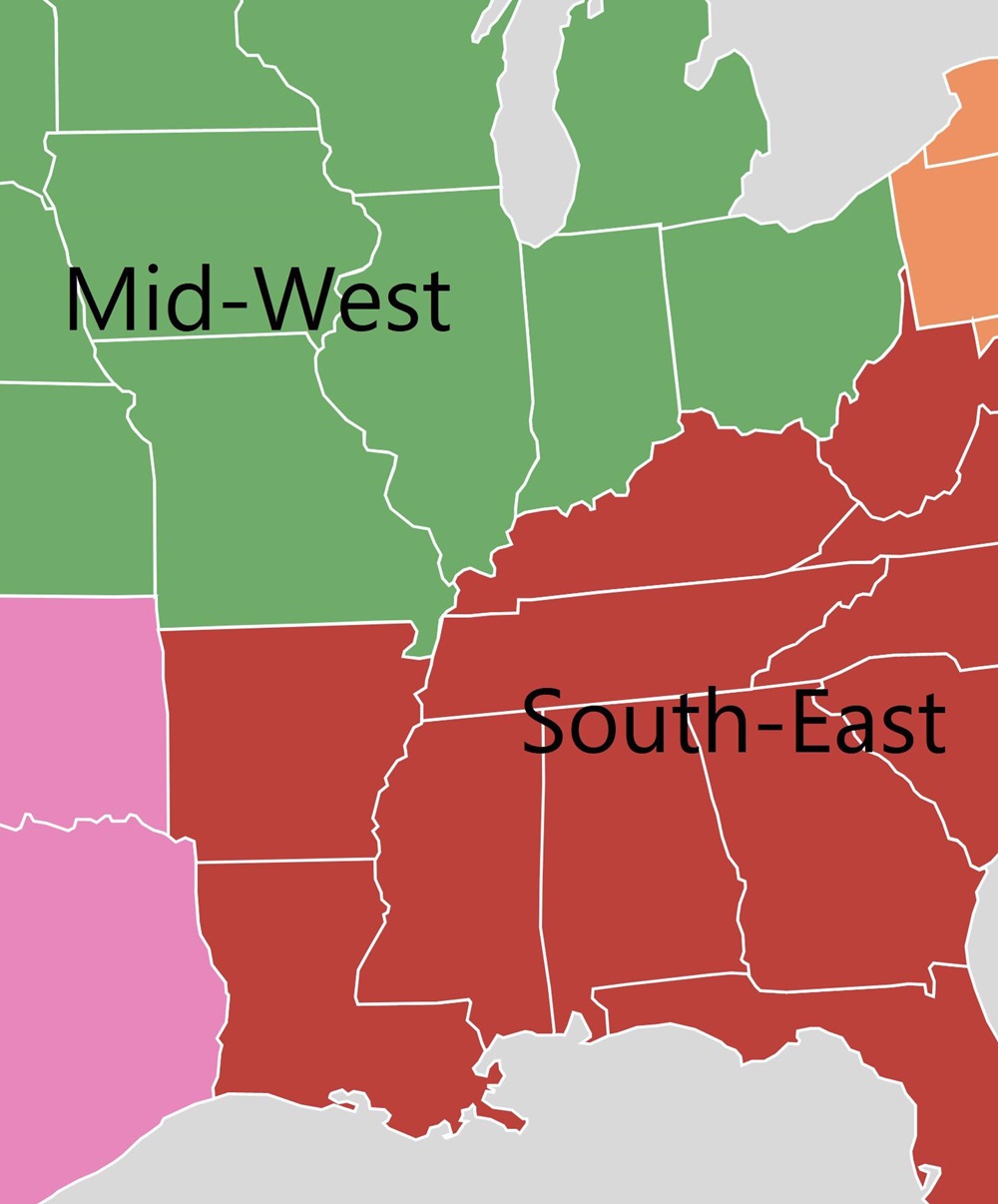
For years, if not decades, we’ve been hearing a familiar tale- that anyone and everyone is moving from the Midwest and Northeast to the South and West. This trend began during and after the collapse of Northern manufacturing, and as higher cost of living began to make the lower-cost South more attractive in particular. However, a lot of the South’s growth over the years- indeed a majority- never had anything to do with region-to-region migration. Instead, it was due largely to natural growth (births vs. deaths) and international migration, particularly from Central America. What received all the attention, though, was the belief that people were packing up and moving to the South from places like Ohio and other struggling Northern states. While that may have been true for a while, that is increasingly looking like it is no longer the case.
The Midwest, especially, has been derided as the region no one wants to live in. Despite its growing population approaching 66 million people, the common refrain was that its colder winters, flailing economies and questionable demographic future meant that it was simply a region being left behind by the booming Southern states.
Recently, the US Census released estimates for 2015-2016 geographic mobility, and they tell a very different story altogether. Regional domestic migration in 2016 may have actually bucked the trends.
First, let’s look at the total domestic migration moving to the Midwest from other regions. South to Midwest: +309,000 West to Midwest: +72,000 Northeast to Midwest: +61,000 Total to Midwest: +442,000
And then compare that to the total that the Midwest sends to other regions. Midwest to South: -254,000 Midwest to West: -224,000 Midwest to Northeast: -34,000 Total from Midwest: -512,000
Net difference by region. Midwest vs. South: +55,000 Midwest vs. West: -152,000 Midwest vs. Northeast: +27,000 Total Net: -70,000
So while the Midwest is seeing an overall net domestic migration loss, it is entirely to the Western states.
This could just be an off year, as almost all recent years showed losses to the South, but then again, maybe not. The South has been in a boom for several decades now, and in that time, the region still lags the other 3 in almost every quality of life metric used. All booms end eventually, and the South’s 2 biggest perceived advantages, low cost of living and business-friendly climate, have been gradually eroding over time. As Census surveys show, people don’t actually move for a change in weather, so it’s the economic factors that are going to make the biggest impacts long-term. The Midwest now has many cities and several states that are doing well economically, including Columbus, and perhaps they are becoming more attractive than they have in many years. Time will tell, but last year, the narrative of an unattractive Midwest vs. South was at least temporarily shelved.
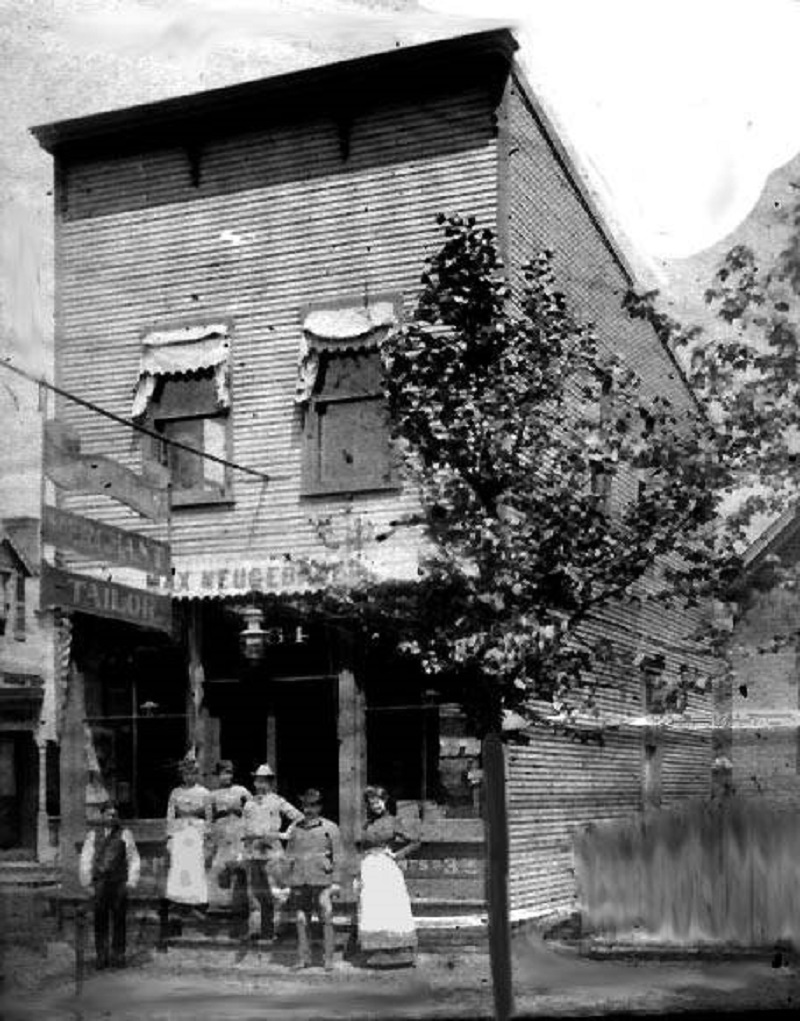
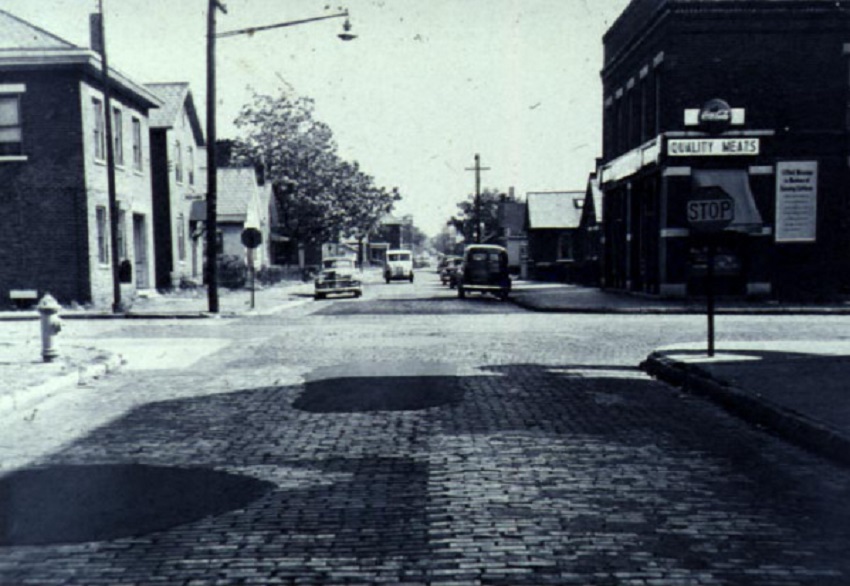
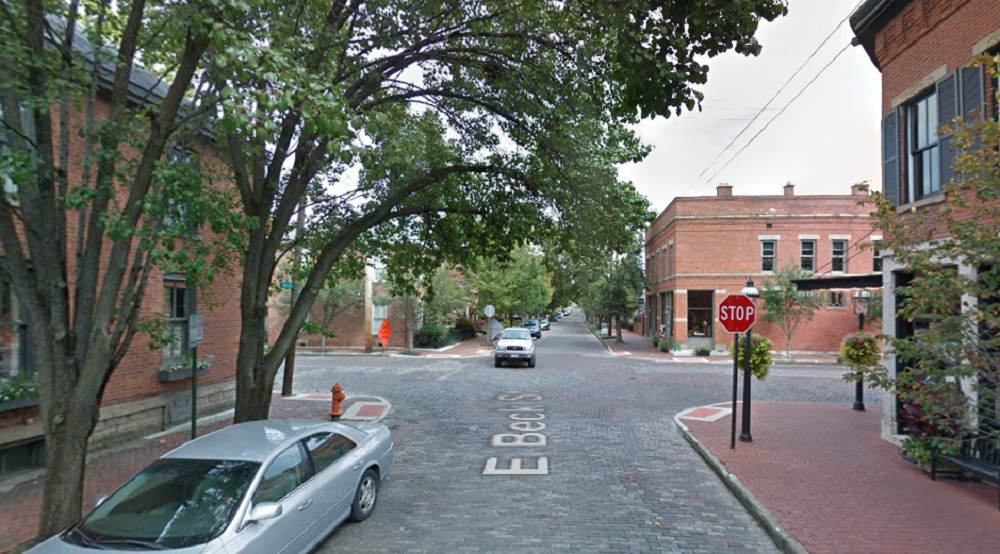
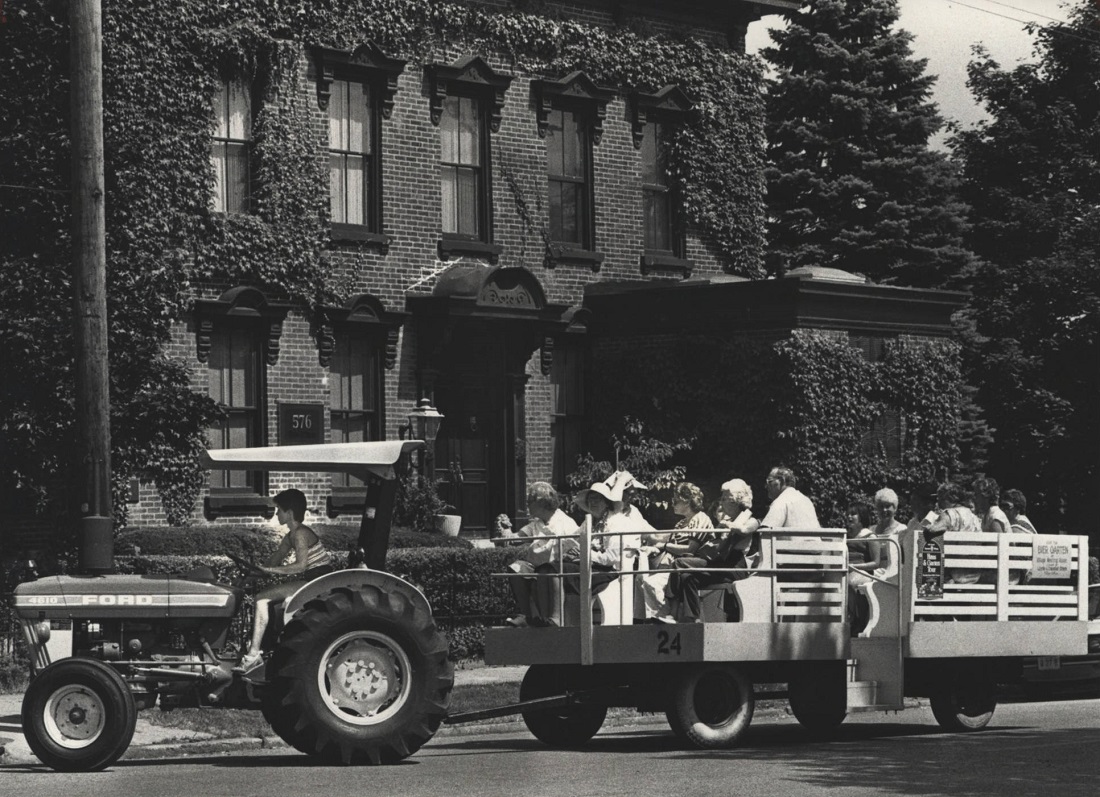
German Village dates back to the early 19th Century, when it was sometimes called called Germantown. Unsurprisingly, by the middle of the 20th Century, the neighborhood had declined significantly, yet still retained the vast majority of its historic buildings. The city of Columbus had it in mind to bulldoze a large part of the neighborhood in the 1950s for public housing, but activists organized against those plans. Instead, in what was one of the first major success stories of Columbus preservation, German Village was saved. The entire area was eventually added onto the National Register of Historic Places in 1975, and today it is still the largest historic district on the registry anywhere in the United States. Here are just a few before and after photos around the neighborhood.
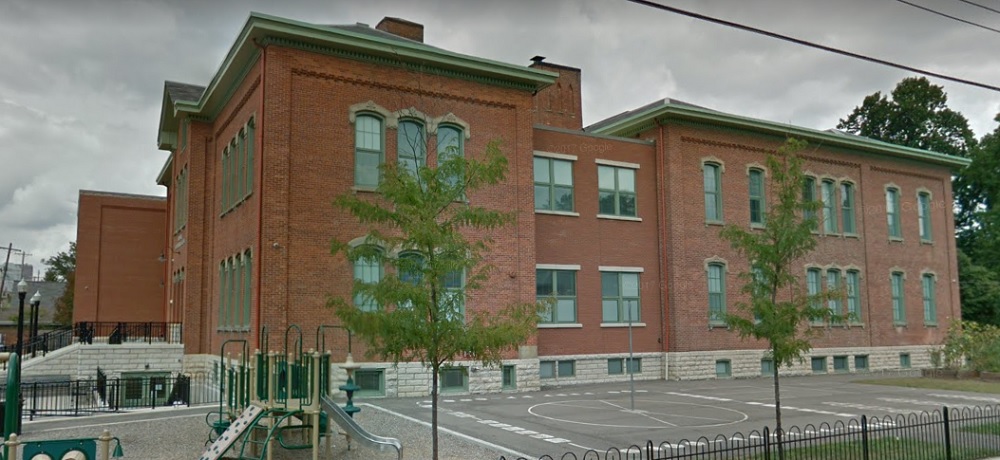
Before: Stewart Avenue Elementary School, looking northeast, in 1920. After: 2017 The school was constructed in 1873 and remains in use today, one of the oldest continuous schools remaining in the city.
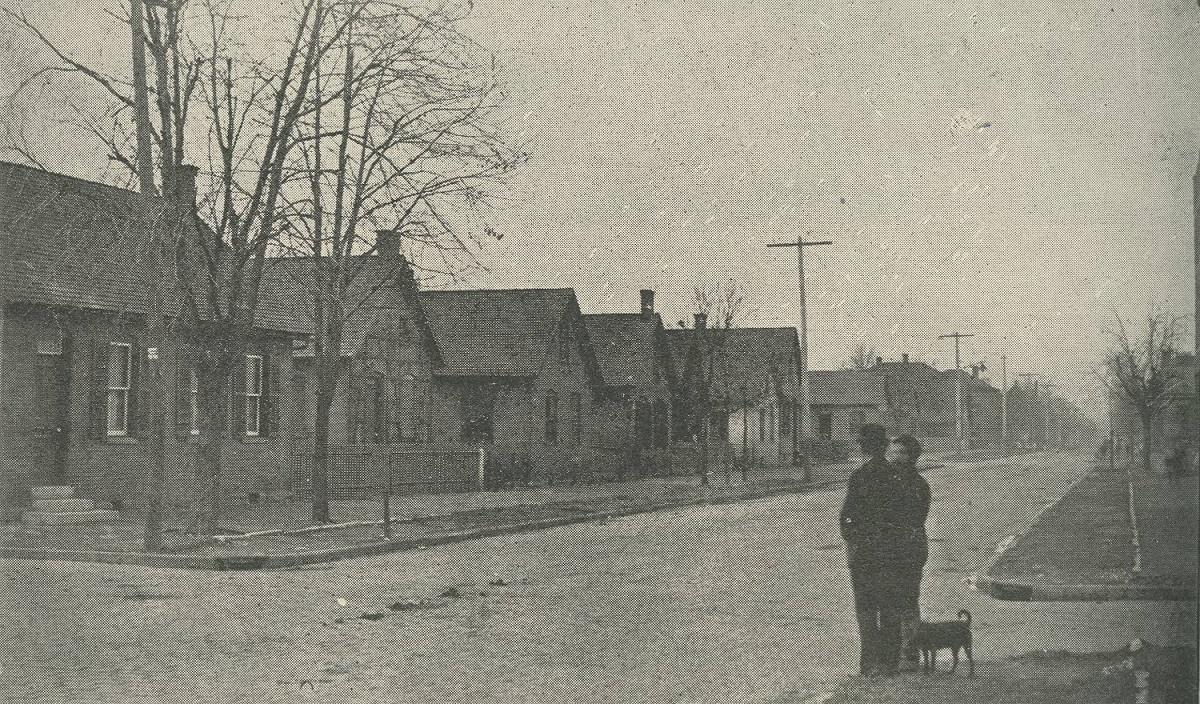
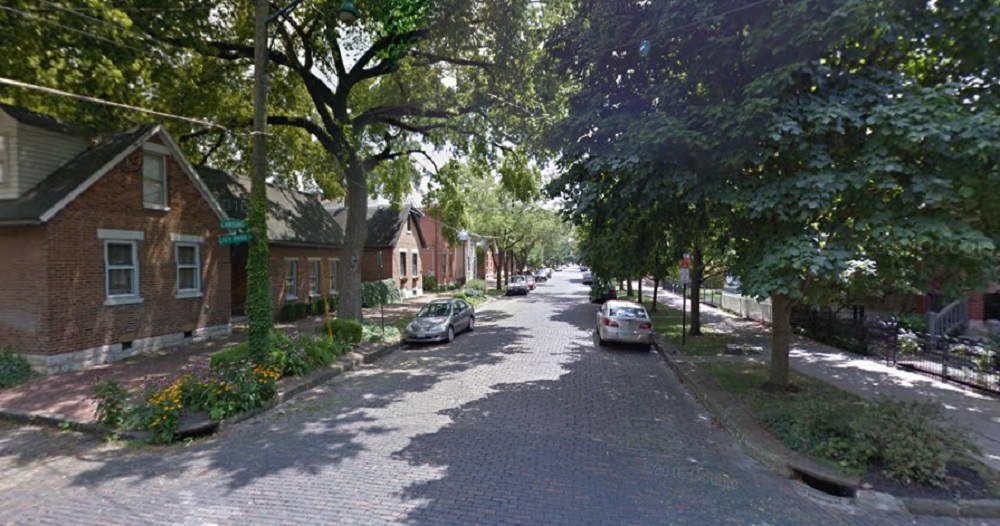
Before: City Park Avenue at Lansing Street, looking south, in 1898. After: 2016
Before: The Max Neugebauer Tailor Shop at 764 Mohawk Street in 1897. After: 2016 Neugebauer arrived in Columbus in 1887, but it’s unclear when he opened this business.
Before: Beck Street and Mohawk, looking east, in 1950. After: 2017 German Village was considered a “slum” by 1950, so the before photo would’ve been around the time of the neighborhood’s low point.
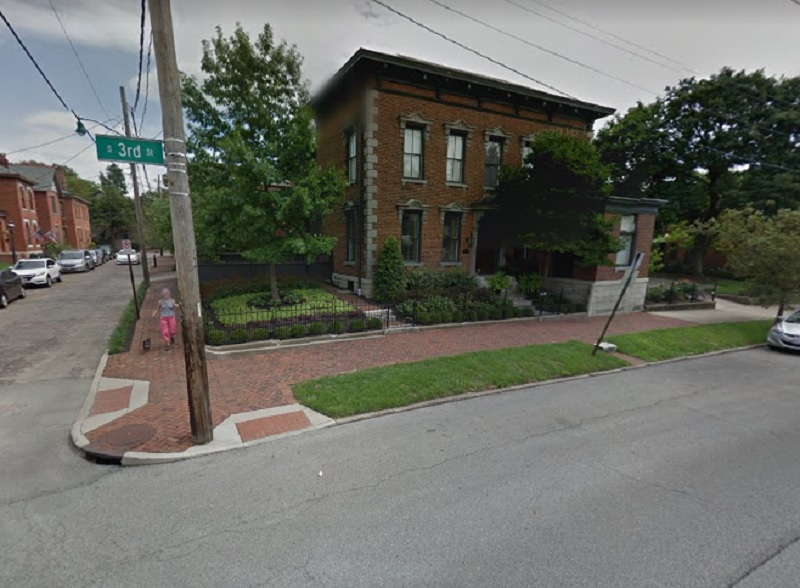
Before: Third Street and Beck, looking east, in 1981. After: 2016 The photo shows a German Village “Haus and Garten Tour” through the neighborhood.
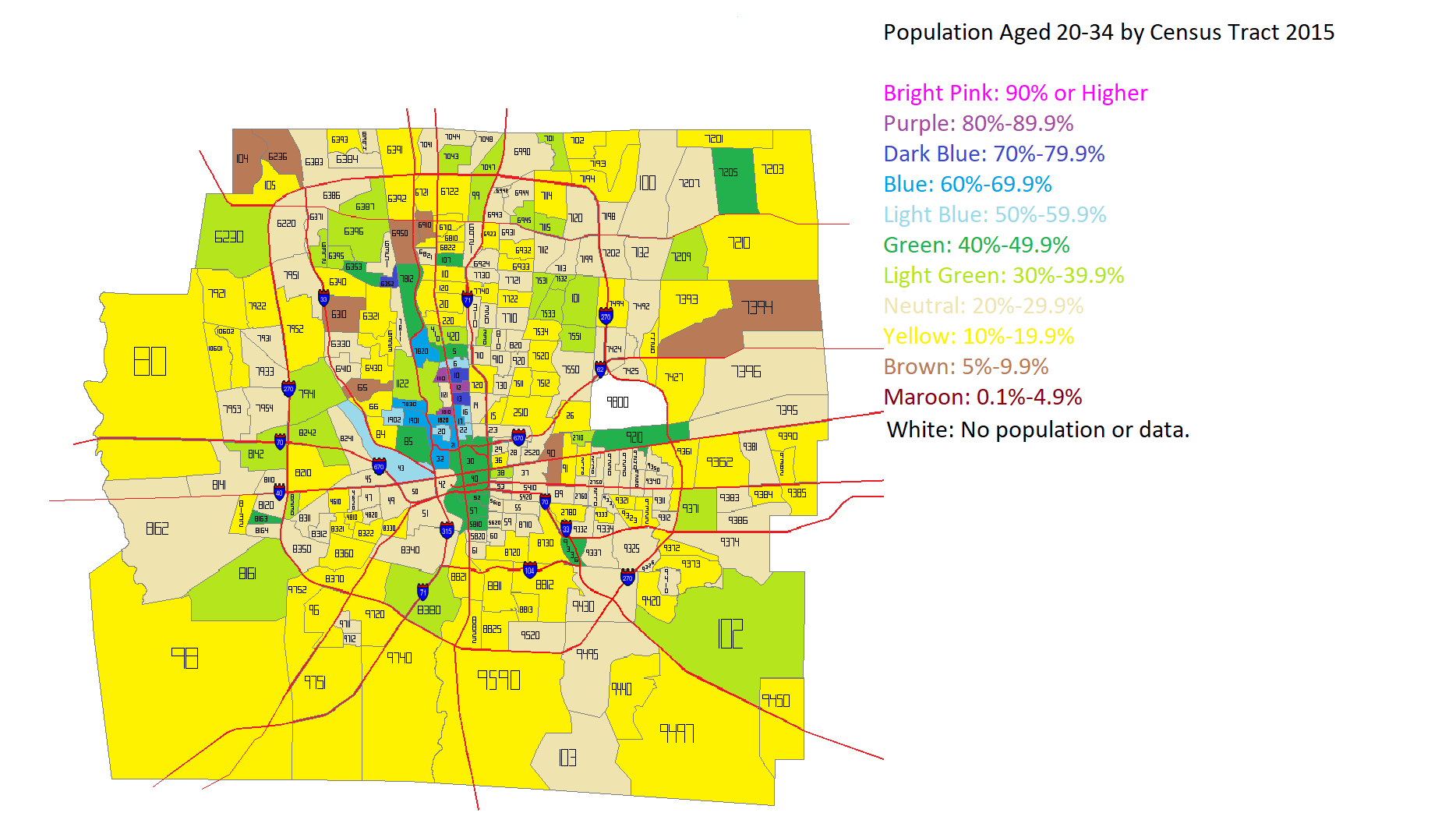
I’ve seen several articles across the internet lately questioning the idea that Millennials and young adults prefer density and urban areas. I decided to see how this played out in Franklin County overall. I first looked at the total population aged 20-34 in the year 2000 and the year 2015 by Census Tract. Here were the maps for those years.
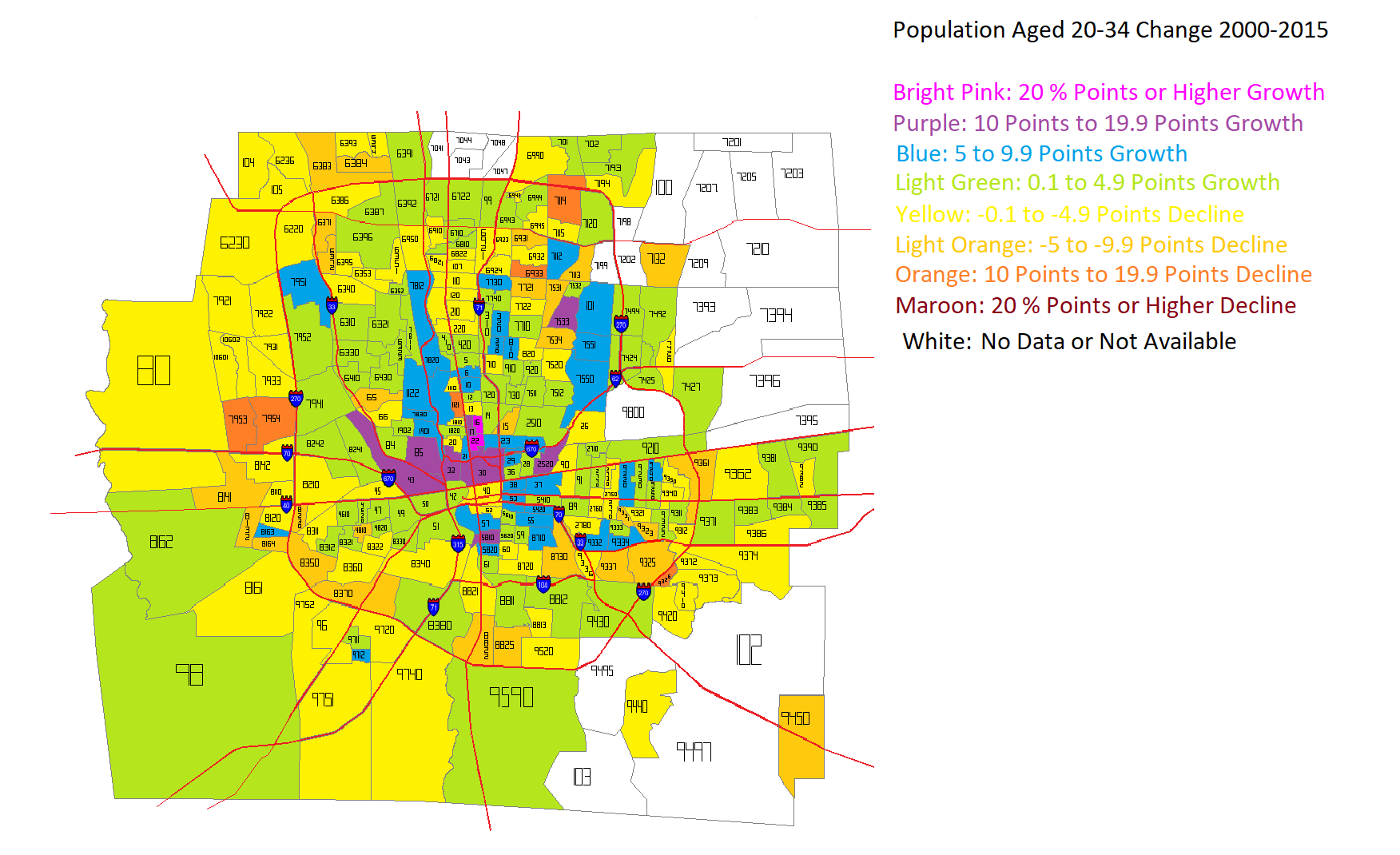
After looking at the numbers for both years, I came up with this map for how that age group had changed in the 2000-2015 period.
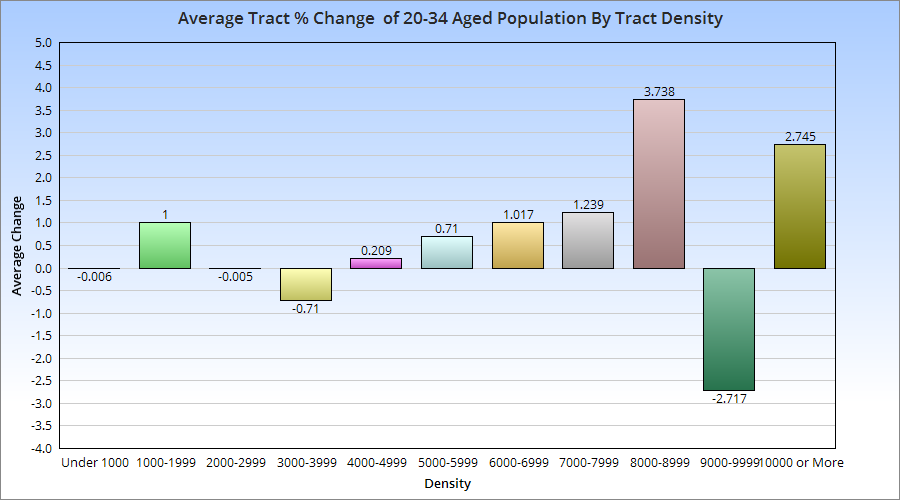
Unfortunately, some tracts, particularly in the eastern suburban areas, did not exist in 2000, and so I was not able to figure out the change for them during the period. The rest of the map, however, shows that the strongest growth in this age group was not only inside 270, but closest to Downtown and central corridors along Broad and High Streets. These maps don’t tell us about the relationship between those changes and the population density of the census tracts. So I went further and broke the tracts into increments of density to see where the strongest growth was occurring.
With a few exceptions, there appears to be a correlation between average 20-34 aged population growth and the density of the census tracts it occurs in. This suggests that this age group, at least in Franklin County, prefers areas with moderate to high density, which typically translates to urban living.
What most of Winter 2016-2017 looked like in Ohio.
The Winter 2016-2017 Review supports that the season was one of the warmest, least snowy winters on record. Depending on your viewpoint, that was either a really good or really bad thing.
Temperature and snowfall ranking data goes back to the winter of 1878-1879. Snow depth ranking data goes back to 1940.
December-February Only Average High: 44.4 7th Warmest Average Low: 29.5 6th Warmest Mean: 37.0 6th Warmest Precipitation: 8.55″ 49th Wettest Snowfall: 7.6″ 13th Least Snowy Average Daily Snow Depth: 0.1″ 2nd Lowest 32 or Below Highs: 17 11th Fewest 32 or Below Lows: 54 5th Fewest Measurable Precipitation Days: 43 10th Most Measurable Snowfall Days: 10 6th Fewest Deepest Snow Depth: 3″ on December 14th Days with 1″+ Snow Depth: 7 5th Fewest
Entire Cold Season: October-April Average High: 54.8 1st Warmest Average Low: 36.7 5th Warmest Mean: 45.8 1st Warmest Precipitation: 19.28″ 67th Driest Snowfall: 9.3″ 8th Least Snowy Average Snow Depth: 0.1″ 2nd Lowest 32 or Below Highs: 18 8th Fewest 32 or Below Lows: 80 5th Fewest Measurable Precipitation Days: 86 19th Most Measurable Snowfall Days: 15 6th Fewest Deepest Snow Depth: 3″ on December 14th Days with 1″+ Snow Depth: 8 5th Fewest
Average High By Month October 2016: 69.3 17th Warmest November 2016: 57.7 7th Warmest December 2016: 38.7 38th Coldest January 2017: 43.5 14th Warmest February 2017: 51.8 1st Warmest March 2017: 52.1 36th Warmest April 2017: 71.1 1st Warmest
Average Low By Month October 2016: 49.1 14th Warmest November 2016: 36.3 26th Warmest December 2016: 26.2 50th Coldest January 2017: 30.1 8th Warmest February 2017: 32.6 4th Warmest March 2017: 34.1 32nd Warmest April 2017: 48.3 1st Warmest
Mean By Month October 2016: 59.2 12th Warmest November 2016: 47.0 13th Warmest December 2016: 32.4 44th Coldest January 2017: 36.8 12th Warmest February 2017: 42.2 1st Warmest March 2017: 43.1 35th Warmest April 2017: 59.7 1st Warmest
Precipitation By Month October 2016: 1.73″ 45th Driest November 2016: 1.02″ 13th Driest December 2016: 3.09″ 49th Wettest January 2017: 2.83″ 53rd Wettest February 2017: 2.63″ 51st Wettest March 2017: 5.39″ 15th Wettest April 2017: 2.59″ 44th Driest
Snowfall By Month October 2016: 0.0″ Least Snowy November 2016: Trace 2nd Least Snowy December 2016: 5.4″ 40th Snowiest January 2017: 1.6″ 13th Least Snowy February 2017: 0.6″ 4th Least Snowy March 2017: 1.7″ 27th Least Snowy April 2017: Trace 2nd Least Snowy
Average Snow Depth By Month October 2016: 0″ November 2016: 0″ December 2016: 0.3″ January 2017: Trace February 2017: 0.1″ March 2017: Trace April 2017: 0″
Maximum High By Month October 2016: 83 on the 18th November 2016: 80 on the 1st December 2016: 69 on the 26th January 2017: 67 on the 12th February 2017: 78 on the 24th March 2017: 77 on the 30th April 2017: 85 on the 26th and 30th
Record Highs -The 83 on October 18th tied the record for the date set in 1938. -The 80 on November 1st tied the record for the date set in 1950. This is also a tie for the warmest temperature ever recorded in November. -The 79 on November 2nd tied the record for the date set in 1897. -The 75 on November 18th was a record for the date, beating the old record of 73 set in 1954. -The 69 on November 26th was a record for the date, beating the old record of 62 set in 1889 and 1982. -The 67 on January 12th tied the record for the date set in 1916. -The 64 on January 17th was a record for the date, beating the old record of 62 set in 1952. -The 66 on February 18th was a record for the date, beating the old record of 63 set in 2011. -The 72 on February 23rd was a record for the date, beating the old record of 66 set in 1905 and 1986. -The 78 on February 24th was a record for the date in 3 ways: 1. It beat the old daily record of 72 set in 1961. 2. It beat the record for the warmest February temperature ever of 75 set on 2/26/2000. 3. It broke the record for the warmest temperature for meteorological winter (Dec-Feb) of all-time, beating the old record of 76 set on 12/3/1982.
Minimum High By Month October 2016: 52 on the 22nd November 2016: 35 on the 20th December 2016: 14 on the 15th January 2017: 16 on the 6th and 7th February 2017: 25 on the 3rd March 2017: 29 on the 14th April 2017: 49 on the 1st
Maximum Low By Month October 2016: 69 on the 18th November 2016: 56 on the 2nd December 2016: 48 on the 26th January 2017: 47 on the 17th February 2017: 59 on the 24th March 2017: 58 on the 25th April 2017: 63 on the 16th and 19th
Record Maximum Lows -The 69 on October 18th was a record for the date, beating the old record of 65 set in 2007. -The 54 on February 22nd was a record for the date, beating the old record of 51 set in 1930. -The 52 on February 23rd was a record for the date, beating the old record of 51 set in 1930. -The 59 on February 24th was a record for the date, beating the old record of 50 set in 2000. -The 58 on March 25th tied the record for the date set in 1949.
Minimum Low By Month October 2016: 35 on the 25th November 2016: 21 on the 22nd December 2016: 4 on the 15th and 16th January 2017: 6 on the 7th February 2017: 9 on the 4th March 2017: 15 on the 15th April 2017: 32 on the 8th
Highest Daily Precipitation By Month October 2016: 0.74″ on the 19th November 2016: 0.36″ on the 28th December 2016: 1.07″ on the 17th January 2017: 0.80″ on the 3rd February 2017: 0.76″ on the 7th March 2017: 1.53″ on the 26th April 2017: 0.80″ on the 9th
Highest Daily Snowfall By Month October 2016: 0.0″ November 2016: Trace on the 19th and 20th December 2016: 3.2″ on the 13th January 2017: 0.9″ on the 5th February 2017: 0.6″ on the 8th March 2017: 0.6″ on the 13th April 2017: Tract on the 6th and 7th
Deepest Snow Depth By Month October 2016: 0″ November 2016: 0″ December 2016: 3″ on the 14th January 2017: 1″ on the 6th February 2017: 1″ on the 9th and 10th March 2017: 1″ on the 14th April 2017: 0″
I haven’t done a Before and After installment for a while. This time around, I chose to not focus on any single neighborhood.
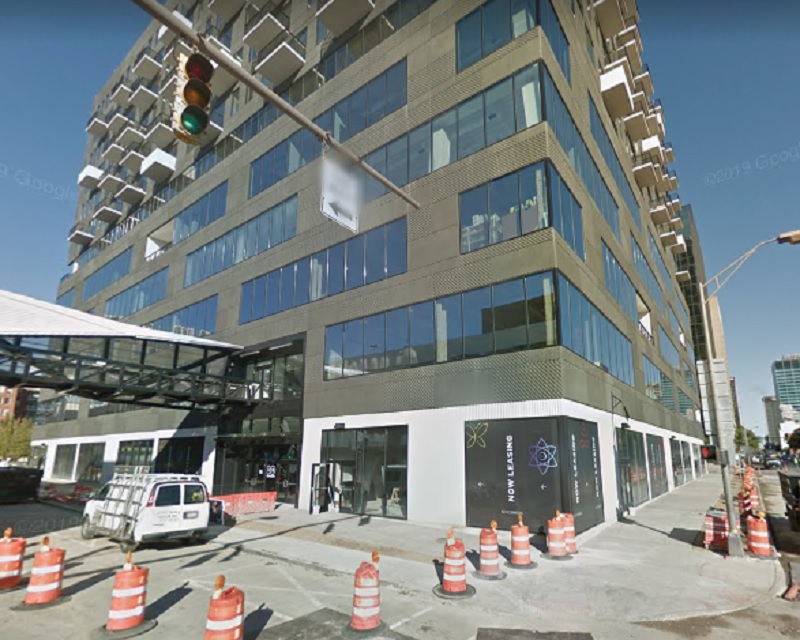
First up is a photo of the construction of the Columbus Interurban Terminal, looking northwest from 3rd. The photo was taken on October 5, 1911, about 3 months before the building opened. The interurban system was relatively short-lived in the city, and the terminal closed after only 26 years in 1938. The building survived as a grocery store through the mid-1960s before the building was demolished in 1967 as part of the construction of the Greyhound Bus Terminal across the street. The actual location of the building was not on the Greyhound site, but was used as an overflow parking lot. It remained a parking lot until the mid-1980s, when it became part of the City Centre Mall site. Today, plans are for the site to become the location for the 12-story, 80 on the Commons mixed-use project.
October, 1911.
Here is the same place in October, 2018.
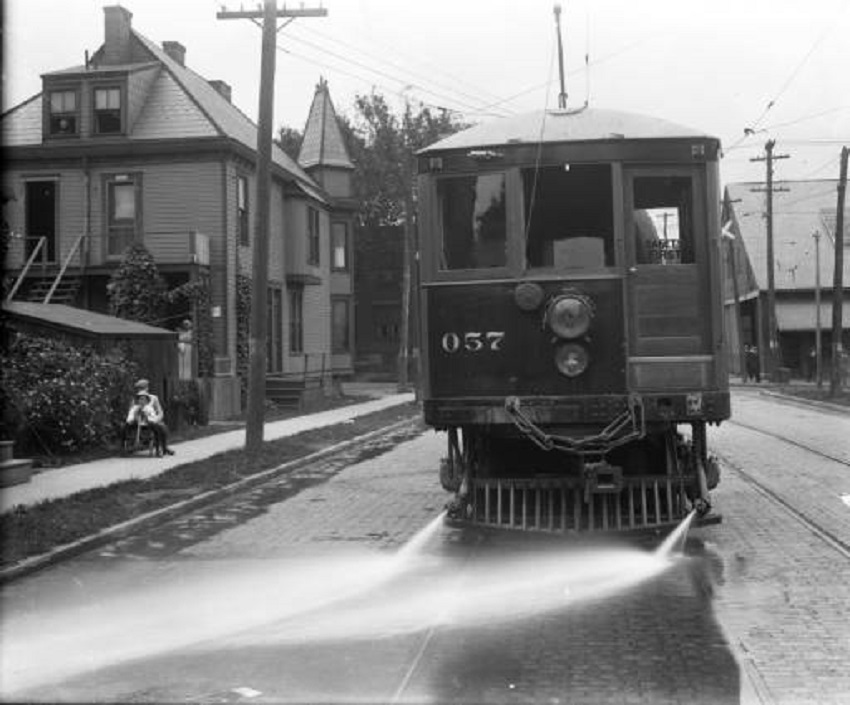
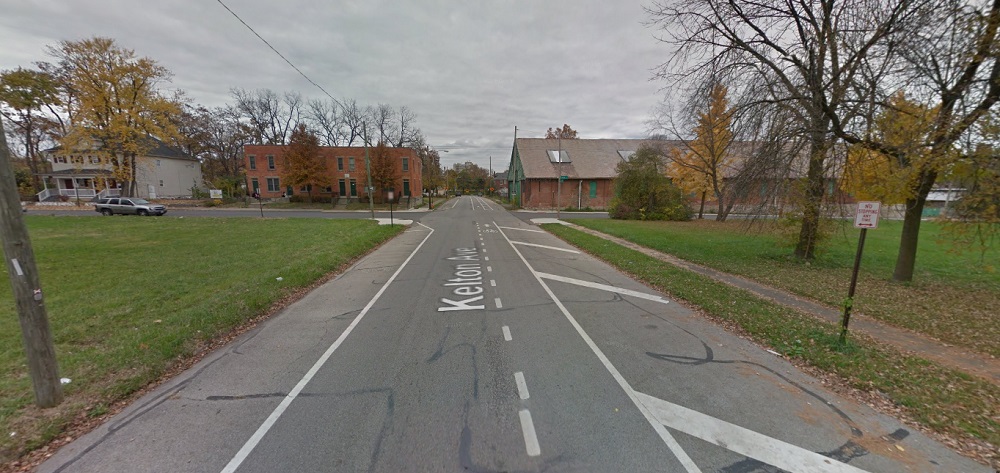
The second historic photo is of the #57 streetcar on Kelton Avenue just south of the Oak Street intersection. The photo, which looks north, was taken on June 30, 1915 and includes 3 separate visible buildings as well. The house on the left actually survived until 1977, when it and the rest of the east half of the block was demolished. The building visible on the right is the surviving streetcar barn. Today, it is in bad shape, and while many would like to see it renovated and saved, time seems to be running out. The other surviving building, barely visible in the 1915 photo, is the tenement building on the northwest corner of Oak and Kelton. And in 2015:
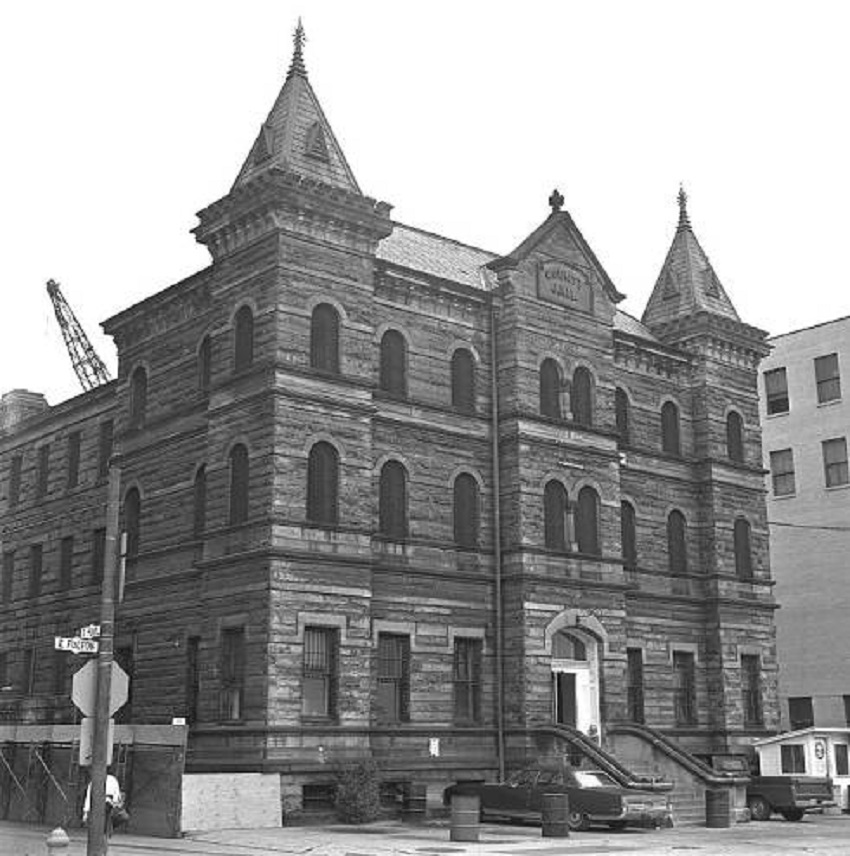
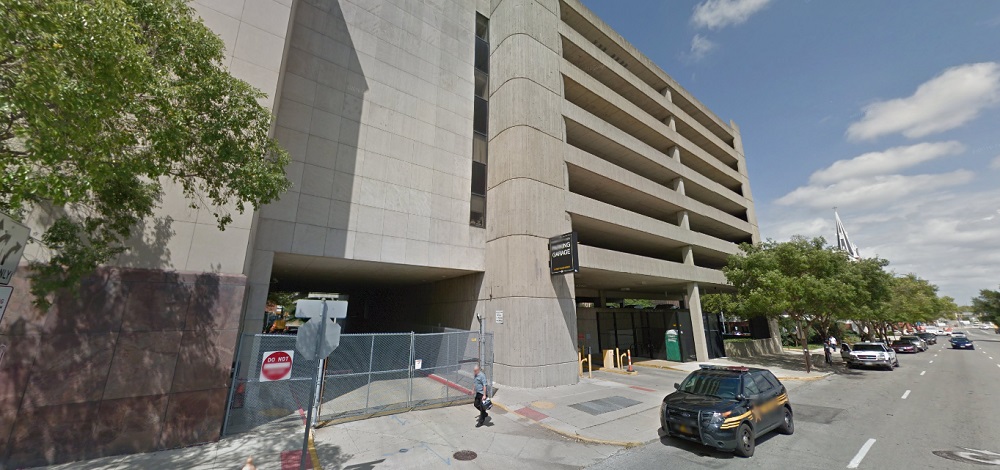
Third in this list is a photo of the demolition of the old Franklin County Jail, once located at 36 E. Fulton Street in Downtown. Built in 1889, the structure survived until the fall of 1971, when the building, which by then had become outdated for its intended purpose, was torn down to make way for- what else- a parking garage. The parking garage remains to the present day. Columbus leaders at the time should’ve been flogged for such short-sighted thinking, something that was repeated over and over and over again during that era. Today, such a very cool, unique building would’ve made an excellent candidate for mixed-use conversion. And in August, 2016:
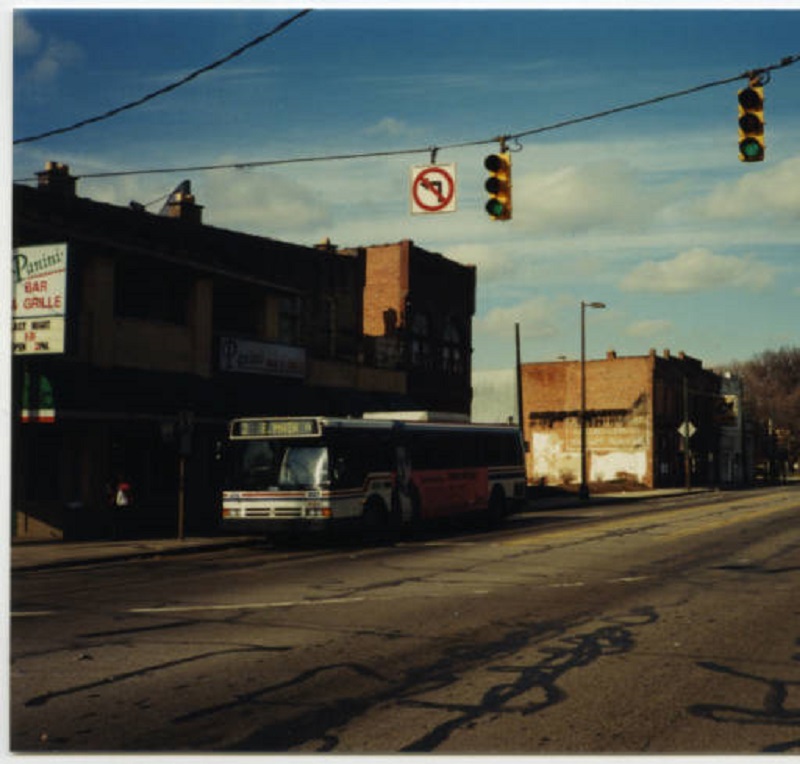
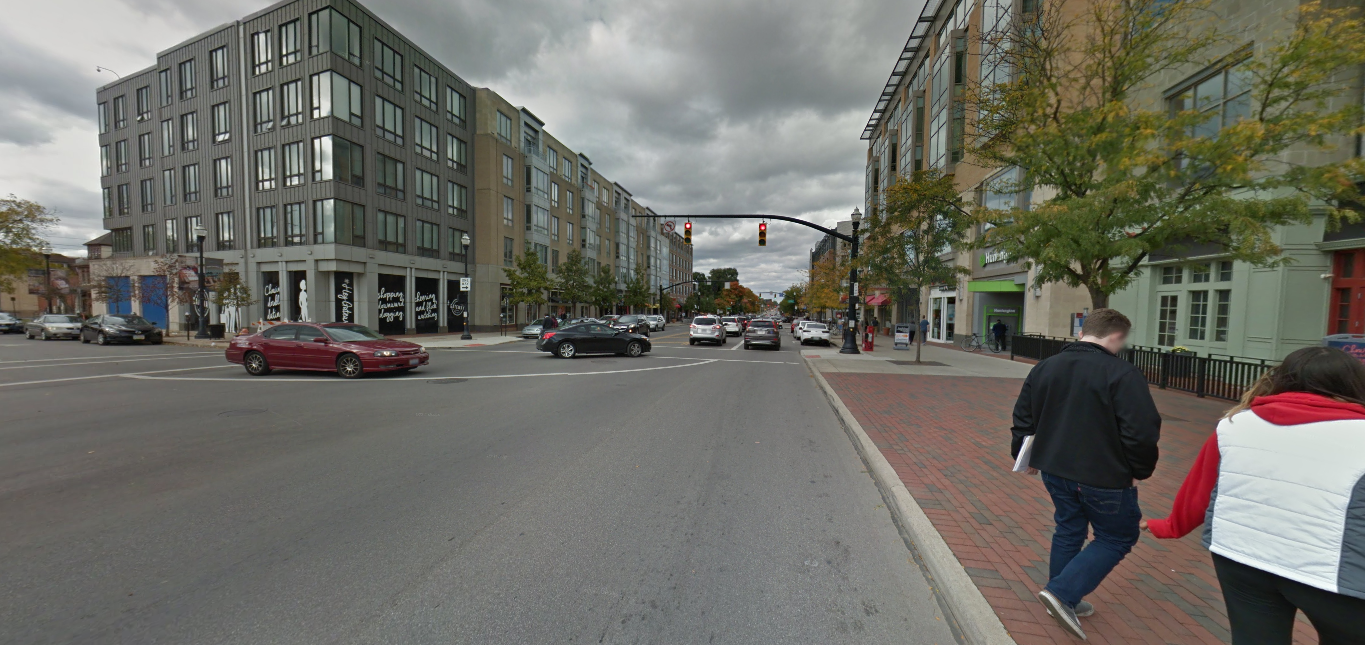
Finally, this next photo isn’t really historic. It was taken a mere 15 years ago in February, 2002, looking northwest from the corner of N. High Street and 10th Avenue. At the time, this area had been made up of low-rise historic buildings that had long held bars for OSU students. All these buildings in the photo, and many more, were demolished not long after the photo was taken in order to make room for the South Campus Gateway, now more or less just called the Gateway. Similar large-scale demolitions are taking place to the north and south as the entirety of the High Street corridor around Campus is transformed. Whether that is good or bad depends on who you ask. What can be agreed upon, however, is that the corridor will be almost unrecognizable in the end. And in October, 2016: