From 1945 until an atmospheric test moratorium in July, 1962, atomic bomb testing in Nevada was so common that Las Vegas tourists would hold parties just to watch the tests from their hotel rooms. Little was known, at least in the beginning, about the effects of nuclear fallout, or just how far it could actually spread.
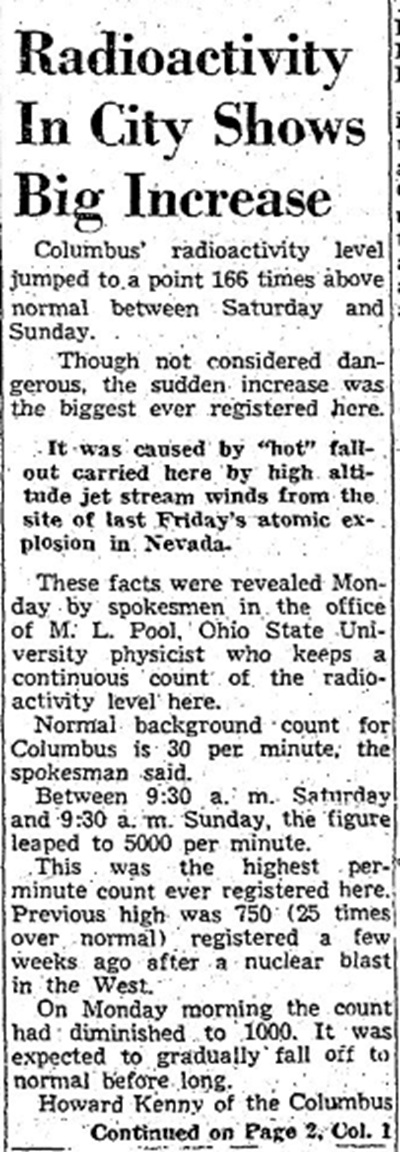
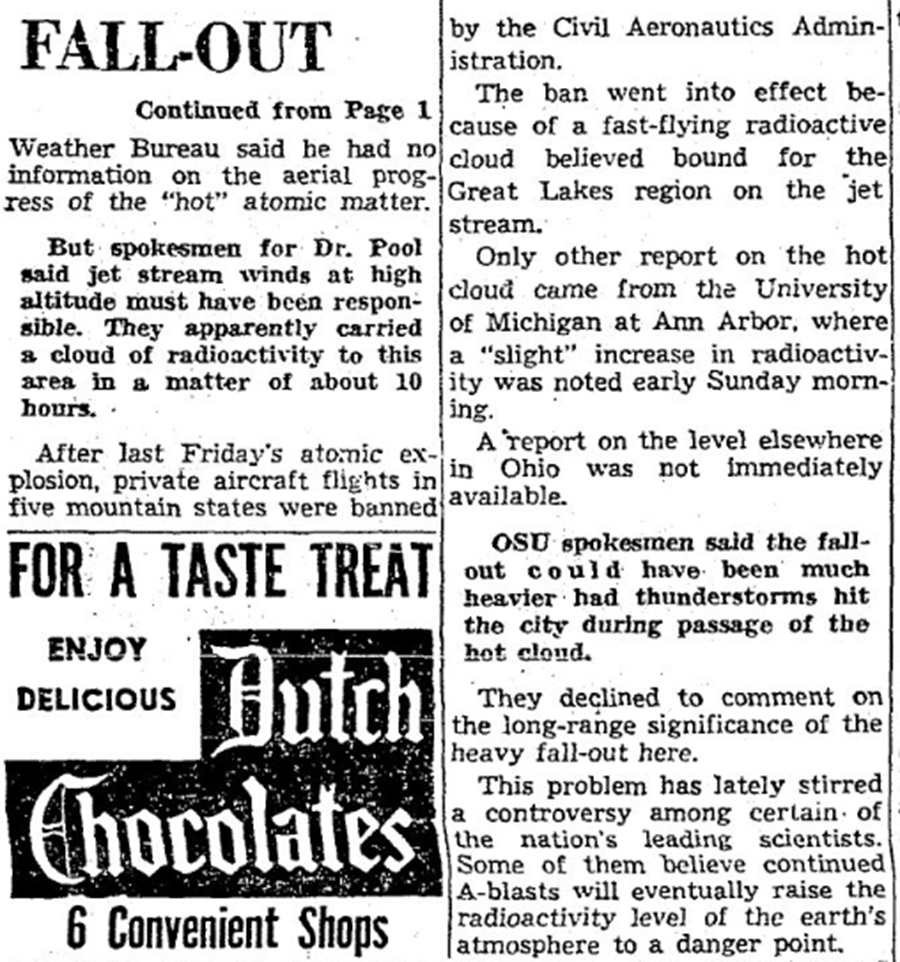
On April 18, 1955, during what was known as Operation Teapot, the Columbus Dispatch reported that radiation from the testing site had reached Columbus.
The radiation had come from the MET test which occurred on April 15, 1955. The bomb was 22 kilotons in size. The video above is from the MET test itself.
Events like this happened several times as the jet stream carried radioactive fallout across the country, and the 1955 nuclear test fallout wouldn’t be the last. It’s unclear whether this fallout had any substantial health impacts long-term, locally or otherwise, but today we understand that even relatively low doses of radiation increase one’s risk for developing cancers down the road. Luckily, these increased levels tended to last a day or two only.
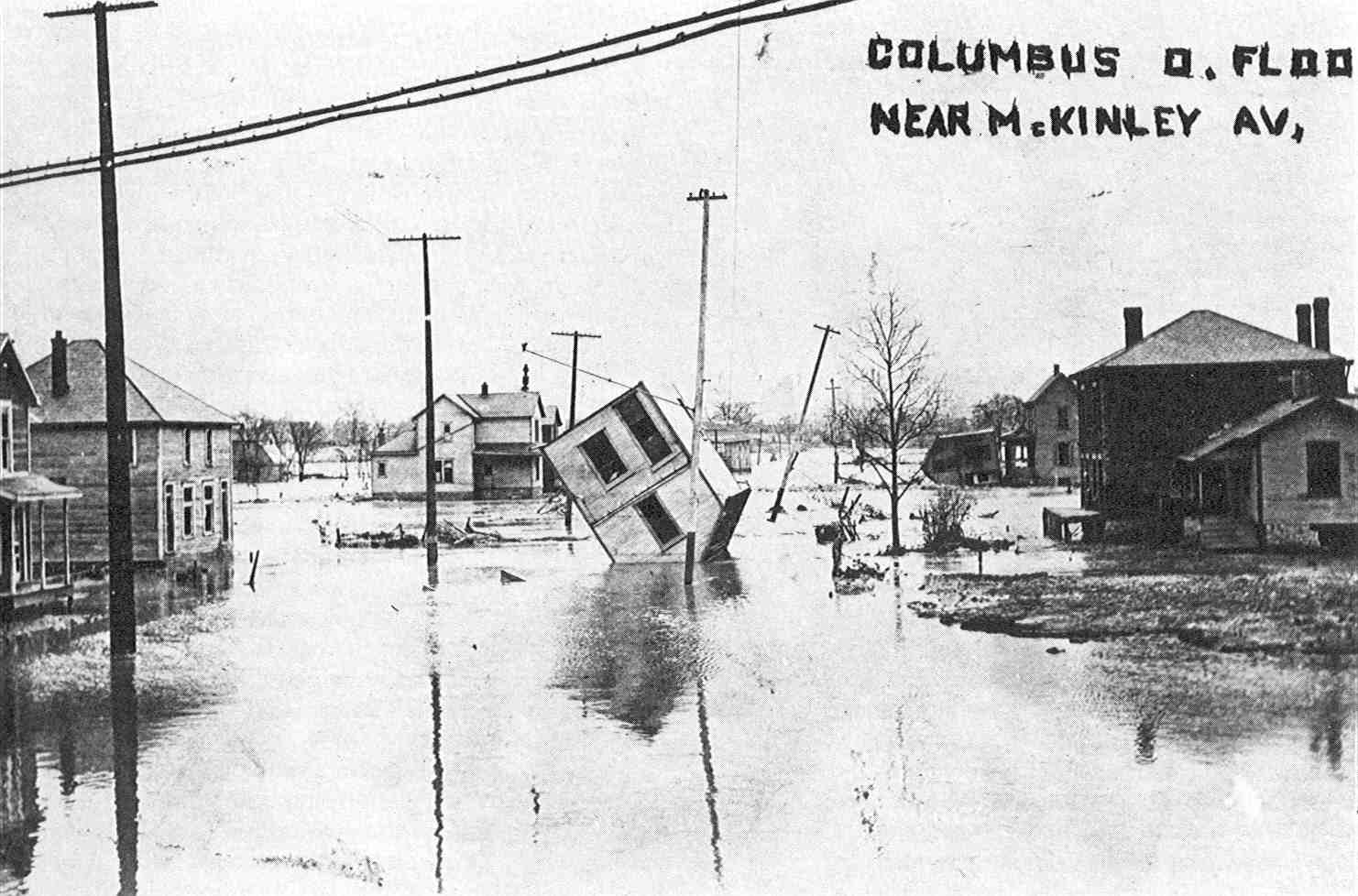
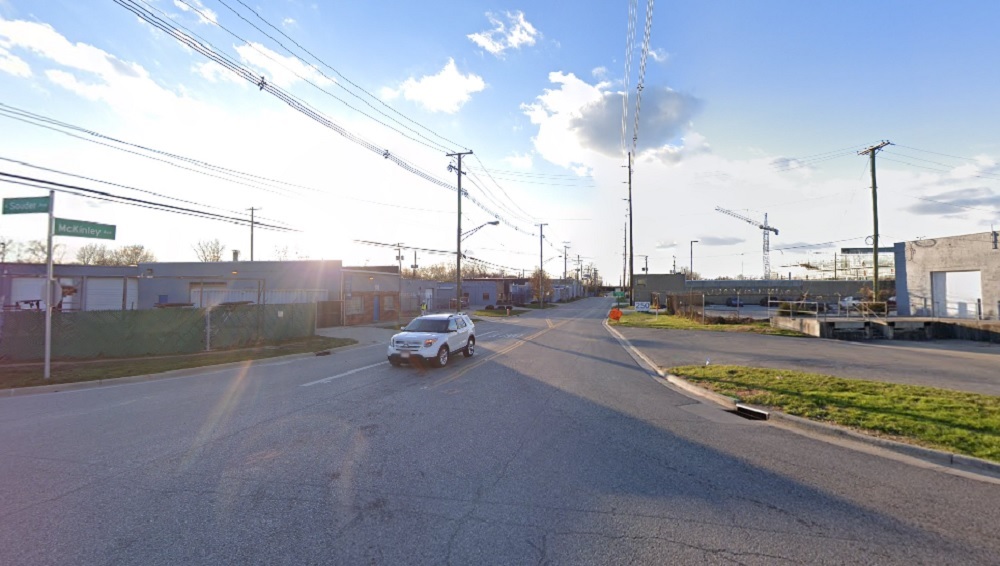
Photo Location: Intersection of McKinley Avenue and North Souder Avenue, looking west. Photo Date: March, 1913 Photo History: The Great Flood of 1913 was the most devastating and deadly flood in Ohio history. 6″-12″ of rain fell between March 23-27, 1913 as two weather systems followed one after the other. Most of the rain fell across the headwaters of major rivers, including the Scioto. The subsequent flood destroyed levees in Columbus and flooded parts of Franklinton- among other areas- with up to 17′ of water with a record crest. The entire riverfront suffered heavy damage with hundreds of buildings damaged or destroyed. 100 people were reportedly killed around the city. Floods like 1913- and later in 1959- eventually led to the federal government limiting new development and investment in Franklinton, which caused it to decline for decades. It wasn’t until 2004 with the completion of the Franklinton floodwall that those limitations were lifted.
The same view today.
Columbus wasn’t the only victim of this great flood. Virtually every major city saw some significant impact, but Dayton arguably got it much worse than any other.
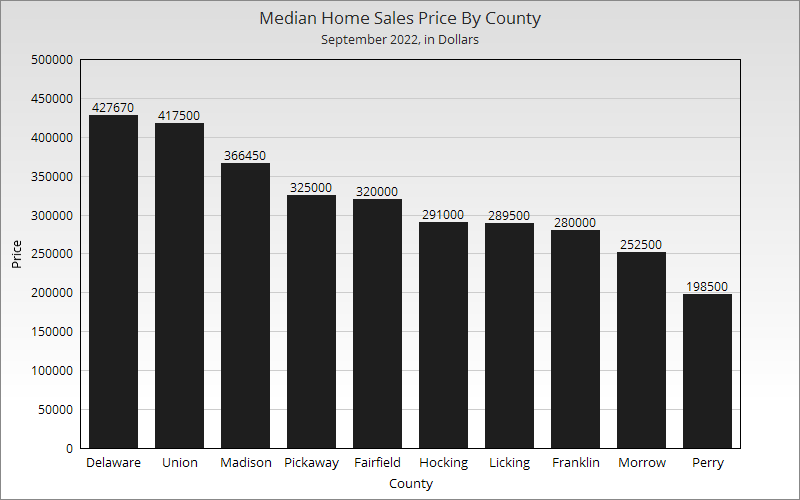
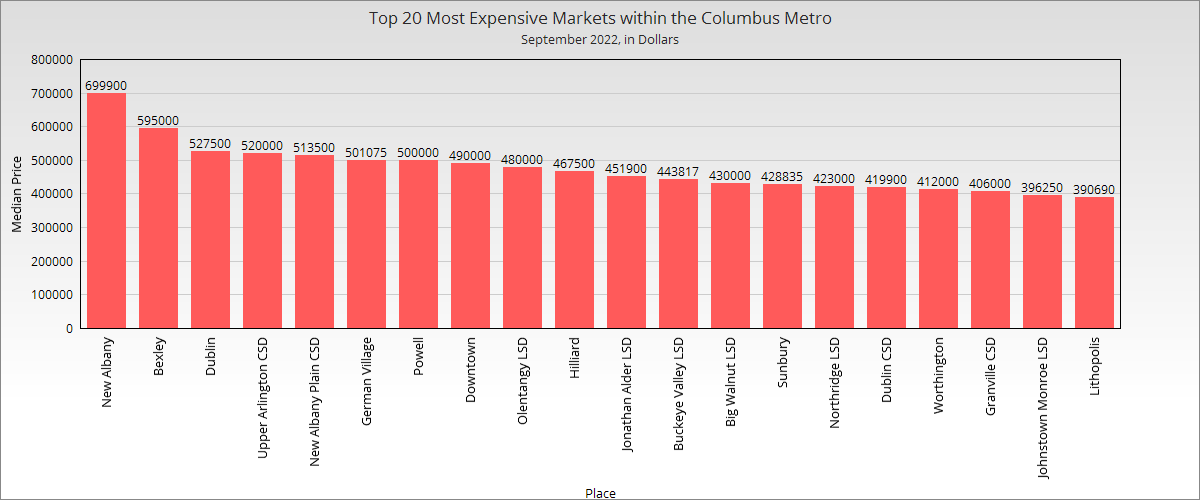
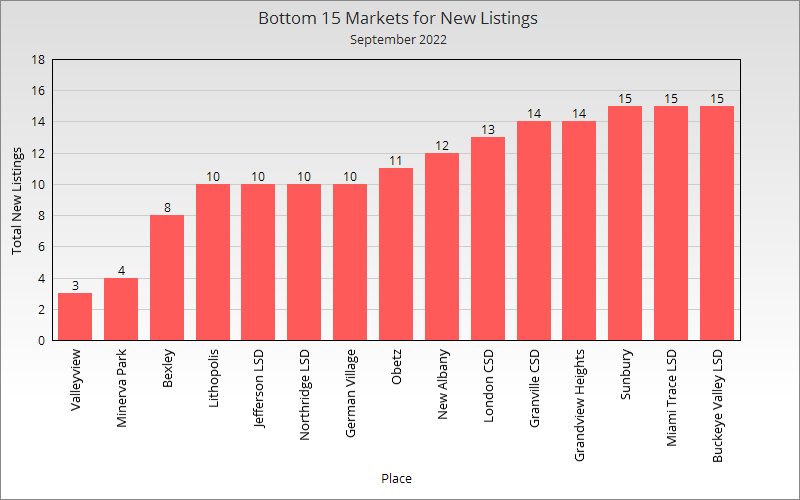
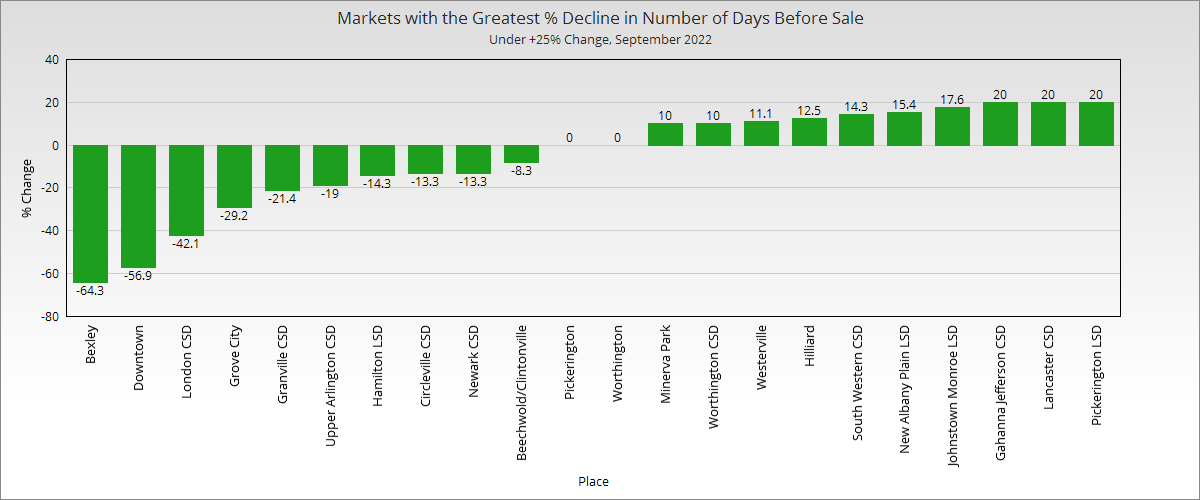
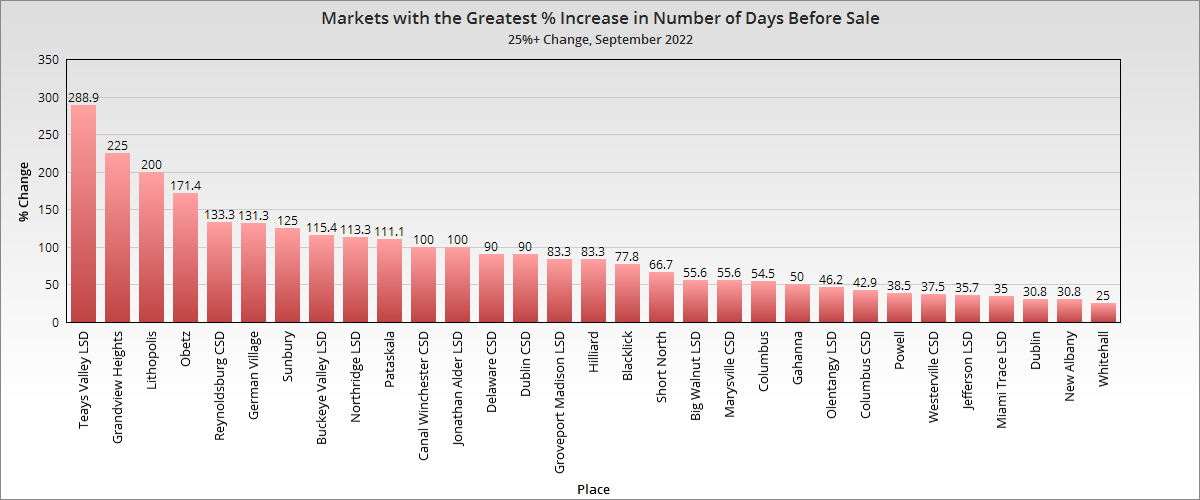
The Housing Market Update September 2022 data from Columbus Realtors continued to support that the local housing shortage is as bad as ever, with low supplies and rising prices.
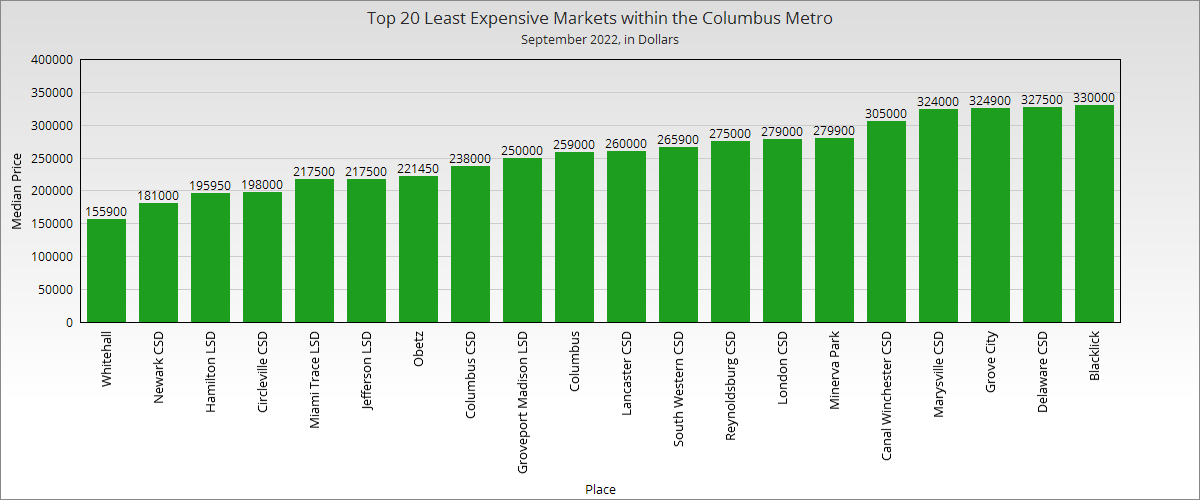
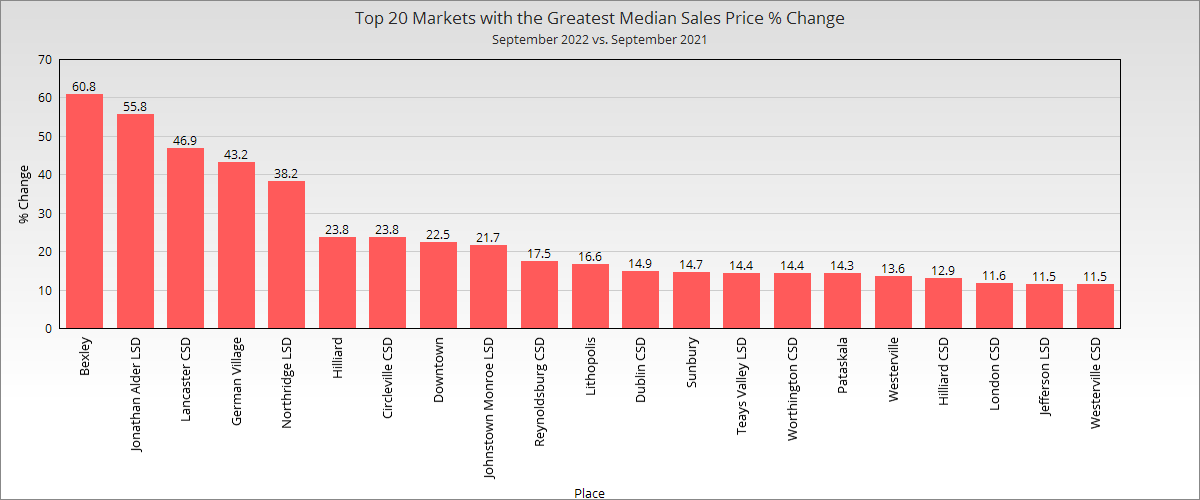
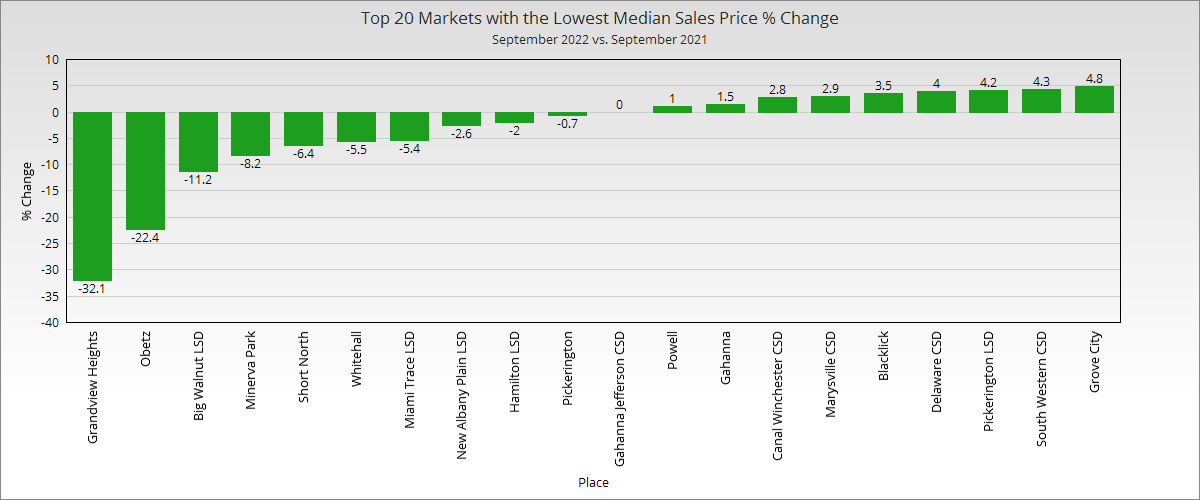
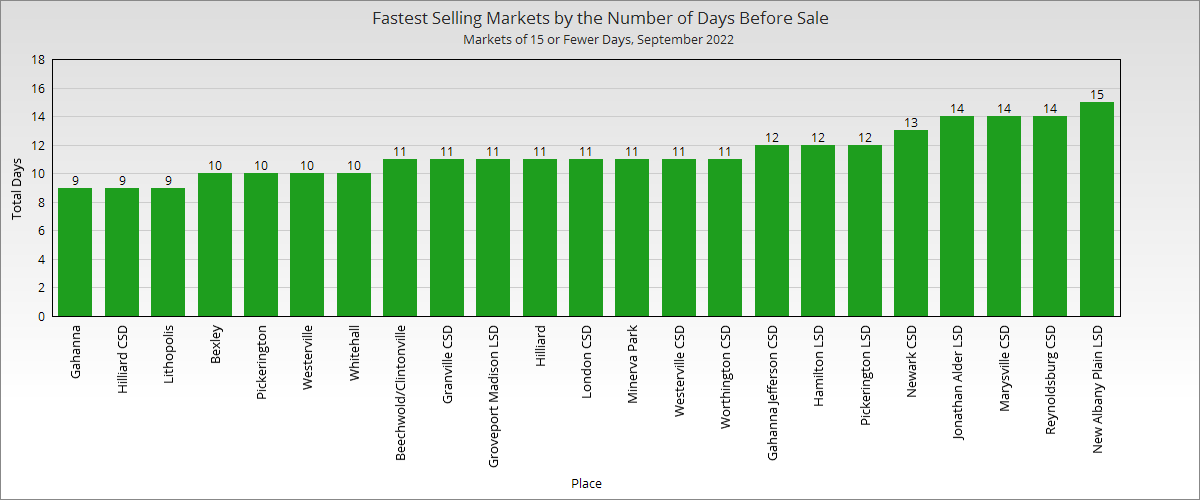
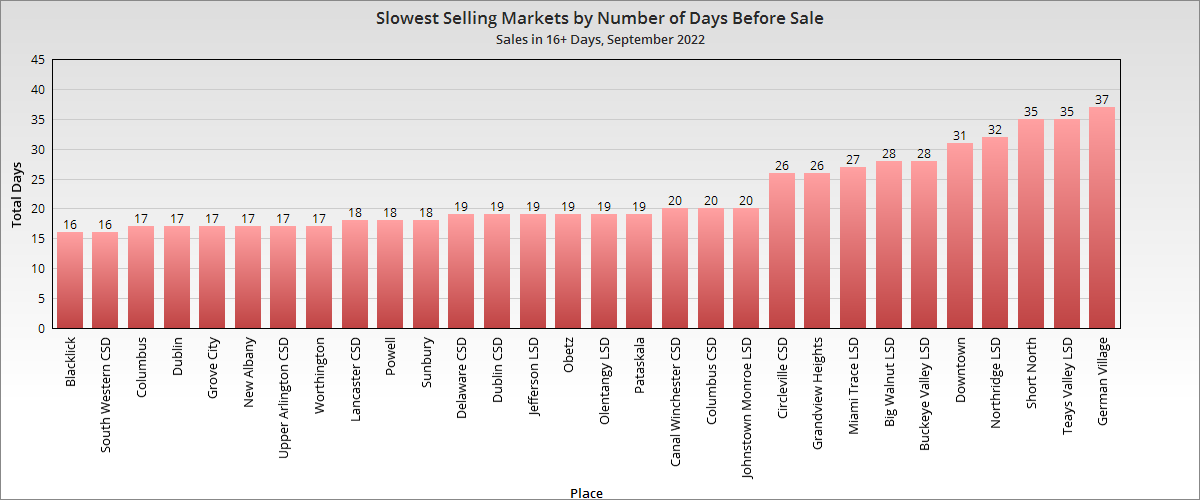
Note: LSD= Local School District, CSD= City School District. In both cases, school district boundaries differ from city boundaries.
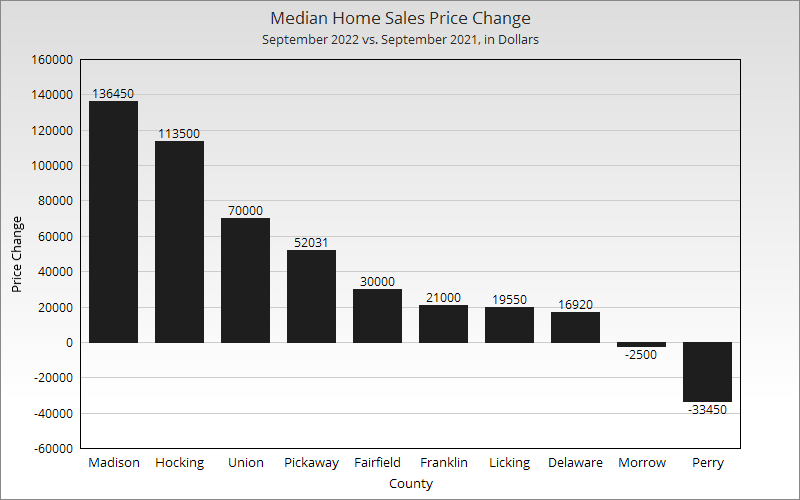
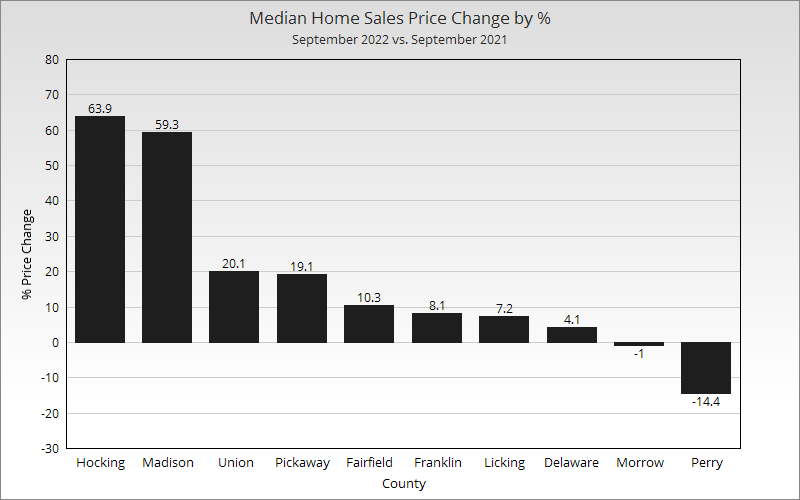
The least populated counties saw some of the largest swings either positively or negatively, which is typically the case given that prices can be determined by a much smaller number of home sales.
Overall Market Median Sales Price in September 2022: $316,812 Based on the 10 Columbus Metro Area counties, the metro price saw about a $10,000 increase over August 2022 and a more than $42,000 increase versus September 2021. Overall Market Median Sales Price % Change in September 2022 versus September 2021: +15.4%
Now let’s take a look at individual neighborhoods and places within the metro area.
New Albany and some of the other expected suburbs continued to top the charts, but with prices not quite as high as over the summer.
Just 4 local markets out of more than 50 remained below the $200K market in September. Columbus itself was in it usual spot closer to the *relatively* more affordable bottom.
Total Metro New Listings in September 2022: 2,725 Total Metro New Listings Change from September 2021 to September 2022: -500 Year-over-year, new listings were down significantly across the metro area, but especially in Franklin County.
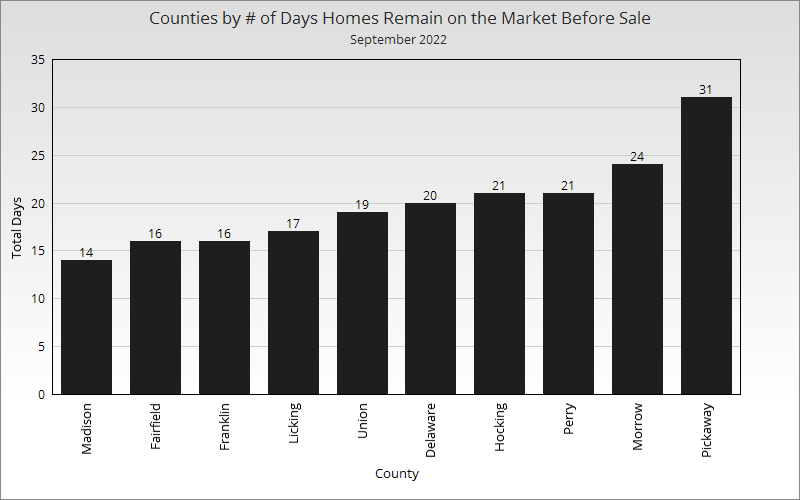
Average # of Days Homes Remain on the Market Before Sale for the Metro Overall in September 2022: 19.9 # of Days Homes Remain on the Market Before Sale for the Metro September 2021 vs. September 2022: -0.3 Homes across the market sold slightly faster than a year ago, but largely due to significant drops in a few rural counties. Most counties saw small increases.
The vast majority of local markets saw substantial increases in the number of days before sale, which is pretty much the only measurement indicating the seller’s market may finally be showing some signs of weakness.
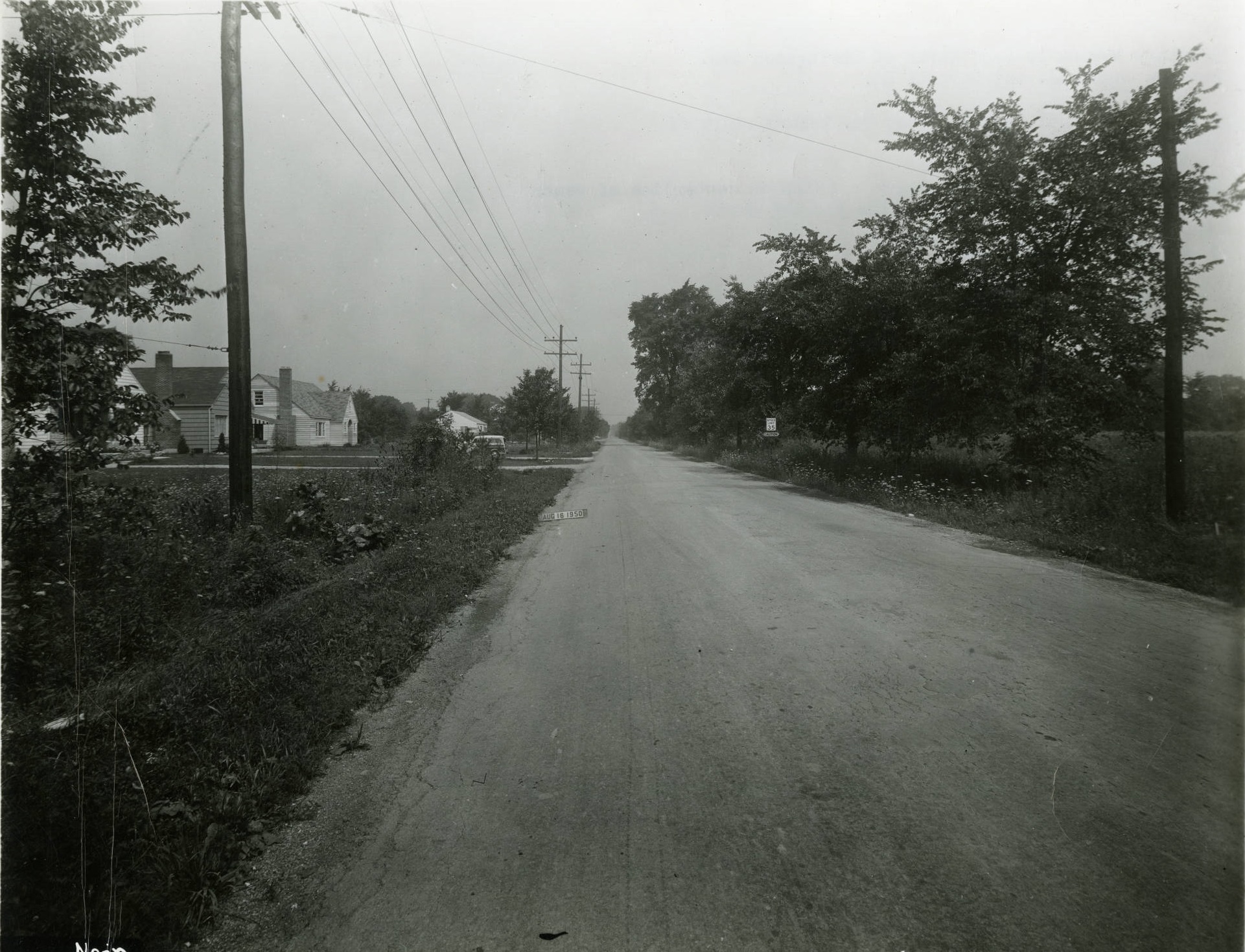
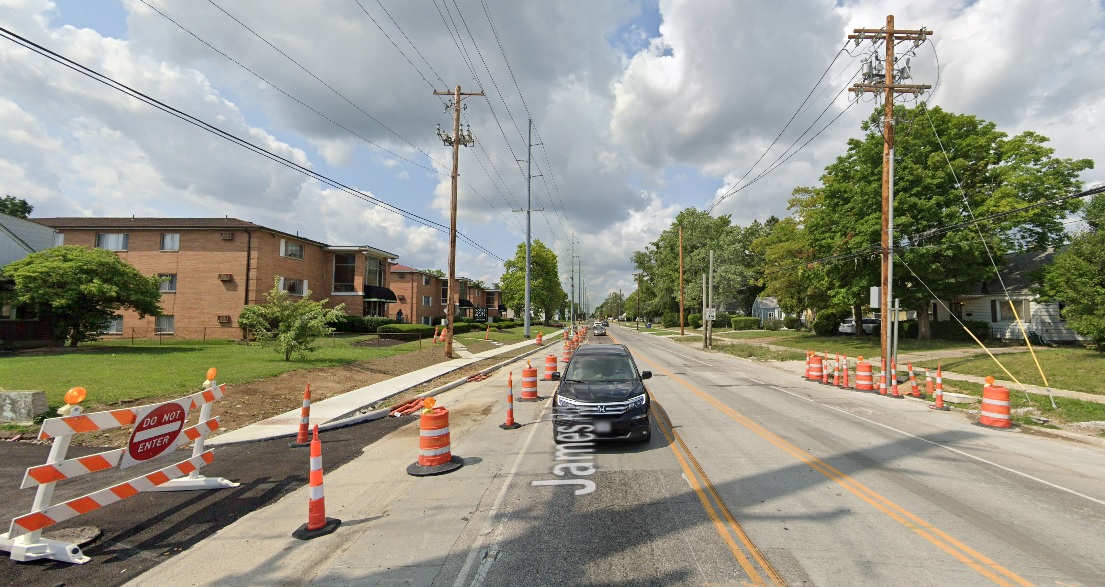
In Random Columbus Photos 10, we look toward the East Side.
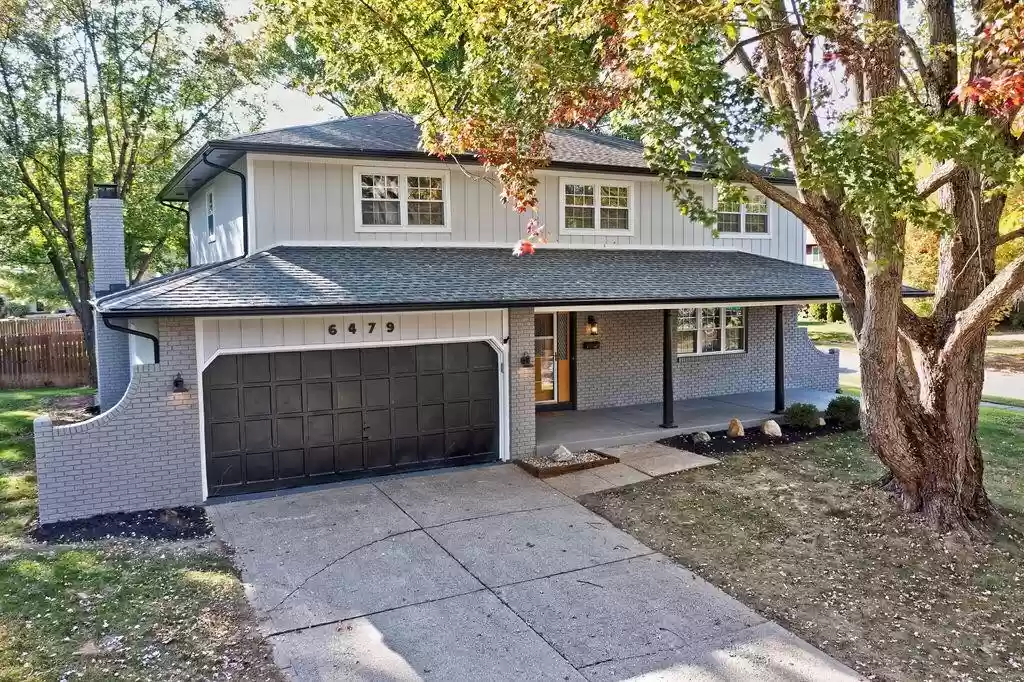
Photo Location: James Road, looking north from Livingston Avenue. Photo Date: August 16, 1950 Photo History: This photo of a very primitive James Road was taken by the City in preparation for installing a sewer system in the area. There were very few homes and other buildings on James at the time, and the area was still mostly farmland. The homes on the left side of the photo had only just been completed, and were the first of large-scale, small-home subdivisions that now dominate this part of the city and neighboring Whitehall. By 1953, the entire area seen in the photo would be fully developed and unrecognizable. The same view today:
Thousands of historic before and after photos from across the city can be found on the Historic Building Database.
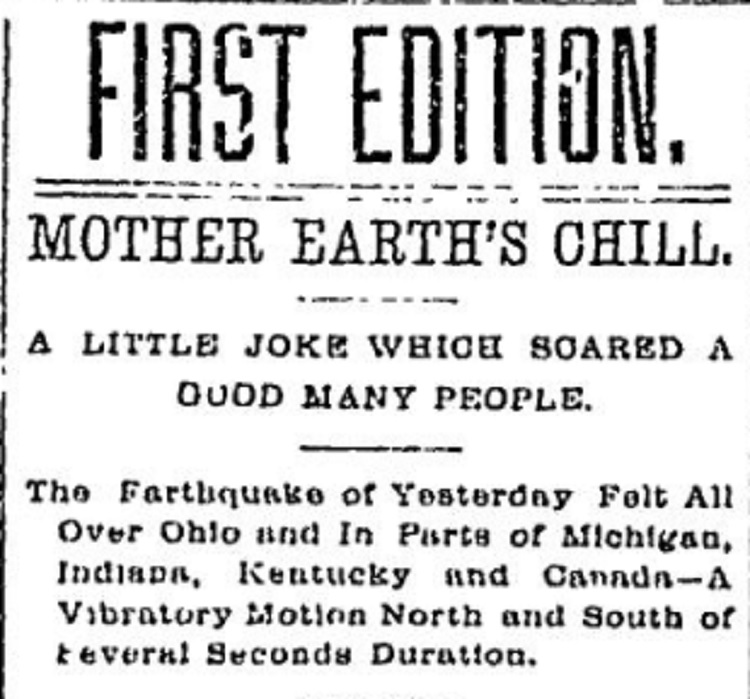
Columbus Dispatch headline from September 20, 1884.
This Strange Columbus 1884 Earthquake edition reviews a fairly rare event in the state-a damaging seismic event. While most earthquakes felt within the state have epicenters outside of Ohio- either west in the Missouri/Illinois area or north in Ontario or Quebec- the September, 1884 quake was one of the few damaging ones that had its origins within state borders. At around 2:45PM on the 19th, an estimated magnitude 4.8 tremor struck northwest Ohio. While 4.8 is not particularly strong as far as earthquakes go, Ohio’s geology allows even relatively weak quakes to shake the land with much greater force than in other parts of the country. The earthquake was felt across all of Ohio and several surrounding states. The Crestline Advocate, from small Crestline, Ohio to the west of Mansfield, provided accounts from all over the region a week after the event. Here are just a few.
From Crestline itself: A genuine earthquake visited this locality last Friday afternoon at 2:45, in which houses were made to tremble and furniture rattle. Several persons ran from dwellings and business houses, expecting everything to “fall in.” The swaying motion was very distinct, running east and west. The sensation was something new in this section. The experience here was the same as that telegraphed from numerous portions of the State. Our neighboring towns, also, reported a lively shaking up. James Booth says that, at the time of the occurrence, he was thrown from a lounge on which he was lying, then bounded up from the floor, whirled around, and went scooting out of his front door up into the air, and when he collected his scattered senses he found himself on the roof of his domicile, standing on his head. He didn’t say this in just so many words, but this was inferred from the experience he related.
COLUMBUS, O., September 20. – At 2:40p.m. yesterday, a shock of earthquake was felt in different parts of this city, the vibrations lasting over thirty seconds. At the Capitol (sic) University the chandeliers swayed to and fro and students left their rooms amid great excitement.
CLEVELAND, Ohio., September 20. – Yesterday afternoon an earthquake was felt in many parts of this city. Tables and furniture were moved in the houses, pictures on the walls were shaken, causing quite an excitement among the inmates. The motion was from west to east and was confined to three distinct rockings finally subsiding and dying away in a sort of a tremor.
CINCINNATI, O., September 20. – At 2:30 yesterday afternoon the shock of an earthquake was felt in this city and in Covington, Ky. There was a slight trembling of buildings and rocking motion felt, which was sufficiently marked to cause astonishment and comment. The motion was from north to south and was a gentle undulation, without any tremor or upheaval. The shocks lasted about ten seconds, there being a perceptible pause between the first and second. A gentleman, who was writing at home on Cutter Street, said he felt his table vibrate. It stopped and then moved again less violently than before. Reports from Mt. Vernon and Delaware, Ohio, say the shock was felt at their places.
A 1998 report on the event further described some of the damage and range of the earthquake. The earthquake caused damage at Lima, where the shock was “of considerable violence and caused much excitement.” Plaster was shaken from ceilings east and southeast of Columbus at Zanesville, Ohio, and Parkersburg, W. Va. Windows and dishes were broken at Defiance and Norwalk, Ohio; to the west at Fort Wayne and Muncie, Ind.; to the north at Lansing, Mich.; and to the east at Wheeling, W. Va. Furniture was displaced and 14 buildings were heavily shaken at Urbana, Ohio, in Champaign County, and at many other towns in the regions. Also felt in Iowa, Kentucky, Pennsylvania, and western Ontario, Canada, and at Washington, D.C. by workmen on top of the unfinished Washington Monument.
The exact epicenter was never determined, but research long after put the likely origin in Allen County.
The United Stated Geological Survey, or USGS, puts out an earthquake map with all current and past earthquakes from around the world. Users can select regions and search for earthquakes going back a century or more, or search based on magnitudes.