The 2010 President’s Day Snowstorm


The 2010 President’s Day Snowstorm was the third and largest snowstorm to strike Columbus and Ohio during February, 2010. Models began showing the potential for another snow event in the Ohio Valley several days before. Initially, the track was well south, with only counties along the Ohio River being impacted, as this excerpt from the February 12, 2010 Area Forecast Discussion from Wilmington National Weather Service mentions:
MODEL SOLUTIONS CONTINUE TO DIFFER ON SYSTEM COMING IN SUNDAY NIGHT INTO THE BEGINNING OF THE WORK WEEK. THE GEM IS STILL THE FURTHEST SOUTH WITH THE UPCOMING SYSTEM. THE ECMWF HAS TRENDED NORTH WITH THE LATEST RUN AND IS NOW MORE IN LINE WITH THE GFS. THE ECMWF NOW ACTUALLY HAS THE SURFACE LOW SLIGHTLY FURTHER NORTH THAN THE GFS.
WENT WITH A GFS AND ECMWF BLEND. IT WILL BE COLD ENOUGH THAT PRECIPITATION WILL ALL BE IN THE FORM OF SNOW. MONDAY WILL SEE THE GREATEST CHANCE FOR SNOW WITH LOW TRACKING ACROSS KENTUCKY. ACCUMULATING SNOWFALL WILL BE POSSIBLE…ESPECIALLY ALONG AND SOUTH OF THE OHIO RIVER.

As the event grew closer, however, model solutions inched northward. On the afternoon of Saturday, February 13th, Wilmington issued the first Winter Storm Watch for parts of Ohio, but the focus continued to be south of Columbus.
URGENT – WINTER WEATHER MESSAGE
NATIONAL WEATHER SERVICE WILMINGTON OH
222 PM EST SAT FEB 13 2010
…ANOTHER WINTER STORM TO AFFECT THE OHIO VALLEY…
.LOW PRESSURE WILL DEVELOP OVER THE LOWER OHIO VALLEY ON SUNDAY…AND WILL TRACK INTO THE CENTRAL APPALACHIANS BY MONDAY EVENING. AS THE LOW MOVES SOUTH OF THE OHIO RIVER SUNDAY NIGHT AND MONDAY…SNOW WILL OVERSPREAD PARTS OF INDIANA…KENTUCKY AND OHIO. THIS SYSTEM HAS THE POTENTIAL TO PRODUCE SEVERAL INCHES OF SNOW ACROSS PARTS OF THE OHIO VALLEY…ESPECIALLY ACROSS AREAS SOUTH OF THE I-70 CORRIDOR.
FRANKLIN IN-RIPLEY-DEARBORN-OHIO-SWITZERLAND-CARROLL-GALLATIN-BOONE-KENTON-CAMPBELL-OWEN-GRANT-PENDLETON-BRACKEN-ROBERTSON-MASON-LEWIS-FAYETTE OH-PICKAWAY-FAIRFIELD-BUTLER-WARREN-CLINTON-ROSS-HOCKING-HAMILTON-CLERMONT-BROWN-HIGHLAND-ADAMS-PIKE-SCIOTO-
INCLUDING THE CITIES OF…BROOKVILLE…VERSAILLES…LAWRENCEBURG…RISING SUN…VEVAY…CARROLLTON…WARSAW…
BURLINGTON…INDEPENDENCE…ALEXANDRIA…OWENTON…WILLIAMSTOWN…FALMOUTH…BROOKSVILLE…MOUNT OLIVET…MAYSVILLE…VANCEBURG…WASHINGTON COURT HOUSE…CIRCLEVILLE…LANCASTER…HAMILTON…
LEBANON…WILMINGTON…CHILLICOTHE…LOGAN…CINCINNATI…MILFORD…GEORGETOWN…HILLSBORO…WEST UNION…PIKETON…PORTSMOUTH
…WINTER STORM WATCH IN EFFECT FROM SUNDAY EVENING THROUGH LATE MONDAY NIGHT…
THE NATIONAL WEATHER SERVICE IN WILMINGTON HAS ISSUED A WINTER STORM WATCH…WHICH IS IN EFFECT FROM SUNDAY EVENING THROUGH LATE MONDAY NIGHT.
LIGHT SNOW IS EXPECTED TO DEVELOP SUNDAY EVENING…AS A STORM SYSTEM MOVES INTO THE OHIO VALLEY. SNOW WILL INCREASE IN INTENSITY THROUGH EARLY MONDAY…WITH OCCASIONAL SNOW CONTINUING INTO MONDAY EVENING. BY THE TIME SNOW ENDS EARLY TUESDAY…THE POTENTIAL EXISTS FOR TOTAL SNOWFALL ACCUMULATIONS OF 4 TO 6 INCHES…WITH LOCALLY HIGHER AMOUNTS.
THESE FORECAST SNOW AMOUNTS ARE HIGHLY DEPENDENT ON THE EVENTUAL TRACK OF THE UPCOMING STORM SYSTEM. IF THE SYSTEM MOVES FURTHER NORTH OR SOUTH OF THE CURRENT FORECAST TRACK…THEN SNOWFALL AMOUNTS MAY BE LESS.

While Columbus was not included in the initial Watch, its zone forecast did call for accumulating snow by the 13th.
OHZ054>056-140930-
MADISON-FRANKLIN OH-LICKING-
INCLUDING THE CITIES OF…LONDON…COLUMBUS…NEWARK
332 PM EST SAT FEB 13 2010
.TONIGHT…MOSTLY CLOUDY WITH SCATTERED FLURRIES. LOWS 15 TO 20. WEST WINDS 5 TO 10 MPH.
.SUNDAY…PARTLY SUNNY. SCATTERED FLURRIES IN THE MORNING. HIGHS IN THE UPPER 20S. SOUTHWEST WINDS 5 TO 10 MPH.
.SUNDAY NIGHT…MOSTLY CLOUDY. A CHANCE OF SNOW AFTER MIDNIGHT. LOWS 10 TO 15. WEST WINDS 5 TO 10 MPH…BECOMING NORTHWEST AFTER MIDNIGHT. CHANCE OF SNOW 40 PERCENT.
.PRESIDENTS DAY…SNOW. SNOW ACCUMULATION 2 TO 4 INCHES. HIGHS IN THE MID 20S. NORTHEAST WINDS 5 TO 10 MPH…BECOMING NORTHWEST IN THE AFTERNOON. CHANCE OF SNOW 80 PERCENT.
.MONDAY NIGHT…CLOUDY. SNOW LIKELY IN THE EVENING…THEN A CHANCE OF SNOW SHOWERS AFTER MIDNIGHT. ADDITIONAL LIGHT SNOW ACCUMULATION POSSIBLE. LOWS 15 TO 20. WEST WINDS 10 TO 15 MPH WITH GUSTS UP TO 25 MPH. CHANCE OF SNOW 70 PERCENT.
.TUESDAY…CLOUDY WITH A 50 PERCENT CHANCE OF SNOW SHOWERS. HIGHS IN THE MID 20S.
.TUESDAY NIGHT…CLOUDY WITH A 30 PERCENT CHANCE OF SNOW SHOWERS. LOWS AROUND 20.

By the morning of the Valentine’s Day, models had moved far enough north with the low track that the I-70 corridor was in line for much higher totals. At 2:43AM that day, the Winter Storm Watch was expanded into Central Ohio, with predictions of 5″-8″. By late morning, the Watch was upgraded to a Warning, and totals were upped slightly to 6″-9″.
OHZ054>056-150930-
MADISON-FRANKLIN OH-LICKING-
INCLUDING THE CITIES OF…LONDON…COLUMBUS…NEWARK
409 PM EST SUN FEB 14 2010
…WINTER STORM WARNING IN EFFECT FROM 4 AM MONDAY TO 6 AM EST TUESDAY…
.TONIGHT…PARTLY CLOUDY THIS EVENING…THEN MOSTLY CLOUDY WITH A SLIGHT CHANCE OF SNOW AFTER MIDNIGHT. MOSTLY CLOUDY WITH A CHANCE OF SNOW LATE. LOWS 15 TO 20. SOUTHWEST WINDS 5 TO 10 MPH… BECOMING SOUTHEAST AFTER MIDNIGHT. CHANCE OF SNOW 40 PERCENT.
.PRESIDENTS DAY…SNOW. SNOW MAY BE HEAVY AT TIMES IN THE AFTERNOON. SNOW ACCUMULATION OF 4 TO 6 INCHES. HIGHS IN THE UPPER 20S. NORTHEAST WINDS 5 TO 10 MPH…BECOMING NORTH IN THE AFTERNOON. CHANCE OF SNOW 100 PERCENT.
.MONDAY NIGHT…SNOW…MAINLY IN THE EVENING. TOTAL SNOW ACCUMULATION OF 6 TO 9 INCHES. LOWS AROUND 20. WEST WINDS 10 TO 15 MPH WITH GUSTS UP TO 25 MPH. CHANCE OF SNOW 90 PERCENT.
.TUESDAY…CLOUDY. SNOW SHOWERS LIKELY…MAINLY IN THE AFTERNOON. ADDITIONAL LIGHT SNOW ACCUMULATION POSSIBLE. HIGHS IN THE MID 20S. WEST WINDS 15 TO 20 MPH WITH GUSTS UP TO 30 MPH. CHANCE OF SNOW 60 PERCENT.
.TUESDAY NIGHT…CLOUDY WITH A 40 PERCENT CHANCE OF SNOW SHOWERS.LOWS IN THE LOWER 20S. WEST WINDS 10 TO 15 MPH WITH GUSTS UP TO 25 MPH.

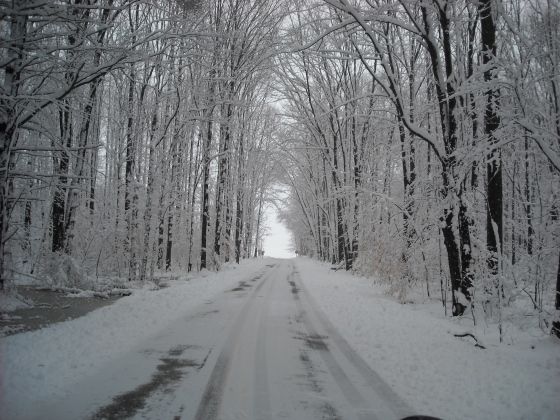
Snow began in the area by 8:30AM on the 15th and was heavy through mid-afternoon. The bulk of the snow moved out of the area by Midnight, with only occasional wraparound snow showers continuing into the 16th.

The storm generally exceeded forecast snow totals across the region. Columbus received a record 9.7″ for the 15th, with a total storm total of 10.4″, making it one of the very rare storms to produce double-digit snowfall totals for the city. Since 1950, Columbus has had just 6 such events- the Great Thanksgiving Blizzard of 1950, April 3-4, 1987, February 14-17, 2003, March, 2008, President’s Day 2010 and February 4-5, 2014. Double-digit snowfalls have historically occurred roughly once every 12 years. It has been 9 years since the last one, but there have been decades between some of them.

Snowfall totals across Franklin County were 7″-11″, with the highest totals in the southwest. Most of the I-70 corridor south had at least 6″. Snow depths in Columbus reached record highs, with the airport having a post-storm depth of 14″, the highest February depth since at least 1939.

This was the peak event for the month, but not the end of February, 2010’s historically snowy run. A 4th, but far smaller snow event would occur towards the end of the month, bringing a general 3″-5″ across most areas. This would contribute to making the month the all-time snowiest on record for many areas. Columbus’ 30.1″ of snow for the month was the highest on record, and is the 2nd snowiest of any month to ever occur, falling just behind January, 1978’s 34.4″. Cincinnati, Dayton and other cities would also record either their top snowiest or 2nd snowiest February as well. Additionally, Winter 2009-2010 went into the record books at the 5th snowiest of all time. A truly memorable run!

If you are interested in seeing stats from other winters, records of all types can be found on the Winter Season Records page.
The Very Cold Christmas of 1872


The very cold Christmas of 1872

The very cold Christmas of 1872 began on December 19-20, 1872, when a significant storm system moved northwestward through the Great Lakes. Chicago reported numerous train delays coming from the west, and streets were blocked with drifts in some places. Further east, the storm brought heavy rains to places like Pittsburgh, which saw its river shipping wharfs flooded. Similar to the events of February 1899 and January 1994, this storm seems to have been the catalyst for a major arctic outbreak.

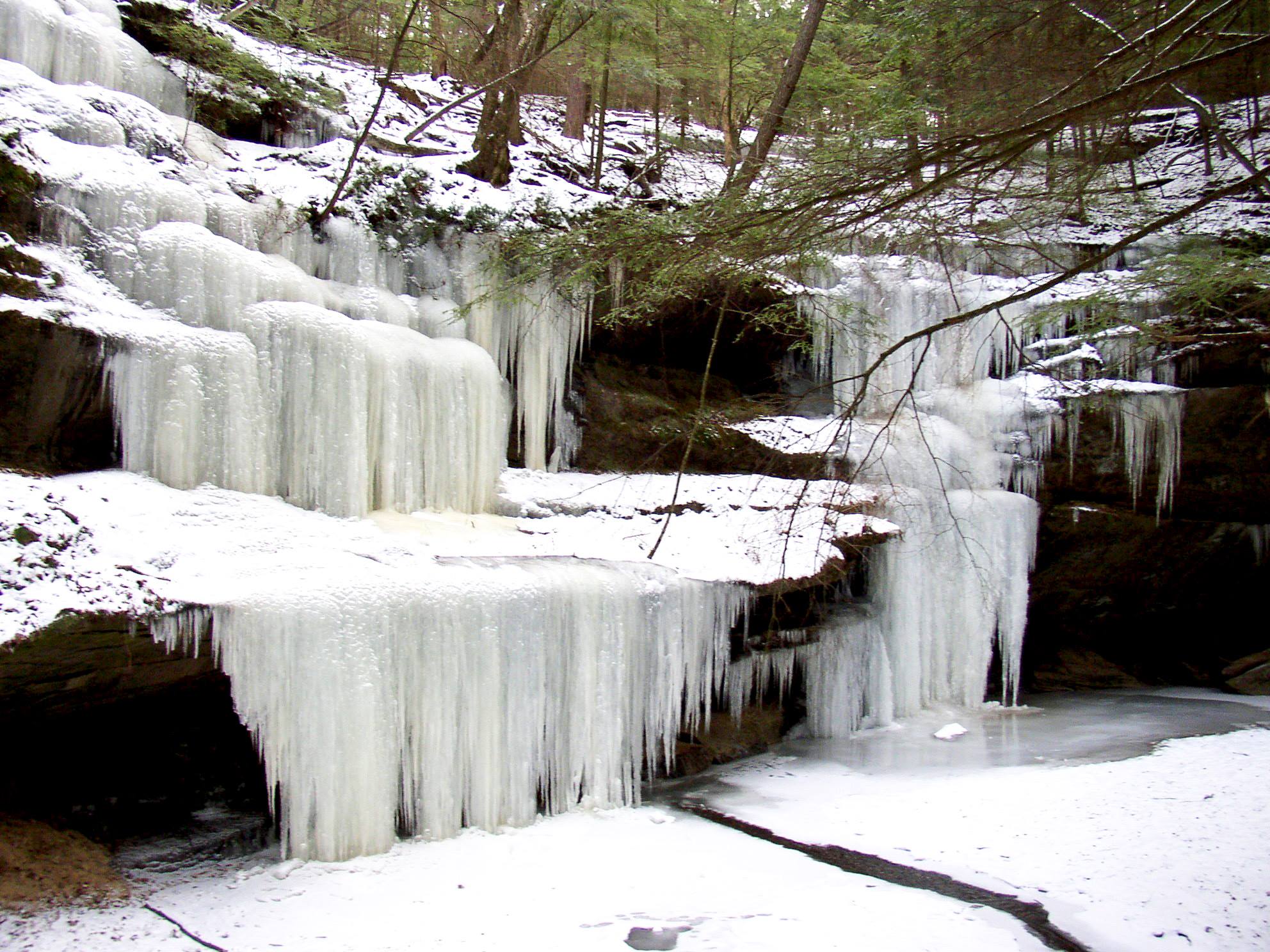
Temperatures began plummeting in the Upper Midwest. By December 21st, reports from Minnesota put temperatures at well below -20, but temperatures were already well below freezing in Ohio. On the 22nd, ice on the Ohio River broke several barges loose from their moorings in Cincinnati and sank them.

Official records of daily weather did not begin in Columbus until the summer of 1878. However, the cold weather did not go unreported. The entire week leading into Christmas was cold, but the arctic air seems to have reached its height on Christmas Eve and Day. Temperatures fell well below zero, with thermometers hitting -10 to -20 across Central Ohio on Christmas Eve.
Temperatures continued below zero on Christmas Day. The Columbus Dispatch, barely a year into its first year of publication, wrote about the cold spell on December 26th.

“A cold spell, a tidal wave, so to speak, has been sweeping all around and over us for the last 48 hours. It was a wave not fully reported by ‘Probabilities’ at Washington, but came through the air, without telegraphic warning, from some frigid region adjacent to the North Pole. This morning we hear of various figures below zero. It is well to shut up the doors, double-bank the windows, pile on the coal, wrap up in furs, and make ready for an Esquimaux winter.
This morning, the wave brought “beautiful snow”, but it did not tarry long enough to settle down to a steady habit and snow us up. The snow breeze passed on. We are pleased that it delayed, no longer. Three such days were enough, even though one of them was Christmas. We will be content if we never see its like again this winter.”

Temperatures were cold across the Great Lakes during the period. In Cleveland, where Lake Erie normally modifies the temperature, it fell to -12 on the 22nd and was -2 on Christmas morning.

After the Christmas Week cold spell, the rest of the winter had several more bouts of severe cold. In some places in the Midwest and Great Lakes, it was one of the coldest winters ever. In Minneapolis, the average temperature over the 3 winter months was just 7.9 degrees, putting it as one of the top 5 coldest winters ever even today.


Winter 2020-2021 Review


Winter 2020-2021 Review Columbus, Ohio

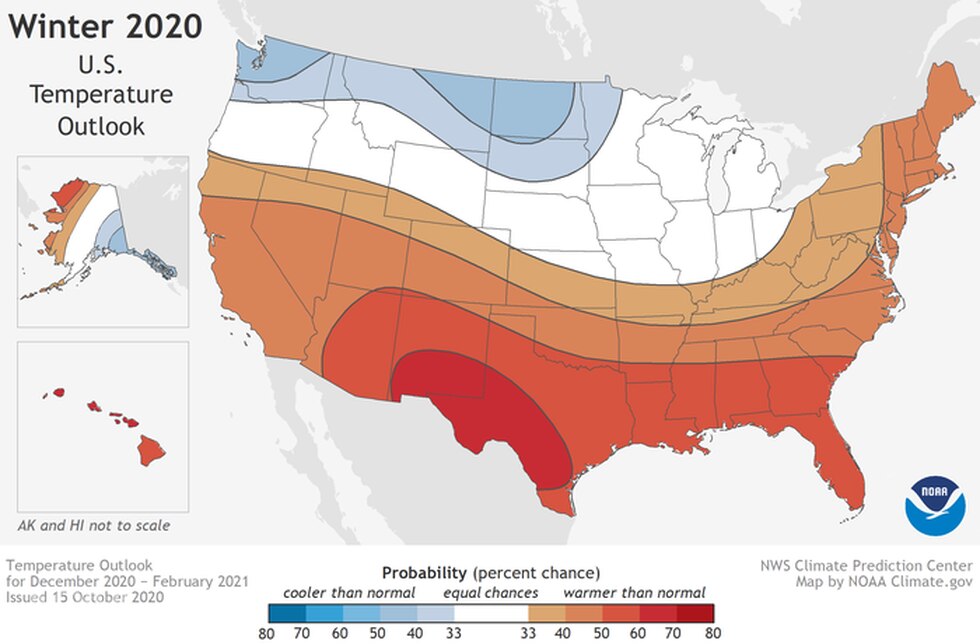
The NOAA temperature outlook for winter 2020-2021.

The Winter 2020-2021 Review is the latest edition in the series. Overall, December and February brought some of the worst winter weather Columbus had seen in several years. Meanwhile, January and March were unusually quiet. Temperatures through January were fairly to slightly above average, while February was well below normal. March and April provided little winter weather, and March had no snowfall whatsoever.

Let’s break the winter down.

December-February Only
Average High: 37.8 42nd Coldest
Average Low: 25.1 34th Warmest
Mean: 31.4 42nd Warmest
Precipitation: 6.72″ 38th Driest
Snowfall: 24.7″ 31st Snowiest
Average Daily Snow Depth: 1.0″ 15th Highest
Largest Snowstorm: 5″ on 1/30-2/1/2021. This was a long-duration storm that moved only very slowly through the region.
# of 32 or Below Highs: 28 22nd Most
# of 32 or Below Lows: 79 10th Most
# of Measurable Precipitation Days: 38 14th Fewest
# of Measurable Snowfall Days: 23 14th Most

Overall, winter 2020-21 was somewhat average- not too cold, not too warm, not too wet, not too dry, not too snowy, but not snowless.

Entire Cold Season: October-April
Average High: 51.2 15th Warmest
Average Low: 33.6 22nd Warmest
Mean: 42.4 15th Warmest
Precipitation: 20.39″ 56th Wettest
Snowfall: 27.8″ 43rd Snowiest
Average Snow Depth: 0.4″ 5th Lowest
Largest Snowstorm: 5″ on 1/30-2/1/2021
# of 32 or Below Highs: 28 18th Fewest
# of 32 or Below Lows: 107 27th Most
# of Measurable Precipitation Days: 76 11th Fewest
# of Measurable Snowfall Days: 25 16th Fewest

The overall cold season was generally warm, but still managed to provide near normal to slight above normal snowfall for the region.

Average High By Month
October 2020: 63.3 31st Coldest
November 2020: 57.6 8th Warmest
December 2020: 41.5 38th Warmest
January 2021: 37.5 49th Warmest
February 2021: 33.9 20th Coldest
March 2021: 59.0 7th Warmest
April 2021: 64.4 29th Warmest

Average Low By Month
October 2020: 45.6 35th Warmest
November 2020: 37.3 18th Warmest
December 2020: 27.7 36th Warmest
January 2021: 26.6 22nd Warmest
February 2021: 20.4 35th Coldest
March 2021: 34.7 27th Warmest
April 2021: 42.0 35th Warmest

Mean By Month
October 2020: 54.5 38th Coldest
November 2020: 47.4 10th Warmest
December 2020: 34.6 36th Warmest
January 2021: 32.1 39th Warmest
February 2021: 27.2 30th Coldest
March 2021: 46.9 12th Warmest
April 2021: 53.2 28th Warmest

Precipitation By Month
October 2020: 4.19″ 16th Wettest
November 2020: 3.35″ 45th Wettest
December 2020: 2.24″ 44th Driest
January 2021: 2.25″ 50th Driest
February 2021: 2.23″ 64th Wettest
March 2021: 2.85″ 54th Driest
April 2021: 3.28″ 60th Wettest

Snowfall By Month
October 2020: 0.0″ Tied for Least Snowy
November 2020: 1.9″ 21st Least Snowy
December 2020: 8.5″ 22nd Snowy
January 2021: 4.1″ 29th Least Snowy
February 2021: 12.1″ 15th Snowiest
March 2021: 0.0″ Tied for Least Snowy
April 2021: 1.2″ 14th Least Snowy

March’s lack of snowfall tied the record for the only time in history the month did not even have a trace of snowfall.

Average Snow Depth By Month
October 2020: 0.0″
November 2020: 0.0″
December 2020: 0.7″
January 2021: 0.1″
February 2021: 2.4″
March 2021: 0.0″
April 2021: 0.0″


Maximum High By Month
October 2020: 80 on the 22nd
November 2020: 78 on the 8th and 10th
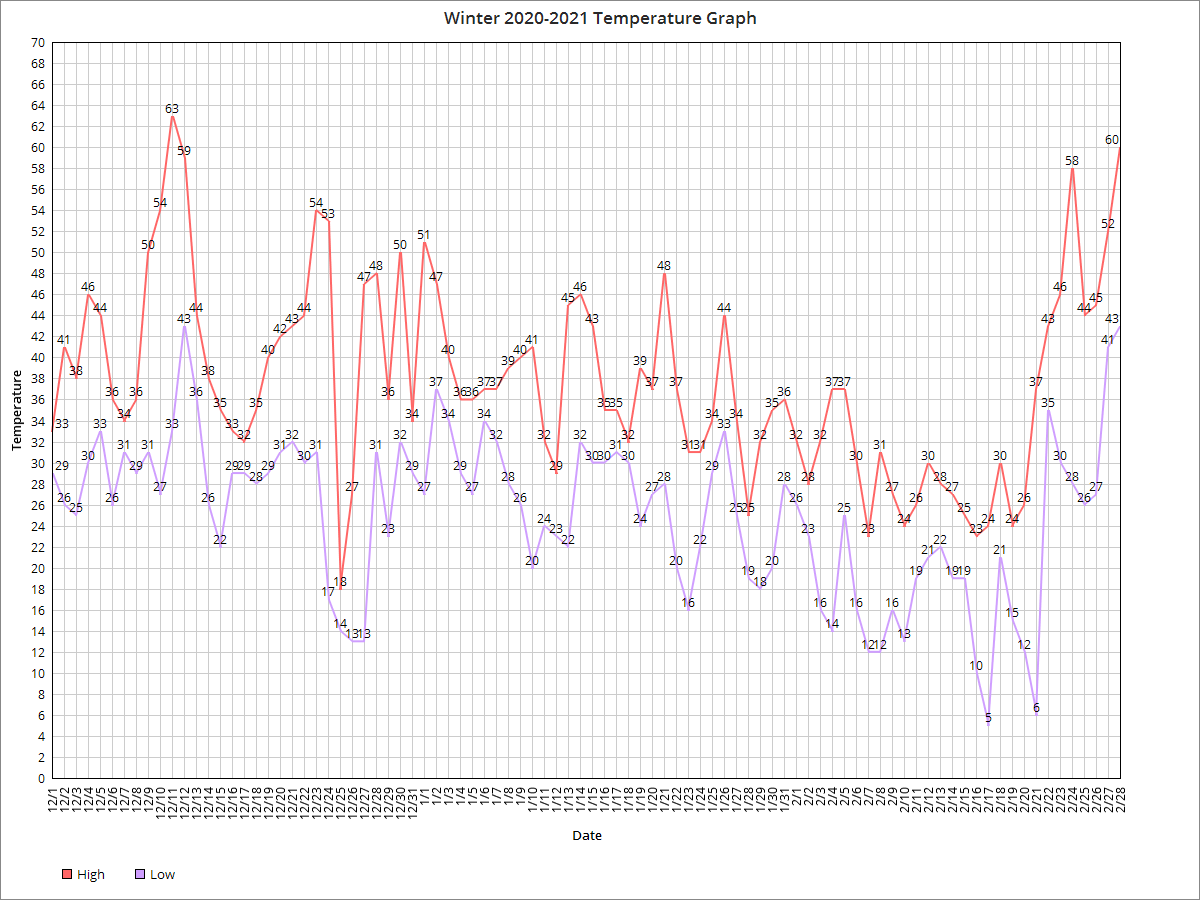
December 2020: 63 on the 11th
January 2021: 51 on the 1st
February 2021: 60 on the 28th
March 2021: 75 on March 24th
April 2021: 83 on April 27th

Maximum High Records
-78 on November 8th was a record high for the date, beating the old record of 74 set in 1945.
-76 on November 9th tied the daily record high with 1975.
-78 on November 10th was a record high for the date, beating the old record of 72 set in 1949.

Minimum High By Month
October 2020: 48 on the 30th
November 2020: 43 on the 18th
December 2020: 18 on the 25th
January 2021: 25 on the 28th
February 2021: 23 on the 7th and 16th
March 2021: 40 on the 15th
April 2021: 37 o the 1st

Maximum Low By Month
October 2020: 62 on the 11th
November 2020: 55 on the 10th
December 2020: 43 on the 12th
January 2021: 37 on the 2nd
February 2021: 43 on the 28th
March 2021: 56 on the 11th
April 2021: 65 on the 28th

Maximum Low Records
-The 65 on April 28th tied the record set in 1914.

Minimum Low By Month
October 2020: 30 on the 31st
November 2020: 25 on the 18th
December 2020: 13 on the 26th and 27th
January 2021: 16 on the 23rd
February 2021: 5 on the 17th
March 2021: 19 on the 5th
April 2021: 21 on the 2nd

Highest Daily Precipitation By Month
October 2020: 1.25″ on the 29th
November 2020: 0.89″ on the 25th
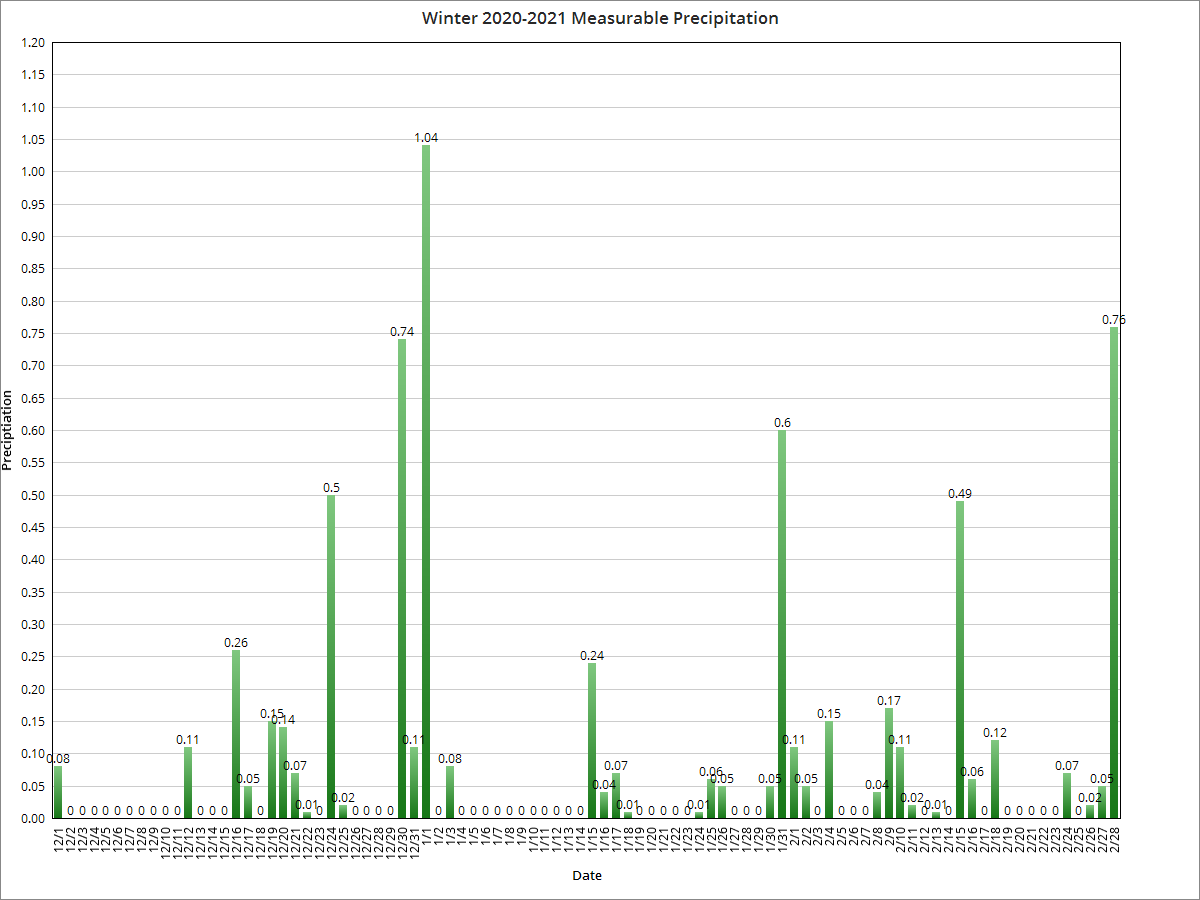
December 2020: 0.74″ on the 30th
January 2021: 1.04″ on the 1st
February 2021: 0.76″ on the 28th
March 2021: 1.12″ on the 18th
April 2021: 1.88″ on the 29th

Precipitation Records
-0.76″ on February 28th was the record for the date, beating the old record of 0.56″ set in 1954.
-The 1.88″ on April 29th was a record for the date, beating the old record of 1.82″ set in 1996.

Highest Daily Snowfall By Month
October 2020: 0.0″
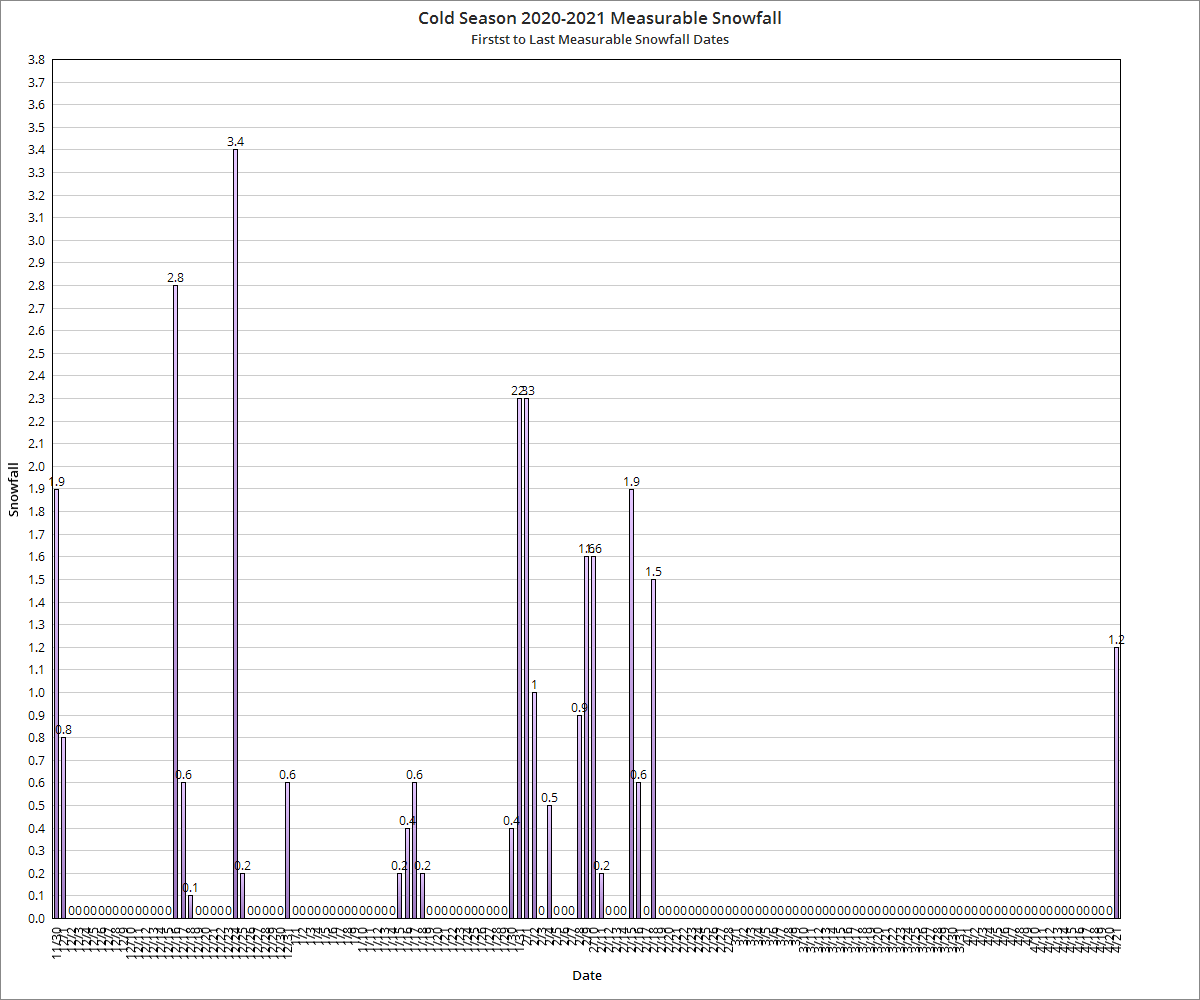
November 2020: 1.9″ on the 30th
December 2020: 3.4″ on the 24th
January 2021: 2.3″ on the 31st
February 2021: 2.3″ on the 1st
March 2021: 0.0″
April 2021: 1.2″ on the 21st

Snowfall Records
-2.8″ on December 16th was a record for the date, beating the old record of 1.8″ set in 1953.
-3.4″ on December 24th was a record for the date, beating the old record of 2.7″ set in 1980.

Deepest Snow Depth By Month
October 2020: 0″
November 2020: 0″
December2020: 4″ on the 26th
January 2021: 3″ on the 31st
February 2021: 5″ on the 18th-21st
March 2021: 0.0″
April 2021: 1″ on the 21st

Winter 2020-2021 Daily Graphs


For more winter records and local weather information, visit the following links.
Winter Season Records
Wilmington National Weather Service

Other Recent Winter Season Reviews
Winter 2019-2020
Winter 2018-2019
Winter 2017-2018


Late Season Snowfalls Through History


Much to the potential annoyance of many, parts of Ohio- including Columbus are predicted to see a late-season snowfall Tuesday night into Wednesday morning. As late as it may seem, Columbus has seen even later season snowfalls since 1878. Though rare, these events do happen, and have sometimes been significant.

late season snowfalls Columbus, Ohio

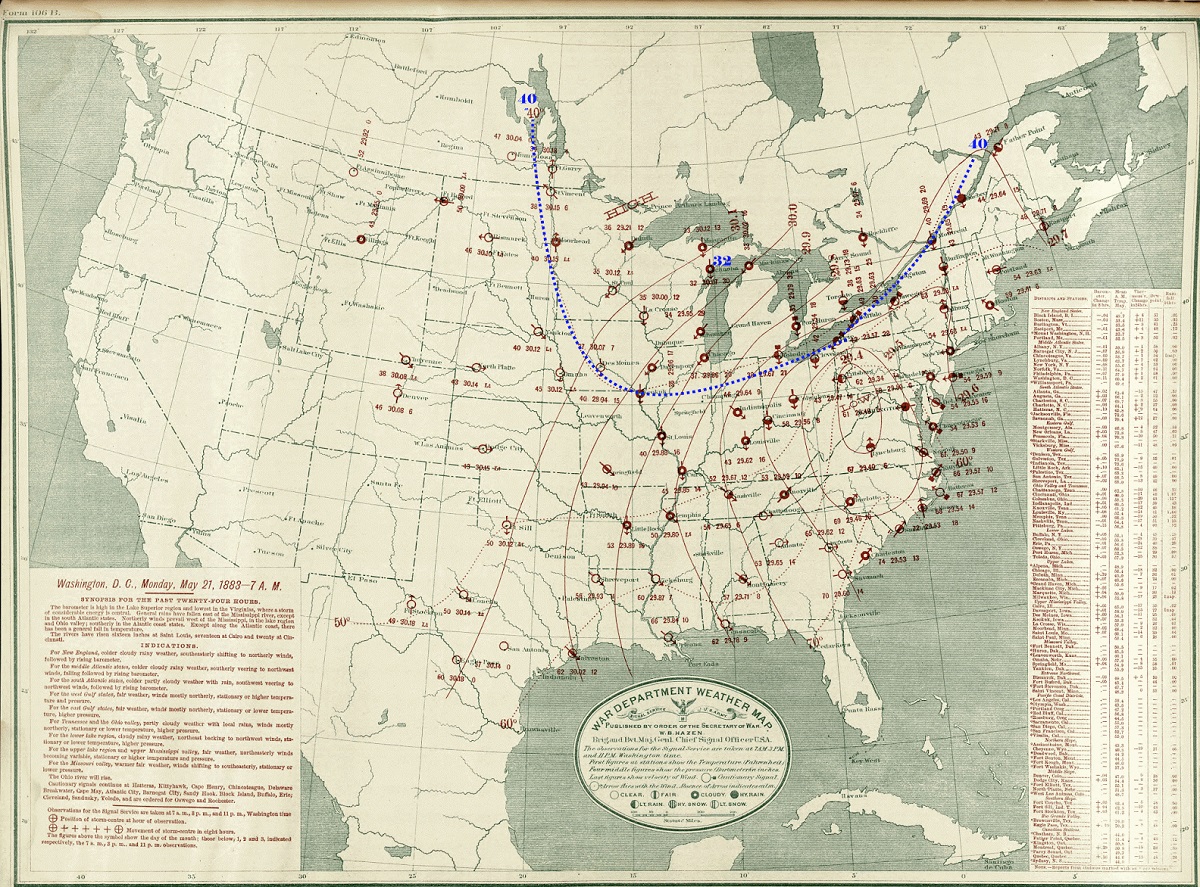
The US weather map on the morning of May 21, 1883.

The absolute latest measurable snow occurred on May 21st, 1883, when 0.4″ fell. The amount was not impactful, but the date certainly was. People are normally thinking about summer by then, but instead got a nasty taste of winter. The present-day I-71 corridor in the state generally had had an inch or less- Cincinnati had upwards of 2″, with 3″ near Hamilton. However, areas just to the north and west were hammered with the heaviest May snow ever recorded.

An excerpt from the book “Thunder in the Heartland” by Thomas W. Schmidlin:
“A drizzling rain on Monday morning, 21 May, turned to snow at 9AM, and the air was filled with large, damp flakes all day. The Sidney Journal reported that ‘though it thawed, it lay six inches deep on Tuesday morning.’ Considering that much of the snow melted as it fell, a total of fifteen to twenty inches was estimated for Sidney. Snow depts of ten inches were measured on the north side of buildings at Houston in Shelby County.”

The Columbus Dispatch reported that snow fell in every major city from Lancaster north and west. Crops and trees were damaged by the heavy, wet snow across Western Ohio during the event. Temperatures at most locations were at or above freezing during the snow, so it did not stick around long after. Just 3 days later, it hit 80 degrees in Columbus.

Dates of Measurable Snowfalls After April 15th
1. May 21, 1883: 0.4″
2. May 9, 1923: 0.3″
3. May 7, 1989: 0.8″
4. April 30, 1908: 2.4″
5. April 24, 2005: 3.0″
6. April 22, 1893: 0.8″
6. April 22, 1901: 0.1″
7. April 21, 1934: 0.4″
7. April 21, 1936: 0.2″
7. April 21, 1953: 0.2″
8. April 20, 1910: 2.4″
8. April 20, 1962: 0.1″
9. April 19, 1887: 0.1″
9. April 19, 1907: 0.4″
9. April 19, 1969: 0.5″
9. April 19, 2019: 0.3″
10. April 18, 1983: 0.1″
10. April 18, 1984: 0.3″
11. April 17, 1961: 1.0″
11. April 17, 2001: 0.6″
12. April 16, 1935: 0.4″
12. April 16, 1956: 0.3″
12. April 16, 1996: 0.1″

Trace amounts have occurred many additional times after April 15th, including into early May. Measurable snow, however, has only occurred 23 times after April 15th since 1878. So snow after that date has occurred roughly once out of every 6.2 years. That rate is not going to be matched this time, as measurable snow fell on April 19th last year. Snow is predicted sometime tomorrow night, the 20th. If it ends up being measurable, it would fall into the tie of 8th latest such ever recorded.

To see more winter season records and local weather information and forecasts, go to the below links.
Wilmington National Weather Service
Winter Season Records
Winter Storms


New Year’s Climatology


New Year's climatology

New Years weather has historically been surprisingly tranquil, with some exceptions. Highs have generally been in the 30s or 40s and significant snowfalls have been rare. The records for New Year’s climatology run back to 1878.

New Year’s Eve Normals
High: 37
Low: 24
Mean: 30
Precipitation: 0.09″
Snowfall: 0.2″

New Year’s Day Normals
High: 37
Low: 23
Mean: 30
Precipitation: 0.10″
Snowfall: 0.3″

Temperature Records

Top 10 Coldest New Year’s Eve Highs
1. 1880: 10
2. 1976: 13
3. 1899: 16
4. 1917, 1962: 17
5. 2017: 19
6. 1894, 1998: 23
7. 1881, 1963, 1983, 2001: 24
8. 1914, 1961, 1997: 25
9. 1939, 1946, 2014: 26
10. 1935: 27

Top 10 Coldest New Year’s Day Highs
1. 1928: 8
2. 1968: 10
3. 2018: 11
4. 1977: 12
5. 1900: 16
6. 1969: 17
7. 1898, 1918: 18
8. 1940: 19
9. 1999: 20
10. 1881: 21

Top 10 Coldest New Year’s Eve Lows
1. 1976: -5
2. 1880: -3
3. 1899, 1963: 1
4. 1961, 1962, 2017: 2
5. 1983: 3
6. 1935, 1939: 6
7. 1902, 1917: 7
8. 1878, 1927, 1968: 8
9. 1960, 1967: 10
10. 1914, 2000: 11

Top 10 Coldest New Year’s Day Lows
1. 1968: -6
2. 2018: -2
3. 1928: -1
4. 1881: 0
5. 1977: 1
6. 1945: 2
7. 1940: 3
8. 1898, 1918, 1963: 4
9. 1900, 1969: 5
10. 20001: 6

Top 10 Coldest New Year’s Eve Means
1. 1880: 3.5
2. 1976: 4
3. 1899: 8.5
4. 1962: 9.5
5. 2017: 10.5
6. 1917: 12
7. 1963: 12.5
8. 1961, 1983: 13.5
9. 1939: 16
10. 1935: 16.5

Top 10 Coldest New Year’s Day Means
1. 1968: 2
2. 1928: 3.5
3. 2018: 4.5
4. 1977: 6.5
5. 1881, 1900: 10.5
6. 1898, 1918, 1940, 1969: 11
7. 1963, 1999: 13.5
8. 1887: 15
9. 2001: 16
10. 1974: 16.5

Top 10 Warmest New Year’s Eve Highs
1. 1951: 68
2. 1965: 63
3. 2010: 62
4. 2006, 2018: 61
5. 1992: 60
6. 1884, 1978, 2022: 59
7. 1972, 2021: 58
8. 1923, 1936: 57
9. 1906, 1933, 2004: 54
10. 1896, 1984, 2002: 53

Top 10 Warmest New Year’s Day Highs
1. 1952: 67
2. 1985: 65
3. 1890: 62
4. 1897: 61
5. 1930: 60
6. 1916, 1921, 1979, 2022: 59
7. 2011, 2019: 58
8. 1955: 57
9. 1905, 1934, 1948: 56
10. 1892, 1919, 2012: 55

Top 10 Warmest New Year’s Eve Lows
1. 1965: 52
2. 2004: 50
3. 2006, 2010: 45
4. 1951: 44
5. 1918, 1978: 43
6. 2021: 42
7. 1937, 1947, 2002: 41
8. 1896, 1933, 2011, 2022: 39
9. 1906, 1929, 1931, 1972: 37
10. 1995, 2018: 36

Top 10 Warmest New Year’s Day Lows
1. 1930: 47
2. 2005: 46
3. 1892: 43
4. 1891: 42
5. 1916, 1921, 1950, 1966, 2022: 41
6. 1897, 1905, 1932, 2019: 39
7. 1941, 1942, 1952: 38
8. 1890, 1907, 1996, 2007: 36
9. 1948, 1959: 35
10. 1886, 1943, 1967, 1992, 1997, 2023: 34

Top 10 Warmest New Year’s Eve Means
1. 1965: 57.5
2. 1951: 56
3. 2010: 53.5
4. 2006: 53
5. 2004: 52
6. 1978: 51
7. 2021: 50
8. 2022: 49
9. 2018: 48.5
10. 1972: 47.5

Top 10 Warmest New Year’s Day Means
1. 1930: 53.5
2. 1952: 52.5
3. 1897, 1916, 1921, 2022: 50
4. 1890, 1892, 1985, 2005: 49
5. 2019: 48.5
6. 1891: 48
7. 1905, 1950: 47.5
8. 1966: 46.5
9. 1942: 46
10. 1948: 45.5

New Year’s Eve High Temperatures by Occurrence since 1878
0 or Below: 0
1-9: 0
10-19: 6
20-29: 18
30-39: 51
40-49: 44
50-59: 21
60 and Above: 6

New Year’s Day High Temperatures by Occurrence since 1878
0 or Below: 0
1-9: 1
10-19: 8
20-29: 20
30-39: 48
40-49: 40
50-59: 25
60 and Above: 5

New Year’s Eve Low Temperatures by Occurrence since 1878
0 or Below: 2
1-9: 13
10-19: 27
20-29: 48
30-39: 45
40-49: 9
50-59: 2
60 and Above: 0

New Year’s Day Low Temperatures by Occurrence since 1878
0 or Below: 4
1-9: 15
10-19: 26
20-29 52
30-39: 41
40-49: 9
50-59: 0
60 and Above: 0


Precipitation Records

Top 10 Wettest New Year’s Eves
1. 2018: 1.01″
2. 1887: 0.89″
3. 1886: 0.76″
4. 1879: 0.74″
5. 1944: 0.71″
6. 1978: 0.67″
7. 1927: 0.49″
8. 1974: 0.47″
9. 1897, 1989, 2006: 0.46″
10. 2022: 0.44″

Top 10 Wettest New Year’s Days
1. 2022: 1.34″
2. 1948: 1.28″
3. 2021: 1.04″
4. 1916: 1.02″
5. 1979: 0.89″
6. 1919: 0.71″
7. 1959: 0.62″
8. 1893: 0.60″
9. 2003: 0.54″
10. 1964: 0.50″

New Year’s Eve Precipitation by Amount Occurrence since 1878
None: 43
Trace: 35
0.01-0.24: 47
0.25-0.49: 15
0.50-0.99: 5
1.00 or More: 1

New Year’s Day Precipitation by Amount Occurrence since 1878
None: 50
Trace: 34
0.01-0.24: 38
0.25-0.49: 14
0.50-0.99: 6
1.00 or More: 4

Top 10 Snowiest New Year’s Eves
1. 1897: 3.6″
2. 1892: 3.0″
3. 1960: 2.6″
4. 1967: 2.4″
5. 2009: 2.1″
6. 1980: 2.0″
7. 1973: 1.9″
8. 1998, 2012: 1.7″
9. 1887: 1.6″
10. 1961: 0.9″

Top 10 Snowiest New Year’s Days
1. 1964: 5.2″
2. 1883: 3.9″
3. 1887: 2.5″
4. 1970: 2.2″
5. 1884: 1.8″
6. 1945: 1.7″
7. 1961: 1.6″
8. 1928: 1.3″
9. 1918: 1.2″
10. 1981: 1.1″

Top 10 Snowiest New Year’s Holidays (Both December 31st and January 1st Combined)
1. 1963-1964: 5.2″
2. 1960-1961: 4.2″
3. 1892-1893: 4.0″
4. 1882-1883: 3.9″
5. 1897-1898: 3.6″
6. 1980-1981: 3.1″
7. 2009-2010: 2.7″
8. 1969-1970: 2.6″
9. 1886-1887: 2.5″
10. 1967-1968: 2.4″

New Year’s Eve Snowfall by Amount Occurrence since 1878
None: 91
Trace: 28
0.1-0.4: 13
0.5-0.9: 4
1.0-2.4: 7
2.5-4.9: 3
5.0 or More: 0

New Year’s Day Snowfall by Amount Occurrence since 1878
None: 88
Trace: 28
0.1-0.4: 13
0.5-0.9: 4
1.0-2.4: 10
2.5-4.9: 2
5.0 or More: 1

Top 5 Deepest New Year’s Eve Snow Depths since 1940
1. 2012: 7″
2. 1973, 2000: 4″
3. 1960, 1976, 2017: 3″
4. 1961, 1995, 1997, 2009: 2″
5. 1967, 1969, 1993, 1998, 2020: 1″

Top 5 Deepest New Year’s Day Snow Depths since 1940
1. 2013: 9″
2. 1961: 6″
3. 2001: 4″
4. 1974, 1977: 3″
5. 1940, 1945, 1962, 1968, 1981, 2018: 2″

For more local weather records, visit:
Weather History
And for current local weather and forecasts, visit:
Wilmington National Weather Service