May was generally a positive month for Columbus and Ohio according to the latest figures from the Bureau of Labor Statistics. Unemployment rates did creep up a bit, but largely because more people came onto the market looking for jobs, which is considered a positive sign. Also positive is that almost every industry saw decent growth in the metro, as shown below in the May 2014 jobs data.
Columbus City Unemployment Rate: 4.4% Unemployment Rate Change since May 2013: -1.7% Unemployment Rate Change since January 2014: -1.4% Civilian Labor Force: 435,500 Civilian Labor Force Change since May 2013: -2,000 Civilian Labor Force Change since January 2014: +1,800 Employment: 416,400 Employment Change since May 2013: +5,600 Employment Change since January 2014: +8,000 Unemployment: 19,100 Unemployment Change since May 2013: -7,500 Unemployment Change since January 2014: -6,300
Franklin County Unemployment Rate: 4.4% Unemployment Rate Change since May 2013: -1.7% Unemployment Rate Change since January 2014: -1.5% Civilian Labor Force: 636,400 Civilian Labor Force Change since May 2013: -2,600 Civilian Labor Force Change since January 2014: +2,800 Employment: 608,300 Employment Change since May 2013: +6,100 Employment Change since January 2014: +11,800 Unemployment: 28,100 Unemployment Change since May 2013: -10,700 Unemployment Change since January 2014: -9,000
Columbus Metro Area Unemployment Rate: 4.4% Unemployment Rate Change since May 2013: -1.6% Unemployment Rate Change since January 2014: -1.6% Civilian Labor Force: 982,412 Civilian Labor Force Change since May 2013: -4,512 Civilian Labor Force Change since January 2014: +2,216 Employment: 939,332 Employment Change since May 2013: +12,108 Employment Change since January 2014: +17,688 Unemployment: 43,080 Unemployment Change since May 2013: -16,620 Unemployment Change since January 2014: -15,472
Ohio Overall Unemployment Rate: 5.5% Unemployment Rate Change since May 2013: -1.9% Unemployment Rate Change since January 2014 : -1.4% Civilian Labor Force: 5,721,891 Civilian Labor Force Change since May 2013: -48,893 Civilian Labor Force Change since January 2014: -41,237 Employment: 5,406,014 Employment Change since May 2013: +60,405 Employment Change since January 2014: +38,259 Unemployment: 315,877 Unemployment Change since May 2013: -109,298 Unemployment Change since January 2014: -79,496
Metro Non-Farm Jobs Total: 995,600 Change from May 2013: +11,100 Change from January 2014: +29,800
By Industry Mining/Logging/Construction Total: 33,700 Change from May 2013: +1,900 Change from January 2014: +4,400
Manufacturing Total: 67,700 Change from May 2013: -100 Change from January 2014: +1,700
Trade/Transportation/Utilities Total: 187,900 Change from May, 2013: +3,900 Change from January 2014: +1,500
Information Total: 18,100 Change from May 2013: +100 Change from January 2014: +0
Financial Activities Total: 73,500 Change from May 2013: -2,000 Change from January 2014: -300
Professional and Business Services Total: 162,500 Change from May 2013: -700 Change from January 2014: +4,100
Education and Health Services Total: 142,500 Change from May 2013: +2,800 Change from January 2014: +5,300
Leisure and Hospitality Total: 103,00 Change from May 2013: +1,800 Change from January 2014: +9,100
Other Services Total: 38,900 Change from May 2013: +900 Change from January 2014: +600
Government Total: 167,800 Change from May 2013: +2,500 Change from January 2014: +3,400
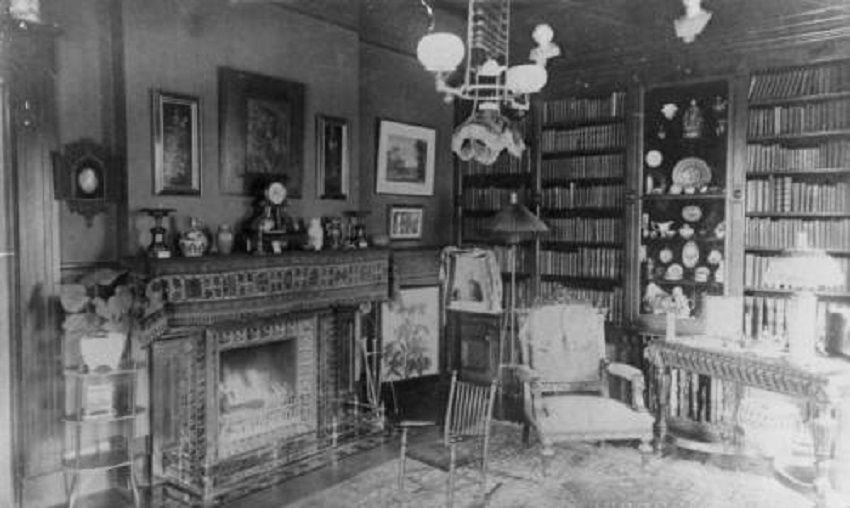
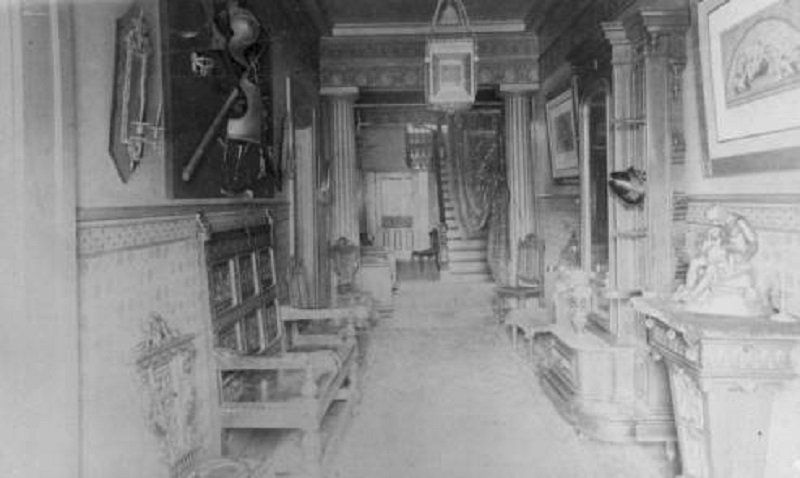
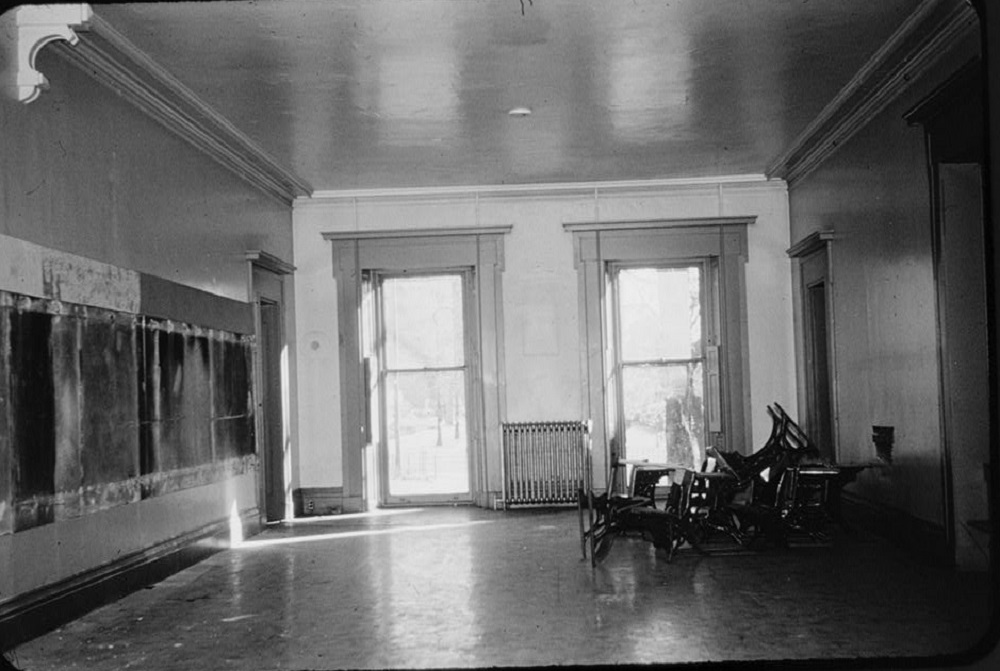
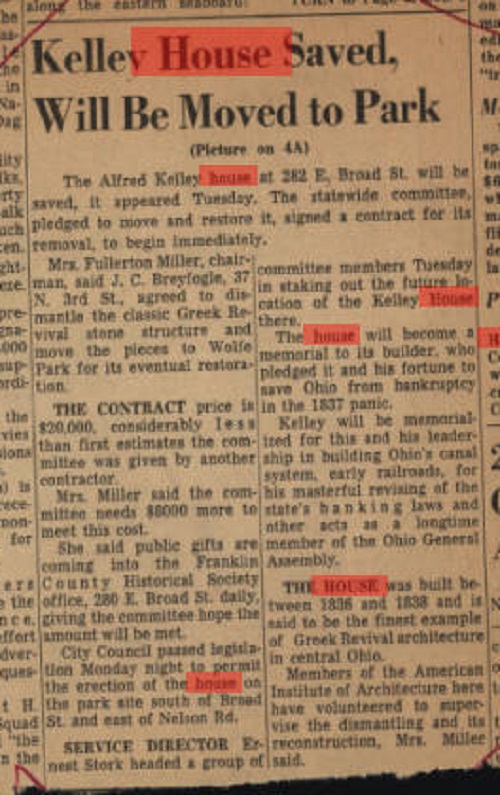
In my research into finding photos and information on historic buildings in Columbus, I have come across some interesting documents related to why some buildings were demolished and how 1960s preservation efforts were often failtures. Take the Alfred E. Kelley House, which once stood at 282 E. Broad Street. Built over the course of about a year between 1837-1838, the house was a classic Greek Revival. Over the many years of its existence, the house functioned in multiple capacities, including as a school. During those other uses, the architecture was drastically altered, and by 1960, the year the house was proposed to be demolished to build the Christopher Inn, the historic nature had been “severely damaged”. Still, the house had survived 122 years by then, and a history-minded group of people got together to try and save it with the intent of restoration and operating a period museum.
Photo taken in 1898.
The library in the Kelley House, circa 1900.
An elaborately decorated hallway in the Kelley House circa 1900.
The gutted house in 1958.
In early January 1962, the efforts to save the house during the previous year were detailed by one Dixie Sayre Miller, chairman of the Kelley House Committee, which had been formed on March 24th, 1961. The goal of the committee was as follows:
“Considering the time element and the importance of Kelley to the State**, the committee decided to ask the legislature for money for which to move the house intact. We, later, would seek private money with which to restore it.”
The Committee had some powerful allies at the time. State Rep. Chris McNamara and John Vorys, former delegate to the UN, were both in leadership roles. Given this, even during a time when preservation efforts took a clear backseat to development, the Committee did meet with some initial success. The Kelley House legislative subcommittee was able to pass an appropriations bill in July 1961 for the amount of $95,000. The governor vetoed the bill, calling the appropriation “frivolous”. In August, a member of the Committee, Lee Skilken, had the idea to solicit local contractors to volunteer in taking down the house in order for it to be moved. When the idea was presented to the property owners on September 5th, it was rejected because it could not be guaranteed that the property would be clear in time for construction to begin. Instead, the owners wanted a paid contractor to do the work so that the timeline could be met. The land had to be cleared by October 15th, 1961, and the Committee had to have the money to pay the contractor by September 15th.
Here is where the story becomes a bit shady and political. On September 6th, members of the committee went to the Governor for advice on how to proceed. He recommended that they go to the Emergency Board, which would be able to issue a grant towards the project. The Governor promised he would “not object, would not fight it and would not make a political issue of it”. On September 15th, the money deadline, the Committee had raised only $11,000 towards the $35,000 cost of the paid contractor. However, the following day, they caught a break. Another contractor came forward offering to take down the house for just $20,000 and would begin immediately. Further, even though the Committee did not have the full $20,000, the contractor trusted that the Committee would have raised the amount by the time the work was completed. I’m not sure if such deals would ever occur in today’s environment, but they still happened 53 years ago. Only 2 days after the contractor began to take down the house, the Emergency Board awarded a $20,000 grant to the Committee and the house was fully dismantled before the deadline of October 15th. Stonework and foundations of the house were moved to a holding site at Franklin Park, while interior detailing was stored “in a city building”, all waiting for funding to be assembled and restored at a new site. This new site was listed as being in Wolfe Park on “East Broad at Nelson Road”.
So, why isn’t the Alfred E. Kelley house at Wolfe Park today? Two things happened after October 15th. First, the Governor lied. On the very day that the Committee was supposed to pay the contractor, they received a call stating that the Governor had deemed the Emergency Board grant unconstitutional and was withholding the money, despite being his recommendation that the Committee seek the grant from it in the first place. This also after a promise that he would not interfere or stand in the way. The Committee considered legal action, but decided a costly court process was not “advisable”.
Without the $20,000, the Committee was only able to pay the contractor $6,000, who then threatened legal action for the full amount. Since the Committee had neglected to be incorporated, each member was personally responsible for a share of what was owed. By December 1961, the Committee had become incorporated and had managed to pay an additional $2,000, but still owed the majority of the contract.
That concluded the events through January 1962. After that time, there are mysteries that remain unknown (at least as far as I can tell). First, what happened to the Committee? Did it end up raising the amount to pay off the contractor or did they end up in court? Why had the Governor decided to prevent the Committee from getting the grant? Did he have a political axe to grind with members of the Committee? Finally, and far more importantly, what happened to the Kelley House? The materials were in storage in early 1962, but the house was never rebuilt. Were they destroyed? Did the contractor take possession of them if the Committee was unable to pay? Are they still sitting in some warehouse somewhere covered in half a century’s worth of dust? We may never know, though I suspect that someone out there has the answers.
An ironic article in 1961.
**Kelley helped save the state from bankruptcy during the Panic of 1837 by offering up his house, possessions and business interests as collateral.
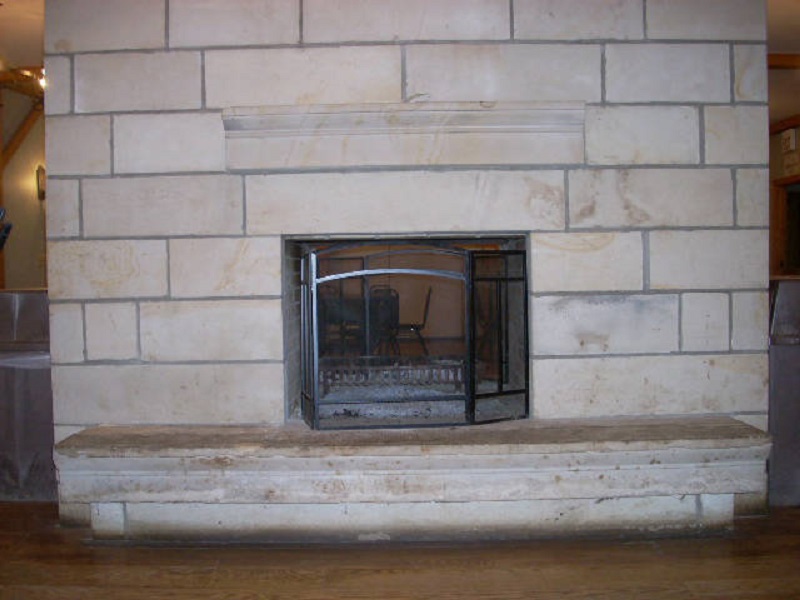
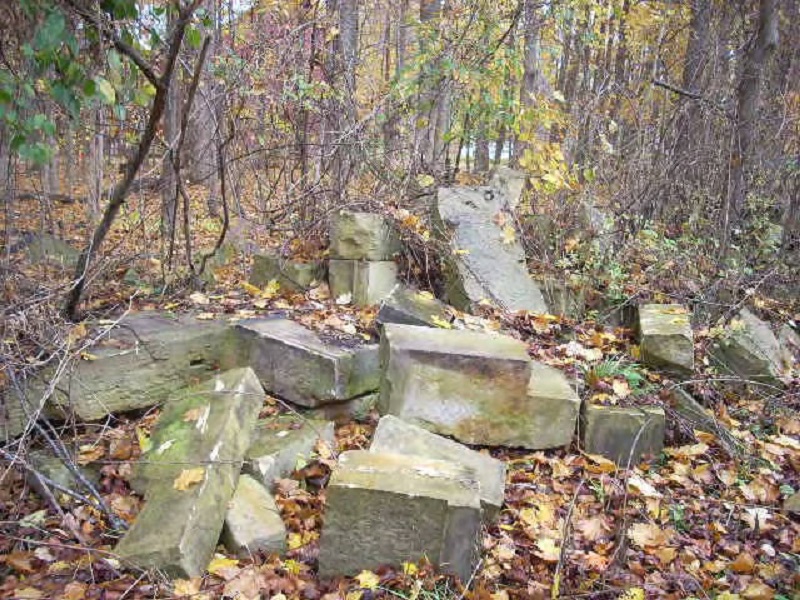
Edit 7/18/2014: I guess research pays off, and now, at least some of the mystery is solved, as contacts through readers led me to part of the answer. As mentioned above, part of the house’s remains, particularly the stone and brick portions, were stored at Franklin Park after the demolition in 1961. Five years later in 1966, these were moved to the Ohio Exposition Center at the Ohio State Fairgrounds. By then, the plans no longer called for putting the house back together and restoring it. Instead, the stone materials were planned to be incorporated into a new Ohio Historical Center in the late 1960s, presumably the one that now sits adjacent to the fairgrounds today. But that plan also fell through for unknown reasons. The stone materials were eventually gifted to the Western Reserve Historic Society in Cleveland. Some of the stone was used in the restoration of the Hale Farm, but much of it now sits tossed around outside in the elements, slowly being worn away. This still leaves many questions unanswered, such as where the interior portions of the house ended up and why none of the material was ever reused in Columbus despite preservation interests eventually securing the funds to do so.
A fireplace at the Hale Farm rebuilt with Kelley House stones.
Kelley House stones in the elements at Hale Farm near Cleveland.
The Before and After July 2014 edition shows a few famous Downtown buildings and what ultimately happened to them.
The Hippodrome Theater Operated from October 26th, 1914 to December 31st, 1933. Address: 77 N. High Street, Downtown Seats: 300+ First movie shown: “The Nightingale” with Ethel Barrymore Last movie shown: Unknown Opening Admission: 10 cents
Photo of the entrance to the Hippodrome Theater, 1915.
The silent-era Hippodrome Theater was developed by G.E. Overton, who took over the Bonnett Jewelry store that occupied the building previously. News articles at the time of its opening described the décor in this way:
The little theater, which seats over 300, is neatly decorated in yellow. The lobby is attractive in white marble and the foyer is in yellow and gold. There is no stage; the picture being projected against a large screen as in most picture theaters.
The Hipp, as it was referred by, had a 6-piece orchestra under the direction of W.H. Claspill. It was the first movie theater in Columbus to have an orchestra.
There seems to be a bit of confusion on just when this theater opened. The official first movie shown there was in 1914, but by some accounts, the theater actually opened in April, 1910. Also, there is some mystery on the lone photograph above. Some list it as having been originally taken in 1915, but others have it listed from 1934, after the theater had closed.
The Park Theater Operated until November 24, 1893. The date it opened is unknown. Address: 217 N. High Street, Downtown Seats: Unknown
The Park Theater began operations sometime in the 1880s or very early 1890s, and may have operated long after 1893 if not for a disaster from the building just to its south, the Chittenden Hotel. In 1889, Henry Chittenden purchased the office building of the B&O Railroad, added 2 floors and spent $400,000 (an enormous sum at the time) converting and renovating the building into a luxury hotel. In 1890, a fire broke out and gutted the entire building, but spared neighboring businesses like the Park Theater.
The second Chittenden Hotel. The Park Theater building can be seen on the very right. The photo is from 1892.
Chittenden decided to rebuild, and the 2nd Chittenden Hotel was completed in 1892. This second hotel had its own theater, the Henrietta, which was still partially under construction on November 24th, 1893. That evening at around 8pm, a fire started during a performance there. The fire originated in the auditorium, in an area that was still under construction and spread into the seating area itself. Once the flames breached the theater, strong winds quickly spread the fire and began to burn the hotel as well as surrounding buildings, including the one that housed the Park Theater. By the time the fire burned itself out just the next morning, both theaters, the hotel, a drug store, saloon, shoe house and clothing shop were all completely destroyed.
The second Chittenden and Park Theater, November 1893.
The Park Theater, November 25th, 1893.
Improbably, despite 2 hotels in the same locating burning down, Chittenden rebuilt for yet a 3rd time, with the largest and grandest version of all- not to mention with far better fire-resistant construction. The third time, it seems, was the charm, and the hotel survived from its completion in 1895 to its final demolition in 1973.
The unlucky Park Theater itself never rebuilt, though the lot had a new commercial building in its spot by 1895. That building also faced the wrecking ball in 1973.
The current location of where the Chittenden and Park Theater once stood.
Over the years, I’ve learned that Columbus has a very suburban reputation, meaning that it is perceived to have very low density throughout, especially because it aggressively annexed suburban areas into the city limits decades ago. With those claims, I wondered what the metro population densities would be if Columbus’ area size was scaled down to others, with the goal of finding out if it really deserves the suburban reputation. Bare with me, because there is a lot to look at.
First, I used Columbus’ 18 peer metros (population 1.5-2.5 million) per the Census, as well as the 14 largest Midwest metros. Since there was some overlap in the 2 groups, it made for a total group comparison of 27. So a fairly sizeable group. Next, I used the mile marker population, which in the City Hall census analysis is made up of circles going out from the center. So it’s just a matter of finding the area of each circle and dividing the population into that. What’s left is the density by area.
Density at Mile Marker 3, with an Area of 28.27 Square Miles 2000————————————2010 1. Chicago: 17,528.7_____________________ 1. Chicago: 18,003.2 2. San Jose, CA: 13,883.0________________ 2. San Jose, CA: 14,549.2 3. Las Vegas: 11,646.0___________________ 3. Las Vegas: 11,576.2 4. Minneapolis: 11,494.2_________________ 4. Minneapolis: 11,503.3 5. Milwaukee: 11,448.9___________________ 5. Milwaukee: 11,288.0 6. Providence: 11,173.7__________________ 6. Providence, RI: 11,240.2 7. Pittsburgh: 10,594.4__________________ 7. Pittsburgh: 9,738.7 8. San Antonio. TX: 9,234.3______________ 8. Portland, OR: 8,973.6 9. Portland, OR: 8,257.0_________________ 9. San Antonio, TX: 8,846.8 10. Cincinnati: 8,141.9__________________ 10. Columbus: 7,834.0 11. Columbus: 8,134.9____________________ 11. Sacramento, CA: 7,668.7 12. Sacramento, CA: 7,261.5______________ 12. Austin, TX: 7,534.0 13. Austin, TX: 7,232.3__________________ 13. Cincinnati: 7,273.6 14. Akron: 6,925.4_______________________ 14. Grand Rapids, MI: 6,540.0 15. Grand Rapids, MI: 6,852.0____________ 15. Akron: 6,284.9 16. Indianapolis: 6,727.9________________ 16. Orlando: 6,055.1 17. Toledo: 6,651.5______________________ 17. Omaha: 5,968.3 18. Dayton: 6,382.8______________________ 18. Toledo: 5,982.1 19. St. Louis: 6,093.7___________________ 19. Indianapolis: 5,879.9 20. Kansas City: 6,025.1_________________ 20. St. Louis: 5,663.8
Density at Mile Marker 4, with an Area of 50.27 Square Miles 2000———————————2010 1. Chicago: 15,447.2____________________ 1. Chicago: 15,205.9 2. San Jose, CA: 12,209.3_______________ 2. San Jose, CA: 12,629.6 3. Las Vegas: 9,788.0___________________ 3. Las Vegas: 10,022.2 4. Minneapolis: 8,874.4_________________ 4. Minneapolis: 8,921.8 5. Milwaukee: 8,823.8___________________ 5. Milwaukee: 8,725.5 6. Providence, RI: 8,454.3______________ 6. Providence, RI: 8,483.8 7. Pittsburgh: 8,216.0__________________ 7. Portland, OR: 7,785.5 8. Portland, OR: 7,282.9________________ 8. Pittsburgh: 7,602.6 9. San Antonio, TX: 7,208.6_____________ 9. San Antonio, TX: 6,995.5 10. Cincinnati: 6,922.8_________________ 10. Cincinnati: 6,279.4 11. Columbus: 6,449.3___________________ 11. Columbus: 6,257.4 12. Sacramento, CA: 5,744.7_____________ 12. Sacramento, CA: 6,138.5 13. Austin, TX: 5,541.5_________________ 13. Austin, TX: 5,847.2 14. St. Louis: 5,447.5__________________ 14. Omaha: 5,047.2 15. Cleveland: 5,356.2__________________ 15. St. Louis: 5,001.6 16. Indianapolis: 5,348.8_______________ 16. Grand Rapids, MI: 4,922.9 17. Detroit: 5,163.1____________________ 17. Orlando: 4,911.7 18. Omaha: 5,019.8______________________ 18. Indianapolis: 4,793.5 19. Akron: 4,900.7______________________ 19. Akron: 4,532.0 20. Dayton: 4,889.3_____________________ 20. Cleveland: 4,521.8
Density at Mile Marker 5, with an Area of 78.54 Square Miles Note that this area size is about the current city size of Cincinnati and Cleveland. 2000————————————2010 1. Chicago: 14,213.6___________________ 1. Chicago: 13,591.0 2. San Jose, CA: 10,464.0______________ 2. San Jose, CA: 11,037.1 3. Las Vegas: 8,521.9__________________ 3. Las Vegas: 9,062.8 4. Minneapolis: 7,443.0________________ 4. Minneapolis: 7,455.9 5. Milwaukee: 7,081.2__________________ 5. Milwaukee: 7,029.1 6. Pittsburgh: 7,009.9_________________ 6. Pittsburgh: 6,492.7 7. San Antonio, TX: 6,326.6____________ 7. Portland, OR: 6,442.3 8. Providence, RI: 6,048.3_____________ 8. San Antonio, TX: 6,223.4 9. Portland, OR: 5,950.1_______________ 9. Providence, RI: 6,055.8 10. Cincinnati: 5,588.9________________ 10. Sacramento, CA: 5,664.2 11. Cleveland: 5,494.6_________________ 11. Orlando: 5,274.1 12. Columbus: 5,252.9__________________ 12. Columbus: 5,152.1 13. Sacramento, CA: 5,104.0____________ 13. Cincinnati: 5,096.2 14. Orlando: 4,993.7___________________ 14. Austin, TX: 4,993.7 15. Austin, TX: 4,786.5________________ 15. Cleveland: 4,602.4 16. Detroit: 4,748.7___________________ 16. St. Louis: 4,285.4 17. St. Louis: 4,731.5_________________ 17. Indianapolis: 4,086.1 18. Indianapolis: 4,447.7______________ 18. Omaha: 3,962.2 19. Akron: 4,025.9_____________________ 19. Grand Rapids, MI: 3,887.3 20. Grand Rapids, MI: 3,990.6__________ 20. Akron: 3,778.8
So if Columbus was the same size as Cincinnati and Cleveland, it would be the most dense city of the 3. And it’s generally in the top half of the grouping in its most urban areas.
But what about further out, past the urban core?
Density at Mile Marker 10, with an Area of 314.16 Square Miles. This area size is much larger than the city limits of Columbus, but it gives an idea of the larger area’s density and not just within the city limits. 2000———————————–2010 1. Chicago: 9,344.3______________________ 1. Chicago: 8,795.0 2. San Jose, CA: 4,563.2_________________ 2. San Jose, CA: 4,809.8 3. Minneapolis: 4,183.2__________________ 3. Las Vegas: 4,794.2 4. Detroit: 4,117.4______________________ 4. Portland, OR: 4,230.3 5. Las Vegas: 3,877.3____________________ 5. Minneapolis: 4,178.3 6. Portland: 3,780.8_____________________ 6. San Antonio, TX: 3,454.9 7. Cleveland: 3,308.4____________________ 7. Detroit: 3,354.7 8. Pittsburgh: 3,279.8___________________ 8. Columbus: 3,163.9 9. San Antonio, TX: 3,217.8______________ 9. Pittsburgh: 3,080.4 10. Milwaukee: 3,013.7___________________ 10. Orlando: 3,055.0 11. Columbus: 2,973.3____________________ 11. Sacramento, CA: 3,016.4 12. St. Louis: 2,937.6___________________ 12. Milwaukee: 3,006.2 13. Cincinnati: 2,873.4__________________ 13. Cleveland: 2,923.7 14. Orlando: 2,783.9_____________________ 14. Indianapolis: 2,772.6 15. Sacramento, CA: 2,736.7______________ 15. St. Louis: 2,751.3 16. Indianapolis: 2,652.6________________ 16. Cincinnati: 2,746.8 17. Kansas City: 2,599.0_________________ 17. Kansas City: 2,538.3 18. Providence, RI: 2,360.0______________ 18. Austin, TX: 2,439.6 19. Austin, TX: 2,111.3__________________ 19. Providence, RI: 2,375.1 20. Dayton: 1,920.7______________________ 20. Charlotte, NC: 2,332.7
So what does all this tell us? That while Columbus is not the most dense city of its peer group, or within the Midwest group, it probably does not wholly deserve its low-density, suburban reputation. Most of the measurements are in the top half of the grouping for density, yes, but it is clearly the most weak in the urban core closest to Downtown, as that ranking is the lowest for it. The Mile 0 population, for example, is down near the very bottom, and that is a good reason why densities are not as high as they should/could be. Currently, Downtown and surrounding neighborhoods are seeing a residential development boom, so that will help, but the city needs to think a lot bigger if it wants that stereotype to truly go away. The recent abandonment of the Convention Center mixed-use project is not a good way to go about that goal… and it should be a goal.
The housing market update May 2014 report for the Columbus area, courtesy of Columbus Realtorscontinued to show the 5-month long trend of sales being down. As with the previous 4 months, the main reason was high demand coupled with historically low supply.
As for when this situation may change seems hard to guess. The rate of construction for single family homes shows no real signs of improving anytime soon, while renting continues to be the dominant choice right now.