Metro Population by Distance from Downtown


Metro population by distance from downtown

One of the more interesting things the Census measures is the population from “City Hall”, or basically the metro population by distance from downtown. The metric measure population at every mile out from the center of each city’s downtown area. Since city boundaries come in all different sizes, this is a good way to compare urban populations.

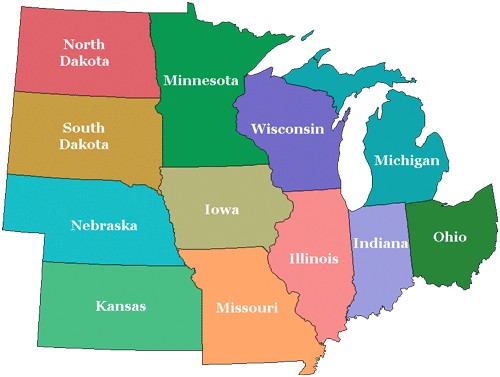
I looked at the 15 largest Midwest metros for these numbers.

First, here is a breakdown of aggregate population at each mile marker in 2010. Aggregate means that with each mile added, the population within all previous miles are added together.

Mile 0
1. Chicago: 63,120
2. Minneapolis: 31,036
3. Milwaukee: 21,587
4. Cincinnati: 17,681
5. St. Louis: 17,359
6. Grand Rapids: 16,099
7. Omaha: 15,582
8. Indianapolis: 14,058
9. Kansas City: 13,709
10. Akron: 12,479
11. Cleveland: 9,471
12. Dayton: 9,182
13. Detroit: 8,709
14. Toledo: 8,304
15. Columbus: 7,416

This is a pretty bad showing in this list. In 2010, Columbus had the lowest downtown population, or population at Mile 0, of any of the largest 15 Midwest metros.

Mile 1
1. Chicago: 181,714
2. Minneapolis: 123,526
3. Milwaukee: 86,261
4. Grand Rapids: 75,613
5. Cincinnati: 65,264
6. Omaha: 56,244
7. Toledo: 55,739
8. Akron: 53,715
9. Columbus: 49,667
10. Indianapolis: 45,079
11. Dayton: 41,053
12. St. Louis: 40,184
13. Kansas City: 32,900
14. Detroit: 32,810
15. Cleveland: 32,193

By Mile 1, Columbus starts to move up rapidly, however.

Mile 2
1. Chicago: 318,522
2. Minneapolis: 228,927
3. Milwaukee: 208,776
4. Cincinnati: 138,235
5. Columbus: 134,826
6. Grand Rapids: 127,535
7. Akron: 122,395
8. Omaha: 113,044
9. Indianapolis: 102,412
10. Dayton: 101,817
11. Toledo: 94,058
12. St. Louis: 94,038
13. Kansas City: 77,388
14. Cleveland: 64,721
15. Detroit: 64,046

Mile 3
1. Chicago: 508,949
2. Minneapolis: 325,198
3. Milwaukee: 319,111
4. Columbus: 221,466
5. Cincinnati: 205,624
6. Grand Rapids: 184,887
7. Akron: 177,674
8. Omaha: 168,724
9. Toledo: 166,569
10. Indianapolis: 166,266
11. St. Louis: 160,117
12. Kansas City: 155,802
13. Dayton: 152,789
14. Cleveland: 139,945
15. Detroit: 109,104

Mile 4
1. Chicago: 764,400
2. Minneapolis: 448,499
3. Milwaukee: 438,629
4. Cincinnati: 315,665
5. Columbus: 314,557
6. Omaha: 253,723
7. St. Louis: 251,432
8. Grand Rapids: 247,473
9. Indianapolis: 240,970
10. Akron: 227,825
11. Cleveland: 227,309
12. Kansas City: 216,483
13. Dayton: 214,614
14. Toledo: 213,529
15. Detroit: 198,341

Mile 5
1. Chicago: 1,067,434
2. Minneapolis: 585,588
3. Milwaukee: 552,064
4. Columbus: 404,642
5. Cincinnati: 400,254
6. Cleveland: 361,475
7. St. Louis: 336,573
8. Indianapolis: 320,919
9. Omaha: 311,189
10. Grand Rapids: 305,307
11. Akron: 296,787
12. Detroit: 282,986
13. Toledo: 271,187
14. Kansas City: 269,936
15. Dayton: 262,069

So while Columbus’ downtown is down at the bottom in this list to start, it ends up being a top 5 within just a few miles. Clearly, though, the city needs to do better at getting people in the center.

What about further out? Let’s keep going.

Mile 10
1. Chicago: 2,763,025
2. Minneapolis: 1,312,640
3. Detroit: 1,053,920
4. Columbus: 993,957
5. Milwaukee: 944,415
6. Cleveland: 918,511
7. Indianapolis: 871,050
8. St. Louis: 864,336
9. Cincinnati: 862,932
10. Kansas City: 797,442
11. Omaha: 588,484
12. Dayton: 586,178
13. Akron: 502,710
14. Grand Rapids: 482,599
15. Toledo: 454,859

Mile 20
1. Chicago: 4,738,903
2. Detroit: 2,663,489
3. Minneapolis: 2,542,565
4. St. Louis: 1,878,365
5. Kansas City: 1,618,823
6. Cincinnati: 1,592,905
7. Cleveland: 1,549,799
8. Indianapolis: 1,511,675
9. Columbus: 1,432,067
10. Milwaukee: 1,317,062
11. Omaha: 788,498
12. Dayton: 757,623
13. Akron: 673,654
14. Grand Rapids: 602,220
15. Toledo: 558,219

Columbus seems to hold its own from Mile 2 through about Mile 15 or 16, and then begins to fall back as full metro populations begin to take shape.

So now we know the exact populations by distance, but what about how those are changing over time? Here are the same miles and their total change from 2000 to 2010.

Aggregate Change 2000-2010
By Mile 1

1. Chicago: 48,288
2. Minneapolis: 7,969
3. St. Louis: 5,881
4. Cleveland: 3,174
5. Milwaukee: 2,250
6. Kansas City: 1,009
7. Omaha: -53
8. Columbus: -1,049
9. Detroit: -3,601
10. Indianapolis: -4,739
11. Grand Rapids: -5,236
12. Cincinnati: -6,112
13. Akron: -8,916
14. Toledo: -10,118
15. Dayton: -10,165

By Mile 2
1. Chicago: 31,824
2. Minneapolis: 3,462
3. Omaha: 408
4. St. Louis: -1,523
5. Milwaukee: -2,399
6. Cleveland: -3,388
7. Kansas City: -4,807
8. Columbus: -6,004
9. Grand Rapids: -9,279
10. Detroit: -11,019
11. Indianapolis: -15,532
12. Cincinnati: -15,749
13. Akron: -15,874
14. Toledo: -16,771
15. Dayton: -20,826

By Mile 3
1. Chicago: 13,414
2. Minneapolis: 257
3. Omaha: -28
4. Milwaukee: -4,550
5. Columbus: -8,509
6. Grand Rapids: -8,818
7. St. Louis: -12,153
8. Kansas City: -14,528
9. Akron: -18,107
10. Toledo: -21,469
11. Cleveland: -23,287
12. Indianapolis: -23,973
13. Cincinnati: -24,548
14. Dayton: -27,652
15. Detroit: -29,905

By Mile 4
1. Minneapolis: 2,381
2. Omaha: 1,376
3. Milwaukee: -4,943
4. Grand Rapids: -8,612
5. Columbus: -9,650
6. Chicago: -12,130
7. Kansas City: -17,813
8. Akron: -18,533
9. Toledo: -22,039
10. St. Louis: -22,415
11. Indianapolis: -27,912
12. Dayton: -31,173
13. Cincinnati: -32,342
14. Cleveland: -41,948
15. Detroit: -61,209

By Mile 5
1. Omaha: 1,800
2. Minneapolis: 1,798
3. Milwaukee: -4,090
4. Columbus: -7,924
5. Grand Rapids: -8,112
6. Akron: -19,405
7. Kansas City: -21,986
8. Toledo: -26,094
9. Indianapolis: -28,401
10. Dayton: -33,066
11. St. Louis: 35,038
12. Cincinnati: -38,698
13. Chicago: -48,898
14. Cleveland: -70,067
15. Detroit: -89,973

By Mile 10
1. Columbus: 59,873
2. Indianapolis: 37,721
3. Omaha: 25,330
4. Grand Rapids: 10,284
5. Minneapolis: -1,544
6. Milwaukee: -2,369
7. Akron: -6,207
8. Dayton: -17,223
9. Kansas City: -19,048
10. Toledo: -21,636
11. Cincinnati: -39,767
12. St. Louis: -58,549
13. Cleveland: -120,862
14. Chicago: -172,571
15. Detroit: -239,616

By Mile 20
1. Indianapolis: 213,270
2. Columbus: 183,014
3. Kansas City: 144,634
4. Minneapolis: 141,652
5. Omaha: 97,813
6. Cincinnati: 46,813
7. Milwaukee: 27,876
8. Grand Rapids: 24,505
9. Akron: 8,625
10. Dayton: -7,484
11. Toledo: -9,112
12. St. Louis: -21,917
13. Cleveland: -88,522
14. Chicago: -215,802
15. Detroit: -291,258

Metro Area Demographics provides a greater picture of the Columbus metro’s population and demographic data.

May Project Updates


May project updates Neighborhood Launch

Just a few May project updates. These represent only a small fraction of what’s going on in terms of local development.

Downtown
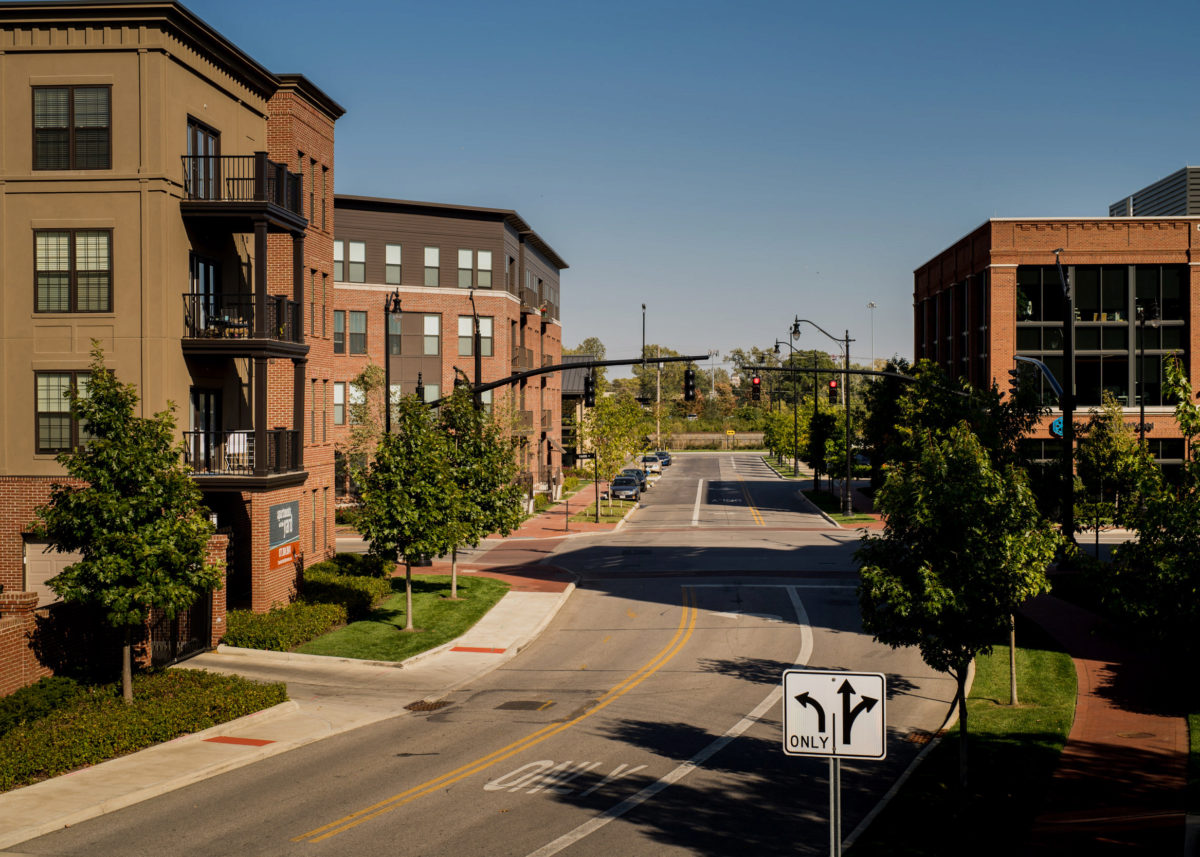
1. Neighborhood Launch’s expansion with a pair of new 5-story buildings containing 260 apartments continues. Located on E. Long Street, the buildings’ foundation work has been mostly completed and elevator shafts and the first steel frames are now going up, which means construction should really get going now. The timetable for these to be complete is late fall or winter.
2. Over at Columbus Commons, the Highpoint 300-unit residential project continues and at least one of the buildings is now reaching towards its 6th and final floor.
3. The Liberty Place 200+ unit residential expansion in the Brewery District is getting closer to being done with the external work, as brick and finishes are going on.
4. The mess that is the reconstruction of 670/71 also continues, but we’re still a year or so away from that being done… before the next phase begins closer to the 70/71 section.
5. Work continues on the restoration of the LeVeque Tower, but more details have emerged. Up to 70 residential units will be created in the tower section, along with lower floors having a new boutique hotel and office space. The lobby will be restored to its original 2-story look, and the entrance outside will get new marble, planters and lighting. The terra cotta exterior of the building will take up to 5 more years to complete, as 80 years of grime and damage have to be fixed. The other improvements should be done late this year or early next year.
6. Columbia Gas’ new HQ building in the Arena District has reached it’s maximum 6-story height with steel, but no exterior work is done yet.
7. The Flats II 120-unit residential building next door to that project is seeing exterior work being done and should be done later this summer or early fall. Reports have been coming out showing this and other residential projects nearby have extremely high rental interest already.
8. 600 Goodale, the 5-story 174-unit residential building is seeing exterior work now and should be done by the end of summer or fall.

Short North
1. Aston Place, a new residential project on Hubbard Avenue, is moving along and the elevator shaft is just about done, so steel should be going up soon.
2. The Hubbard project continues to the east. The 5-story, 68-unit residential building is all framed out and exterior work is beginning. The adjoining parking garage is complete and the 4 concealing townhomes should begin construction soon.
3. The Out of the Closet development at 5th and High is well underway, now completely framed out.


2011 Census Tract Estimates


2011 census tract estimates Columbus, Ohio

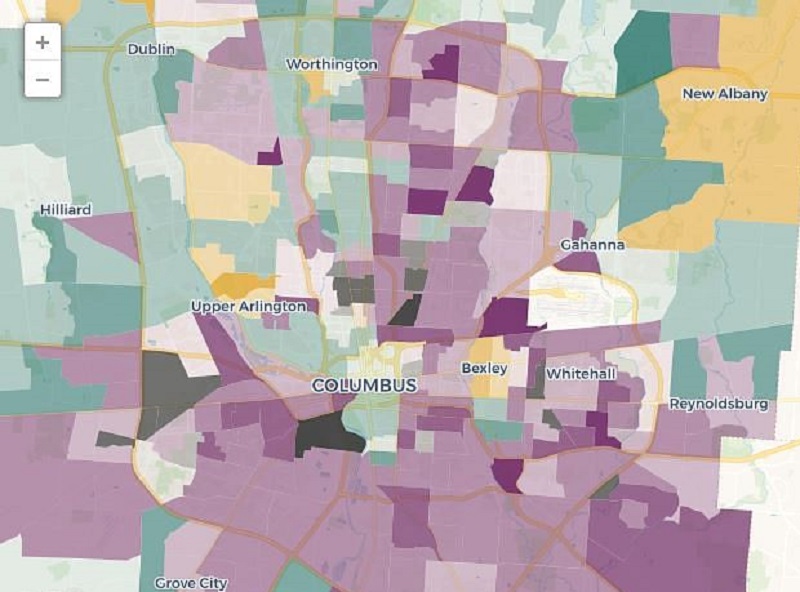
While I wouldn’t normally make a post on the 2011 census tract estimates- or any other estimates for them- because I really don’t know what their reliability is, I thought it might be an interesting exercise.

I only looked at those tracts that made up the original 1950 boundaries as well as some of the adjacent areas. I won’t go into too much detail, but…

In 2010, only 20 of the 78 tracts I looked at were growing. Well, specifically, only 20 grew during the 2000-2010 period, not just in 2010 alone. So several more could’ve been starting to recover in 2010, but since it measured the whole decade, it might still show up as a loss. In any case, the 2011 estimates are interesting just because they show a much different picture.

If I use the exact estimate used, 34 of the 78 tracts were growing in 2011, a significant improvement. However, some of the estimates were hard to understand where they came from. For example, they had Downtown tracts, which have had rapid growth the last decade, as declining in population for 2011, even while more and more residential units are built and more people move into the area. Also, they showed some tracts gaining population when the long-term trend is for significant loss and no reason to see that reversing.

So using the margin of error as a guide, I went back over them and did my own estimates. Of the 78 tracts, I only did my own for 14, as they were the only ones I felt didn’t match the reality on the ground or the long-term trends. With those changes, 38 of the 78 were growing, a slight increase of the official 34.

If we use the official estimates, the total population for the 78 tracts was 232,297, a loss of 2,285 since 2010. If we use my estimates, the population would be 237,806, or an increase of 3,224. So what’s the real story? Well, new 2012 tract estimates will be coming out soon. When they do, I will compare and see what, if any, updates should be made. The only real way to know, however, is to wait until 2020 with the next census. Still, until that time, it’s fun to look at the numbers- or maps– and see if the urban core is recovering in the same way that cities and towns are in and around Franklin County.


2012 Urban Population Trends


2012 urban and suburban population trends

I posted the 2012 city estimates from the US Census yesterday. Within them may be an interesting trend that has long-term implications for Columbus and other cities, so today we’re going to go over 2012 urban population trends, and see how they compare.

A lot of the talk in the news in recent years has been how urban core cities are seeing a comeback of sorts. I’ve made mention of it several times, myself, with hard data located on the Demographics and Population part of this site. However, there is some disagreement between urban proponents and suburban proponents about what’s really going on, and that disagreement seems to focus mostly around if the city is growing faster than the suburbs, and if so, if that trend can be sustained.

Looking over the estimates, I noticed something that may support the urban back-to-the-city argument, at least in Columbus. What I noticed was that those villages/towns/cities that were growing tended to be clustered closer to the urban core of the metro than those that were losing population.

I first gathered the data on the Columbus metro area’s 99 incorporated places, ranging in population from 36 on up to Columbus’ 809,798. I then measured the distance between Columbus’ Downtown center and the center of all 99 places. I then broke them up into increments of about 5 miles each. Here is some of what I found.

Average Total Population Growth by Place 2010-2012 by Distance from Columbus’ Center
0-4.9 Miles: 3,962.8
5-9.9 Miles: 438.4
10-14.9 Miles: 342.8
15-19.9 Miles: 26.5
20-24.9 Miles: 148.9
25+ Miles: 10.5

What this says, is that for the most part, the closer a place is to the center, the more total average growth it’s had since 2010. While the 0-4.9 mile distance is somewhat skewed because it includes Columbus’ growth, there is also a significant drop-off beyond 15 miles from the center.

Next, I looked at all the places that saw either 0 population change or a loss during the 2010-2012 period. Again, it was separated by the distance from Columbus’ center.

0-4.9 Miles: 0 of 6, or 0.0%
5-9.9 Miles: 0 of 12, or 0.0%
10-14.9 Miles: 1 of 12, or 8.3%
15-19.9 Miles: 2 of 8, or 25.0%
20-24.9 Miles: 2 of 10, or 20.0%
25+ Miles: 21 of 51, or 41.2%

What this shows is that the further the distance away from the center, in general, the more places there were that were stagnant or lost population since 2010.

Finally, I looked at the top 15 total population increases of all places from 2010-2012, as well as their distance from Columbus’ center.
1. Columbus (obviously): +22,765- 0 Miles
2. Hilliard: +2,129- 9.9 Miles
3. Grove City: +1,257- 7.4 Miles
4. Delaware: +1,172- 23.6 Miles
5. Dublin: +1,155- 11.3 Miles
6. Westerville: +953- 12.0 Miles
7. New Albany: +783- 13.0 Miles
8. Gahanna: +580- 7.5 Miles
9. Powell: +460- 14.2 Miles
10. Reynoldsburg: +454- 9.9 Miles
11. Upper Arlington: +432- 4.1 Miles
12. Pickerington: +401- 14.1 Miles
13. Grandview Heights: +374- 2.6 Miles
14. Whitehall: +341- 6.0 Miles
15. Canal Winchester: +292- 12.7 Miles

12 of the 15 are within Franklin County. Another 2 (Pickerington and Powell) are near the Franklin County border. Only Delaware is beyond 15 miles from Columbus’ center.

So do these numbers show a real trend? Maybe. Some of the questions are: Do 2 years of data support a real trend or just a blip? Is this really an urban movement or a rural decline… or both? Is this a new/recent trend or have the numbers been changing? Those questions and others need to be answered before making a definitive statement, but if nothing else, they are a positive indication that Columbus and it’s immediate surroundings remain the metro’s (and Ohio’s) strongest population draw.


2012 City Population Estimates


2012 city population estimates Columbus, Ohio

Here are the 2012 city population estimates for just about every location within the Columbus Metro Area.

The numbers show what the 2010 Census population was, the July 1, 2012 estimate, and the total change over that period.

City- 2010 – 2012 – Change
Alexandria 517 518 +1
Amanda 737 741 +4
Ashley 1,330 1,344 +14
Ashville 4,097 4,115 +18
Baltimore 2,966 2,968 +2
Bexley 13,057 13,252 +195
Bremen 1,425 1,438 +13
Brice 115 116 +1
Buckeye Lake 2,746 2,723 -23
Canal Winchester 7,101 7,393 +292
Cardington 2,047 2,046 -1
Carroll 524 524 0
Chesterville 228 229 +1
Circleville 13,314 13,453 +139
Columbus 787,033 809,798 +22765
Commercial Point 1,582 1,587 +5
Corning 583 579 -4
Crooksville 2,534 2,518 -16
Darbyville 222 224 +2
Delaware 34,753 35,925 +1172
Dublin 41,751 42,906 +1155
Edison 437 439 +2
Fulton 258 259 +1
Gahanna 33,248 33,828 +580
Galena 653 666 +13
Glenford 173 176 +3
Grandview Heights 6536 6910 +374
Granville 5646 5638 -8
Gratiot 221 221 0
Grove City 35575 36832 +1257
Groveport 5363 5540 +177
Hanover 921 1002 +81
Harrisburg 320 326 +6
Hartford 397 393 -4
Heath 10310 10389 +79
Hebron 2336 2350 +14
Hemlock 155 155 0
Hilliard 28435 30564 +2129
Johnstown 4632 4806 +174
Junction City 819 816 -3
Kirkersville 525 528 +3
Lancaster 38780 38880 +100
Laurelville 527 523 -4
Lithopolis 1106 1181 +75
Lockbourne 237 241 +4
Logan 7152 7157 +5
London 9904 9876 -28
Magnetic Springs 268 270 +2
Marble Cliff 573 580 +7
Marengo 342 344 +2
Marysville 22094 22051 -43
Midway 322 322 0
Milford Center 792 802 +10
Millersport 1044 1047 +3
Minerva Park 1272 1291 +19
Mount Gilead 3660 3658 -2
Mount Sterling 1782 1716 -66
Murray City 449 445 -4
New Albany 7724 8507 +783
Newark 47573 47688 +115
New Holland 801 827 +26
New Lexington 4731 4751 +20
New Straitsville 722 720 -2
Obetz 4532 4628 +96
Orient 270 272 +2
Ostrander 643 656 +13
Pataskala 14962 15091 +129
Pickerington 18291 18692 +401
Plain City 4225 4221 -4
Pleasantville 960 955 -5
Powell 11500 11960 +460
Rendville 36 36 0
Reynoldsburg 35893 36347 +454
Richwood 2229 2238 +9
Riverlea 545 555 +10
Rushville 302 304 +2
St Louisville 373 374 +1
Shawnee 655 652 -3
Shawnee Hills 681 709 +28
Somerset 1481 1473 -8
South Bloomfield 1744 1770 +26
South Solon 355 355 0
Sparta 161 162 +1
Stoutsville 560 563 +3
Sunbury 4389 4605 +216
Tarlton 282 285 +3
Thornville 991 995 +4
Thurston 604 607 +3
Unionville Center 233 235 +2
Upper Arlington 33771 34203 +432
Urbancrest 960 975 +15
Utica 2132 2130 -2
Valleyview 620 627 +7
Westerville 36120 37073 +953
West Jefferson 4222 4199 -23
West Rushville 134 135 +1
Whitehall 18062 18403 +341
Williamsport 1023 1032 +9
Worthington 13575 13757 +182

For those counting, there are 99 places in that list. 79 of them, or 79.8%, show growth over the period. Every place within Franklin County saw growth- maybe not down to the neighborhood level- but in all of the towns and cities.

Columbus passed 800,000 for the first time, and its actual growth rate increased from about 1.1% annually to 1.6% annually.