Historic Midwest Population and Density Ranking


Historic Midwest population and density ranking

I’ve compared Columbus to peer cities nationally in terms of density and population, but I’ve never compared Columbus to the Midwest as a whole historically for those categories. For the following historic Midwest population and density ranking, I used the top 15 largest Midwest cities as of 2012 as determined by the US Census.

Red indicates a fallen ranking while blue indicates a rise. Black is no change.

Historic Population Rankings
1840

1. Cincinnati: 46,338
2. St. Louis: 16,469
3. Detroit: 9,102
4. Cleveland: 6,071
5. Columbus: 6,048
6. Chicago: 4,470
7. Indianapolis: 2,695
8. Milwaukee: 1,700
9. Toledo: 1,222
10. Kansas City: Not incorporated.
11. Lincoln: Not incorporated.
12. Minneapolis: Not incorporated.
13. Omaha: Not incorporated.
14. St. Paul: Not incorporated.
15. Wichita: Not incorporated.

1850
1. Cincinnati: 115,435
2. St. Louis: 77,860
3. Chicago: 29,963
4. Detroit: 21,019
5. Milwaukee: 20,061
6. Columbus: 17,882
7. Cleveland: 17,034
8. Indianapolis: 8,091
9. Toledo: 3,829
10. St. Paul: 1,112
11. Kansas City: Not incorporated.
12. Lincoln: Not incorporated.
13. Minneapolis: Not incorporated.
14. Omaha: Not incorporated.
15. Wichita: Not incorporated.

1860
1. Cincinnati: 161,044
2. St. Louis: 160,773
3. Chicago: 112,172
4. Detroit: 45,619
5. Milwaukee: 45,246
6. Cleveland: 43,417
7. Indianapolis: 18,611
8. Columbus: 18,554
9. Toledo: 13,768
10. St. Paul: 10,401
11. Minneapolis: 5,809
12. Kansas City: 4,418
13. Omaha: 1,883
14. Lincoln: Not incorporated.
15. Wichita: Not incorporated.

1870
1. St. Louis: 310,864
2. Chicago: 298,977
3. Cincinnati: 216,239
4. Cleveland: 92,829
5. Detroit: 79,577
6. Milwaukee: 71,440
7. Indianapolis: 48,244
8. Kansas City: 32,260
9. Toledo: 31,584
10. Columbus: 31,274
11. St. Paul: 20,030
12. Omaha: 16,083
13. Minneapolis: 13,066
14. Lincoln: 2,441
15. Wichita: 689

1880
1. Chicago: 503,185
2. St. Louis: 350,518
3. Cincinnati: 255,139
4. Cleveland: 160,146
5. Detroit: 116,340
6. Milwaukee: 115,587
7. Indianapolis: 75,056
8. Kansas City: 55,785
9. Columbus: 51,647
10. Toledo: 50,137
11. Minneapolis: 46,887
12. St. Paul: 41,473
13. Omaha: 30,518
14. Lincoln: 13,003
15. Wichita: 4,911

1890
1. Chicago: 1,099,850
2. St. Louis: 451,770
3. Cincinnati: 296,908
4. Cleveland: 261,353
5. Detroit: 205,877
6. Milwaukee: 204,468
7. Minneapolis: 164,738
8. Omaha: 140,452
9. St. Paul: 133,156
10. Kansas City: 132,716
11. Indianapolis: 105,436
12. Columbus: 88,150
13. Toledo: 81,434
14. Lincoln: 55,164
15. Wichita: 23,853

1900
1. Chicago: 1,698,575
2. St. Louis: 575,238
3. Cleveland: 381,768
4. Cincinnati: 325,902
5. Detroit: 285,704
6. Milwaukee: 285,315
7. Minneapolis: 202,718
8. Indianapolis: 169,164
9. Kansas City: 163,752
10. St. Paul: 163,065
11. Toledo: 131,822
12. Columbus: 125,560
13. Omaha: 102,555
14. Lincoln: 40,169
15. Wichita: 24,671

1910
1. Chicago: 2,185,283
2. St. Louis: 687,029
3. Cleveland: 560,663
4. Detroit: 465,766
5. Milwaukee: 373,857
6. Cincinnati: 363,591
7. Minneapolis: 301,408
8. Kansas City: 248,381
9. Indianapolis: 233,650
10. St. Paul: 214,744
11. Columbus: 181,511
12. Toledo: 168,497
13. Omaha: 124,096
14. Wichita: 52,450
15. Lincoln: 43,973

1920
1. Chicago: 2,701,705
2. Detroit: 993,678
3. Cleveland: 796,841
4. St. Louis: 772,897
5. Milwaukee: 457,147
6. Cincinnati: 401,247
7. Minneapolis: 380,582
8. Kansas City: 324,410
9. Indianapolis: 314,194
10. Toledo: 243,164
11. Columbus: 237,031
12. St. Paul: 234,698
13. Omaha: 191,061
14. Wichita: 72,217
15. Lincoln: 54,948

1930
1. Chicago: 3,376,438
2. Detroit: 1,568,662
3. Cleveland: 900,429
4. St. Louis: 821,960
5. Milwaukee: 578,249
6. Minneapolis: 464,356
7. Cincinnati: 451,160
8. Kansas City: 399,746
9. Indianapolis: 364,161
10. Toledo: 290,718
11. Columbus: 290,564
12. St. Paul: 271,606
13. Omaha: 214,006
14. Wichita: 111,110
15. Lincoln: 75,933

1940
1. Chicago: 3,396,808
2. Detroit: 1,623,452
3. Cleveland: 878,336
4. St. Louis: 816,048
5. Milwaukee: 587,472
6. Minneapolis: 492,370
7. Cincinnati: 455,610
8. Kansas City: 400,178
9. Indianapolis: 386,972
10. Columbus: 306,087
11. St. Paul: 287,736
12. Toledo: 282,349
13. Omaha: 223,844
14. Wichita: 114,966
15. Lincoln: 81,984

1950
1. Chicago: 3,620,962
2. Detroit: 1,849,568
3. Cleveland: 914,808
4. St. Louis: 856,796
5. Milwaukee: 637,392
6. Minneapolis: 521,718
7. Cincinnati: 503,998
8. Kansas City: 456,622
9. Indianapolis: 427,173
10. Columbus: 375,901
11. St. Paul: 311,349
12. Toledo: 303,616
13. Omaha: 251,117
14. Wichita: 168,279
15. Lincoln: 98,884

1960
1. Chicago: 3,550,404
2. Detroit: 1,670,144
3. Cleveland: 876,050
4. St. Louis: 750,026
5. Milwaukee: 741,324
6. Cincinnati: 502,550
7. Minneapolis: 482,872
8. Indianapolis: 476,258
9. Kansas City: 475,539
10. Columbus: 471,316
11. Toledo: 318,003
12. St. Paul: 313,411
13. Omaha: 301,598
14. Wichita: 254,698
15. Lincoln: 128,521

1970
1. Chicago: 3,366,957
2. Detroit: 1,514,063
3. Cleveland: 750,903
4. Indianapolis: 744,624
5. Milwaukee: 717,099
6. St. Louis: 622,236
7. Columbus: 539,677
8. Kansas City: 507,087
9. Cincinnati: 452,525
10. Minneapolis: 434,400
11. Toledo: 383,818
12. Omaha: 346,929
13. St. Paul: 309,980
14. Wichita: 276,554
15. Lincoln: 149,518

1980
1. Chicago: 3,005,072
2. Detroit: 1,203,368
3. Indianapolis: 700,807
4. Milwaukee: 636,212
5. Cleveland: 573,822
6. Columbus: 564,871
7. St. Louis: 452,801
8. Kansas City: 448,159
9. Cincinnati: 385,460
10. Minneapolis: 370,951
11. Toledo: 354,635
12. Omaha: 313,939
13. Wichita: 279,272
14. St. Paul: 270,230
15. Lincoln: 171,932

1990
1. Chicago: 2,783,726
2. Detroit: 1,027,974
3. Indianapolis: 731,327
4. Columbus: 632,910
5. Milwaukee: 628,088
6. Cleveland: 505,616
7. Kansas City: 435,146
8. St. Louis: 396,685
9. Minneapolis: 368,383
10. Cincinnati: 364,040
11. Omaha: 335,795
12. Toledo: 332,943
13. Wichita: 304,011
14. St. Paul: 272,235
15. Lincoln: 191,972

2000
1. Chicago: 2,896,016
2. Detroit: 951,270
3. Indianapolis: 781,926
4. Columbus: 711,470
5. Milwaukee: 596,974
6. Cleveland: 478,403
7. Kansas City: 441,545
8. Omaha: 390,007
9. Minneapolis: 382,618
10. St. Louis: 348,189
11. Wichita: 344,284
12. Cincinnati: 331,285
13. Toledo: 313,619
14. St. Paul: 287,151
15. Lincoln: 225,581

2010
1. Chicago: 2,695,598
2. Indianapolis: 829,445
3. Columbus: 787,033
4. Detroit: 713,777
5. Milwaukee: 594,833
6. Kansas City: 459,787
7. Omaha: 408,958
8. Cleveland: 396,815
9. Minneapolis: 382,578
10. Wichita: 382,368
11. St. Louis: 319,294
12. Cincinnati: 296,945
13. Toledo: 287,208
14. St. Paul: 285,068
15. Lincoln: 258,379

2012
1. Chicago: 2,714,856
2. Indianapolis: 834,852
3. Columbus: 809,798
4. Detroit: 701,475
5. Milwaukee: 598,916
6. Kansas City: 464,310
7. Omaha: 421,570
8. Minneapolis: 392,880
9. Cleveland: 390,928
10. Wichita: 385,577
11. St. Louis: 318,172
12. Cincinnati: 296,727
13. St. Paul: 290,770
14. Toledo: 284,012
15. Lincoln: 265,404

2020 Projection based on 2012 growth rates.
1. Chicago: 2,789,944
2. Indianapolis: 893,465
3. Columbus: 892,495
4. Detroit: 665,954
5. Milwaukee: 607,919
6. Kansas City: 482,776
7. Omaha: 460,487
8. Minneapolis: 428,487
9. Wichita: 401,104
10. Cleveland: 373,336
11. St. Louis: 315,462
12. St. Paul: 305,878
13. Cincinnati: 302,288
14. Lincoln: 289,901
15. Toledo: 271,124

Columbus seems poised to take the #2 spot from Indianapolis around or just after 2020. Also, 11 of 15 would’ve seen growth 2010-2020. Cleveland, Toledo, St. Louis and Detroit would be the only cities that still lost.

2012 Density
1. Chicago: 11,949.2
2. Minneapolis: 7,156.3
3. Milwaukee: 6,230.9
4. St. Paul: 5,593.9
5. St. Louis: 5,140.1
6. Detroit: 5,055.7
7. Cleveland: 5,031.2
8. Cincinnati: 3,807.1
9. Columbus: 3,728.4
10. Toledo: 3,519.8
11. Omaha: 3,317.1
12. Lincoln: 2,978.4
13. Wichita: 2,420.6
14. Indianapolis: 2,286.6
15. Kansas City: 1,474.2

2020 Projected density using 2012 growth rates
1. Chicago: 12,279.7
2. Minneapolis: 7,804.9
3. Milwaukee: 6,324.6
4. St. Paul: 5,884.5
5. St. Louis: 5,096.3
6. Cleveland: 4,804.8
7. Detroit: 4,799.7
8. Columbus: 4,109.7
9. Cincinnati: 3,878.5
10. Omaha: 3,623.3
11. Toledo: 3,360.1
12. Lincoln: 3,253.3
13. Wichita: 2,518.1
14. Indianapolis: 2,447.2
15. Kansas City: 1,532.9


Major Ohio State Housing Project


Ohio State University has been engaged in long-term housing developmentand improvements on its campus for a few years now, and is set to begin the next and largest phase to date.

The first phase along W. 11th Avenue, called the South Campus High Rise Renovation and Addition Project, is nearing completion. The $171 million project began in 2010 and focused on Stradley, Smith, Park, Steeb and Siebert Halls. The residential buildings, which were all constructed between 1957 and 1960, would see major changes.

-New 12-story additions would connect Park with Stradley and Steeb to Smith.
-10-story Siebert Hall would receive a major renovation.

Major Ohio State housing project Columbus, Ohio

Rendering of the additions between Park/Stradley and Steeb/Smith.


In addition to the building additions, air conditioning, new elevators, lobbies and other improvements were made. The air conditioning was provided by drilling 450 geothermal wells. The additions would bring an additional 360 student beds.

Also renovated and added to was the William H. Hall housing complex at W. 11th and Worthington Street. Opened in August 2012, the building added 530 new beds.

The South Campus High Rise Renovation and Addition Project will ultimately add about 900 new student beds, but this is a far cry from the project just beginning along Lane Avenue.

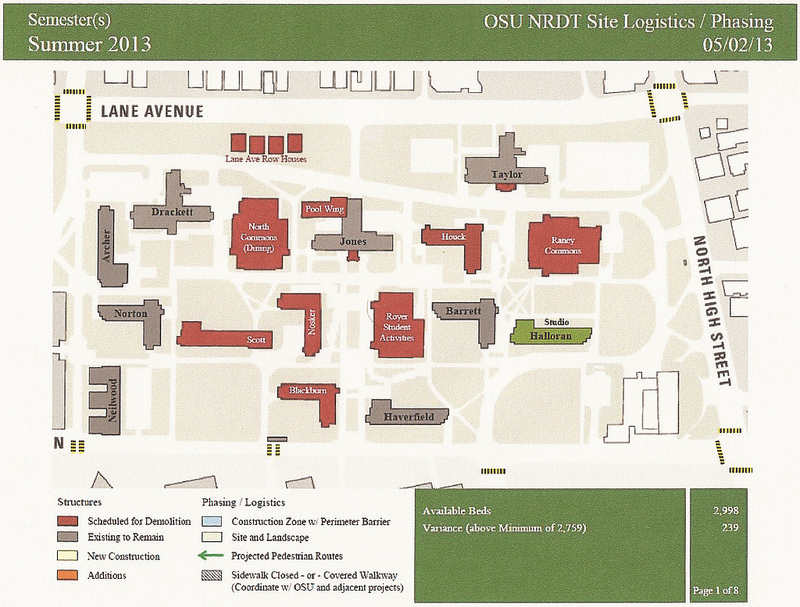
Announced around the same time as SCHRRAP, the North Campus Residential District Project began just this past week. This project focuses on the large cluster of dorms and other buildings at the southwest corner of N. High Street and W. Lane Avenue. Most were built in the 1960s and 1970s and look it.

North Campus in 2013.


The image above shows how the area looks currently. As the key says, the buildings in red are scheduled to be demolished. The road that goes through the complex, Curl Drive, is also scheduled to be removed.

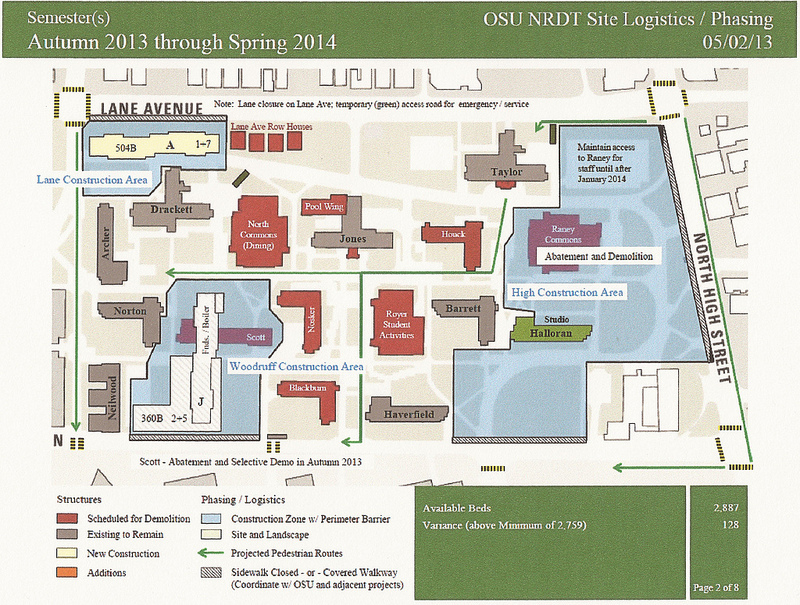
The image above shows the first phases of construction through Spring 2014. As you can see, there will be 3 main areas of construction during this period.
-A new dorm will be constructed at the southeast corner of W. Lane and Neil Avenues. This area is currently a surface parking lot.
-Scott Hall will be demolished and the site will be replaced with a much larger building.
-Raney Commons will be demolished, and site preparation will take place for new buildings, as well as removing Curl Drive and other infrastructure.
-Once site preparation is complete, 3 new dorm buildings will be constructed at the corner of N. High and W. Lane.

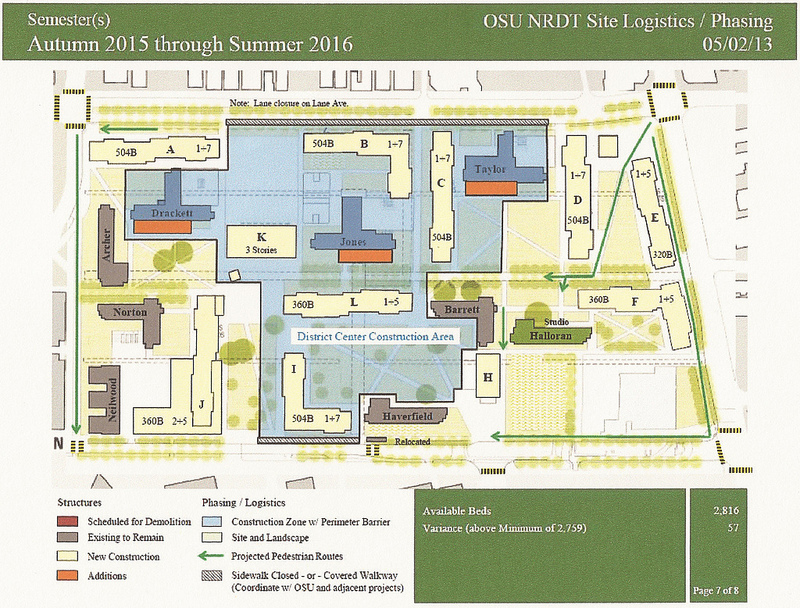
The last image above shows the final phase of construction, from Fall 2015 to Summer 2016. During this period, several changes take place.
-4 row homes along W. Lane will be demolished, as well as North Commons, Houck, Blackburn and Nosker Halls, the Royer Student Activities building and the Jones Pool.
-5 new buildings will be built in this area, as well as new addtions to Taylor, Jones and Drackett Halls.
-A central pedestrian corridor will be completed through the entire complex.
-High and Lane will be landscaped, and park spaces will be created throughout.

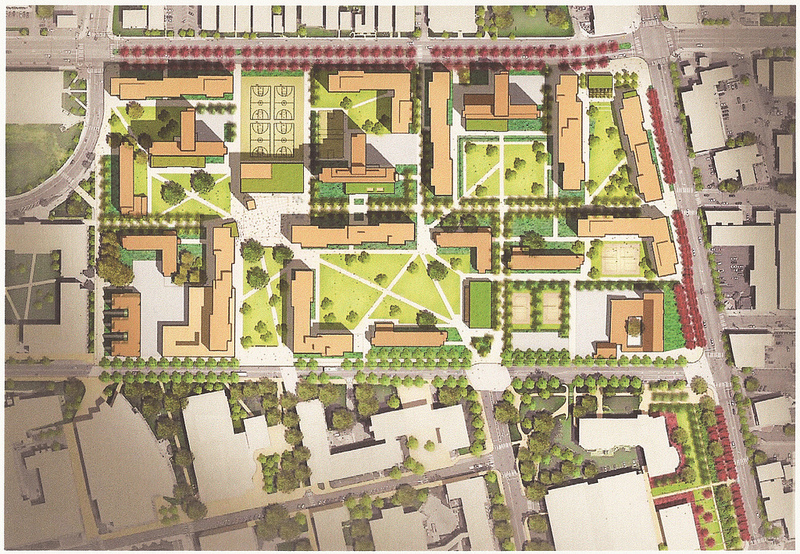
Final rendering.


In the end, 3,200 new beds will be created in the $370 million project. This will drastically change the look and feel of this area, and will continue to add density to the campus area, already Columbus’ most dense.


Columbus Housing Market July 2013


Columbus housing market July 2013

In this edition of the Columbus Housing Market July 2013, we see from Columbus Realtorsthat the housing market has been pretty white hot, and metro area sales set monthly records in July with an increase over 28%. July also featured the 3rd highest sales of any month on record.

I looked at the 21 major areas of Franklin County (11 urban, 10 suburban). Here is what the July market looked like.

Top 10 July Sales Totals
1. Columbus: 1,055
2. Dublin: 95
3. Upper Arlington: 91
4. Clintonville: 85
5. Westerville: 68
6. Grove City: 66
7. Hilliard: 60
8. Reynoldsburg: 46
9. Gahanna: 42
10. Pickerington: 38

Top 10 July Sales Increases Over July 2012
1. Minerva Park: +300.0%
2. German Village: +154.5%
3. Grove City: +83.3%
4. Reynoldsburg: +70.4%
5. Canal Winchester: +60.0%
6. Whitehall: +55.6%
7. Pataskala: +41.2%
8. Clintonville: +37.1%
9. Columbus: +35.8%
10. New Albany: +32.0%

Top 10 Total YTD Sales Through July
1. Columbus: 6,072
2. Dublin: 480
3. Upper Arlington: 447
4. Clintonville: 423
5. Westerville: 375
6. Grove City: 363
7. Hilliard: 338
8. Gahanna: 315
9. Reynoldsburg: 310
10. Pickerington: 203

Top 10 YTD Sales Increases Through over July 2012
1. Whitehall: +42.7%
2. Hilliard: +42.0%
3. Bexley: +38.7%
4. Reynoldsburg: +36.6%
5. Pataskala: +35.9%
6. German Village: +34.7%
7. Pickerington: +34.4%
8. Minerva Park: +31.3%
9. Clintonville: +31.0%
10. Westerville: +29.8%

Average Sales July 2013
Urban: 124.7
Suburban: 50.4
Urban without Columbus: 31.7

Average % Change July 2013 vs. July 2012
Urban: +48.3%
Suburban: +35.0%
Urban without Columbus: +54.0%

Average Sales YTD Through July
Urban: 699.1
Suburban: 283.4
Urban without Columbus: 161.8

Average % Change YTD vs. YTD 2012 (Through July)
Urban: +19.7%
Suburban: +28.2%
Urban without Columbus: +18.8%

Top 10 Average Sales Price
1. New Albany: $563,891
2. Upper Arlington: $389,264
3. Bexley: $370,056
4. Dublin: $350,545
5. Downtown: $329,266
6. German Village: $325,721
7. Worthington: $272,706
8. Grandview Heights: $254,470
9. Hilliard: $240,506
10. Westerville: $209,706

Top 10 Average Sales Price % Increases vs. July 2012
1. Upper Arlington: +22.3%
2. Hilliard: +18.7%
3. Grandview Heights: +13.1%
4. Downtown: +12.5%
5. Pickerington: +12.4%
6. Pataskala: +11.6%
7. Canal Winchester: +11.3%
8. Worthington: +7.5%
9. Dublin: +6.7%
10. Columbus: +6.5%

Top 10 Average Sales Price YTD
1. New Albany: $545,545
2. Upper Arlington: $355,993
3. Bexley: $347,920
4. Dublin: $333,285
5. German Village: $310,179
6. Downtown: $285,807
7. Worthington: $243,009
8. Grandview Heights: $219,100
9. Hilliard: $218,104
10. Gahanna: $202,527

Top 10 Average YTD Sales Price % Change vs. YTD 2012
1. Whitehall: +33.5%
2. Downtown: +18.6%
3. Gahanna: +13.8%
4. Minerva Park: +13.0%
5. Upper Arlington: +12.4%
6. Reynoldsburg: +9.9%
7. New Albany: +9.1%
8. Hilliard: +5.5%
9. Gahanna: 5.0%
10. Canal Winchester: +4.9%

Average Price July 2013
Urban: $230,605
Suburban: $236,871
Urban without Columbus: $239,388

Average Price % Change vs. July 2012
Urban: +1.8%
Suburban: +6.3%
Urban without Columbus: +1.3%

Average Price YTD
Urban: $214,207
Suburban: $223,511
Urban without Columbus: $223,053

Average Price % Change YTD vs. YTD 2012
Urban: +6.3%
Suburban: +5.0%
Urban without Columbus: +6.6%

Top 10 Fastest Selling Markets July 2013 (based on # of Days listings sell)
1. Grandview Heights: 9
2. Obetz: 9
3. Hilliard: 25
4. Worthington: 26
5. Upper Arlington: 29
6. Bexley: 31
7. Westerville: 38
8. Reynoldsburg: 40
9. New Albany: 42
10. Clintonville: 44

Top 10 Fastest Selling Markets YTD
1. Worthington: 36
2. Grandview Heights: 47
3. Upper Arlington: 47
4. Clintonville: 56
5. Westerville: 56
6. Hilliard: 58
7. Dublin: 59
8. New Albany: 60
9. Gahanna: 62
10. Pataskala: 62

Average # of Days before Sale, July 2013
Urban: 49.8
Suburban: 48.7
Urban without Columbus: 48.8

Average # of Days before Sale, YTD
Urban: 64.6
Suburban: 62.3
Urban without Columbus: 64.4

Top 10 Lowest Housing Supplies (based on # of months to sell all listings), July 2013
1. Worthington: 1.9
2. Grandview Heights: 2.4
3. Upper Arlington: 2.4
4. Clintonville: 2.5
5. Hilliard: 2.7
6. Westerville: 2.8
7. Dublin: 3.1
8. Bexley: 3.2
9. Gahanna: 3.6
10. Downtown: 4.0

Average # of Months to Sell All Listings
Urban: 3.7
Suburban: 4.2
Urban without Columbus: 3.6

Average % Change of Single-Family Home Sales, July 2013 vs. July 2012
Urban: +55.0%
Suburban: +33.4%
Urban without Columbus: +58.0%

Average % Change of Condo Sales, July 2013 vs. July 2012
Urban: +78.4%
Suburban: +89.0%
Urban without Columbus: +82.3%

Average % Change of Single-Family Home Sales YTD vs. YTD 2012
Urban: +14.4%
Suburban: +28.5%
Urban without Columbus: +13.0%

Average % Change of Condo Sales YTD vs. YTD 2012
Urban: +42.8%
Suburban: +32.7%
Urban without Columbus: +44.0%

Seems like most areas are doing fairly well, including the urban core. Of course, these number do not measure rentals, which is what is really booming right now in the residential scene.


May 2013 Jobs Data


May 2013 jobs data

The latest May 2013 jobs data is now out from the Bureau of Labor Statistics.

Columbus City
Unemployment Rate: 6.0%
Unemployment Rate Change since May 2012: +0
Unemployment Rate Change since January 2013: -0.8
Civilian Labor Force: 431,500
Civilian Labor Force Change since May 2012: +3,600
Civilian Labor Force Change since January 2013: +5,100
Employment: 405,500
Employment Change since May 2012: +3,400
Employment Change since January 2013: +8,200
Unemployment: 26,000
Unemployment Change since May 2012: +100
Unemployment Change since January 2013: -3,100

Franklin County
Unemployment Rate: 6.0%
Unemployment Rate Change since May 2012: +0
Unemployment Rate Change since January 2013: -0.8
Civilian Labor Force: 631,000
Civilian Labor Force Change since May 2012: +5,300
Civilian Labor Force Change since January 2013: +7,300
Employment: 593,100
Employment Change since May 2012: +5,100
Employment Change since January 2013: +12,100
Unemployment: 37,900
Unemployment Change since May 2012: +200
Unemployment Change since January 2013: -4,700

Columbus Metro Area
Unemployment Rate: 6.0%
Unemployment Rate Change since May 2012: +0.1
Unemployment Rate Change since January 2013: -1.0
Civilian Labor Force: 977,400
Civilian Labor Force Change since May 2012: +8,600
Civilian Labor Force Change since January 2013: +9,500
Employment: 919,100
Employment Change since May 2012: +7,800
Employment Change since January 2013: +18,600
Unemployment: 58,300
Unemployment Change since May 2012: +800
Unemployment Change since January 2013: -9,100

Ohio Overall
Unemployment Rate: 7.0%
Unemployment Rate Change since May 2012: -0.3
Unemployment Rate Change since January 2013 : +0
Civilian Labor Force: 5,750,000
Civilian Labor Force Change since May 2012: -5,000
Civilian Labor Force Change since January 2013: +10,000
Employment: 5,345,000
Employment Change since May 2012: +9,000
Employment Change since January 2013: +4,000
Unemployment: 405,000
Unemployment Change since May 2012: -15,000
Unemployment Change since January 2013: +6,000

Metro Non-Farm Jobs
Total: 966,900
Change from May 2012: +12,200
Change from January 2013: +23,300

By Industry
Mining/Logging/Construction Total: 30,600
Change from May 2012: +500
Change from January 2013: +3,700

Manufacturing Total: 66,600
Change from May 2012: +600
Change from January 2013: +1,600

Trade/Transportation/Utilities Total: 180,700
Change from May 2012: -1,200
Change from January 2013: -2,500

Information Total: 16,400
Change from May 2012: -200
Change from January 2013: -100

Financial Activities Total: 71,300
Change from May 2012: -200
Change from January 2013: -400

Professional and Business Services Total: 161,000
Change from May 2012: +1,100
Change from January 2013: +5,400

Education and Health Services Total: 142,600
Change from May 2012: +4,500
Change from January 2013: +3,100

Leisure and Hospitality Total: 99,700
Change from May 2012: +4,900
Change from January 2013: +11,200

Other Services Total: 35,800
Change from May 2012: -600
Change from January 2013: -400

Government Total: 162,200
Change from May 2012: -200
Change from January 2013: +1,700


Columbus Murders by Census Tract 2008-2012


A few days ago, I posted maps for murders by zip code. Because zip codes encompass such large areas, they aren’t as accurate in showing where murders are taking place within them. To help show this more, I broke the maps down into Columbus murders by census tract. While the tracts can include large areas also, they are much smaller than zip codes and allow us to see more at the neighborhood level.

So here they are.


The same forces spreading murder further out into the suburbs in the zip codes seems to be at play in tracts as well.
Here are the totals for the entire period.

The High Street corridor from Merion Village up through Worthington has very low or non-existent murder rates. This is also true for most of Whitehall, surprisingly, Bexley, most of the Northwest Side and much of the North Side, apart from the Tamarack Circle area.

Columbus Crime Statistics provide additional maps and data for local crime back to 1985.