The 2010 President’s Day Snowstorm


The 2010 President’s Day Snowstorm was the third and largest snowstorm to strike Columbus and Ohio during February, 2010. Models began showing the potential for another snow event in the Ohio Valley several days before. Initially, the track was well south, with only counties along the Ohio River being impacted, as this excerpt from the February 12, 2010 Area Forecast Discussion from Wilmington National Weather Service mentions:
MODEL SOLUTIONS CONTINUE TO DIFFER ON SYSTEM COMING IN SUNDAY NIGHT INTO THE BEGINNING OF THE WORK WEEK. THE GEM IS STILL THE FURTHEST SOUTH WITH THE UPCOMING SYSTEM. THE ECMWF HAS TRENDED NORTH WITH THE LATEST RUN AND IS NOW MORE IN LINE WITH THE GFS. THE ECMWF NOW ACTUALLY HAS THE SURFACE LOW SLIGHTLY FURTHER NORTH THAN THE GFS.
WENT WITH A GFS AND ECMWF BLEND. IT WILL BE COLD ENOUGH THAT PRECIPITATION WILL ALL BE IN THE FORM OF SNOW. MONDAY WILL SEE THE GREATEST CHANCE FOR SNOW WITH LOW TRACKING ACROSS KENTUCKY. ACCUMULATING SNOWFALL WILL BE POSSIBLE…ESPECIALLY ALONG AND SOUTH OF THE OHIO RIVER.

As the event grew closer, however, model solutions inched northward. On the afternoon of Saturday, February 13th, Wilmington issued the first Winter Storm Watch for parts of Ohio, but the focus continued to be south of Columbus.
URGENT – WINTER WEATHER MESSAGE
NATIONAL WEATHER SERVICE WILMINGTON OH
222 PM EST SAT FEB 13 2010
…ANOTHER WINTER STORM TO AFFECT THE OHIO VALLEY…
.LOW PRESSURE WILL DEVELOP OVER THE LOWER OHIO VALLEY ON SUNDAY…AND WILL TRACK INTO THE CENTRAL APPALACHIANS BY MONDAY EVENING. AS THE LOW MOVES SOUTH OF THE OHIO RIVER SUNDAY NIGHT AND MONDAY…SNOW WILL OVERSPREAD PARTS OF INDIANA…KENTUCKY AND OHIO. THIS SYSTEM HAS THE POTENTIAL TO PRODUCE SEVERAL INCHES OF SNOW ACROSS PARTS OF THE OHIO VALLEY…ESPECIALLY ACROSS AREAS SOUTH OF THE I-70 CORRIDOR.
FRANKLIN IN-RIPLEY-DEARBORN-OHIO-SWITZERLAND-CARROLL-GALLATIN-BOONE-KENTON-CAMPBELL-OWEN-GRANT-PENDLETON-BRACKEN-ROBERTSON-MASON-LEWIS-FAYETTE OH-PICKAWAY-FAIRFIELD-BUTLER-WARREN-CLINTON-ROSS-HOCKING-HAMILTON-CLERMONT-BROWN-HIGHLAND-ADAMS-PIKE-SCIOTO-
INCLUDING THE CITIES OF…BROOKVILLE…VERSAILLES…LAWRENCEBURG…RISING SUN…VEVAY…CARROLLTON…WARSAW…
BURLINGTON…INDEPENDENCE…ALEXANDRIA…OWENTON…WILLIAMSTOWN…FALMOUTH…BROOKSVILLE…MOUNT OLIVET…MAYSVILLE…VANCEBURG…WASHINGTON COURT HOUSE…CIRCLEVILLE…LANCASTER…HAMILTON…
LEBANON…WILMINGTON…CHILLICOTHE…LOGAN…CINCINNATI…MILFORD…GEORGETOWN…HILLSBORO…WEST UNION…PIKETON…PORTSMOUTH
…WINTER STORM WATCH IN EFFECT FROM SUNDAY EVENING THROUGH LATE MONDAY NIGHT…
THE NATIONAL WEATHER SERVICE IN WILMINGTON HAS ISSUED A WINTER STORM WATCH…WHICH IS IN EFFECT FROM SUNDAY EVENING THROUGH LATE MONDAY NIGHT.
LIGHT SNOW IS EXPECTED TO DEVELOP SUNDAY EVENING…AS A STORM SYSTEM MOVES INTO THE OHIO VALLEY. SNOW WILL INCREASE IN INTENSITY THROUGH EARLY MONDAY…WITH OCCASIONAL SNOW CONTINUING INTO MONDAY EVENING. BY THE TIME SNOW ENDS EARLY TUESDAY…THE POTENTIAL EXISTS FOR TOTAL SNOWFALL ACCUMULATIONS OF 4 TO 6 INCHES…WITH LOCALLY HIGHER AMOUNTS.
THESE FORECAST SNOW AMOUNTS ARE HIGHLY DEPENDENT ON THE EVENTUAL TRACK OF THE UPCOMING STORM SYSTEM. IF THE SYSTEM MOVES FURTHER NORTH OR SOUTH OF THE CURRENT FORECAST TRACK…THEN SNOWFALL AMOUNTS MAY BE LESS.

While Columbus was not included in the initial Watch, its zone forecast did call for accumulating snow by the 13th.
OHZ054>056-140930-
MADISON-FRANKLIN OH-LICKING-
INCLUDING THE CITIES OF…LONDON…COLUMBUS…NEWARK
332 PM EST SAT FEB 13 2010
.TONIGHT…MOSTLY CLOUDY WITH SCATTERED FLURRIES. LOWS 15 TO 20. WEST WINDS 5 TO 10 MPH.
.SUNDAY…PARTLY SUNNY. SCATTERED FLURRIES IN THE MORNING. HIGHS IN THE UPPER 20S. SOUTHWEST WINDS 5 TO 10 MPH.
.SUNDAY NIGHT…MOSTLY CLOUDY. A CHANCE OF SNOW AFTER MIDNIGHT. LOWS 10 TO 15. WEST WINDS 5 TO 10 MPH…BECOMING NORTHWEST AFTER MIDNIGHT. CHANCE OF SNOW 40 PERCENT.
.PRESIDENTS DAY…SNOW. SNOW ACCUMULATION 2 TO 4 INCHES. HIGHS IN THE MID 20S. NORTHEAST WINDS 5 TO 10 MPH…BECOMING NORTHWEST IN THE AFTERNOON. CHANCE OF SNOW 80 PERCENT.
.MONDAY NIGHT…CLOUDY. SNOW LIKELY IN THE EVENING…THEN A CHANCE OF SNOW SHOWERS AFTER MIDNIGHT. ADDITIONAL LIGHT SNOW ACCUMULATION POSSIBLE. LOWS 15 TO 20. WEST WINDS 10 TO 15 MPH WITH GUSTS UP TO 25 MPH. CHANCE OF SNOW 70 PERCENT.
.TUESDAY…CLOUDY WITH A 50 PERCENT CHANCE OF SNOW SHOWERS. HIGHS IN THE MID 20S.
.TUESDAY NIGHT…CLOUDY WITH A 30 PERCENT CHANCE OF SNOW SHOWERS. LOWS AROUND 20.

By the morning of the Valentine’s Day, models had moved far enough north with the low track that the I-70 corridor was in line for much higher totals. At 2:43AM that day, the Winter Storm Watch was expanded into Central Ohio, with predictions of 5″-8″. By late morning, the Watch was upgraded to a Warning, and totals were upped slightly to 6″-9″.
OHZ054>056-150930-
MADISON-FRANKLIN OH-LICKING-
INCLUDING THE CITIES OF…LONDON…COLUMBUS…NEWARK
409 PM EST SUN FEB 14 2010
…WINTER STORM WARNING IN EFFECT FROM 4 AM MONDAY TO 6 AM EST TUESDAY…
.TONIGHT…PARTLY CLOUDY THIS EVENING…THEN MOSTLY CLOUDY WITH A SLIGHT CHANCE OF SNOW AFTER MIDNIGHT. MOSTLY CLOUDY WITH A CHANCE OF SNOW LATE. LOWS 15 TO 20. SOUTHWEST WINDS 5 TO 10 MPH… BECOMING SOUTHEAST AFTER MIDNIGHT. CHANCE OF SNOW 40 PERCENT.
.PRESIDENTS DAY…SNOW. SNOW MAY BE HEAVY AT TIMES IN THE AFTERNOON. SNOW ACCUMULATION OF 4 TO 6 INCHES. HIGHS IN THE UPPER 20S. NORTHEAST WINDS 5 TO 10 MPH…BECOMING NORTH IN THE AFTERNOON. CHANCE OF SNOW 100 PERCENT.
.MONDAY NIGHT…SNOW…MAINLY IN THE EVENING. TOTAL SNOW ACCUMULATION OF 6 TO 9 INCHES. LOWS AROUND 20. WEST WINDS 10 TO 15 MPH WITH GUSTS UP TO 25 MPH. CHANCE OF SNOW 90 PERCENT.
.TUESDAY…CLOUDY. SNOW SHOWERS LIKELY…MAINLY IN THE AFTERNOON. ADDITIONAL LIGHT SNOW ACCUMULATION POSSIBLE. HIGHS IN THE MID 20S. WEST WINDS 15 TO 20 MPH WITH GUSTS UP TO 30 MPH. CHANCE OF SNOW 60 PERCENT.
.TUESDAY NIGHT…CLOUDY WITH A 40 PERCENT CHANCE OF SNOW SHOWERS.LOWS IN THE LOWER 20S. WEST WINDS 10 TO 15 MPH WITH GUSTS UP TO 25 MPH.

Snow began in the area by 8:30AM on the 15th and was heavy through mid-afternoon. The bulk of the snow moved out of the area by Midnight, with only occasional wraparound snow showers continuing into the 16th.

The storm generally exceeded forecast snow totals across the region. Columbus received a record 9.7″ for the 15th, with a total storm total of 10.4″, making it one of the very rare storms to produce double-digit snowfall totals for the city. Since 1950, Columbus has had just 6 such events- the Great Thanksgiving Blizzard of 1950, April 3-4, 1987, February 14-17, 2003, March, 2008, President’s Day 2010 and February 4-5, 2014. Double-digit snowfalls have historically occurred roughly once every 12 years. It has been 9 years since the last one, but there have been decades between some of them.

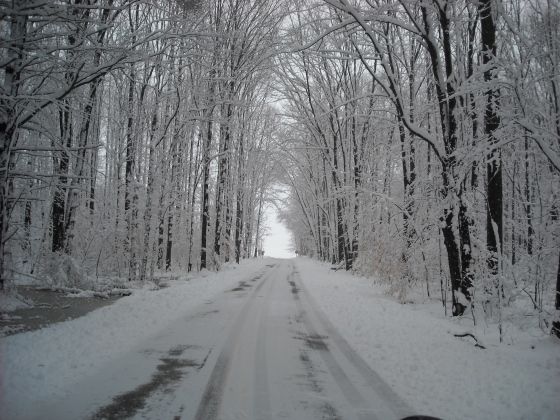
Snowfall totals across Franklin County were 7″-11″, with the highest totals in the southwest. Most of the I-70 corridor south had at least 6″. Snow depths in Columbus reached record highs, with the airport having a post-storm depth of 14″, the highest February depth since at least 1939.

This was the peak event for the month, but not the end of February, 2010’s historically snowy run. A 4th, but far smaller snow event would occur towards the end of the month, bringing a general 3″-5″ across most areas. This would contribute to making the month the all-time snowiest on record for many areas. Columbus’ 30.1″ of snow for the month was the highest on record, and is the 2nd snowiest of any month to ever occur, falling just behind January, 1978’s 34.4″. Cincinnati, Dayton and other cities would also record either their top snowiest or 2nd snowiest February as well. Additionally, Winter 2009-2010 went into the record books at the 5th snowiest of all time. A truly memorable run!

If you are interested in seeing stats from other winters, records of all types can be found on the Winter Season Records page.


Christmas Day Climatology


Christmas Day climatology Columbus, Ohio

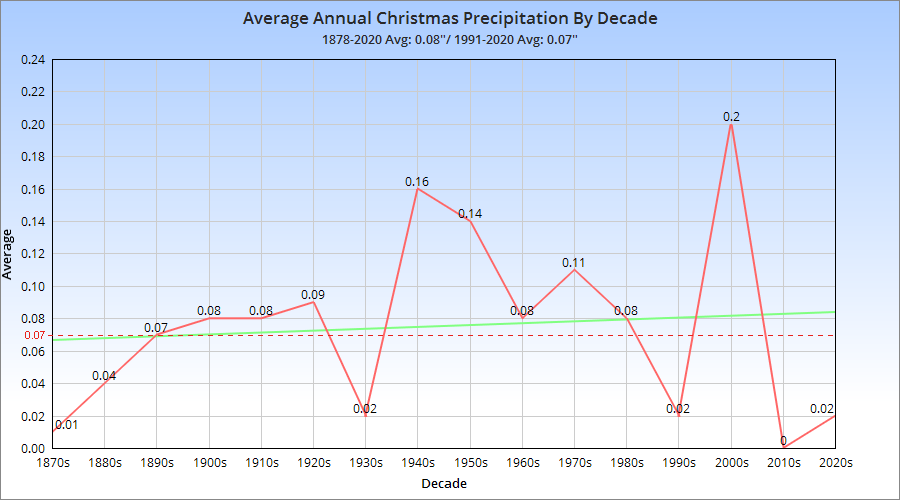
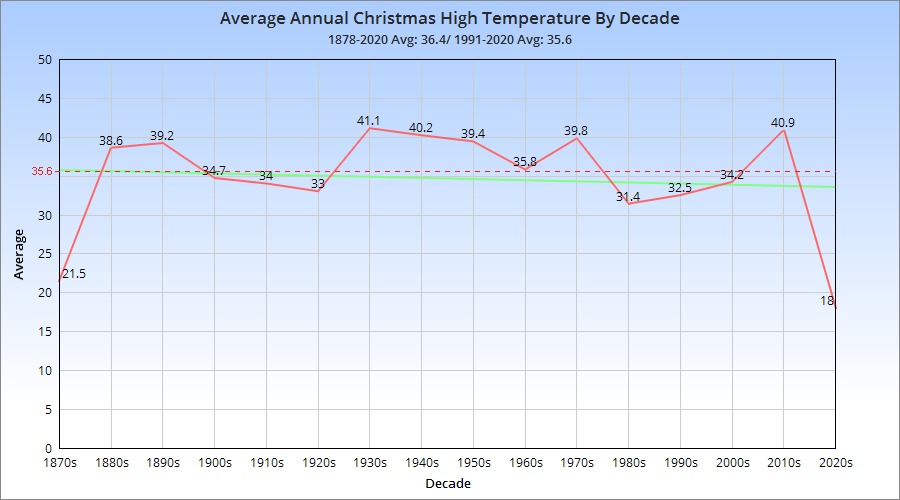
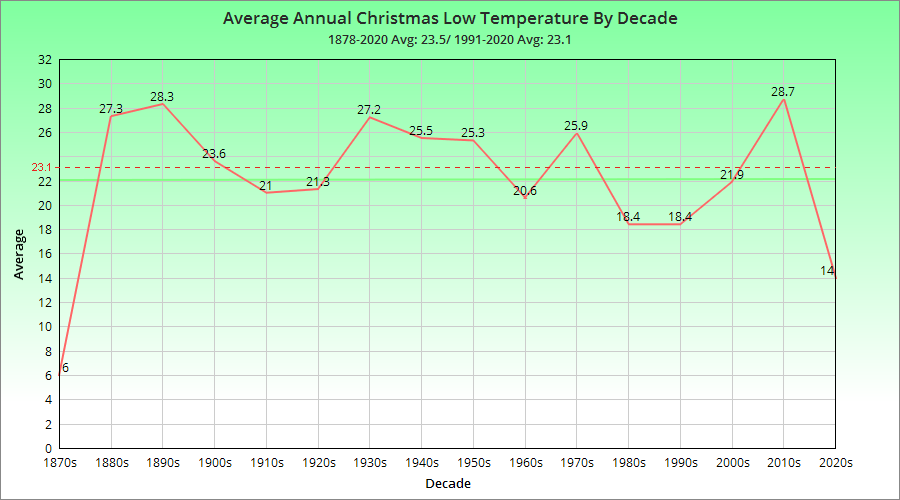
Columbus, Ohio weather is has varied wildly over the 143 years of records, and the holidays are no different. It’s seen record warmth into the 60s, and record cold well below zero, as well as heavy snow and driving rainstorms. The records below break down Columbus’ historic Christmas Day climatology.

Normals 1991-2020
High: 35.6
Low: 23.1
Mean: 26.8
Precipitation: 0.10″
Snowfall: 0.1″

1878-2020 Averages
High: 36.4
Low: 23.5
Mean: 30.1
Precipitation: 0.08″
Snowfall: 0.3″

First, let’s take a look at the temperature breakdowns for the holiday.

Top 10 Coldest Highs
1. 1983: 1
2. 1878: 10
3. 1924: 11
4. 1980: 15
5. 1902: 16
6. 1985: 17
7. 2020: 18
8. 1884, 2000: 19
9. 1899, 1906, 1914:20
10. 1950, 1968: 22

Top 10 Coldest Lows
1. 1983: -12
2. 1980: -5
3. 1935: -4
4. 1924: -3
5. 1878: -2
6. 2004: -1
7. 1985: 1
8. 2000: 2
9. 1884: 4
10. 1914, 1999: 7

Top 10 Warmest Highs
1. 1893: 64
2. 1982: 63
3. 1932, 1940: 62
4. 1889: 60
5. 1964: 58
6. 1895, 1955: 57
7. 2019: 56
8. 1891: 55
9. 1936, 2015: 53
10. 1888, 1915, 1987: 52

Top 10 Warmest Lows
1. 1889, 1982: 55
2. 1895: 52
3. 1893: 49
4. 1891: 45
5. 2015: 43
6. 1932, 1940: 40
7. 1888, 1964, 1973: 39
8. 1987: 38
9. 1922, 1941, 2009, 2016: 37
10. 1936, 1972: 36

Number of Christmases with High Temperature
Less than 10: 1
10-19: 8
20-29: 24
30-39: 54
40-49: 36
50-59: 12
60 or Higher: 5

Number of Christmases with Low Temperature
Less than 0: 6
0-9: 7
10-19: 36
20-29: 47
30-39: 38
40-49: 5
50 or Higher: 4


Now let’s example precipitation and snowfall records.

Top 10 Wettest
1. 2009: 0.79″
2. 1944: 0.77″
3. 1926: 0.69″
4. 1951: 0.58″
5. 2006: 0.57″
6. 1945: 0.54″
7. 1957: 0.52″
8. 1987, 2005: 0.51″
9. 1915: 0.48″
10. 1909: 0.47″

Number of Christmases with Precipitation Amount
0.00″: 46
Trace: 27
0.01″-0.24″: 55
0.25″-0.49″: 6
0.50″-0.74″: 7
0.75″-0.99″: 2
1.00″ or More: 0

Top 10 Snowiest
1. 1890: 7.0″
2. 1909: 5.7″
3. 1950: 3.0″
4. 1917: 2.5″
5. 1969: 2.3″
6. 1884: 2.2″
7. 1976: 1.9″
8. 1880: 1.8″
9. 1935: 1.3″
10. 1944: 1.2″

Most Snow on the Ground (Since 1940)
1. 1960: 9″
2. 1961, 1963, 1989, 1995: 4″
3. 1969, 1980, 2004: 3″
4. 1947, 1950, 2000: 2″
5. 1944, 1945, 1951, 1956, 1962, 1990, 1992, 1993, 2010, 2017: 1″

Number of Christmases with Snowfall Amount
0.0″: 75
Trace: 23
0.1″-0.4″: 20
0.5″-0.9″: 9
1″-2.9″: 7
3″ or More: 3


Columbus’ Thanksgiving Day Climatology


Columbus' Thanksgiving Day climatology Columbus, Ohio

Thanksgiving can be a relatively volatile holiday. Sitting on the edge of fall and winter, it can be warm and sunny one year, and then freezing cold with snow falling the next. Here we look back at the averages and the greatest extremes the holiday has ever seen.

Normals *1981-2010
High: 48
Low: 33
Mean: 40.5
Precipitation: 0.11″
Snowfall: 0.1″

Thanksgiving Temperature Records

Top 10 Coldest Highs
1. 1930: 12
2. 1936: 26
3. 1880, 1903, 1905: 27
4. 1938: 28
5. 1892, 1898: 29
6. 1881: 30
7. 1945, 2002, 2013: 32
8. 1886, 1889, 1890, 1929, 1958: 33
9. 1882, 1885, 1901, 2014: 34
10. 1912, 1947, 1956, 1982, 2000: 35

Top 10 Coldest Lows
1. 1930: 3
2.1930, 2005: 15
3. 1929, 1984: 16
4. 2000: 17
5. 1880, 1881, 1892, 1894, 1958: 18
6. 1901, 1905, 2002: 19
7. 1898, 1936, 1938, 1950, 1982, 1989, 1996: 20
8. 1911, 1956, 2013: 21
9. 1882, 1886, 1912, 1945: 22
10. 1994, 2008: 23

Top 10 Warmest Highs
1. 1896: 70
2. 2015: 65
3. 1915, 1940: 64
4. 1879, 1908, 1981, 2007, 2012: 63
5. 1966, 1968, 1973, 1979: 62
6. 1918, 1941: 61
7. 1914, 1927, 1983: 60
8. 1933: 59
9. 1899, 1957: 58
10. 1921, 1943, 1990, 2010: 57

Top 10 Warmest Lows
1. 1979: 53
2. 1896: 52
3. 1940: 51
4. 1957: 49
5. 1879: 48
6. 1934, 1966, 2015: 47
7. 1968: 46
8. 1913, 1933, 1978, 1990, 2003: 43
9. 1899, 1927, 1961: 42
10. 1908, 1951, 1987, 1991, 1998: 41


Top 10 Wettest
1. 2010: 1.76″
2. 1961: 1.58″
3. 1968: 1.22″
4. 1990: 0.71″
5. 1921, 1925: 0.70″
6. 1926: 0.69″
7. 1980: 0.65″
8. 1887: 0.60″
9. 1957: 0.59″
10. 1951: 0.49″

Top 10 Snowiest
1. 1880: 3.2″
2. 1950: 1.1″
3. 1938: 0.8″
4. 1959: 0.7″
5. 1889: 0.4″
6. 1945, 1957: 0.3″
7. 1890, 1954, 2005: 0.2″
8. 1953, 2004: 0.1″
9. Multiple: Trace
10. Multiple: 0

Most Snow on the Ground
1959: 1″
2013: 1″
Trace: Multiple

Climatology for all months of the year is located on the Weather History

Wilmington National Weather Service


Summer 2021 Review


Summer 2021 Review Columbus, Ohio

The Summer 2021 review shows a rather warm and wet season, but extremes were rare. Record heat did not occur, and severe weather- a typical event during the summer- was all but missing for the region.

The rankings are accurate through the time of posting, and that data largely comes from the Wilmington National Weather Service. Other comparative data is at the Summer Season Records page.

1991-2020 Summer Normals
Average High: 83.9
Average Low: 63.6
Mean: 73.8
Precipitation: 12.74″

June-August
Average High: 84.9 Tied for 23rd Warmest
Average Low: 65.8 Tied for 6th Warmest
Mean: 74.4 12th Warmest
Precipitation: 14.38″ 24th Wettest
# of 70 or Below Highs: 1 Tied for 2nd Fewest
# of 50 or Below Lows: 1 Tied for 2nd Fewest
# of 90 or Above Highs: 19 Tied for 21st Most
# of 100 or Above Highs: 0 Tied for 1st Fewest
# of 70 or Above Lows: 29 Tied for 4th Most
# of Measurable Precipitation Days: 39 Tied for 7th Most

Average High By Month
June 2021: 84.3 17th Warmest
July 2021: 84.4 Tied for 33rd Coldest
August 2021: 86.1 Tied for 18th Warmest

Average Low By Month
June 2021: 64.1 Tied for 10th Warmest
July 2021: 66.1 Tied for 26th Warmest
August 2021: 67.3 Tied for 7th Warmest

Mean By Month
June 2021: 74.2 Tied for 12th Warmest
July 2021: 75.2 Tied for 35th Warmest
August 2021: 76.7 10th Warmest

Precipitation By Month
June 2021: 2.58″ 35th Driest
July 2021: 4.64″ Tied for 50th Wettest
August 2021: 7.16″ Tied for 5th Wettest

Summer 2021 got both progressively warmer and wetter as it went.


Maximum High By Month
June 2021: 96 on June 29th
July 2021: 92 on July 5th, 6th and 7th
August 2021: 92 on August 12th and 24th

Minimum High By Month
June 2021: 68 on June 2nd
July 2021: 75 on July 10th
August 2021: 77 on August 15th

Maximum Low By Month
June 2021: 73 on June 20th, 26th and 27th
July 2021: 72 on July 12th, 13th and 25th
August 2021: 72 on August 11th, 12th and 29th

Maximum Low Records
-The 73 on June 20th tied the record for the date, last set in 1931.
-The 73 on June 26th tied the record for the date, last set in 1998.

Minimum Low By Month
June 2021: 50 on June 23rd
July 2021: 56 on July 3rd
August 2021: 58 on August 2nd

Highest Daily Precipitation By Month
June 2021: 0.60″ on June 7th
July 2021: 1.26″ on July 1st
August 2021: 1.55″ on August 16th

Precipitation Records
-The 1.55″ on August 16th set a new record for the date, breaking the 1.26″ set in 1934.

Measurable Precipitation Days By Month
June 2021: 12
July 2021: 10
August 2021: 17

Severe weather was unusually limited over the summer. Columbus had only 3 severe thunderstorm warnings over the entire 3 month period- on July 29th, August 11th and August 12th. July 29th brought quarter-sized hail and strong winds to the Downtown area, while the August dates brought strong winds up to 60MPH.


New Year’s Climatology


New Year's climatology

New Years weather has historically been surprisingly tranquil, with some exceptions. Highs have generally been in the 30s or 40s and significant snowfalls have been rare. The records for New Year’s climatology run back to 1878.

New Year’s Eve Normals
High: 37
Low: 24
Mean: 30
Precipitation: 0.09″
Snowfall: 0.2″

New Year’s Day Normals
High: 37
Low: 23
Mean: 30
Precipitation: 0.10″
Snowfall: 0.3″

Temperature Records

Top 10 Coldest New Year’s Eve Highs
1. 1880: 10
2. 1976: 13
3. 1899: 16
4. 1917, 1962: 17
5. 2017: 19
6. 1894, 1998: 23
7. 1881, 1963, 1983, 2001: 24
8. 1914, 1961, 1997: 25
9. 1939, 1946, 2014: 26
10. 1935: 27

Top 10 Coldest New Year’s Day Highs
1. 1928: 8
2. 1968: 10
3. 2018: 11
4. 1977: 12
5. 1900: 16
6. 1969: 17
7. 1898, 1918: 18
8. 1940: 19
9. 1999: 20
10. 1881: 21

Top 10 Coldest New Year’s Eve Lows
1. 1976: -5
2. 1880: -3
3. 1899, 1963: 1
4. 1961, 1962, 2017: 2
5. 1983: 3
6. 1935, 1939: 6
7. 1902, 1917: 7
8. 1878, 1927, 1968: 8
9. 1960, 1967: 10
10. 1914, 2000: 11

Top 10 Coldest New Year’s Day Lows
1. 1968: -6
2. 2018: -2
3. 1928: -1
4. 1881: 0
5. 1977: 1
6. 1945: 2
7. 1940: 3
8. 1898, 1918, 1963: 4
9. 1900, 1969: 5
10. 20001: 6

Top 10 Coldest New Year’s Eve Means
1. 1880: 3.5
2. 1976: 4
3. 1899: 8.5
4. 1962: 9.5
5. 2017: 10.5
6. 1917: 12
7. 1963: 12.5
8. 1961, 1983: 13.5
9. 1939: 16
10. 1935: 16.5

Top 10 Coldest New Year’s Day Means
1. 1968: 2
2. 1928: 3.5
3. 2018: 4.5
4. 1977: 6.5
5. 1881, 1900: 10.5
6. 1898, 1918, 1940, 1969: 11
7. 1963, 1999: 13.5
8. 1887: 15
9. 2001: 16
10. 1974: 16.5

Top 10 Warmest New Year’s Eve Highs
1. 1951: 68
2. 1965: 63
3. 2010: 62
4. 2006, 2018: 61
5. 1992: 60
6. 1884, 1978, 2022: 59
7. 1972, 2021: 58
8. 1923, 1936: 57
9. 1906, 1933, 2004: 54
10. 1896, 1984, 2002: 53

Top 10 Warmest New Year’s Day Highs
1. 1952: 67
2. 1985: 65
3. 1890: 62
4. 1897: 61
5. 1930: 60
6. 1916, 1921, 1979, 2022: 59
7. 2011, 2019: 58
8. 1955: 57
9. 1905, 1934, 1948: 56
10. 1892, 1919, 2012: 55

Top 10 Warmest New Year’s Eve Lows
1. 1965: 52
2. 2004: 50
3. 2006, 2010: 45
4. 1951: 44
5. 1918, 1978: 43
6. 2021: 42
7. 1937, 1947, 2002: 41
8. 1896, 1933, 2011, 2022: 39
9. 1906, 1929, 1931, 1972: 37
10. 1995, 2018: 36

Top 10 Warmest New Year’s Day Lows
1. 1930: 47
2. 2005: 46
3. 1892: 43
4. 1891: 42
5. 1916, 1921, 1950, 1966, 2022: 41
6. 1897, 1905, 1932, 2019: 39
7. 1941, 1942, 1952: 38
8. 1890, 1907, 1996, 2007: 36
9. 1948, 1959: 35
10. 1886, 1943, 1967, 1992, 1997, 2023: 34

Top 10 Warmest New Year’s Eve Means
1. 1965: 57.5
2. 1951: 56
3. 2010: 53.5
4. 2006: 53
5. 2004: 52
6. 1978: 51
7. 2021: 50
8. 2022: 49
9. 2018: 48.5
10. 1972: 47.5

Top 10 Warmest New Year’s Day Means
1. 1930: 53.5
2. 1952: 52.5
3. 1897, 1916, 1921, 2022: 50
4. 1890, 1892, 1985, 2005: 49
5. 2019: 48.5
6. 1891: 48
7. 1905, 1950: 47.5
8. 1966: 46.5
9. 1942: 46
10. 1948: 45.5

New Year’s Eve High Temperatures by Occurrence since 1878
0 or Below: 0
1-9: 0
10-19: 6
20-29: 18
30-39: 51
40-49: 44
50-59: 21
60 and Above: 6

New Year’s Day High Temperatures by Occurrence since 1878
0 or Below: 0
1-9: 1
10-19: 8
20-29: 20
30-39: 48
40-49: 40
50-59: 25
60 and Above: 5

New Year’s Eve Low Temperatures by Occurrence since 1878
0 or Below: 2
1-9: 13
10-19: 27
20-29: 48
30-39: 45
40-49: 9
50-59: 2
60 and Above: 0

New Year’s Day Low Temperatures by Occurrence since 1878
0 or Below: 4
1-9: 15
10-19: 26
20-29 52
30-39: 41
40-49: 9
50-59: 0
60 and Above: 0


Precipitation Records

Top 10 Wettest New Year’s Eves
1. 2018: 1.01″
2. 1887: 0.89″
3. 1886: 0.76″
4. 1879: 0.74″
5. 1944: 0.71″
6. 1978: 0.67″
7. 1927: 0.49″
8. 1974: 0.47″
9. 1897, 1989, 2006: 0.46″
10. 2022: 0.44″

Top 10 Wettest New Year’s Days
1. 2022: 1.34″
2. 1948: 1.28″
3. 2021: 1.04″
4. 1916: 1.02″
5. 1979: 0.89″
6. 1919: 0.71″
7. 1959: 0.62″
8. 1893: 0.60″
9. 2003: 0.54″
10. 1964: 0.50″

New Year’s Eve Precipitation by Amount Occurrence since 1878
None: 43
Trace: 35
0.01-0.24: 47
0.25-0.49: 15
0.50-0.99: 5
1.00 or More: 1

New Year’s Day Precipitation by Amount Occurrence since 1878
None: 50
Trace: 34
0.01-0.24: 38
0.25-0.49: 14
0.50-0.99: 6
1.00 or More: 4

Top 10 Snowiest New Year’s Eves
1. 1897: 3.6″
2. 1892: 3.0″
3. 1960: 2.6″
4. 1967: 2.4″
5. 2009: 2.1″
6. 1980: 2.0″
7. 1973: 1.9″
8. 1998, 2012: 1.7″
9. 1887: 1.6″
10. 1961: 0.9″

Top 10 Snowiest New Year’s Days
1. 1964: 5.2″
2. 1883: 3.9″
3. 1887: 2.5″
4. 1970: 2.2″
5. 1884: 1.8″
6. 1945: 1.7″
7. 1961: 1.6″
8. 1928: 1.3″
9. 1918: 1.2″
10. 1981: 1.1″

Top 10 Snowiest New Year’s Holidays (Both December 31st and January 1st Combined)
1. 1963-1964: 5.2″
2. 1960-1961: 4.2″
3. 1892-1893: 4.0″
4. 1882-1883: 3.9″
5. 1897-1898: 3.6″
6. 1980-1981: 3.1″
7. 2009-2010: 2.7″
8. 1969-1970: 2.6″
9. 1886-1887: 2.5″
10. 1967-1968: 2.4″

New Year’s Eve Snowfall by Amount Occurrence since 1878
None: 91
Trace: 28
0.1-0.4: 13
0.5-0.9: 4
1.0-2.4: 7
2.5-4.9: 3
5.0 or More: 0

New Year’s Day Snowfall by Amount Occurrence since 1878
None: 88
Trace: 28
0.1-0.4: 13
0.5-0.9: 4
1.0-2.4: 10
2.5-4.9: 2
5.0 or More: 1

Top 5 Deepest New Year’s Eve Snow Depths since 1940
1. 2012: 7″
2. 1973, 2000: 4″
3. 1960, 1976, 2017: 3″
4. 1961, 1995, 1997, 2009: 2″
5. 1967, 1969, 1993, 1998, 2020: 1″

Top 5 Deepest New Year’s Day Snow Depths since 1940
1. 2013: 9″
2. 1961: 6″
3. 2001: 4″
4. 1974, 1977: 3″
5. 1940, 1945, 1962, 1968, 1981, 2018: 2″

For more local weather records, visit:
Weather History
And for current local weather and forecasts, visit:
Wilmington National Weather Service