In this edition of Columbus retail history, we will talk about how the markets of the city were once a vibrant and important part of daily life. As in most cities, shopping in Columbus prior to 1950 was almost exclusively a function of Downtown. This was for the simple reason that widespread suburbs did not exist yet and Downtown was the heart of the city, where almost everyone lived and worked, and therefore did all of their shopping there as well. Most of this shopping occurred in family owned shops and small marketplaces, but as the city grew, the need for larger centers of commerce began to rise. Beginning in 1849 and continuing through early 1850, Central Market was built at S. 4th and E. Town Streets. Opening on June 1, 1850, Central Market was designed to be an economic center for the city, but also served as City Hall from May 1851 until 3/28/1872 when the new City Hall opened.
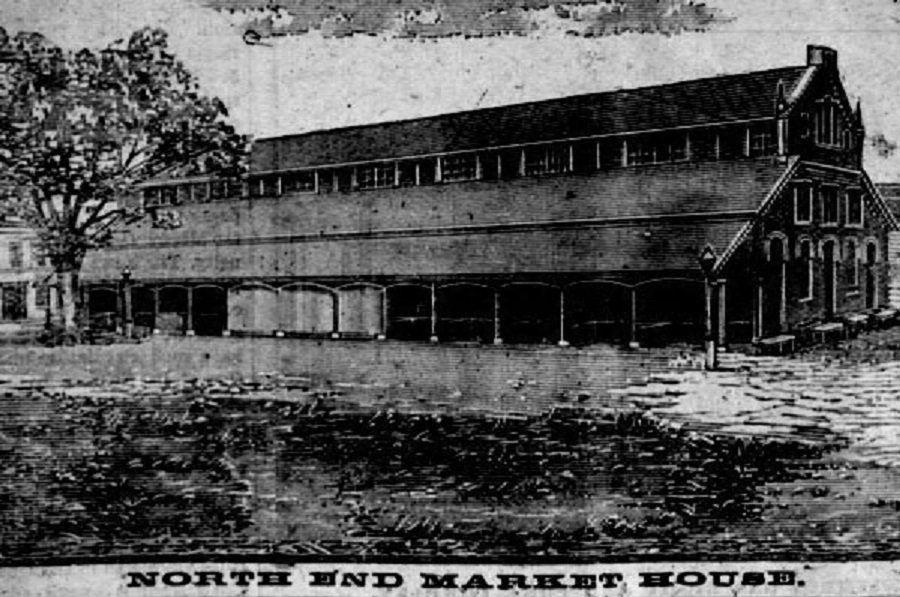
Central Market C. 1860-1880 Central Market was a very popular market for decades, and at its height, attracted some 20,000 shoppers during weekend days. Its success allowed for the creation of other, smaller markets nearby. East Market was located at the intersection of Mt Vernon and Miami Avenues in the King-Lincoln neighborhood. West Market was located on S. Gift Street in Franklinton. North Market, the last to be built, was finished in 1876 and located at the intersection of Spruce and N. Hight Streets.
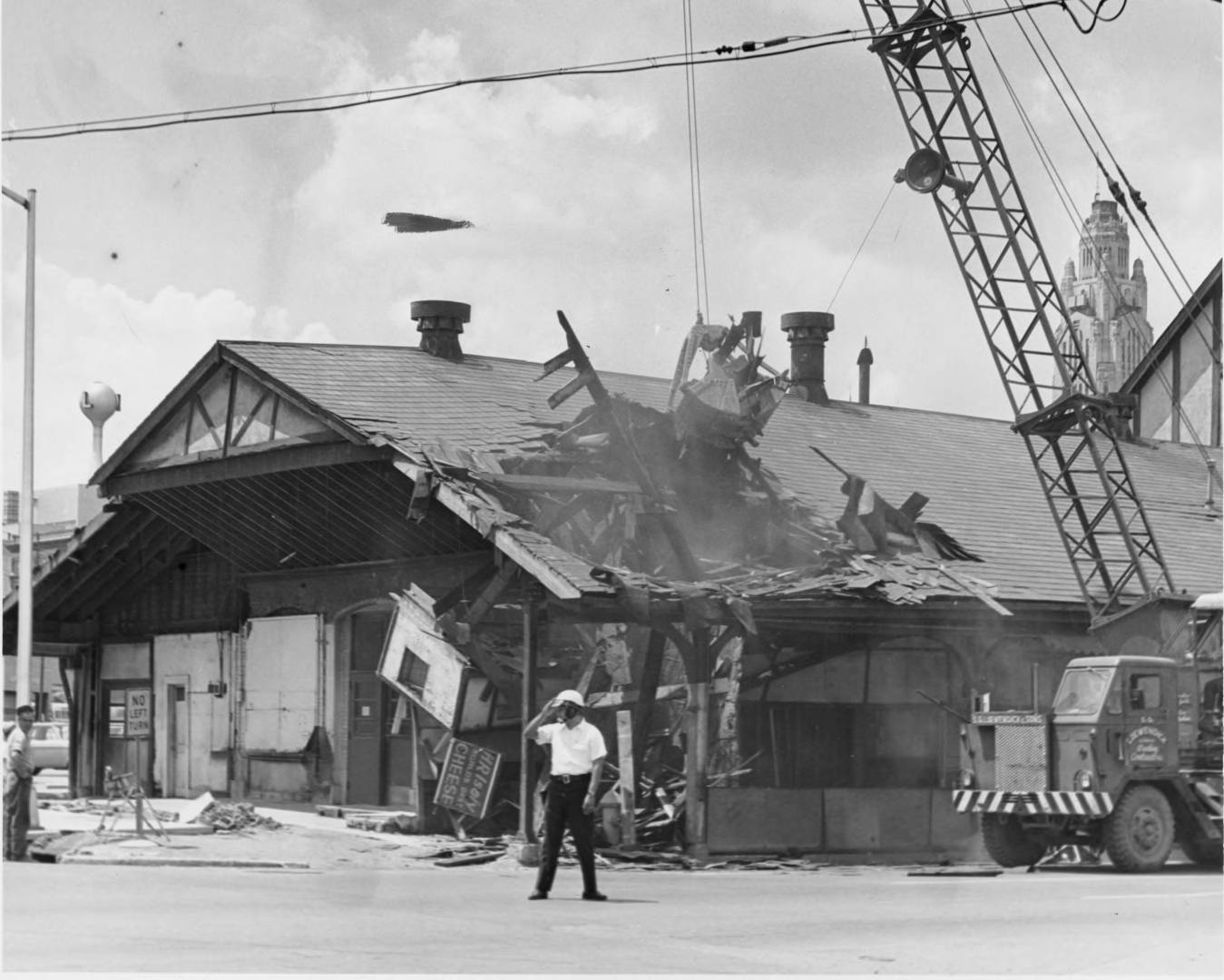
Original North Market: 1876-1948 As time passed, each of these markets succumbed, most notably through fire. East and West Markets were gone by the 1940s, and North Market, too, burned to the ground in February 1948. Central Market was spared fire and significant alteration, existing almost exactly as it was built through the entirety of its lifetime. It also continued to serve as a marketplace, albeit with steadily declining traffic, through the 1950s. Its future, however, was doomed. With no widespread preservation groups at the time and with the push for Urban Renewal, a historic relic like Central Market had no chance. So, in June 1966, Central Market was demolished to make way for a new Greyhound Bus terminal, an exceedingly ugly building built in the brutalist style that was popular during the time. Central Market’s Demolition: 1966
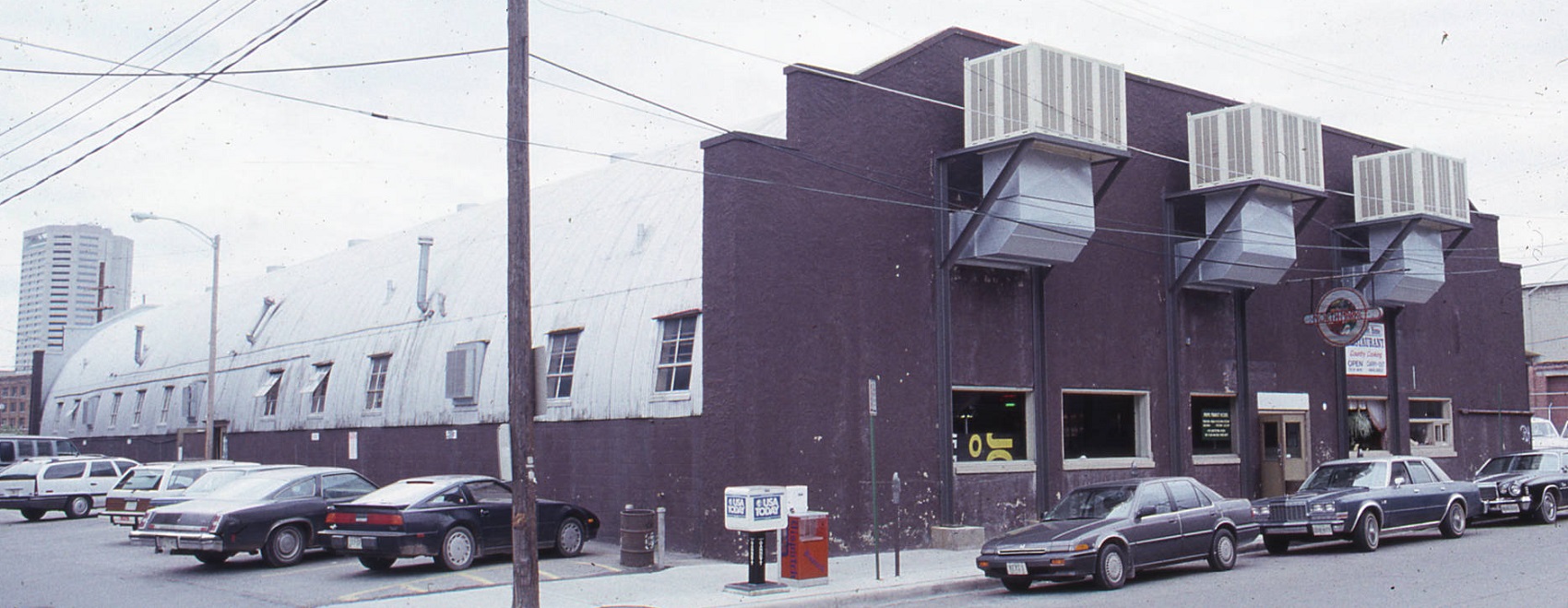
North Market’s replacement did survive somewhat, but was in pretty bad shape by the 1980s. In 1988, the North Market Development Authority was formed to bring the old market back to life. Unfortunately, the old building was not feasible to reuse as the market. The 1948 North Market building from Spruce Street: 1990
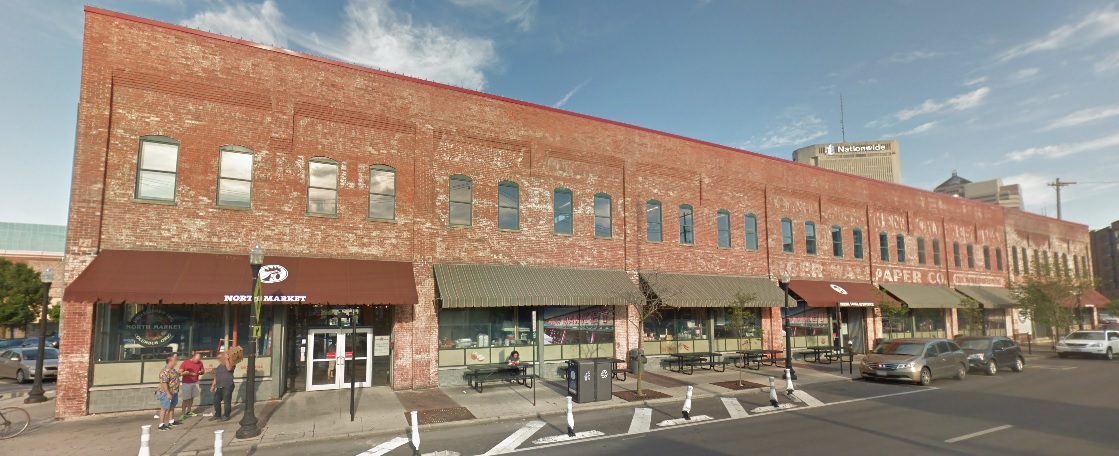
In 1992, Nationwide Insurance sold the NMDA a former warehouse just to the west of the original location. A $5 million renovation of the warehouse was completed and the new North Market opened in November 1995. Today, North Market remains a very popular destination and has played a role in the area’s revitalization, especially along Park Street, which has become a popular spot for new bars and restaurants. It has become a strong incubator for area small businesses and helped launch concepts such as Jeni’s Ice Creams. North Market: 2018
Although much has been lost to time, markets are now returning as an important part of urban life. With North Market’s success and a now increasing population in the Downtown area, a need for the market has returned. A Hills Market grocery store is now in the works at Grant Avenue and should be opening within the next month or two. While lacking the scale and nature of 19th century marketplaces, it will serve new generations of Downtown residents who are helping to bring back this urban neighborhood.
See Shopping Centers for the continuation of the local retail story.
Snow rollers in Columbus after the January 2-3, 1999 event.
In this episode of weather history, we’ll look at the January 1999 snowstorm that pummeled the Columbus area. New Year’s Day, 1999 dawned partly cloudy and cold in Ohio, a tranquil early January day in what had been until then a very warm fall and beginning to winter. Both November and December 1998 had been very warm months. December even had highs reaching into the 70’s early in the month, a truly rare occurrence. However, by the end of December, conditions had taken a turn.
On December 21, 1998, a cold front moved through Ohio, bringing copious amounts of rain. Most cities in Ohio received more than 1″ of rainfall, with several getting 2-3″. This front was the beginning of a very active period that would last for the next three weeks into mid-January. This pattern is not uncommon in La Nina winters, where the Midwest and Ohio Valley, in particular, are often much wetter than normal.
In any event, temperatures fell behind the front and remained generally below normal through the rest of the month of December, though no significant snow events came with the colder weather. That was about to change.
National radars on January 1, 1999 showed blossoming snow in the Great Plains, with cold air pushing south and abundant moisture pushing north from the Gulf of Mexico. Forecasts called for a significant winter storm beginning late on the 1st and lasting through the 2nd. The storm arrived a bit later than expected, but arrived in most areas during the overnight hours of the 1st/2nd as heavy snowfall. The snow initially fell at the rate of at least 1″ per hour, and thundersnow was reported from Cincinnati up through Dayton and Columbus.
During the day on the 2nd, warm air began to affect upper layers of the atmosphere, and the snow gradually began to change over to sleet and freezing rain, with an accumulation of ice of up to 1/2″ in some areas on top of the snow. By then, though, the damage was done. 4-6″ of snow fell in the Cincinnati area, with 6-10″ along the I-70 corridor. Up to 12″ fell to the north of there. Gusty winds created blowing and drifting snow at times, particularly in the northern areas that received less of a coating of ice.
Temperatures turned colder as the storm passed, and what precipitation remained changed back to snow showers by the 3rd of January. Temperatures would remain in the low to mid-teens for highs during the next two days before another storm would set eyes on the state.
Snow Totals for January 2-3, 1999 Dayton: 7.5″ Columbus: 6.6″ Cincinnati: 4.2″
Snow totals in the area from the December 29, 2012 snowstorm.
For this December 2012 weather recap, we’ll quickly review what was probably one of the strangest months ever for weather. The first three weeks were extremely warm, being almost 10 degrees above normal. The last 10 days cooled off, but not enough to make up for the warmth. The mean was 39.4 degrees, or 5.9 degrees above normal, and December ended up being the 10th warmest on record.
Although the month was very wet from the beginning (3rd wettest), there was also only a trace of snowfall through the 20th, and it looked like the month might end with below normal snowfall. Then 4 separate snow events dropped 14.9″ the last 10 days, making the month the 4th snowiest December of all time. Not only that, but two of the snowfalls (5.9″ and 4.9″) were two of the top 20 snowfalls for a December.
December 2012 will definitely go down as one of those months that defied expectations.
In a first of its kind, this is the Columbus housing market update for December 2012. In it, the local housing market will be detailed by categories such as most expensive market, market listing rankings and more.
Note: LSD= Local School District, CSD= City School District. In both cases, school district boundaries differ from city boundaries.
Top 15 Most Expensive Locations By Median Sales Price in December 2012 1. New Albany: $535,000 2. New Albany Plain LSD: $397,450 3. German Village: $376,000 4. Grandview Heights: $362,500 5. Powell: $354,950 6. Dublin: $343,600 7. Granville CSD: $330,000 8. Bexley: $325,000 9. Upper Arlington CSD: $319,500 10. Olentangy LSD: $315,000 11. Big Walnut LSD: $306,250 12. Dublin CSD: $271,500 13. Worthington: $$270,000 14. Buckeye Valley LSD: $259,000 15. Sunbury: $253,000
New Albany was by far the most expensive local market around Columbus.
Top 15 Least Expensive Locations by Median Sales Price in December 2012 1. Obetz: $80,100 2. Hamilton LSD: $80,100 3. Whitehall: $85,950 4. Newark CSD: $86,900 5. Lancaster CSD: $103,000 6. Jefferson LSD: $123,000 7. London CSD: $124,000 8. Groveport Madison LSD: $125,900 9. Reynoldsburg CSD: $125,950 10. Columbus CSD: $129,900 11. South-Western CSD: $131,000 12. Columbus: $140,026 13. Jonathan Alder LSD: $150,000 14. Minerva Park: $159,500 15. Grove City: $160,950
Southern and eastern suburbs tend to perform best on this list, as well as Columbus itself.
Overall Market Median Sales Price in December 2012: $158,645
Top 15 Locations with the Highest Median Sales Price % Growth Between December 2011 and December 2012 1. Whitehall: +69.5% 2. Circleville CSD: +64.9% 3. Sunbury: +63.0% 4. Jefferson LSD: +53.5% 5. Big Walnut LSD: +44.1% 6. Canal Winchester CSD: +40.9% 7. Westerville: +29.8% 8. Westerville CSD: +27.3% 9. Powell: +25.4% 10. Pataskala: +24.0% 11. Olentangy LSD: +23.5% 12. Gahanna Jefferson CSD: +21.8% 13. Grandview Heights: +21.2% 14. Granville CSD: +20.0% 15. Pickerington: +17.7%
Top 15 Locations with the Lowest Median Sales Price % Growth Between December 2011 and December 2012 1. London CSD: -53.5% 2. Obetz: -38.3% 3. Hamilton LSD: -27.1% 4. Jonathan Alder LSD: -25.2% 5. Buckeye Valley LSD: -23.0% 6. Reynoldsburg CSD: -18.7% 7. Hilliard: -17.7% 8. Lancaster CSD: -17.6% 9. Grove City: -15.3% 10. Dublin CSD: -12.8% 11. Johnstown Monroe LSD: -10.8% 12. Upper Arlington CSD: -8.5% 13. Newark CSD: -8.1% 14. Dublin: -7.1% 15. South-Western CSD: -6.4%
Overall Market Median Sales Price % Change December 2011 vs. December 2012: -0.3%
Top 10 Locations with the Most New Listings in December 2012 1. Columbus: 829 2. Columbus CSD: 544 3. South-Western CSD: 136 4. Olentangy LSD: 122 5. Westerville CSD: 100 6. Hilliard CSD: 94 7. Dublin CSD: 89 8. Worthington CSD: 66 9. Dublin: 64 10. Pickerington LSD: 60
Top 10 Locations with the Fewest New Listings in December 2012 1. Valleyview: 0 2. Lithopolis: 1 3. Sunbury: 2 4. Minerva Park: 2 5. Obetz: 3 6. Johnstown Monroe LSD: 5 7. Jefferson LSD: 8 8. German Village: 8 9. Hamilton LSD: 8 10. Whitehall: 11 11. Granville CSD: 12
Total New Listings in the Columbus Metro in December 2012: 2,002 Overall Metro New Listings % Change December 2011-December 2012: +10.5%
Overall, prices are slightly down as supply is currently outstripping demand.
For more information on the local market, go here: Columbus Realtors
2008 was a year of extreme weather events, but aside from the March Blizzard, the biggest story of the year was its severe wind events. Let’s take a look back at these events, but particularly at the Hurricane Ike disaster.
January 8th-9th Severe Weather Record warm temperatures in the upper 60s on the 7th-8th of January, 2008 gave way to storms and even a rare January Tornado Watch on the evening of the 8th. Winds had been gusty all during the day of the 8th, but reached their peak with the frontal passage storms. Rain and thunderstorms began moving into Ohio during the late afternoon and increased in intensity through the evening, prompting the NWS to issue a Tornado Watch just after 10pm. Although no tornadoes were reported anywhere in Ohio on the night of the 8th-9th, the storms brought with them rains of 1-2″ and winds of up to 70mph, causing many reports of minor structural damage and scattered power outages.
January 29th-30th Windstorm The second, more intense wind event for January in Ohio came during the last few days of the month. A very strong low pressure moved north and west of Ohio as strong high pressure moved south into the Plains. The resulting gradient caused winds to increase. Winds were sustained between 30-35mph most of the 29th. When the front arrived during the evening hours, winds ramped up even more, with winds sustained at 40-45 with gusts between 60-70mph. There was very little precipitation with this front. Reports of the event showed widespread high winds and minor to moderate damage in spots. On a personal note with this event, I witnessed several power poles bent over and large business signs blown out from the force of the January 29th-30th wind event.
Hurricane Ike and Ohio’s Worst Windstorm On September 1st, 2008, a tropical depression formed in the central Atlantic Ocean. That same day, the depression strengthened enough to gain a name: Ike. No one in Ohio anticipated that this storm, far out in the Atlantic, would cause the most widespread, destructive windstorm the state had ever seen.
Ike gradually became a hurricane and roared west and then southwest over Cuba as a Category 4 before turning back to the northwest and into the Gulf of Mexico. He churned westward growing in size as he went. The wind field of the hurricane was gigantic. Hundreds of miles from the center, tropical storm force winds were pounding parts of the Gulf Coast, giving an indication of the long-duration wind and surge potential.
Hurricane Ike made landfall near Galveston, Texas early on Saturday, September 13th with maximum sustained winds of 110mph. After landfall, the system turned to the north and then to the northeast as it hooked up with a frontal boundary that was draped across the Midwest. The system became extratropical by the end of the day on the 13th and gradually accelerated to the north and east towards the Great Lakes.
Now, at this point, that would normally be the end of the story. A dying tropical system far inland tends to produce a lot of rain and flooding, but wind is not usually an issue. And indeed, parts of Indiana, Missouri, and Illinois saw major and disastrous flooding from a combination of the frontal boundary and the remains of Ike. However, a very unusual situation occurred.
Over the Gulf of Mexico and up through landfall, Ike was never quite able to translate upper level high winds down to the surface. The sustained reading of 110mph at landfall never seemed to actually materialize in reports on the ground, and the vast majority of the damage along the Texas coastline was due to significant storm surge brought in by the massive size of the storm. However, Ike’s inability to translate the highest winds to the surface was about to change.
Ike maintained a very low pressure of between 986 and 990 throughout the journey through the OV and Great Lakes, and as he transitioned from tropical to extratropical, the remains actually intensified and Ike retained a large amount of his original wind field, particularly on the eastern side.
No one forecasted this. The NWS, as late as Saturday evening, had forecast winds of 30mph in gusts for much of Ohio and for the Columbus area, as seen in the September 13th forecast below.
OHZ045-046-054>056-140830- UNION OH-DELAWARE-MADISON-FRANKLIN OH-LICKING- INCLUDING THE CITIES OF…MARYSVILLE…DELAWARE…LONDON… COLUMBUS…NEWARK 404 PM EDT SAT SEP 13 2008
.TONIGHT…PARTLY CLOUDY THIS EVENING…THEN BECOMING MOSTLY CLOUDY. SCATTERED SHOWERS AND THUNDERSTORMS. LOWS IN THE LOWER 70S. SOUTHWEST WINDS 10 TO 15 MPH. CHANCE OF RAIN 30 PERCENT. .SUNDAY…PARTLY SUNNY IN THE MORNING…THEN BECOMING MOSTLY CLOUDY. A CHANCE OF THUNDERSTORMS. A CHANCE OF SHOWERS IN THE MORNING…THEN SHOWERS LIKELY IN THE AFTERNOON. HUMID WITH HIGHS IN THE UPPER 80S. SOUTH WINDS 15 TO 20 MPH WITH GUSTS UP TO 30 MPH. CHANCE OF RAIN 70 PERCENT. .SUNDAY NIGHT…THUNDERSTORMS IN THE EVENING. SHOWERS. BREEZY WITH LOWS IN THE LOWER 60S. SOUTHWEST WINDS 15 TO 25 MPH… BECOMING WEST 10 TO 15 MPH AFTER MIDNIGHT. CHANCE OF RAIN 90 PERCENT.
Just 12 hours after the above forecast was made, on the morning of Sunday, September 14th, 2008, the National Weather Service in Wilmington had issued a Wind Advisory for its forecast area calling for gusty winds of 20-30mph with gusts up to 40mph.
URGENT – WEATHER MESSAGE NATIONAL WEATHER SERVICE WILMINGTON OH 423 AM EDT SUN SEP 14 2008 …WIND ADVISORY IN EFFECT THIS AFTERNOON INTO THIS EVENING… .THE REMNANTS OF HURRICANE IKE WILL COMBINE WITH A QUICK MOVING COLD FRONT TO BRING WINDY CONDITIONS TO THE REGION TODAY. WAYNE-FAYETTE IN-UNION IN-FRANKLIN IN-RIPLEY-DEARBORN-OHIO- SWITZERLAND-CARROLL-GALLATIN-BOONE-KENTON-CAMPBELL-OWEN-GRANT-PENDLETON-BRACKEN-ROBERTSON-MASON-LEWIS-HARDIN-MERCER-AUGLAIZE-DARKE-SHELBY-LOGAN-UNION OH-DELAWARE-MIAMI-CHAMPAIGN-CLARK-MADISON-FRANKLIN OH-LICKING-PREBLE-MONTGOMERY-GREENE-FAYETTE OH-PICKAWAY-FAIRFIELD-BUTLER-WARREN-CLINTON-ROSS-HOCKING-HAMILTON-CLERMONT-BROWN-HIGHLAND-ADAMS-PIKE-SCIOTO- 423 AM EDT SUN SEP 14 2008 …WIND ADVISORY IN EFFECT FROM NOON TODAY TO 9 PM EDT THIS EVENING… THE NATIONAL WEATHER SERVICE IN WILMINGTON HAS ISSUED A WIND ADVISORY…WHICH IS IN EFFECT FROM NOON TODAY TO 9 PM EDT THIS EVENING. THE REMNANTS OF HURRICANE IKE WILL COMBINE WITH A QUICK MOVING COLD FRONT TO BRING WINDY CONDITIONS TO THE REGION TODAY. SURFACE WINDS WILL BEGIN TO INCREASE THIS MORNING…WITH SUSTAINED SOUTH WINDS OF 25 TO 35 MPH AND GUSTS ABOVE 40 MPH EXPECTED BY THIS AFTERNOON. THE STRONG WINDS WILL CONTINUE THROUGH THE AFTERNOON AND INTO THE EARLY EVENING UNTIL A COLD FRONT PASSES THROUGH THE REGION. A WIND ADVISORY IS ISSUED WHEN SUSTAINED WINDS ARE FORECAST TO BE 31 TO 39 MPH OR GUSTS WILL RANGE BETWEEN 46 AND 57 MPH. WINDS OF THESE MAGNITUDES MAY CAUSE MINOR PROPERTY DAMAGE WITHOUT EXTRA PRECAUTIONS. MOTORISTS IN HIGH PROFILE VEHICLES SHOULD USE CAUTION UNTIL THE WINDS SUBSIDE.
However, even the wind advisory quickly became obsolete. Kentucky was already getting rocked with high winds of over 50mph, and the winds seemed to intensify even more as the core began to move into Ohio through Cincinnati.
By late morning, winds in Cincinnati had reached a *sustained* speed of 54mph with gusts to hurricane force! These heavy winds began to ride up the I-71 corridor, reaching Wilmington by noon and Columbus by 2pm. Wilmington didn’t upgrade its advisory to a High Wind Warning until 12:49PM, when parts of the state were already getting walloped by damaging winds. For several hours, high winds pounded the area. Sustained winds over 50mph were common, and gusts of 70-80mph were widespread. The winds did not begin to die down until after 6pm, and by 8pm, the area had gone almost completely calm. There had been almost no precipitation whatsoever during the entire event.
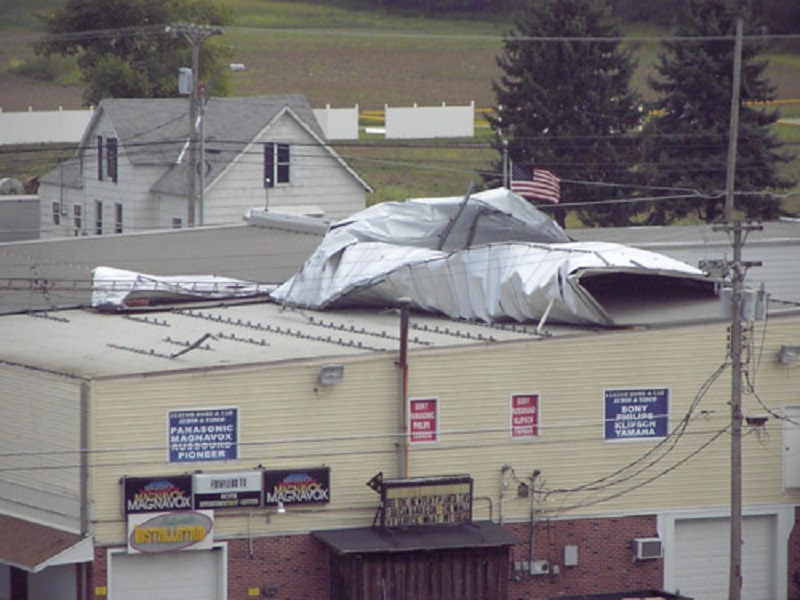
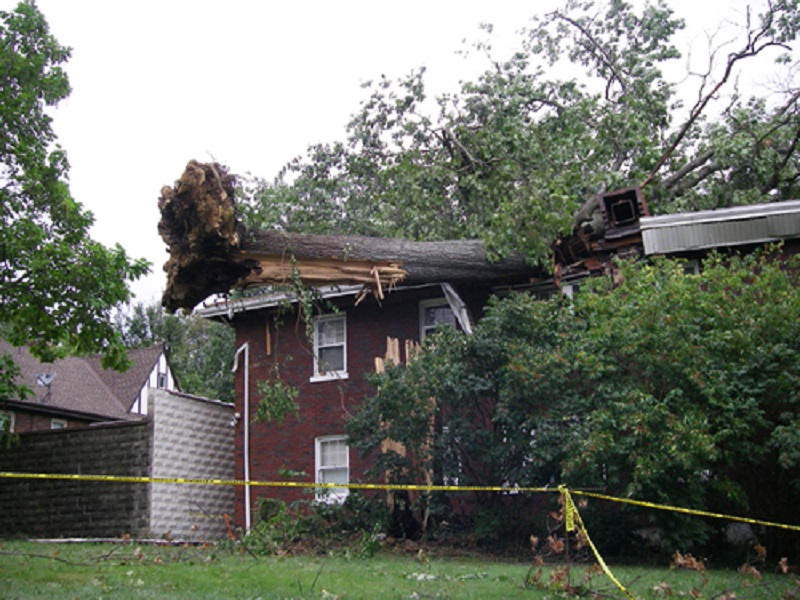
When the storm was over, more than 2.5 million Ohio residents were without power, including more than 55% of Columbus, one of the largest outages ever known in state and local history. Tens of thousands of trees had fallen and debris of all kinds was everywhere. Power lines had been snapped, signs had been blown down, billboards had been destroyed, and thousands of homes and buildings had sustained damage from broken windows to siding and parts of roofs blown off. Power remained out for thousands for up to two weeks after the storm passed, and there was a sea of blue tarps covering roofs throughout Central Ohio for months.
The story was the same up and down I-71 up through Cleveland, although damage there was less than that in central and southern parts of Ohio. The severe wind field was about 100 miles across and centered through the major cities on I-71. Insured losses from this storm totaled well over a billion dollars, and total damage was at least double that figure. This made the storm one of the most damaging natural disasters in Ohio history, exceeding those like the Blizzard of 1978, the 1974 Xenia Tornado and perhaps even the Great Flood of 1913 in adjusted dollars. Additionally, 7 people lost their lives in the storm.
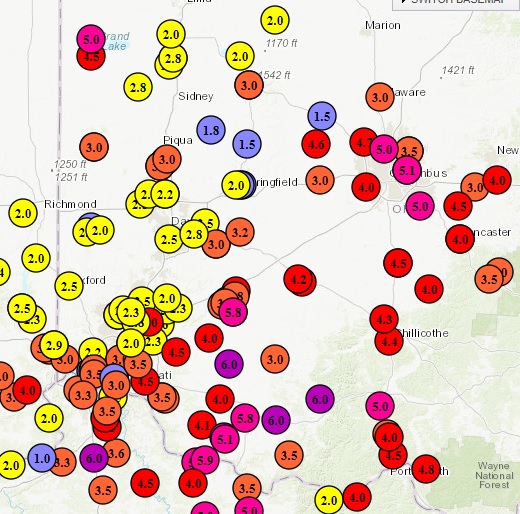
Highest Wind Gusts in Ohio on 9/14/2008 Highest measured wind gusts — official observations 75 mph — Port Columbus International Airport (Franklin County, OH) 74 mph — Cincinnati-Northern Kentucky Int’l Airport (Boone County, KY) 74 mph — Airborne Airpark, Wilmington, OH (Clinton County, OH) 69 mph — Bolton Field (Franklin County, OH) 69 mph — Rickenbacker Airport (Franklin County, OH) 68 mph — Dayton-Wright Brothers Airport (Montgomery County, OH) 63 mph — OSU Airport (Franklin County, OH) 61 mph — Cincinnati Lunken Municipal Airport (Hamilton County, OH) 60 mph — Dayton International Airport (Montgomery County, OH) 59 mph — Wright-Patterson Air Force Base (Greene County, OH)
As in most cases, recording equipment only captured a small snapshot of actual winds, with many areas seeing higher gusts than were officially recorded by instruments. Overall, the highest wind gusts and sustained winds on September 14, 2008 were not the highest ever recorded in Columbus and other places, but they were generally in the top 5. However, previous events had generally been recorded during severe thunderstorms, and so were rather brief in duration. That September day, winds roared at top strength for 3-5 hours, allowing the damage to be far more widespread than it would’ve been in a thunderstorm. Therefore, it stands as one of the worst wind events in Ohio history.
Videos from around Ohio on 9/14/2008 Columbus
Cincinnati
Dayton
Elsewhere
Weather events like this are truly rare, but history is full of severe weather of all types across the Columbus area. Weather History provides links to all sorts of records and event descriptions.