In Week in Review 2, we find that the FBI has finally released the full crime numbers for 2017 for all cities. How did Columbus fare? Well, it was a decidedly mixed bag. Total murders were their highest ever, at 143, but the rate fell quite short of the record set back in 1991. So far for 2018, murder is behind 2017’s rate by about 22%, so it’s a good improvement, but still not even close to where it should be.
Other violent crime figures 2016 to 2017 -Rape continued its multi-year rise in the city, reaching 919 incidents. This was a 6% increase over 2016. -Assaults were up 4% over 2016, but in the context of still being one of the lowest totals in the past 30 years. -Robberies were down almost 8.5% over 2016. -Despite the rises in most types of violent crime, the drop in robberies meant overall violent crime dropped by about 0.5%. Property crime figures 2016 to 2017 -Burglaries were down more than 8%. -Larceny thefts were down about 2.9% -Motor vehicle thefts were up 17.6%, so not a good trend, but still less than half the rate it was 15-20 years ago. -Overall property crime was down about 2% versus 2016.
And if you think this year’s been particularly wet, you are right! Through October 1st, Columbus is having its 3rd wettest year on record. Only 1882 and 1890 are ahead of 2018 at this point, and by barely 1″. 2018 at this point is running almost 14″ above normal. Top 10 Wettest Years Through October 1st 1. 1882: 44.55″ 2. 1890: 43.56″ 3. 2018: 43.31″ 4. 1979: 42.17″ 5. 2003: 41.58″ 6. 2011: 41.12″ 7. 1990: 39.10″ 8. 1949: 38.54″ 9. 2004: 38.46″ 10. 1996: 37.46″ It is surprising how many recent years are on this list. Still with 3 months to go, the pattern could break, but it’s very unlikely that 2018 doesn’t end up in the top 10. Here are the top 10 wettest full years. 1. 2011: 54.96″ 2. 1990: 53.16″ 3. 1882: 51.30″ 4. 1890: 50.73″ 5. 2004: 49.27″ 6. 1979: 49.17″ 7. 2003: 49.03″ 8. 1883: 48.88″ 9. 1881: 46.99″ 10. 2017: 46.61″
Wind and heavy snow on the evening of January 12, 2018.
The Winter 2017-2018 Review shows the season featured some wild swings, from a very cold late December-early January to one of the warmest Februaries of all time. Let’s take a closer look at this volatile season, specifically December to February.
Temperature and snowfall ranking data goes back to the winter of 1878-1879. Snow depth ranking data goes back to 1940.
December-February Only Average High: 40.2 29th Warmest Average Low: 24.2 42nd Warmest Mean: 32.2 36th Warmest Precipitation: 9.40″ 33rd Wettest Snowfall: 24.6″ 32nd Snowiest Average Daily Snow Depth: 0.7″ 8th Lowest 32 or Below Highs: 29 21st Most 32 or Below Lows: 70 18th Fewest Measurable Precipitation Days: 40 Measurable Snowfall Days: 20 Deepest Snow Depth: 5″ on January 16th and 17th Days with 1″+ Snow Depth: 26 19th Most
Entire Cold Season: October-April Average High: 49.6 29th Warmest Average Low: 32.0 36th Coldest Mean: 40.8 30th Warmest Precipitation: 25.83″ 13th Wettest Snowfall: 30.7″ 34th Snowiest Average Snow Depth: 0.3″ 4th Lowest 32 or Below Highs: 29 19th Fewest 32 or Below Lows: 119 14th Most Measurable Precipitation Days: 87 18th Most Measurable Snowfall Days: 34 11th Most Deepest Snow Depth: 5″ on January 16th and 17th Days with 1″+ Snow Depth: 31 20th Most
Average High By Month October 2017: 68.5 21st Warmest November 2017: 52.5 33rd Warmest December 2017: 38.6 36th Coldest January 2018: 35.4 39th Coldest February 2018: 47.3 7th Warmest March 2018: 47.5 36th Coldest April 2018: 58.0 14th Coldest
Average Low By Month October 2017: 48.8 15th Warmest November 2017: 34.8 38th Warmest December 2017: 23.7 33rd Coldest January 2018: 19.3 39th Coldest February 2018: 30.3 9th Warmest March 2018: 29.6 33rd Coldest April 2018: 37.5 9th Coldest
Mean By Month October 2017: 58.6 16th Warmest November 2017: 43.6 32nd Warmest December 2017: 31.2 37th Coldest January 2018: 27.3 39th Coldest February 2018: 38.8 7th Warmest March 2018: 38.5 36th Coldest April 2018: 47.7 12th Coldest
Precipitation By Month October 2017: 3.57″ 28th Wettest November 2017: 4.67″ 15th Wettest December 2017: 1.76″ 28th Driest January 2018: 2.39″ 64th Wettest February 2018: 5.25″ 8th Wettest March 2018: 2.96″ 57th Driest April 2018: 5.23″ 15th Wettest
Snowfall By Month October 2017: Trace 2nd Least Snowy November 2017: Trace 2nd Least Snowy December 2017: 8.1″ 23rd Snowiest January 2018: 10.5″ 38th Snowiest February 2018: 6.0″ 45th Snowiest March 2018: 3.2″ 48th Least Snowy April 2018: 2.9″ 8th Snowiest
Average Snow Depth By Month October 2017: 0″ 1st Lowest November 2017: 0″ 1st Lowest December 2017: 0.3″ 4th Lowest January 2018: 1.4″ 15th Lowest February 2018: 0.4″ 5th Lowest March 2018: 0.1″ 2nd Lowest April 2018: 0.1″ 2nd Lowest
Maximum High By Month October 2017: 86 on the 4th November 2017: 73 on the 5th December 2017: 60 on the 4th January 2018: 60 on the 11th and 22nd February 2018: 77 on the 20th March 2018: 61 on the 19th and 29th April 2018: 82 on the 13th
Record Highs -The 77 on February 20th was a record for the date, beating the old record of 68 set in 1891 and 2016.
Minimum High By Month October 2017: 43 on the 28th November 2017: 35 on the 10th December 2017: 17 on the 27th January 2018: 10 on the 2nd February 2018: 22 on the 2nd March 2018: 33 on the 8th April 2018: 37 on the 17th
Minimum High Records -The 10 on January 2nd was a record for the date, beating the old record of 11 set in 1928. -The 37 on April 17th was a record for the date, beating the old record of 39 set in 1907.
Maximum Low By Month October 2017: 66 on the 7th November 2017: 60 on the 5th December 2017: 47 on the 22nd January 2018: 52 on the 11th February 2018: 60 on the 20th March 2018: 51 on the 28th April 2018: 63 on the 13th
Record Maximum Lows -The 47 on December 22nd tied the record set in 2015, and ties for the warmest December low on record. -The 55 on February 15th was a record for the date, beating the old record of 53 set in 1954. -The 60 on February 20th was a record for the date, beating the old record of 49 set in 1930. -The 63 on April 13th was a record for the date, beating the old record of 61 set in 1916.
Minimum Low By Month October 2017: 31 on the 26th November 2017: 21 on the 11th December 2017: 2 on the 31st January 2018: -4 on the 2nd February 2018: 10 on the 5th March 2018: 20 on the 10th April 2018: 25 on the 8th
Highest Daily Precipitation By Month October 2017: 1.14″ on the 8th November 2017: 1.72″ on the 5th December 2017: 0.72″ on the 23rd January 2018: 0.66″ on the 12th February 2018: 1.23″ on the 24th March 2018: 0.83″ on the 1st April 2018: 2.06″ on the 15th
Precipitation Records -The 1.14″ on the October 8th was the record for the date, beating the old record of 0.92″ set in 1959. -The 1.72″ on November 5th was the record for the date, beating the old record of 0.88″ set in 1988. -The 1.95″ on April 3rd was a record for the date, beating the old record of 1.50″ set in 2000. -The 2.06″ on April 15th was a record for the date, beating the old record of 1.46″ set in 1939.
Highest Daily Snowfall By Month October 2017: Trace on the 28th November 2017: Trace on the 22nd December 2017: 2.1″ on the 30th January 2018: 3.5″ on the 12th February 2018: 4.4″ on the 7th March 2018: 0.9″ on the 21st April 2018: 0.9″ on the 1st
Snowfall Records -The 4.4″ on February 7th was a record for the date, beating the old record of 3.6″ set in 1895. -The 0.9″ on March 21st was a record for the date, beating the old record of 0.8″ set in 1984.
Deepest Snow Depth By Month October 2017: 0″ November 2017: 0″ December 2017: 3″ on the 30th and 31st January 2018: 5″ on the 16th and 17th February 2018: 4″ on the 7th March 2018: 1″ on the 8th, 14th and 21st April 2018: 1″ on the 2nd and 7th
So overall, the winter was definitely warmer than normal, but not record-breaking, even with the extremely warm February. It was also wetter and snowier than normal as well.
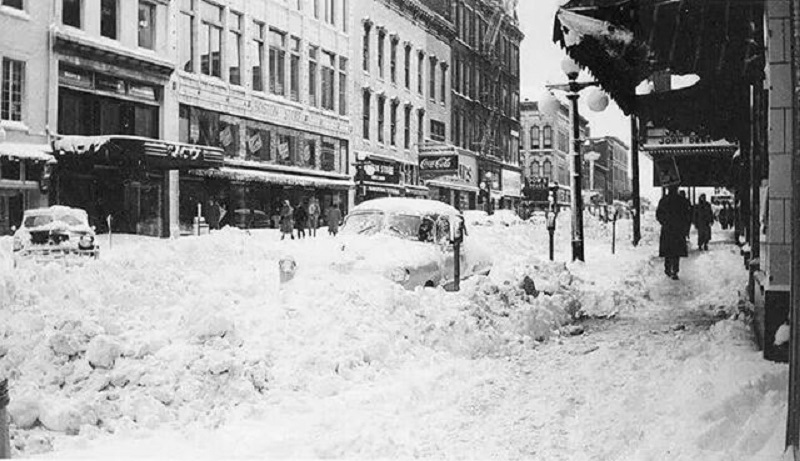
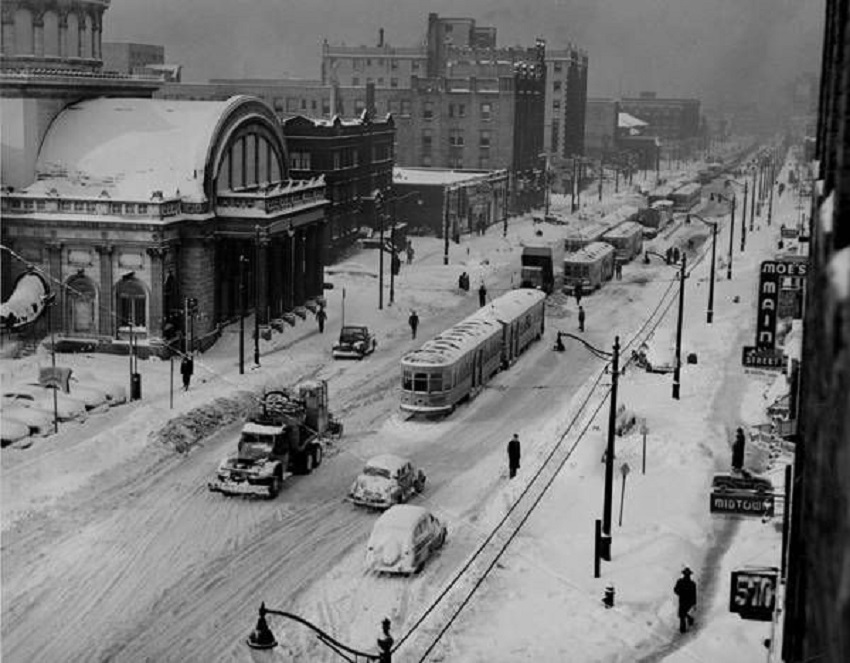
Exactly 67 years ago today, the Great Thanksgiving Blizzard of 1950 began. It was the biggest snowstorm for Columbus, and indeed most of Ohio, during the 40-year period of 1920-1960. That period, especially from the mid-1920s through the mid-1950s, had the lowest rates of cold and snowy winters of any comparable period. The average seasonal snowfall during that period was just 19.1″, a full 9″ below the average the 1980s-2010s have had to date. Still, the period was not without its memorable winters, including 1935-36, 1939-40 and 1947-48. None of those winters, however, had a snow event nearly as big as November 1950.
October 1950 had generally been very warm, ranking historically as the 19th warmest October in Columbus. Highs reached 65 or higher on 21 days of the month. This warmth lasted through early November, and the 80 degrees recorded on November 1st, 1950 remains tied for the warmest November temperature ever recorded. After that, the month seesawed up and down until a strong cold front and rainstorm on the 19th-20th dropped temperatures 25-30 degrees across the state, from the upper 50s-low 60s on the 20th to the low-mid 30s on the 21st. This front would be one of the catalysts for one of Ohio’s greatest winter weather events in its history.
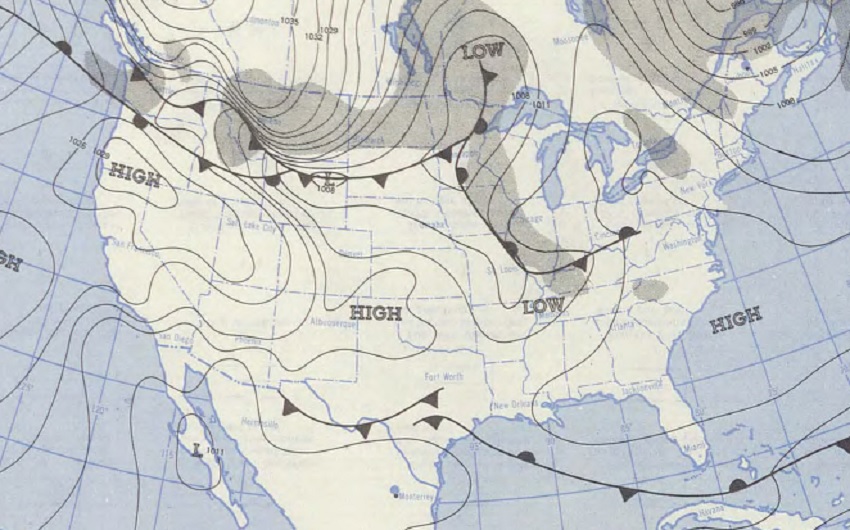
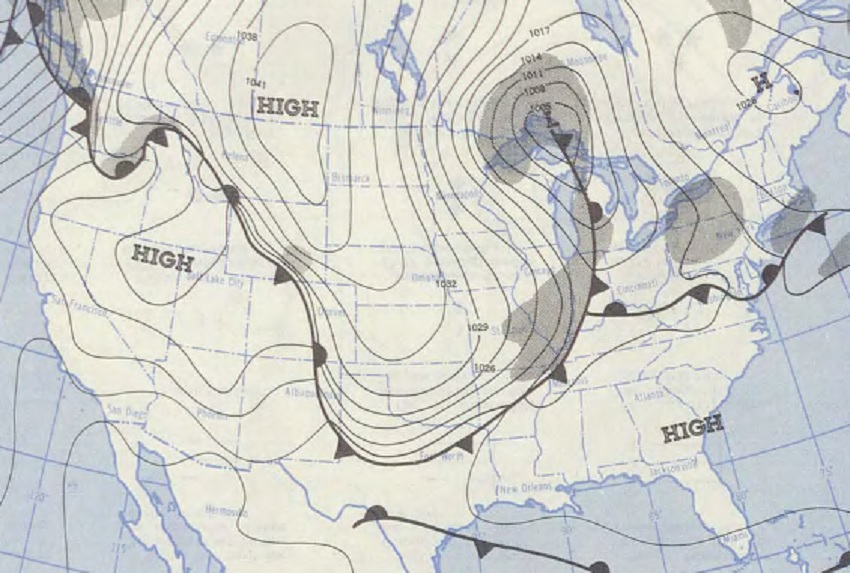
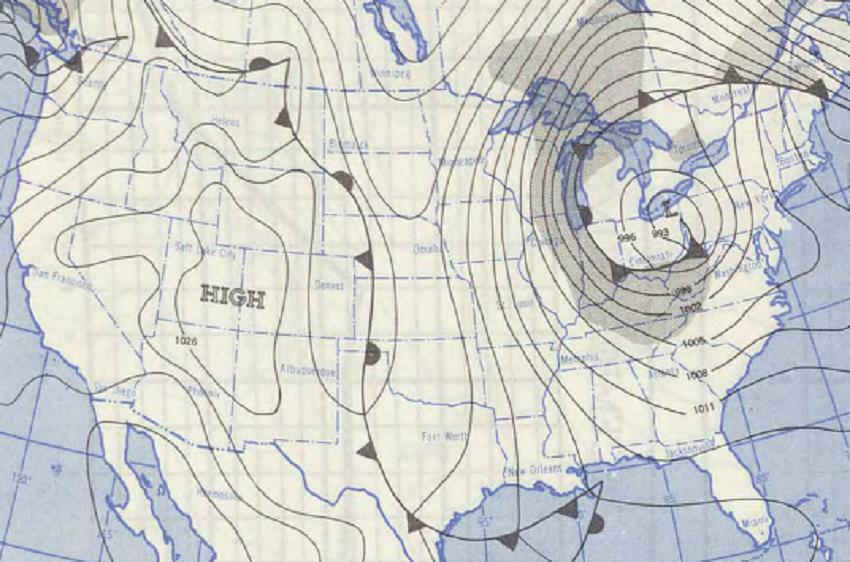
Snow began in Columbus and other parts of Ohio on Thanksgiving, Thursday, November 23rd as a low moved through the Great Lakes and weakened. Behind that system, another cold high pressure was diving south out of Canada.
Thursday, November 23rd 1950 National Map
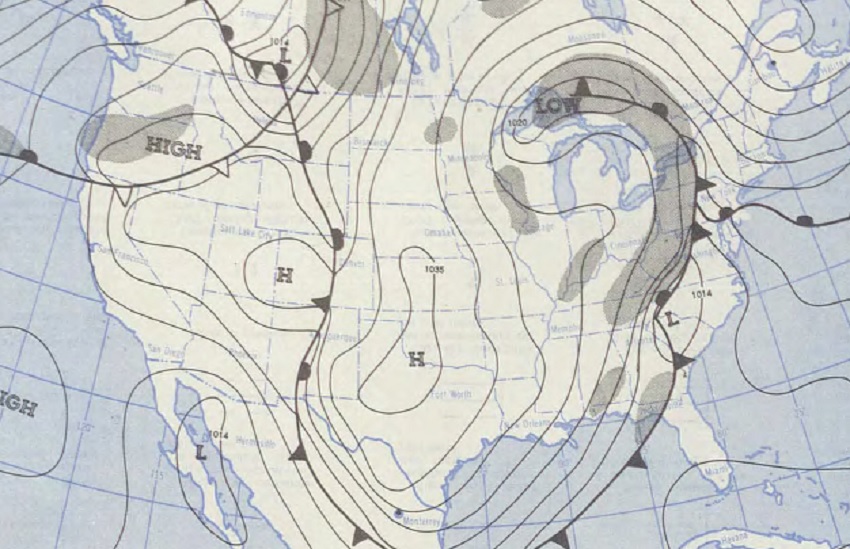
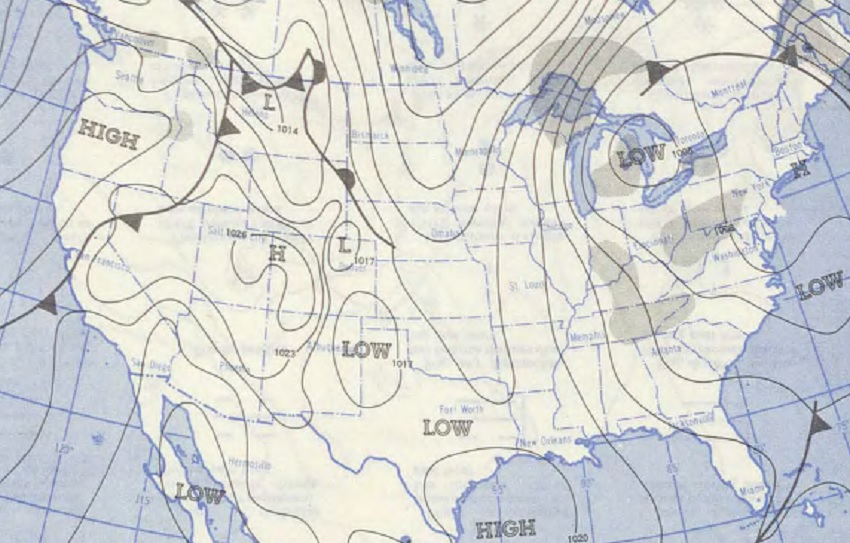
On Friday the 24th, a low formed on the stalled cold front that had moved through Ohio a few days earlier. Initially forming in southeastern North Carolina, this low would’ve normally gone out to see or moved up the East Coast as a Nor’easter. Instead, the strong, cold high pressure was moving into the Ohio Valley at the same time, and the little low exploded and as it began to move north. The strong push of cold was very evident in Ohio, as temperatures plunged from the upper-30s to upper 40s on Thanksgiving afternoon to single digits and low teens by early Friday morning.
Friday, November 24th, 1950 National Map
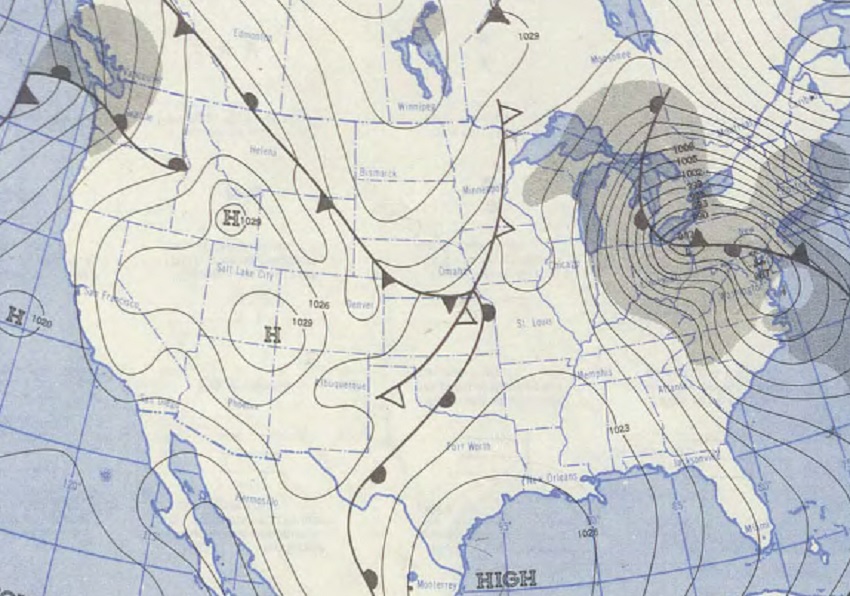
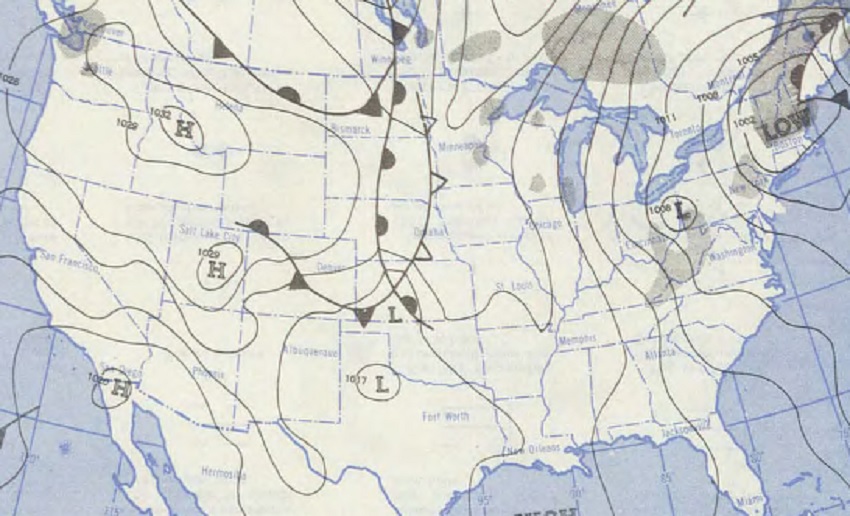
The low moved into southern Pennsylvania by the morning of the 25th, and then began to do something few other storms ever do- it began to retrograde toward the west and Ohio, continuing to strengthen as it went. The unusual west movement was caused by a blocking high pressure system parked over Maine.
Saturday, November 25th, 1950 National Map
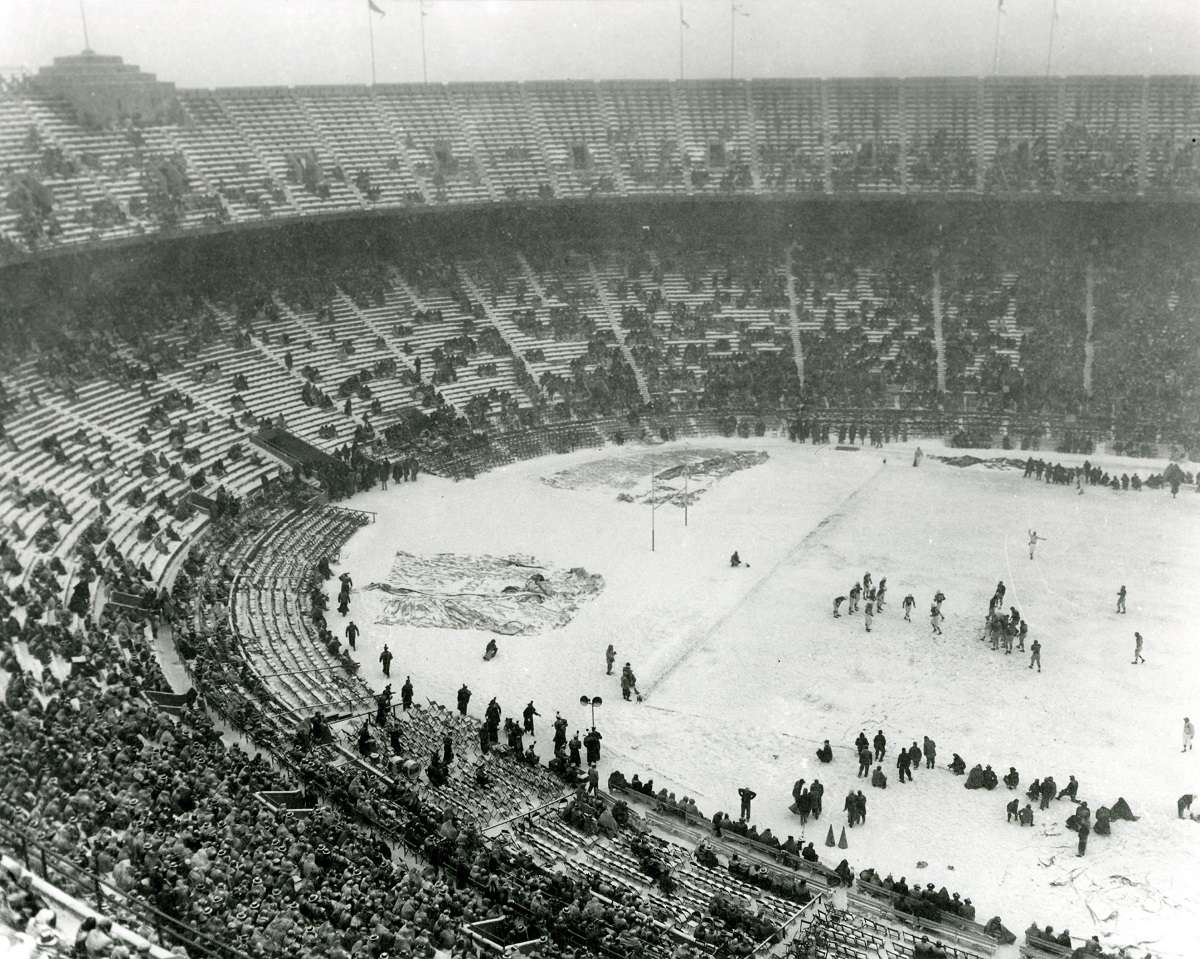
Light snow that had been ongoing in Ohio on the 24th quickly intensified from east to west across the state as the low moved westward from Central Pennsylvania to Northern Ohio by the end of the day on the 25th. With it arrived winds of 40-60 miles per hour, causing blinding white-outs and drifting. Saturday the 25th was the height of the storm as the low pressure bottomed out at 978mb, a pressure normally associated with hurricanes. This day was, coincidentally, the famed Ohio State-Michigan rivalry football game, now famously known as the “Snow Bowl” for its terrible weather conditions.
With temperatures on Saturday morning in the single digits, wind chills well below zero and with heavy snow, there was debate about cancelling the game altogether, which was the Big Ten Championship. Ironically, despite the fact that Ohio State would’ve gone on to the Rose Bowl had the game been cancelled (Michigan did not want to reschedule), it was Ohio State’s athletic director who ultimately refused to cancel the game, much to the rest of the staff’s disappointment. Perhaps after the fact, considering Ohio State lost 9-3, that decision was regretted, especially in front of the more than 50,000 die-hard fans that managed to show up for the game.
Columbus would receive 7.5″ at the airport, with eastern suburbs getting up to 10″, just on that Saturday alone.
Due to the blocking high pressure, the storm didn’t budge for days, and it continued through the 26th and 27th before slowly dying out. The last accumulating snowflakes from this system fell on the 29th, 6 days after the snow began.
Sunday, November 26th, 1950 National Map Monday, November 27th, 1950 National Map Tuesday, November 28th, 1950 National Map Wednesday, November 29th, 1950 National Map
All in all, the storm was a record-breaker. Snow totals reached 10″ or more across most of the state except the far northwest and far southwest. In Central Ohio, snow had piled up between 10″-20″, with Columbus officially reporting 15.2″ for the duration of the event. This was the second-heaviest snowstorm in Columbus on record to that time, falling just shy of the 15.3″ that occurred February 17-18, 1910. Both of these storms would be surpassed by the February 14-17, 2003 snowstorm of 15.5″, which itself was surpassed by March 7-8th, 2008’s 20.5″.
Other totals in the state included up to 22″ in Cleveland, 27″ in Marietta, and reports of 44″ in Steubenville in far eastern Ohio. Totals of 25″-30″ were common throughout the eastern 1/3rd of the state. These totals are some of the highest the state has ever seen, coming close to those seen in the eastern Ohio snowstorm of April 1901.
In addition to the snow, record cold temperatures in Columbus of 5 degrees on the 25th (along with a record low maximum of 20) made this one of the greatest early winter events of all time.
What most of Winter 2016-2017 looked like in Ohio.
The Winter 2016-2017 Review supports that the season was one of the warmest, least snowy winters on record. Depending on your viewpoint, that was either a really good or really bad thing.
Temperature and snowfall ranking data goes back to the winter of 1878-1879. Snow depth ranking data goes back to 1940.
December-February Only Average High: 44.4 7th Warmest Average Low: 29.5 6th Warmest Mean: 37.0 6th Warmest Precipitation: 8.55″ 49th Wettest Snowfall: 7.6″ 13th Least Snowy Average Daily Snow Depth: 0.1″ 2nd Lowest 32 or Below Highs: 17 11th Fewest 32 or Below Lows: 54 5th Fewest Measurable Precipitation Days: 43 10th Most Measurable Snowfall Days: 10 6th Fewest Deepest Snow Depth: 3″ on December 14th Days with 1″+ Snow Depth: 7 5th Fewest
Entire Cold Season: October-April Average High: 54.8 1st Warmest Average Low: 36.7 5th Warmest Mean: 45.8 1st Warmest Precipitation: 19.28″ 67th Driest Snowfall: 9.3″ 8th Least Snowy Average Snow Depth: 0.1″ 2nd Lowest 32 or Below Highs: 18 8th Fewest 32 or Below Lows: 80 5th Fewest Measurable Precipitation Days: 86 19th Most Measurable Snowfall Days: 15 6th Fewest Deepest Snow Depth: 3″ on December 14th Days with 1″+ Snow Depth: 8 5th Fewest
Average High By Month October 2016: 69.3 17th Warmest November 2016: 57.7 7th Warmest December 2016: 38.7 38th Coldest January 2017: 43.5 14th Warmest February 2017: 51.8 1st Warmest March 2017: 52.1 36th Warmest April 2017: 71.1 1st Warmest
Average Low By Month October 2016: 49.1 14th Warmest November 2016: 36.3 26th Warmest December 2016: 26.2 50th Coldest January 2017: 30.1 8th Warmest February 2017: 32.6 4th Warmest March 2017: 34.1 32nd Warmest April 2017: 48.3 1st Warmest
Mean By Month October 2016: 59.2 12th Warmest November 2016: 47.0 13th Warmest December 2016: 32.4 44th Coldest January 2017: 36.8 12th Warmest February 2017: 42.2 1st Warmest March 2017: 43.1 35th Warmest April 2017: 59.7 1st Warmest
Precipitation By Month October 2016: 1.73″ 45th Driest November 2016: 1.02″ 13th Driest December 2016: 3.09″ 49th Wettest January 2017: 2.83″ 53rd Wettest February 2017: 2.63″ 51st Wettest March 2017: 5.39″ 15th Wettest April 2017: 2.59″ 44th Driest
Snowfall By Month October 2016: 0.0″ Least Snowy November 2016: Trace 2nd Least Snowy December 2016: 5.4″ 40th Snowiest January 2017: 1.6″ 13th Least Snowy February 2017: 0.6″ 4th Least Snowy March 2017: 1.7″ 27th Least Snowy April 2017: Trace 2nd Least Snowy
Average Snow Depth By Month October 2016: 0″ November 2016: 0″ December 2016: 0.3″ January 2017: Trace February 2017: 0.1″ March 2017: Trace April 2017: 0″
Maximum High By Month October 2016: 83 on the 18th November 2016: 80 on the 1st December 2016: 69 on the 26th January 2017: 67 on the 12th February 2017: 78 on the 24th March 2017: 77 on the 30th April 2017: 85 on the 26th and 30th
Record Highs -The 83 on October 18th tied the record for the date set in 1938. -The 80 on November 1st tied the record for the date set in 1950. This is also a tie for the warmest temperature ever recorded in November. -The 79 on November 2nd tied the record for the date set in 1897. -The 75 on November 18th was a record for the date, beating the old record of 73 set in 1954. -The 69 on November 26th was a record for the date, beating the old record of 62 set in 1889 and 1982. -The 67 on January 12th tied the record for the date set in 1916. -The 64 on January 17th was a record for the date, beating the old record of 62 set in 1952. -The 66 on February 18th was a record for the date, beating the old record of 63 set in 2011. -The 72 on February 23rd was a record for the date, beating the old record of 66 set in 1905 and 1986. -The 78 on February 24th was a record for the date in 3 ways: 1. It beat the old daily record of 72 set in 1961. 2. It beat the record for the warmest February temperature ever of 75 set on 2/26/2000. 3. It broke the record for the warmest temperature for meteorological winter (Dec-Feb) of all-time, beating the old record of 76 set on 12/3/1982.
Minimum High By Month October 2016: 52 on the 22nd November 2016: 35 on the 20th December 2016: 14 on the 15th January 2017: 16 on the 6th and 7th February 2017: 25 on the 3rd March 2017: 29 on the 14th April 2017: 49 on the 1st
Maximum Low By Month October 2016: 69 on the 18th November 2016: 56 on the 2nd December 2016: 48 on the 26th January 2017: 47 on the 17th February 2017: 59 on the 24th March 2017: 58 on the 25th April 2017: 63 on the 16th and 19th
Record Maximum Lows -The 69 on October 18th was a record for the date, beating the old record of 65 set in 2007. -The 54 on February 22nd was a record for the date, beating the old record of 51 set in 1930. -The 52 on February 23rd was a record for the date, beating the old record of 51 set in 1930. -The 59 on February 24th was a record for the date, beating the old record of 50 set in 2000. -The 58 on March 25th tied the record for the date set in 1949.
Minimum Low By Month October 2016: 35 on the 25th November 2016: 21 on the 22nd December 2016: 4 on the 15th and 16th January 2017: 6 on the 7th February 2017: 9 on the 4th March 2017: 15 on the 15th April 2017: 32 on the 8th
Highest Daily Precipitation By Month October 2016: 0.74″ on the 19th November 2016: 0.36″ on the 28th December 2016: 1.07″ on the 17th January 2017: 0.80″ on the 3rd February 2017: 0.76″ on the 7th March 2017: 1.53″ on the 26th April 2017: 0.80″ on the 9th
Highest Daily Snowfall By Month October 2016: 0.0″ November 2016: Trace on the 19th and 20th December 2016: 3.2″ on the 13th January 2017: 0.9″ on the 5th February 2017: 0.6″ on the 8th March 2017: 0.6″ on the 13th April 2017: Tract on the 6th and 7th
Deepest Snow Depth By Month October 2016: 0″ November 2016: 0″ December 2016: 3″ on the 14th January 2017: 1″ on the 6th February 2017: 1″ on the 9th and 10th March 2017: 1″ on the 14th April 2017: 0″
Now that the Summer of 2016 is but a memory, let’s take a quick look back at where it stands in the weather record books.
Temperature
Summer 2016 Means June-August Mean High: 85.5 June-August Mean Rank since 1878: 26th Warmest While the average high for Summer 2016 was certainly warm, it fell just outside of the top 25. By comparison to recent years, 2010 (85.6), 2011 (85.7) and 2012 (87.7) all had warmer average highs.
June-August Mean Low: 66.1 June-August Mean Low Rank since 1878: 4th Warmest The average low for the summer is what made 2016 much more exceptional. No recent years (last decade) were warmer, although 2010 did tie.
June-August Mean: 75.8 June-August Mean Rank since 1878: 10th So if you thought this summer was hot, well you were right. Only 2010 (75.9) and 2012 (76.4) were warmer of any recent years.
Monthly Means June Mean: 73.2 June Mean Rank since 1878: 17th Warmest July Mean: 76.6 July Mean Rank since 1878: 20th Warmest August Mean: 77.6 August Mean Rank since 1878: 6th Warmest The summer gradually became hotter as it went on.
Summer 2016 Misc. Temperature Stats # of 90+ Days: 18 90+ Days Rank: 22nd Warmest High: 95 Warmest Low: 77 Coldest High: 72 Coldest Low: 48
Daily Temperature Records June 11th: Record Warm Maximum Tie: 95: Tied with 1914 and 1933. August 10th: Record Warm Minimum Tie: 75: Tied with 2001. August 11th: Record Warm Minimum Tie: 76: Tied with 1918. August 12th: Record Warm Minimum: 76: Beat record from 1947. August 13th: Record Warm Minimum Tie: 75: Tied with 1995.
Precipitation June-July Precipitation Total: 13.53″ June-July Precipitation Rank since 1878: 29th Wettest Besides being warm, Summer 2016 was also fairly wet.
Monthly Precipitation Stats June Precipitation: 5.22″ June Precipitation Rank since 1878: 29th July Precipitation: 2.49″ July Precipitation Rank since 1878: 27th Driest August Precipitation: 5.82″ August Precipitation Rank since 1878: 13th Wettest So the summer was bookended by wet months with July being fairly dry.
Summer 2016 Misc. Precipitation Stats Total Precipitation Days (including Trace): 45 Total Measurable Precipitation Days: 30 Measurable Precipitation Days Rank since 1878: 16th Highest Days with 0.25″ or Higher: 16 Days with 0.50″ or Higher: 10 Days with 1.00″ or Higher: 4
Daily Precipitation Records June 23rd: 2.75″: Beat the old record in 1901.