Columbus Relocation Resources


The Short North.

Columbus has been growing steadily its entire existance. The past 10 years have seen its fastest growth ever, however.
The city is attracting new residents not just from other parts of Ohio, but from across the United States and world. 50% of its overall growth is made up by either domestic migration or immigration from other nations.

There is now a steady stream of prospective residents in search for answers about the city and metro area. Hopefully, this post provides some of those desired answers.

Let’s look at some of the most common questions and attempt to provide the necessary information.

1. What are the most desirable places to live in Columbus?
The answer to this question depends on what someone is searching for. For this question, we’ll base the answer on 5 categories- affordability, walkability, safety, schools and access to amenities. Based on these topics, here are the most-recommended urban neighborhoods.

Click on any neighborhood to find out more information.

1. The Short North, including Italian Village and Victorian Village
Arguably the heart of Columbus’ urban core, the Short North is one of the most complete Midwest urban neighborhoods outside Chicago. While it has tons of amenities and walkability, a few potential negatives include the lack of parking and higher housing costs.
2. German Village and the Brewery District
German Village is one of the largest historic districts in the United States. Its preserved 19th Century brick buildings and streets, walkable amenities and landscaped parks make it one of Columbus’ most uniquely beautiful neighborhoods. However, all that beauty can come with higher housing prices and very strict preservation rules.
3. Downtown and the Arena District
The Downtown area, which includes the Arena District, is a rapidly growing area with tons of new housing and entertainment amenities. It is very walkable and the central hub of the city’s transit system.
4. Clintonville
Located just north of the massive Ohio State Campus, Clintonville is a larger, more family-oriented neighborhood with quality housing and decent schools.
5. Merion Village, Schumacher Place, Franklinton, Weinland Park, Olde Towne East, Westgate and Old North Columbus
These neighborhoods are for those who are okay with neighborhoods in transition. They are more affordable than the top 4, but also in various stages of revitalization. These neighborhoods provide some of the best long-term investment opportunities so long as you can look past some grit.

Based on the same criteria, here are the most-recommended suburbs.

1. Dublin
This outer northwest suburb has a great mix of urban and suburban neighborhoods, with plenty of options for most tastes. Great schools and a one of the most diverse suburban populations make Dublin a popular choice. Negatives include a general lack of transit and higher housing costs.
2. Bexley
Bexley is one of the oldest inner suburbs in the city. Its attractive older homes and beautiful tree-lined streets are right out of a John Hughes film. Great schools and walkable retail corridors make this suburb highly desirable. However, negatives include high property taxes and higher housing costs.
3. Grandview Heights
Grandview is another more urban inner suburb with a great mix of quality housing stock and amenities. Schools are also very good. Negatives include a very tight housing market that make finding a home difficult, along with higher costs.
4. Upper Arlington
This inner suburb is well known for its terrific schools and quality of life. It is more suburban in nature than other inner suburbs, and therefore a negative is its general lack of walkability to amenities. The cost of housing is generally higher.
5. Westerville
Westerville is a northern, outer traditional suburb. Positives include a nice, walkable downtown area and much less expensive housing the other suburbs on the list.

This list of urban and suburban places is just a starter list and is not to be limiting.

2. What are the best ways to find somewhere to live?
Beyond going with a realtor or doing internet searches, the best way to find somewhere to live is to visit your preferred neighborhood. Some house and apartments may not be advertised online, specifically those sales being managed by the owner. Another potential way is to visit local neighborhood social media sites to see if anyone has advertised their home or apartment. With the extremely fast-moving Columbus market, thinking outside the box can be beneficial.

As for more traditional ways of finding a house or apartment, here are some helpful resources.
The Columbus Land Bank Center
Columbus Realtors
Zillow
Realtor

3. What are some resources to help immigrate to Columbus from another country?
Because immgration is a large part of Columbus’ growth, resources for immigrants are also readily available. Here are some of the most useful for prospective and recent immigrants to Columbus.
Community Refugee and Immigraton Services
New Americans Initiative
US Citizenship and Immigration Services

4. Where can I find more information about the city and its quality of life?
For many more links on Columbus activities, local government, schools and much more, check out the Columbus Links and Resources


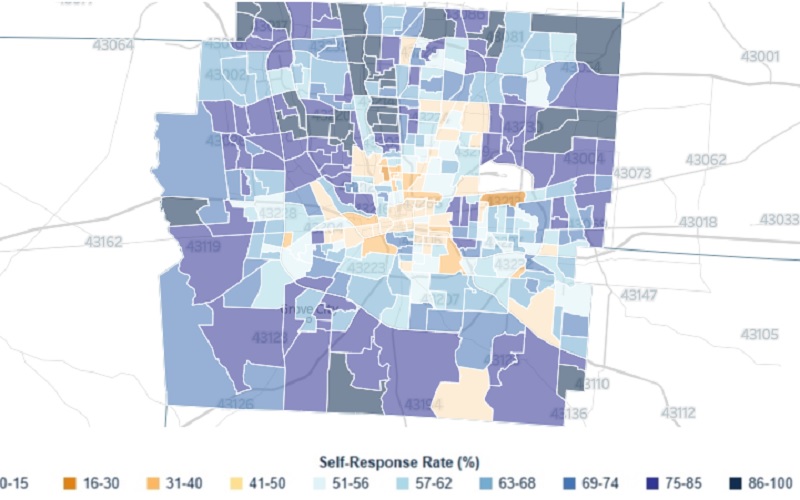
Ohio Census 2020 Response Rates


Ohio census 2020 response rates

The 2020 US Census is currently winding down, perhaps somewhat earlier than planned, but wrapping up nonetheless.
The accuracy of the Census relies heavily on enough people responding to the surveys. Because of the pandemic this year, the internet has played a bigger role in the response rates than normal, but there were still plenty of door to door workers doing surveys. How did Columbus, Central Ohio and other parts of the state do? Here are the Ohio census 2020 response rates.

First, let’s look at Ohio counties. These numbers are through September 2nd.

Top 10 counties for Census Response
1. Medina County: 81.9%
2. Delaware County: 79.7%
3. Geauga County, Warren County: 78.7%
4. Union County: 78.0%
5. Lake County: 77.4%
6. Auglaize County: 76.9%
7. Wayne County: 76.8%
8. Greene County: 76.0%
9. Miami County: 75.9%
10. Fulton County: 75.2%

Bottom 10 Counties for Census Response
1. Harrison County: 55.5%
2. Morgan County: 57.7%
3. Vinton County: 57.9%
4. Pike County: 58.5%
5. Monroe County: 58.8%
6. Lawrence County: 59.3%
7. Scioto County: 59.4%
8. Meigs County: 59.6%
9. Adams County: 59.9%
10. Ashtabula County, Athens County: 60.8%

Most of the high-reporting counties were large metro counties, while most of the low ones were Appalachia. This may be related to access to the internet, which again, played a crucial role this year.

Here are the counties that anchor Ohio’s largest metros
Lucas County: 64.6%
Cuyahoga County: 65.5%
Franklin County: 66.7%
Hamilton County: 66.7%
Mahoning County: 67.4%
Montgomery County: 68.0%
Stark County: 74.3%

Columbus’ Franklin County was tied for 3rd worst.

Now let’s look at Central Ohio cities and towns.
Minerva Park: 88.6%
Worthington: 86.8%
Upper Arlington: 85.7%
Westerville: 83.2%
Dublin: 82.7%
Canal Winchester: 81.8%
Grandview Heights: 81.8%
Gahanna: 81.1%
New Albany: 81.1%
Bexley: 79.5%
Grove City: 78.9%
Groveport: 78.9%
Pataskala: 77.4%
Hilliard: 77.0%
Valleyview: 76.5%
Reynoldsburg: 75.3%
Obetz: 72.7%
Pickerington: 71.6%
Columbus: 62.1%
Whitehall: 58.5%

Generally, the more urban commmunities tended to do worse than the outer suburbs. This has implications on urban areas possibly being undercounted, though the response rates are generally similar to what they were in 2010, so that concern is probably overblown to some extent.

If your’e interested in taking a further look at Ohio’s and other states numbers, visit the following link, in which response rates are tracked all the way down to the Census Tract level: https://2020census.gov/en/response-rates/self-response.html


Updates!


There have been a lot of updates and additions to the site in the last month.

The Historic Building Database pages now contain more than 1,200 buildings.

A new Local Sports History page has been added under the History tab. It contains information on Columbus’ college, minor and major league sports teams going back to the 19th Century.

The May Weather page has been updated with 2020 data, and records can be viewed back to 1879.

The numerous severe weather pages have all been updated to some degree over the past month or so with more links, events and even videos.

The Demographics and Population pages have been updated with 2019 population data, as well as various information related to income, GDP, housing and more!

Finally, a new Columbus Crime Statistics page has been added under the Demographics and Population tab. You can view total crimes, crime rates and maps going back to 1985.

2019 City Population Estimates


2019 city population estimates

The Census has just released 2019 city population estimates. These estimates are good for July 1, 2019. Let’s take a look at how Columbus compares to other cities in Ohio.

Ohio Top 30 Largest Cities by Rank
Census 2010————————————–July 1, 2019
1. Columbus: 787,033————————1. Columbus: 898,553
2. Cleveland: 396,815————————2. Cleveland: 381,009
3. Cincinnati: 296,943——————-—–3. Cincinnati: 303,940
4. Toledo: 287,208———————-——4. Toledo: 272,779
5. Akron: 199,110————————-—–5. Akron: 197,597
6. Dayton: 141,527—————————-6. Dayton: 140,407
7. Parma: 81,601—————————––7. Parma: 78,103
8. Canton: 73,007———————–——-8. Canton: 70,447
9. Youngstown: 66,982————————9. Youngstown: 65,469
10. Lorain: 64,097——————–———10. Lorain: 63,855
11. Hamilton: 62,477——————–——11. Hamilton: 62,082
12. Springfield: 60,608————————12. Springfield: 58,877
13. Kettering: 56,163————————-–13. Kettering: 54,855
14. Elyria: 54,533—————————-—14. Elyria: 53,757
15. Lakewood: 52,131———————––15. Newark: 50,315
16. Cuyahoga Falls: 49,652——————16. Lakewood: 49,678
17. Euclid: 48,920————————–—–17. Cuyahoga Falls: 49,106
18. Middletown: 48,694————————18. Dublin: 49,037
19. Mansfield: 47,821———————-—–19. Middletown: 48,807
20. Newark: 47,573————————–—-20. Beavercreek: 47,741
21. Mentor: 47,159—————————––21. Mentor: 47,262
22. Cleveland Heights: 46,121—————-22. Mansfield: 46,599
23. Beavercreek: 45,193——————–—-23. Euclid: 46,550
24. Strongsville: 44,750————————–24. Strongsville: 44,660
25. Fairfield: 42,510——————————25. Cleveland Heights: 43,992
26. Dublin: 41,751———————————26. Fairfield: 42,558
27. Warren: 41,557—————————-—-27. Grove City: 41,820
28. Findlay 41,202—————————–—-28. Delaware: 41,283
29. Lancaster: 38,780—————————–29. Findlay: 41,225
30. Lima: 38,771———————————–30. Westerville: 41,103

In 2010, 4 Columbus metro communities were in the top 30.  By last year, 6 were, with more poised to enter the list in the coming years.  This represents the Columbus region’s growing influence in the state and how its share of the state’s population continues to increase.

Top 30 Ohio Cities with the Highest Total Growth Census 2010 to July 1, 2019
1. Columbus: +111,520
2. Hilliard: +8,099
3. Dublin: +7,286
4. Cincinnati: +6,997
5. Delaware: +6,530
6. Grove City: +6,245
7. Westerville: +4,983
8. North Ridgeville: +4,927
9. Pickerington: +3,867
10. New Albany: +3,209
11. Mason: +3,158
12. Newark: +2,742
13. Marysville: +2,573
14. Beavercreek: +2,548
15. Wadsworth: +2,479
16. Reynoldsburg: +2,434
17. Gahanna: +2,235
18. Avon: +2,206
19. Harrison: +1,999
20. Sunbury: +1,978
21. Avon Lake: +1,923
22. Powell: +1,875
23. Grandview Heights: +1,797
24. Oxford: +1,739
25. Lancaster: +1,725
26. Canal Winchester: +1,717
27. Upper Arlington: +1,595
28. Monroe: +1,573
29. Fairborn: +1,524
30. Springboro: +1,522

The Columbus Metro had 18 of the top 30, including 8 of the top 10.


Top 30 Ohio Cites with the Highest Total Growth July 1, 2018 to July 1, 2019
1. Columbus: +7,684
2. Cincinnati: +1,663
3. Delaware: +1,356
4. Pickerington: +932
5. Westerville: +771
6. Youngstown: +609
7. North Ridgeville: +580
8. Sunbury: +483
9. Marysville: +471
10. Dublin: +443
11. Beavercreek: +415
12. Warren: +381
13. Newark: +314
14. Wadsworth: +291
15. Mason: +290
16. Harrison: +274
17. Grove City: +247
18. Oxford: +239
19. Miamisburg: +231
20. Troy: +229
21. Canal Winchester: +220
22. Xenia: +219
23. Cedarville: +209
24. Hilliard: +201
25. Fairborn: +182
26. Piqua: +182
27. Avon: +170
28. Plain City: +168
29. Aurora: +157
30. Springboro: +157

2018 to 2019, Columbus had 12 cities in the top 30, a lower number than the average of the decade. This is not necessarily indicating a slowdown in growth within the metro, however. The final year before a decennial census, population estimates tend to be used for final adjustments. This means that if a city is thought to have been estimated too high or too low through the decade, the final estimate year is adjusted accordingly and not necessarily according to true growth. The point of estimates is to get a snapshot of the population at the time of the estimate, but they are constantly being changed every time a new estimate comes out. This usually leaves the final estimate year as showing the slowest growth. This was true for 2008-2009 as well.

Finally, here is every Columbus Metro community ranked and the population change 2010-2019.
1. Columbus: 898,533 +111,520
2. Newark: 50,315 +2,742
3. Dublin: 49,037 +7,286
4. Grove City: 41,820 +6,245
5. Delaware: 41,283 +6,530
6. Westerville: 41,103 +4,983
7. Lancaster: 40,505 +1,725
8. Reynoldsburg: 38,327 +2,434
9. Hilliard: 36,534 +8,099
10. Gahanna: 35,483 +2,235
11. Upper Arlington: 35,366 +1,595
12. Marysville: 24,667 +2,573
13. Pickerington: 22,158 +3,867
14. Whitehall: 18,926 +864
15. Pataskala: 15,883 +921
16. Worthington: 14,692 +1,117
17. Circleville: 14,050 +736
18. Bexley: 13,770 +713
19. Powell: 13,375 +1,875
20. New Albany: 10,933 +3,209
21. Heath: 10,942 +632
22. London: 10,328 +424
23. Canal Winchester: 8,818 +1,717
24. Grandview Heights: 8,333 +1,797
25. Logan: 7,020 -132
26. Sunbury: 6,367 +1,978
27. Granville: 5,916 +270
28. Groveport: 5,621 +258
29. Obetz: 5,196 +664
30. Johnstown: 5,098 +466
31. New Lexington: 4,671 -60
32. Plain City: 4,586 +361
33. West Jefferson: 4,431 +209
34. Ashville: 4,385 +288
35. Baltimore: 3,004 +38
36. Buckeye Lake: 2,871 +125
37. Crooksville: 2,482 -52
38. Richwood: 2,480 +251
39. Hebron: 2,477 +141
40. Utica: 2,260 +128
41. Cardington: 2,071 +24
42. South Bloomfield: 1,979 +235
43. Roseville: 1,839 -13
44. Lithopolis: 1,796 +690
45. Mount Sterling: 1,793 +11
46. Commercial Point: 1,679 +97
47. Ashley: 1,608 +278
48. Somerset: 1,455 -26
49. Bremen: 1,452 +27
50. Minerva Park: 1,321 +49
51. Hanover: 1,204 +283
52. Millersport: 1,074 +30
53. Williamsport: 1,074 +51
54. Thornville: 1,008 +17
55. Urbancrest: 993 +33
56. Pleasantville: 959 -1
57. Milford Center: 902 +110
58. New Holland: 851 +50
59. Shawnee Hills: 820 +139
60. Junction City: 805 -14
61. Ostrander: 749 +106
62. Galena: 742 +89
63. Amanda: 738 +1
64. Marble Cliff: 732 +159
65. New Straitsville: 710 -12
66. Shawnee: 642 -13
67. Valleyview: 638 +18
68. Thurston: 604 +0
69. Corning: 568 -15
70. Buchtel: 567 +9
71. Carroll: 566 +42
72. Riverlea: 565 +20
73. Stoutsvlle: 565: +5
74. Kirkersville: 552 +27
75. Alexandria: 542 +25
76. Laurelville: 503 -24
77. Edison: 443 +6
78. Murray City: 435 -14
79. Sugar Grove: 426 +0
80. Hartford: 410 +13
81. St. Louisville: 386 +13
82. South Solon: 364 +9
83. Harrisburg: 341 +21
84. Marengo: 341 -1
85. Midway: 328 +1
86. Rushville: 309 +7
87. Magnetic Springs: 298 +30
88. Tarlton: 290 +8
89. Orient: 277 -1
90. Fulton: 255 -3
91. Lockbourne: 249 +12
92. Chesterville: 232 +4
93. Darbyville: 229 +7
94. Unionville Center: 229 -4
95. Gratiot: 220 -1
96. Glenford: 169 -4
97. Sparta: 160 -1
98. Hemlock: 152 -3
99. West Rushville: 143 +9
100. Brice: 120 +6
101. Rendville: 36 +0

Out of the 101 communities of any size in the Metro, 81 of them have either steady populations or estimated growth since 2010. Most of the 20 that have shown declines are very small communities in the Appalachia counties of Perry and Hocking, the furthest removed from Columbus’ influence.


2019 Metro Population Estimates


2019 metro population estimates

The Census has released 2019 metro population estimates. This comparison uses those figures to rank the Columbus metro with other metros under the following categories:
Ohio metros with at least 250,000 people.
Midwest metros with at least 500,000 people.
National metros with 1.5-2.599 million people.

Total Metro Area Population Census 2010, July 1, 2018 and July 1, 2019
Census 2010——————————-July 1, 2018————————July 1, 2019

1. Chicago, IL: 9,461,105————-1. Chicago: 9,484,158———–1. Chicago: 9,458,539
2. Detroit, MI: 4,296,250—————2. Detroit: 4,322,084————-2. Detroit: 4,319,629
3. Minneapolis, MN: 3,348,8459—-3. Minneapolis: 3,610,061–3. Minneapolis: 3,640,043
4. St. Louis, MO: 2,787,701———-4. St. Louis: 2,803,958———4. St. Louis: 2,803,228
5. Pittsburgh, PA: 2,356,285——5. San Antonio: 2,512,379—5. San Antonio: 2,550,960
6. San Juan, PR: 2,350,126———-6. Portland: 2,473,350———6. Portland: 2,492,412
7. Portland, OR: 2,226,009——-7. Sacramento: 2,341,940—–7. Sacramento: 2,363,730
8. Sacramento, CA: 2,149,127—–8. Pittsburgh: 2,322,653——–8. Pittsburgh: 2,317,600
9. San Antonio, TX: 2,142,516—–9. Las Vegas: 2,226,115——-9. Las Vegas: 2,266,715
10. Cincinnati: 2,114,580———–10. Cincinnati: 2,211,936——-10. Austin: 2,227,083
11. Cleveland: 2,077,240———–11. Austin: 2,165,497———–11. Cincinnati: 2,221,208
12. Kansas City, MO: 2,009,342-12. Kansas City: 2,144,427–12. Kanas City: 2,157,990
13. Las Vegas, NV: 1,951,269—–13. Columbus: 2,104,194—–13. Columbus: 2,122,271
14. Columbus: 1,901,974——-14. Cleveland: 2,053,795—–14. Indianapolis: 2,074,537
15. Indianapolis, IN: 1,887,877—15. Indianapolis: 2,052,368—15. Cleveland: 2,048,449
16. San Jose, CA: 1,836,911—16. San Juan: 2,022,139———16. San Juan: 2,023,227
17. Austin, TX: 1,716,289————17. San Jose: 1,993,804—–17. San Jose: 1,990,660
18. Virginia Beach, VA: 1,676,822—18. Nashville: 1,904,726—18. Nashville: 1,934,317
19. Nashville: 1,670,890—19. Virginia Beach: 1,763,713–19. Virginia Beach: 1,768,901
20. Providence, RI: 1,600,852—-20. Providence: 1,622,379—20. Providence: 1,624,578
21. Milwaukee, WI: 1,555,908—–21. Milwaukee: 1,573,995—21. Milwaukee: 1,575,179
22. Jacksonville, FL: 1,345,596-22. Jacksonville: 1,532,663–22. Jacksonville: 1,559,514
23. Grand Rapids: 988,938–23. Grand Rapids: 1,071,370-23. Grand Rapids: 1,077,370
24. Omaha, NE: 865,350————–24. Omaha: 940,970—-24. Omaha: 949,442
25. Dayton: 799,232——————–25. Dayton: 805,088—–25. Dayton: 807,611
26. Akron: 703,200———————26. Akron: 703,855——–26. Akron: 703,479
27. Wichita, KS: 630,919————27. Des Moines: 690,915—27. Des Moines: 699,292
28. Toledo: 610,001——————28.Madison: 659,927——–28. Madison: 664,865
29. Madison, WI: 605,435———–29. Toledo: 643,089——–29. Toledo: 641,816
30. Des Moines, IA: 569,633——-30. Wichita: 637,519——30. Wichita: 640,218
31. Youngstown: 565,773———–31. Lansing: 548,674—–31. Lansing: 550,391
32. Lansing, MI: 534,684————32. Youngstown: 538,226—32. Youngstown: 536,081
33. Canton: 404,422——————33. Canton: 401,165—-33. Canton: 399,927

Charlotte and Orlando metros, previous national peers, have grown past the population standard limit of 2.599 million and are no longer used. Lansing and San Juan have been added.

Metro Area Total Growth Census 2010-July 1, 2019 and July 1, 2018-July 1, 2019
Census 2010-July 1, 2019—————————–July 1, 2018-July 1, 2019

1. Austin: +510,794————————————–1. Austin: +61,586
2. San Antonio: +408,452——————————2. Las Vegas: +40,600
3. Las Vegas: +315,446——————————–3. San Antonio: +38,581
4. Minneapolis: +306,410——————————4. Minneapolis: +29,982
5. Nashville: +288,117———————————-5. Nashville: +29,591
6. Portland: +266,403———————————–6. Jacksonville: +26,851
7. Columbus: +220,297——————————–7. Indianapolis: +22,169
8. Sacramento: +214,603——————————8. Sacramento: +21,790
9. Jacksonville: +213,918——————————9. Portland: +19,062
10. Indianapolis: +186,660—————————-10. Columbus: +18,077
11. San Jose: +153,749——————————–11. Kansas City: +13,563
12. Kansas City: +148,648—————————–12. Cincinnati: +9,272
13. Des Moines: +92,817——————————-13. Omaha: +8,472
14. Omaha: +84,092————————————-14. Des Moines: +8,377
15. Grand Rapids: +83,700—————————–15. Grand Rapids: +6,000
16. Cincinnati: +83,541———————————-16. Virginia Beach: +5,188
17. Madison: +59,430————————————17. Madison: +4,938
18. Virginia Beach: +54,947—————————-18. Wichita: +2,699
19. Providence: +23,726——————————–19. Dayton: +2,523
20. Detroit: +23,379—————————————20. Providence: +2,199
21. Milwaukee: +19,271———————————21. Lansing: +1,717
22. Wichita: +17,157————————————-22. Milwaukee: +1,184
23. Lansing: +15,707————————————23. San Juan: +1,088
24. St. Louis: +15,527———————————–24. Akron: -376
25. Dayton: +8,379—————————————25. St. Louis: -730
26. Akron: +279——————————————-26. Canton: -810
27. Chicago: -2,566————————————–27. Toledo: -1,273
28. Canton: -6,902—————————————28. Youngstown: -2,45
29. Toledo: -9,613—————————————-29. Detroit: -2,455
30. Cleveland: -28,791———————————-30. San Jose: -3,144
31. Youngstown: -29,692——————————-31. Pittsburgh: -5,053
32. Pittsburgh: -36,685———————————32. Cleveland: -5,346
33. San Juan: -326,899——————————–33. Chicago: -25,619


Now let’s look at the components of population change for metro areas.

Total Births By Metro Census 2010-July 1, 2019 and July 1, 2018-July 1, 2019
Census 2010-July 1, 2019———————–July 1, 2018-July 1, 2019

1. Chicago: 1,085,985——————————-1. Chicago: 108,425
2. Detroit: 462,696————————————2. Detroit: 48,879
3. Minneapolis: 419,634—————————–3. Minneapolis: 44,602
4. St. Louis: 310,273———————————4. San Antonio: 32,592
5. San Antonio: 300,032—————————-5. St. Louis: 31,686
6. Kansas City: 253,384—————————-6. Columbus: 27,096
7. Cincinnati: 253,180——————————-7. Las Vegas: 27,048
8. Portland: 253,110———————————8. Cincinnati: 26,892
9. Sacramento: 252,144—————————9. Sacramento: 26,752
10. Columbus: 251,291—————————10. Kanas City: 26,497
11. Las Vegas: 247,787—————————11. Indianapolis: 26,300
12. Indianapolis: 246,099————————-12. Portland: 26,204
13. Austin: 239,673———————————13. Austin: 26,115
14. San Jose: 220,891—————————–14. Nashville: 24,308
15. Pittsburgh: 218,159—————————-15. Pittsburgh: 22,570
16. Nashville: 216,969—————————–16. San Jose: 22,487
17. Cleveland: 212,523—————————-17. Cleveland: 22,003
18. Virginia Beach: 209,617———————-18. Virginia Beach: 21,589
19. Milwaukee: 182,815—————————19. Milwaukee: 18,927
20. Jacksonville: 167,526————————-20. Jacksonville: 18,592
21. Providence: 152,794————————–21. Providence: 16,182
22. Grand Rapids: 125,556———————-22. Grand Rapids: 13,339
23. Omaha: 122,306——————————23. Omaha: 12,848
24. Dayton: 88,783——————————–24. Dayton: 9,391
25. Des Moines: 85,530————————–25. Des Moines: 9,311
26. Wichita: 81,503——————————–26. Wichita: 8,057
27. Toledo: 71,848———————————27. Toledo: 7,428
28. Akron: 69,159———————————-28. Akron: 7,196
29. Madison: 67,559——————————29. Madison: 6,988
30. Lansing: 54,679——————————-30. Lansing: 5,702
31. Youngstown: 51,745————————-31. Youngstown: 5,450
32. Canton: 40,730——————————–32. Canton: 4,254

Components of change stats are not available for San Juan.

Total Deaths By Metro Census 2010-July 1, 2019 and July 1, 2018-July 1, 2019
Census 2010-July 1, 2019———————————July 1, 2018-July 1, 2019

1. Chicago: -647,739——————————————-1. Chicago: -74,501
2. Detroit: -377,943———————————————2. Detroit: -42,151
3. Pittsburgh: -253,686—————————————-3. St. Louis: -27,669
4. St. Louis: -241,884——————————————4. Pittsburgh: -27,387
5. Minneapolis: -210,510————————————-5. Minneapolis: -24,290
6. Cleveland: -198,044—————————————-6. Cleveland: -21,464
7. Cincinnati: -179,563—————————————-7. Cincinnati: -20,279
8. Sacramento: -157,234————————————-8. Sacramento: -18,933
9. Portland: -156,592——————————————9. San Antonio: -18,551
10. Kansas City: -155,166———————————–10. Portland: -18,458
11. San Antonio: -153,339———————————–11. Las Vegas: -17,919
12. Indianapolis: -148,608———————————–12. Kansas City: -17,692
13. Columbus: -142,665————————————–13. Columbus: -16,704
14. Las Vegas: -142,415————————————-14. Indianapolis: -16,678
15. Providence: -139,006————————————15. Virginia Beach: -15,280
16. Virginia Beach: -131,065——————————–16. Providence: -15,189
17. Nashville: -128,228—————————————17. Nashville: -15,122
18. Milwaukee: -123,806————————————-18. Jacksonville: -14,089
19. Jacksonville: -114,660———————————–19. Milwaukee: -13,810
20. San Jose: -94,587—————————————-20. San Jose: -11,582
21. Austin: -89,867——————————————–21. Austin: -11,445
22. Dayton: -77,893——————————————-22. Dayton: -8,506
23. Grand Rapids: -69,869———————————-23. Grand Rapids: -7,947
24. Akron: -65,852——————————————–24. Akron: -7,196
25. Youngstown: -64,558————————————25. Omaha: -6,931
26. Omaha: -62,030——————————————26. Youngstown: -6,842
27. Toledo: -59,436——————————————-27. Toledo: -6,624
28. Wichita: -51,734——————————————28. Wichita: 5,732
29. Des Moines: -44,857————————————29. Des Moines: 5,175
30. Canton: -41,233——————————————30. Lansing: -4,577
31. Lansing: -40,586—————————————–31. Madison: -4,453
32. Madison: -39,499—————————————-32. Canton: -4,395

Total Net Natural Change (Births vs. Deaths) By Metro Census 2010-July 1, 2019 and July 1, 2018-July 1, 2019
Census 2010-July 1, 2019———————————July 1, 2018-July 1, 2019

1. Chicago: 438,246———————————————1. Chicago: 33,924
2. Minneapolis: 209,124—————————————-2. Minneapolis: 20,312
3. Austin: 149,806———————————————–3. Austin: 14,670
4. San Antonio: 146,693—————————————4. San Antonio: 14,041
5. San Jose: 126,304——————————————-5. San Jose: 10,905
6. Columbus: 108,626——————————————6. Columbus: 10,392
7. Las Vegas: 105,372—————————————–7. Indianapolis: 9,622
8. Kansas City: 98,218—————————————–8. Nashville: 9,186
9. Indianapolis: 97,491—————————————–9. Las Vegas: 9,129
10. Portland: 96,518——————————————-10. Kansas City: 8,805
11. Sacramento: 94,910————————————–11. Sacramento: 7,819
12. Nashville: 88,741——————————————12. Portland: 7,746
13. Detroit: 84,753———————————————-13. Detroit: 6,728
14. Virginia Beach: 78,552———————————–14. Cincinnati: 6,613
15. Cincinnati: 73,617—————————————–15. Virginia Beach: 6,309
16. St. Louis: 68,389——————————————-16. Omaha: 5,917
17. Omaha: 60,276———————————————17. Grand Rapids: 5,392
18. Milwaukee: 59,009—————————————–18. Milwaukee: 5,117
19. Grand Rapids: 55,687————————————19. Jacksonville: 4,503
20. Jacksonville: 52,866————————————–20. Des Moines: 4,136
21. Des Moines: 40,673————————————–21. St. Louis: 4,017
22. Wichita: 29,769——————————————–22. Madison: 2,535
23. Madison: 28,060——————————————23. Wichita: 2,325
24. Cleveland: 14,479—————————————-24. Lansing: 1,125
25. Lansing: 14,093——————————————25. Providence: 993
26. Providence: 13,788————————————–26. Dayton: 885
27. Toledo: 12,412——————————————–27. Toledo: 804
28. Dayton: 10,890——————————————-28. Cleveland: 539
29. Akron: 3,307———————————————-29. Akron: 0
30. Canton: -503———————————————-30. Canton: -141
31. Youngstown: -12,813———————————–31. Youngstown: -1,392
32. Pittsburgh: -35,527————————————–32. Pittsburgh: -4,817

Total Domestic Migration By Metro Census 2010-July 1, 2019 and July 1, 2018-July 1, 2019
Census 2010-July 1, 2019———————————July 1, 2018-July 1, 2019

1. Austin: 293,162———————————————–1. Austin: 41,334
2. San Antonio; 214,509—————————————2. Las Vegas: 31,643
3. Las Vegas: 185,570—————————————–3. San Antonio: 21,987
4. Nashville: 158,336——————————————-4. Jacksonville: 20,051
5. Jacksonville: 126,483—————————————5. Nashville: 15,482
6. Portland: 121,473——————————————–6. Sacramento: 9,941
7. Sacramento: 69,723—————————————-7. Portland: 8,374
8. Columbus: 53,301——————————————-8. Indianapolis: 6,196
9. Indianapolis: 46,076—————————————-9. Columbus: 3,746
10. Des Moines: 40,183————————————–10. Des Moines: 3,718
11. Kansas City: 24,457————————————–11. Minneapolis: 3,202
12. Madison: 15,880——————————————12. Kansas City: 2,437
13. Minneapolis: 11,638————————————–13. Madison: 1,418
14. Grand Rapids: 10,903———————————–14. Cincinnati: 1,193
15. Omaha: 7,537———————————————-15. Omaha: 1,068
16. Canton: -7,124———————————————16. Dayton: 896
17. Dayton: -15,586——————————————–17. Wichita: -291
18. Akron: -15,683———————————————-18. Grand Rapids: -669
19. Lansing: -18,240——————————————-19. Canton: -677
20. Youngstown: -19,317————————————-20. Youngstown: -751
21. Cincinnati: -19,944—————————————-21. Lansing: -840
22. Wichita: -21,454——————————————-22. Akron: -1,190
23. Toledo: -27,740——————————————–23. Virginia Beach: -2,197
24. Pittsburgh: -31,804—————————————24. Toledo: -2,339
25. Providence: -38,503————————————-25. Pittsburgh: -2,658
26. Virginia Beach: -59,729———————————26. Providence: -3,185
27. Milwaukee: -64,395————————————–27. Milwaukee: -5,140
28. Cleveland: -78,763————————————–28. Cleveland: -7,250
29. St. Louis: -85,003—————————————-29. St. Louis: -7,685
30. San Jose: -124,105————————————-30. Detroit: -16,655
31. Detroit: -172,225—————————————–31. San Jose: -27,495
32. Chicago: -638,599—————————————32. Chicago: -74,950

Total International Migration By Metro Census 2010-July 1, 2019 and July 1, 2018-July 1, 2019
Census 2010-July 1, 2019———————————July 1, 2018-July 1, 2019
1. Chicago: 197,093——————————————-1. Chicago: 15,257
2. San Jose: 152,520—————————————–2. San Jose: 13,371
3. Detroit: 110,907———————————————3. Detroit: 7,516
4. Minneapolis: 87,847—————————————4. Minneapolis: 6,645
5. Austin: 62,740———————————————–5. Indianapolis: 6,394
6. Columbus: 58,853——————————————6. Austin: 5,280
7. Sacramento: 51,225—————————————7. Nashville: 4,937
8. Providence: 49,015—————————————-8. Providence: 4,455
9. Portland: 47,983——————————————–9. Sacramento: 4,053
10. San Antonio: 45,348————————————10. Columbus: 4,032
11. Indianapolis: 43,502————————————-11. St. Louis: 2,991
12. Nashville: 39,422—————————————–12. Portland: 2,960
13. Virginia Beach: 36,319———————————-13. Pittsburgh: 2,555
14. Cleveland: 36,318—————————————-14. San Antonio: 2,504
15. Jacksonville: 34,089————————————-15. Kansas City: 2,377
16. St. Louis: 32,872—————————————–16. Jacksonville: 2,251
17. Cincinnati: 31,157—————————————-17. Cincinnati: 1,547
18. Pittsburgh: 30,654—————————————-18. Omaha: 1,517
19. Kansas City: 27,259————————————-19. Lansing: 1,452
20. Milwaukee: 25,298—————————————20. Cleveland: 1,433
21. Las Vegas: 23,319—————————————21. Grand Rapids: 1,316
22. Lansing: 19,865——————————————22. Milwaukee: 1,277
23. Grand Rapids: 17,629———————————-23. Virginia Beach: 1,165
24. Omaha: 16,785——————————————24. Madison: 988
25. Madison: 15,600—————————————–25. Akron: 836
26. Dayton: 13,473——————————————26. Dayton: 785
27. Akron: 13,086——————————————–27. Wichta: 688
28. Des Moines: 11,716————————————28. Des Moines: 519
29. Wichita: 9,096——————————————-29. Toledo: 270
30. Toledo: 5,646——————————————–30. Canton: 25
31. Youngstown: 2,675————————————-31. Youngstown: 25
32. Canton: 1,073——————————————–32. Las Vegas: -360

Total Net Migration By Metro Census 2010-July 1, 2019 and July 1, 2018-July 1, 2019
Census 2010-July 1, 2019———————————July 1, 2018-July 1, 2019

1. Austin: 355,902———————————————1. Austin: 46,614
2. San Antonio: 259,857————————————-2. Las Vegas: 31,283
3. Las Vegas: 208,889—————————————3. San Antonio: 24,491
4. Nasvhille: 197,758—————————————–4. Jacksonville: 22,302
5. Portland: 169,456——————————————5. Nashville: 20,419
6. Jacksonville: 160,572————————————-6. Sacramento: 13,994
7. Sacramento: 120,948————————————-7. Indianapolis: 12,590
8. Columbus: 112,154—————————————-8. Portland: 11,334
9. Minneapolis: 99,458—————————————9. Minneapolis: 9,847
10. Indianapolis: 89,578————————————10. Columbus: 7,778
11. Des Moines: 51,899————————————-11. Kansas City: 4,814
12. Kansas City: 51,716————————————-12. Des Moines: 4,237
13. Madison: 31,480——————————————13. Cincinnati: 2,740
14. Grand Rapids: 28,352———————————–14. Omaha: 2,585
15. San Jose: 28,415—————————————-15. Madison: 2,406
16. Omaha: 24,322——————————————-16. Dayton: 1,681
17. Cincinnati: 11,213—————————————-17. Providence: 1,270
18. Providence: 10,512————————————–18. Grand Rapids: 647
19. Lansing: 1,625——————————————–19. Lansing: 612
20. Pittsburgh: -1,150—————————————-20. Wichita: 397
21. Dayton: -2,113——————————————–21. Pittsburgh: -103
22. Akron: -2,597———————————————-22. Akron: -354
23. Canton: -6,051——————————————–23. Canton: -652
24. Wichita: -12,358——————————————24. Youngstown: -726
25. Youngstown: -16,642————————————25. Virginia Beach: -1,032
26. Toledo: -22,094——————————————-26. Toledo: -2,069
27. Virginia Beach: -23,410——————————–27. Milwaukee: -3,863
28. Milwaukee: -39,097————————————-28. St. Louis: -4,694
29. Cleveland: -42,445————————————–29. Cleveland: -5,817
30. St. Louis: -52,131—————————————-30. Detroit: -9,139
31. Detroit: -61,318——————————————31. San Jose: -14,124
32. Chicago: -441,506————————————–32. Chicago: -59,693

The 2019 metro population estimates show Columbus largely holding its own against state, regional and national peers.