Aerial photos have been around for more than a century, ever since someone thought to take photos from airplanes. These photos go back to at least the 1910s, when the airplane was still very much a new technology. I thought it might be interesting to do show a few of these before and after Downtown aerial photos to give an idea of how the same areas look today.
Before
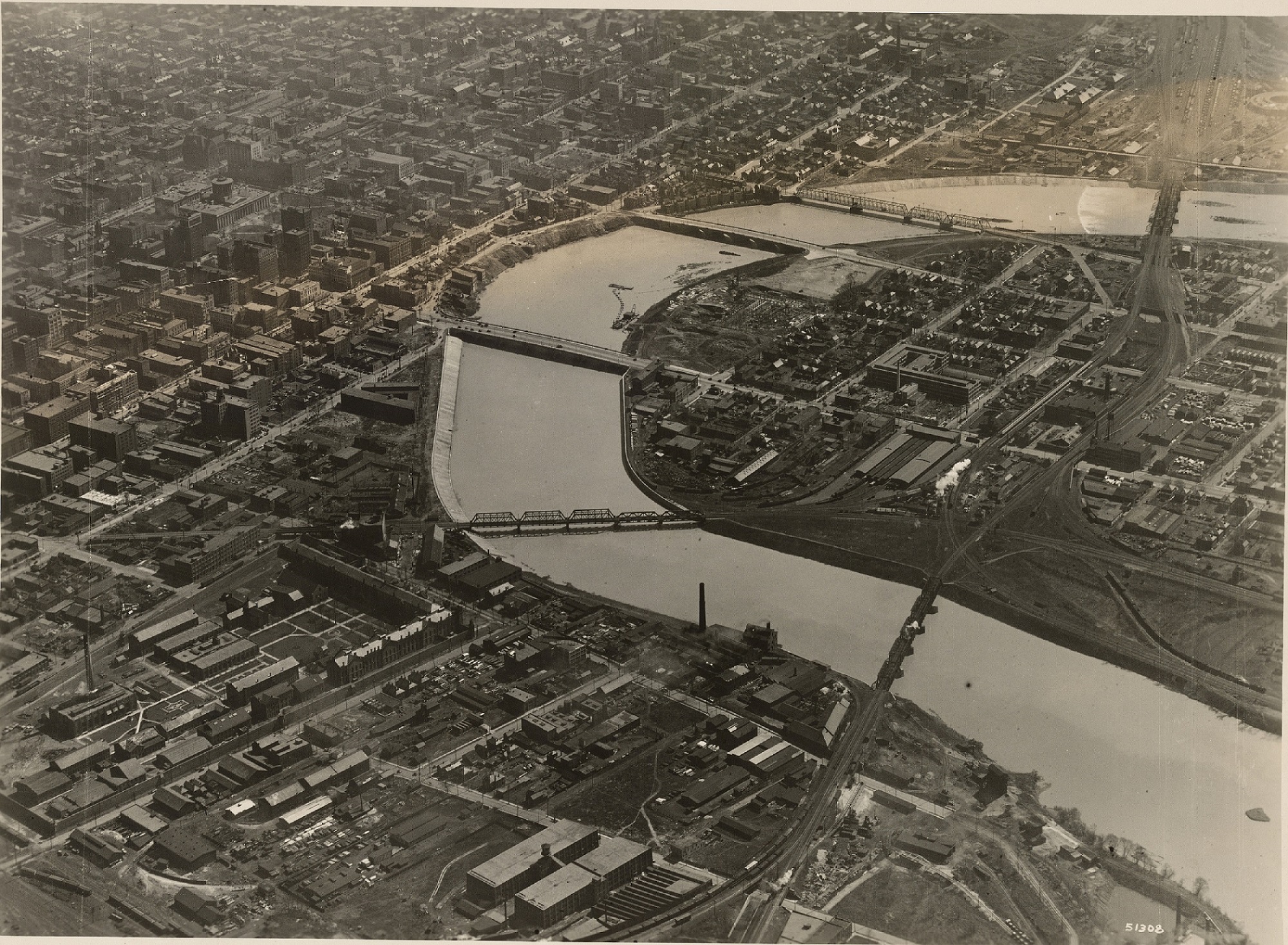
Downtown around 1923.
This photo of Downtown was likely taken sometime between 1922 and 1923. The main clue is that the old Central High School is clearly under construction on the Scioto Peninsula, but seemingly in the early phases. The school would later open in the fall of 1924. Also in the photo is the new Scioto River floodwall under construction just a decade after the Great Flood of 1913. The buildings near and along the riverfront would eventually be demolished for this project, as well as the eventual Civic Center project that would later build the Post Office and Ohio Supreme Court building. Notice as well the lack of Columbus’ signature building- LeVeque Tower. That project would be constructed over the next few years. After
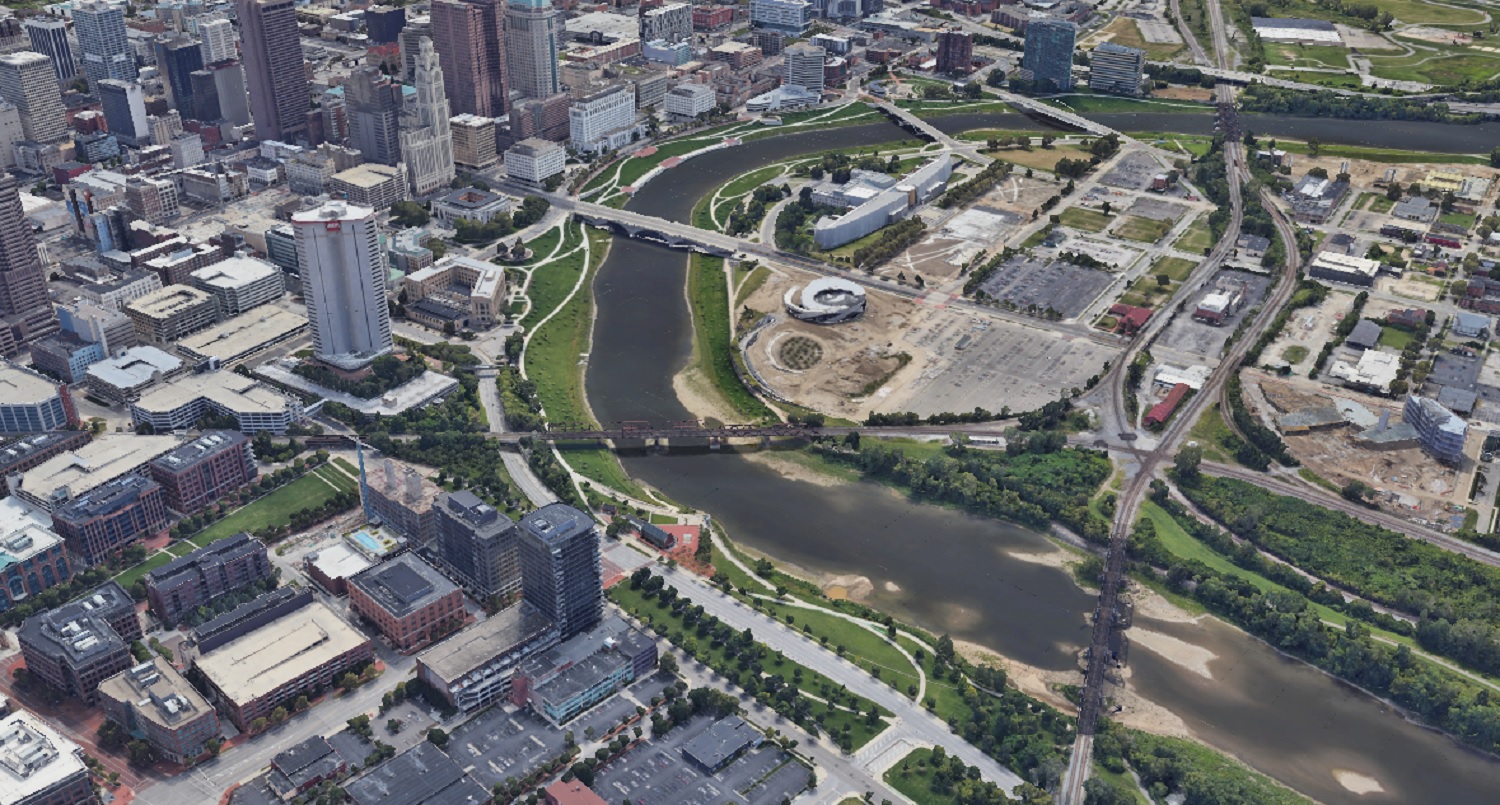
Downtown in 2019.
Downtown has obviously changed enormously in the past century. Skyscrapers now dominate Downtown, and the highway system now cuts through many neighborhoods. The riverfront itself is also significantly nicer and less industrial looking. Before
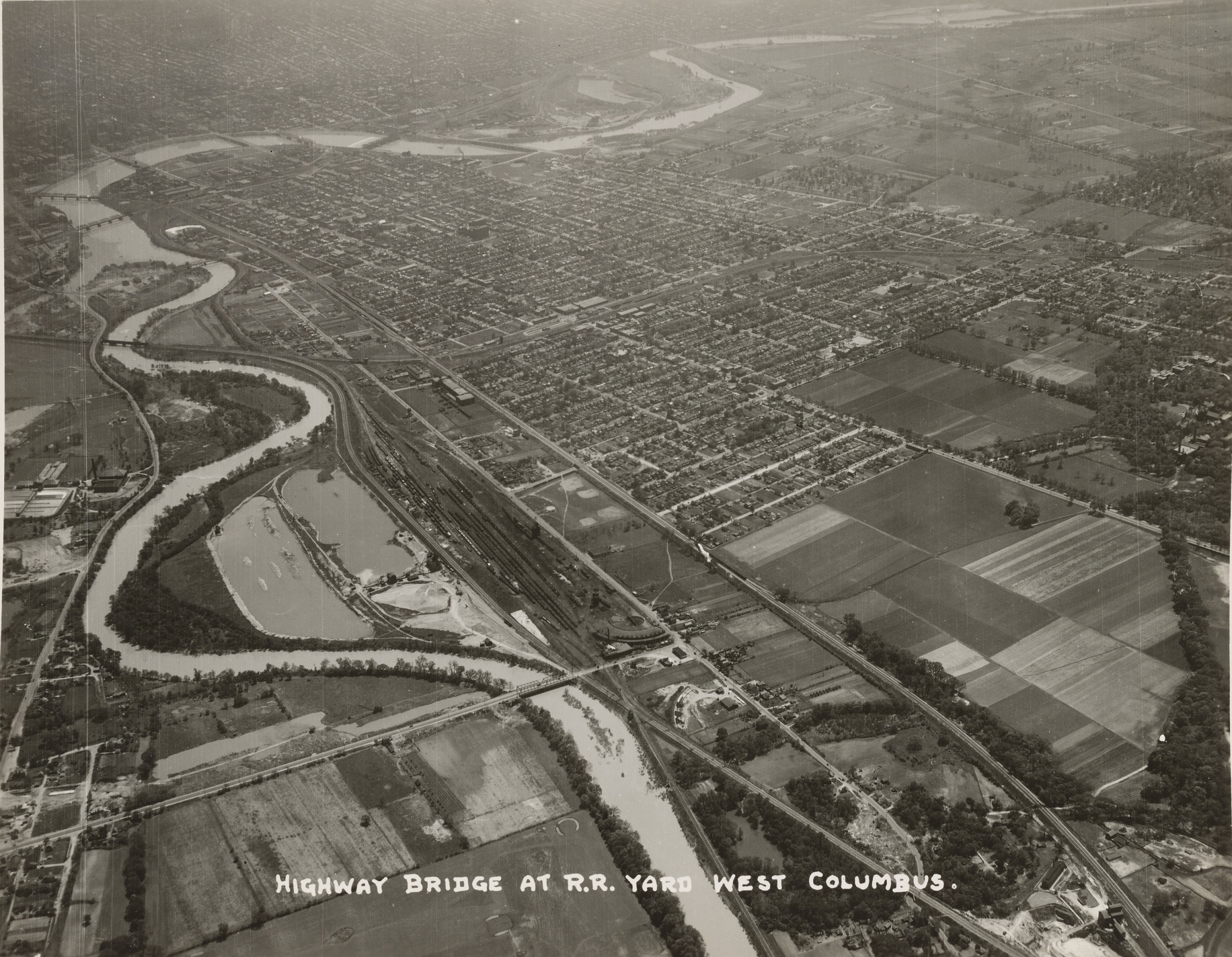
Photo taken in 1929.
This 1929 photo looks west over Franklinton towards Downtown. The most revealing part of this photo is how compact the developed area of Columbus really was at the time. Farm fields can be seen to the south and west of Columbus. After
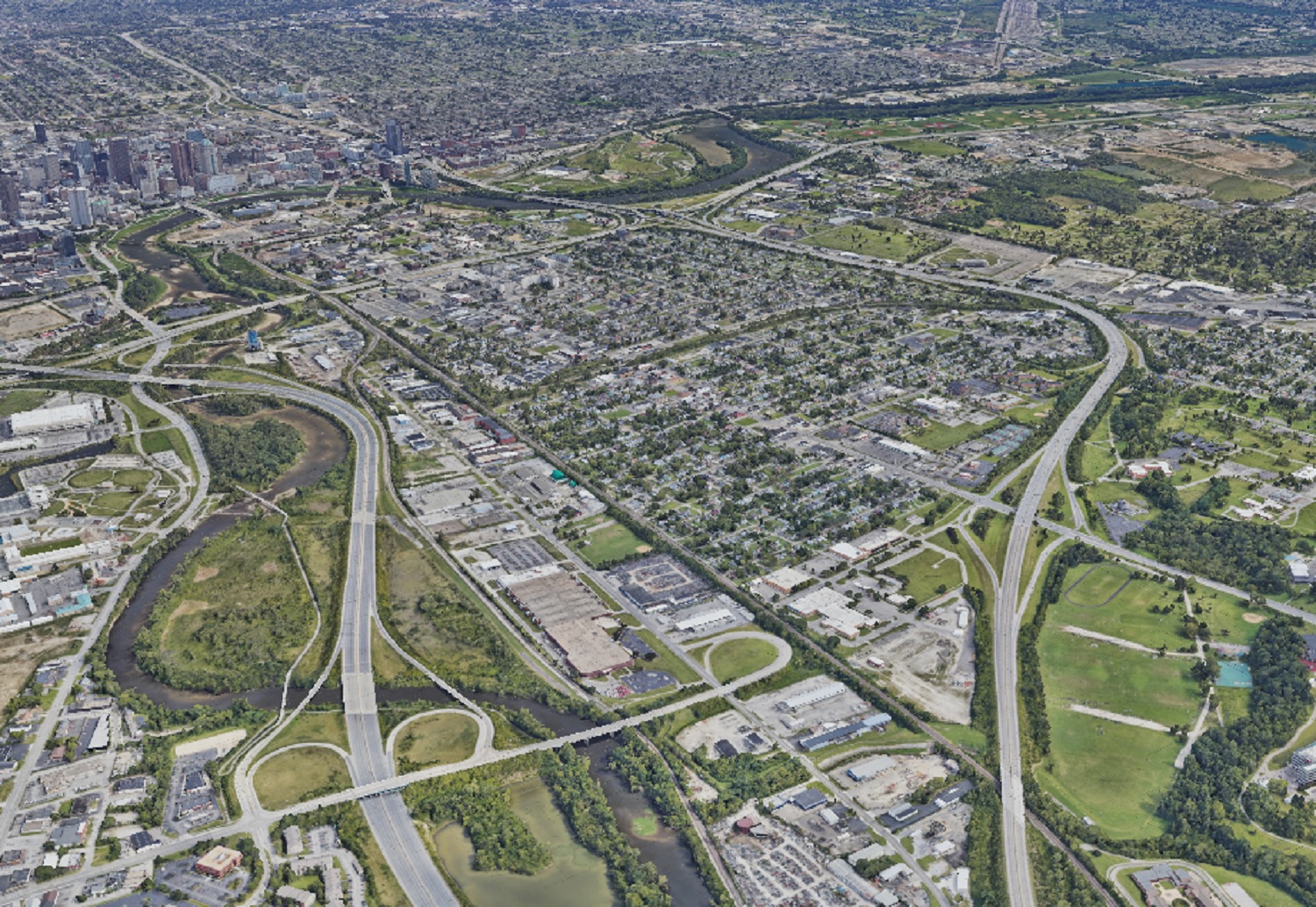
Photo taken in 2019.
In the after photo, nearly all the vacant land is gone except for park space, Greenlawn Cemetery and areas along the rivers.
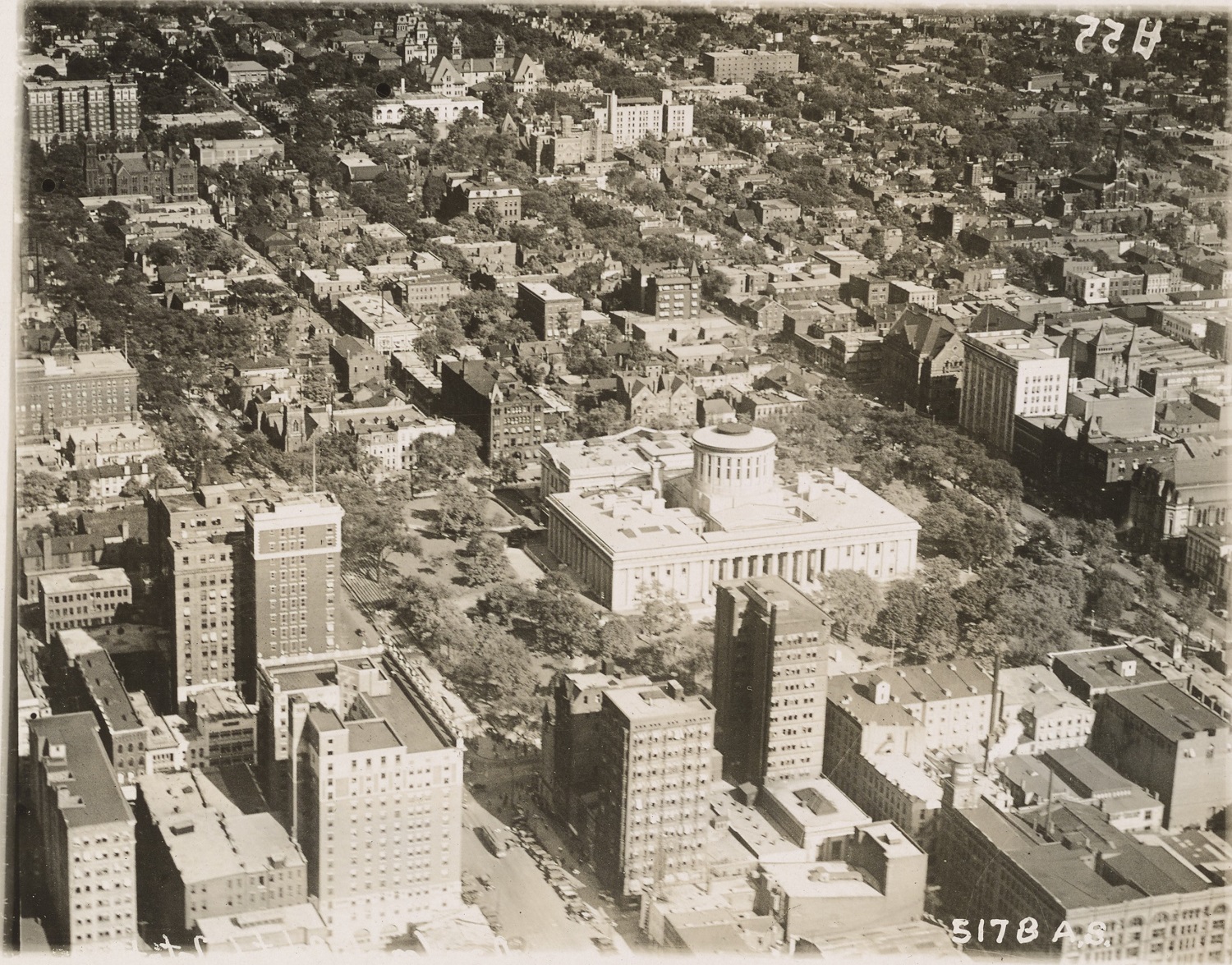
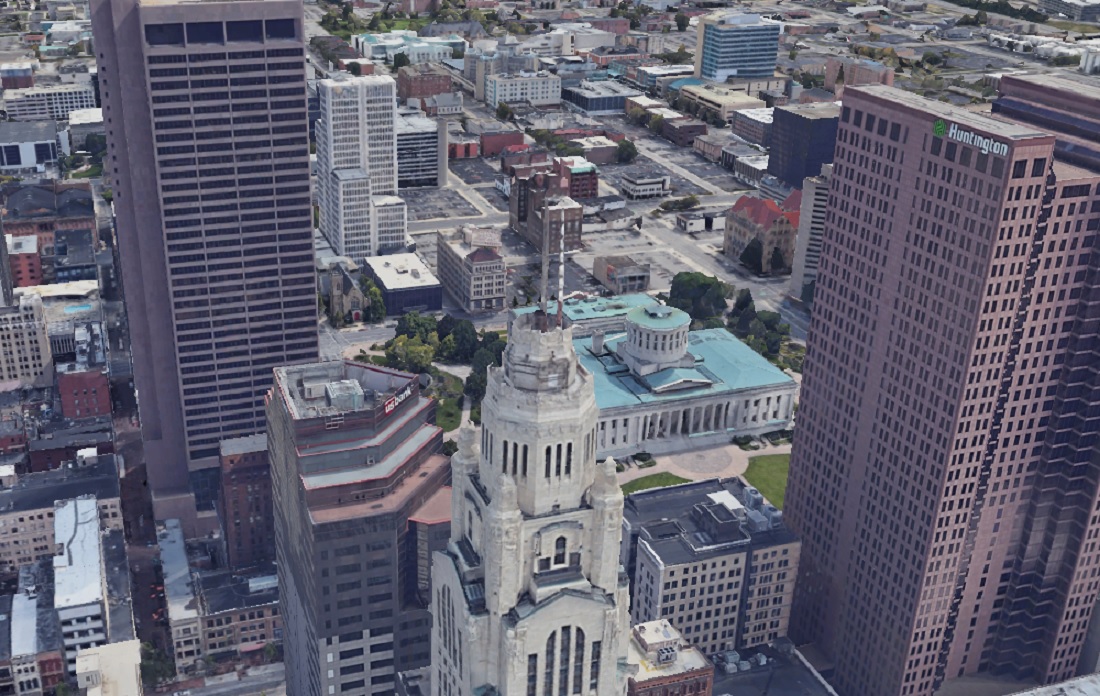
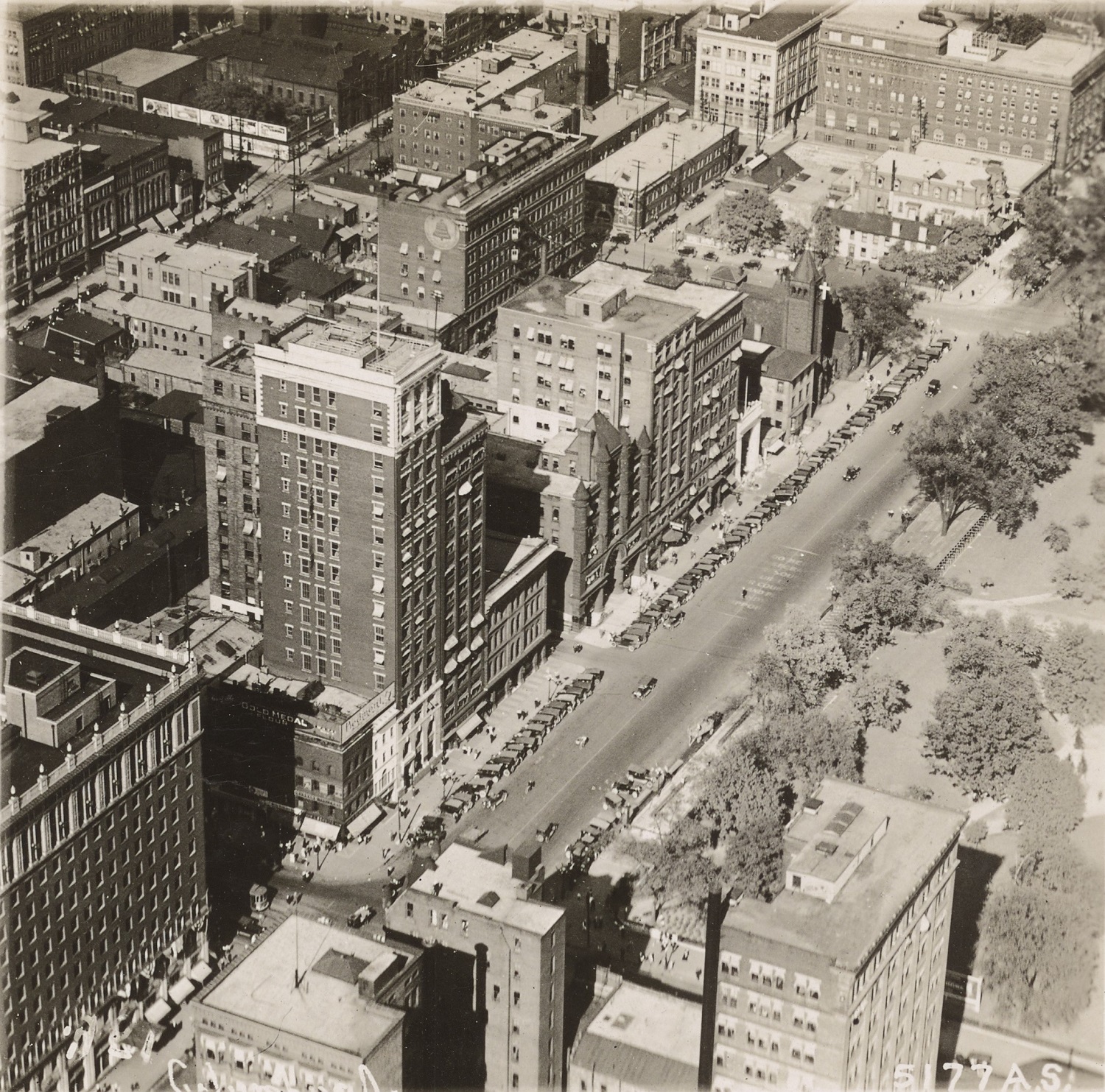
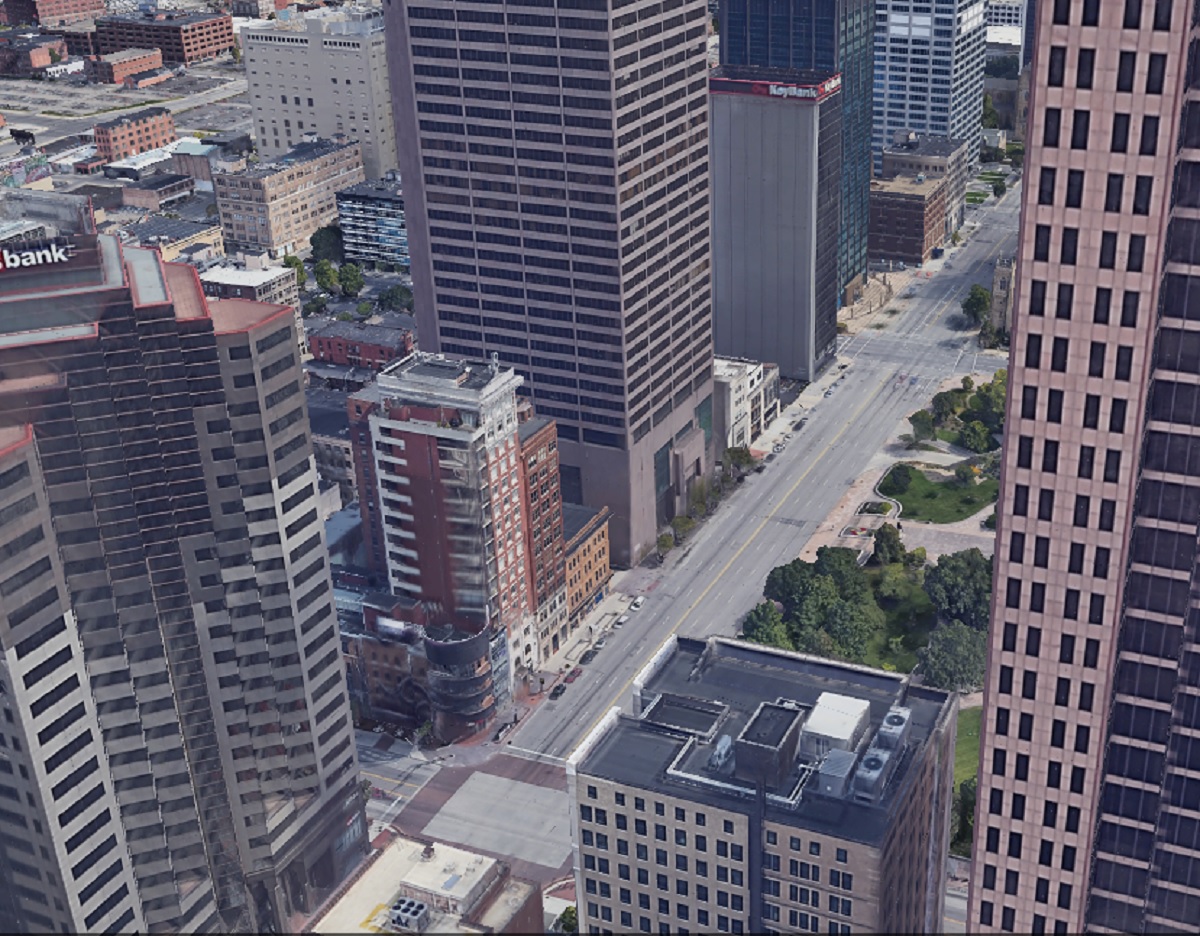
Before This photo of Capitol Square in 1919 is one of the earliest aerials of Downtown I was able to find. This photo predates all highrise construction. The city was compact, dense and dominated by brick buildings. After In the 2019 image, skyscrapers have now replaced many of the older buildings. While the Capitol itself a handful of other buildings remain, the density has largely been lost over the years, with parking lots where many once stood. Before The 1919 image shows the intersection of High and Broad Streets, arguably the very center of Columbus. After Aside from the 8 on the Square building, virtually everything else from 1919 is long gone.
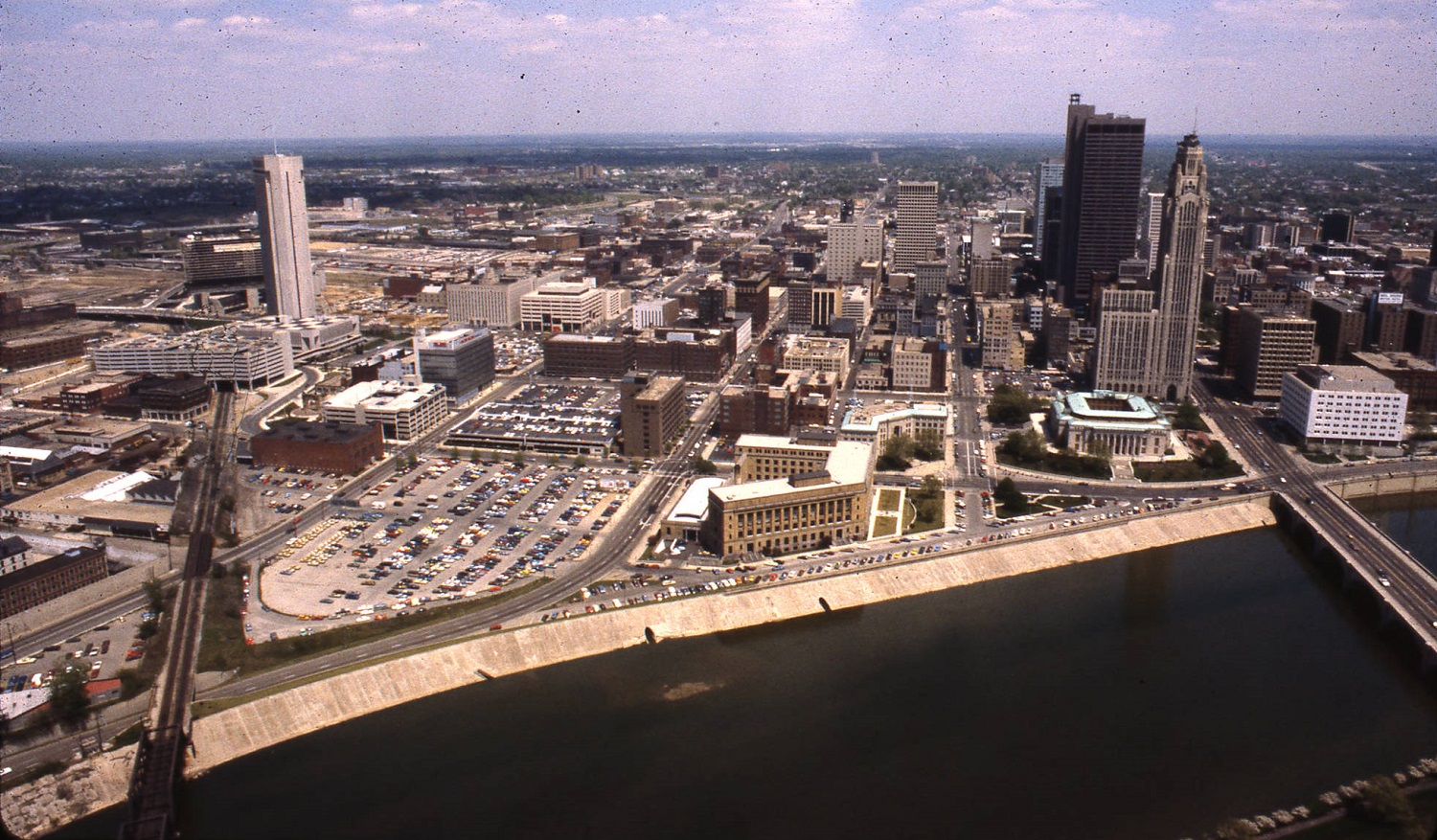
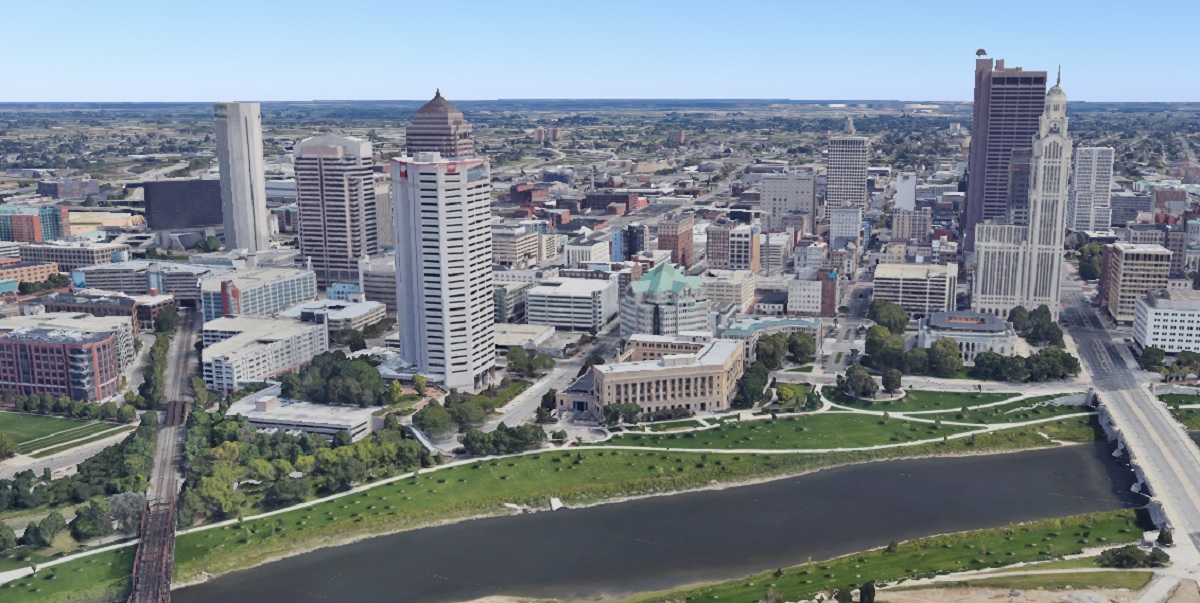
Before This much more modern image of Downtown and the riverfront was taken in 1980. After The 2019 Google Earth image from the same angle shows significant changes in 40 years. New skyscrapers and other development are obvious, but the massive changes to the riverfront itself almost make this look like a different city altogether.
What might these areas look like in another century?
The monthly housing market update April 2021 has been released from Columbus Realtors. The results continue ongoing trends of rising prices and low supply.
Note: LSD= Local School District, CSD= City School District. In both cases, school district boundaries differ from city boundaries.
Top 15 Most Expensive Locations By Median Sales Price in April 2021 1. New Albany: $677,500 2. German Village: $570,000 3. Bexley: $527,500 4. Dublin: $514,000 5. Powell: $500,000 6. Grandview Heights: $486,000 7. New Albany Plain LSD: $469,393 8. Upper Arlington CSD: $465,008 9. Olentangy LSD: $446,575 10. Dublin CSD: $437,000 11. Buckeye Valley LSD: $425,000 12. Jonathan Alder LSD: $422,000 13. Granville CSD: $410,000 14. Worthington: $409,250 15. Short North: $405,500
New Albany continued to top the charts, and remained more than $100K over second place.
Top 15 Least Expensive Locations by Median Sales Price in April 2021 1. Newark CSD: $140,000 2. Circleville CSD: $164,900 3. Whitehall: $165,000 4. Hamilton LSD: $195,250 5. Groveport Madison LSD: $196,000 6. Jefferson LSD: $198,000 7. Lancaster CSD: $200,000 8. London CSD: $207,500 9. Columbus CSD: $217,000 10. Obetz: $225,100 11. Columbus: $228,500 12. South-Western CSD: $230,000 13. Reynoldsburg CSD: $237,900 14. Canal Winchester CSD: $245,500 15. Minerva Park: $245,551
Columbus and some of its suburbs remained relative bargains in April.
Overall Market Median Sales Price in April 2021: $251,135 The overall market is defined by Columbus Metro Area counties.
Top 15 Locations with the Highest Median Sales Price % Growth Between April 2020 and April 2021 1. German Village: +67.2% 2. Jonathan Alder LSD: +42.1% 3. Worthington: +39.3% 4. Blacklick: +38.6% 5. Buckeye Valley LSD: +36.7% 6. Powell: +33.8% 7. Teays Valley LSD: +30.6% 8. Whitehall: +29.7% 9. Worthington CSD: 26.4% 10. London CSD: +25.8% 11. Olentangy LSD: 24.7% 12. Bexley: +24.1% 13. Westerville CSD: 22.9% 14. Jefferson LSD: +21.5% 15. South-Western CSD: +21.1% 16. Marysville CSD: +20.3%
Top 15 Locations with the Lowest Median Sales Price % Growth Between April 2020 and April 2021 1. Grandview Heights: -20.4% 2. New Albany Plain LSD: -10.3% 3. Canal Winchester CSD: -8.4% 4. Downtown: -8.0% 5. Johnstown-Monroe LSD: -6.8% 6. New Albany: -6.6% 7. Lithopolis: -6.3% 8. Newark CSD: -2.1% 9. Big Walnut LSD: +0.3 10. Circleville CSD: +0.6% 11. Granville CSD: +1.4% 12. Reynoldsburg CSD: +2.9% 13. Pataskala: +5.0% 14. Minerva Park: +5.8% 15. Gahanna Jefferson CSD: +6.4%
Urban areas generally improved significantly over earlier in the year. Downtown was still down, but by less than in previous months, so it seems the urban market is now well underway with a recovery.
Overall Market Median Sales Price % Change April 2021 vs. April 2020: +13.8%
Top 10 Locations with the Most New Listings in April 2021 1. Columbus: 1,328 2. Columbus CSD: 917 3. South-Western CSD: 197 4. Westerville CSD: 182 5. Olentangy LSD: 177 6. Hilliard CSD: 171 7. Dublin CSD: 153 8. Worthington CSD: 108 9. Pickerington LSD: 105 10. Grove City: 100
Columbus lead again, and had a few hundred more listings in April than it did in March. Listings overall were up in most places compared to a year ago, a small glimmer of good news.
Top 10 Locations with the Fewest New Listings in April 2021 1. Valleyview: 3 2. Lithopolis: 6 3. Obetz: 8 4. Jefferson LSD: 9 5. Sunbury: 9 6. Johnstown-Monroe LSD: 9 7. Jonathan Alder LSD: 10 8. Minerva Park: 11 9. Circleville CSD: 13 10. Grandview Heights: 14
Total New Listings in the Columbus Metro in April 2021: 3,250 Overall Metro New Listings % Change April 2021 vs April 2020: +41.1%
Top 10 Fastest-Selling Locations by # of Days Homes Remain on the Market Before Sale in April 2021 1. Lithopolis: 2 2. Minerva Park, Sunbury: 3 3. Big Walnut LSD, Jonathan Alder LSD: 4 4. Canal Winchester CSD, Jefferson LSD, Reynoldsburg CSD, Westerville, Worthington: 5 5. Groveport Madison LSD: 7 6. Beechwold/Clintonville, Delaware CSD, Hilliard CSD, Johnstown-Monroe LSD, Powell, Westerville CSD, Worthington CSD: 8 7. Hamilton LSD, South-Western CSD: 9 8. Hilliard, Pickerington LSD: 10 9. Obetz: 11 10. Bexley, Circleville CSD, Columbus: 12
Top 10 Slowest-Selling Locations by # of Days Homes Remain on the Market Before Sale in April 2021 1. Short North: 52 2. New Albany: 49 3. Granville CSD, New Albany Plain LSD: 39 4. German Village: 38 5. Grandview Heights: 28 6. Downtown: 27 7. Buckeye Valley LSD: 25 8. Lancaster CSD: 23 9. Marysville CSD, Olentangy LSD: 20 10. Upper Arlington CSD: 18
Top 10 Locations with the Greatest % Decline of # of Days on the Market Before Sale April 2021 vs March 2020 1. Lithopolis: -97.0% 2. Minerva Park: -94.6% 3. Big Walnut LSD: -93.7% 4. Johnstown-Monroe LSD: -92.3% 5. Canal Winchester CSD: -87.2% 6. Jonathan Alder LSD: -85.7% 7. Downtown: -81.0% 8. Delaware CSD: -80.0% 9. Hamilton LSD: -75.0% 10. Groveport Madison LSD: -73.1%
Top 10 Locations with the Lowest % Decline of # of Days on the Market Before Sale April 2021 vs March 2020 1. Short North: +73.3% 2. New Albany Plain LSD: +62.5% 3. New Albany: +44.1% 4. Jefferson LSD: +25.0% 5. Lancaster CSD: +4.5% 6. Upper Arlington CSD: 0.0% 7. Grove City: -7.1% 8. Buckeye Valley LSD: -16.7% 9. Gahanna: -18.8% 10. German Village: -24.0%
% Change for the # of Days Homes Remain on the Market Before Sale Across the Metro Overall: -46.7%
The market heated up even more in April. Despite more homes on the market, houses were selling the fastest they have in any month year to date. The improvements in sales came across the metro area, including urban areas that had been lagging behind somewhat in previous months.
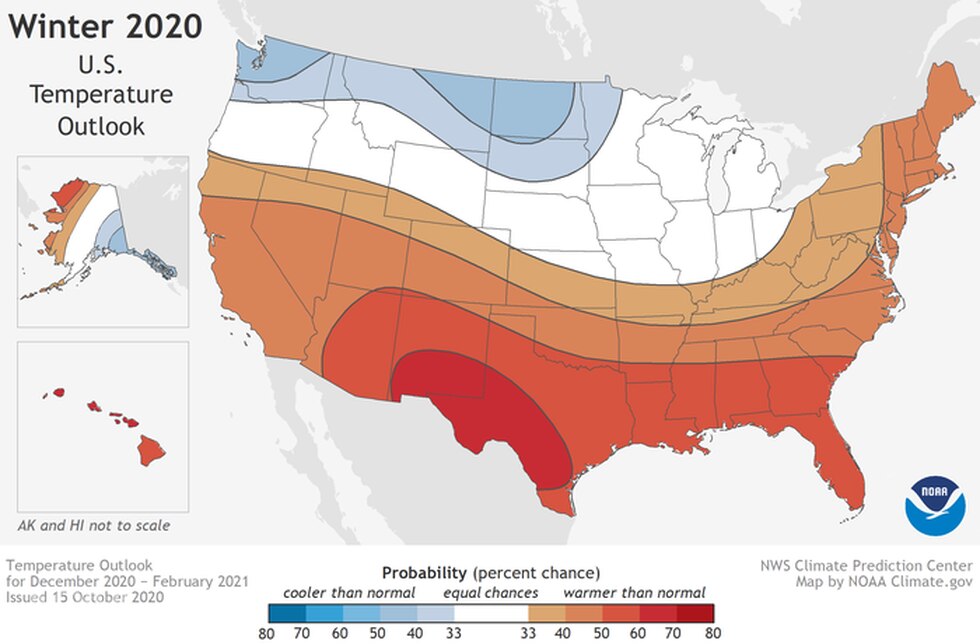
The NOAA temperature outlook for winter 2020-2021.
The Winter 2020-2021 Review is the latest edition in the series. Overall, December and February brought some of the worst winter weather Columbus had seen in several years. Meanwhile, January and March were unusually quiet. Temperatures through January were fairly to slightly above average, while February was well below normal. March and April provided little winter weather, and March had no snowfall whatsoever.
Let’s break the winter down.
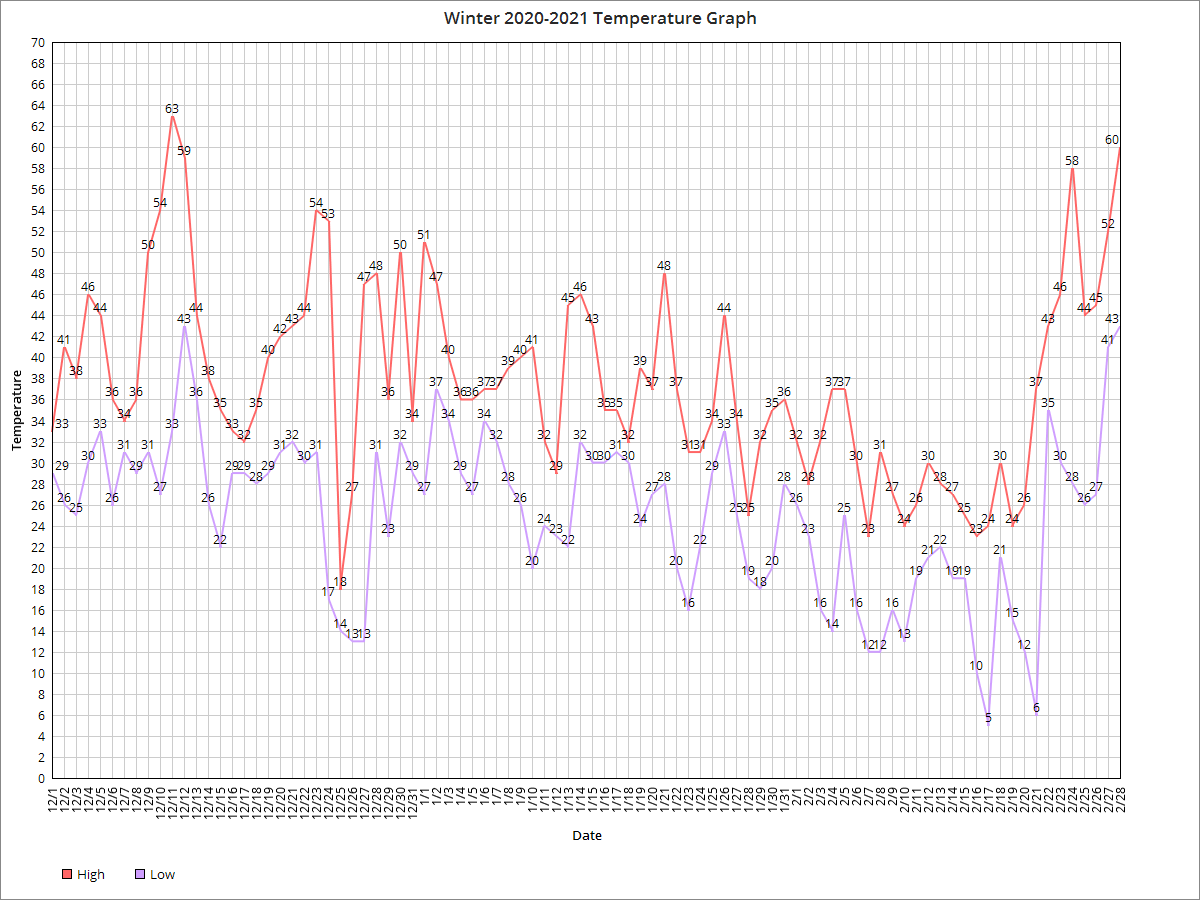
December-February Only Average High: 37.8 42nd Coldest Average Low: 25.1 34th Warmest Mean: 31.4 42nd Warmest Precipitation: 6.72″ 38th Driest Snowfall: 24.7″ 31st Snowiest Average Daily Snow Depth: 1.0″ 15th Highest Largest Snowstorm: 5″ on 1/30-2/1/2021. This was a long-duration storm that moved only very slowly through the region. # of 32 or Below Highs: 28 22nd Most # of 32 or Below Lows: 79 10th Most # of Measurable Precipitation Days: 38 14th Fewest # of Measurable Snowfall Days: 23 14th Most
Overall, winter 2020-21 was somewhat average- not too cold, not too warm, not too wet, not too dry, not too snowy, but not snowless.
Entire Cold Season: October-April Average High: 51.2 15th Warmest Average Low: 33.6 22nd Warmest Mean: 42.4 15th Warmest Precipitation: 20.39″ 56th Wettest Snowfall: 27.8″ 43rd Snowiest Average Snow Depth: 0.4″ 5th Lowest Largest Snowstorm: 5″ on 1/30-2/1/2021 # of 32 or Below Highs: 28 18th Fewest # of 32 or Below Lows: 107 27th Most # of Measurable Precipitation Days: 76 11th Fewest # of Measurable Snowfall Days: 25 16th Fewest
The overall cold season was generally warm, but still managed to provide near normal to slight above normal snowfall for the region.
Average High By Month October 2020: 63.3 31st Coldest November 2020: 57.6 8th Warmest December 2020: 41.5 38th Warmest January 2021: 37.5 49th Warmest February 2021: 33.9 20th Coldest March 2021: 59.0 7th Warmest April 2021: 64.4 29th Warmest
Average Low By Month October 2020: 45.6 35th Warmest November 2020: 37.3 18th Warmest December 2020: 27.7 36th Warmest January 2021: 26.6 22nd Warmest February 2021: 20.4 35th Coldest March 2021: 34.7 27th Warmest April 2021: 42.0 35th Warmest
Mean By Month October 2020: 54.5 38th Coldest November 2020: 47.4 10th Warmest December 2020: 34.6 36th Warmest January 2021: 32.1 39th Warmest February 2021: 27.2 30th Coldest March 2021: 46.9 12th Warmest April 2021: 53.2 28th Warmest
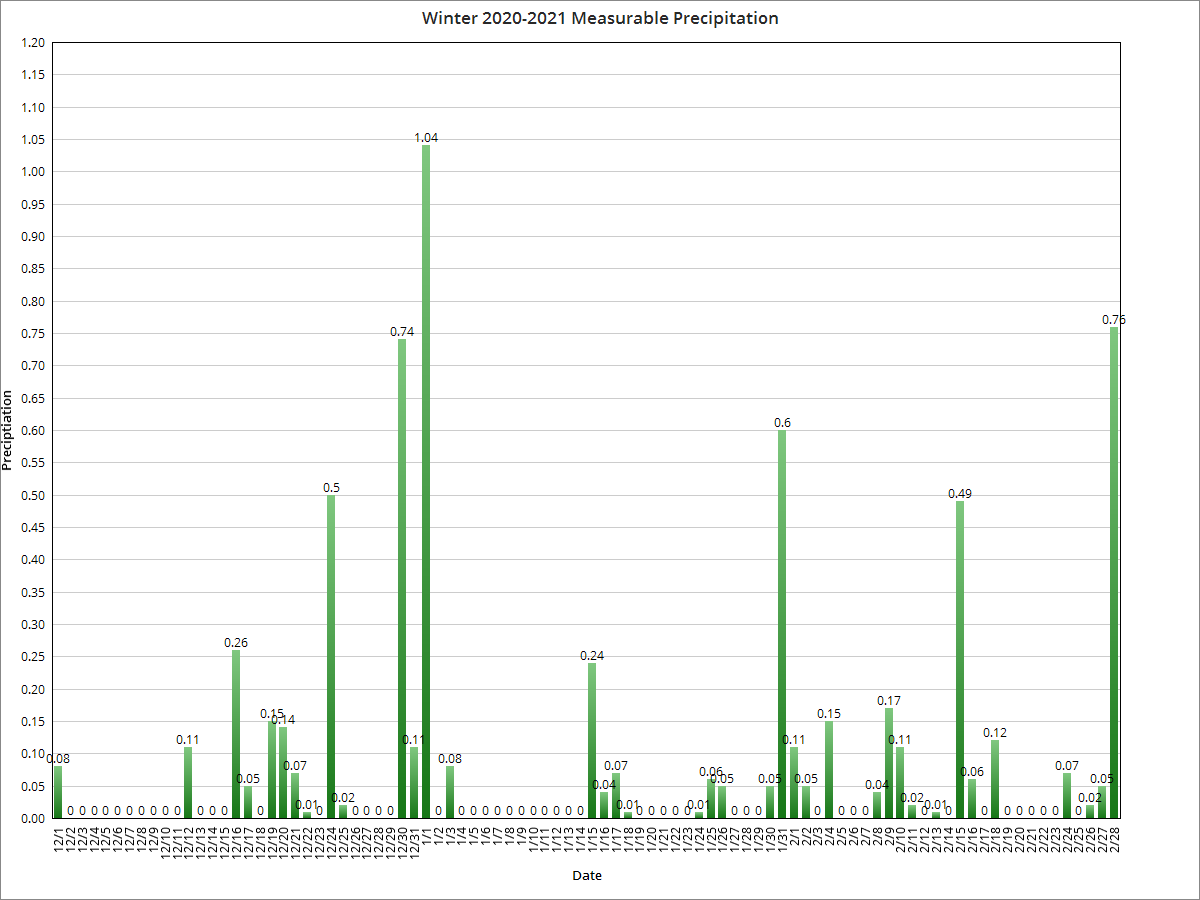
Precipitation By Month October 2020: 4.19″ 16th Wettest November 2020: 3.35″ 45th Wettest December 2020: 2.24″ 44th Driest January 2021: 2.25″ 50th Driest February 2021: 2.23″ 64th Wettest March 2021: 2.85″ 54th Driest April 2021: 3.28″ 60th Wettest
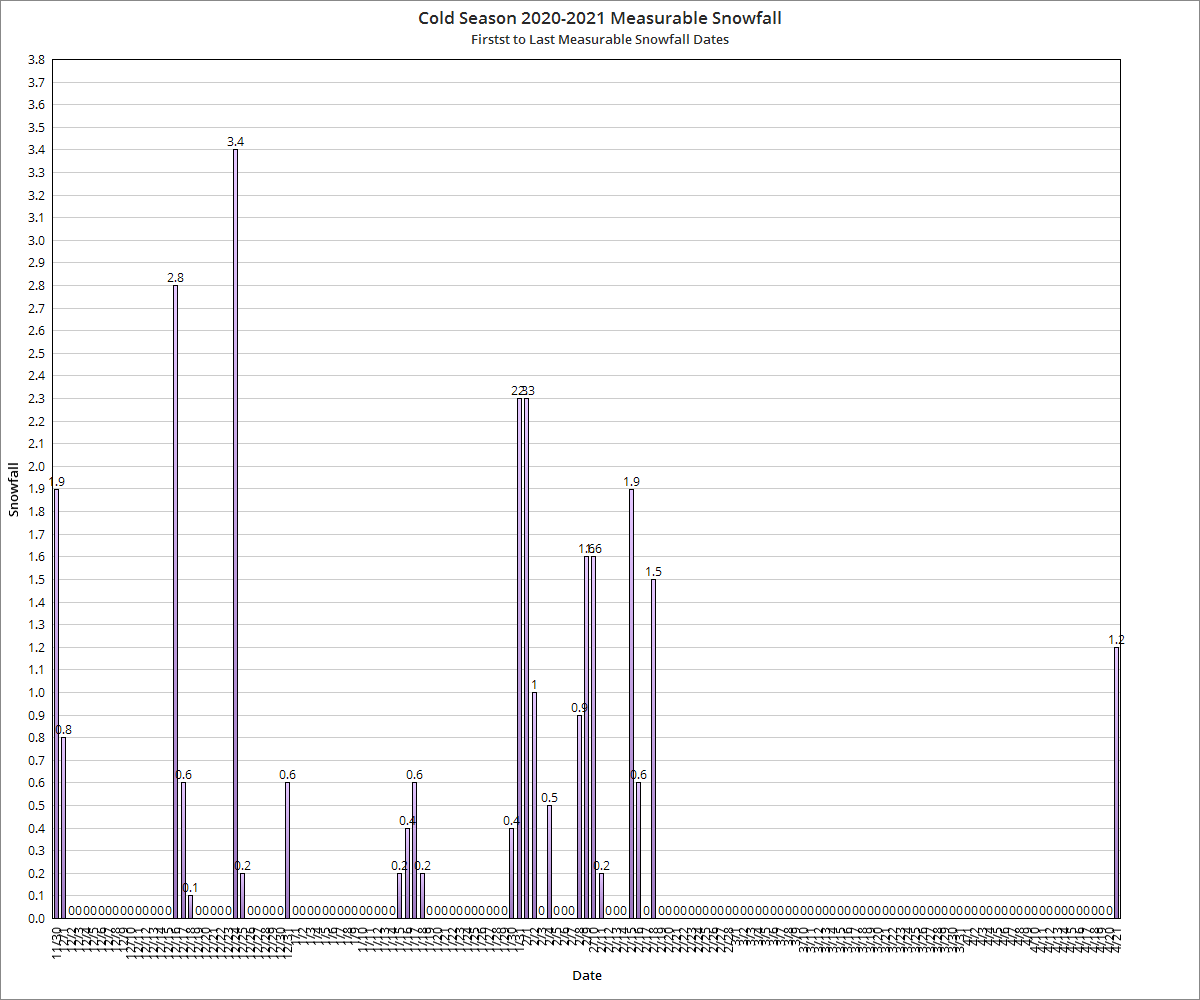
Snowfall By Month October 2020: 0.0″ Tied for Least Snowy November 2020: 1.9″ 21st Least Snowy December 2020: 8.5″ 22nd Snowy January 2021: 4.1″ 29th Least Snowy February 2021: 12.1″ 15th Snowiest March 2021: 0.0″ Tied for Least Snowy April 2021: 1.2″ 14th Least Snowy
March’s lack of snowfall tied the record for the only time in history the month did not even have a trace of snowfall.
Average Snow Depth By Month October 2020: 0.0″ November 2020: 0.0″ December 2020: 0.7″ January 2021: 0.1″ February 2021: 2.4″ March 2021: 0.0″ April 2021: 0.0″
Maximum High By Month October 2020: 80 on the 22nd November 2020: 78 on the 8th and 10th December 2020: 63 on the 11th January 2021: 51 on the 1st February 2021: 60 on the 28th March 2021: 75 on March 24th April 2021: 83 on April 27th
Maximum High Records -78 on November 8th was a record high for the date, beating the old record of 74 set in 1945. -76 on November 9th tied the daily record high with 1975. -78 on November 10th was a record high for the date, beating the old record of 72 set in 1949.
Minimum High By Month October 2020: 48 on the 30th November 2020: 43 on the 18th December 2020: 18 on the 25th January 2021: 25 on the 28th February 2021: 23 on the 7th and 16th March 2021: 40 on the 15th April 2021: 37 o the 1st
Maximum Low By Month October 2020: 62 on the 11th November 2020: 55 on the 10th December 2020: 43 on the 12th January 2021: 37 on the 2nd February 2021: 43 on the 28th March 2021: 56 on the 11th April 2021: 65 on the 28th
Maximum Low Records -The 65 on April 28th tied the record set in 1914.
Minimum Low By Month October 2020: 30 on the 31st November 2020: 25 on the 18th December 2020: 13 on the 26th and 27th January 2021: 16 on the 23rd February 2021: 5 on the 17th March 2021: 19 on the 5th April 2021: 21 on the 2nd
Highest Daily Precipitation By Month October 2020: 1.25″ on the 29th November 2020: 0.89″ on the 25th December 2020: 0.74″ on the 30th January 2021: 1.04″ on the 1st February 2021: 0.76″ on the 28th March 2021: 1.12″ on the 18th April 2021: 1.88″ on the 29th
Precipitation Records -0.76″ on February 28th was the record for the date, beating the old record of 0.56″ set in 1954. -The 1.88″ on April 29th was a record for the date, beating the old record of 1.82″ set in 1996.
Highest Daily Snowfall By Month October 2020: 0.0″ November 2020: 1.9″ on the 30th December 2020: 3.4″ on the 24th January 2021: 2.3″ on the 31st February 2021: 2.3″ on the 1st March 2021: 0.0″ April 2021: 1.2″ on the 21st
Snowfall Records -2.8″ on December 16th was a record for the date, beating the old record of 1.8″ set in 1953. -3.4″ on December 24th was a record for the date, beating the old record of 2.7″ set in 1980.
Deepest Snow Depth By Month October 2020: 0″ November 2020: 0″ December2020: 4″ on the 26th January 2021: 3″ on the 31st February 2021: 5″ on the 18th-21st March 2021: 0.0″ April 2021: 1″ on the 21st
Happy day! The 2020 Census data is finally beginning to be released after months of delays, including 2020 census state populations. Let’s take a look.
In many cases, the 2020 estimates had significant errors. New York was found to have more than 800,000 people above what the estimate was. The estimate assumed the state had lost population the past decade, but it had actually gained well over 800,000. Ohio was also undercounted by more than 106,000. In general, the Census estimates had Northern states with either too large losses/too slow growth than reality, while Southern states were generally estimated to have grown more than they really did. This has been a long-standing bias within the Census estimates program.
Total Change By Region Between 2000-2010 and 2010-2020 South: -2,571,014 Midwest: -475,772 Northeast: +531,490 West: -2,104,601
Ohio moved into the top 25 in total growth and was one of the top states for the biggest improvement between the 2000s and 2010s. However, because it was already one of the most-populated states in the nation, its total growth still wasn’t enough for it to not lose another House district. The state will have to keep improving if it wants to maintain its level of representation in Congress. Meanwhile, the fast-growing South and West regions clearly slowed down in growth the past decade. Combined, they added 4.675 million fewer people the past decade than they did during the 2000s. The Midwest was more of a mixed bag, with more states improving, but Illinois cancelling out all of that positive momentum. Only the Northeast managed to add more people the past decade than it did during the 2000s, mostly led by a huge improvement in New York.
The Census will release 2020 population numbers for counties, cities and other places over the next few months, and will be posted here when they are.
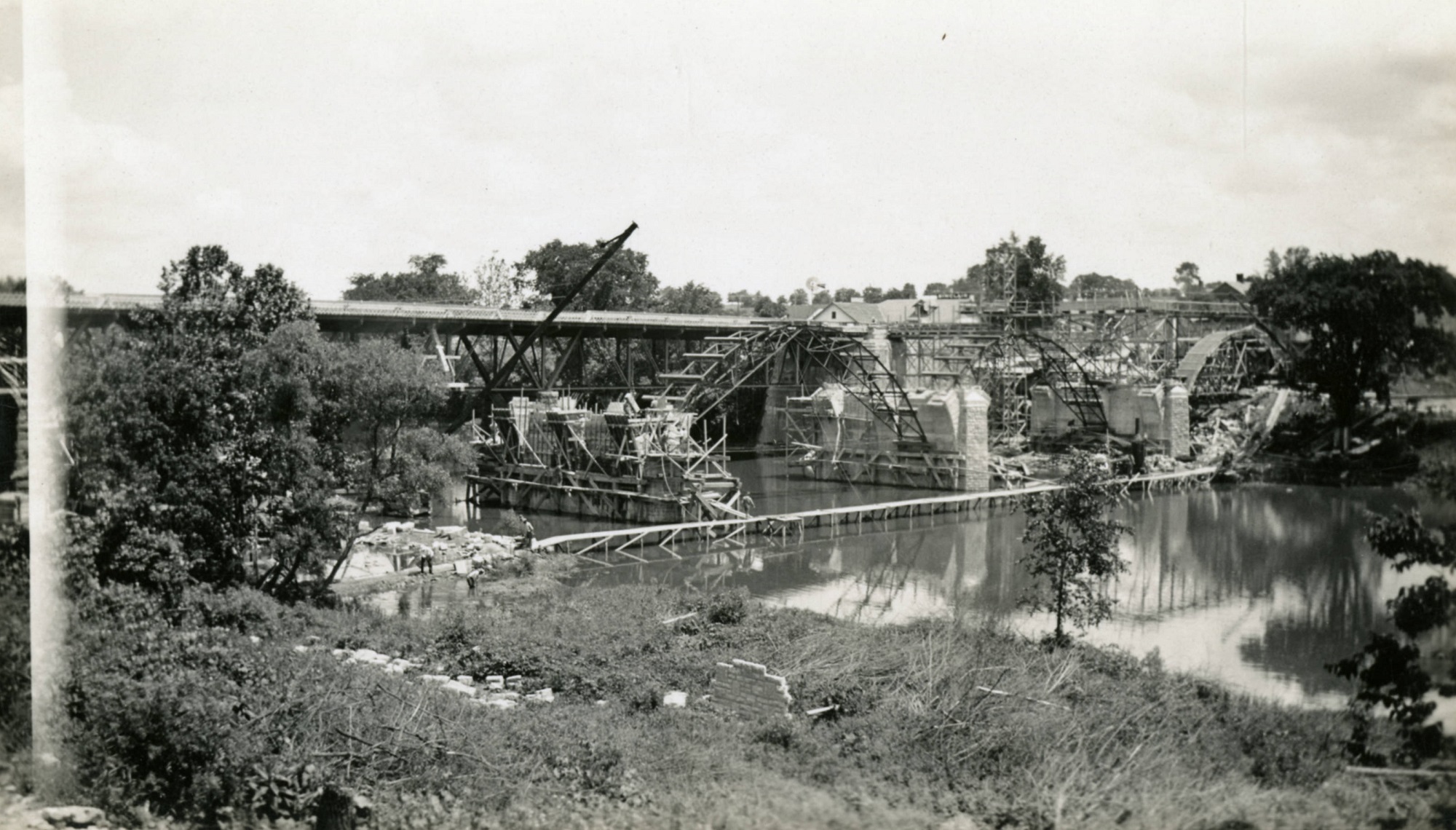
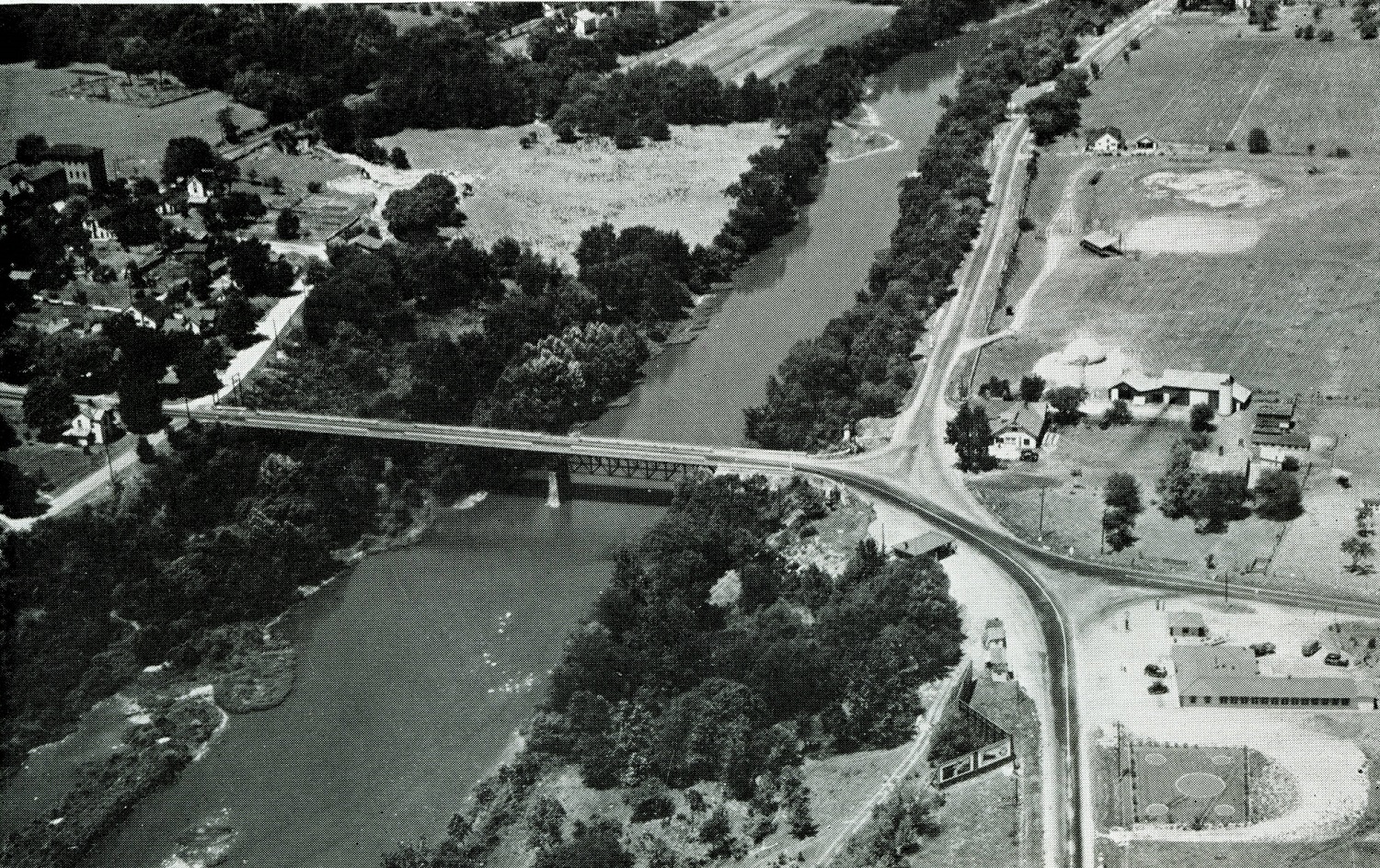
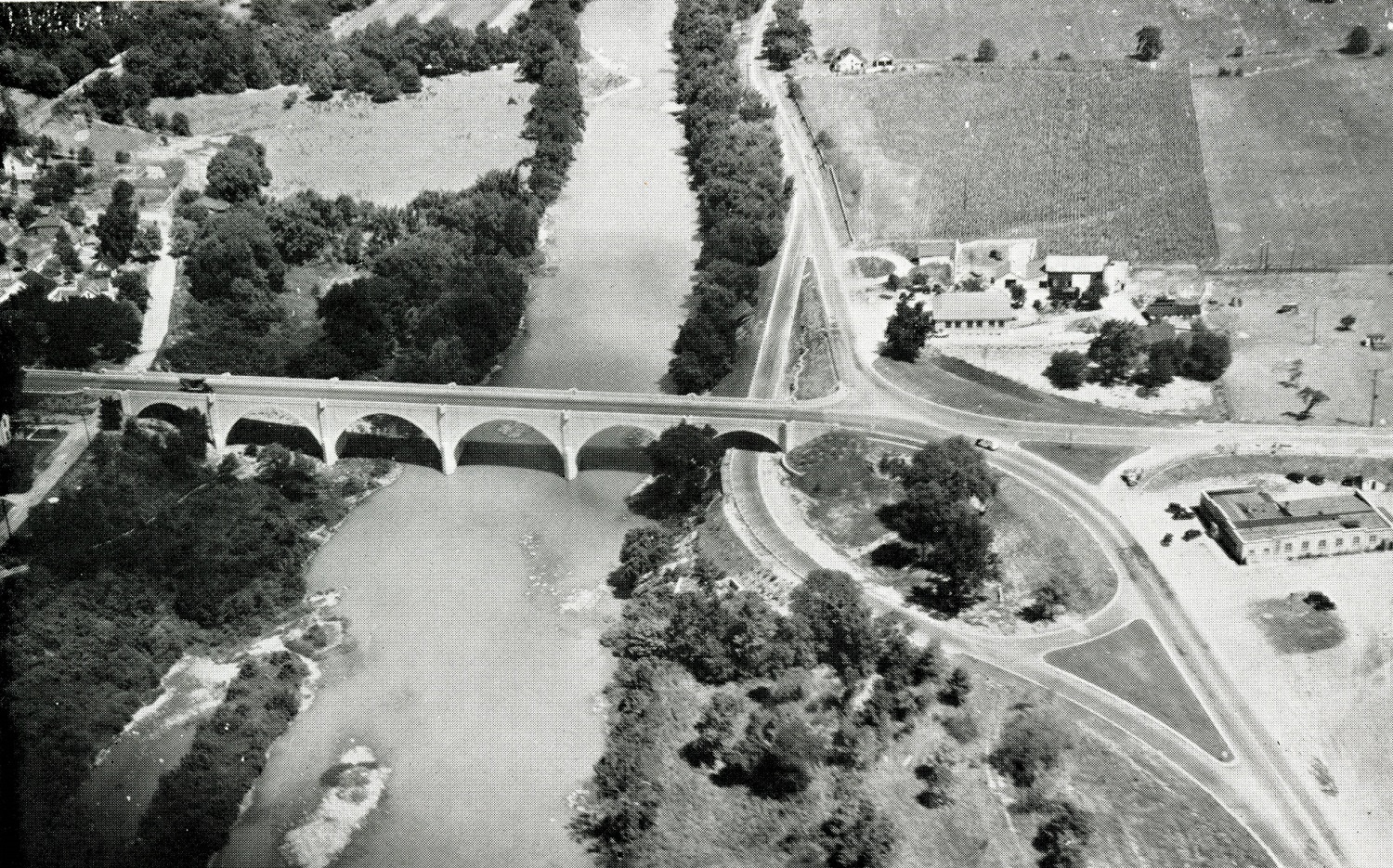
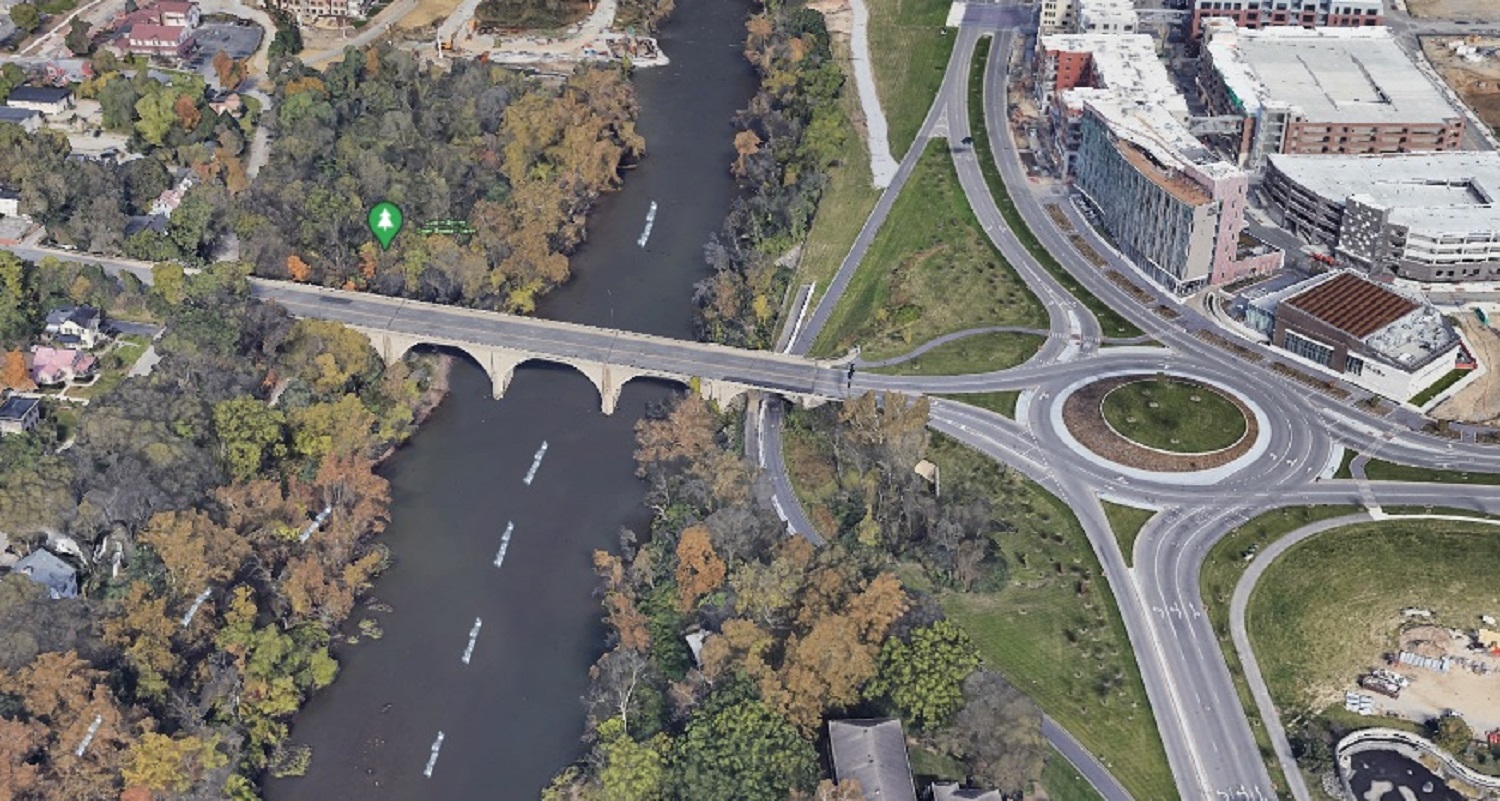
Bridge Street gets its name from the lone bridge that has connected Dublin with areas east of the Scioto River for well over a century. Dublin’s stone bridge, however, is not original. It is the 3rd iteration over the lifespan of the crossing, replacing an 1879 iron version that replaced the original wooden covered bridge. The iron bridge crossed the river just to the north of the current bridge.
The bridge was constructed between 1935-1936. It was built by the Works Progress Administration (WPA), a Depression-era infrastructure building and jobs program. The project employed about 300 workers.
Since its construction, the bridge has been repaired and altered several times, with the original roadway itself now much wider than it once was.
Construction of the bridge in 1935.
An aerial photo of the old iron bridge taken around 1934.
The new bridge around 1937.
The bridge in the present.
Much has changed between the old images and the present one. Long gone are the fields and quieter life of 1930s Dublin.