Unimaginative Developers Creating Poor Projects


Columbus continues to develop rapidly as the population grows. Demand is high and homes have been in short supply for years. Unimaginative developers creating poor projects and proposals seems to be the norm, however. Some of these proposals sacrifice historic buildings, others promote an entirely car-centric environment unfriendly to transit, bikes and pedestrians, while still others are a massive waste of site space.

Here are just a few recent examples of proposed projects that are baffling in their lack of creativity, access, accommodation and site potential.

167-191 S. High Street
Destroying Columbus history 167-189 S. High Street
The Plan
The 3 buildings pictured on this Downtown block of High Street are all in imminent danger. In a recent Columbus Business First article, it was reported that the 3 buildings were purchased by Cleveland-based Harsax Management Company, a construction and development firm. While the 1914 Ohio National Bank building at 167 S. High is supposedly the most likely to stay, the other two early 1910s buildings at 171-177 and 181-191 S. High are already likely to be demolished according to the company’s CEO.
No specific reason is given for the demolition proposal, only that the company plans to develop the site at some point afterwards. So the suggestion is that these buildings may be demolished without any actual plan in place to replace them, so they’d end up- at least for a short time- as an empty lot or parking.
The Problem
Not incorporating the southern two buildings into a new development is an entirely unnecessary wasted opportunity, and High Street and Downtown lose at least 2 more of of their old streetscape for no good reason. While the prospect of new development is exciting, the fact of the matter is that preservation can take place while still getting a new dense, mixed-use project for the site even if most or all of the existing buildings are saved.

Destroying Columbus history 181-191 S. High

The Walnut side of 181-191 S. High Street, showing its old stone foundation and other architectural features.


A Few Potential Solutions
The site is more than large enough to accommodate the existing buildings with new development, and there are 3 potential configurations that show this.
Option 1- The Least Destructive

The red area in the above map shows the best possible option. The main part of 171-177 is saved, along with the entirety of 181-189. The small parking lot, the skinny section of 171-177, and the later, smaller addition behind 181-189 would all be replaced with a new development. The area would encompass about 1/3 of an acre, plenty of space to build something fairly significant on. With the renovations of the existing buildings and the new, taller development in back, it would be a potentially spectacular addition to the RiverSouth part of Downtown.
In fact, a new project and renovation could incorporate the adjacent dead-end Walnut Alley into the plan, turning it into a market space, restaurant/bar patio, or both. It would be a shame to lose the addition as it is a cool little building itself, but if it allowed the other main buildings to be saved, it would ultimately be worth it.
Option 2- The Compromise

The second option would fully replace 171-177 S. High and the rear parking lot with a new build. The site would offer just under 1/3rd an acre, so it would be the smallest available option, but would still allow a taller, dense, mixed-use project with High Street frontage. It would also allow both 181-189 and its rear addition to be saved and renovated, which are arguably more important.
Option 3- The Greatest Sacrifice

Option 3 would require the demolition of 171-177 and the rear addition. This would allow the developer to build an L-shaped project with the new building having direct High Street frontage. It would be a greater loss than Options 1 and 2, for sure, but still a potential compromise versus full demolition. Furthermore, the new building could maintain 171-177’s facade so that the old streetscape look is still maintained. This would be similar to what was done with this hotel project on Park Street.

The fact that the developer either hasn’t considered such options, or isn’t interested in them, is unfortunate. Given its prime location, the potential for this site is extremely high, both in terms of a new build and preservation. It would be incredibly short-sighted of the Downtown Commission to allow full demolition of the site to take place, even if the developer ultimately proposes something significant for the site.

45 W. Barthman Avenue
Developers creating poor projects 45 W. Barthman
The Plan
This 8.2-acre South Side site is a former industrial area that has been mostly vacant and abandoned for many years. The NRP Group, another Cleveland-based development company, wants to turn this site into a residential complex with 200 apartments in 3 buildings.

The site as it exists now.


The proposed site layout.


The Problem
The 8.2-acre site is one of the largest single development sites available anywhere on the South Side. 200 units is an insultingly low density for the space. Furthermore, the layout is absolutely awful. The 3 proposed buildings are completely surrounded by surface parking lots, and the positioning of the buildings make it virtually impossible to ever add additional housing on the site later on. It’s also entirely unfriendly to pedestrians, as the site plan shows no sidewalks or pathways along Wall Street and no connections across it. There are only small sections of sidewalk between the buildings and the parking lots, but they do not connect with each other between the 3 buildings. This is about as poor of a plan as it gets.
A Potential Solution

A new layout is desperately needed for the site. In 5 minutes, I created this potential one. The blue box is a large parking garage- or surface lot alone if any of the buildings have parking underneath- that could easily accommodate hundreds or 1000+ cars. The black lines are new streets, including extensions of Reeb and Barthman Avenues. The yellow line is a new sidewalk along the entire site on Wall Street, and each new street would have connecting sidewalks. The orange boxes are potential buildings, each between 1/2-1.2 acres in size. For comparison, the entire HighPoint project on High Street Downtown is about 1.3 acres. That’s more than large enough to accommodate 100-300 units each depending on the number of floors. That means the 6 buildings could potentially provide 6x-9x the housing units that the original proposal provides, even with just 3 or 4-story buildings.
Furthermore, any of the buildings could incorporate retail/restaurant space, something this part of the South Side really doesn’t have outside of strip centers. Those spaces would be particularly attractive facing the 1.5-acre park carved out in the center of the site. I noticed in the original plan that they have retention ponds. If they are necessary, a central retention pond could be the key feature of this pocket park and event space.
You might say, however, that the developer might not have the financing to build all of this, and that’s true. However, just like Jeffrey Park in Italian Village, building one or 2 buildings at a time, letting them fill up and then building more over several years would not be out of the question. The site doesn’t have to be developed all at once. The developer can build the 3 buildings originally planned and then fill out the rest of the site over time. The point is to do it right, not fast.

329 Loeffler Avenue

329 Loeffler Avenue.


The Plan
Another proposal that seeks to demolish a part of old Columbus is the 7-townhome proposal from, it seems, an R and R Construction. Most of the land for the proposal is vacant and has been for years, but there is a lone brick house at the corner of Loeffler and Carrie Avenue that the company wants to demolish for the project. The house dates back to between 1890-1905.
The Problem
There is, quite plainly, no reason the house needs to be demolished. While it is vacant, auditor records list the house in fair condition, so it’s hardly beyond saving. It can be renovated. Furthermore, the location on the corner means that it is not actually in the way of the project overall. The proposed layout below shows the location of the house in the red box.

The Solution
There is no reason that the new building on Loeffler needs to extend to the corner. It could just be a 3-unit building on that section instead of 4, with the house being renovated on the corner. It’s location does not interfere with the other 3 units facing the back alley whatsoever and the overall number of units for the project would still be 7. The house is a part of the neighborhood’s history. Regardless of how it may look at the moment, it’s condition means that it is not structurally deficient, so it can remain and should. Brick homes like this are being lost for all sorts of reasons- neglect, arson, new development- but this is a perfect example where location makes it a great candidate for saving.

While these are recent, the fact is that such poor project proposals come out almost every month, and there is often little to no pushback from neighborhood commissions or the city to do better. While solutions and better options exist, we’re missing out on creating better, richer neighborhoods that both embrace new development while encouraging preservation and higher standards for residents. I encourage anyone who can to contact these companies, the city and neighborhood commissions to speak out. Even if you disagree with my particular take on these proposals, collectively more voices should be heard in the direction that development in Columbus takes.
Before and After Goodale Expressway


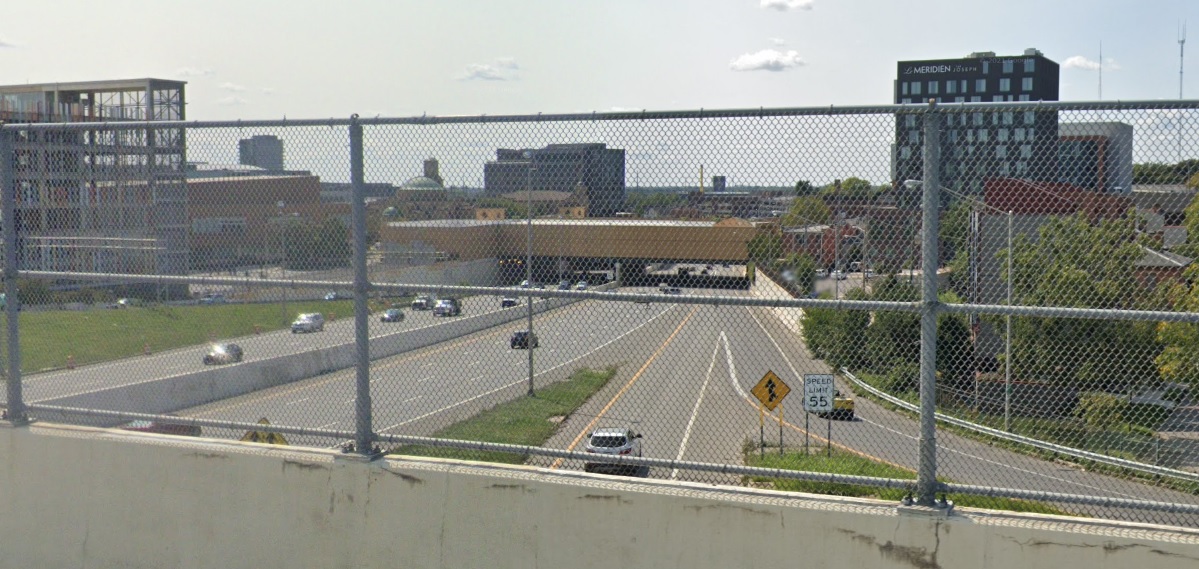
This Before and After Goodale Expressway addition shows a bit of the Columbus highway system’s earliest construction projects.

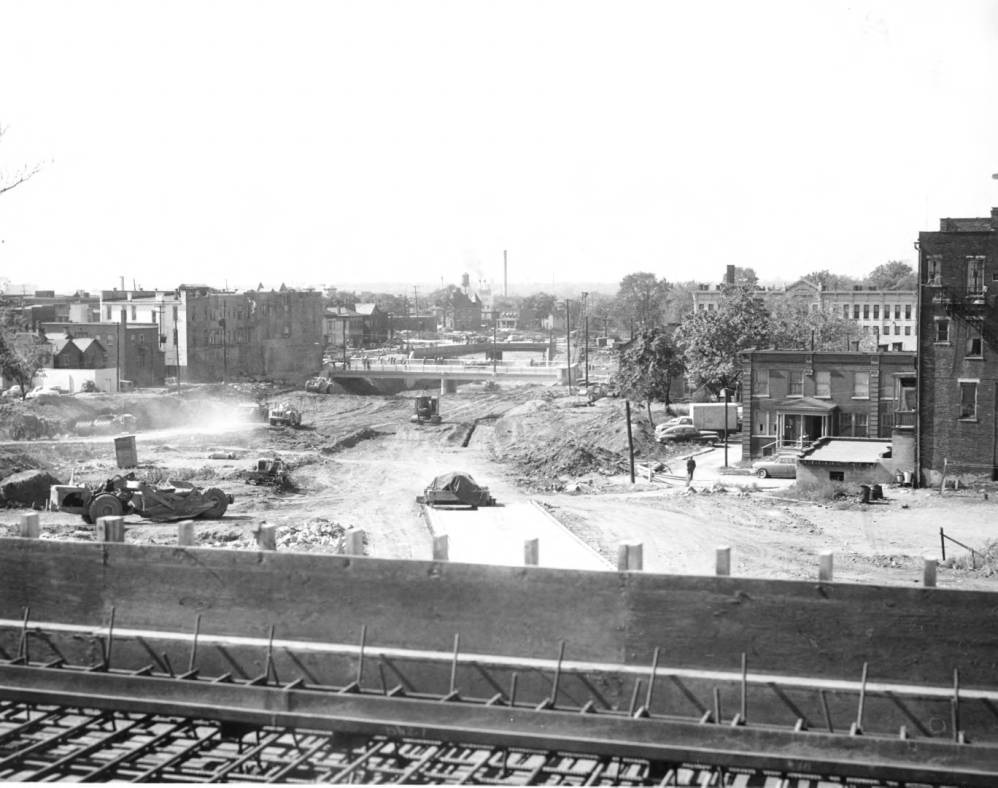
Before: Around 1960
Before and after Goodale Expressway
The image above is taken from the then under construction 3rd Street Viaduct overlooking construction of the Goodale Expressway. It is facing west towards High Street, with Italian Village on the right. Although this section did not require significant demolitions due to preexisting railroad tracks, one of the big casualties a bit further west was Flytown, an area along and north of Goodale Avenue west and south of Victorian Village.
The Goodale Expressway was one of the first sections of the Columbus highway system constructed, which is somewhat ironic given it would take more than 40 years to fully construct and be the last major highway completed. After decades of controversy, studies and false starts, the final stretch from 71 to the Rt. 62 interchange at 270 was completed in 2003.
After: 2021
Before and after Goodale Expressway view
While an unfortunate fence blocks the view, you can still see how drastically the landscaped has changed after more than 60 years.

Building Collapse a City Failure

In recent years, Columbus has lost multiple historic buildings, but not all of them were for new development. Instead, they were largely the victims of neglect and indifference, with both owners and the City itself acting as their executioners. The most recent building collapse is a City failure, but it is just one more in a long, depressing list. Let’s take a look at just some of these cases, and how bias against poorer or less-White neighborhoods may be part of the problem.

Charles Building

Building collapse is a city failure Columbus, Ohio

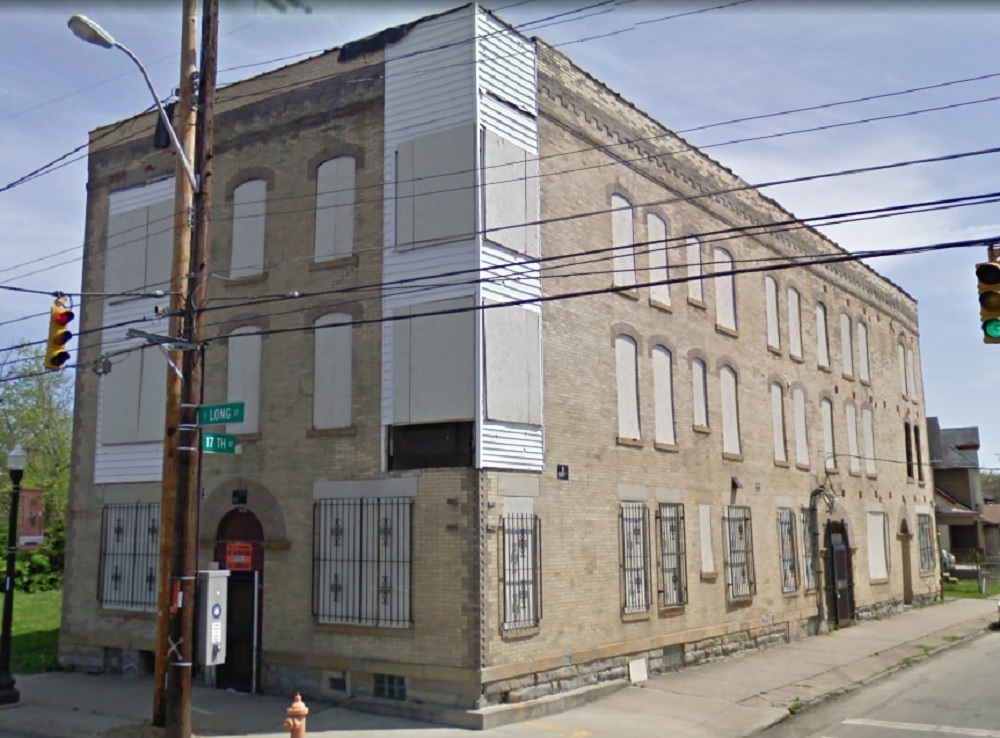
The Charles Building in 2009.

905 E. Long Street
Built: 1910s
Demolished: 2010
The apartment building was first owned by Dr. William Method, a prominent figure who was often called the “dean of Negro physicians” at the time. Method was responsible for helping to build the hospital across the street, known as Alpha Hospital, which primarily served Black residents who struggled to get adequate medical care otherwise. The apartment building was named after Method’s only son, Charles.
Method didn’t own the building for very long and was in the hands of another owner by 1920. The building belonged to one owner from 1938-1966, and was largely maintained during this period. In 1970, it passed to yet new owners, and that seems to have been when the problems started. At the time, disinvestment in the Near East Side had become a powerful force in and of itself. After 70-71 had split the neighborhood off from Downtown in 1962, the population collapsed and most of the people who remained were lower-income minorities, a demographic that wasn’t exactly being prioritized in the mid-20th Century. Coinciding with the Urban Renewal period, these neighborhoods were devastated both by the lack of investment, but also by the City demolishing large swaths of what they had determined to be undesirable areas.
Part of that lack of investment was allowing many of the older buildings that didn’t immediately meet the wrecking ball to decline in condition through lax, and sometimes virtually nonexistent inspections and maintenance.
The building was old by the 1970s, but continued to be a solidly-built structure. Over the following decades, however, neglect eventually caused the building to become abandoned, and the City took over ownership of it in 2004. The City did not maintain it after that, though, and it remained abandoned and in increasingly poor shape as the years went on. In the late 2000s, a plan was finally formed to renovate it and turn it into affordable housing by the Affordable Housing Trust for Columbus & Franklin County. However, city architects argued that it would cost more to renovate the building than to tear it down and build new ($2.1 Million vs. $1.5 Million), and city leaders were concerned the federal government wouldn’t provide the funds to make up the difference, leaving Columbus on the hook for the remaining $600,000. So, the renovation plans were given up and the decision was made to demolish it.
A part of the story familiar to most of the demolitions listed here, neighborhood residents were less than happy about another part of their history being lost due to outright neglect and the hand-wringing of officials using cost as an excuse. Regardless, the building was torn down by the end of 2010. An affordable housing project was built on the site in 2012, and given the name “The Charles” as a somewhat pandering move to the site’s history.
Ironically, the new Charles building cost $2.2 million to construct, which meant that the demolition and new building ended up costing more than just renovating the old one in the first place. Curious. Worse, the new building provided only 10 units, fewer than the original building could have.


Centenary United Methodist Church

Building collapse is a city failure Centenary United Methodist Church

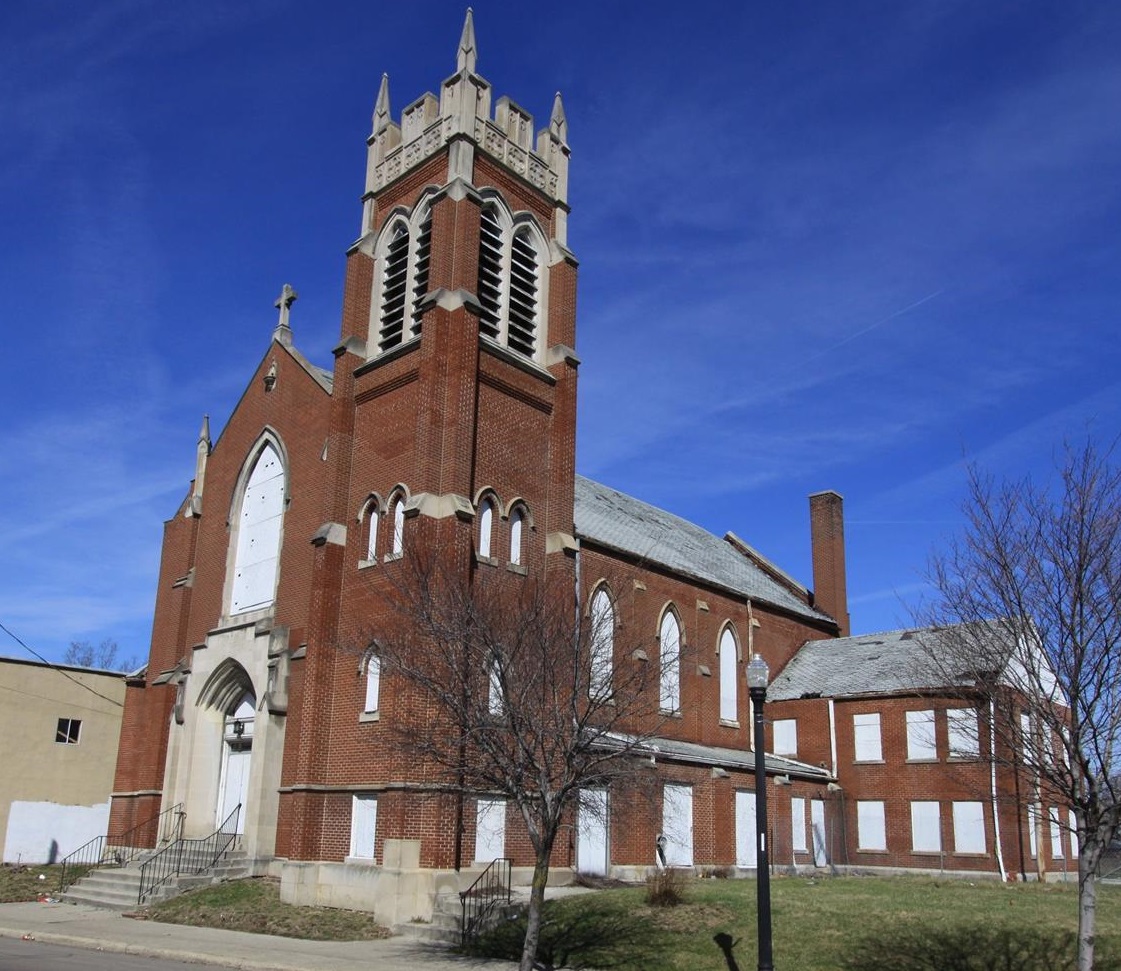
The church in March, 2010.

928 E. Long Street
Built: 1928
Demolished: May, 2010
In 2002, then Columbus Mayor Michael Coleman was pushing hard for revitalizing the King-Lincoln neighborhood, with 25 buildings throughout the neighborhood being designated as “major community assets”. The old Centenary United Methodist Church, the home of a long-time predominantly Black congregation, was one of those buildings. The following year, that existing congregation vacated the building and it was sold to Second Baptist Church of Columbus. Second Baptist didn’t seem to have any real plans for the building, as in 2009, it prepared to sell it to another church called Yeshua is Lord Ministries, which wanted to renovate the structure for a community center.
By 2003, the building was already 75 years old and had started to show its age. Deferred maintenance by the long-time owner had left parts of the structure, particularly the brick facade, vulnerable. Second Baptist had spent no money maintaining the structure, either, between 2003 and 2009.
The sale to Yeshua got as far as Second Baptist signing a sale contract, but for reasons that aren’t clear, the deal fell through. It’s also unclear whether Second Baptist sought other buyers after that or just decided to tear it down. In April, 2010, a city engineer’s report called the building “unsafe” due to loose brick, a few of which had fallen off the building. The City ordered the church stabilized or torn down, and Second Baptist chose the latter, with a vague plan to redevelop the site after.
Columbus Landmarks Foundation briefly got involved to either raise money to save it or find a new buyer, but they just didn’t have any time to do so. Only a month after the report, the church was demolished. To date, Second Baptist still owns the site, but it continues to be vacant more than a decade later.
In some ways, this story is more complicated than with the Charles Building, but there are familiar themes here too. The building lacked the necessary maintenance by its owners, and the City lacked the oversight necessary to make sure it was maintained before it became a public safety issue. By the time any of it was addressed, the timeline pushed to do so did not give interested parties the time necessary to save it. Furthermore, we have a common case of historic buildings being demolished with no real plans in place to replace them with anything. Churches have been a surprising force in this type of historic destruction, not just with church buildings themselves, but with surrounding blocks, often either for newer buildings or parking lots.

Commercial Building

Building collapse is a city failure 1072 E. Long Street

The building in 2009.

1072 E. Long Street
Built: Unknown, prior to 1891
Demolished: 2010
While it never seems to have had an official name, this commercial building was long an important fixture on Long Street. While articles say it was built around 1910, historic maps clearly show it being at the site as early as 1891, so it was far older than suggested. In the 1940s and 1950s, for example, it functioned as the Burns Memorial Funeral Home, a family-owned business that served the local Black community. It also served as apartments, retail space, the Crosby Funeral Home and in the early 1970s, as a Franklin County registrar to buy plates and licenses. Records after the 1970s are few, and it seems the building may have been fallen into disuse by the 1980s, coinciding with the general decline of the Near East Side. Its path to demolition is an interesting one, as it seems the City was determined to tear it down.
In November, 2009, the building went to a Sheriff’s auction, where Columbus bought it with plans to turn over the site to the Columbus Housing Partnership. At the time, though, CHP had no actual plans for it. A few weeks later and after an inspection, the City inspectors issued an emergency order that claimed the building was in such a state of decay that it could “collapse at any time”. The order gave Columbus 30 days to either fix the building or tear it down.
After the emergency order was issued, the Bronzeville Neighborhood Association, among other neighborhood groups, requested the chance to get a second opinion on the building’s condition and if there was a possibility of saving it. The Columbus Department of Development, which took ownership of the building after the auction, claimed that there was simply no time to wait for that as the building was a significant risk.
It is very strange, then, that the City did not act within the ordered 30-day timeframe. Indeed, 4 months would go by and nothing would be done with the structure, far longer than would’ve been required to honor the request of neighborhood groups for a second opinion on condition. On March 1, 2010, The Bronzeville Neighborhood Association offered Columbus $500 for the building, an amount more than the Director of the Columbus Department of Development thought the building was worth. The same day, the BNA was given until March 5th to come up with a “viable” plan to buy and renovate the building.
So to recap, city inspectors had claimed the building was in imminent danger of collapse and gave the Department of Development 30 days to either renovate or demolish. The DOD then told neighborhood groups that 30 days was just not enough time for them to get a second opinion and put together a proposal. 4 months pass with no action from Columbus, neighborhood groups put an offer for more than the building is considered to be worth, but the DOD gives them just 5 days to come up with a new proposal, something they could’ve been working on the previous 4 months as the City did nothing. It sure seems like the City wasn’t acting in good faith.
On the March 5th deadline, the City rejected the $500 offer by saying that it didn’t come with any assurances that the neighborhood groups would raise the necessary funds to renovate the structure. Just a week later, the building came down. At the time, it was one of the oldest buildings remaining on Long Street.

Charles Seefried Building

Building collapse is a city failure 555 W. Town Street

Seefried building in 2021.


555 W. Town Street
Built: 1884
Demolished: Soon
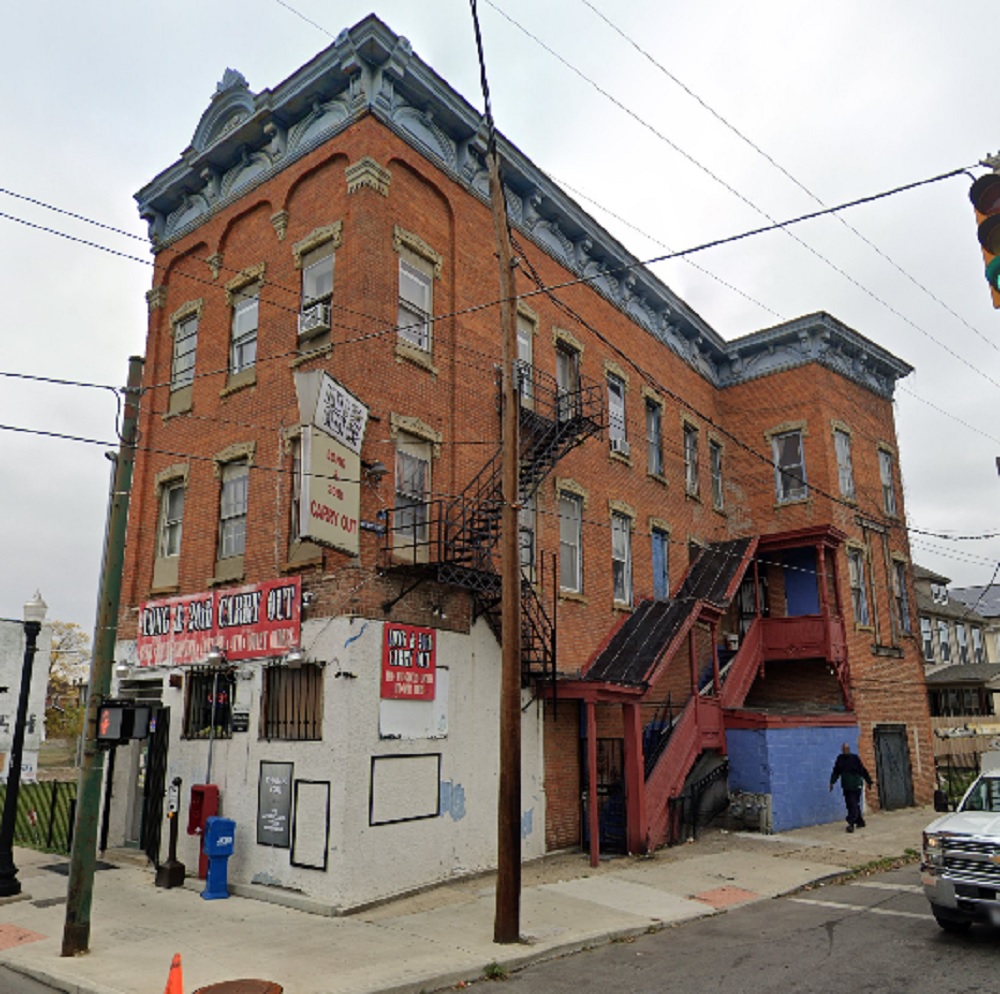
While this mixed-use building has yet to meet the wrecking ball, it seems to be only a matter of time. Charles Seefried’s life seems to not show up much in the historical record. In an 1889 directory, he is listed as a “blacksmith helper” and living at 179 1/2 N. High Street, but it’s unclear if this is the same Seefried whose name adorns the building. Either way, Seefried seems to have passed away on October 29, 1888 at age 43. The building housed apartments on upper floors with commercial space on the ground for for just about all of its existence. A general store called Couts & Downing is listed in the building as early as 1907 and were still there when WWII broke out. A bar called the Red Star Grill was there for at least a decade in the 1960s and 1970s. The exact year when the building was abandoned is unclear, but it seems the most likely period was the 1980s. Between 1979 and 2012, the building was sold at least 6 times to different owners, most of whom did almost nothing in terms of maintenance. There were minor repairs done in the mid-1990s and in 2002, but they were not the kind of repairs that would halt the deterioration. In 2016, it seems the most recent owner at least applied for a permit to replace the roof, but it’s unclear if that was done. A few years later, in March, 2019, the building was declared unsafe, with similar declarations coming into 2020, with repeated 90-day orders to stabilize or tear the building down.
Finally, in March of this year, it was reported the the owner had decided to tear it down, citing structural issues that rendered the building “too far gone”. No permits for the demolition have yet been issued, so there is a very tiny chance that the building will somehow make it, but that seems very unlikely.

And now we finally come to the latest loss.

Mixed-Use Building

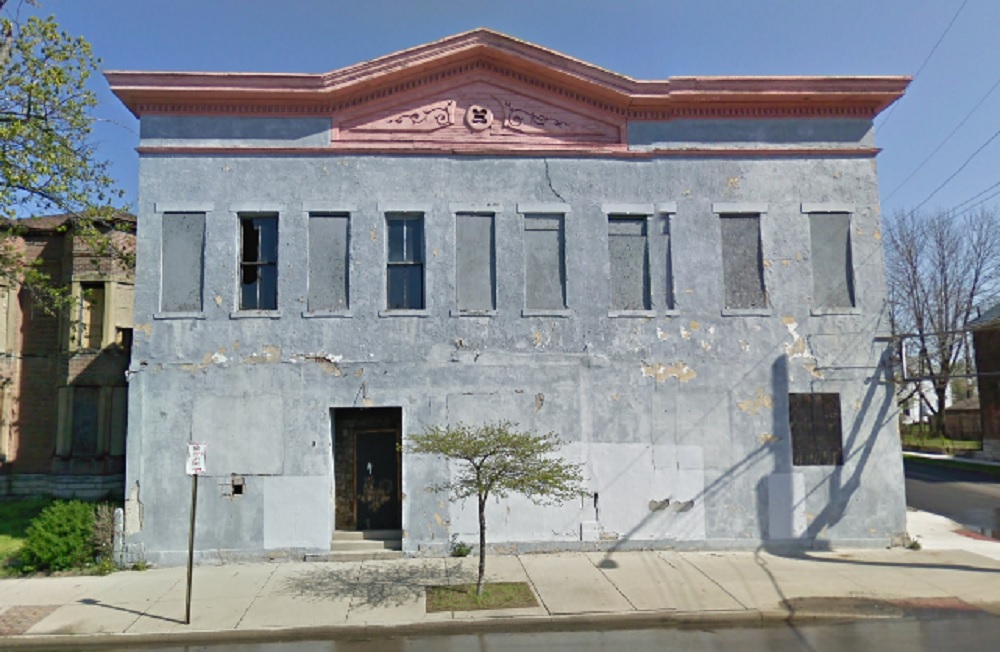
building collapse a city failure 1032 E. Long Street

1032 E. Long in 2021.


1032 E. Long Street
Built: 1880s
Demolished: July, 2022
This was likely one of the oldest remaining commercial buildings on East Long Street, a very rare survivor after 70 years of demolitions in the neighborhood. How it survived so long when so many others did not is probably more luck than anything, but it still managed to meet the same fate of neglect that all these others- and so many more- did.
On July 18, 2022, part of the back half of the building completely collapsed.

In public records, there are no listed permits for any improvements or renovations, so this likely occurred simply due to neglect. After 140 years, all that deferred maintenance left the building vulnerable until it literally couldn’t stand anymore. Going back more than a decade, the only code violations I could find had to do with trash, weeds, graffiti and signage. Had there been any inspections of the building at all over the past 5 owners in the last 20 years?
Why is Columbus allowing so much of its history to rot away to the point of collapse? These buildings had history and each one arguably added more to their neighborhoods architecturally than anything being built today. Each loss is a tragedy and should serve as reason enough for change.
Building collapse is a city failure 1032 E. Long Street

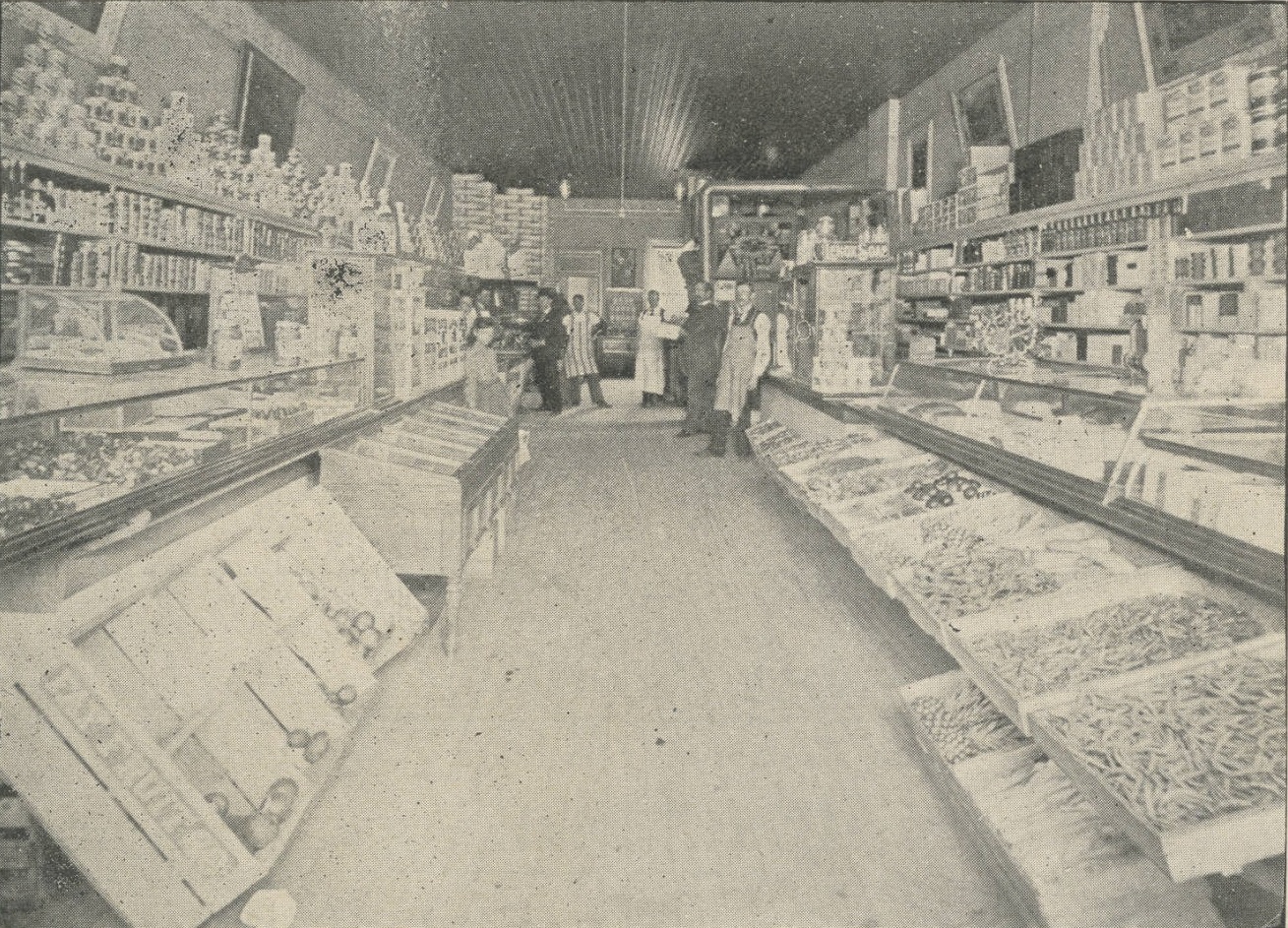
The interior of L. Hicken Staple and Fancy Groceries inside 1032 E. Long Street in 1898.


What the Intel Semiconductor Fabs Mean for Columbus


What the Intel Semiconductor Fabs Mean for Columbus

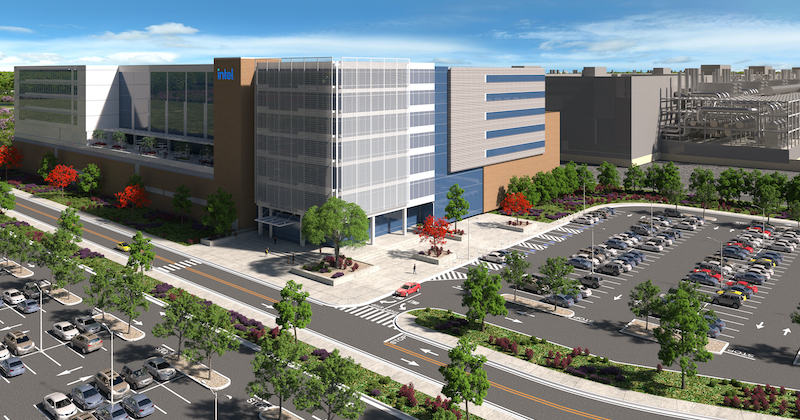
The Columbus area will soon be home to Ohio’s largest private investment in history with the Intel semiconductor fab planned for the Franklin County/Licking County line in New Albany. While this is not within Columbus itself, this project has massive implications for the city, region and possibly even Ohio overall. Let’s examine exactly what the Intel semiconductor fabs mean for Columbus, and some of the potential impacts the project may have for years to come.

What is it?
Semiconductors -at their most basic- conduct electricity, and are essentially what are used to make microchips. As such, they are crucially important for virtually all types of electronics, from cars to computers to ATMS to household appliances. Because they are so important, everyone needs them. Unfortunately, however, their production is more complex than many other types of manufacturing. Their production plants require large amounts of power and water, and manufacturing areas have to be free of things like static electricity and humidity, which can damage semiconductors. Furthermore, the jobs typically require specialized training and degrees. What all this means is that building a semiconductor factory- or fab- is enormously expensive. A single fab can easily cost $10-$20 billion, so there aren’t that many companies in the world that can actually build them- in fact, there are currently just 38 companies in the entire world capable of manufacturing them.

The proposed fab in New Albany is significant in several ways. First of all, as mentioned above, it will be Ohio’s largest single private investment in history, significantly more than any auto manufacturer or other industry. The first phase of the project has been announced, and will include two fabs at a cost of $20 billion, and will provide 3,000 direct jobs, 10,000 ancillary jobs and 7,000 construction jobs. The fab jobs will have an average salary of $135,000, about 2.5x the Ohio average. While this first phase is huge on its own, it seems that it will just be the beginning.

For some time, Intel has been talking about building a “mini-city” type development somewhere in the US. This mini tech city would include up to 8 or more fabs, and along with supporting development would be an investment greater than $100 billion. When news first broke about the New Albany project, there was some speculation that this site would be where this gigantic development would go, especially given that it included more than 3,000 acres of available land. Now, it seems that we have confirmation that Central Ohio is indeed the location of this mini city. In a recent Time article, this section stood out:

“Our expectation is that this becomes the largest silicon manufacturing location on the planet,” Intel CEO Pat Gelsinger told TIME; the company has the option to eventually expand to 2,000 acres and up to eight fabs. “We helped to establish the Silicon Valley,” he said. “Now we’re going to do the Silicon Heartland.”

So now that Central Ohio is about to rocket to the potential forefront of microchip manufacturing on a global scale, what might be the consequences long term?

Impacts

It’s hard to overstate how significant this development will be for the Columbus area. Here are just a few.

Housing Market
While the effects of this project won’t be felt by most right away, the areas and communities nearest to it will likely see home prices escalate fairly quickly. Places like Johnstown, New Albany, Alexandria and Granville, among others, will likely see the fastest- and most significant- realization of this increase, but virtually every community within 50 miles will likely see upward pressure- certainly including Columbus, which will probably end up with a healthy majority of any new workers into the region.
What that means long term is that housing construction will also explode. The region, if anything, has been underbuilding for years despite high demand. Even before this news, it was estimated that Central Ohio needed roughly 2x-4x the residential units constructed each year just to meet existing demand. Because of that existing issue, the area has faced a deep housing shortage and a near monthly new median housing price record.
So housing construction will almost inevitably increase, but the makeup of that housing and where it will be built remains to be seen. No doubt suburban sprawl around the construction area will accelerate, but what happens in Columbus itself is likely to be somewhat different. The city could see a massive upward movement in urban infill projects that make the past decade look paltry in comparison.
You might be wondering why all this development would even occur just because of this one project, no matter how large it is, and that brings us to the next impact.

Population
A project as large as the Intel mini-city doesn’t happen everyday, and arguably nowhere else in the country is going to have something like it in the industry. Because of the scale and notoriety alone, it is inevitable that other companies- and not just tech- take notice and give the Columbus are a new look for investment or relocation. Columbus, and indeed Ohio, doesn’t have the high costs associated with the West Coast or even parts of the Sun Belt. Ohio doesn’t struggle with water supplies like the Southwest, has stable power, does not suffer from significant natural disaster threats, is positioned well for climate change and is arguably the best-located state for access to a majority of the US population. Seeing Intel make such a large investment in the state will attract other investments as well, and these new companies investing will need supporting infrastructure and companies of their own, as well.
In fact, this process has already begun. Intel itself has said that multiple other companies, such as Air Products, Applied Materials, LAM Research and Ultra Clean Technology, among others, are already moving to invest in the area. Many more will follow.
Over time, this will lead to a greater influx of people, spurring more and more development.
Obviously, this is not going to happen overnight. Intel’s first fab isn’t even due to be completed for potentially another 3-4 years, but the stars are aligning for the Columbus population to really begin taking off and enter a true golden age.

Infrastructure
Up to now, the Columbus region’s infrastructure has been more or less sufficient in handling the needs of the population, with some exceptions. The highway system has been more than adequate to ensure that most trips around the area are relatively quick and easy, but should a rapidly-rising population manifest, that highway and road system may quickly fall behind. Even with current growth levels, traffic is becoming more of an issue. It’s been rumored that the State is going to invest up to a billion dollars improving infrastructure in the area surrounding the site, but this most likely is limited to roadway expansion, if anything.
One big negative for the region has always been mass transit. Columbus remains one of the few large US cities without rail service of any kind. It’s certainly possible, if not likely, that MORPC and other local planning groups are going to be faced with increasing pressure to invest in driving alternatives. COTA can only go so far. The plan to build BRT routes in some areas of the city is a start, but rail needs to be part of the longer-term picture. At the very least, a few lines between Downtown and the airport, and perhaps the airport and New Albany is something that needs to seriously be considered. The Columbus region can no longer afford to keep putting these investments off. Planning needs to start now, not later.

John Glenn International Airport is another potential weakness. While it is fine as a regional airport, all this news should put greater emphasis on the plan to replace the current terminal with a new one. Originally, city planners were talking about 2030 or later for this to happen. Due to the pandemic and a drop in overall air traffic, those plans were likely moved back even later, but if anything, the plans should go forward even sooner. This will allow the city to gain more flights- perhaps even some truly international ones- that are going to be increasingly in-demand.

The reality is that these are just a handful of the potential long-term impacts for the city and region, but they are the ones most obviously likely to be impacted the greatest. In effect, Intel’s mini-city is not just a single economic boost for Central Ohio, but it could also be the first wave in a tsunami of transformation that will change Columbus- good or bad- forever.


3 Major Columbus Proposals that Died in 2021


Columbus saw a ton of new development proposals the past year, but not all of them have a future. Here are 3 major Columbus proposals that died in 2021.

Harmony Tower
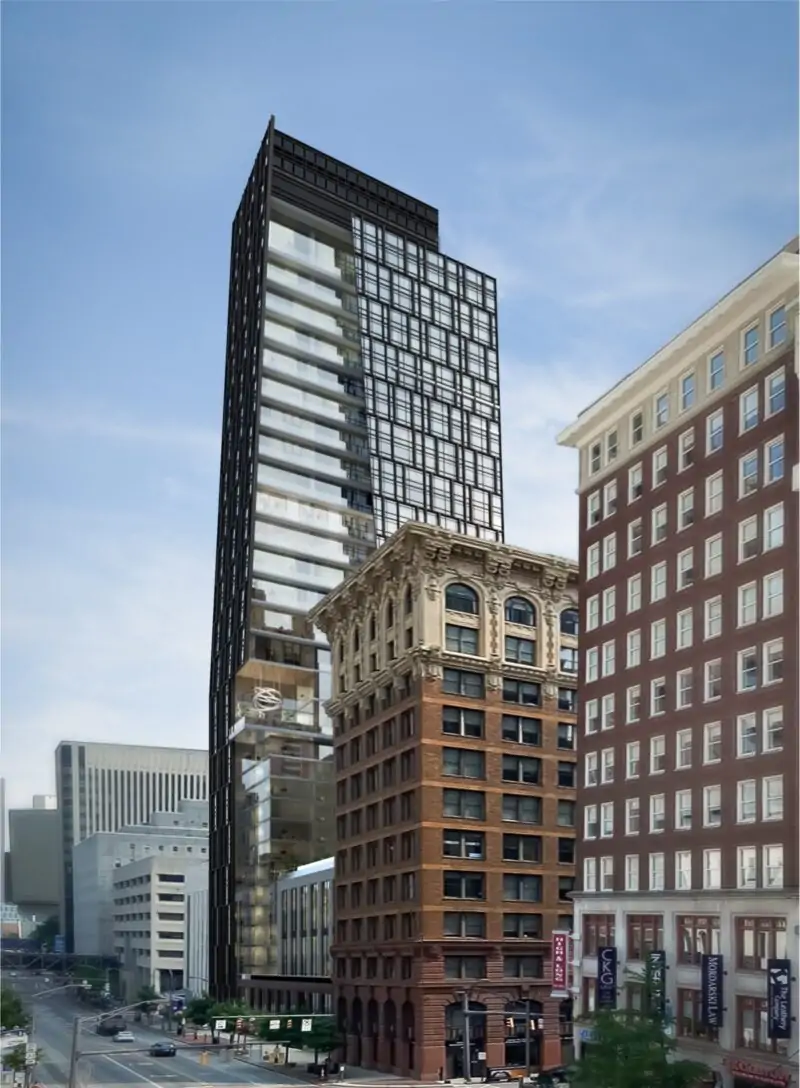
Originally announced in the summer of 2020, this proposal called for a 30-story, mixed-use tower to replace a parking lot at 158 N. High Street Downtown. The $100+ million project would’ve included a hotel, 15 floors of condos, office and retail space.
After announcing the project, Schiff Capital went silent and the project basically disappeared. There were no updates, no news. In some ways, it was a reminder of the way Arshot had gone silent on the SPARC project years earlier.

Sometime over the summer of 2021, plans for the tower were quietly abandoned, though no reason was given as to why. Speculation for its cancellation mostly revolved around Covid and its consequences related to supply chains and rapidly rising costs of construction materials.
Sadly, this was not the only skyline-altering proposal that went belly-up this year.

Whittier Peninsula Tower
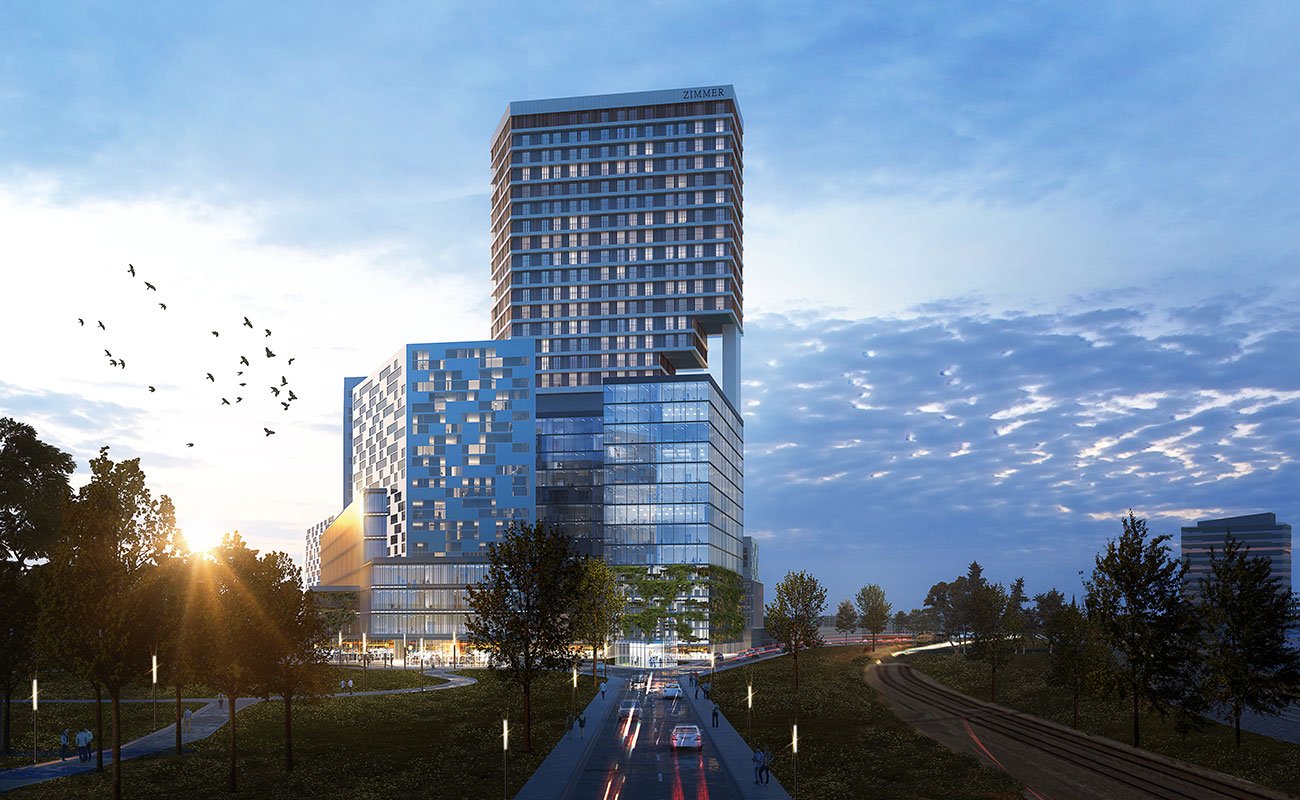
At the end of 2019, a North Carolina company announced a proposal for a significant new development along the railroad tracks just to the east of Scioto-Audubon Metro Park in the Brewery District. The plan called for for the multi-phase development of 10 buildings, including a mixed-use tower that would reach up to 30-stories, with a 7-story and 12-story containing another 400 residential units and retail and office space making up the first phase. The use makeup of the 30-story tower and other buildings had not been determined fully at the time.

Rendering of the original 30-story tower.


As with Harmony tower, after the initial announcement there was radio silence for months. 18 months later, in June of this year, new renderings for the proposal all but confirmed that the project had gone through a serious downsizing. Instead of 10 buildings with heights between 7-30 stories, the update consisted of just 5 6-story apartment and retail buildings.
Unfortunately, the scaling down wasn’t finished. In early October of this year, yet another update was released. In it, the 5 6-story buildings had been reduced to to just 3. So the number of buildings had been reduced by 70%, and the top height was now 5x shorter than the original proposal. To me, it seems like a pretty blatant case of the developer never having the necessary resources- or ability to access the necessary resources- required for the original proposal, and by the end of it, the neighborhood development commission was just happy to approve whatever leftovers the developer had really intended to build all along.

The Mondrian
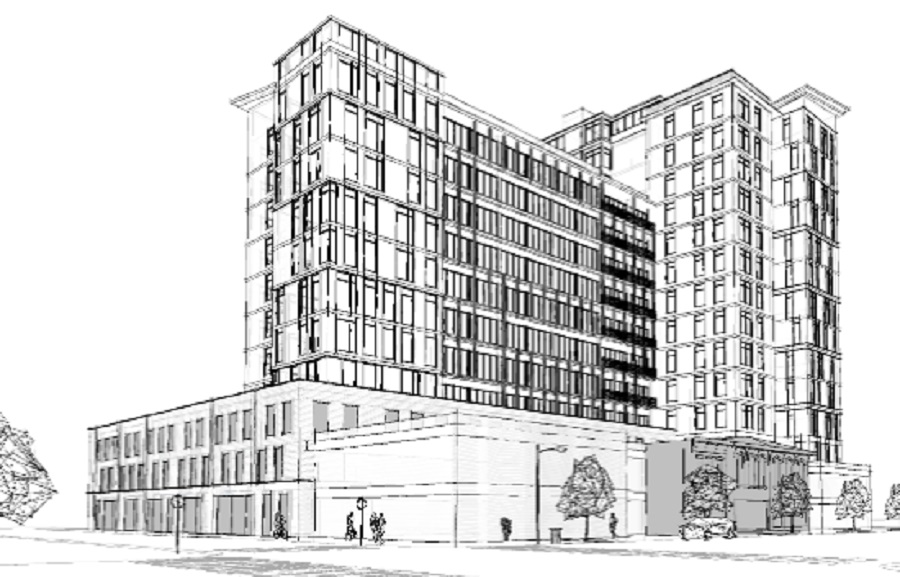
The Mondrian was originally a 13-story tower for 567 W. Broad in Franklinton. It was by far the largest proposal for Franklinton to date in its new revival. The Mondrian would’ve had 80 residential units and ground-floor retail space along Broad Street.

The 15-story Mondrian proposal rendering from Spring 2021.


In April we found out that the proposal had actually increased in height to 15 stories, likely to try to take advantage of new, large-project state tax credits, but otherwise, there was no known movement on this project.
We know by now that no news on a big project tends to be bad news, and while there has been no official word that this project has been canceled, the evidence points that it has met an end. It was reported earlier this month that the listed site for the project is now up for sale, indicating that the proposal is likely dead.
That said, this project could still have some legs to it and the situation will be monitored until a more definitive answer is known.

Proposals come and go, and in a city growing as fast as Columbus, the more proposals the city gets, the more likely it is that some of them never come to fruition.