Peer and Columbus Metro GDP Comparison


Metro GDP comparison

This metro GDP comparison is based on information from the Bureau of Economic Analysis.

Rank of Major Midwest Metros and Columbus National Peers by GDP, 2001, 2010 and 2015
In Millions
2001——————————————–2010————————————-2015

1. Chicago, IL: $416,444————-1. Chicago: $533,825————–1. Chicago: $640,656
2. Detroit, MI: $190,921———–2. Minneapolis: $199,606——-2. Minneapolis: $248,779
3. Minneapolis, MN: $148,192—–3. Detroit: $197,973—————–3. Detroit: $245,607
4. San Jose, CA: $125,037———4. San Jose: $163,836———–4. San Jose: $235,222
5. St. Louis, MO: $102,385———5. Portland: $141,233————5. Portland: $158,770
6. Pittsburgh, PA: $88,769———-6. St. Louis: $133,888———6. St. Louis: $155,077
7. Cleveland: $87,796————-7. Pittsburgh: $117,895———-7. Charlotte: $152,447
8. Portland, OR: $80,753———8. Charlotte: $114,500————8. Pittsburgh: $138,873
9. Cincinnati: $79,638————-9. Indianapolis: $111,084——-9. Indianapolis: $134,081
10. Kansas City, MO: $79,544—-10. Cleveland: $109,365—–10. Cleveland: $128,448
11. Charlotte, NC $78,675———11. Kansas City: $107,265—11. Cincinnati: $127,057
12. Indianapolis, IN: $78,009——-12. Cincinnati: $104,314—-12. Kansas City: $125,618
13. Columbus: $74,172————-13. Orlando: $101,307——–13. Columbus: $124,381
14. Sacramento, CA: $66,696—–14. Columbus: $96,475——14. Orlando: $121,329
15. Orlando, FL: $66,644———–15. Sacramento: $96,015—-15. Austin: $119,949
16. Milwaukee, WI: $65,033——–16. Austin: $87,473———-16. Sacramento: $118,822
17. Nashville, TN: $58,245———17. Milwaukee: $86,569—–17. Nashville: $113,680
18. Las Vegas, NV: $57,035——-18. Las Vegas: $85,020—–18. San Antonio: $108,879
19. Virginia Beach, VA: $54,040—-19. Nashville: $84,804—19. Las Vegas: $103,343
20. Austin, TX: $53,915——20. Virginia Beach: $82,685—–20. Milwaukee: $102,209
21. San Antonio, TX: $53,248—21. San Antonio: $81,722—21. Virginia Beach: $95,680
22. Providence, RI: $49,997——-22. Providence: $67,754—-22. Providence: $78,694
23. Grand Rapids, MI: $35,248—-23. Omaha: $47,711——-23. Omaha: $59,090
24. Omaha, NE: $32,044——–24. Grand Rapids: $41,221–24. Grand Rapids: $53,949
25. Dayton: $29,658————–25. Dayton: $34,226————25. Dayton: $39,206
26. Toledo: $22,216————–26. Akron: $28,628————–26. Akron: $34,419
27. Akron: $21,684—————27. Toledo: $27,158————-27. Toledo: $34,019
28. Youngstown: $15,314——28. Youngstown: $17,293——28. Youngstown: $21,417

Rank by Total Change in Millions 2001-2015
1. Chicago: +$224,212
2. San Jose: +$110,185
3. Minneapolis: +$100,587
4. Portland: +$78,017
5. Charlotte: +$73,772
6. Austin: +$66,034
7. Indianapolis: +$56,072
8. San Antonio: +$55,631
9. Nashville: +$55,435
10. Detroit: +$54,686
11. Orlando: +$54,685
12. St. Louis: +$52,692
13. Sacramento: +$52,126
14. Columbus: +$50,209
15. Pittsburgh: +$50,104
16. Cincinnati: +$47,419
17. Las Vegas: +$46,308
18. Kansas City: +$46,074
19. Virginia Beach: +$41,640
20. Cleveland: +$40,652
21. Milwaukee: +$37,176
22. Providence: +$28,697
23. Omaha: +$27,046
24. Grand Rapids: +$18,701
25. Akron: +$12,735
26. Toledo: +$11,803
27. Dayton: +$9,548
28. Youngstown: +$6,103

Rank by Total Change in Millions 2010-2015
1. Chicago: +$106,831
2. San Jose: +$71,386
3. Minneapolis: +$49,173
4. Detroit: +$47,634
5. Charlotte: +$37,947
6. Austin: +$32,476
7. Nashville: $28,876
8. Columbus: +$27,906
9. San Antonio: +$27,157
10. Indianapolis +$22,997
11. Sacramento: +$22,807
12. Cincinnati: +$22,743
13. St. Louis: +$21,189
14. Pittsburgh: +$20,978
15. Orlando: +$20,022
16. Cleveland: +$19,083
17. Kansas City: +$18,353
18. Las Vegas: +$18,323
19. Portland: +$17,537
20. Milwaukee: +$15,640
21. Virginia Beach: +$12,995
22. Grand Rapids: +$12,728
23. Omaha: +$11,379
24. Providence: +$10,940
25. Toledo: +$6,861
26. Akron: +$5,791
27. Dayton: +$4,980
28. Youngstown: +$4,124

Total Rank by % Change 2001-2015
1. Austin: +122.48%
2. San Antonio: +104.48%
3. Portland: +96.61%
4. Nashville: +95.18%
5. Charlotte: +93.77%
6. San Jose: +88.12%
7. Omaha: +84.40%
8. Orlando: +82.06%
9. Las Vegas: +81.19%
10. Sacramento: +78.15%
11. Virginia Beach: +77.05%
12. Indianapolis: +71.88%
13. Minneapolis: +67.88%
14. Columbus: +67.69%
15. Cincinnati: +59.54%
16. Akron: +58.73%
17. Kansas City: +57.92%
18. Providence: +57.40%
19. Milwaukee: +57.16%
20. Pittsburgh: +56.44%
21. Chicago: +53.84%
22. Toledo: +53.13%
23. Grand Rapids: +53.06%
24. St. Louis: +51.46%
25. Cleveland: +46.30%
26. Youngstown: +39.85%
27. Dayton: +32.19%
28. Detroit: +28.64%

Total Rank by % Change 2010-2015
1. San Jose: +43.57%
2. Austin: +37.13%
3. Nashville: +34.05%
4. San Antonio: +33.23%
5. Charlotte: +33.14%
6. Grand Rapids: +30.88%
7. Columbus: +28.93%
8. Toledo: +25.26%
9. Minneapolis: +24.64%
10. Detroit: +24.06%
11. Omaha: +23.85%
12. Youngstown: +23.85%
13. Sacramento: +23.75%
14. Cincinnati: +21.80%
15. Las Vegas: +21.55%
16. Indianapolis: +20.70%
17. Akron: +20.23%
18. Chicago: +20.01%
19. Orlando: +19.76%
20. Milwaukee: +18.07%
21. Pittsburgh: +17.79%
22. Cleveland: +17.45%
23. Kansas City: +17.11%
24. Providence: +16.15%
25. St. Louis: +15.83%
26. Virginia Beach: +15.72%
27. Dayton: +14.55%
28. Portland: +12.42%

Finally, let’s take a look at per-capita GDP and income.

Rank of Metros by Per-Capita GDP in Dollars, 2015
1. San Jose: $112,851
2. Minneapolis: $63,474
3. Portland: $62,229
4. Chicago: $59,688
5. Indianapolis: $59,479
6. Milwaukee: $58,219
7. Omaha: $57,334
8. Cleveland: $56,013
9. Nashville: $55,841
10. Charlotte: $55,610
11. Pittsburgh: $55,335
12. Austin: $55,323
13. Columbus: $55,005
14. Kansas City: $54,097
15. Cincinnati: $52,649
16. Detroit: $51,428
17. Virginia Beach: $49,606
18. Toledo: $49,428
19. St. Louis: $49,258
20. Sacramento: $46,697
21. Grand Rapids: $46,677
22. Orlando: $45,756
23. Akron: $44,246
24. Dayton: $43,748
25. Providence: $43,744
26. Las Vegas: $43,476
27. San Antonio: $42,169
28. Youngstown: $34,960

Total Growth 2001-2015 by Rank, in Dollars
1. San Jose: +$40,677
2. Portland: +$18,225
3. Pittsburgh: +$10,064
4. Austin: +$9,925
5. Toledo: +$7,414
6. Virginia Beach: +$7,256
7. Nashville: +$7,071
8. Cleveland: +$6,767
9. Milwaukee: +$6,744
10. Omaha: +$6,581
11. Akron: +$6,167
12. Minneapolis: +$5,900
13. Providence: +$5,560
14. Chicago: +4,663
15. San Antonio: +$4,652
16. Cincinnati: +$4,426
17. Youngstown: +$4,391
18. Sacramento: +$3,210
19. Columbus: +$3,182
20. Indianapolis: +$2,984
21. Grand Rapids: +$2,971
22. Charlotte: +$2,880
23. Kansas City: +$2,770
24. St. Louis: +$2,699
25. Detroit: +$2,011
26. Dayton: +$162
27. Orlando: -$1,630
28. Las Vegas: -$5,041

Total Per-Capita GDP Growth 2010-2015, in Dollars
1. San Jose: +$23,814
2. Toledo: +$6,242
3. Pittsburgh: +$6,172
4. Nashville: +$5,643
5. Detroit: +$5,459
6. Austin: +$5,307
7. Grand Rapids: +$5,158
8. Youngstown: +$4,987
9. San Antonio: +$4,878
10. Columbus: +$4,864
11. Minneapolis: +$4,644
12. Charlotte: +$4,578
13. Chicago: +$4,004
14. Cleveland: +$3,992
15. Cincinnati: +$3,986
16. Akron: +$3,774
17. Milwaukee: +$2,913
18. Omaha: +$2,863
19. Sacramento: +$2,680
20. Providence: +$1,902
21. St. Louis: +$1,884
22. Dayton: +$1,439
23. Kansas City: +$1,270
24. Indianapolis: +$1,186
25. Virginia Beach: +$998
26. Las Vegas: +$206
27. Portland: -$992
28. Orlando: -$1,345

What the numbers suggest is that Columbus was performing at a middle-mediocre level in the first half of the 2001-2015 period, and has generally been performing significantly better in the latter half. In Ohio, Columbus is poised to become Ohio’s largest metro economy over the next few years.


The Real Makeup of the Columbus Economy


Columbus economy

Over the years, there have been endless claims about how the Columbus economy is dominated by jobs related to state government and OSU. These claims are usually made from other Ohioans complaining that Columbus has an unfair advantage and is mooching public dollars from the rest of the state to prop up the economy.

Let’s first address two points made: 1. That the number of government jobs is far above what they are in all other major Ohio cities, and 2. That overall, government jobs are becoming a larger slice of the metro economy.

The first claim is easy to look into. The Bureau of Labor Statistics, or BLS, produces numbers every single month on job industry numbers by metro area. The most recent numbers are from June 2016.
Here are the total government jobs for Ohio’s largest cities.
Columbus: 162,600
Cleveland: 138,800
Cincinnati: 124,200
Dayton: 62,300
Toledo: 44,800
Akron: 40,600

So as to the first claim, that the total of government jobs in Columbus is higher than the other cities, that is true. As the state capital, this is no surprise. However, how dependent on government jobs is Columbus really versus those other cities? To find out, you have to divide government jobs by all total jobs within the metro. In June 2016, here was the percentage of the total.

Dayton: 16.17%
Columbus: 15.30%
Toledo: 14.21%
Cleveland: 12.90%
Akron: 11.84%
Cincinnati: 11.43%

Interestingly enough, Columbus is not the top government-dependent city. That spot goes to Dayton.

Now onto the 2nd claim- that Columbus is increasingly reliant on those government jobs. Let’s look at the % of total jobs that government jobs made up going back to 1990. The figures are for June of each year given.

1990: 17.97%
1995: 17.25%
2000: 15.97%
2005: 17.18%
2010: 17.81%
2015: 15.34%
2016: 15.30%

So it does not appear that Columbus has become more or less dependent on government jobs over the last 26 years. Indeed, if there is any pattern at all, it appears that during economic downturns, the number of government jobs increase, and during periods of stability/recovery, government jobs decline. The early 1990s and late 2000s had high levels of governments jobs, both periods of recession. In June 2016, nearly 85% of the local economy was not government-related, not statistically much different than other Ohio cities.

Finally, let’s look at how total government jobs have changed since the beginning of this decade, 2010, by Ohio city. The figures are for June 2010 and June 2016.

Toledo: +2.75%
Columbus: -0.91%
Cleveland: -1.56%
Cincinnati: -3.72%
Dayton: -4.30%
Akron: -10.38%

All cities except Toledo have seen declines.

So that brings us to the actual makeup of the Columbus metro economy. What are the industries that most people work for? What are the industries that have the greatest % of the total jobs? Let’s compare June 1990 and June 2016.

1990
Trade/Transportation/Utilities: 20.51%
Government: 17.97%
Manufacturing: 13.49%
Professional and Business Services: 11.46%
Health and Education: 9.41%
Leisure and Hospitality: 8.63%
Financial Activities: 8.26%
Mining/Logging/Construction: 4.30%
Other Services: 3.46%
Information: 2.51%

2016
Trade/Transportation/Utilities: 18.37%
Professional and Business Services: 17.11%
Government: 15.30%
Health and Education: 14.43%
Leisure and Hospitality: 10.89%
Financial Activities: 7.63%
Manufacturing: 6.84%
Other Services: 4.10%
Mining/Logging/Construction: 3.75%
Information: 1.57%

If anything, Columbus’ economy is actually more diverse in 2016 than it was in 1990, not less.


Random Columbus Photos 4


The Random Columbus Photos 4 edition takes a look back at Downtown in the 1980s.

Date Photo Taken: 1989
Photo Location: Looking west on Broad Street from LeVeque Tower.
Random Columbus photos 4
This photo is interesting for a few reasons. First, it shows the beginning of construction to replace the Broad Street Bridge over the Scioto River. After the Great Flood of 1913 destroyed an earlier Broad Street Bridge, the one in the photo was finished in 1921. By the early 1980s, the bridge was rapidly deteriorating and the decision was made to replace it. It’s reconstruction start, however, was delayed until 1988 due to a contract to keep the Columbus 500 auto race going, which used the bridge. The nearly identical new bridge was completed in 1992 at a cost of $13.2 million.
Across the bridge is the Scioto Peninsula. On the right is Vets Memorial, built in the 1950s and recently demolished to make way for a new memorial and museum as part of the redevelopment of the peninsula. On the left is the old Central High School, years before it was converted into COSI’s new location. Also of note are warehouse and other buildings that still existed on the peninsula, remnants of when this area was largely manufacturing. These were mostly demolished in the 1990s and early 2000s and were left as vacant lots for well over a decade, some of them becoming parking lots for COSI. These lots will soon become part of a large mixed-use development and park.

1950s Ohio Severe Weather Reports Map


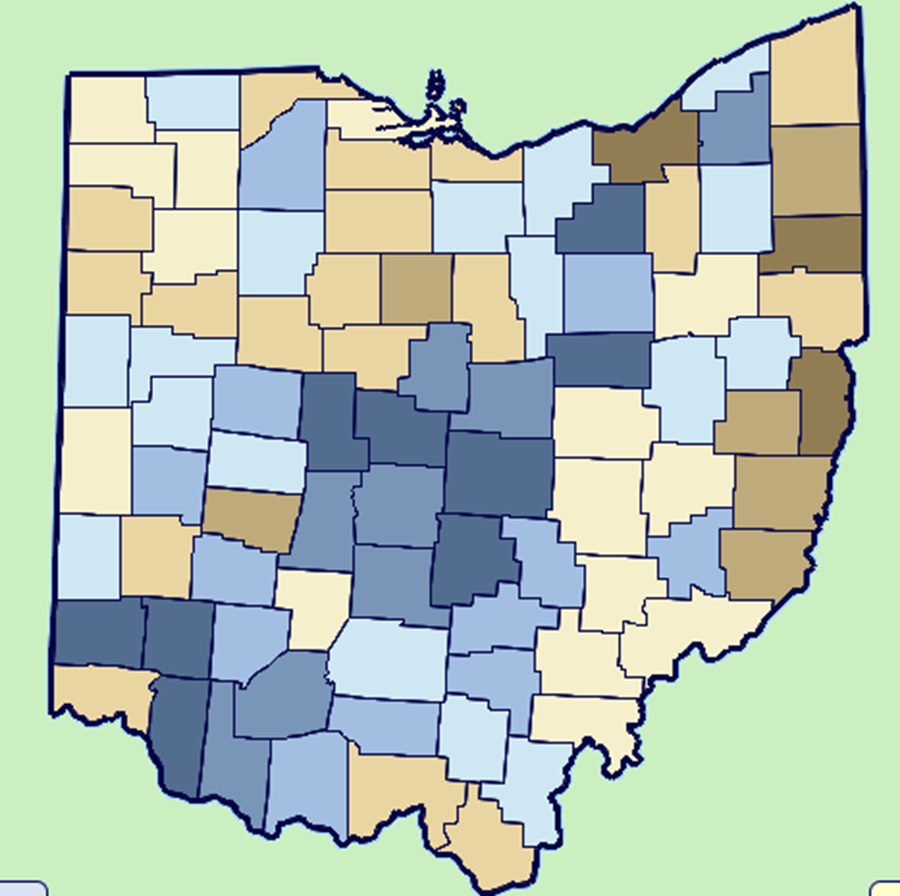
Here is a map for all the listed 1950s Ohio severe weather reports during that era. Click on the pins for more information.

1950s Severe Weather Reports

The map incudes information for tornadoes, high wind and hail reports.

1950s Ohio severe weather reports map

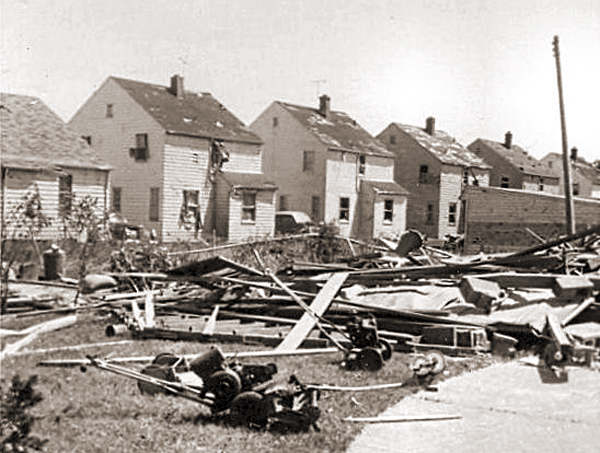
June 8, 1953 Northeast Ohio tornado damage.

2015 City Population Estimates


2015 city population estimates

The latest 2015 city population estimates came out today from the US Census, so let’s take a look at them.

First of all, let’s look at the top 25 cities in Ohio on July 1, 2015, and the population change from July 1, 2014.
1. Columbus: 850,106 +12,175
2. Cleveland: 388,072 -1,788
3. Cincinnati: 298,550 +509
4. Toledo: 279,789 -803
5. Akron: 197,542 -557
6. Dayton: 140,599 -235
7. Parma: 79,937 -119
8. Canton: 71,885 -395
9. Youngstown: 64,628 -438
10. Lorain: 63,647 -104
11. Hamilton: 62,407 -44
12. Springfield: 59,680 -246
13. Kettering: 55,525 -117
14. Elyria: 53,775 -179
15. Lakewood: 50,656 -297
16. Cuyahoga Falls: 49,146 -123
17. Middletown: 48,760 -6
18. Newark: 47,986 +140
19. Euclid: 47,676 -242
20. Mentor: 46,901 +35
21. Mansfield: 46,830 -5
22. Beavercreek: 46,227 +217
23. Dublin: 45,098 +794
24. Cleveland Heights: 44,962 -243
25. Strongsville: 44,668 -9

Only a handful of the top 25 saw growth.

Now let’s look at the Columbus metro overall, and the change since July 1, 2014.
1. Columbus: 850,106
2. Newark (Licking): 47,986
3. Dublin: 45,098
4. Lancaster (Fairfield): 39,766
5. Grove City: 39,388
6. Westerville: 38,384
7. Delaware (Delaware): 37,995
8. Reynoldsburg: 37,158
9. Upper Arlington: 34,907
10. Gahanna: 34,590
11. Hilliard: 33,649
12. Marysville (Union): 22,817
13. Pickerington (Fairfield): 19,745
14. Whitehall: 18,694
15. Pataskala (Licking): 15,245
16. Worthington: 14,498
17. Bexley: 13,654
18. Circleville (Pickaway): 13,857
19. Powell (Delaware): 12,927
20. Heath (Licking): 10,489
21. London (Madison): 10,060
22. New Albany: 9,879
23. Canal Winchester: 7,818
24. Grandview Heights: 7,328
25. Logan (Hocking): 7,117
26. Granville (Licking): 5,747
27. Groveport: 5,737
28. Sunbury (Delaware): 5,097
29. Johnstown (Licking): 4,918
30. Obetz: 4,761
31. New Lexington (Perry): 4,727
32. Plain City (Madison): 4,302
33. West Jefferson (Madison): 4,279
34. Ashville (Pickaway): 4,190
35. Mount Gilead (Morrow): 3,653
36. Baltimore (Fairfield): 2,970
37. Buckeye Lake (Licking): 2,760
38. Crooksville (Perry): 2,498
39. Hebron (Licking): 2,409
40. Richwood (Union): 2,281
41. Utica (Licking): 2,196
42. Cardington (Morrow): 2,047
43. South Bloomfield (Pickaway): 1,851
44. Mount Sterling (Madison): 1,745
45. Commercial Point (Pickaway): 1,611
46. Somerset (Perry): 1,464
47. Bremen (Fairfield): 1,437
48. Ashley (Delaware): 1,361
49. Lithopolis (Fairfield) 1,351
50. Minerva Park: 1,318
51. Hanover (Licking): 1,131
52. Williamsport (Pickaway): 1,051
53. Millersport (Fairfield): 1,049
54. Urbancrest: 1,033
55. Thornville (Perry): 997
56. Pleasantville (Fairfield): 958
57. New Holland (Pickaway): 836
58. Milford Center (Union): 823
59. Junction City (Perry): 810
60. Amanda (Fairfield): 747
61. Shawnee Hills (Delaware): 735
62. New Straitsville (Perry): 715
63. Ostrander (Delaware): 688
64. Galena (Delaware): 684
65. Shawnee (Perry): 646
66. Valleyview: 636
67. Thurston (Fairfield): 610
68. Marble Cliff: 584
69. Corning (Perry): 573
70. Riverlea: 569
71. Stoutsville (Fairfield): 566
72. Kirkersville (Licking): 541
73. Carroll (Fairfield): 520
74. Laurelville (Hocking): 517
75. Alexandria (Licking): 523
76. Murray City (Hocking): 435
77. Edison (Morrow): 435
78. Sugar Grove (Fairfield): 431
79. Hartford (Licking): 402
80. St. Louisville (Licking): 376
81. South Solon (Madison): 361
82. Marengo (Morrow): 346
83. Harrisburg: 334
84. Midway (Madison): 327
85. Rushville (Fairfield): 305
86. Tarlton (Pickaway): 290
87. Orient (Pickaway): 275
88. Magnetic Springs (Union): 276
89. Fulton (Morrow): 261
90. Lockbourne: 247
91. Unionville Center (Union): 239
92. Chesterville (Morrow): 230
93. Darbyville (Pickaway): 229
94. Gratiot (Licking): 224
95. Glenford (Perry): 177
96. Sparta (Morrow): 163
97. Hemlock (Perry): 156
98. West Rushville (Fairfield): 135
99. Brice: 120
100. Rendville (Perry): 36

Finally, let’s take a look at population growth ranking between Census 2010 and July 1, 2015.
1. Columbus: +63,073
2. Hilliard: +5,214
3. Grove City: +3,813
4. Dublin: +3,347
5. Delaware: +3,242
6. Westeville: +2,264
7. New Albany: +2,155
8. Powell: +1,472
9. Pickerington: +1,454
10. Gahanna: +1,342
11. Reynoldsburg: +1,265
12. Upper Arlington: +1,136
13. Lancaster: +986
14. Worthington: +923
15 Grandview Heights: +792
16. Marysville: +723
17. Canal Winchester: +717
18. Sunbury: +708
19. Whitehall: +632
20. Bexley: +597
21. Circleville: +543
22. Newark: +413
23. Groveport: +374
24. Johnstown: +286
25. Pataskala: +283
26. Lithopolis: +245
27. Obetz: +229
28. Hanover: +210
29. Heath: +179
30. London: +156
31. South Bloomfield: +107
32. Granville: +101
33. Ashville: +93
34. Plain City: +77
35. Urbancrest: +73
36. Hebron: +73
37. Utica: +64
38. West Jefferson: +57
39. Shawnee Hills: +54
40. Richwood: +52
41. Minverva Park: +46
42. Galena: +45
43. Ostrander: +45
44. New Holland: +35
45. Milford Center: +31
46. Ashley: +31
47. Commercial Point: +29
48. Williamsport: +28
49. Riverlea: +24
50. Kirkersville: +16
51. Valleyview: +16
52. Buckeye Lake: +14
53. Harrisburg: +14
54. Bremen: +12
55. Marble Cliff: +11
56. Amanda: +10
57. Lockbourne: +10
58. Tarlton: +8
59. Magnetic Springs: +8
60. Darbyville: +7
61. Brice: +7
62. Thurston: +6
63. Alexandria: +6
64. Stoutsville: +6
65. Unionville Center: +6
66. Thornville: +6
67. Millersport: +5
68. Orient: +5
69. Sugar Grove: +5
70. Hartford: +5
71. South Solon: +5
72. Somerset: +5
73. Midway: +5
74. Marengo: +4
75. Baltimore: +4
76. Glenford: +4
77. Fulton: +3
78. Gratiot: +3
79. St. Louisville: +3
80. Rushville: +3
81. Chesterville: +2
82. Sparta: +2
83. West Rushville: +1
84. Hemlock: +1
85. Cardington: 0
86. Rendville: 0
87. Pleasantville: -2
88. Edison: -2
89. Carroll: -4
90. New Lexington: -4
91. Mount Gilead: -7
92. New Straitsville: -7
93. Junction City: -9
94. Shawnee: -9
95. Corning: -10
96. Laurelville: -10
97. Murray City: -14
98. Logan: -35
99. Mount Sterling: -37
100. Crooksville: -37

So 86 of the metro’s 100 places have either grown or held steady in population since 2010. That is an increase from 70 places during the 2000s.