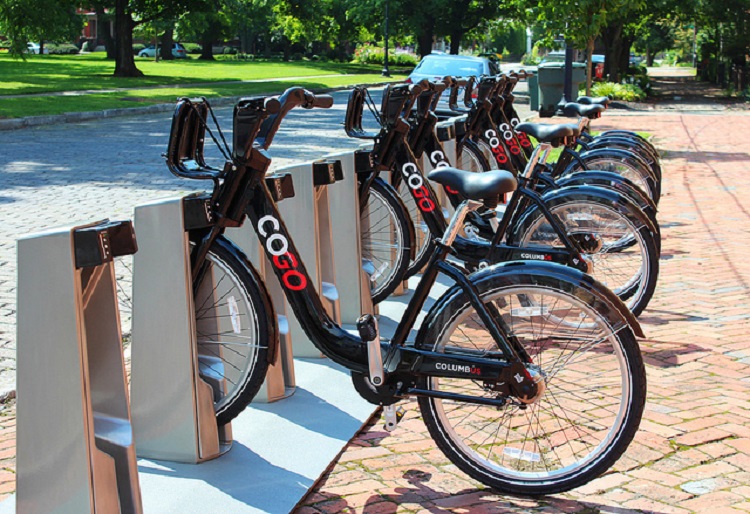
This map shows the location of every bike share system in the world. The map gives data on system size, bike availability at stations, station totals and locations. You can even pull up ridership reports and run animations! Columbus will be getting a bike share system that opens in July, so expect it to show up on this map in the coming months!
One of the more interesting things the Census measures is the population from “City Hall”, or basically the metro population by distance from downtown. The metric measure population at every mile out from the center of each city’s downtown area. Since city boundaries come in all different sizes, this is a good way to compare urban populations.
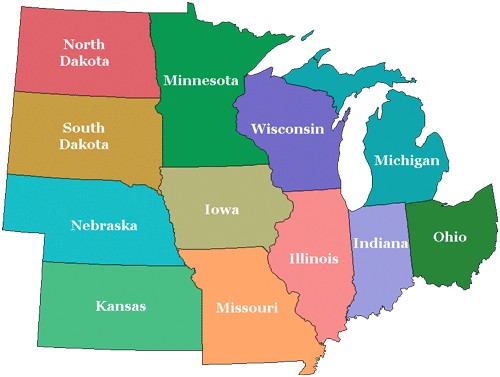
I looked at the 15 largest Midwest metros for these numbers.
First, here is a breakdown of aggregate population at each mile marker in 2010. Aggregate means that with each mile added, the population within all previous miles are added together.
This is a pretty bad showing in this list. In 2010, Columbus had the lowest downtown population, or population at Mile 0, of any of the largest 15 Midwest metros.
So while Columbus’ downtown is down at the bottom in this list to start, it ends up being a top 5 within just a few miles. Clearly, though, the city needs to do better at getting people in the center.
Columbus seems to hold its own from Mile 2 through about Mile 15 or 16, and then begins to fall back as full metro populations begin to take shape.
So now we know the exact populations by distance, but what about how those are changing over time? Here are the same miles and their total change from 2000 to 2010.
Just a few May project updates. These represent only a small fraction of what’s going on in terms of local development.
Downtown 1. Neighborhood Launch’s expansion with a pair of new 5-story buildings containing 260 apartments continues. Located on E. Long Street, the buildings’ foundation work has been mostly completed and elevator shafts and the first steel frames are now going up, which means construction should really get going now. The timetable for these to be complete is late fall or winter. 2. Over at Columbus Commons, the Highpoint 300-unit residential project continues and at least one of the buildings is now reaching towards its 6th and final floor. 3. The Liberty Place 200+ unit residential expansion in the Brewery District is getting closer to being done with the external work, as brick and finishes are going on. 4. The mess that is the reconstruction of 670/71 also continues, but we’re still a year or so away from that being done… before the next phase begins closer to the 70/71 section. 5. Work continues on the restoration of the LeVeque Tower, but more details have emerged. Up to 70 residential units will be created in the tower section, along with lower floors having a new boutique hotel and office space. The lobby will be restored to its original 2-story look, and the entrance outside will get new marble, planters and lighting. The terra cotta exterior of the building will take up to 5 more years to complete, as 80 years of grime and damage have to be fixed. The other improvements should be done late this year or early next year. 6. Columbia Gas’ new HQ building in the Arena District has reached it’s maximum 6-story height with steel, but no exterior work is done yet. 7. The Flats II 120-unit residential building next door to that project is seeing exterior work being done and should be done later this summer or early fall. Reports have been coming out showing this and other residential projects nearby have extremely high rental interest already. 8. 600 Goodale, the 5-story 174-unit residential building is seeing exterior work now and should be done by the end of summer or fall.
Short North 1. Aston Place, a new residential project on Hubbard Avenue, is moving along and the elevator shaft is just about done, so steel should be going up soon. 2. The Hubbard project continues to the east. The 5-story, 68-unit residential building is all framed out and exterior work is beginning. The adjoining parking garage is complete and the 4 concealing townhomes should begin construction soon. 3. The Out of the Closet development at 5th and High is well underway, now completely framed out.
Downtown, more than any other neighborhood, has seen major changes over the years. This edition of Before and After Downtown looks at just a few locations around the neighborhood that have seen massive transformation over the years. Some of these photos come from the Historic Building Database.
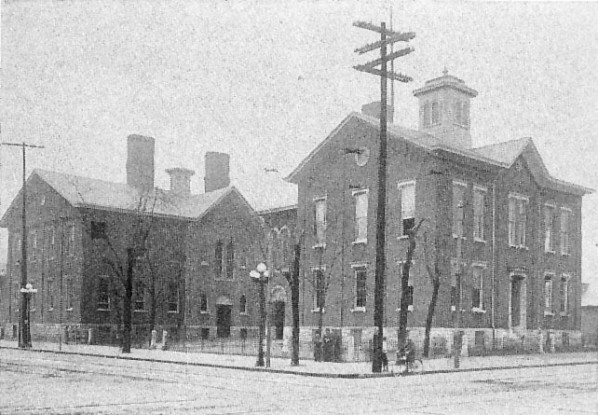
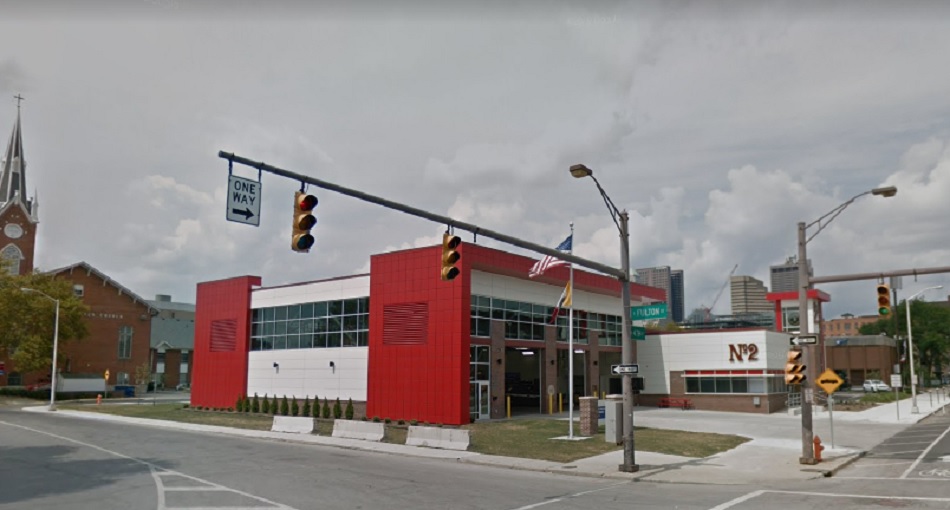
Before: The Central German School at 400 S. 4th Street in 1916 After: 2017 The school was originally opened in December, 1863. In 1920, the school began an expansion and opened as an institution for physically challenged children in March, 1922. The building met its demise in December, 1967 to clear the right of way for I-70/I-71. The highway split the northern sections of German Village off from the rest of the neighborhood. Eventually, almost every historic building left to the north of the highway was demolished. One of the few still remaining is the nearby Trinity Lutheran Church at the corner of S. 3rd and E. Fulton Street, which was dedicated on December 20, 1857.
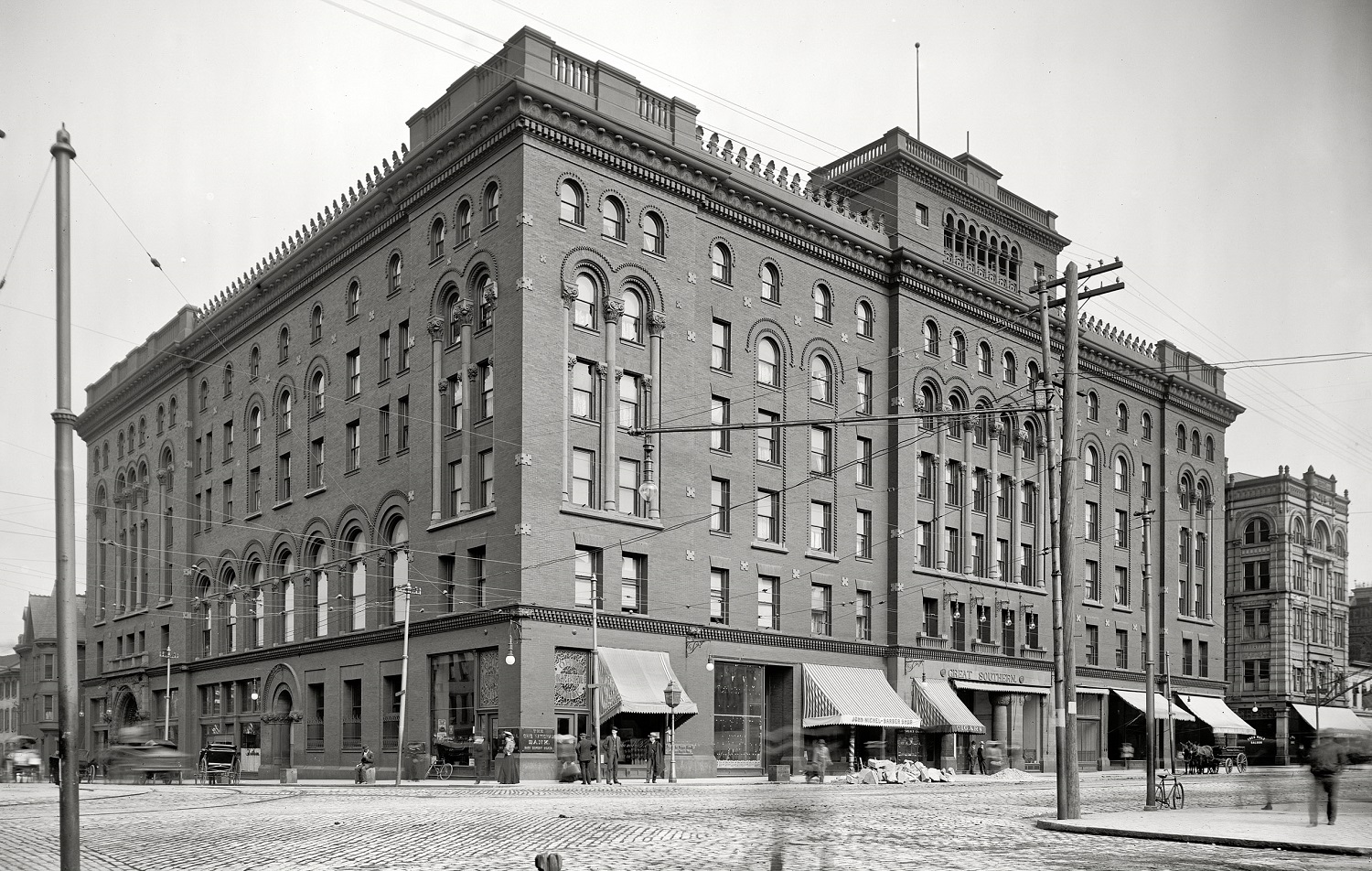
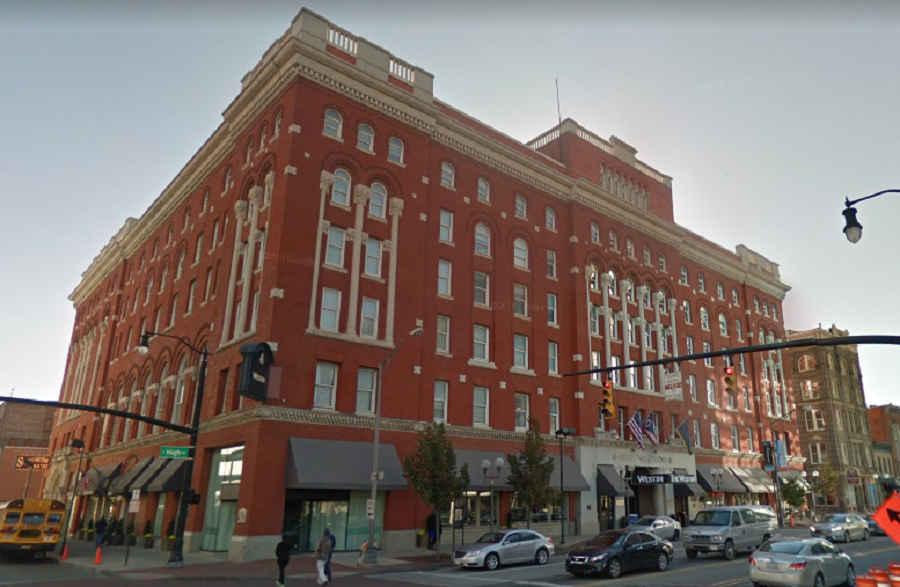
Before: Southern Theater in 1905 After: 2018 The Southern Theater came about out of the ashes of it’s predecessors. Fires had destroyed 5 separate Columbus theaters between 1889 and 1893, and with the sudden absence of major city theaters, the concept of the Southern Theater was born. The theater opened on September 21, 1896 and has changed very little over the years. Today, it is one of the oldest surviving theaters in Ohio. Very few other buildings can be seen in the old photo, but the 1895 building next door on High and Noble also survives.
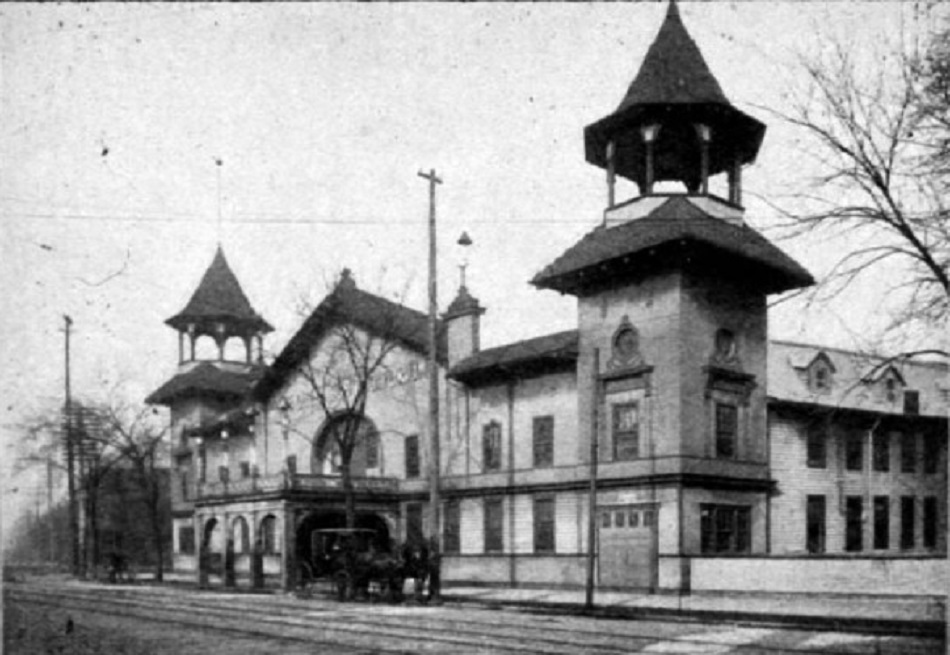
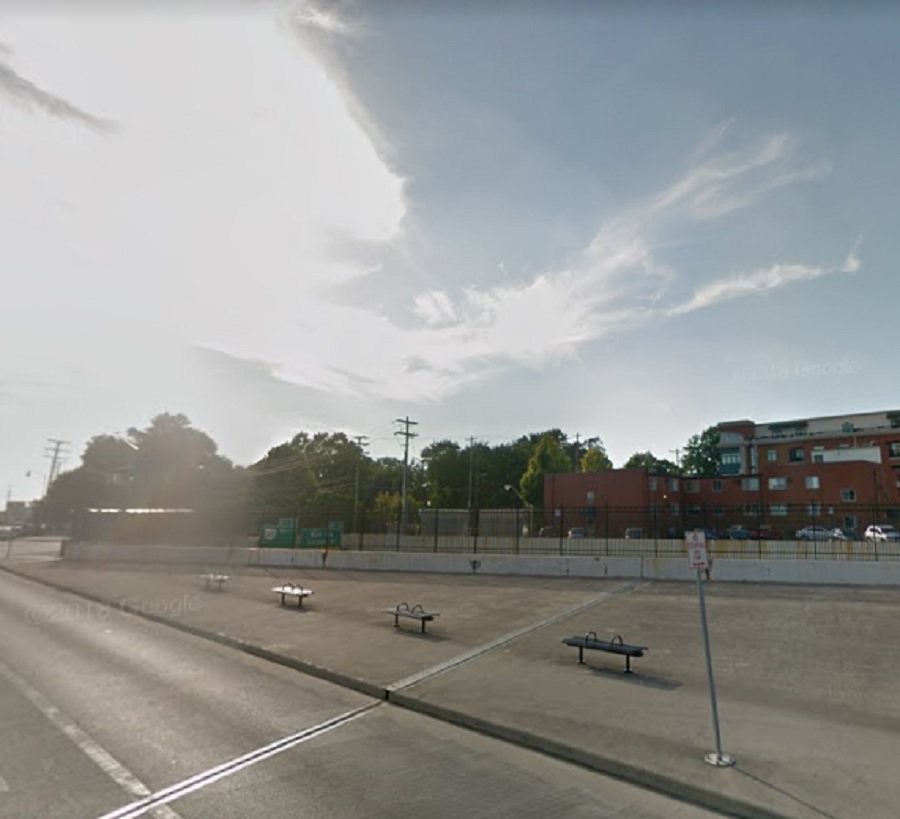
Before: The Columbus Auditorium at 570 N. Front Street in 1901 After: 2018 Opened on March 17, 1885, the Park Roller Skating Rink was a large, beautiful building across from where Nationwide Arena sits today. Originally for amusement, the rink only lasted a bit over a decade before being bought and remodeled to become the Columbus Auditorium in 1897. It’s large expanse of flat roof doomed the building however. After more than 15″ of snow fell on the city from February 16-18, 1910, the roof simply could not handle the load, and collapsed on the 18th. The building was deemed a total loss and was torn down not long after.
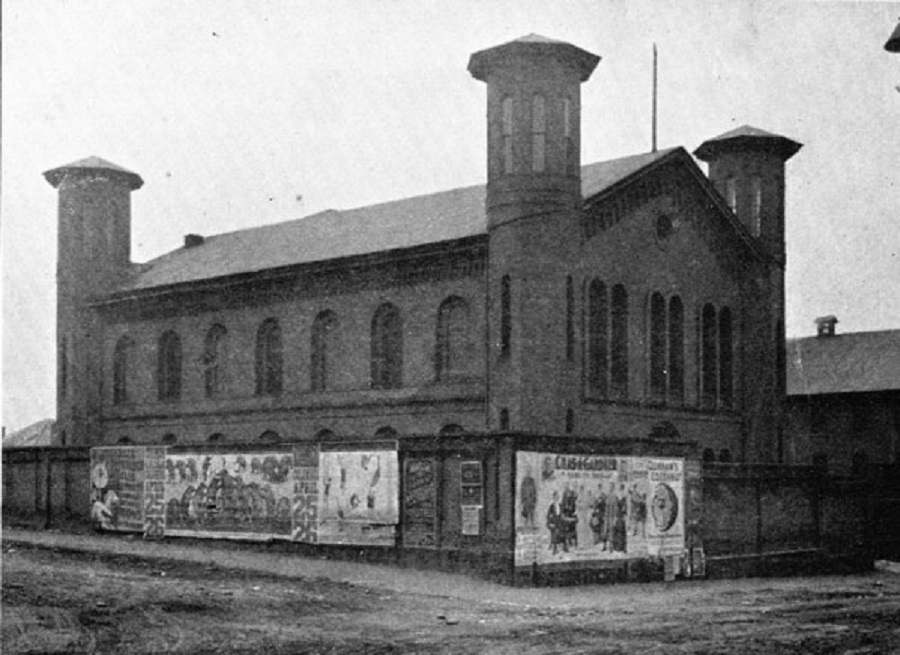
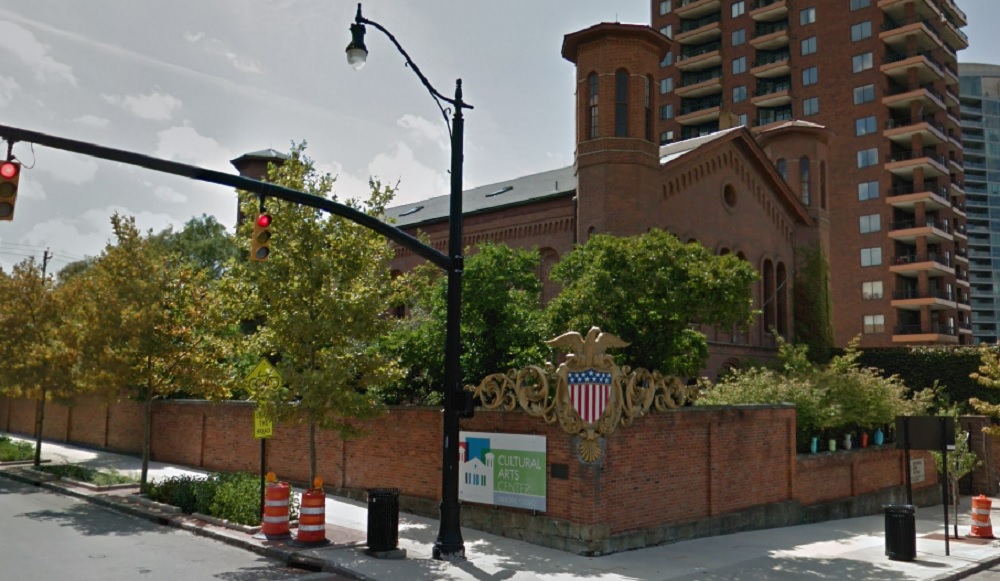
Before: The Ohio State Arsenal building at 139 W. Main Street in 1898 After: 2017 The Ohio State Arsenal building at 139 W. Main Street, seems to have a bit of disagreement as to when it was actually built (1861 vs. 1863), but regardless, it was a Civil War era arsenal that was used for this purpose for well over 100 years. It was put on the National Register of Historic Places in 1974, and became a cultural arts center in 1978, which it remains so to this day.
While I wouldn’t normally make a post on the 2011 census tract estimates- or any other estimates for them- because I really don’t know what their reliability is, I thought it might be an interesting exercise.
I only looked at those tracts that made up the original 1950 boundaries as well as some of the adjacent areas. I won’t go into too much detail, but…
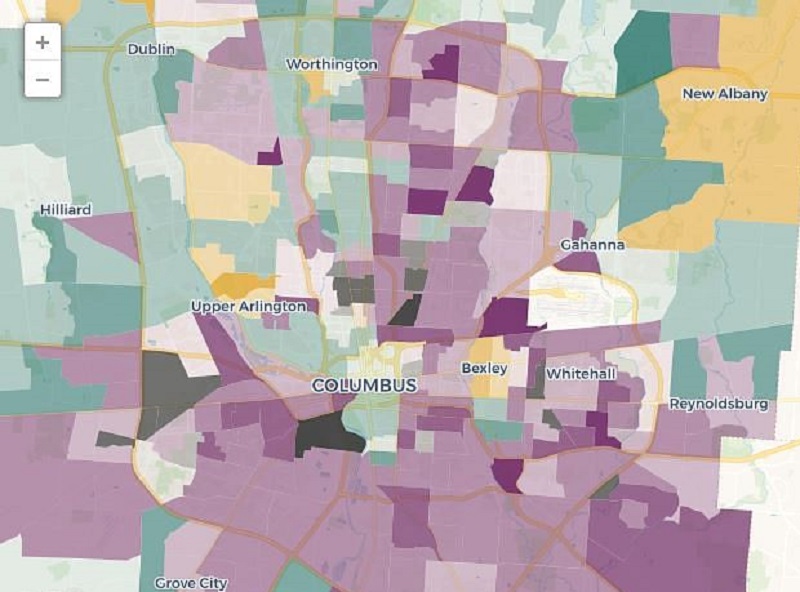
In 2010, only 20 of the 78 tracts I looked at were growing. Well, specifically, only 20 grew during the 2000-2010 period, not just in 2010 alone. So several more could’ve been starting to recover in 2010, but since it measured the whole decade, it might still show up as a loss. In any case, the 2011 estimates are interesting just because they show a much different picture.
If I use the exact estimate used, 34 of the 78 tracts were growing in 2011, a significant improvement. However, some of the estimates were hard to understand where they came from. For example, they had Downtown tracts, which have had rapid growth the last decade, as declining in population for 2011, even while more and more residential units are built and more people move into the area. Also, they showed some tracts gaining population when the long-term trend is for significant loss and no reason to see that reversing.
So using the margin of error as a guide, I went back over them and did my own estimates. Of the 78 tracts, I only did my own for 14, as they were the only ones I felt didn’t match the reality on the ground or the long-term trends. With those changes, 38 of the 78 were growing, a slight increase of the official 34.
If we use the official estimates, the total population for the 78 tracts was 232,297, a loss of 2,285 since 2010. If we use my estimates, the population would be 237,806, or an increase of 3,224. So what’s the real story? Well, new 2012 tract estimates will be coming out soon. When they do, I will compare and see what, if any, updates should be made. The only real way to know, however, is to wait until 2020 with the next census. Still, until that time, it’s fun to look at the numbers- or maps– and see if the urban core is recovering in the same way that cities and towns are in and around Franklin County.