The Random Columbus Photos 2 edition looks at one of the most infamous building complexes that had ever existed in the city.
Photo Date: Unknown, Pre-1910 Location: The southeastern corner watchtower of the Ohio Penitentiary site. The old Ohio Penitentiary first opened up in 1834. The Civil-War-era building that fronted Spring Street was easily the most iconic. It can be seen in the background of the photo as the lighter building. The Ohio Pen had an interesting, and occasionally disastrous, life. On April 21, 1930, a massive fire broke out that would kill 322 inmates and become the worst prison fire in United State history. Despite the fire, the prison’s population would continue to grow. At its peak in 1955, the prison held over 5,200 inmates- and singlehandedly provided a large population boost to Downtown. The following year, Ohio began transferring inmates to more modern facilities. The move took nearly 30 years. Ohio moved the last inmates in 1984 and then permanently closed the prison. After the closure, the abandoned prison deteriorated quickly. Due to a lack of state maintenance, a portion of the outer wall collapsed onto some cars in 1996, and the city began to aggressively plan a new life for the site. In 1998, despite some protests to save some of the historic buildings, the city demolished the entire complex to make way for the planned Arena District. Today, the only reminder of the prison site is that the eastern edge of McPherson Commons park runs along the same line as the original outer wall.
Random Columbus photos 1 is the first edition in a new, very occasional series highlighting historic views in and around the city.
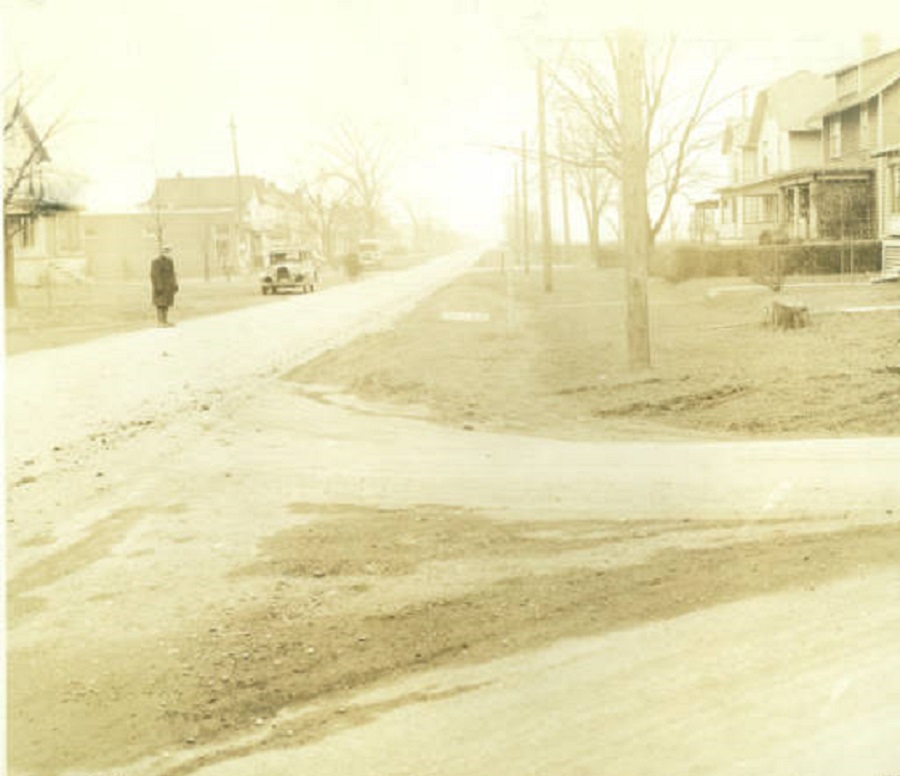
Photo Date: January 15, 1936 Location: Parkwood Avenue, East Linden
This random street scene photo was taken during the frigid winter of 1935-36. I couldn’t pinpoint exactly where the photo was taken, only that the style of homes indicates that it was taken looking north between Earl and Denune Avenues. Little has changed on Parkwood in the last 79 years. The area still looks and feels a little rural, and there are still no sidewalks. The one change, however, is that the roads are no longer dirt.
The day of the photo was fairly mild, with highs in the mid-40s. The next day, however, a snowstorm struck that dropped about 5″ of snow, and just a week later, temperatures hit 16 degrees below zero.
After a generally cold December, the January 1879 arctic outbreak would begin the new year, leading to Columbus’ 2nd coldest temperature ever officially recorded. The outbreak began on January 2nd, when a strong cold front moved in from the northwest in the early afternoon hours. The temperature fell rapidly during the evening, reaching a low of -13 on the 2nd for a total drop that day of 42 degrees. The core of the cold air moved across Ohio during the day of the 3rd, so temperatures warmed very little. Highs across the state were in the single digits south to below zero across the norther 2/3rds. Columbus had a rare below zero high of -4, which is the 2nd coldest January high on record and the 3rd coldest high of any month. The low on the 3rd was a frigid -20. This low stood as the coldest temperature in Columbus for 115 years, only being surpassed during the great arctic outbreak of January 1994, during which the temperature fell to -22.
The strong front was very moisture starved, and only a few tenths to an inch to an inch of snow fell with its passage.
Temperatures remained in the single digits for two more days before a gradual warming commenced. By the 8th temperatures went above freezing. The rest of January 1879 was fairly tame. 16 days after the 8th had highs of 35 or greater.
Of note is that the temperature of -20 occurred two more times before the end of the 19th century, in January 1884 and February 1899.
This kind of post seems obligatory at this time of year. I thought about making just one big post, but there was so much that happened this year that I decided to break it up by month. This won’t include every single piece of news, of course, but rather just the highlights. First up is the January 2014 review.
Weather January 2014 continued what December 2013 had started. Snowfall was nearly 2x above normal and temperatures were almost 7 degrees below normal. The month tied for the 15th coldest January and the 16th snowiest. The coldest low was -11 and the low hit 0 or below 7 times, the most since 1994. The biggest snow event occurred on the 25th-26th with 8.3″. This was the 10th largest January snowstorm of all time. Snow depth reached at least 1″ on 19 days.
The Census released updated 2013 census tract estimates, and they showed some interesting things. There are 285 census tracts that make up Franklin County.
First, let’s take a look at the Franklin County trends 2000-2013.
In regards to the above map, it’s a mix of both the 2013 official estimates and some that I did. For example, the official estimates had the Downtown tracts 30 and 40 losing population, as well as most of the Short North. That’s rather absurd considering the level of residential construction in these areas, as well as population estimates the city has done in the last few years for Downtown. In fact, the 2013 official estimates have Downtown tract population BELOW 2010. That’s just not the reality. So I looked over the tracts and adjusted them according to their long-term growth/decline trends. Most of them I left alone, but some adjustments had to be made. However, I was very conservative with any changes, and several tracts that the official estimates showed gains, I actually had losses.
Here are all the tracts that grew by at least 300 people between 2010 and 2013 in Franklin County, as well as their locations. Blacklick #7395: +1,609 Dublin #6230: +1,214 Columbus-West Side #7951: +1,002 Columbus-Northwest #6372: +966 Columbus Northeast #6931: +963 Hilliard #7921: +955 Columbus-East Side #9361: +952 Columbus-West Side #8350: +951 Columbus-Northwest: #6384: +949 Dublin #6220: +933 Columbus-West Side #8141: +921 Columbus-Easton #7551: +793 Columbus-Southeast #9373: +749 Hilliard #7933: +688 Minerva Park #7112: +675 Columbus-South Side #8340: +652 Hilliard #7954: +643 Columbus North Side #7044: +636 Columbus Northeast #7132: +615 Columbus Northwest #6396: +557 Dublin #6386: +549 Columbus North Side #6921: +540 Columbus Northwest #6393: +492 Columbus-West Side: +489 Gahanna #7492: +473 New Albany #7209: +472 Columbus-Hilltop #8321: +466 Columbus-Southeast #9374: +455 Grove City #9740: +441 Columbus Northeast #6945: +438 Hillard #7931: +432 Columbus-West Side #7812: +427 Columbus-South Side #9590: +411 Columbus-South Side #8710: +407 Hilliard #10602: +407 Columbus-South Side #8822: +403 Whitehall #9230: +398 Columbus-West Side #8163: +397 Columbus-East Side #9362: +389 Columbus-Downtown #30: +387 Hilliard #7953: +382 Columbus-West Side #6330: +371 Columbus-Northwest #6387: +361 Columbus-East Side #9322: +352 Columbus-South Side #8825: +349 Columbus-Southwest #8161: +346 West Side-Marble Cliff #43: +345 Columbus-Southwest #8370: +340 Grandview #85: +332 Columbus-Downtown #40: +321 Hilliard #7922: +320 Dublin #6371: +312 Grove City #9751: +304 Columbus-Campus Area #13: +303
As far as the core of the city, the 1950 boundaries, here are the results.
There are 78 tracts that make up the original 1950 city boundary. Using the official estimates, 38 of the 78 tracts grew between 2010-2013, yet had a total loss of 3,229. However, again, it had all the Downtown and adjacent tracts inexplicably losing population, yet the opposite is occurring in these areas. For Downtown, the combined loss was about 370, and for the Short North, it had the loss at more than 700.
Using my adjusted estimates, 35 tracts are growing, adding 1,166 people 2010-2013. Most of the gains were made in the Downtown and adjacent tracts, and some of the losses were simply not as steep. For example, the official estimates had tract #10, in the Campus area, losing nearly 1,300 people since 2010, which is a ridiculous loss, especially considering it grew by almost 8% 2000-2010. In fact, most of the largest losses from the official estimates were around Campus and the Short North. Nonsense.