Ohio Covid Vaccination Rates By County


Ohio Covid Vaccination rates by county

Vaccinations have been going on for about a month now. How is the process progressing across locations and age groups?

This data is updated through April 5, 2021.

Ohio Total Vaccinations Begun (1 shot): 3,721,565 31.84% of Ohio Population
Ohio Total Vaccinations Completed (2 shots): 2,188,726 18.72% of Ohio Population

Top 20 Counties by Vaccinations Begun- One Shot Given- by % of Population
1. Delaware: 39.77%
2. Ottawa: 39.67%
3. Lake: 36.51%
4. Wood: 36.38%
5. Geauga: 36.35%
6. Cuyahoga: 35.57%
7. Warren: 35.07%
8. Medina: 34.88%
9. Henry: 34.58%
10. Erie: 33.92%
11. Mahoning: 33.61%
12. Green: 33.42%
13. Lorain: 32.97%
14. Hamilton: 32.78%
15. Summit: 32.62%
16. Montgomery: 31.96%
17. Sandusky: 31.79%
18. Clark: 31.64%
19. Trumbull: 31.58%
20. Lucas: 31.46%

Bottom 20 Counties by Vaccinations Begun- One Shot Given- by % of Population
1. Holmes: 11.38%
2. Adams: 17.51%
3. Brown: 19.63%
4. Lawrence: 21.23%
5. Highland: 21.37%
6. Shelby: 21.54%
7. Ashland: 22.56%
8. Preble: 22.90%
9. Hardin: 22.96%
10. Vinton: 23.68%
11. Darke: 24.20%
12. Wayne: 24.27%
13. Morrow: 24.37%
14. Logan: 24.45%
15. Fayette: 24.50%
16. Mercer: 24.59%
17. Perry: 24.63%
18. Clinton: 24.84%
19. Tuscarawas: 24.99%
20. Richland: 25.10%

In general, more urban counties- or those within larger metros, have had better vaccination start success while more rural counties have done worse. Holmes County is by far the worst, and that may have something to do with the large Amish population.

Top 20 Counties for Completed Vaccinations by % of Population
1. Ottawa: 24.91%
2. Putnam: 23.72%
3. Henry: 23.29%
4. Erie: 22.55%
5. Delaware: 21.98%
6. Clark: 21.87%
7. Muskingum: 21.71%
8. Wood: 21.28%
9. Mahoning: 21.22%
10. Geauga: 20.91%
11. Fulton: 20.84%
12. Scioto: 20.75%
13. Sandusky: 20.54%
14. Monroe: 20.36%
15. Greene: 20.22%
16. Crawford: 20.07%
17. Washington: 20.04%
18. Defiance: 20.0%
19. Noble: 19.98%
20. Wyandot: 19.83%

Bottom 20 Counties for Completed Vaccinations by % of Population
1. Holmes: 8.68%
2. Adams: 12.20%
3. Brown: 13.38%
4. Ashland: 13.56%
5. Lawrence: 13.57%
6. Highland: 14.61%
7. Preble: 14.74%
8. Shelby: 14.81%
9. Wayne: 14.98%
10. Butler: 15.02%
11. Champaign: 15.11%
12. Logan: 15.30%
13. Morrow: 15.81%
14. Darke: 15.93%
15. Portage: 16.18%
16. Belmont: 16.36%
17. Richland: 16.46%
18. Pickaway: 16.63%
19. Tuscarawas: 16.72%
20. Jackson: 16.78%

There is less of a rural/urban divide in completed numbers, perhaps because there is 3-week time frame between the first and second shots. The numbers may eventually wash out more similarly in the end.


In terms of who is getting the vaccine by age, I will break it down below.

Top 10 Counties with the Most Vaccination Starts for the 0-39 Age Group by % of Population
1. Delaware: 19.13%
2. Wood: 18.63%
3. Cuyahoga: 16.18%
4. Athens: 15.74%
5. Hamilton: 15.63%
6. Warren: 15.43%
7. Franklin: 14.67%
8. Medina: 14.52%
9. Ottawa: 14.07%
10. Geauga: 13.75%
Greene: 13.64%

Bottom 10 Counties with the Fewest Vaccination Starts for the 0-39 Age Group by % of Population
1. Holmes: 2.54%
2. Adams: 4.65%
3. Shelby: 5.22%
4. Brown: 5.38%
5. Harrison: 5.94%
6. Preble: 6.10%
7. Logan: 6.20%
8. Belmont: 6.27%
9. Darke: 6.39%
10. Monroe: 6.47%

Top 10 Counties with the Most Vaccination Starts for the 40-59 Age Group by % of Population
1. Delaware: 53.79%
2. Wood: 47.0%
3. Warren: 44.39%
4. Cuyahoga: 40.63%
5. Ottawa: 40.44%
6. Athens: 40.21%
7. Union: 40.21%
8. Franklin: 40.20%
9. Hamilton: 40.12%
10. Greene: 39.63%

Bottom 10 Counties with the Fewest Vaccination Starts for the 40-59 Age Group by % of Population
1. Holmes: 12.41%
2. Adams: 15.24%
3. Brown: 18.33%
4. Ashland: 21.47%
5. Preble: 21.82%
6. Harrison: 22.01%
7. Lawrence: 22.11%
8. Darke: 22.26%
9. Mercer: 23.16%
10. Shelby: 23.22%

Top 10 Counties with the Most Vaccination Starts for the 60 and Older Age Group by % of Population
1. Delaware: 80.12%
2. Wood: 77.63%
3. Union: 75.64%
4. Henry: 74.39%
5. Warren: 72.78%
6. Putnam: 72.61%
7. Sandusky: 71.31%
8. Medina: 71.26%
9. Geauga: 70.36%
10. Muskingum: 70.36%

Bottom 10 Counties with the Fewest Vaccination Starts for the 60 and Older Age Group by % of Population
1. Noble: 38.30%
2. Holmes: 39.92%
3. Lawrence: 46.90%
4. Adams: 47.33%
5. Brown: 50.30%
6. Vinton: 55.02%
7. Preble: 55.22%
8. Scioto: 55.35%
9. Shelby: 56.86%
10. Pike: 57.01%

Again, rural counties do generally worse while suburban and urban counties tend to do better. Only Delaware County has managed to at least start vaccinations for more than 80% of the most vulnerable age group- those aged 60 and older.

So overall, the state clearly has a long way to go if it wants to reach “herd immunity”, which is considered somewhere around 70% or more of the population.

To see more county data for Covid 19 and vaccinations, go to the Ohio Covid Dashboard
And for instructions on how to schedule a vaccine shot appointment, go here: Ohio Covid Vaccine Guide

New Amtrak Route Plan Underserves Columbus


Amtrak route underserves Columbus

Columbus is the 2nd largest city in the United States without any form of passenger rail. It hasn’t had passenger rail since the last train pulled out of Union Station in 1977. Some might argue that rail is an outdated form of transit, and therefore unnecessary anyway. Others argue that not having a multi-modal transit system holds the city back economically and developmentally.

However one views rail, Amtrak’s latest national route plan, called Connect US is still arguably mediocre. In fact, one could say that the new Amtrak route plan underserves Columbus completely.

The route plan.

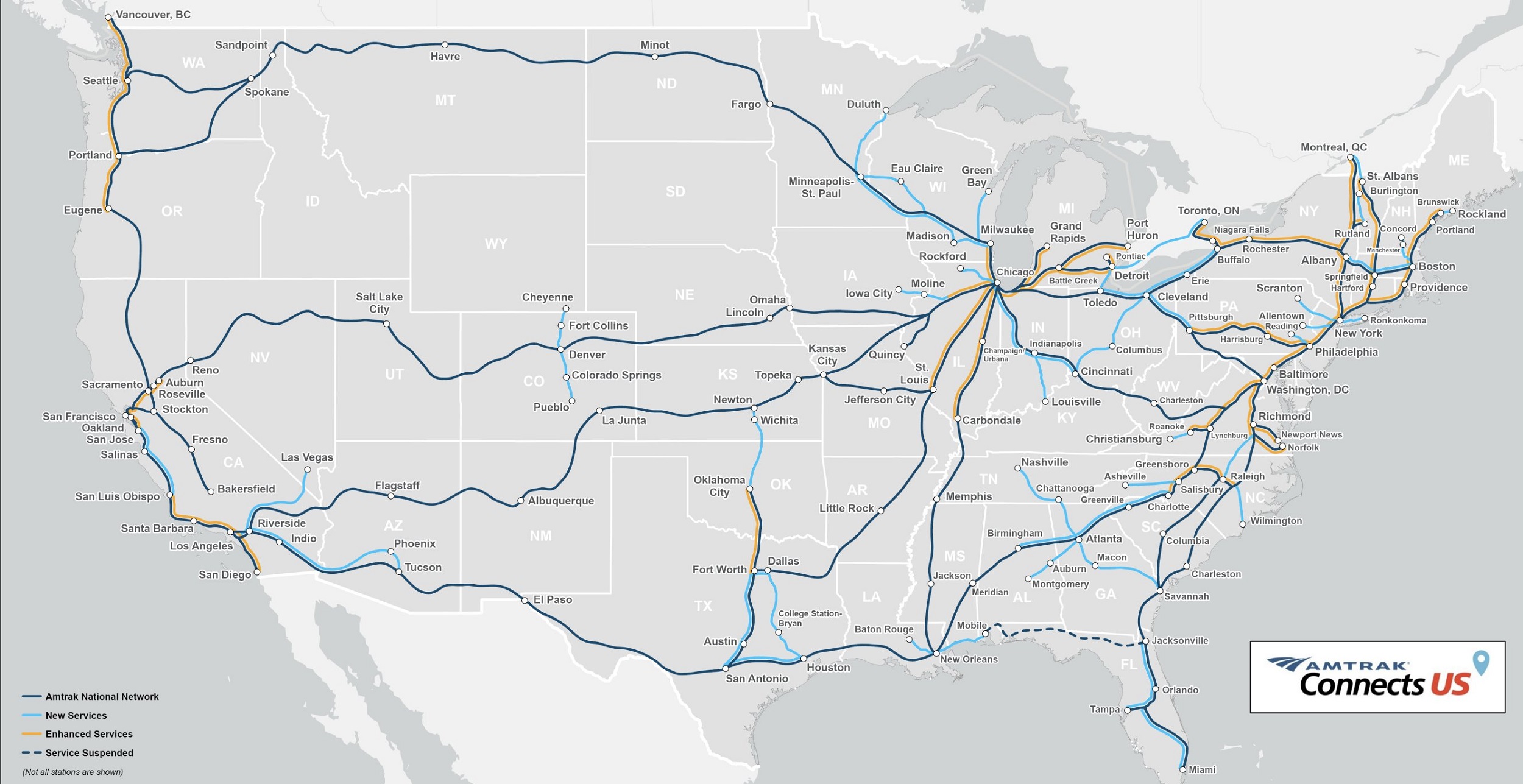
As shown in the above map, Columbus would only have direct connections to Cincinnati and Cleveland. To go anywhere else, passengers from Columbus would first have to travel to those cities and then make transfers. While a direct connection to Cleveland and Cincinnati is important, this plan would present more of a challenge to potential travelers who want direct connections outside of the state.
Columbus is currently the largest city in Ohio and will soon be the largest metro area. It is one of the fastest-growing cities in the United States and has added more people the past 10 years than any other Midwest city. On top of all that, it is the capital of the 7th most-populated state.

Amtrak’s plan attempts to largely use existing rail lines, but in many places the routes would be brand new. Columbus doesn’t have existing passenger rail routes, so it may be more expensive to build them there. However, it seems to be a wasted opportunity to not make Columbus more of the state’s hub by having direct connections to cities like Chicago, Indianapolis and Pittsburgh.
Incidentally, the proposed Hyperloop project would be a Chicago-Columbus-Pittsburgh route that would eventually connect all the way to New York. Most people view Hyperloop as a gimmick more than a real proposal, so more traditional rail is still taken more seriously.

It is in all our best interests to want the best possible infrastructure. Amtrak’s plan treats Columbus as a 2nd or 3rd-rate city. That’s unfortunate, and works against all the momentum the city has had in recent decades. The current Amtrak plan would provide less economic benefit and options to Ohio’s fastest-growing city and capital.
The city deserves so much better than being an afterthought.


Columbus’ 2020 Economic Performance


Columbus' 2020 economic performance

As with everywhere else in the country, Columbus has not gone unscathed by the Covid-19 pandemic and its related economic fallout.  Just how bad did the situation get, though, and how was Columbus’ 20202 economic performance overall? Has it recovered since reaching pandemic bottom?

To find out, we’ll look at the latest economic data ending in January 2021.

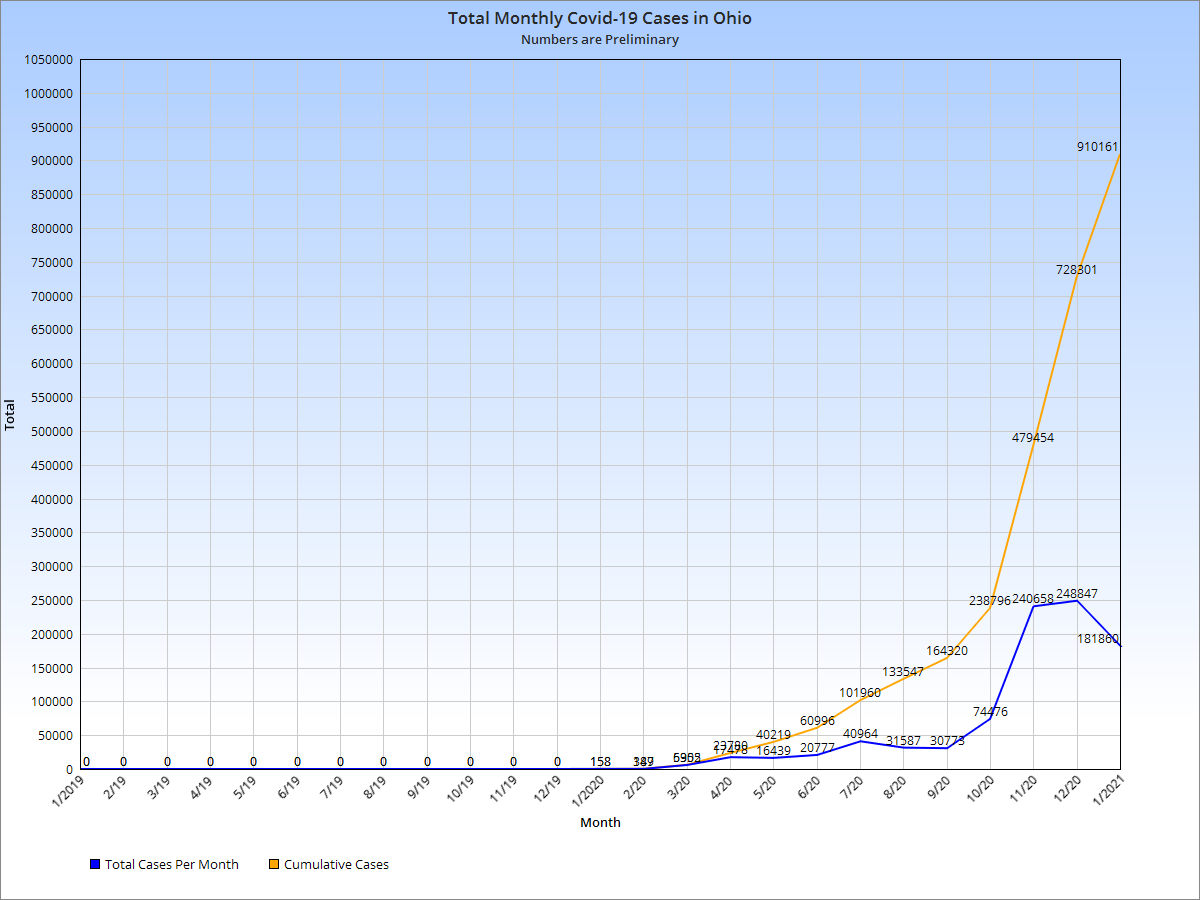
First, here are the historic and current Ohio Covid-19 numbers.

Covid 19 Cases and Deaths in Ohio


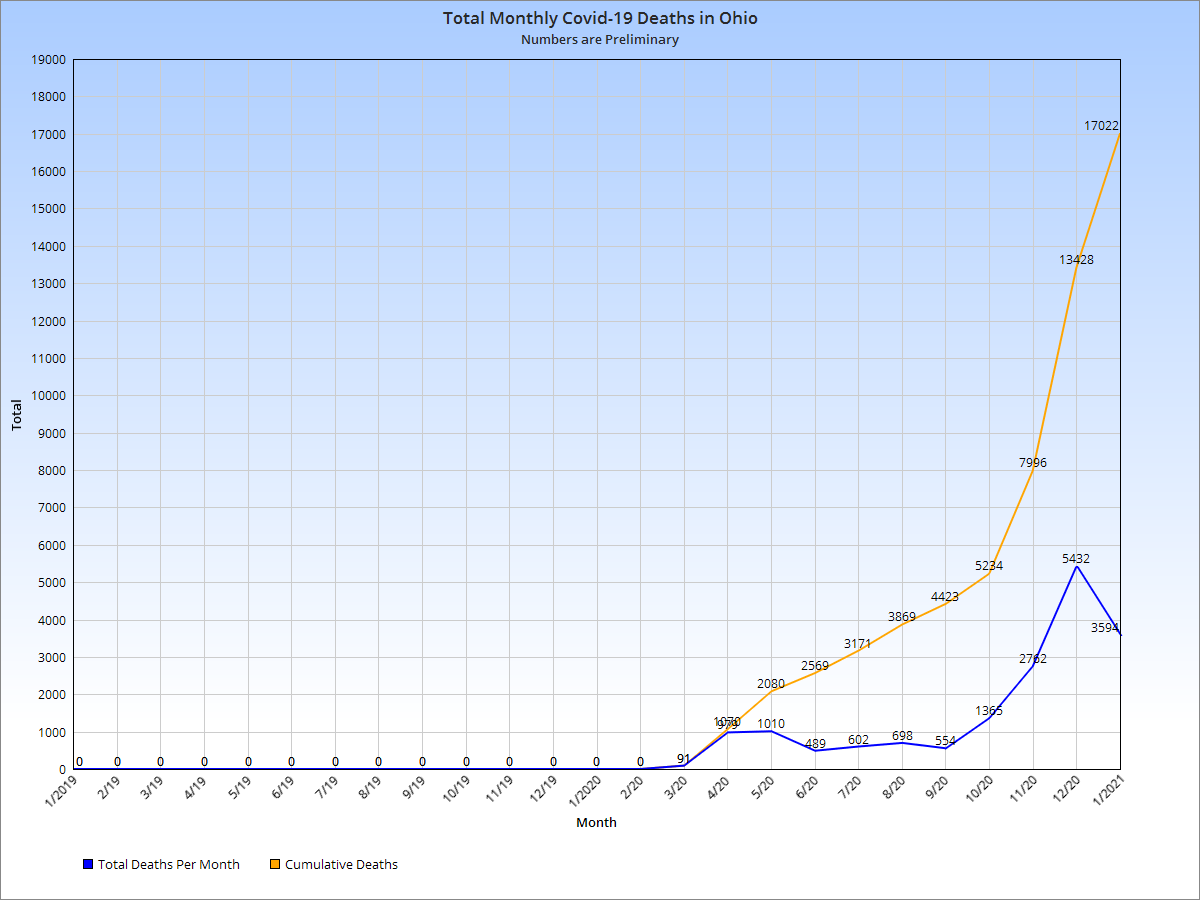
In Ohio, the pandemic generally began in early January, though Ohio didn’t originally announce any cases until the end of February.

March 2020 marked the official beginning of the pandemic. It was on March 11th, 2020, however, that truly brought out the seriousness of the situation. On that day, multiple news stories all happened simultaneously. The WHO finally declared the situation a pandemic, state and local shutdowns began, Trump gave a national televised address announcing travel bans to Europe, and the stock market had one of its largest drops in history. The pile of bad news would begin affecting the economy almost immediately.

In Ohio, cases and deaths also began to add up quickly in March. As stay-at-home orders were issued and people stopped going out, there were mass layoffs across every industry of the economy.

So how was this all reflected in the economic data?

Columbus Metro Labor Force

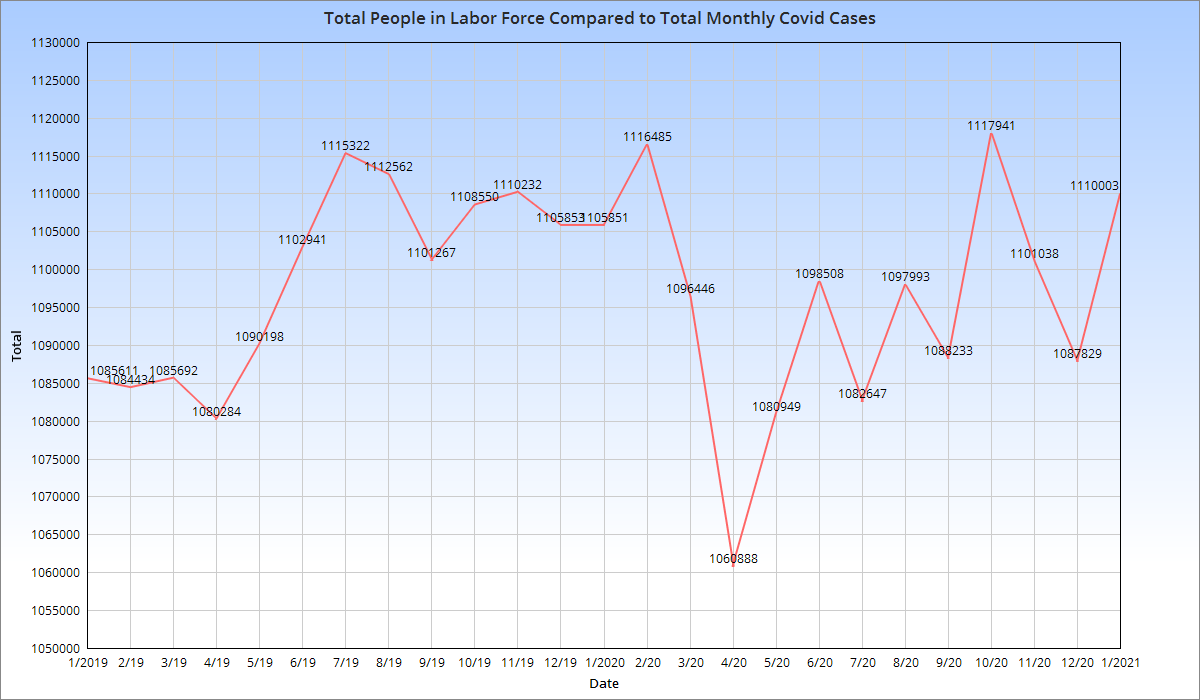
The metro’s labor force was initially unfazed and reached peak in February 2020, slightly higher than the 2019 peak. However, March lost more than 20,000 from the labor force and April lost almost 36,000 more.
The losses were mostly temporary, with a new peak being reached in October. However, the labor forced declined going into the late fall and winter as the 3rd- and worst- wave hit.

Columbus Metro Total Employed and Unemployed


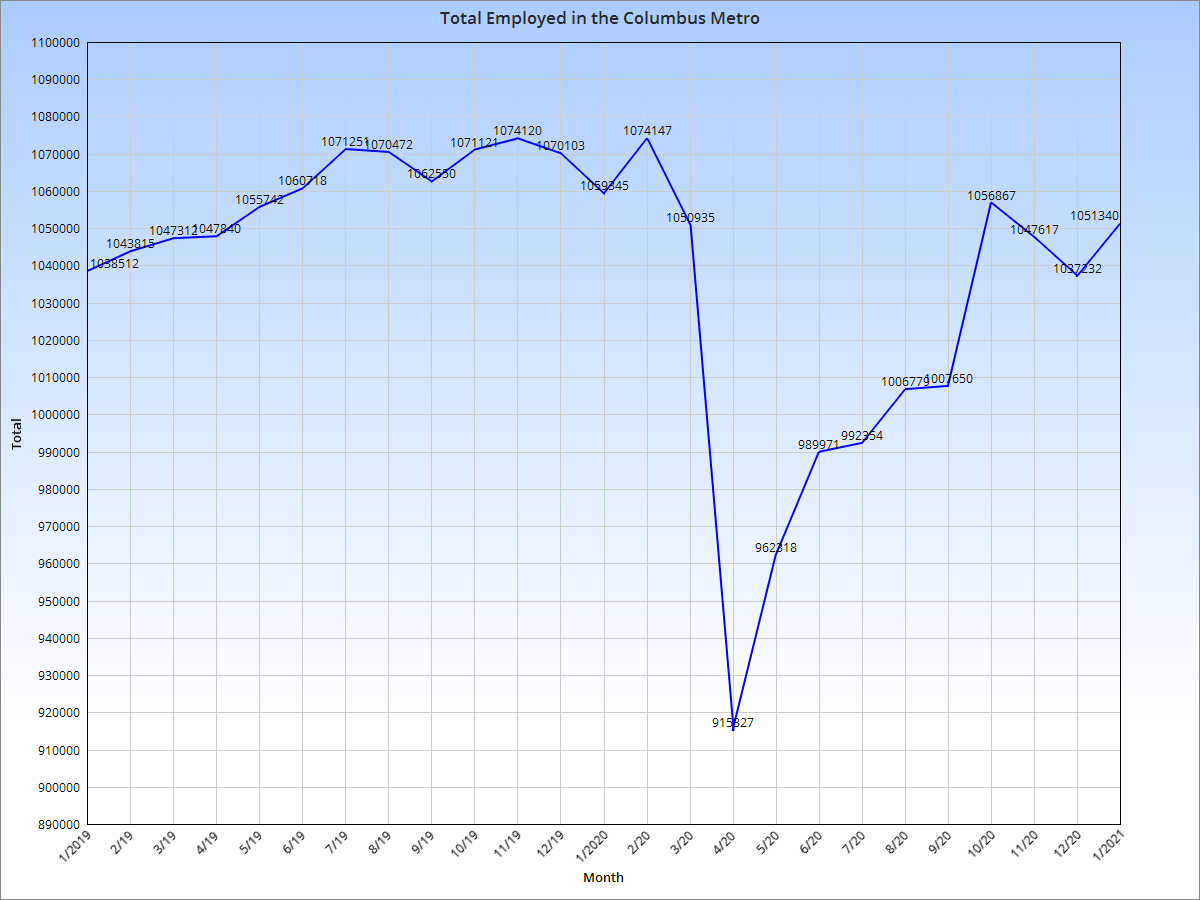
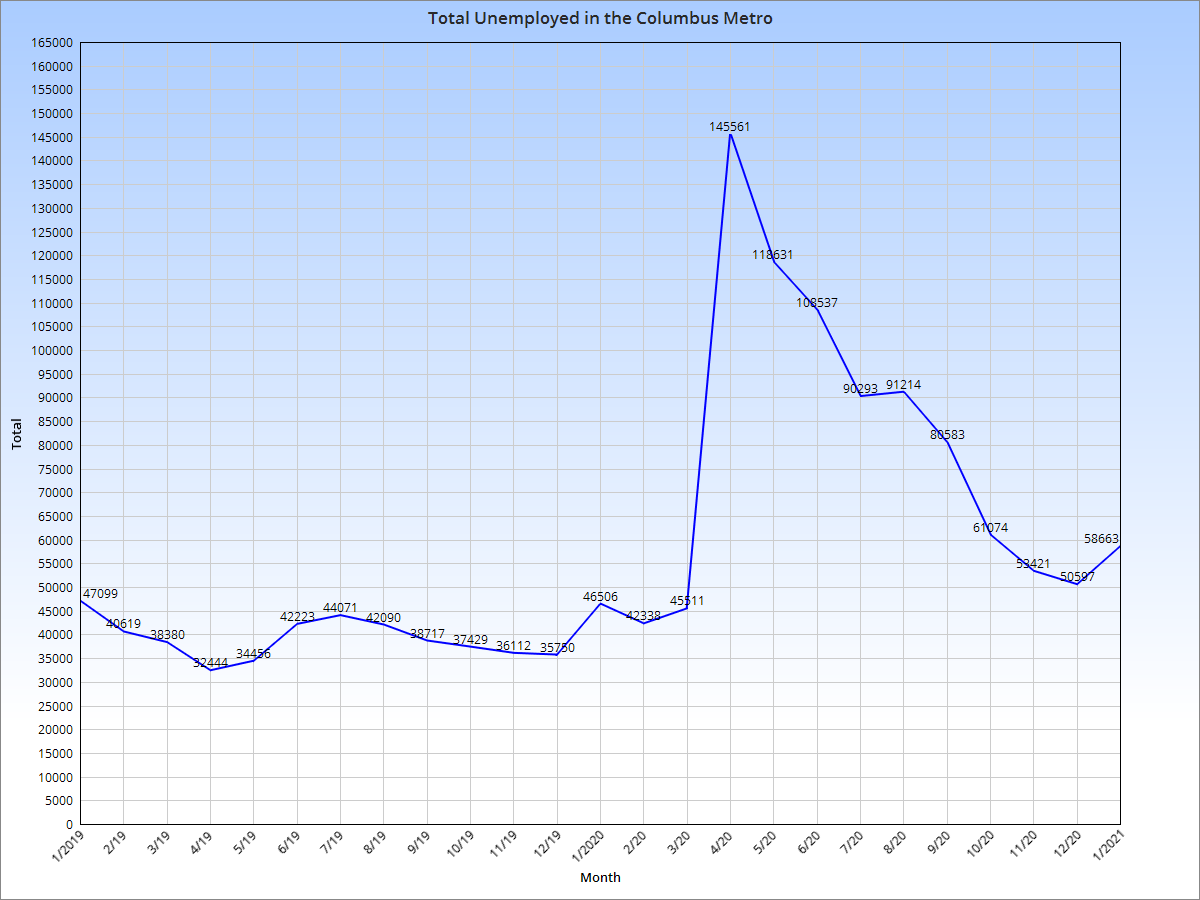
Employed totals were hit far harder than the labor force overall. More than 158K fewer people were employed in April versus February, a nearly 15% drop. Total employed has gone up since the bottom, but was still below the pre-Covid peak through January 2021.

Columbus Metro Unemployment Rate

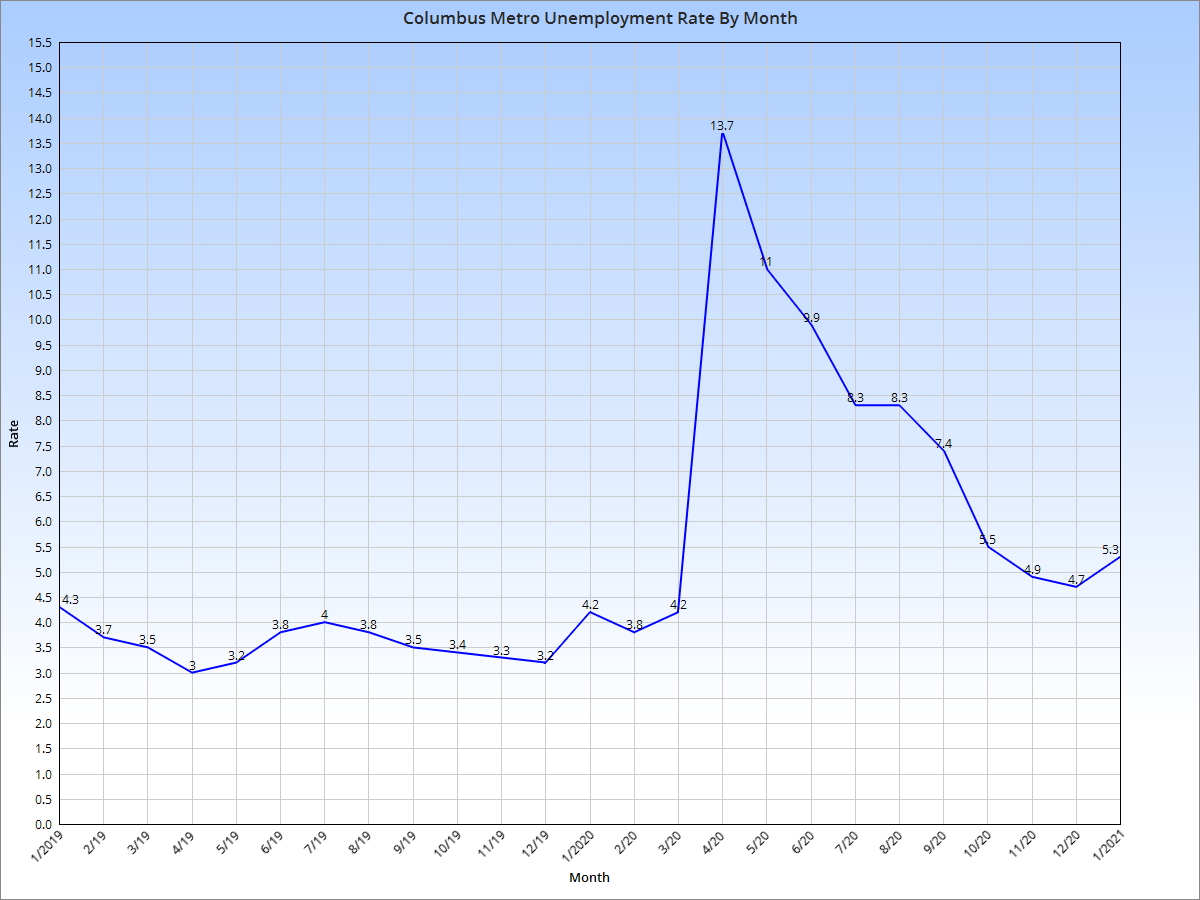
The 13% unemployment in April was one of the highest outside of the Great Depression and nearly 4 points higher than the 2009-2010 recession. Unemployment fell through the end of 2020, but remained higher that pre-Covid levels.
Columbus’ unemployment rate was a full point below the national average in January, a sign of its continuing economic resilience even during some of the worst economic conditions in generations.

Columbus Metro Non-Farm Jobs

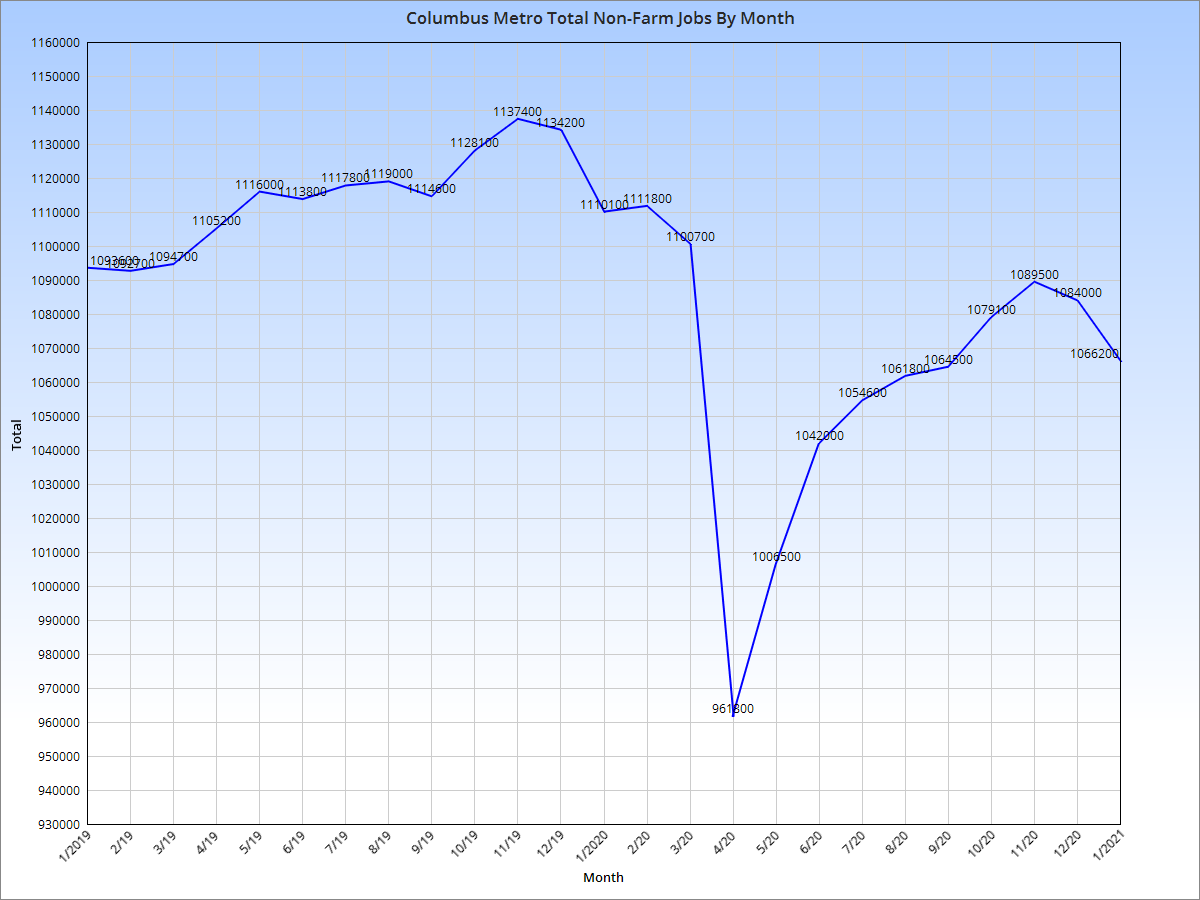
Non-farm jobs in the metro area had peaked in November 2019 and had been declining even before the pandemic set in. Between February and April, 2020, 150,000 non-farm jobs were lost in the metro. As of January 2021, the metro was still short about 71,000 from the 2019 peak.


Now let’s take a closer look at how individual industries have performed.

Columbus Jobs by Industry

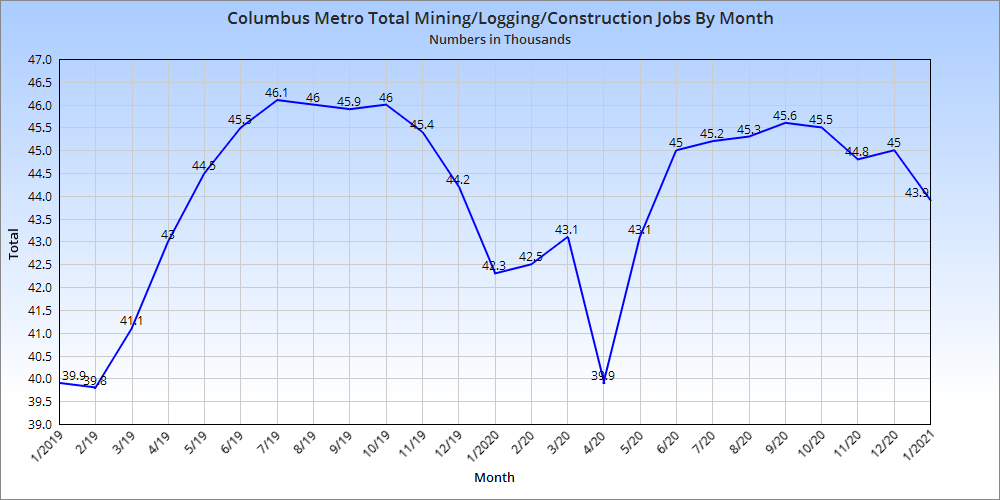
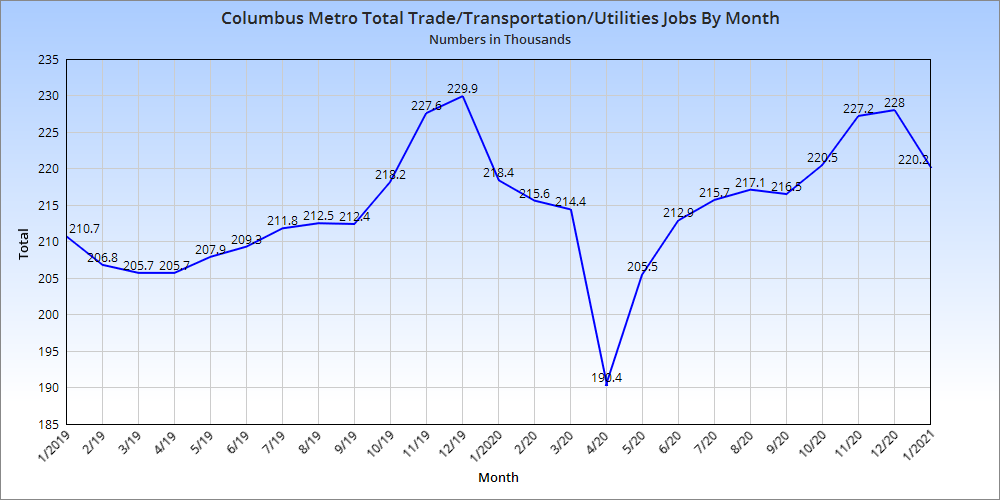
While the mining/logging/construction group did manage to get close to pre-Covid levels, it has been in general decline since last September, likely due to the 3rd wave that began in October.


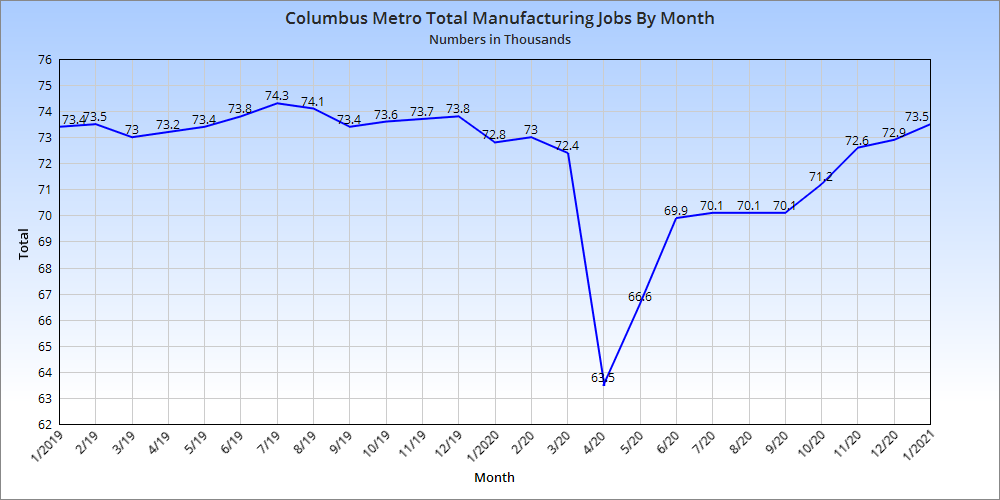
Manufacturing, surprisingly, has recovered completely, and jobs in the industry continued to rise through the 3rd wave.


This industry group has also recovered fairly well, being close to where it was pre-Covid.


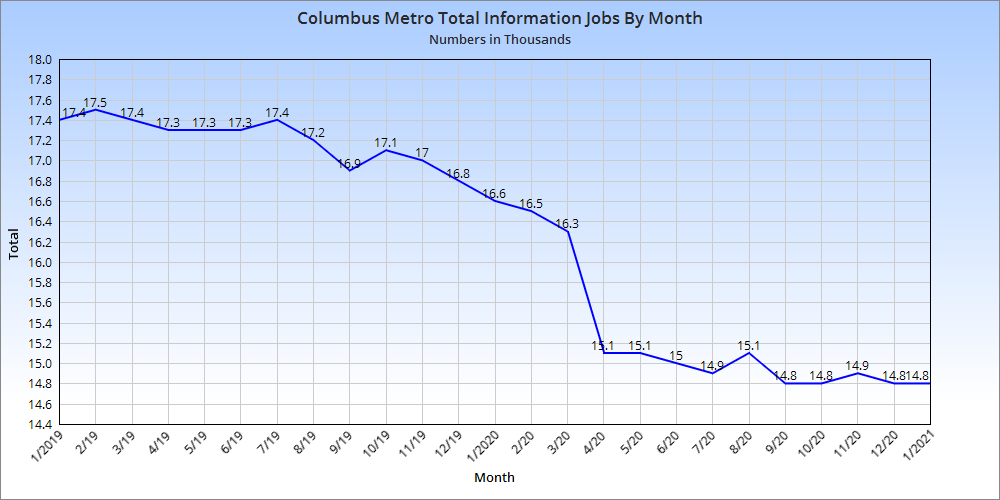
Information jobs were already in a long-term decline before the pandemic, but still faced a steep drop during the spring. Those lost jobs have not come back.


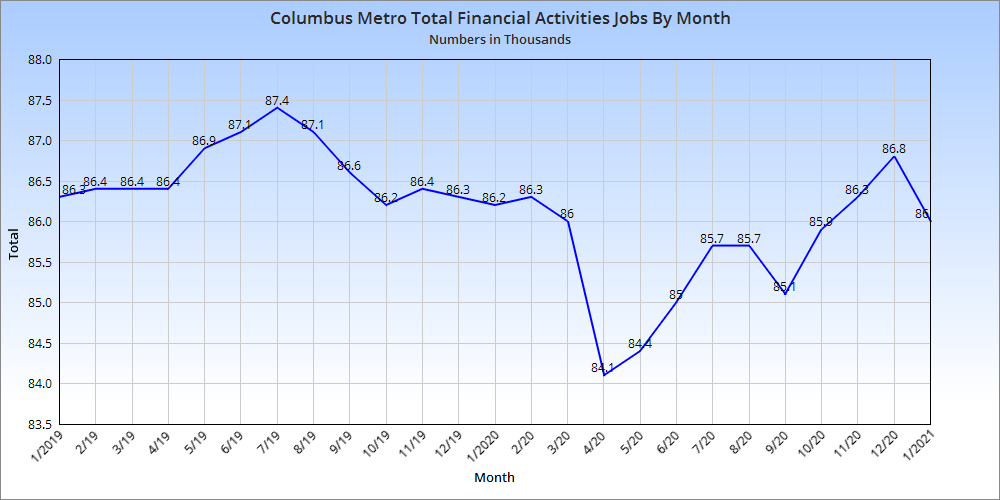
Financial activities jobs did not seem to face a significant decline, and have mostly recovered.


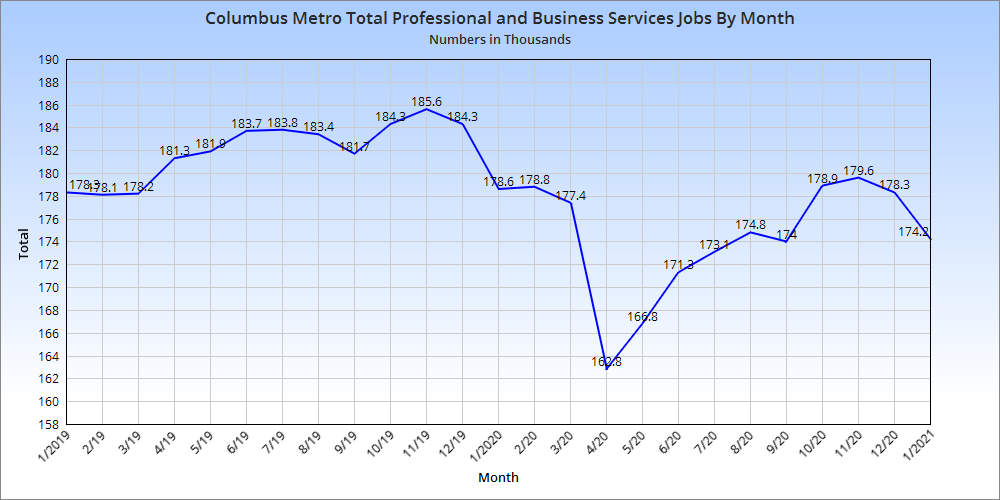
Professional and business services jobs were hit relatively hard during the economic collapse, and have only managed to recover about half of the losses through January.


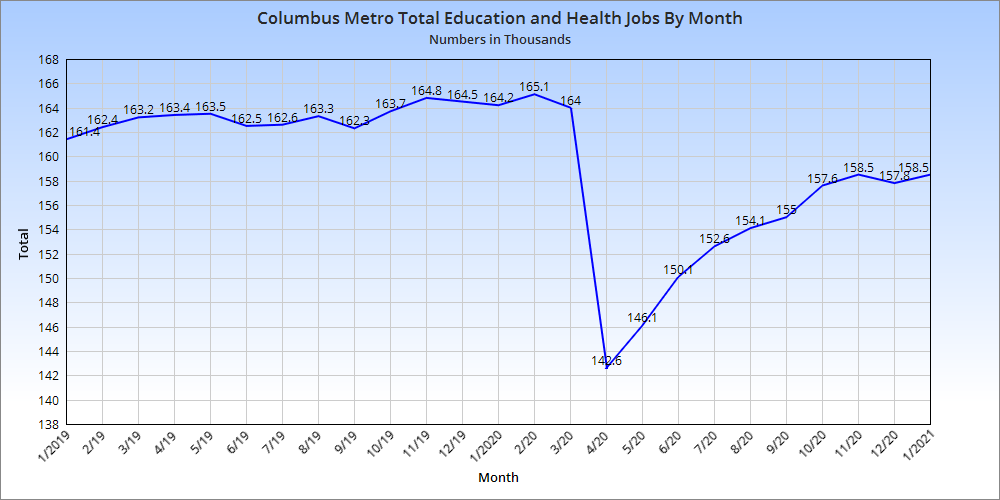
Another hard-hit industry group, the majority of the losses in the Health/Education group probably stem from the education side given that in-person schools have been mostly shut down the past year. Still, the industry group had recovered about 2/3rds of the losses through January.


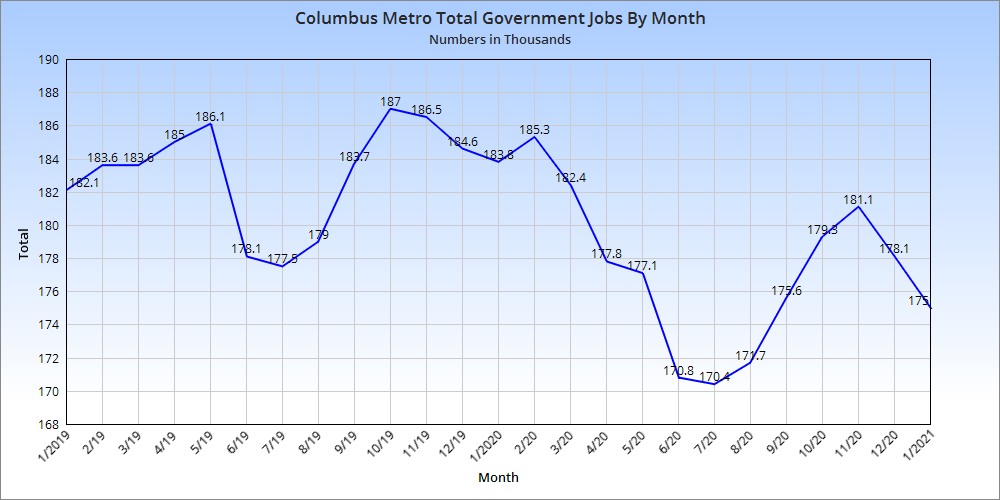
Government jobs typically see a significant mid-year drop, but it was much more severe in 2020. This category has not yet recovered fully.


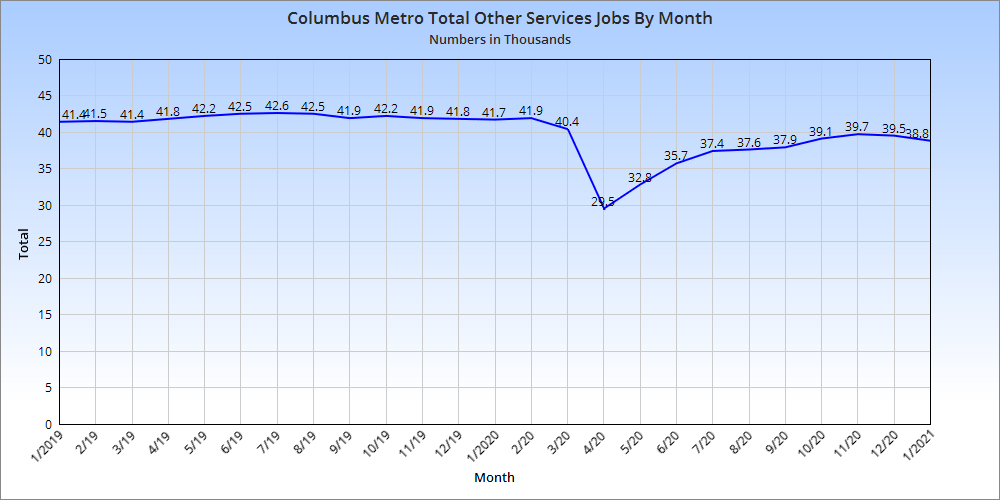
Other services jobs are typically pretty steady year over year and don’t see large changes. Obviously they did during the downturn, however. They have mostly recovered, although seemingly at a readjusted lower level.


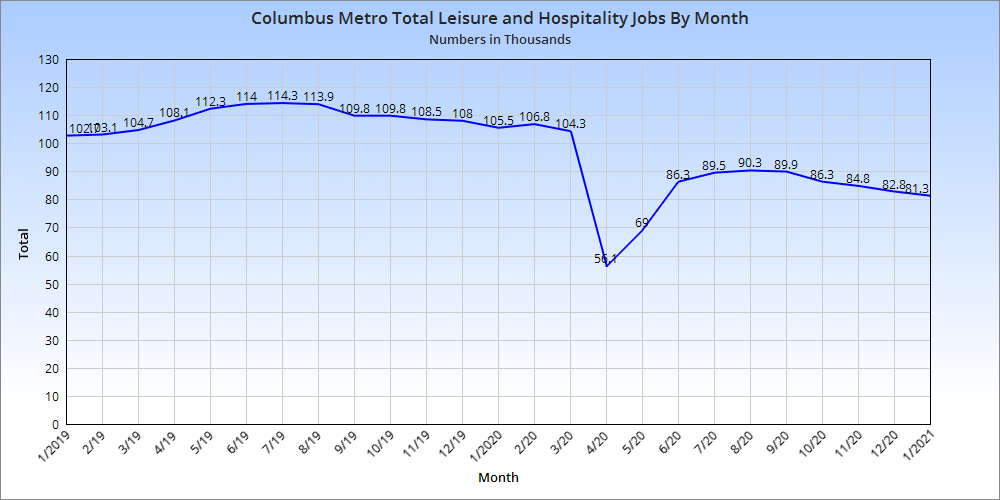
The leisure and hospitality industry was absolutely devastated, losing nearly 50% of all jobs. It has recovered some, but January still featured the fewest jobs in the industry since February 2003.

The Conclusion
So as we can see, recovery for some industries is *far* better than others. Service industries have done much worse overall and continue to be below pre-Covid levels. This is not really all that surprising when restaurants, bars and other entertainment spots have faced the brunt of hardship. It remains to be seen how everything from economic stimulus packages to vaccination rates affect 2021, but it’s hard to imagine anything worse than last year.

To get more local and national economic data, check out The Bureau of Labor Statistics


2019 Columbus Crime Data


2019 Columbus crime data

I updated the Columbus Crime Statistics page with 2019 data, which is the latest year available. The data comes from what the city reported to the FBI’s Uniform Crime Reporting system.

2019 Violent Crime
-There were 5,350 incidents of violent crime in Columbus in 2019, down slightly from 2018’s 5,365. The rate per 100K people was 595.4, down from 2018’s 601.0.
-There is some discrepancy between the murders the city reported to the FBI- 81- and the total number of homicides it reported in its 2019 year-end report- 104. At 81 murders, it would be a rate of 9 per 100K, while 104 would be a rate of 11.6 per 100K. Even at 104, it would represent a drop from 2018’s 109.
-There were 882 reported rapes, down from 2018’s 894. There were 98.2 rapes per 100K, down from 2018’s 99.9.
-Robberies continued their years-long decline, with 1,810 total and a rate of 201.4 per 100K. Robberies have declined 53% since 2007.
-There were 1,788 aggravated assaults at a rate of 199.0 per 100K. Assaults were higher than 2018’s 1,615, but they are still down nearly 35% since they peaked in 1990.

Violent Crime Changes By Race 2010-2019
Other: -72.7%
Black: -34.6%
White: -21.3%
Unknown Race: -18.2%
Asian: +33.3%

Violent Crime Changes By Gender 2010-2019
Unknown Gender: -42.0%
Male: -35.2%
Female: +21.7%

Violent Crime Changes By Age Group 2010-2019
0 to 19: -41.2%
20 to 39: -33.9%
Unknown Age: -30.8%
40 to 59: +12.8%
60 and Over: +220.9%

Perhaps strangely, Asians, women and older people have seen their crime rates increase. In all 3 cases, the total crimes were relatively low in comparison to other groups, but the changes were significant enough to be noticeable.


2019 Property Crime
-There were 29,974 property crimes reported in 2019 for a rate of 3335.6 per 100K, down from 2018’s 3596.3.
Property crimes peaked in 2001 with 62,151, but have fallen nearly every year since. The 2019 total was 51.8% lower than in 2001.
-Larceny thefts reached 20,606 for a rate of 2293.1 per 100K. This is both down from 2018’s 2427.8 and 46.9% lower than their 2001 peak.
-Burglaries continued their dramatic fall in 2019. 5,809 were reported for a rate of 646.5 per 100K. This is down from 6,477 and 724.9 in 2018, and down nearly 62% just since 2010.
-There were 3,559 motor vehicle thefts for a rate of 396.1 per 100K in 2019, down from 3,962 and 443.7 in 2018. As with burglaries, motor vehicle thefts are down significantly in recent years, having fallen more than 58% just since 2004.

Property Crime Changes By Race 2010-2019
Other: -62.5%
White: -43.9%
Black: -27.7%
Unknown Race: +5.5%
Asian: +22.9%

Property Crime Changes By Gender 2010-2019
Male: -36.9%
Female: -23.3%
Unknown Gender: -0.9%

Property Crime Changes By Age Group 2010-2019
0 to 19: -48.7%
20 to 39: -33.1%
40 to 59: -25.5%
Unknown Age: +2.9%
60 and Over: +31.5%

Here are some additional crime-related links.
Columbus Police Department
National Crime Data Explorer


Is North Linden the Best Neighborhood for a Starter Home?


Is North Linden the best neighborhood for a starter home in Columbus? For many local residents, when they hear “Linden”, they may only think of negatives such as crime and neighborhood condition. Like many other parts of urban Columbus, the area is changing as development forces and population growth have begun pushing in from all sides, however.

With the Columbus market on fire, supply low and prices skyrocketing due to heavy demand, Linden homes are being looked at with a new perspective. Linden homes are some of the most affordable anywhere in Columbus, and while the neighborhood can be hit or miss to say the least, North Linden has begun to emerge as a destination for first-time home buyers.

Although the southern part of Linden was constructed before WWII, the vast majority of the remaining area was built in the 1950s and 1960s as former soldiers looked to start new lives.
Because of the era in which many of the homes were built, most are single-story ranches or Cape Cod style cottages. The square footage of many of these homes tends to be around 1000 square feet or less. Until recently, the small relative size, among other issues, kept buyers away. The aforementioned tight real-estate market has given these homes potential new life.

North Linden is generally the part of the neighborhood that is to the between I-71 and Cleveland Avenue west to east and between Hudson Avenue and Cooke Road south to north. Let’s take a look at some of the homes currently on the market in this area to get a feel for what is available there.

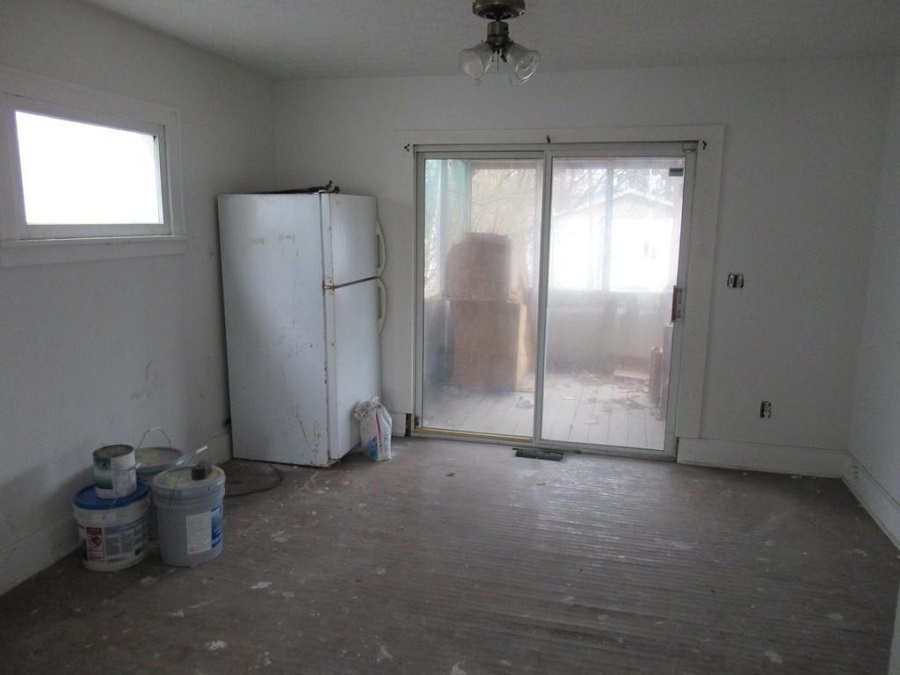
1541 Genessee Avenue: $25,000
Square Footage: 1,056
This pre-WWII home is an example of many in the area that need some level of renovations- in this home’s case- major renovations. For those willing to take on a challenge, these types of inexpensive purchases could be a consideration.
Best neighborhood for a starter home 1541 Gennessee Avenue

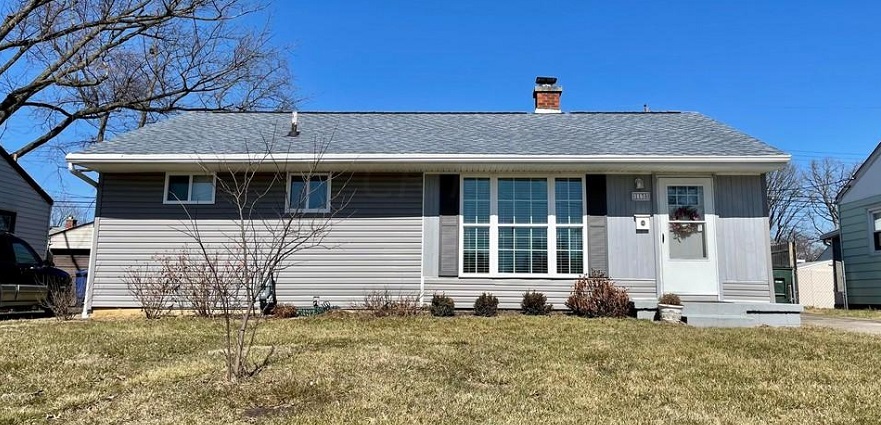
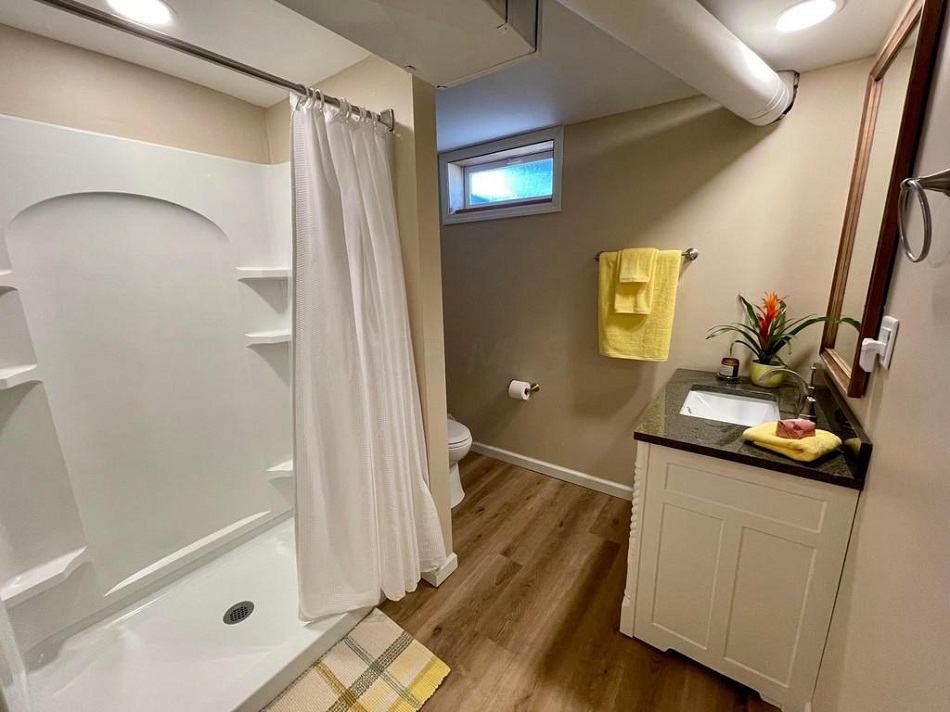
1130 Pauline Avenue: $185,000
Square Footage: 1,412
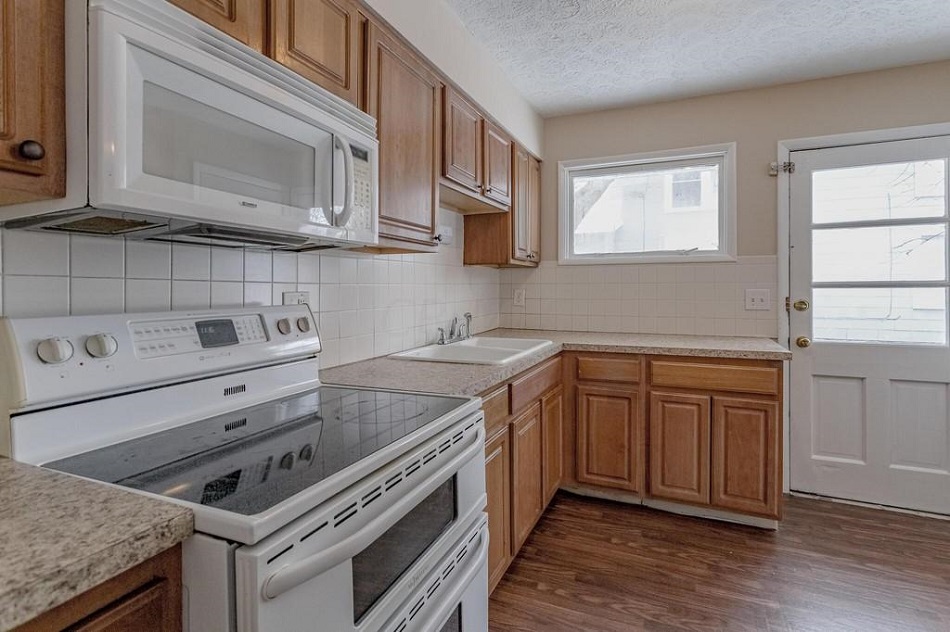
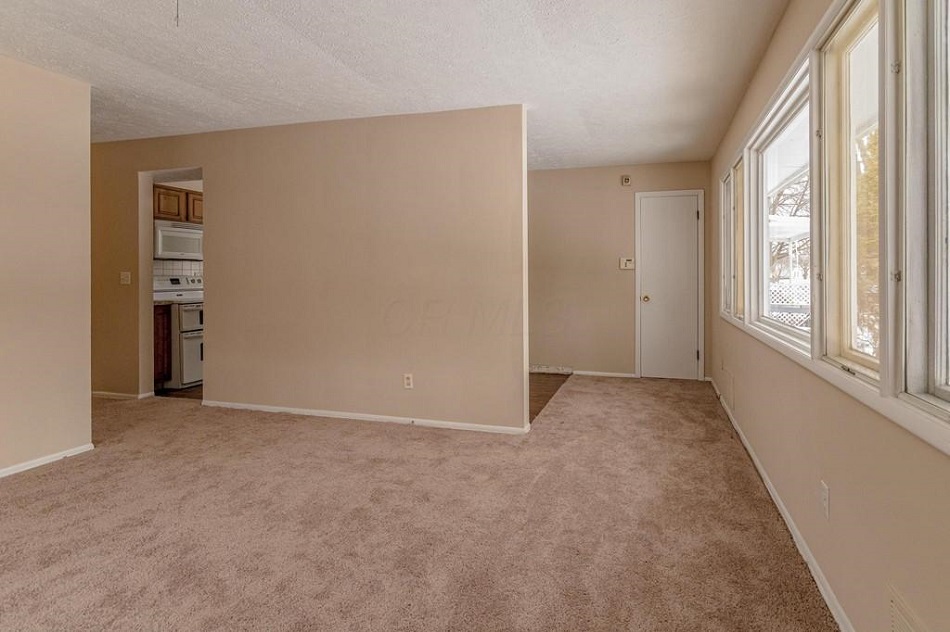
Built in 1955, this home is much more typical of the housing stock that exists within the neighborhood, but on the larger side. Unlike the home above, this one has been fully renovated and shows the potential of what they can become. This type of home represents the top of the market in terms of price in the neighborhood, showing just how affordable the area really is.
https://www.realtor.com/realestateandhomes-detail/1130-Pauline-Ave_Columbus_OH_43224_M37110-45745


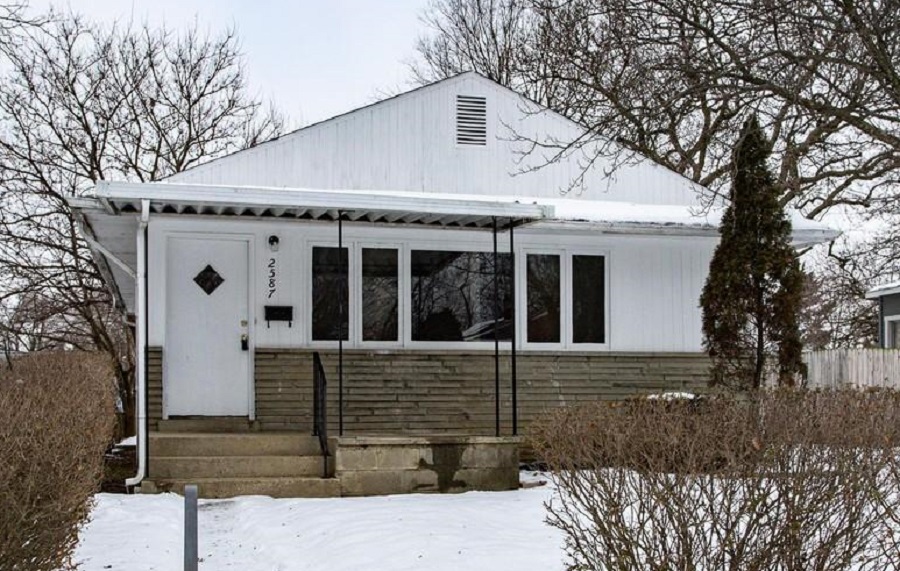
2587 Azelda Street: $119,900
Square Footage: 1,045
This 1956 home is typical of many in the area. It doesn’t necessarily have a brand new renovation, but has been kept updated and maintained over the years, so it is in great condition for an individual or small family.
https://www.realtor.com/realestateandhomes-detail/2587-Azelda-St_Columbus_OH_43211_M49757-14142


Beyond the less expensive prices and variety of quality fixer-uppers and renovated starter homes, North Linden is also well-situated near popular areas such as Easton, Clintonville, OSU Campus and the Morse corridor, which is rich in locally-owned restaurants and markets that specialize in foods and products from Asia, Africa and the Middle East.
While there are many positives, some negatives might be higher crime in some spots- particularly closer to Cleveland Avenue- lack of walkability to amenities, and lower ranked schools within the Columbus district. As with any neighborhood, prospective residents must weigh the pros and cons according to their own lifestyles and needs. If one is a current Columbus resident looking to downsize, or a new family to Columbus looking to purchase their first home in an extremely difficult market to break into, North Linden does offer some opportunities that other neighborhoods do not.

The North Linden Area Commission and the
Linden Neighborhood links provide additional news and information on this up and coming area of Columbus.