Domestic Migration by State Report


domestic migration by state

Over the last few decades, much attention has been given to the fact that domestic migration by state has heavily favored the “Sun Belt”, states made up of the Southeast west to the West Coast. While Northern states weren’t all losing people, the region as a whole sent far more people to the Sun Belt than they retained. This helped fuel the respective Southern boom, and media story after media story over the years have made sweeping predictions of this growing powerhouse region, often centered around the idea that the boom had no foreseeable end. The irony with these predictions is that they ignored history. For more than 2 centuries, the North was where people moved. Its states and cities saw massive influxes of population. As recently as the decade of the 1950s, Ohio grew by nearly 2 million alone. Economic conditions in decline, job losses, particularly in the manufacturing industry, increases in the cost of living and other factors ended the boom and helped to bring about the rise of the South, so to speak. Since at least the 1960s, the story has been about the Sun Belt/West.

The Censusdoes state migration estimates every year, and there are some interesting things going on in the data that may indicate that the boom in the South is faltering while the North’s fortunes are not looking as grim as they once did.

First, what are the regions?
South: Alabama, Arkansas, Florida, Georgia, Kentucky, Louisiana, Mississippi, North Carolina, Oklahoma, South Carolina, Tennessee, Texas, Virginia and West Virginia.
North: Connecticut, Delaware, Washington D.C., Illinois, Indiana, Iowa, Kansas, Maine, Maryland, Massachusetts, Michigan, Minnesota, Missouri, Nebraska, New Hampshire, New Jersey, New York, North Dakota, Ohio, Pennsylvania, Rhode Island, South Dakota, Vermont and Wisconsin.
West: Alaska, Arizona, California, Colorado, Hawaii, Idaho, Montana, Nevada, New Mexico, Oregon, Utah, Washington and Wyoming.

Let’s next look at the states by rank of domestic migration in 2005, the earliest available year for the state data, and compared it to 2012, the most recent year available. This period covers the period just before and just after the Great Recession.

Domestic Migration Rank, 2005 vs. 2012, by Total
2005___________________________________2012

1. Florida: +188,035_________________________1. Florida: +108,823
2. Arizona: +131,501_________________________2. Texas: +105,565
3. Texas: +124,522__________________________3. Colorado: +43,530
4. Georgia: +88,250________________________4. Washington: +37,187
5. North Carolina: +51,575___________________5. North Carolina: +34,846
6. Tennessee: +43,901______________________6. South Carolina: +34,149
7. Oregon: +43,360_________________________7. Nevada: +25,835
8. Washington: +38,093_____________________8. Arizona: +25,615
9. South Carolina: +32,312___________________9. Georgia: +25,204
10. Arkansas: +30,765______________________10. Missouri: +20,176
11. Nevada: +26,839________________________11. North Dakota: +14,254
12. Idaho: +20,308_________________________12. Tennessee: +13,255
13. Colorado: +16,963______________________13. Virginia: +12,110
14. Oklahoma: +16,372_____________________14. Arkansas: +11,981
15. Alabama: +14,501______________________15. Oregon: +10,742
16. New Mexico: +13,714___________________16. New Hampshire: +10,711
17. Delaware: +12,561______________________17. Delaware: +10,610
18. Virginia: +11,121________________________18. Kentucky: +8,899
19. Kentucky: +7,451______________________19. Mississippi: +6,569
20. Missouri: +6,338______________________20. Oklahoma: +6,402
21. Iowa: +5,406__________________________21. Utah: +5,717
22. Montana: +4,185______________________22. Vermont: +4,375
23. Pennsylvania: +2,868__________________23. South Dakota: +3,578
24. Maine: +2,447_________________________24. Montana: +3,410
25. Hawaii: +2,388________________________25. Idaho: +3,400
26. West Virginia: +998____________________26. Wisconsin: +1,468
27. New Hampshire: +497__________________27. Iowa: +275
28. South Dakota: +360____________________28. Ohio: -105
29. Wyoming: -366________________________29. West Virginia: -300
30. Minnesota: -1,154______________________30. Wyoming: -639
31. Kansas: -2,244_________________________31. Maryland: -2,821
32. North Dakota: -2,553___________________32. Rhode Island: -2,948
33. Wisconsin: -2,756______________________33. Louisiana: -4,741
34. Vermont: -3,580_______________________34. Kansas: -4,850
35. Nebraska: -5,128_______________________35. Nebraska: -5,174
36. Utah: -5,639___________________________36. Hawaii: -6,364
37. Connecticut: -6,536____________________37. Connecticut: -6,712
38. Mississippi: -7,120_____________________38. Washington D.C.: -7,470
39. Indiana: -9,222_________________________39. New Mexico: -9,228
40. Maryland: -9,718_______________________40. Alabama: -9,431
41. Washington D.C.: -12,872________________41. Indiana: -10,460
42. Rhode Island: -15,037___________________42. Maine: -11,025
43. New Jersey: -22,051____________________43. Minnesota: -14,904
44. Alaska: -23,567________________________44. Massachusetts: -15,579
45. Ohio: -40,841__________________________45. Pennsylvania: -21,656
46. Massachusetts: -52,726________________46. Michigan: -41,761
47. Michigan: -53,852______________________47. Alaska: -49,250
48. Illinois: -55,932________________________48. Illinois: -68,356
49. Louisiana: -99,684_____________________49. California: -73,345
50. New York: -239,848____________________50. New Jersey: -89,666
51. California: -266,243_____________________51. New York: -135,149

So in 2005, the breakdown was as follows:
12 of 14 Southern states had positive domestic migration. The only 2 that did not, Louisiana and Mississippi, were heavily influenced in 2005 by Hurricane Katrina, which caused large numbers of displaced residents to leave the states entirely.
7 of 24 Northern states has positive domestic migration. The 7 states were mixed between the Midwest and the Northeast/Mid-Atlantic. Just one Great Lakes State had positive domestic migration in 2005.
9 of 13 Western states had positive domestic migration. Only California and a few Mountain West states had negative numbers.

The 2005 numbers show the overall domestic migration picture as it had been for at least the last few decades, if not much longer. The South and West were the dominant net gainers of domestic migration, while most of the North sent people to those regions.

In 2012, the breakdown was as follows:
11 of 14 Southern states had positive domestic migration. Even with Katrina-hit state Mississippi having net gains in 2012, the overall number of states with positive gains declined.
8 of 24 Northern states had positive domestic migration, a slight improvement over 2005.
8 of 13 Western states had positive domestic migration, a slight decline over 2005.

But the breakdowns don’t tell us the whole story. When trying to compare the two years, trends are very important, and the trends are far more revealing.

Total Change 2005-2012 By Rank
1. California: +192,898
2. New York: +104,699
3. Louisiana: +94,943
4. Ohio: +40,736
5. Massachusetts: +37,147
6. Colorado: +26,567
7. North Dakota: +16,807
8. Missouri: +13,838
9. Mississippi: +13,689
10. Michigan: +12,091
11. Rhode Island: +12,089
12. Utah: +11,356
13. New Hampshire: +10,214
14. Vermont: +7,955
15. Maryland: +6,897
16.Washington, D.C.: +5,402
17. Wisconsin: +4,224
18. South Dakota: +3,218
19. South Carolina: +1,837
20. Kentucky: +1,448
21. Virginia: +989
22. Nebraska: -46
23. Connecticut: -176
24. Wyoming: -273
25. Montana: -775
26. Washington: -906
27. Nevada: -1,004
28. Indiana: -1,238
29. West Virginia: -1,298
30. Delaware: -1,951
31. Kansas: -2,606
32. Iowa: -5,131
33. Hawaii: -8,752
34. Oklahoma: -9,970
35. Illinois: -12,424
36. Maine: -13,472
37. Minnesota: -13,750
38. North Carolina: -16,729
39. Idaho: -16,908
40. Arkansas: -18,784
41. Texas: -18,957
42. New Mexico: -22,942
43. Alabama: -23,932
44. Pennsylvania: -24,524
45. Alaska: -25,683
46. Tennessee: -30,646
47. Oregon: -32,618
48. Georgia: -63,046
49. New Jersey: -67,615
50. Florida: -79,212
51. Arizona: -105,886

5 of 14 Southern states improved their domestic migration rates 2005-2012.
13 of 24 Northern states improved their domestic migration rates 2005-2012.
3 of 13 Western states improved their domestic migration rates 2005-2012.

Ohio had the 4th best improvement over the period, a huge change. But some might ask, is it really a change when the rates may still be positive or negative like they were before? Well, yes and no. 7 years is not that long, and we’re talking about decades-long patterns here. Those won’t change like flipping a switch. It will take time. The point is more that for many states that have faced negative numbers for a long time, there is positive momentum now that they did not have before. Another question some may ask, however, is if the recession during the period reduced mobility. In some cases, I’m sure that it did, but if so, that reduction seems to have been centered on the South. A reduction in mobility would only indicate that migration rates would reduce to levels around 0, neither particularly positive nor negative. That reduction would NOT necessarily support switches from positive to negative or increases in negative or positive rates that already exist. Meaning that reduced mobility would mean that positive would become less positive as fewer people moved in, and negative would become less negative as fewer people left. On a state and regional basis, there is a wide range of results that do not support that geographic mobility alone is the culprit, or even a primary factor.


Columbus Housing Trends


I posted a graph recently showing housing permits for Franklin County to show how construction was trending. Today, I found more long-term data for both the city and county that continue to show some interesting Columbus housing trends. All data comes from the Building Permits Survey.

First, let’s look at just the city of Columbus.
Columbus housing trends total housing units
The chart above goes back through the mid-1990s. The first thing to notice is the housing boom from 1999-2002. Both single-family and multi-family construction was booming. The very good economic conditions, or seemingly good ones, during the 1999-2000 period is probably most responsible for this. What’s most interesting is that the boom seemed to last through at least part of the mild recession experienced in 2001-2002. After that, housing of both types started to decline through the late 2000s. This shows that construction in the city began to decline as early as 2002-2003, before the peak of the general housing boom in the mid-2000s.

Another interesting fact is at the end of the period. Multi-family units have recovered and are back in boom territory. This boom, however, is much different than the one that occurred more than a decade ago, as shown by the below chart.
Columbus housing trends housing unit type
During the 1999-2002 housing boom, multi-family housing averaged 59.3% of all the units constructed. In the current boom, which began in 2012, multi-family housing has averaged 82.1% of all the units constructed. The average difference between the types 1999-2002 was just 18.6 points. In the current boom, the difference is an amazing 64.2 points! In that regard, there really is no comparison between the housing boom a decade ago and the current one. Multi-family construction is in MUCH higher relative demand now than it was at any time in the last 17-18 years, including during the last housing boom.

But what does this tell us about where the housing is actually being constructed? Well, for that, we have to look at the entirety of Franklin County. Is the county also seeing a similar multi-family boom, or has single-family construction recovered there more than in the city?
Columbus housing trends Franklin County units
This chart, in some aspects, is the opposite of the one for the city. While in the city, multi-family units consistently outnumbered single-family, the opposite is true for the county as a whole. This is likely because the county takes into account all the suburban areas, most of which are dominated by single-family housing. In only a few instances did multi-family housing units outnumber single-family before 2010. After 2010, it’s clear that the multi-family boom is hitting the rest of the county and not just Columbus itself. This may actually represent an even greater shift in housing construction.

Here’s the % of total chart for the county.
Columbus housing trends Franklin County housing type
So it’s also clear that the county is seeing most of its construction in recent years be multi-family units.

But this still doesn’t tell us if most of Franklin County’s housing construction is occurring in the city or in the suburbs. The easiest way to tell is to take the city totals and find out the % of total to the overall county.
Columbus housing trends Columbus percent of Franklin County units
Not much can be taken from this chart, however. Columbus encompasses the largest part of Franklin County by far, so it has always included most of the county’s construction. Perhaps a better way to look at it would be to measure the city’s total against the overall metro share, but that’s for another day.


2013 Metro Area Comparison


2013 Metro Area Comparison

The recent Census release of updated population numbers gives new figures on metro populations. In previous articles, I talked mostly about density, so this time, the data is being expanded a bit for a full 2013 metro area comparison.

Metro Area Population on July 1, 2012 and July 1, 2013 By Rank
2012————————————–—-2013

1. Pittsburgh: 2,360,989— 1. Pittsburgh: 2,360,867
2. Charlotte: 2,294,990—2. Charlotte: 2,335,358
3. Portland, OR: 2,289,038—3. Portland, OR: 2,314,554
4. San Antonio, TX: 2,234,494—4. San Antonio, TX: 2,277,550
5. Orlando: 2,223,456—5. Orlando: 2,267,846
6. Sacramento, CA: 2,193,927—6. Sacramento, CA: 2,215,770
7. Cincinnati: 2,129,309—7. Cincinnati: 2,137,406
8. Cleveland: 2,064,739—8. Cleveland: 2,064,725
9. Kansas City: 2,038,690—9. Kansas City: 2,054,473
10. Las Vegas: 1,997,659—10. Las Vegas: 2,027,868
11. Columbus: 1,944,937—11. Columbus: 1,967,066
12. Indianapolis: 1,929,207—12. Indianapolis: 1,953,961
13. San Jose, CA: 1,892,894—13. San Jose, CA: 1,919,641
14. Austin, TX: 1,835,110— 14. Austin, TX: 1,883,051
15. Nashville: 1,726,759—15. Nashville: 1,757,912
16. Virginia Beach, VA: 1,698,410—16. Virginia Beach, VA: 1,707,369
17. Providence, RI: 1,601,160—17. Providence, RI: 1,604,291
18. Milwaukee: 1,566,182—18. Milwaukee: 1,569,659

Total Metro Population Change, 2012-2013, By Rank
1. Austin: +47,941
2. Orlando: +44,390
3. San Antonio: +43,056
4. Charlotte: +40,368
5. Nashville: +31,153
6. Las Vegas: +30,209
7. San Jose: +26,747
8. Portland: +25,516
9. Indianapolis: +24,754
10. Columbus: +22,129
11. Sacramento: +21,843
12. Kansas City: +15,783
13. Virginia Beach: +8,959
14. Cincinnati: +8,097
15. Milwaukee: +3,477
16. Providence: +3,131
17. Cleveland: -14
18. Pittsburgh: -122

Average Annual Population Change from 2000-2010 vs. 2010-2013
2000-2010——————–—-2010-2013
1. Charlotte: +88,657— 1. Austin: +55,587
2. Las Vegas: +57,550— 2. San Antonio: +45,014
3. Orlando: +48,985— 3. Orlando: +44,478
4. Austin: +46,653— 4. Charlotte: +39,447
5. San Antonio: +43,081— 5. Portland: +29,515
6. Indianapolis: +36,277— 6. Nashville: +29,007
7. Nashville: +35,910— 7. San Jose: +27,577
8. Sacramento: +35,227— 8. Las Vegas: +25,553
9. Portland: +29,819— 9. Sacramento: +22,214
10. Columbus: +28,928— 10. Indianapolis: +22,028
11. Kansas City: +17,330— 11. Columbus: +21,697
12. Cincinnati: +10,495— 12. Kansas City: +15,134
13. San Jose: +10,109— 13. Virginia Beach: +10.182
14. Virginia Beach: +10,045— 14. Cincinnati: +7,609
15. Milwaukee: +5,517— 15. Milwaukee: +4,584
16. Providence: +1,846— 16. Pittsburgh: +1,527
17. Cleveland: -7,090— 17. Providence: +1,146
18. Pittsburgh: -7,480— 18. Cleveland: -4,172

Annual Growth Rate % Change 2000-2010 vs. 2010-2013**
1. San Jose: +172.8%
2. Pittsburgh: +120.4%
3. Cleveland: +69.9%
4. Austin: +19.1%
5. San Antonio: +4.5%
6. Virginia Beach: +1.4%
7. Portland: -1.0%
8. Orlando: -9.2%
9. Kansas City: -12.7%
10. Milwaukee: -16.9%
11. Nashville: -19.2%
12. Columbus: -25.0%
13. Cincinnati: -27.5%
14. Sacramento: -36.9%
15. Providence: -37.9%
16. Indianapolis: -39.3%
17. Charlotte: -55.5%
18. Las Vegas: -55.6%

**Some of the changes in rates are due to boundary changes. For example, part of the growth rate for Columbus 2000-2010 was a retroactive population addition when boundaries were changed in 2013. The actual growth rate changed very little.

Metro Area Density 2012 vs. 2013
2012——————————2013
1. Cleveland: 1,033.3—Cleveland: 1,033.9
2. Providence: 978.8— 2. Providence: 980.6
3. Milwaukee: 859.6— 3. Milwaukee: 861.0
4. San Jose: 702.9— 4. San Jose: 712.3
5. Virginia Beach: 642.2— 5. Orlando: 649.6
6. Orlando: 637.0— 6. Virginia Beach: 645.0
7. Cincinnati: 484.4— 7. Cincinnati: 486.4
8. Indianapolis: 444.4— 8. Charlotte: 450.8
9. Charlotte: 443.4— 9. Indianapolis: 450.1
10. Austin: 428.6—- 10. Austin: 440.0
11. Pittsburgh: 413.7— 11. Pittsburgh: 413.8
12. Columbus: 400.8— 12. Columbus: 405.6
13. Portland: 335.9— 13. Portland: 339.5
14. Sacramento: 316.7— 14. Sacramento: 319.5
15. San Antonio: 302.4— 15. San Antonio: 308.3
16. Kansas City: 276.5— 16. Kansas City: 278.6
17. Nashville: 270.7— 17. Nashville: 275.6
18. Las Vegas: 247.3— 18. Las Vegas: 250.6


Total Births 2012 vs. 2013
2012————————————2013
1. San Antonio: +31,045— 1. San Antonio: +31,527
2. Kansas City: +28,087— 2. Kansas City: +27,937
3. Cincinnati: +27,803— 3. Sacramento: +27,865
4. Portland: +27,683— 4. Portland: +27,762
5. Sacramento: +27,649— 5. Cincinnati: +27,545
6. Orlando: +27,165— 6. Orlando: +27,484
7. Las Vegas: +26,385— 7. Las Vegas: +26,616
8. Columbus: +25,904— 8. Columbus: +25,740
9. Indianapolis: +25,472— 9. Austin: +25,519
10. Austin: +25,015 — 10. Indianapolis: +25,507
11. Charlotte: +24,415— 11. Charlotte: +24,437
12. San Jose: +24,240— 12. San Jose: +24,386
13. Pittsburgh: +24,006— 13. Pittsburgh: +23,938
14. Cleveland: +23,227— 14. Cleveland: +23,204
15. Virginia Beach: +22,799— 15. Virginia Beach: +22,773
16. Nashville: +21,641— 16. Nashville: +21,714
17. Milwaukee: +20,125— 17. Milwaukee: +19,963
18. Providence: +16,761— 18. Providence: +16,668

Total Deaths 2012 vs. 2013
2012—————————–—-2013
1. Austin: -8,732— 1. Austin: -8,859
2. San Jose: -9,965— 2. San Jose: -10,319
3. Nashville: -12,187— 3. Nashville: -12,327
4. Charlotte: -12,241— 4. Charlotte: -12,396
5. Virginia Beach: -12,801— 5. Milwaukee: -12,856
6. Milwaukee: -12,836— 6. Virginia Beach: -13,094
7. Indianapolis: -13,520— 7. Indianapolis: -13,414
8. Columbus: -13,938— 8. Columbus: -14,118
9. Las Vegas: -14,311— 9. Providence: -14,387
10. Providence: -14,568— 10. Las Vegas: -14,462
11. San Antonio: -15,367— 11. San Antonio: -15,593
12. Orlando: -15,419— 12. Orlando: -15,882
13. Sacramento: -15,973— 13. Sacramento: -16,133
14. Portland: -16,013— 14. Portland: -16,155
15. Kansas City: -16,255— 15. Kansas City: -16,254
16. Cincinnati: -18,477— 16. Cincinnati: -18,490
17. Cleveland: -20,708— 17. Cleveland: -20,326
18. Pittsburgh: -27,310— 18. Pittsburgh: -27,070

Net Natural Growth (Births vs. Deaths) 2012 vs. 2013
2012————————————–2013
1. Austin: +16,283— 1. Austin: +16,660
2. San Antonio: +15,678— 2. San Antonio: +15,934
3. San Jose: +14,275— 3. San Jose: +14,067
4. Charlotte: +12,174— 4. Las Vegas: +11,622
5. Las Vegas: +12,074— 5. Indianapolis: +12,093
6. Columbus: +11,966— 6. Charlotte: +12,041
7. Indianapolis: +11,952— 7. Sacramento: +11,732
8. Kansas City: +11,862— 8. Kansas City: +11,683
9. Orlando: +11,746— 9. Columbus: +11,622
10. Sacramento: +11,676— 10. Portland: +11,607
11. Portland: +11,670— 11. Orlando: +11,602
12. Virginia Beach: +9,998— 12. Virginia Beach: +9,679
13. Nashville: +9,454— 13. Nashville: +9,387
14. Cincinnati: +9,326— 14. Cincinnati: +9,055
15. Milwaukee: +7,289— 15. Milwaukee: +7,107
16. Cleveland: +2,519— 16. Cleveland: +2,878
17. Providence: +2,193— 17. Providence; +2,281
18. Pittsburgh: -3,310— 18. Pittsburgh: -3,132

Domestic In-Migration 2012 vs. 2013
2012———————————2013
1. Austin: +31,041— 1. Austin: +25,908
2. Orlando: +22,667— 2. San Antonio: +22,392
3. San Antonio: +21,908— 3. Charlotte: +21,382
4. Charlotte: +18,000— 4. Nashville: +17,975
5. Nashville: +14,946— 5. Orlando: +17,316
6. Las Vegas: +12,315— 6. Las Vegas: +10,524
7. Portland: +11,767— 7. Indianapolis: +8,934
8. Indianapolis: +4,146— 8. Portland: +7,901
9. Columbus: +3,275— 9. Columbus: +5,749
10. Pittsburgh: +1,963— 10. Sacramento: +3,329
11. Sacramento: +1,302— 11. Kansas City: +771
12. Kansas City: -1,061— 12. Pittsburgh: +590
13. San Jose: -2,304— 13. San Jose: -1,397
14. Milwaukee: -4,291— 14. Providence: -3,721
15. Providence: -5,210— 15. Cincinnati: -3,894
16. Virginia Beach: -5,950— 16. Cleveland: -5,581
17. Cincinnati: -6,024— 17. Milwaukee: -5,663
18. Cleveland: -9,990— 18. Virginia Beach: -5,920

International In-Migration 2012 vs. 2013
2012————————————–2013
1. Orlando: +14,506— 1. Orlando: +14,725
2. San Jose: +13,728— 2. San Jose: +14,124
3. Virginia Beach: +7,562— 3. Las Vegas: +6,506
4. Las Vegas: +6,606— 4. Sacramento: +6,071
5. Sacramento: +5,921— 5. Austin: +5,322
6. Austin: +5,199— 6. Portland: +5,280
7. Portland: +5,109— 7. Virginia Beach: +5,037
8. Columbus: +4,654— 8. Charlotte: +4,996
9. Providence: +4,637— 9. Columbus: +4,689
10. Charlotte: +4,573— 10. Providence: +4,563
11. San Antonio: +4,441— 11. Indianapolis: +4,064
12. Indianapolis: +3,958— 12. Cleveland: +3,698
13. Cleveland: +3,647— 13. San Antonio: +3,469
14. Nashville: +3,305— 14. Nashville: +3,463
15. Cincinnati: +3,268— 15. Cincinnati: +3,326
16. Kansas City: +3,164— 16. Kansas City: +3,119
17. Pittsburgh: +2,767— 17. Pittsburgh: +2,778
18. Milwaukee: +2,179— 18. Milwaukee: +2,233

Net In-Migration Total 2012 vs. 2013
2012—————————–—-2013
1. Orlando: +37,173— 1. Orlando: +32,041
2. Austin: +36,240— 2. Austin: +31,230
3. San Antonio: +25,949— 3. Charlotte: +26,378
4. Charlotte: +22,573— 4. San Antonio: +25,861
5. Las Vegas: +18,921— 5. Nashville: +21,428
6. Nashville: +18,251— 6. Las Vegas: +17,030
7. Portland: +16,876— 7. Portland: +13,181
8. San Jose: +11,424— 8. Indianapolis: +12,998
9. Indianapolis: +8,104— 9. San Jose: +12,727
10. Columbus: +7,929— 10. Columbus: +10,438
11. Sacramento: +7,223— 11. Sacramento: +9,400
12. Pittsburgh: +4,730— 12. Kansas City: +3,890
13. Kansas City: +2,103— 13. Pittsburgh: +3,368
14. Virginia Beach: +1,612— 14. Providence: +842
15. Providence: -573— 15. Cincinnati: -568
16. Milwaukee: -2,112— 16. Virginia Beach: -883
17. Cincinnati: -2,756— 17. Cleveland: -1,883
18. Cleveland: -6,343— 18. Milwaukee: -3,430

2013 Ohio County Population Estimates


Along with the metro estimates, the latest 2013 Ohio county population estimates were released on Thursday by the US Census.

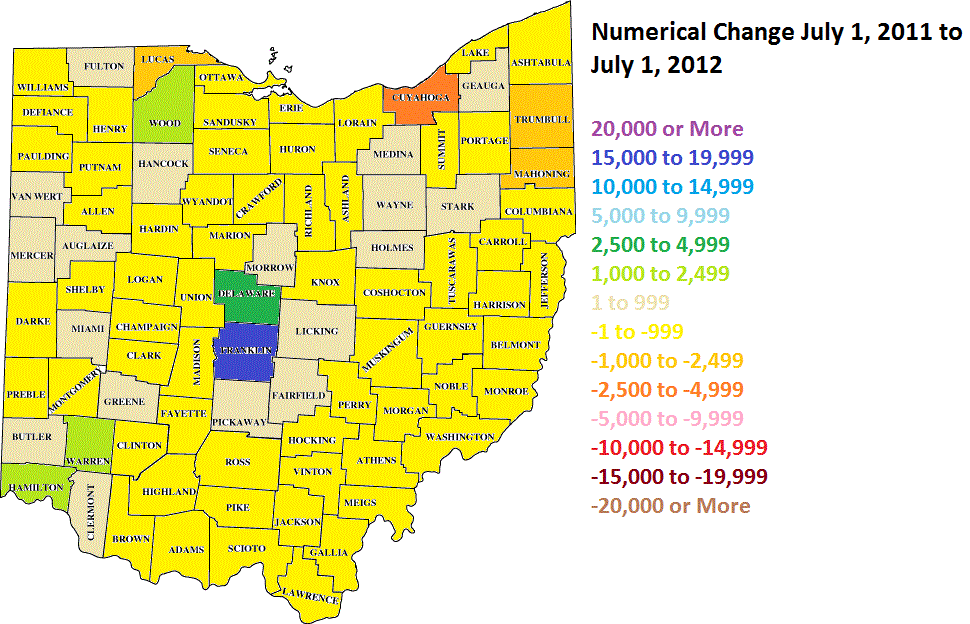
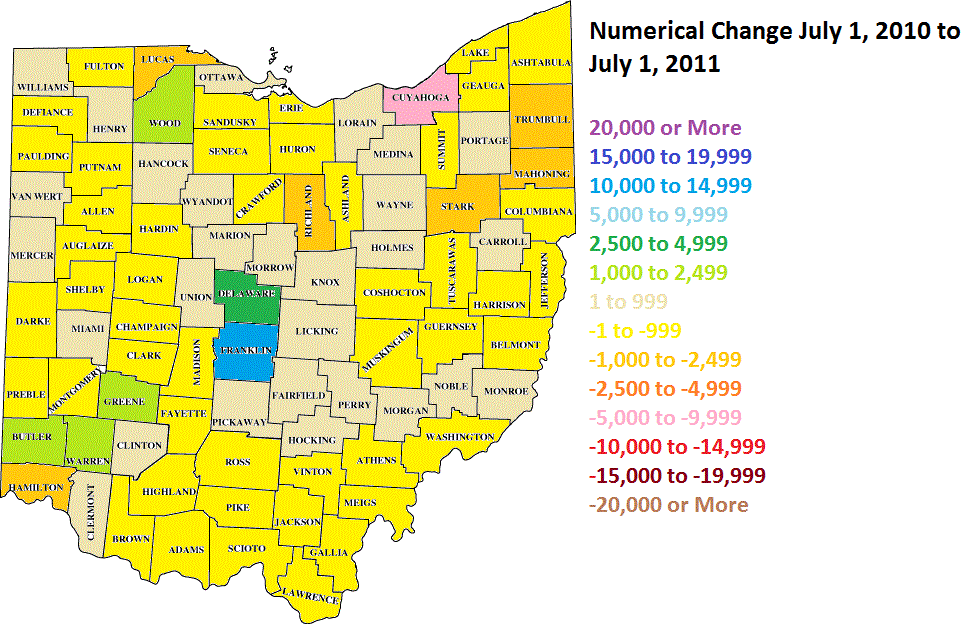
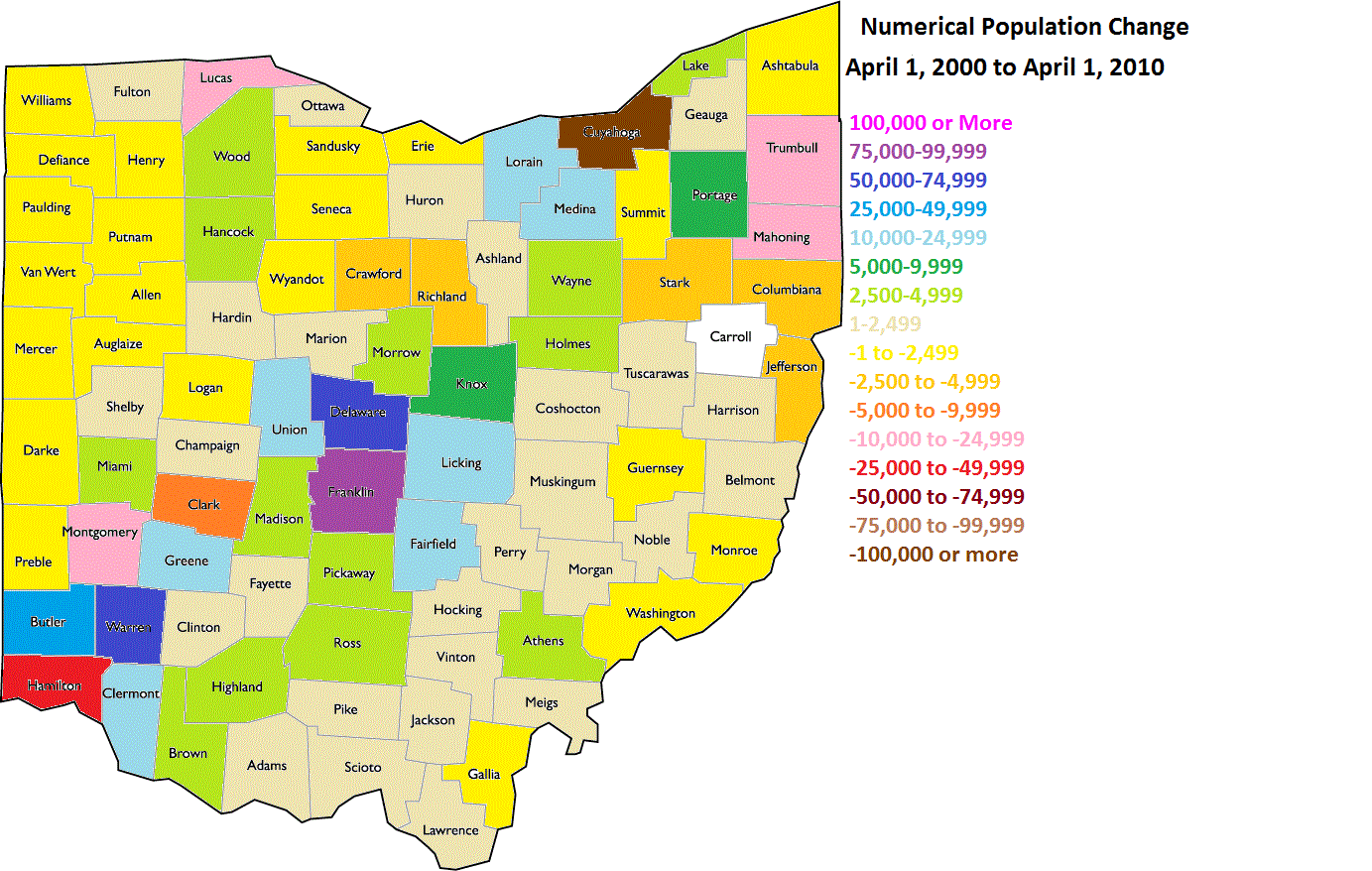
Here are the statewide county maps for recent estimate years as well as previous decades, just to show how growth patterns have been changing.
2013 Ohio county population estimates


Top 10 Largest Counties
1. Cuyahoga: 1,263,154
2. Franklin: 1,212,263
3. Hamilton: 804,520
4. Summit: 541,824
5. Montgomery: 535,846
6. Lucas: 436,393
7. Stark: 375,432
8. Butler: 371,272
9. Lorain: 302,827
10. Mahoning: 233,869

Top 10 Counties with the Largest Numerical Change 2012-2013
1. Franklin: +16,193
2. Delaware: +3,791
3. Hamilton: +2,004
4. Warren: +1,859
5. Fairfield: +1,358
6. Lorain: +1,230
7. Medina: +1,190
8. Clermont: +1,190
9. Summit: +718
10. Licking: +660


1810 US Census


The 1810 US Census doesn’t exactly have a lot of information available. The earliest censuses seem to focus more on economic information rather than population and demographics.

In 1810, Ohio had just 36 counties and Columbus had not been founded yet. Franklin County, however, did exist at the time, as well as Franklinton and a few other towns.

Franklin County
Cotton Goods Value in Dollars: $6,043
Rank of Ohio’s Counties: 3rd
Flaxen Goods Value in Dollars: $13,935
Rank of Ohio’s Counties: 13th
Blended and Unnamed Cloths and Stuffs Value in Dollars: $9,927
Rank of Ohio’s Counties: 15th
Woolen Goods Value in Dollars: $2,496
Rank of Ohio’s Counties: 13th
# of Looms: 150
# of Naileries: 1
# of Tanneries: 5

That’s all I have for now, but if I find more information about the area in 1810, I will add it here.