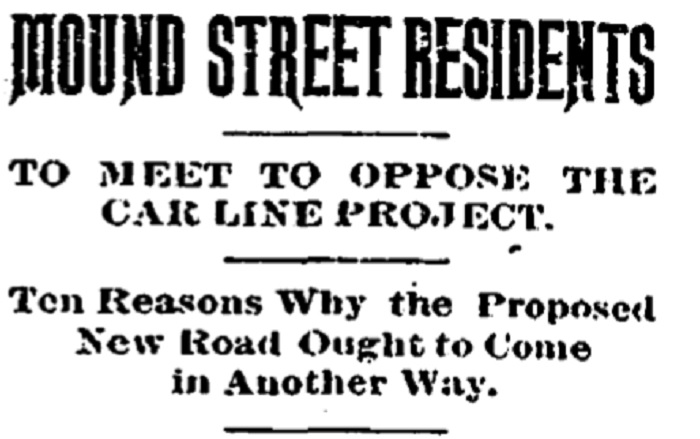
In a January, 1900 debate on Columbus transit, a group of concerned Downtown Columbus residents and business owners voiced their opposition to the Columbus & Newark Traction Company being greenlit to build and operate a streetcar line on Mound Street. Today’s car-dominated environment means most arguments against transit projects would likely revolve around rail being too expensive or that few would ride them. In contrast, 1900 arguments involving transit options showed a very different attitude towards public transit in general.
The opposition group put out a list of 10 reasons why they objected to the project. They were: 1. We believe it to be the interest of prospective passengers of a street railroad from the east over the National Road, that the cars come into the city over the Main Street tracks. 2. Because it would be most direct to the center of the city. 3. Coming over the Main Street line would confine cars of the new line to the established rate of speed while in the city. 4. The proposed line on Mound Street would get but few city passengers. 5. It is not likely that reduced fares would be secured. 6. Transfers over old lines could not likely be had. 7. Cars would be far between. 8. A car line on Mound Street would be useless to residents of the city because too near Main Street where cars are much more frequent than could be expected on a suburban line. 9. Not getting city traffic, cars on the proposed line over Mound Street would run at a high rate of speed, making it dangerous for people in that part of the city and especially so for the residents of Mound Street. 10. We believe that it would be to the general interest of the city and the special interest of the southeastern part, also the interest of a new company that the proposed new line over the National Road from the east should come into the city two or three blocks from, if not on the Main Street line, but never over Mound Street. Besides being somewhat repetitive in places, the given reasons are more practical than the emotional anti-rail tirades often witnessed today. The group wasn’t so much opposed to rail- just the opposite. Instead, they didn’t like that there were too many lines in the same area, thereby making a new one redundant and financially infeasible. They didn’t bring up construction costs, but objections to the potential lack of transfer stops. They weren’t overly worried about the line interfering with other traffic, but whether the service would run enough cars.
Too often in the current transit debate, proposals tend to get bogged down in politics rather than the basic transit needs of the population. A century ago, even opposition groups seemed to fully understand that the issue was not rail itself, but in ensuring that what got built made the best sense possible. Columbus hasn’t had rail in more than 40 years. In its long absence, we’ve perhaps lost the plot on what really matters.
The opposition group lost the fight and Mound Street got its streetcar line. The East Mound section ended service in 1929 as the car became increasingly dominant. The last streetcar trip in the city occurred on September 5, 1948.
The Week in Review 3 includes some big news that has me very excited. The Columbus Metropolitan Library announced that it had reached an agreement with The Columbus Dispatch and its parent company to purchase the rights to its entire newspaper collection, which it will make available in digital form on its website as early as November. The Columbus Dispatch has been publishing since 1871, but the library has had Dispatch content from 1985-present only, and only in text format for a limited number of articles. The agreement will allow the library to offer every issue of the paper online since 1871 in its entirety, including its enormous photograph collection. This is an massive win and game-changer for researchers and history buffs alike. This information has largely been difficult to access. Microfilm at the library was impossible to search through unless you knew the exact date of an article. The digital collection will allow for easy searching for any content with just a simple search box, as it has with its other digital collections.
The other news this week was the ongoing saga with the North Market Tower project. A few weeks back, I posted renderings that were released, perhaps be accident, on an architect’s website. Well, this week we saw yet another rendering, seen below:
All I can say is… I hope to god this isn’t the final design. Not only is it shorter (and the planners promised that the project would absolutely NOT be reduced in height regardless of the final design), but it has none of the interesting architecture of any previous renderings. It’s just another box on top of another box. I call this style Modern Vanilla. It’s so painfully boring and architecturally sterile that to see this being built would remove all the excitement from this project. The height reduction would be pure Columbus.
In this first Week in Review series, we will do a quick rundown of the past week in Columbus.
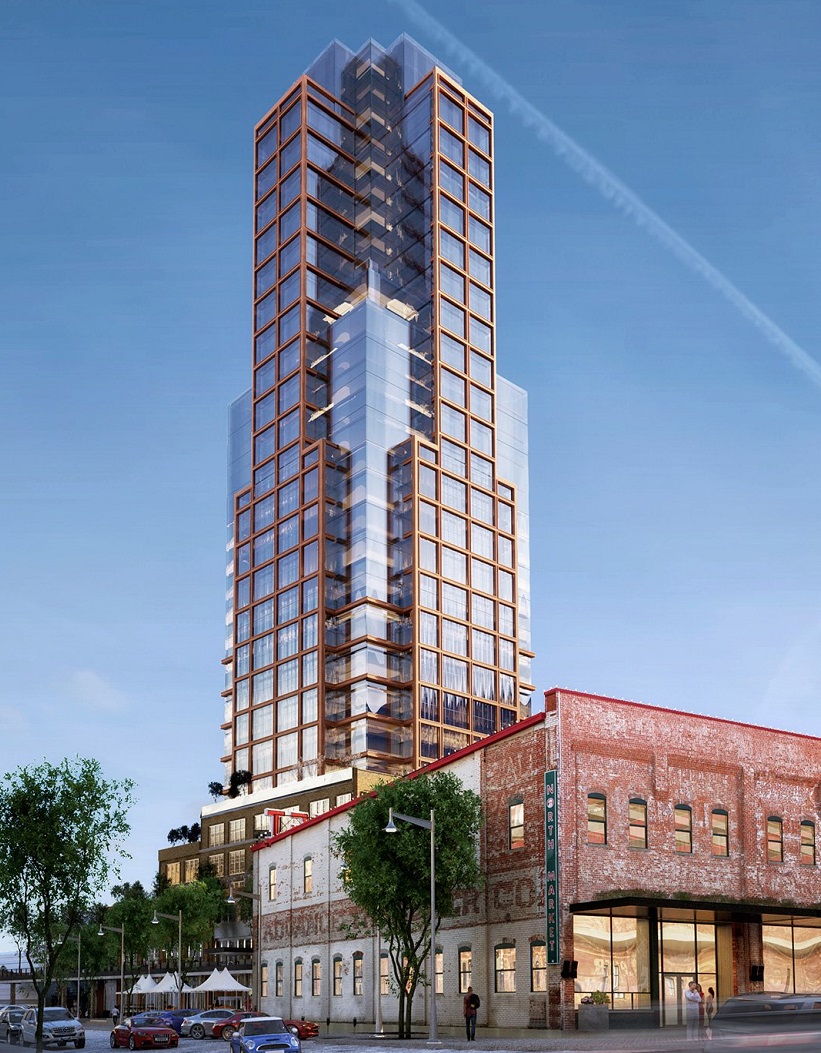
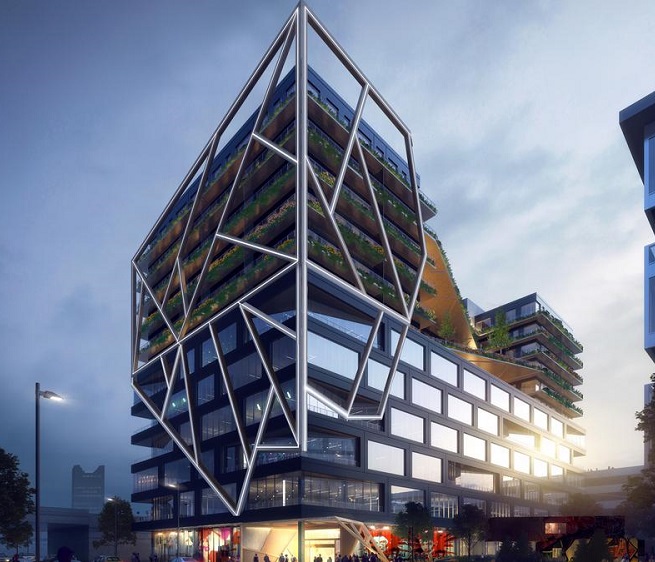
First, in terms of development, we had a few updates. -The Market Tower project at the North Market has apparently gotten a new design. It’s gone from this-
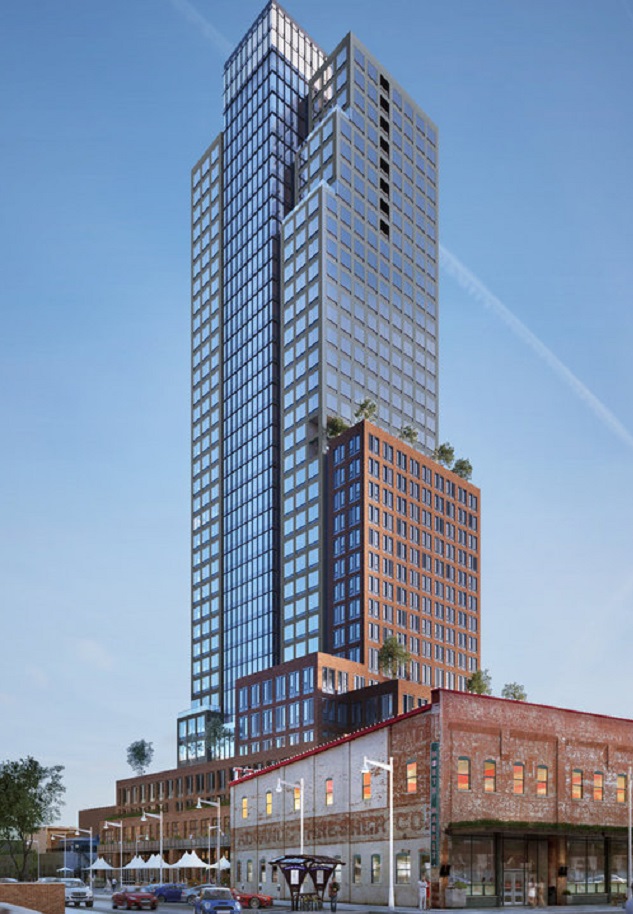
To this-
The new design may actually be at least 40 stories instead of the originally-proposed 35. No official announcements on the height increase have been released, but I suspect we’ll be hearing something soon on this.
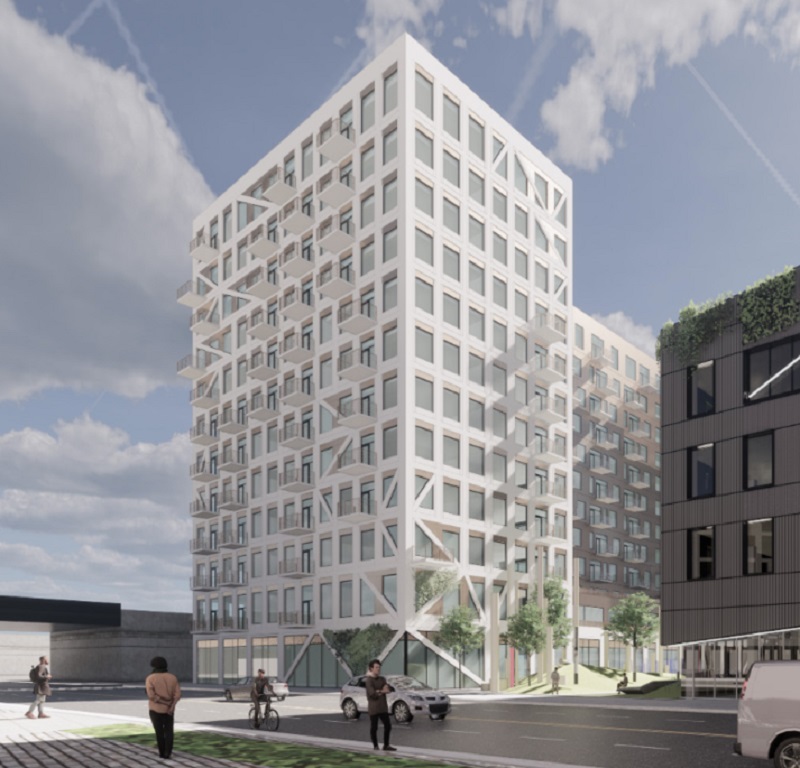
-The Gravity 2.0 project in Franklinton got its initial approvals from the neighborhood development commission, including approval on the 12-story tower, which has also gotten an updated rendering, seen below.
Instead of focusing on a single project in this addition, I wanted to do a rundown of a few projects- this time both good and bad- that represent the opportunities of the month.
First, the bad.
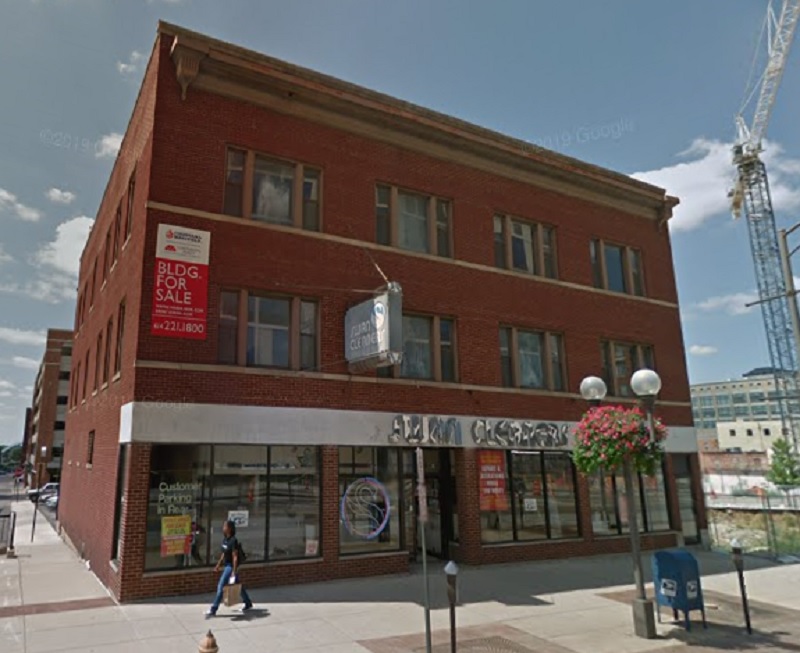
High and Cherry Street Project In what’s becoming a tradition for Downtown, yet another project there has been inexplicably downsized. Originally approved back in 2016, the project required the demolition of a historic building.
Photo taken in 2015.
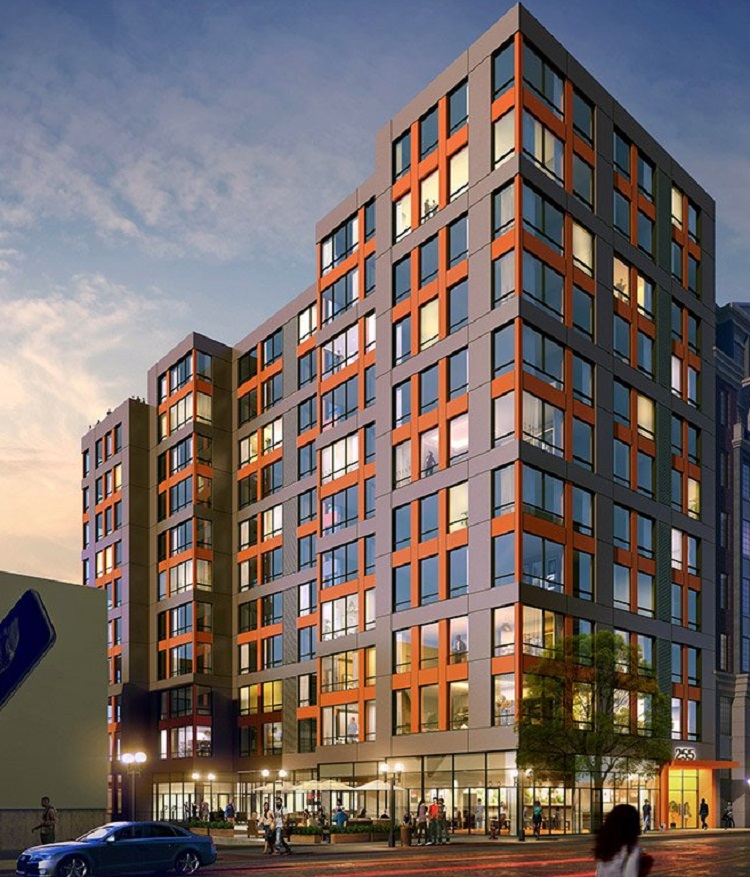
This was generally considered okay because the proposed 11-story project was a significant improvement in density that would’ve added more vibrancy to this part of Downtown.
The 11-story rendering in 2016.
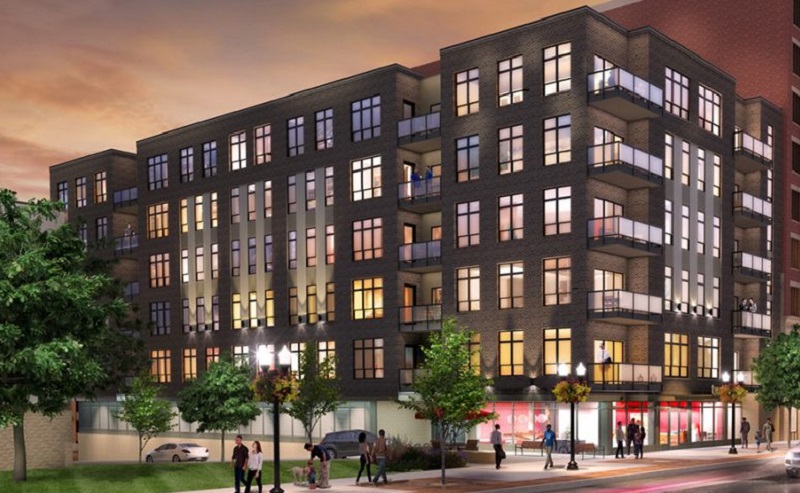
Two years later and, beyond the demolition, there had been no movement on the site, which was itself a little concerning because that typically means that something’s gone wrong or there are about to be big changes for the project. So it was no surprise when, toward the end of July, we received the bad news. Not only was the project going to be reduced in size by a full 4 stories, but all aspects of the project were getting worse. Parking spaces doubled, bike parking spaces were reduced by 70% to just 18, the ground floor retail was completely eliminated and overall residential units fell by 50 to just 70 total. Worse still, even the design of the building became just another bland box.
So what happened? Crawford-Hoying, the developer, made some reference to rising material costs that made its plan to include affordable, micro-unit apartments too expensive, hence the reduction in project size. However, this excuse seems suspicious at best. If higher material costs were a detriment to building the affordable component, why not simply lower the number of micro units or change to a market-rate project altogether? Furthermore, what would that have to do with eliminating the retail space or increasing parking? It wouldn’t. In fact, building parking is actually very expensive, and it’s why many cities nationally are reducing or eliminating parking requirements for new projects, as it is often prohibitively expensive to build and can derail quality urban proposals. If finances were tight, the last thing a developer would do with a new project is add MORE parking rather than trying to maximize potential income with residential units or retail space. Meanwhile, in the month since the project reduction was announced, we have seen other new projects announced or previously-announced projects move forward that have seen no reduction. The company also didn’t make any changes to its 10-story Moxy Hotel project at 800 N. High street, which is currently under construction. Overall, this just feels like a bait and switch. The 11-story proposal was approved, which allowed for the demolition, and now it’s coming in smaller and of a lower quality. Regardless of the real reasons why this project was suburbanized and reduced, it continues the long-standing pattern of Downtown projects being underwhelming. Downtown should be receiving the the statement makers, so to speak. Instead, we continue to see other neighborhoods get them.
Speaking of, let’s look at the good with a couple of proposals that have matched, if not exceeded, their potential.
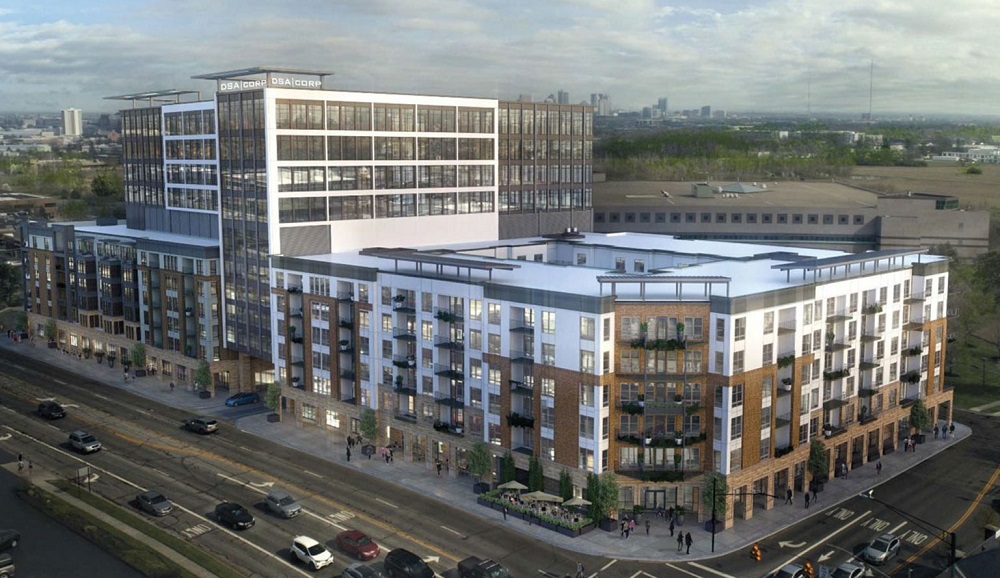
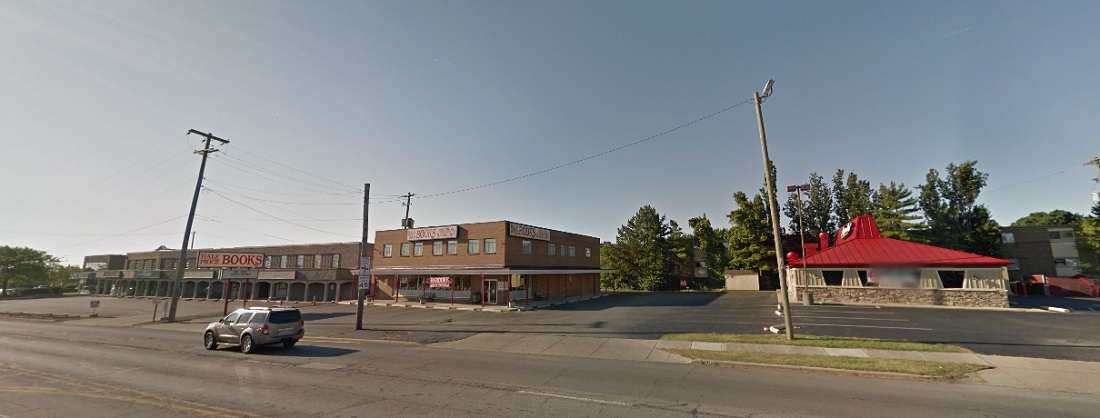
Upper Arlington’s Arlington Gateway Proposed back in 2016 as a 7-story mixed-use building, the project has gone through many revisions. Over the course of the last 2 years, the project has only grown in size to its final iteration, an 11-story with more than 200 apartments, office space and retail. The $100 million project is the largest ever proposed for Upper Arlington, which has long been a more traditional suburban-style inner suburb. It has resisted the urban densification movement until recently. Being landlocked, the only way that it can increase population and maintain tax levels is to build up. Its city leadership seems to understand this, and though there was neighborhood opposition to the project, the city approved it almost unanimously. The project will replace suburban development, including a strip center and Pizza Hut, as seen below.
Quality urbanism, increased walkability… this is a solid addition to Upper Arlington.
Franklinton’s Gravity 2.0 Franklinton is seeing a revival these days, particularly east of 315. Multiple projects have been proposed, and the upcoming Scioto Peninsula redevelopment is on the horizon. Kaufman Development, highlighted in last month’s Missed Opportunity for having to abandon a project in Victorian Village due to NIMBYism, has been on somewhat of a roll lately. It spearheaded a significant renovation of the famed LeVeque Tower, it built both of Downtown’s largest recent projects- 250 High and 80 on the Commons (the latter of which was, of course, downsized)- and it’s heavily investing in the future of Franklinton with a stunning, out-of-the-box development named Gravity.
Gravity 1.0
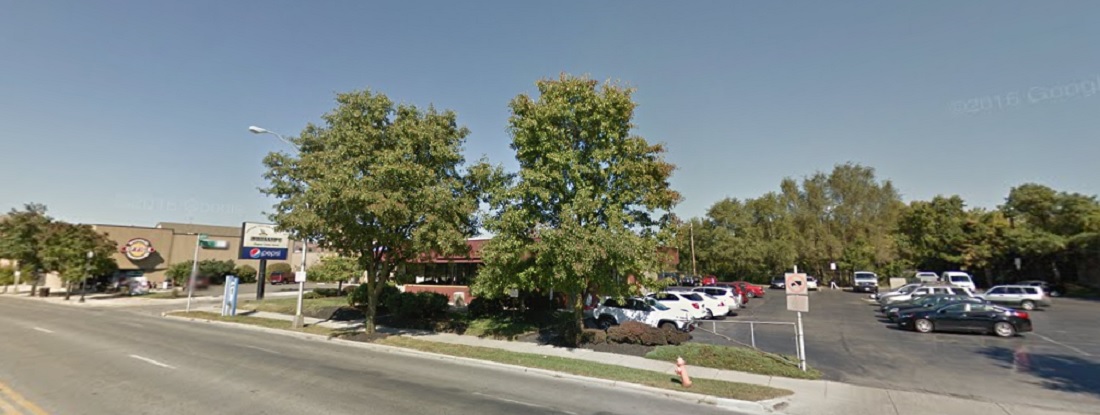
The Gravity 1.0 site in 2014.
Gravity 1.0 was proposed back in 2016 as a 6-story, mixed-use development at 500 W. Broad Street Replacing a few single-story, non-historic buildings and some parking lots (as seen above), the project was designed to drastically change the existing streetscape. It began construction in late 2016 and is nearing completion now. Few anticipated a second phase of the project, however, dubbed Gravity 2.0
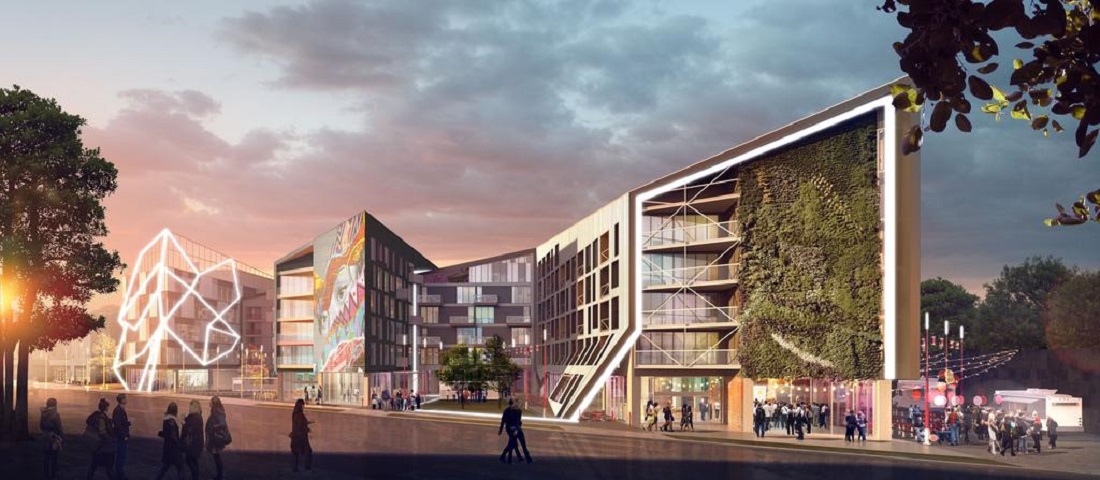
The latest 12-story proposal for Gravity 2.0.
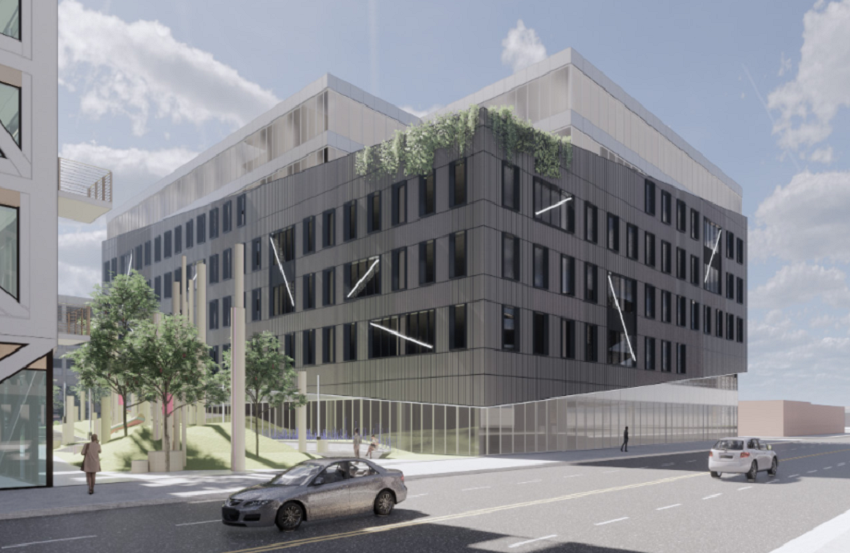
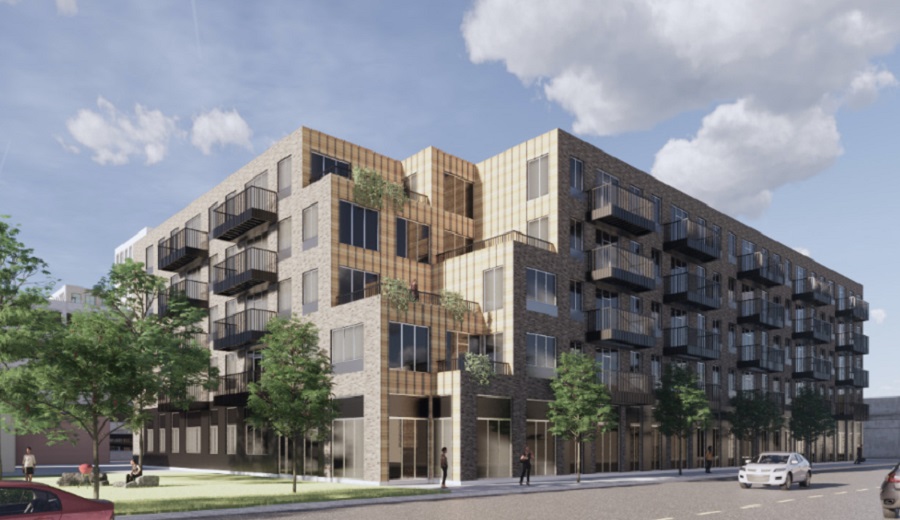
Another Broad Street component of Gravity 2.0.
Announced last week, Gravity 2.0 would be much more massive in scale than 1.0. Proposed for the entire block directly across the street between W. Broad and W. State, the project would include the following: – A 12-story mixed-use building at the northeast corner of the site, directly to the west of the railroad tracks. This would contain 258 apartments. – A 6-story residential building on the State Street with 94 units. – A 5-story parking garage. – A 6-story mixed-use addition to the existing Murphy building, which will be renovated. – A 5-story townhouse building along McDowell Street with 18 units. – A renovation to the existing Solazzo Building at the southwest corner. Like Gravity 1.0, the project will include different types of amenities than would be typically found. These include a green roof on the parking garage with a “city view overlook”, as well as an art walk through the lower floor of the garage. Along Broad Street, a retail plaza will be constructed out of shipping containers. Co-living will be included in the southern residential building. A food hall, brewery and restaurants are also potentially in the works. Overall, the architecture will match the funky modernism of Gravity 1.0. This project is poised to become a serious game-changer for Franklinton. While there was already ongoing redevelopment in this area, a mid-rise development like this pushes the envelope and raises the prospects of future development coming in bigger, and the pace of the redevelopment will likely accelerate. This also increases the likelihood that the Scioto Peninsula to the east will see larger scale development, as well. Originally, the city wanted a couple 30+ story buildings there, with a mix of other mid-rise buildings. That plan was abandoned when an Indianapolis developer was chosen for the site and proposed mostly low-rise. That developer was let go from the project a few months ago, and the Peninsula will now be developed piece by piece. With large development occurring in Franklinton itself, the high-rises may be about to make a return, making the entire eastern section of Franklinton an extension of Downtown.
So there are a few great projects that are definitely NOT missed opportunities. Take note, Downtown developers- a lot of you are getting embarrassed.
**2018 Update: The Crew was saved and Confluence Village, a new development with a new Crew Stadium, will be built at the Arena District site.
Last week, it was announced that the owner of the Columbus Crew MLS team- Anthony Precourt- was considering moving the team. His reasons, whether one believes them to be true, include the idea that the current home stadium- Mapre- is outdated and in a bad location to attract the needed attendance to make the team financially viable. The stadium, which was the first soccer-specific stadium of its kind in the United States, is just 18 years old. However, being still relatively young, it is currently one of the most bare-bones professional soccer stadiums in the country, and it’s location at the Ohio State Fairgrounds is not particularly good. The stadium itself is surrounded by vacant and parking lots as well as a mish-mash of development that leaves the area feeling rather desolate. For years, there has been talk about building a new stadium closer to or in Downtown itself. The city, according to officials, have tried to talk with Precourt about either buying the team or trying to come up with a stadium plan, but were apparently rebuffed. This may be because Precourt had long-established plans to move the team to Austin, Texas, an out clause that he intentionally added to the contract when he purchased the team. So while the Mayor and others discuss the future of the team, there’s a practical matter to solve.
I don’t want to go too much more into the debate about Precourt, his motives or how likely it is that the Crew will stay in Columbus even with the promise of a new arena. Those subjects are already being debated on other sites, including the Dispatch and Reddit and other forums. So, what I want to do is to look at where a potential new stadium could even go. Let’s look at the potential options.
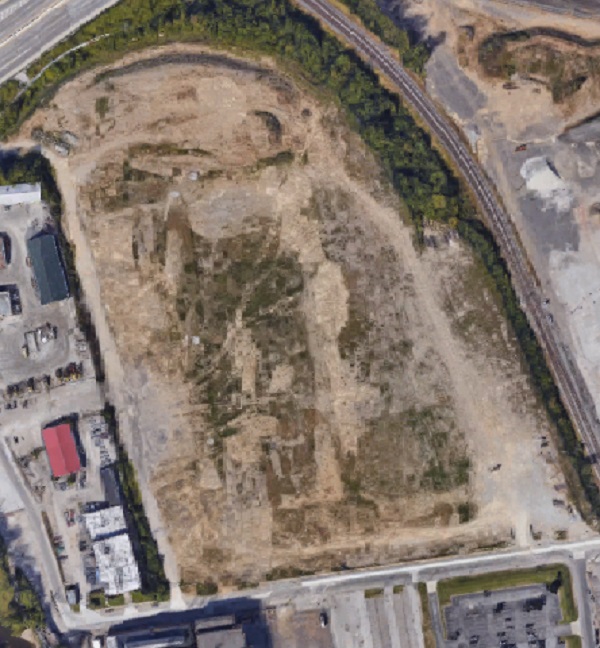
Scioto Peninsula The Scioto Peninsula has long been underutilized and empty since its old manufacturing buildings were torn down between the 1970s and the early 2000s. Pros: More than enough room for a new stadium as well as surrounding mixed-use development. Great location Downtown on the Riverfront. Cons: This site has an existing mixed-use development plan already in place, and an Indianapolis company has recently been chosen to develop the Peninsula, with a potential construction start in Spring 2018. It would seem unlikely that those plans would be scrapped at the last minute.
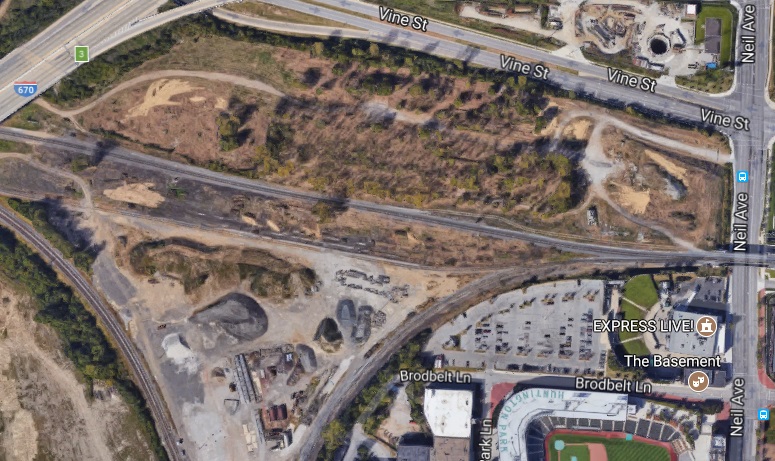
Arena District Site #1 The Arena District is a thriving neighborhood that would be a perfect fit for a new stadium. Pros: Already an established entertainment and sports neighborhood with stadiums for the Clippers and Blue Jackets, lots of local bars and restaurants, great location, enough space for a new stadium development. Cons: As with the Scioto Peninsula, this site already has plans. Perhaps a new stadium could be incorporated, especially when the plan left a lot of open space with parking lots and retention ponds. The site is also split in half by railroad tracks that are still active. This would take some creative development to accommodate a stadium and any required infrastructure.
Arena District Site #2 Pros: Good location, enough space for a stadium, near bars, restaurants and other entertainment venues. Cons: This site is owned by Nationwide. While no specific plans have been announced as of yet, they have stated for a few years now that they want to eventually do some kind of mixed-use development. Whether they would be willing to incorporate a stadium into those plans is unknown. The site is also somewhat separated from the rest of the AD by the railroad tracks on the east side. Another problem may be infrastructure. There is really only a single road- Nationwide Boulevard- in and out of this site. During games, this could be an issue unless it’s resolved or some kind of shuttle system is provided.
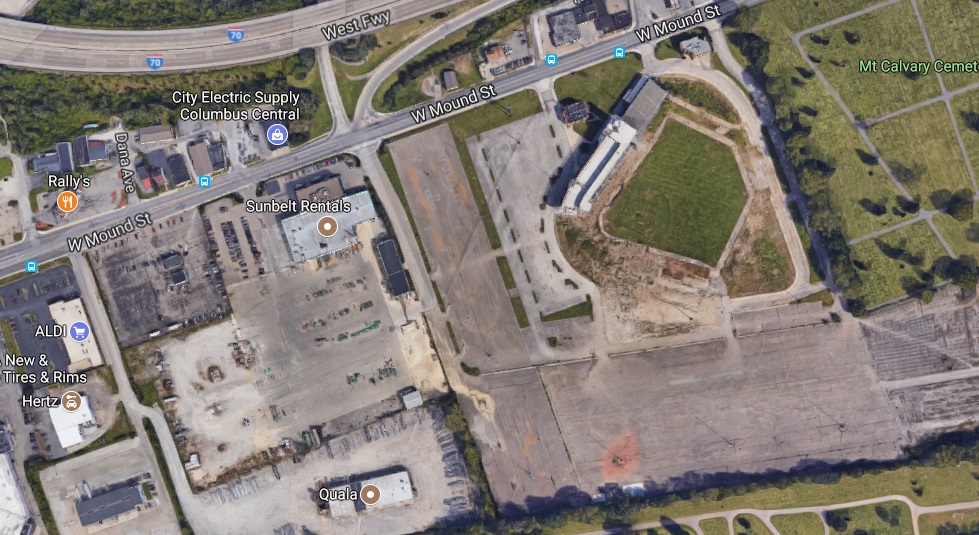
Cooper Stadium Cooper Stadium, the original home of the Columbus Clippers before they moved to the Arena District, has sat empty and rotting since 2010. The surrounding area, while not exactly great, is a perfect candidate for revitalization. Pros: Enough room for a stadium, and with the potential purchase of nearby properties, enough to create a mixed-use development around it. Still close to Downtown. Cons: This site is owned by Arshot, a development company that has long planned a race track development here called SPARC. However, there has been no movement on this development whatsoever, and most now believe that the project is dead. Would Arshot be willing to develop a soccer stadium there instead? Also, given that the site is surrounded by a cemetery on 2 sides affect the possible development?
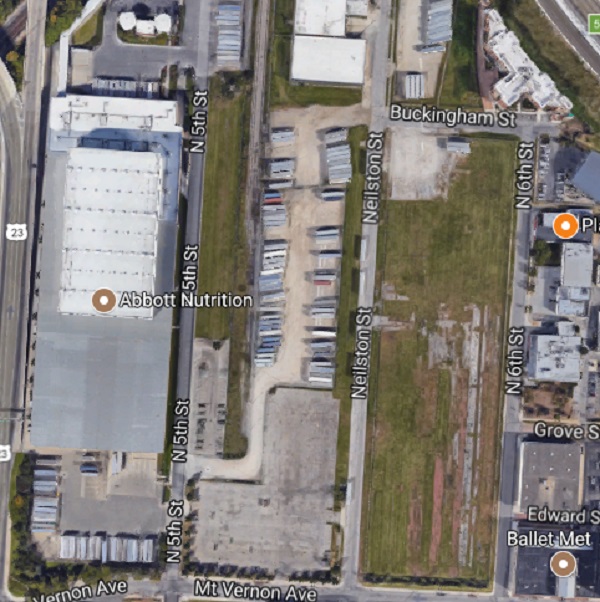
Abbott Labs On the north end of the Central Business District, this site has very large empty lots that are mostly used to store semi trailers, when they’re used at all. Pros: Plenty of space, as Downtown as Downtown gets, plenty of nearby restaurant and bar options to create a neighborhood experience. Cons: Abbott Labs owns the land. While much of it is only lightly used at best, they may not be willing to sell it.
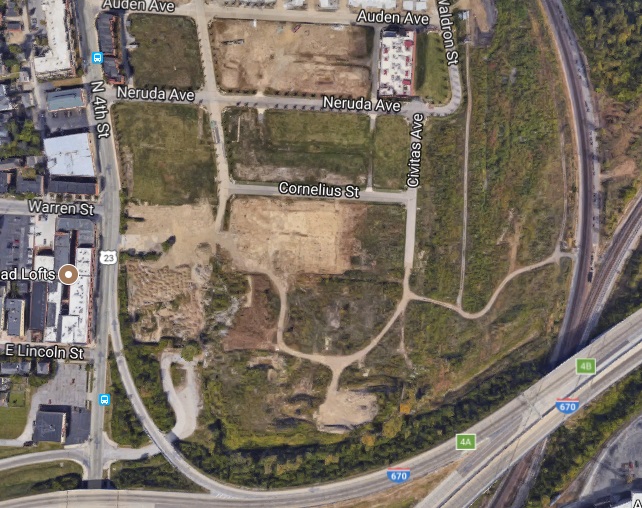
Jeffrey Manufacturing The old site of the Jeffrey Manufacturing Plant, these vacant lots are in one of the most prime locations in the entire city. Pros: Great location in the Short North/Italian Village, high levels of bars and restaurants nearby. Cons: Most of the site north of Neruda Avenue has already been developed with housing. I’m not sure if there is enough space to the south for a new stadium and some kind of parking garage (parking is already very tight in the area). Again, this could be potentially solved with a shuttle or transit system from existing lots/garages Downtown, though. I’m also not sure if the current developers would be willing to sell it, and NIMBYism would likely be fierce from local residents.
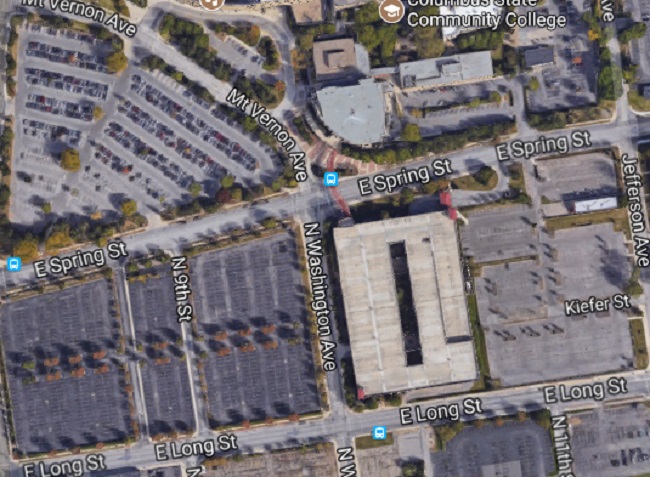
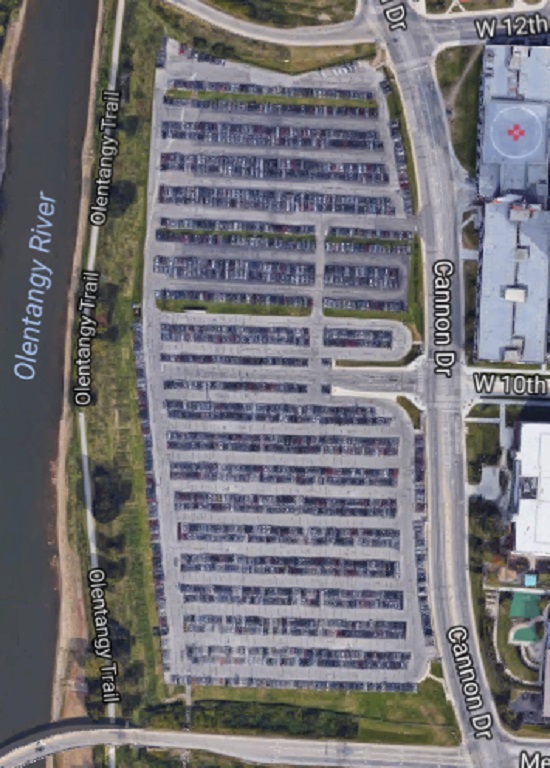
Columbus State Parking Lots On the northeast side of the Central Business District, Columbus State Community College’s land includes one of the largest areas of surface parking lots anywhere in the city. Pros: Great location, plenty of space to develop. Cons: Columbus State owns the land and has long-term plans to develop these. It’s doubtful that they’d be willing to incorporate a stadium here and lose valuable expansion space.
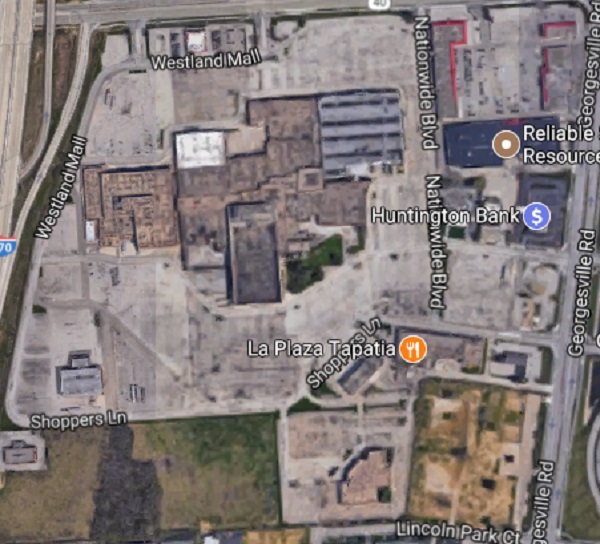
Unconventional Possibilities Westland Mall Westland Mall hasn’t been functional for many years, and its last and original tenant- Sears- recently abandoned the site as well. There have been no plans announced for the mall and it otherwise rots and prevents the improvement of the Far West Side. Pros: The defunct mall site is enormous. A new stadium and new mixed-use neighborhood could basically be built from scratch. It also has excellent access to the Outerbelt. Cons: Not Downtown or even close to it, so it wouldn’t solve the complaint about being too far from the core of the city. This area is also not particularly nice, and may suffer the same perception problems that the current stadium site has.
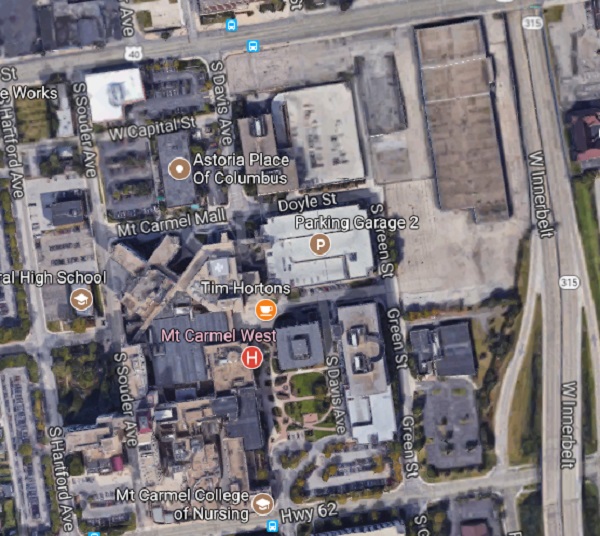
Mt. Carmel West Mt. Carmel West, a long-time hospital in Franklinton, will be moving most of its operations to Grove City. Pros: Close to Downtown, potential to create new entertainment district. Cons: The site has many existing buildings that would have to be torn down or repurposed to fit a stadium and mixed-use development. Mt. Carmel has plans to create a mixed-use development eventually, anyway, but this would be one of the most difficult to remake.
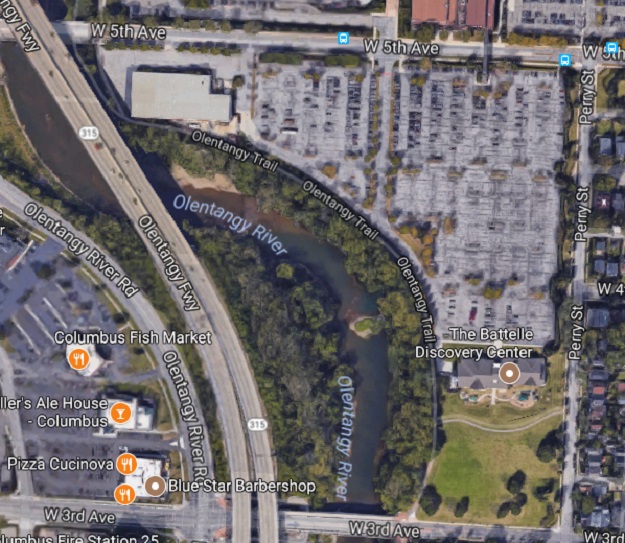
Harrison West Part of the Short North, Harrison West is a largely residential neighborhood. Off of 5th Avenue is a large parking lot and empty land that Battelle is selling off for redevelopment. Pros: Great location, should be enough space. Cons: There is little extra room for mixed-use development, and neighbors would pull the same kind of strong NIMBYism that the Jeffrey Manufacturing site would face. There are also already tentative development plans, and it’s unknown if a stadium would work.
Ohio State Campus Pros: While not exactly Downtown, Ohio State is already a destination in many ways- certainly for sports. There is land available, and the surrounding neighborhoods are much nicer than the current stadium location. Cons: Ohio State has long-term plans for practically every square inch of land it owns. Would they be willing to part with enough for a stadium? And could an attached mixed-use development come into play?
So there you have it, my list of potential Crew Stadium locations. What do you think? Am I missing any good ones?