Let’s be honest, Summer 2020 is hardly shaping up to be one of swimming pools and BBQs and beach vacations. With the virus continuing to rage nationally, it’s going to be the kind of summer many people watch from their porches or couches. So in that sense, 2020 certainly ranks up there as one of the worst summers ever. On the other hand, there’s probably going to be a bit less concern as to how the weather is. Still, here’s a look back on the best and worst Columbus summers when it comes to weather.
I used a basic ranking system, much like I did with my Worst Winters of All Time post a few years back, to determine the severity of each summer’s weather. Here was the point system I used.
On temperature, I added one point for each of the following: -# of 86 or Above Highs -# of 70 or Above Lows -# of 70 or Below Highs -# of 50 or Below Lows Each earned the summer a point for each day that featured these conditions, as either extreme heat or low temperatures during summer are generally considered a negative.
With precipitation, I added one point for each of the following: -# of days with measurable precipitation. -# of days with at least 1″+ of precipitation.
The more points a summer got, the worse the weather was overall.
If you like either very hot, very wet or summers with a combination of both conditions, these ones were for you. It’s no surprise the 1930s and 1940s show up often. Every summer between 1930 and 1944 had hotter than normal conditions. No other similar period has matched it.
The 1960s had the best average score, with the 1940s easily claiming the top prize for worst. Perhaps unsurprisingly, the 2010s featured more crappy ones than not.
The Winter 2019-2020 Review has arrived! Aside some a few instances, winter was largely absent in Ohio for the 2019-2020 season. The season was bookended by periods of cold while the heart of winter was one of the warmest on record. Along with the warmth, precipitation was high throughout the season, but that didn’t translate into much snow.
Temperature and snowfall ranking data goes back to the winter of 1878-1879. Snow depth ranking data goes back to 1940.
December-February Only Average High: 43.5 11th Warmest Average Low: 28.3 9th Warmest Mean: 35.9 10th Warmest Precipitation: 9.69″ 29th Wettest Snowfall: 8.3″ 16th Least Snowiest Average Daily Snow Depth: 0.1″ 2nd Lowest Largest Snowstorm: 2.2″ December 15th-16th 32 or Below Highs: 12 6th Fewest 32 or Below Lows: 65 13th Fewest Measurable Precipitation Days: 34 10th Fewest Measurable Snowfall Days: 13 9th Fewest Deepest Snow Depth: 2″ on February 9th Days with 1″+ Snow Depth: 5 3rd Fewest
Entire Cold Season- October-April Average High: 51.9 10th Warmest Average Low: 34.1 17th Warmest Mean: 43.0 11th Warmest Precipitation: 27.60″ 6th Wettest Snowfall: 11.7″ 18th Least Snowiest Average Snow Depth: 0.1″ 2nd Lowest Largest Snowstorm: 2.8″ November 11th-12th 32 or Below Highs: 14 4th Fewest 32 or Below Lows: 98 17th Fewest Measurable Precipitation Days: 87 18th Most Measurable Snowfall Days: 16 7th Fewest Deepest Snow Depth: 2″ on February 9th Days with 1″+ Snow Depth: 8 5th Fewest
Average High By Month October 2019: 69.8 13th Warmest November 2019: 47.3 21st Coldest December 2019: 45.9 12th Warmest January 2020: 43.3 16th Warmest February 2020: 41.2 35th Warmest March 2020: 55.4 18th Warmest April 2020: 59.6 21st Coldest
Average Low By Month October 2019: 47.0 26th Warmest November 2019: 30.3 9th Coldest December 2019: 28.8 28th Warmest January 2020: 30.1 8th Warmest February 2020: 25.9 35th Warmest March 2020: 37.6 13th Warmest April 2020: 38.7 16th Coldest
Mean By Month October 2019: 58.4 18th Warmest November 2019: 38.8 12th Coldest December 2019: 37.4 18th Warmest January 2020: 36.7 13th Warmest February 2020: 33.6 38th Warmest March 2020: 46.5 13th Warmest April 2020: 49.2 23rd Coldest
The 2019-2020 winter months were full of extremes, and most months ended up in either the top 20 coldest or warmest ever recorded.
Precipitation By Month October 2019: 4.05″ 19th Wettest November 2019: 1.48″ 24th Driest December 2019: 2.76″ 62nd Wettest January 2020: 4.37″ 25th Wettest February 2020: 2.56″ 54th Wettest March 2020: 8.16″ 2nd Wettest April 2020: 4.22″ 32nd Wettest
Snowfall By Month October 2019: Trace 2nd Least Snowiest November 2019: 2.8″ 22nd Snowiest December 2019: 2.3″ 23rd Least Snowiest January 2020: 0.3″ 3rd Least Snowiest February 2020: 5.7″ 47th Snowiest March 2020: 0.6″ 5th Least Snowiest April 2020: Trace 2nd Least Snowiest
As with temperature, precipitation and snowfall varied wildly as well, but generally most months were wetter than normal and less snowy than normal.
Average Snow Depth By Month October 2019: 0.0″ November 2019: 0.2″ December 2019: 0.1″ January 2020: Trace February 2020: 0.2″ March 2020: Trace April 2020: 0.0″
Maximum High By Month October: 94 on the 1st and 2nd November: 59 on the 27th December: 62 on the 27th January: 71 on the 11th February: 63 on the 3rd March: 76 on the 28th April: 77 on the 7th
Maximum High Records -The 94 on October 1st was a record for the date, beating the old record of 89 set in 1952. This is also the warmest October temperature ever recorded, beating the old October record of 91 set in 2007. -The 94 on October 2nd was a record for the date, beating the old record of 88 set in 1919. This also ties for the warmest October temperature ever, set on October 1st, 2019, the previous day. -The 93 on October 3rd was a record for the date, beating the old record of 89 set in 1898 and 1953. -The 71 on January 11th was a record for the date, beating the old record of 66 set in 1886 and 1890. -The 63 on February 3rd tied the old record set in 1890.
Minimum High By Month October: 55 on the 12th November: 28 on the 12th and 13th December: 29 on the 18th January: 28 on the 20th February: 24 on the 14th March: 38 on the 21st April: 45 on the 10th
Minimum High Records -The 28 on the 12th was a record for the date, beating the old record of 30 set in 1920.
Maximum Low By Month October: 68 on the 2nd November: 39 on the 21st and 27th December: 47 on the 9th and 29th January: 53 on the 11th February: 39 on the 25th March: 55 on the 29th April: 53 on the 8th
Maximum Low Records -The 45 on January 10th was a record for the date, beating the old record of 43 set in 1960.
Minimum Low By Month October: 35 on the 31st November: 11 on the 13th December: 13 on the 19th January: 12 on the 20th February: 13 on the 15th and 21st March: 19 on the 1st April: 26 on the 16th
Minimum Low Records -The 15 on November 12th was a record for the date, beating the old record of 16 set in 1911. -The 11 on November 13th was a record for the date, beating the old record of 14 set in 1911.
Highest Daily Precipitation By Month October: 1.51″ on the 31st November: 0.33″ on the 27th December: 1.20″ on the 29th January: 1.13″ on the 18th February: 0.57″ on the 12th March: 2.89″ on the 20th April: 0.66″ on the 7th
Precipitation Records -The 1.51″ on October 31st was a record for the date, beating the old record of 1.44″ set in 1932. -The 1.20″ on December 29th was a record for the date, beating the old record of 1.13″ set in 1915. -The 1.13″ on January 18th was a record for the date, beating the old record of 0.79″ set in 1927. -The 1.31″ on March 4th was a record for the date, beating the old record of 0.74″ set in 1951. -The 2.89″ that fell on March 20th was a record for the date, beating the old record of 1.60″ set in 1984.
Highest Daily Snowfall By Month October: Trace on the 31st November: 2.1″ on the 12th December: 1.5″ on the 15th January: 0.2″ on the 25th February: 1.8″ on the 8th March: 0.6″ on the 14th April: Trace on the 15th and 17th
Snowfall Records -The 2.1″ on November 11th was a record for the date, beating the old record of 0.5″ set in 1983.
Deepest Snow Depth By Month October: 0″ November: 3″ on the 12th December: 2″ on the 16th January: Trace on the 19th and 20th February: 2″ on the 29th March: Trace on the 15th April: 0″
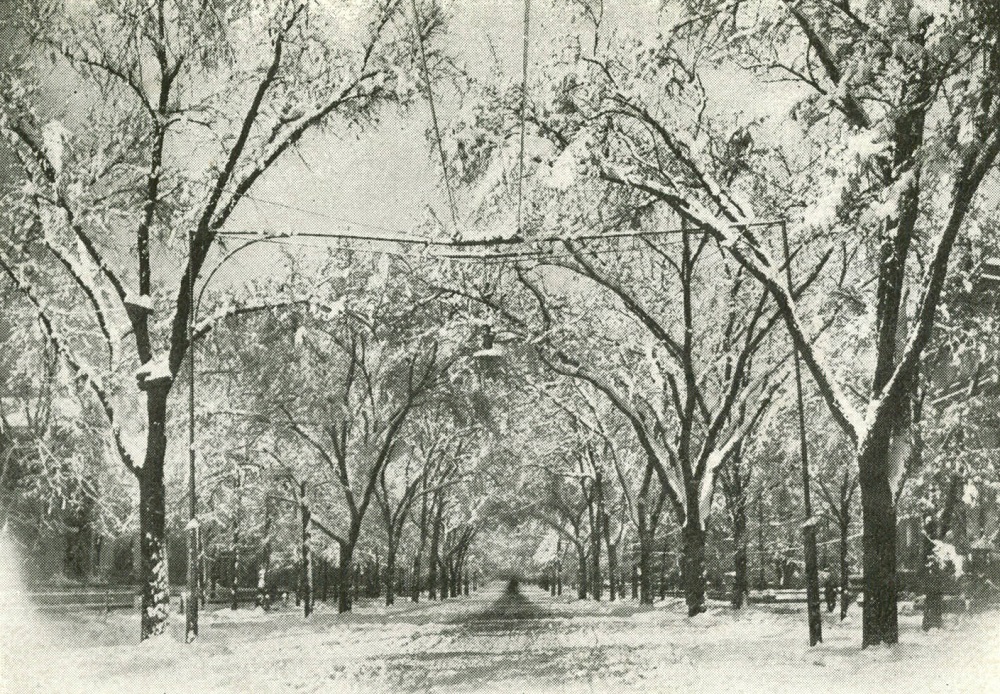
East Broad Street after a snowstorm in March, 1906.
In light of yesterday’s strange storm that challenged local forecasters, I thought it might be time to look at the biggest snowstorms of all time in Columbus, or at least since records began in 1878. I looked up the total snowfall over different periods of time.
If your yard has been a swampy no man’s land all year, there’s a reason for it. 2018 was one of the wettest years ever across the state. In some cities, almost every month featured above normal precipitation. Let’s take a look across the state to see how places fared in this extraordinary and very wet 2018.
Here were the final 2018 totals in major Ohio cities and how they rank since their records began. Cincinnati: 55.90″ 3rd wettest since 1871. Columbus: 55.18″ 1st wettest since 1878. Cleveland: 51.47″ 4th wettest since 1871. Youngstown: 50.97″ 2nd wettest since 1896. Dayton: 48.99″ 10th wettest since 1893. Akron: 48.46″ 5th wettest since 1896. Toledo: 38.01″ 22nd wettest since 1871.
In big cities in Ohio, only Toledo managed to avoid having a top 10 wettest year. Columbus had its wettest on record, beating the previous record of 54.96″ set just a few years ago in 2011.
Locally in the Columbus metro, here were some other totals. Newark: 56.01″ Marysville: 51.12″ Lancaster: 50.51″ Circleville: 46.66″ OSU Campus: 46.66″
Biggest Individual Precipitation Day and Rank Cincinnati: 5.02″ on 8/16/2018, 2nd highest since 1871. Youngstown: 3.50″ on 9/9/2018, 11th highest since 1896. Dayton: 2.88″ on 4/3/2018, 24th highest since 1893. Akron: 2.50″ on 9/9/2018, unranked. Cleveland: 2.12″ on 11/1/2018, unranked. Columbus: 2.06″ on 4/15/2018, unranked. Toledo: 1.62″ on 3/1/2018, unranked.
Cincinnati had 2 days in the top 10, but most other cities had just constant rain rather than exceptionally high individual totals.
Total 2018 Measurable Precipitation Days and Rank Youngstown: 191 1st most since 1896. Akron: 180 1st most since 1896. Cleveland: 177 8th most since 1871. Columbus: 162 6th most since 1878. Cincinnati: 151 7th most since 1871. Dayton: 148 10th most since 1893. Toledo: 142 16th most since 1871.
3 cities saw more than half their days with measurable precipitation. Columbus came in at just under 50%. This also had the unfortunate result of making most of the year feel unusually gloomy. Traditionally sunny months in the summer and fall were much cloudier than normal.
Total 2018 1″+ Precipitation Days and Rank Columbus: 15 1st most since 1878. Cleveland: 13 2nd most since 1871. Cincinnati: 12 7th most since 1871. Dayton: 11 6th most since 1893. Akron: 10 5th most since 1896. Toledo: 7 7th most since 1871. Youngstown: 5 9th most since 1896.
Columbus had the most 1″ days of any year on record, and even beat every other major Ohio city.
Wettest 2018 Months Cincinnati: 8.21″ in August Youngstown: 7.91″ in September Akron: 7.26″ in September Dayton: 6.72″ in September Columbus: 6.71″ in June Cleveland: 6.68″ in July Toledo: 5.91″ in May
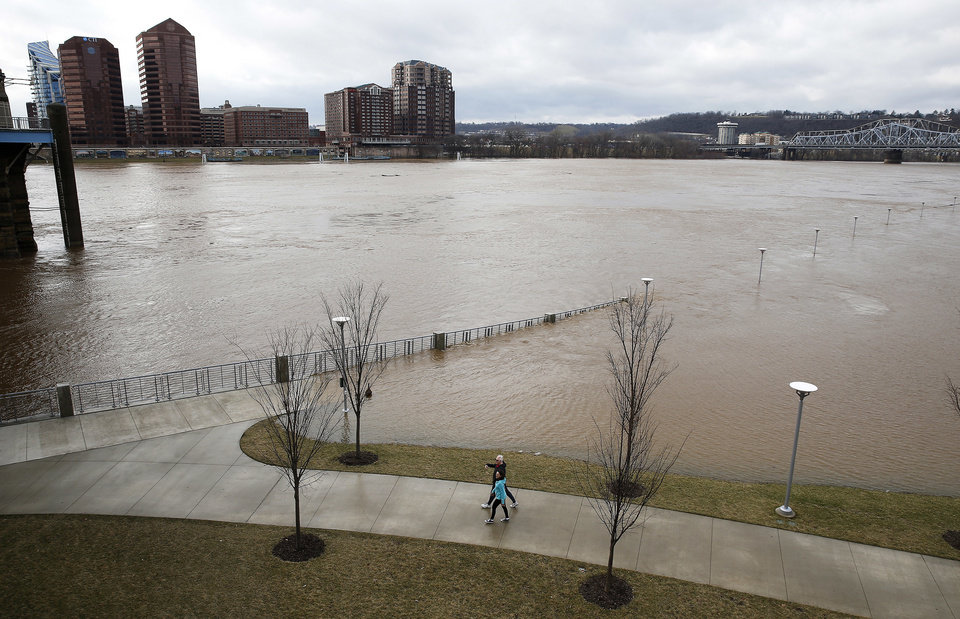
No cities saw any of their months be even close to the wettest ever. There were not really any events with heavy flooding, either, except in February in Cincinnati, when the Ohio River reached the highest since the 1997 flood. There was also some scattered flooding from some tropical system remnants that passed through, particularly in September, but for the most part, it was just constantly wet from beginning to end in most places.
Flooding in Cincinnati in February, 2018.
One might ask if 2018 was merely a blip or part of a long-term trend in the state. Climate scientists have actually looked at this, and the state has indeed been getting both warmer and wetter over the last century or so, but the pace of both the warming and the increase in precipitation has been much faster since the 1970s. Many of the Ohio’s wettest years on record have occurred since 1990.
In Week in Review 2, we find that the FBI has finally released the full crime numbers for 2017 for all cities. How did Columbus fare? Well, it was a decidedly mixed bag. Total murders were their highest ever, at 143, but the rate fell quite short of the record set back in 1991. So far for 2018, murder is behind 2017’s rate by about 22%, so it’s a good improvement, but still not even close to where it should be.
Other violent crime figures 2016 to 2017 -Rape continued its multi-year rise in the city, reaching 919 incidents. This was a 6% increase over 2016. -Assaults were up 4% over 2016, but in the context of still being one of the lowest totals in the past 30 years. -Robberies were down almost 8.5% over 2016. -Despite the rises in most types of violent crime, the drop in robberies meant overall violent crime dropped by about 0.5%. Property crime figures 2016 to 2017 -Burglaries were down more than 8%. -Larceny thefts were down about 2.9% -Motor vehicle thefts were up 17.6%, so not a good trend, but still less than half the rate it was 15-20 years ago. -Overall property crime was down about 2% versus 2016.
And if you think this year’s been particularly wet, you are right! Through October 1st, Columbus is having its 3rd wettest year on record. Only 1882 and 1890 are ahead of 2018 at this point, and by barely 1″. 2018 at this point is running almost 14″ above normal. Top 10 Wettest Years Through October 1st 1. 1882: 44.55″ 2. 1890: 43.56″ 3. 2018: 43.31″ 4. 1979: 42.17″ 5. 2003: 41.58″ 6. 2011: 41.12″ 7. 1990: 39.10″ 8. 1949: 38.54″ 9. 2004: 38.46″ 10. 1996: 37.46″ It is surprising how many recent years are on this list. Still with 3 months to go, the pattern could break, but it’s very unlikely that 2018 doesn’t end up in the top 10. Here are the top 10 wettest full years. 1. 2011: 54.96″ 2. 1990: 53.16″ 3. 1882: 51.30″ 4. 1890: 50.73″ 5. 2004: 49.27″ 6. 1979: 49.17″ 7. 2003: 49.03″ 8. 1883: 48.88″ 9. 1881: 46.99″ 10. 2017: 46.61″