2013 City Population Estimates


2013 city population estimates

Today, the Census released new population figures for cities and incorporated places. I looked at all those places within the Columbus metro area and came up with the following stats on 2013 city population estimates.

Top 25 Largest Places in the Columbus Metro, July 1, 2013
1. Columbus: 822,553
2. Newark: 47,777
3. Dublin: 43,607
4. Lancaster: 39,325
5. Westerville: 37,530
6. Grove City: 37,490
7. Reynoldsburg: 36,526
8. Delaware: 36,459
9. Upper Arlington: 34,420
10. Gahanna: 34,051
11. Hilliard: 31,012
12. Marysville: 22,396
13. Pickerington: 19,085
14. Whitehall: 18,503
15. Pataskala: 15,160
16. Worthington: 13,837
17. Bexley: 13,455
18. Circleville: 13,444
19. Powell: 12,237
20. Heath: 10,45
21. London: 9,978
22. New Albany: 8,820
23. Canal Winchester: 7,543
24. Logan: 7,146
25. Grandview Heights: 6,943

Top 25 Largest Total Change 2012-2013
1. Columbus: +12,450
2. Dublin: +710
3. Grove City: +637
4. Delaware: +534
5. Lancaster: +422
6. Hilliard: +421
7. Pickerington: +375
8. Westerville: +321
9. Marysville: +284
10. New Albany: +282
11. Powell: +258
12. Gahanna: +215
13. Upper Arlington: +183
14. Reynoldsburg: +172
15. Bexley: +163
16. Canal Winchester: +143
17. Sunbury: +109
18. London: +107
19. Pataskala: +98
20. Groveport: +88
21. Whitehall: +87
22. Worthington: +69
23. Hanover: +67
24. Heath: +63
25. Lithopolis/Obetz/West Jefferson: +35

Top 25 Largest Total Change 2010-2013
1. Columbus: +35,520
2. Hilliard: +2,577
3. Grove City: +1,915
4. Dublin: +1,856
5. Delaware: +1,706
6. Westerville: +1,410
7. New Albany: +1,096
8. Gahanna: +806
9. Pickerington: +794
10. Powell: +737
11. Upper Arlington: +649
12. Reynoldsburg: +633
13. Lancaster: +545
14. Canal Winchester: +442
15. Whitehall: +441
16. Grandview Heights: +407
17. Bexley: +388
18. Sunbury: +326
19. Marysville: +302
20. Groveport: +269
21. Worthington: +262
22. Newark: +204
23. Johnstown: +200
24. Pataskala: +198
25. Heath: +142

Top 25 Largest % Changes 2012-2013
1. Hanover: +6.74%
2. New Albany: +3.30%
3. Lithopolis: +2.93%
4. Sunbury: +2.37%
5. Powell: +2.15%
6. Shawnee Hills: +2.12%
7. Pickerington: +2.00%
8. Canal Winchester: +1.93%
9. Grove City: +1.73%
10. Dublin: +1.66%
11. Groveport: +1.59%
12. Columbus: +1.54%
13. Delaware: +1.49%
14. Hilliard: +1.38%
15. Marysville: +1.28%
16. Bexley: +1.23%
17. Lancaster and London: +1.08%
18. Midway: +0.93%
19. Harrisburg: +0.92%
20. Westerville: +0.86%
21. Brice: +0.85%
22. Kirkersville and Obetz: +0.76%
23. Milford Center: +0.75%
24. Pataskala: +0.65%
25. Gahanna and Hemlock: +0.64%

Top 25 Largest % Changes 2010-2013
1. Hanover: +15.20%
2. New Albany: +14.19%
3. Lithopolis: +11.21%
4. Hilliard: +9.06%
5. Sunbury: +7.43%
6. Powell: +6.41%
7. Grandview Heights: +6.23%
8. Canal Winchester: +6.22%
9. Shawnee Hills: +6.17%
10. Grove City: +5.38%
11. Groveport: +5.02%
12. Delaware: +4.91%
13. Columbus: +4.51%
14. Dublin: +4.45%
15. Brice: +4.39%
16. Pickerington: +4.34%
17. Johnstown: +4.32%
18. Westerville: +3.90%
19. New Holland: +3.25%
20. Bexley: +2.97%
21. Harrisburg: +2.91%
22. Obetz: +2.74%
23. Riverlea: +2.57%
24. Lockbourne: +2.53%
25. Galena: +2.45%

Trends
Average Annual Growth 2000-2010 vs. 2010-2013 for the Top 25 Largest Places
2000-2010————2010-2013——–% Change

1. Upper Arlington: +9 +216 +2,300%
2. Bexley: -15 +129 +960.0%
3. Grandview Heights: -16 +136 +950.0%
4. Westerville: +80 +470 +487.50%
5. Circleville: -17 +43 +352.94%
6. Gahanna: +61 +269 +340.98%
7. Worthington: -55 +87 +258.18%
8. Whitehall: -114 +147 +228.95%
9. Hilliard: +400 +859 +114.75%
10. Columbus: +7,556 +11,840 +56.70%
11. New Albany: +400 +365 -8.75%
12. Grove City: +850 +638 -24.94%
13. Delaware: +951 +569 -40.17%
14. Dublin: +1,036 +619 -40.25%
15. Canal Winchester: +262 +147 -43.89%
16. Reynoldsburg: +382 +211 -44.76%
17. Lancaster: +345 +182 -47.25%
18. Newark: +129 +68 -47.29%
19. Powell: +525 +246 -53.14%
20. Pickerington: +850 +265 -68.82%
21. Heath: +178 +47 -73.60%
22. London: +113 +25 -77.88%
23. Marysville: +615 +107 -82.60%
24. Pataskala: +471 +66 -85.99%
25. Logan: +45 -2 -104.44%

So by the trends, it definitely appears that most suburbs have slowed, while Columbus and its inner suburbs increased. This seems like a pretty good indication of the ongoing urban movement to me.


2013 Metro Area Comparison


2013 Metro Area Comparison

The recent Census release of updated population numbers gives new figures on metro populations. In previous articles, I talked mostly about density, so this time, the data is being expanded a bit for a full 2013 metro area comparison.

Metro Area Population on July 1, 2012 and July 1, 2013 By Rank
2012————————————–—-2013

1. Pittsburgh: 2,360,989— 1. Pittsburgh: 2,360,867
2. Charlotte: 2,294,990—2. Charlotte: 2,335,358
3. Portland, OR: 2,289,038—3. Portland, OR: 2,314,554
4. San Antonio, TX: 2,234,494—4. San Antonio, TX: 2,277,550
5. Orlando: 2,223,456—5. Orlando: 2,267,846
6. Sacramento, CA: 2,193,927—6. Sacramento, CA: 2,215,770
7. Cincinnati: 2,129,309—7. Cincinnati: 2,137,406
8. Cleveland: 2,064,739—8. Cleveland: 2,064,725
9. Kansas City: 2,038,690—9. Kansas City: 2,054,473
10. Las Vegas: 1,997,659—10. Las Vegas: 2,027,868
11. Columbus: 1,944,937—11. Columbus: 1,967,066
12. Indianapolis: 1,929,207—12. Indianapolis: 1,953,961
13. San Jose, CA: 1,892,894—13. San Jose, CA: 1,919,641
14. Austin, TX: 1,835,110— 14. Austin, TX: 1,883,051
15. Nashville: 1,726,759—15. Nashville: 1,757,912
16. Virginia Beach, VA: 1,698,410—16. Virginia Beach, VA: 1,707,369
17. Providence, RI: 1,601,160—17. Providence, RI: 1,604,291
18. Milwaukee: 1,566,182—18. Milwaukee: 1,569,659

Total Metro Population Change, 2012-2013, By Rank
1. Austin: +47,941
2. Orlando: +44,390
3. San Antonio: +43,056
4. Charlotte: +40,368
5. Nashville: +31,153
6. Las Vegas: +30,209
7. San Jose: +26,747
8. Portland: +25,516
9. Indianapolis: +24,754
10. Columbus: +22,129
11. Sacramento: +21,843
12. Kansas City: +15,783
13. Virginia Beach: +8,959
14. Cincinnati: +8,097
15. Milwaukee: +3,477
16. Providence: +3,131
17. Cleveland: -14
18. Pittsburgh: -122

Average Annual Population Change from 2000-2010 vs. 2010-2013
2000-2010——————–—-2010-2013
1. Charlotte: +88,657— 1. Austin: +55,587
2. Las Vegas: +57,550— 2. San Antonio: +45,014
3. Orlando: +48,985— 3. Orlando: +44,478
4. Austin: +46,653— 4. Charlotte: +39,447
5. San Antonio: +43,081— 5. Portland: +29,515
6. Indianapolis: +36,277— 6. Nashville: +29,007
7. Nashville: +35,910— 7. San Jose: +27,577
8. Sacramento: +35,227— 8. Las Vegas: +25,553
9. Portland: +29,819— 9. Sacramento: +22,214
10. Columbus: +28,928— 10. Indianapolis: +22,028
11. Kansas City: +17,330— 11. Columbus: +21,697
12. Cincinnati: +10,495— 12. Kansas City: +15,134
13. San Jose: +10,109— 13. Virginia Beach: +10.182
14. Virginia Beach: +10,045— 14. Cincinnati: +7,609
15. Milwaukee: +5,517— 15. Milwaukee: +4,584
16. Providence: +1,846— 16. Pittsburgh: +1,527
17. Cleveland: -7,090— 17. Providence: +1,146
18. Pittsburgh: -7,480— 18. Cleveland: -4,172

Annual Growth Rate % Change 2000-2010 vs. 2010-2013**
1. San Jose: +172.8%
2. Pittsburgh: +120.4%
3. Cleveland: +69.9%
4. Austin: +19.1%
5. San Antonio: +4.5%
6. Virginia Beach: +1.4%
7. Portland: -1.0%
8. Orlando: -9.2%
9. Kansas City: -12.7%
10. Milwaukee: -16.9%
11. Nashville: -19.2%
12. Columbus: -25.0%
13. Cincinnati: -27.5%
14. Sacramento: -36.9%
15. Providence: -37.9%
16. Indianapolis: -39.3%
17. Charlotte: -55.5%
18. Las Vegas: -55.6%

**Some of the changes in rates are due to boundary changes. For example, part of the growth rate for Columbus 2000-2010 was a retroactive population addition when boundaries were changed in 2013. The actual growth rate changed very little.

Metro Area Density 2012 vs. 2013
2012——————————2013
1. Cleveland: 1,033.3—Cleveland: 1,033.9
2. Providence: 978.8— 2. Providence: 980.6
3. Milwaukee: 859.6— 3. Milwaukee: 861.0
4. San Jose: 702.9— 4. San Jose: 712.3
5. Virginia Beach: 642.2— 5. Orlando: 649.6
6. Orlando: 637.0— 6. Virginia Beach: 645.0
7. Cincinnati: 484.4— 7. Cincinnati: 486.4
8. Indianapolis: 444.4— 8. Charlotte: 450.8
9. Charlotte: 443.4— 9. Indianapolis: 450.1
10. Austin: 428.6—- 10. Austin: 440.0
11. Pittsburgh: 413.7— 11. Pittsburgh: 413.8
12. Columbus: 400.8— 12. Columbus: 405.6
13. Portland: 335.9— 13. Portland: 339.5
14. Sacramento: 316.7— 14. Sacramento: 319.5
15. San Antonio: 302.4— 15. San Antonio: 308.3
16. Kansas City: 276.5— 16. Kansas City: 278.6
17. Nashville: 270.7— 17. Nashville: 275.6
18. Las Vegas: 247.3— 18. Las Vegas: 250.6


Total Births 2012 vs. 2013
2012————————————2013
1. San Antonio: +31,045— 1. San Antonio: +31,527
2. Kansas City: +28,087— 2. Kansas City: +27,937
3. Cincinnati: +27,803— 3. Sacramento: +27,865
4. Portland: +27,683— 4. Portland: +27,762
5. Sacramento: +27,649— 5. Cincinnati: +27,545
6. Orlando: +27,165— 6. Orlando: +27,484
7. Las Vegas: +26,385— 7. Las Vegas: +26,616
8. Columbus: +25,904— 8. Columbus: +25,740
9. Indianapolis: +25,472— 9. Austin: +25,519
10. Austin: +25,015 — 10. Indianapolis: +25,507
11. Charlotte: +24,415— 11. Charlotte: +24,437
12. San Jose: +24,240— 12. San Jose: +24,386
13. Pittsburgh: +24,006— 13. Pittsburgh: +23,938
14. Cleveland: +23,227— 14. Cleveland: +23,204
15. Virginia Beach: +22,799— 15. Virginia Beach: +22,773
16. Nashville: +21,641— 16. Nashville: +21,714
17. Milwaukee: +20,125— 17. Milwaukee: +19,963
18. Providence: +16,761— 18. Providence: +16,668

Total Deaths 2012 vs. 2013
2012—————————–—-2013
1. Austin: -8,732— 1. Austin: -8,859
2. San Jose: -9,965— 2. San Jose: -10,319
3. Nashville: -12,187— 3. Nashville: -12,327
4. Charlotte: -12,241— 4. Charlotte: -12,396
5. Virginia Beach: -12,801— 5. Milwaukee: -12,856
6. Milwaukee: -12,836— 6. Virginia Beach: -13,094
7. Indianapolis: -13,520— 7. Indianapolis: -13,414
8. Columbus: -13,938— 8. Columbus: -14,118
9. Las Vegas: -14,311— 9. Providence: -14,387
10. Providence: -14,568— 10. Las Vegas: -14,462
11. San Antonio: -15,367— 11. San Antonio: -15,593
12. Orlando: -15,419— 12. Orlando: -15,882
13. Sacramento: -15,973— 13. Sacramento: -16,133
14. Portland: -16,013— 14. Portland: -16,155
15. Kansas City: -16,255— 15. Kansas City: -16,254
16. Cincinnati: -18,477— 16. Cincinnati: -18,490
17. Cleveland: -20,708— 17. Cleveland: -20,326
18. Pittsburgh: -27,310— 18. Pittsburgh: -27,070

Net Natural Growth (Births vs. Deaths) 2012 vs. 2013
2012————————————–2013
1. Austin: +16,283— 1. Austin: +16,660
2. San Antonio: +15,678— 2. San Antonio: +15,934
3. San Jose: +14,275— 3. San Jose: +14,067
4. Charlotte: +12,174— 4. Las Vegas: +11,622
5. Las Vegas: +12,074— 5. Indianapolis: +12,093
6. Columbus: +11,966— 6. Charlotte: +12,041
7. Indianapolis: +11,952— 7. Sacramento: +11,732
8. Kansas City: +11,862— 8. Kansas City: +11,683
9. Orlando: +11,746— 9. Columbus: +11,622
10. Sacramento: +11,676— 10. Portland: +11,607
11. Portland: +11,670— 11. Orlando: +11,602
12. Virginia Beach: +9,998— 12. Virginia Beach: +9,679
13. Nashville: +9,454— 13. Nashville: +9,387
14. Cincinnati: +9,326— 14. Cincinnati: +9,055
15. Milwaukee: +7,289— 15. Milwaukee: +7,107
16. Cleveland: +2,519— 16. Cleveland: +2,878
17. Providence: +2,193— 17. Providence; +2,281
18. Pittsburgh: -3,310— 18. Pittsburgh: -3,132

Domestic In-Migration 2012 vs. 2013
2012———————————2013
1. Austin: +31,041— 1. Austin: +25,908
2. Orlando: +22,667— 2. San Antonio: +22,392
3. San Antonio: +21,908— 3. Charlotte: +21,382
4. Charlotte: +18,000— 4. Nashville: +17,975
5. Nashville: +14,946— 5. Orlando: +17,316
6. Las Vegas: +12,315— 6. Las Vegas: +10,524
7. Portland: +11,767— 7. Indianapolis: +8,934
8. Indianapolis: +4,146— 8. Portland: +7,901
9. Columbus: +3,275— 9. Columbus: +5,749
10. Pittsburgh: +1,963— 10. Sacramento: +3,329
11. Sacramento: +1,302— 11. Kansas City: +771
12. Kansas City: -1,061— 12. Pittsburgh: +590
13. San Jose: -2,304— 13. San Jose: -1,397
14. Milwaukee: -4,291— 14. Providence: -3,721
15. Providence: -5,210— 15. Cincinnati: -3,894
16. Virginia Beach: -5,950— 16. Cleveland: -5,581
17. Cincinnati: -6,024— 17. Milwaukee: -5,663
18. Cleveland: -9,990— 18. Virginia Beach: -5,920

International In-Migration 2012 vs. 2013
2012————————————–2013
1. Orlando: +14,506— 1. Orlando: +14,725
2. San Jose: +13,728— 2. San Jose: +14,124
3. Virginia Beach: +7,562— 3. Las Vegas: +6,506
4. Las Vegas: +6,606— 4. Sacramento: +6,071
5. Sacramento: +5,921— 5. Austin: +5,322
6. Austin: +5,199— 6. Portland: +5,280
7. Portland: +5,109— 7. Virginia Beach: +5,037
8. Columbus: +4,654— 8. Charlotte: +4,996
9. Providence: +4,637— 9. Columbus: +4,689
10. Charlotte: +4,573— 10. Providence: +4,563
11. San Antonio: +4,441— 11. Indianapolis: +4,064
12. Indianapolis: +3,958— 12. Cleveland: +3,698
13. Cleveland: +3,647— 13. San Antonio: +3,469
14. Nashville: +3,305— 14. Nashville: +3,463
15. Cincinnati: +3,268— 15. Cincinnati: +3,326
16. Kansas City: +3,164— 16. Kansas City: +3,119
17. Pittsburgh: +2,767— 17. Pittsburgh: +2,778
18. Milwaukee: +2,179— 18. Milwaukee: +2,233

Net In-Migration Total 2012 vs. 2013
2012—————————–—-2013
1. Orlando: +37,173— 1. Orlando: +32,041
2. Austin: +36,240— 2. Austin: +31,230
3. San Antonio: +25,949— 3. Charlotte: +26,378
4. Charlotte: +22,573— 4. San Antonio: +25,861
5. Las Vegas: +18,921— 5. Nashville: +21,428
6. Nashville: +18,251— 6. Las Vegas: +17,030
7. Portland: +16,876— 7. Portland: +13,181
8. San Jose: +11,424— 8. Indianapolis: +12,998
9. Indianapolis: +8,104— 9. San Jose: +12,727
10. Columbus: +7,929— 10. Columbus: +10,438
11. Sacramento: +7,223— 11. Sacramento: +9,400
12. Pittsburgh: +4,730— 12. Kansas City: +3,890
13. Kansas City: +2,103— 13. Pittsburgh: +3,368
14. Virginia Beach: +1,612— 14. Providence: +842
15. Providence: -573— 15. Cincinnati: -568
16. Milwaukee: -2,112— 16. Virginia Beach: -883
17. Cincinnati: -2,756— 17. Cleveland: -1,883
18. Cleveland: -6,343— 18. Milwaukee: -3,430

2013 Ohio County Population Estimates


Along with the metro estimates, the latest 2013 Ohio county population estimates were released on Thursday by the US Census.

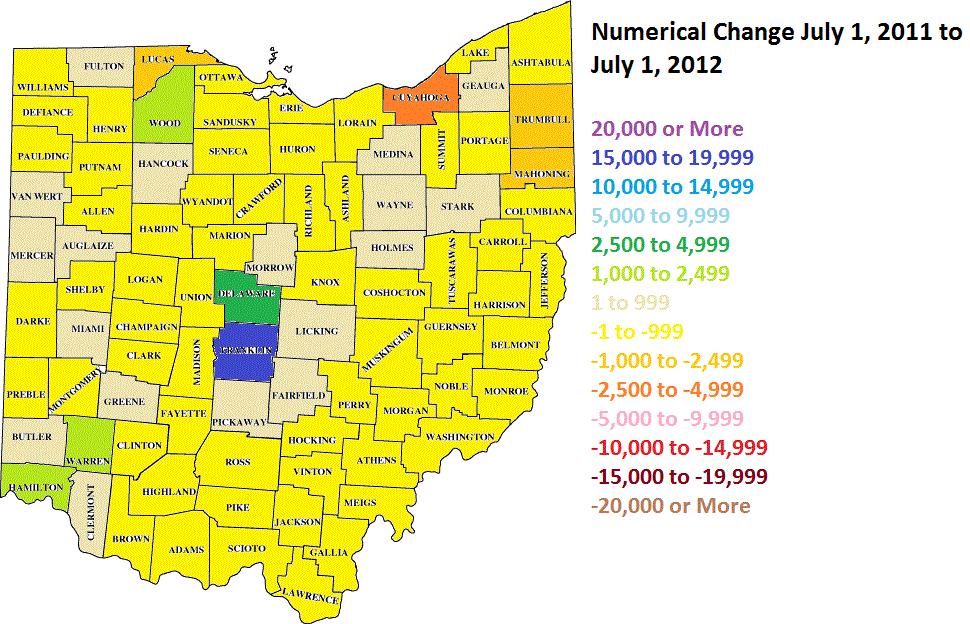
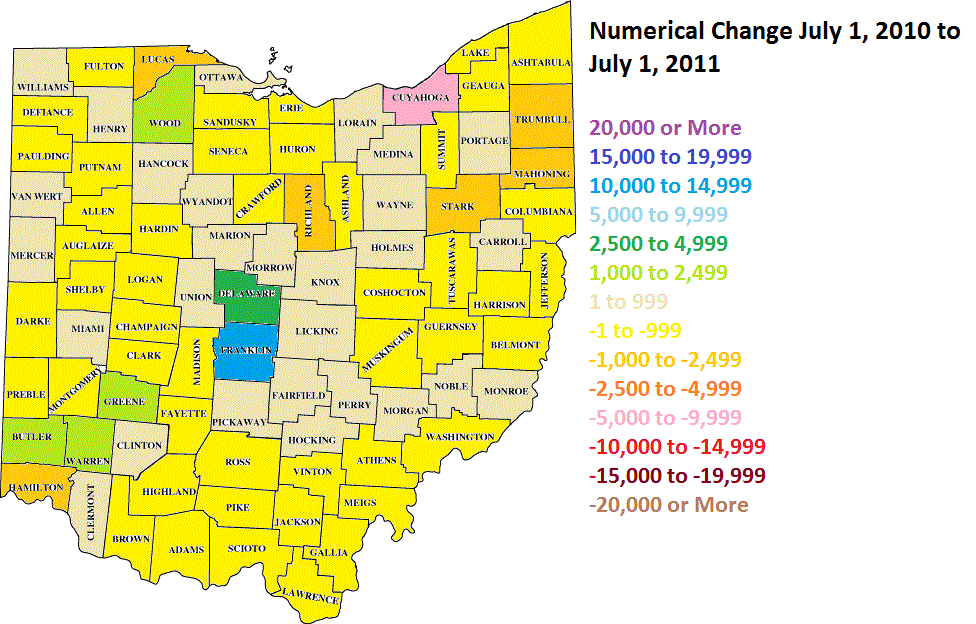
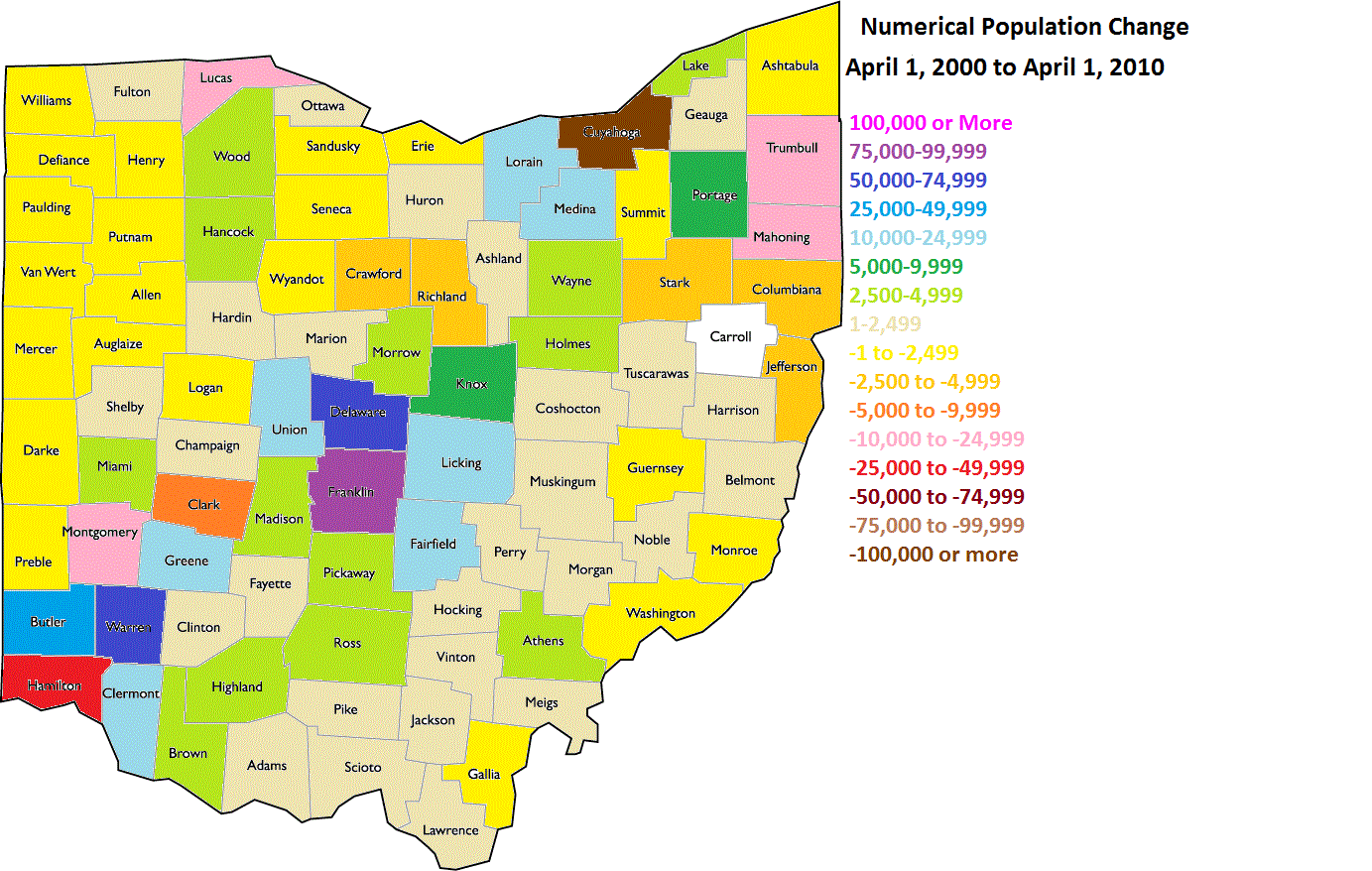
Here are the statewide county maps for recent estimate years as well as previous decades, just to show how growth patterns have been changing.
2013 Ohio county population estimates


Top 10 Largest Counties
1. Cuyahoga: 1,263,154
2. Franklin: 1,212,263
3. Hamilton: 804,520
4. Summit: 541,824
5. Montgomery: 535,846
6. Lucas: 436,393
7. Stark: 375,432
8. Butler: 371,272
9. Lorain: 302,827
10. Mahoning: 233,869

Top 10 Counties with the Largest Numerical Change 2012-2013
1. Franklin: +16,193
2. Delaware: +3,791
3. Hamilton: +2,004
4. Warren: +1,859
5. Fairfield: +1,358
6. Lorain: +1,230
7. Medina: +1,190
8. Clermont: +1,190
9. Summit: +718
10. Licking: +660


2013 Ohio Metro Area Population Estimates


2013 Ohio metro area population estimates

The US Census released the latest population estimates for metropolitan/micropolitan areas as well as counties for the year July 1, 2012 to July 1, 2013. Here is what they found for Columbus and Ohio metros.

2013 Metro Population, Highest to Lowest
1. Cincinnati: 2,137,406
2. Cleveland: 2,064,725
3. Columbus: 1,967,066
4. Dayton: 802,489
5. Akron: 705,686
6. Toledo: 608,145
7. Youngstown: 555,506
8. Canton: 403,707
9. Springfield: 136,167
10. Mansfield: 121,773
11. Lima: 105,298

2012-2013 Total Population Change, Highest to Lowest
1. Columbus: +22,129
2. Cincinnati: +8,097
3. Akron: +729
4. Canton: +28
5. Cleveland: -14
6. Lima: -31
7. Springfield: -268
8. Toledo: -336
9. Dayton: -696
10. Mansfield: -812
11. Youngstown: -2,989

Columbus leads the pack, and by a lot. Some interesting notes about these numbers is that half of the 8 major metros are growing. Also of significance is that Cleveland barely lost at all, which may indicate that the losses there are slowing down.

Now let’s take a look at where the population changes for these metros are coming from.

Total Metro Births, 2012-2013, Highest to Lowest
1. Cincinnati: +27,366
2. Columbus: +26,464
3. Cleveland: +23,204
4. Dayton: +9,407
5. Akron: +7,548
6. Toledo: +7,198
7. Youngstown: +5,459
8. Canton: +4,349
9. Springfield: +1,577
10. Mansfield: +1,362
11. Lima: +1,245

Total Metro Deaths, 2012-2013, Highest to Lowest
1. Cleveland: -20,326
2. Cincinnati: -18,365
3. Columbus: -14,765
4. Dayton: -7,812
5. Akron: -6,784
6. Youngstown: -6,781
7. Toledo: -5,700
8. Canton: -4,119
9. Springfield: -1,612
10. Mansfield: -1,289
11. Lima: -1,045

Total Metro Natural Growth (Births vs. Deaths), 2012-2013, Highest to Lowest
1. Columbus: +11,699
2. Cincinnati: +9,001
3. Cleveland: +2,878
4. Dayton: +1,595
5. Toledo: +1,498
6. Akron: +764
7. Canton: +230
8. Lima: +200
9. Mansfield: +73
10. Springfield: -35
11. Youngstown: -1,322

Natural growth is a vital part of the growth picture for any place. For Columbus, it is roughly 50% of it’s total annual growth. For places like Youngstown, with more deaths than births, it just contributes to overall decline.

Total Metro Domestic Migration, 2012-2013, Highest to Lowest
1. Columbus: +5,749
2. Canton: -275
3. Lima: -308
4. Springfield: -343
5. Mansfield: -943
6. Akron: -1,011
7. Youngstown: -1,691
8. Toledo: -2,575
9. Dayton: -3,415
10. Cincinnati: -3,894
11. Cleveland: -5,581

Total Metro International Migration, 2012-2013, Highest to Lowest
1. Columbus: +4,689
2. Cleveland: +3,698
3. Cincinnati: +3,326
4. Dayton: +1,148
5. Akron: +1,051
6. Toledo: +674
7. Canton: +261
8. Youngstown: +185
9. Springfield: +78
10. Lima: +75
11. Mansfield: +23

Total Metro Migration, 2012-2013, Highest to Lowest
1. Columbus: +10,438
2. Akron: +40
3. Canton: -14
4. Lima: -233
5. Springfield: -265
6. Cincinnati: -568
7. Mansfield: -920
8. Youngstown: -1,506
9. Cleveland: -1,883
10. Toledo: -1,901
11. Dayton: -2,267

The 2nd most important part of the growth rate, migration, is also pretty bad for most metros. Only Columbus is seeing a decent rate of growth, particularly domestically.

One final question is… how are these metro growth rates changing over time? That’s a bit harder to answer, as metro boundaries change so often that it’s more difficult to determine comparable rates decade to decade. However, this is what I came up with.

Average Annual Metro Growth By Decade
Akron

1970s: -1,891
1980s: -275
1990s: +3,739
2000s: +824
2010s: +622
Cincinnati
1970s: +6,119
1980s: +9,111
1990s: +16,474
2000s: +12,052
2010s: +7,609
Cleveland
1970s: -15,108
1980s: -8,090
1990s: +4,624
2000s: -7,090
2010s: -4,172
Columbus
1970s: +9,953
1980s: +13,487
1990s: +20,752
2000s: +22,384
2010s: +21,697
Dayton
1970s: -2,246
1980s: +1,377
1990s: +432
2000s: -665
2010s: +1,089
Lima
1970s: +110
1980s: -249
1990s: -128
2000s: -214
2010s: -337
Mansfield
1970s: +121
1980s: -509
1990s: -272
2000s: -438
2010s: -901
Springfield
1970s: -688
1980s: -270
1990s: -280
2000s: -641
2010s: -722
Toledo
1970s: +1,350
1980s: -278
1990s: +503
2000s: -776
2010s: -619
Youngstown
1970s: -470
1980s: -4,605
1990s: -1,064
2000s: -3,719
2010s: -3,422

Some improved, especially the larger metros. Smaller ones tended to do worse over time.

For more information, click on the below links:
Metro Area Demographics
Columbus vs. Other Places
US Census