The Recovery of Downtown vs. Cleveland and Cincinnati Part 1


Columbus’ downtown has seen many many changes, especially over the last decade. Developments like the Arena District, Columbus Commons, the Scioto Mile and more have brought new life to the area. Dozens of new restaurants have opened the past year or two alone, and a new grocery store will be opening for area residents in February. More developments coming up include the Scioto River restoration project that will create acres of new Downtown park space and pathways, and the redevelopment of the Scioto Peninsula behind COSI should connect the two sides of the river. All of this had led to rising population, now approaching 7,000. More than 1,000 residential units are currently under construction and more is on the way. So the question I was wondering is how has population been changing not only in Columbus’ downtown, but in comparison to Cleveland and Cincinnati. Both of those cities have also seen major projects in their downtown cores and are seeing an uptick in their downtown populations.

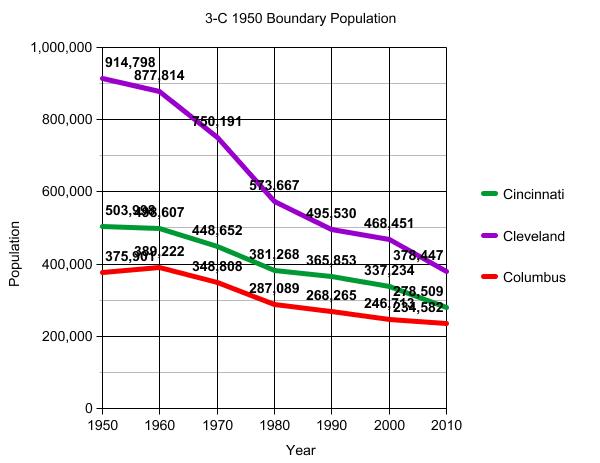
First, I examined the 1950 city limits for all three cities. This was the last census year before sprawl really took hold and changed the city dynamics and growth patterns. 1950 is also when most cities in Ohio reached their peak urban population, so I thought it would be interesting to see how those old boundaries had changed over the years. I went to the US census website and began to look up all the census tracts that existed in each city in 1950. Those would represent my base area that I would use to see the changes in the city core. All of the 3-Cs have grown beyond those 1950 boundaries, especially Columbus, but these areas were the hardest hit when the urban decline came the last 50-60 years while the suburbs grew. The results are both sobering and hopeful.
The recovery of Downtown Columbus, Ohio

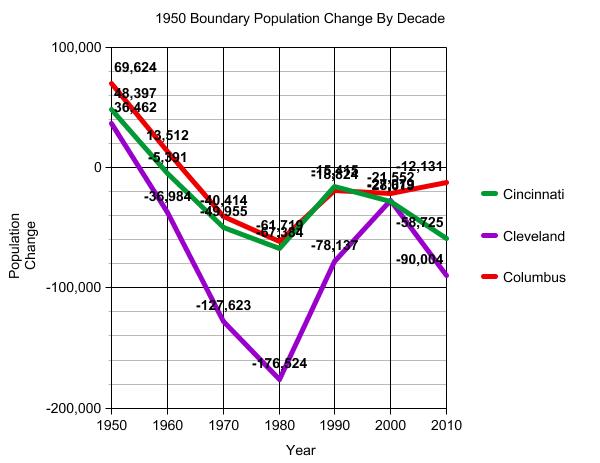
1950 Boundary Population Change 1950-2010
Cincinnati: -225,489
Cleveland: -536,351
Columbus: -141,319

1950 Boundary Population % Change 1950-2010
Cincinnati: -44.7%
Cleveland: -58.6%
Columbus: -37.6%

So what do these numbers show? Well, it’s clear that all 3 cities had urban core population declines the past 60 years just like just about every other city in the nation did. This was mostly a result of the suburban movement.
In Cleveland, the rate of loss had gradually been slowing down since the 1970s, but suddenly skyrocketed again in the 2000s. I’m not sure what exactly caused this. The double recessions made it more difficult for people to move, so if anything, the losses should’ve not accelerated. Cleveland lost over 90,000 people in its urban core from 2000-2010, the highest lost by % and total of any Ohio city.
In Cincinnati, population loss had peaked in the 1970s and the rate of loss fell substantially the following decade. However, the past 2 decades have actually seen a gradual acceleration of losses. The 2000-2010 period saw the second biggest total loss for the urban core.
For Columbus, it’s been the opposite picture. Like the other 2-Cs, losses peaked in the 1970s. Since then, the urban core losses have been in gradual decline. The 2000-2010 period had the smallest rate and total loss of any decade the past 60 years.

So interesting results, but these numbers don’t show any trends of what’s going on inside the 1950 boundaries, especially not the relatively small part that would be the downtowns. So let’s break the numbers down to the tract level.

# of Tracts in 1950*
Cincinnat: 107
Cleveland: 201
Columbus: 48

*The number of tracts changed from 1950 on as some were split or consolidated. This made it more complicated, but luckily the Census gives lists on how tracts changed over time, so one can figure out what tract became what and reasonably keep up with the same boundaries that existed in 1950.
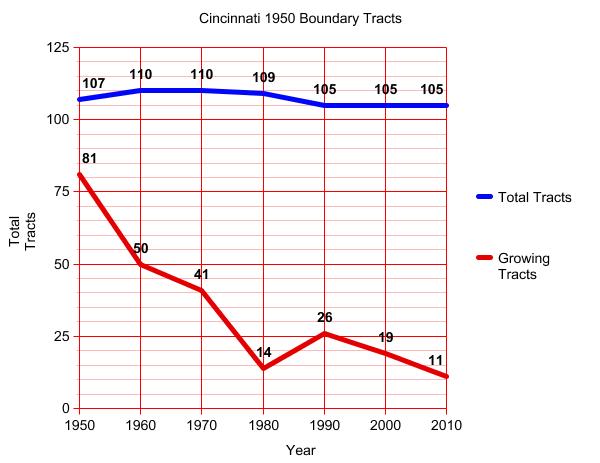

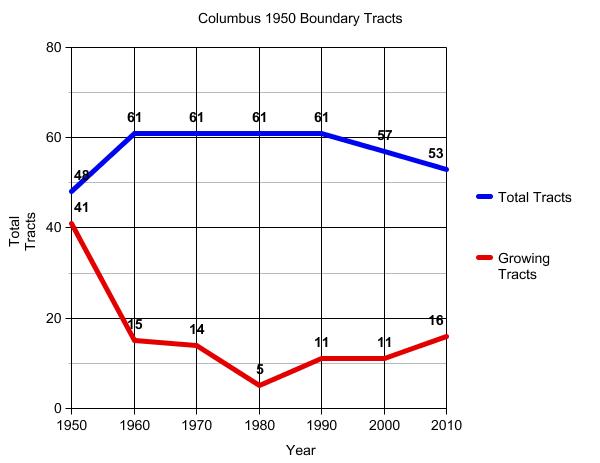
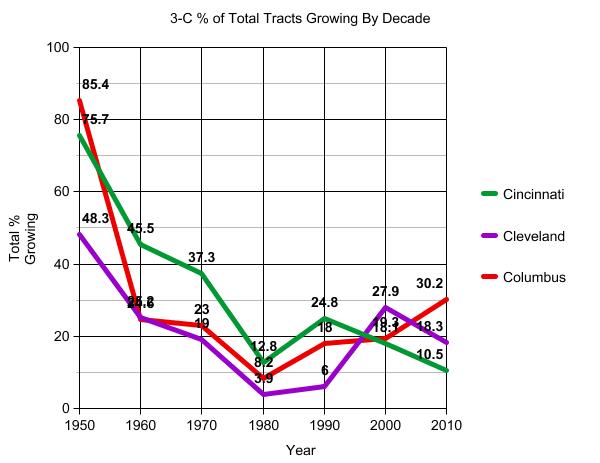
So with this breakdown, we can see more of the trends within the 1950 boundaries. In Cincinnati, a long decline was followed by a recovery in 1990, only to have the next 20 years show an increasing decline. The 2010 census showed the fewest number of tracts growing on record. This is the worst performance of the 3-Cs. Cleveland also had a steep decline followed by a recovery, but it too declined more at the last census, but not nearly to the low point it reached in the 1970s and 1980s.

Meanwhile, Columbus also faced an initial steep decline and barely had any tracts growing during the 1970s. Since then, the trend has been up. The 16 growing tracts in 2010 were the highest since the 1940s. This is the best performance of the 3-Cs, and Columbus had the highest % of growing tracts in its core. Still, those 16 represent less than 1/3rd of the total tracts within the 1950 boundaries. So while there appears to be recovery ongoing in Columbus, especially compared to Cleveland and Cincinnati, it’s not where it needs to be.


So let’s look to the future. All these tracts are trending in certain directions themselves. While they may be losing now, they may be trending toward an eventual gain, and vice versa. If we follow the trends ongoing for the urban core tracts, where might the picture look like in say, 2020?

Tract Trends for Those Tracts Growing in Population in 2010
Trends are listed from what, in my opinion are the most positive to the most negative.

Growing in both 2000 and 2010, but Growth Accelerating Over Time and % of Total Tracts
Cincinnati: 0- 0%
Cleveland: 7- 4.6%
Columbus: 5- 11.3%

Shrinking in 2000 but Growing in 2010 and % of Total Tracts
Cincinnati: 10- 9.5%
Cleveland: 20- 13.1%
Columbus: 10- 18.9%

Growing in both 2000 and 2010, but Growth Slowing Over Time and % of Total Tracts
Cincinnati: 1- 1.0%
Cleveland: 1- 0.7%
Columbus: 1- 1.9%

Shrinking in both 2000 and 2010, but Loss Slowing Over Time and % of Total
Cincinnati: 28- 26.7%
Cleveland: 21- 13.7%
Columbus: 15- 28.3%

These tracts are those most likely to switch to positive growth come 2020. This is arguably one of the more positive trends and may deserve to be bumped a bit higher on the list.

Growing in 2000 but Shrinking in 2010 and % of Total
Cincinnati: 18- 17.1%
Cleveland: 42- 27.5%
Columbus: 5- 9.4%

Shrinking in both 2000 and 2010, but Loss Accelerating and % of Total
Cincinnati: 48- 45.7%
Cleveland: 93- 60.8%
Columbus: 17- 32.1%

These are the worst of the worst tracts, likely representing the most declined parts of the urban core. It’s pretty surprising to see that almost 2/3rds of Cleveland’s tracts are in this condition.

The tract trends paint a very interesting picture about each city’s urban core future. If we expanded these trends to the next census in 2020, this is what you might see.
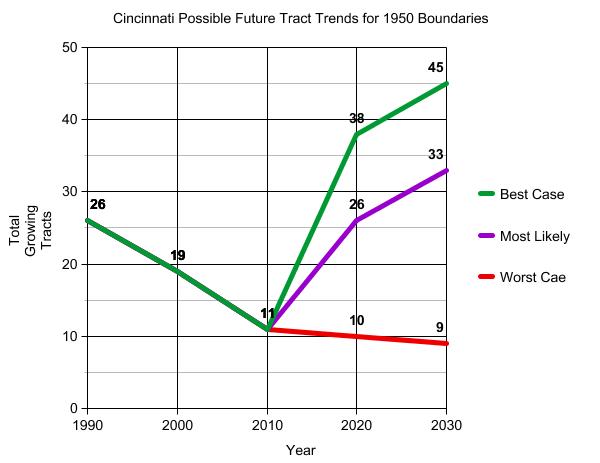
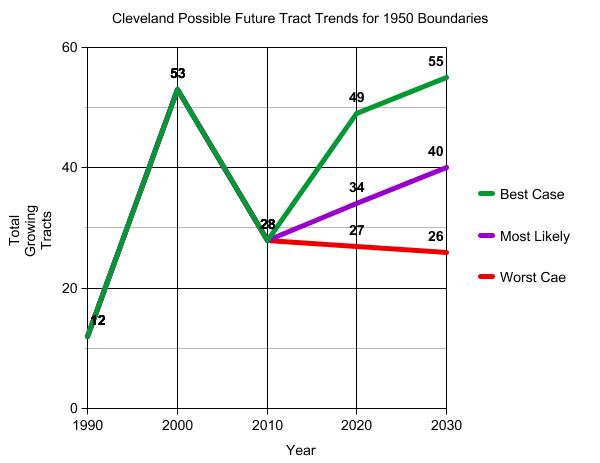
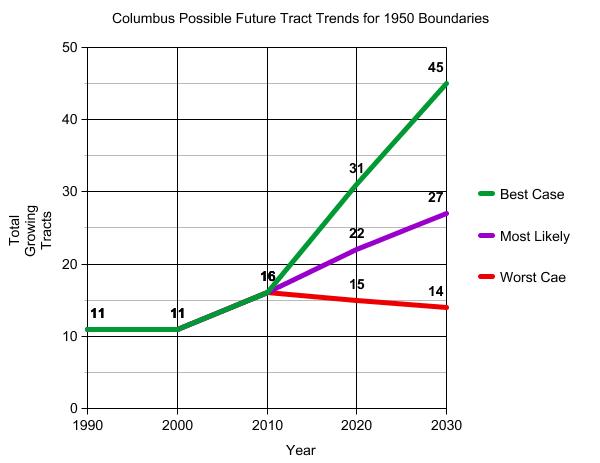
All this information, however, deals with the entire urban core. What about just the Central Business Districts, or the downtown areas for each city? In , I will examine those numbers and trends for the very heart of these cities.

Housing Market Update December 2012


housing market update December 2012

In a first of its kind, this is the Columbus housing market update for December 2012. In it, the local housing market will be detailed by categories such as most expensive market, market listing rankings and more.

Note: LSD= Local School District, CSD= City School District. In both cases, school district boundaries differ from city boundaries.

Top 15 Most Expensive Locations By Median Sales Price in December 2012
1. New Albany: $535,000
2. New Albany Plain LSD: $397,450
3. German Village: $376,000
4. Grandview Heights: $362,500
5. Powell: $354,950
6. Dublin: $343,600
7. Granville CSD: $330,000
8. Bexley: $325,000
9. Upper Arlington CSD: $319,500
10. Olentangy LSD: $315,000
11. Big Walnut LSD: $306,250
12. Dublin CSD: $271,500
13. Worthington: $$270,000
14. Buckeye Valley LSD: $259,000
15. Sunbury: $253,000

New Albany was by far the most expensive local market around Columbus.

Top 15 Least Expensive Locations by Median Sales Price in December 2012
1. Obetz: $80,100
2. Hamilton LSD: $80,100
3. Whitehall: $85,950
4. Newark CSD: $86,900
5. Lancaster CSD: $103,000
6. Jefferson LSD: $123,000
7. London CSD: $124,000
8. Groveport Madison LSD: $125,900
9. Reynoldsburg CSD: $125,950
10. Columbus CSD: $129,900
11. South-Western CSD: $131,000
12. Columbus: $140,026
13. Jonathan Alder LSD: $150,000
14. Minerva Park: $159,500
15. Grove City: $160,950

Southern and eastern suburbs tend to perform best on this list, as well as Columbus itself.

Overall Market Median Sales Price in December 2012: $158,645

Top 15 Locations with the Highest Median Sales Price % Growth Between December 2011 and December 2012
1. Whitehall: +69.5%
2. Circleville CSD: +64.9%
3. Sunbury: +63.0%
4. Jefferson LSD: +53.5%
5. Big Walnut LSD: +44.1%
6. Canal Winchester CSD: +40.9%
7. Westerville: +29.8%
8. Westerville CSD: +27.3%
9. Powell: +25.4%
10. Pataskala: +24.0%
11. Olentangy LSD: +23.5%
12. Gahanna Jefferson CSD: +21.8%
13. Grandview Heights: +21.2%
14. Granville CSD: +20.0%
15. Pickerington: +17.7%

Top 15 Locations with the Lowest Median Sales Price % Growth Between December 2011 and December 2012
1. London CSD: -53.5%
2. Obetz: -38.3%
3. Hamilton LSD: -27.1%
4. Jonathan Alder LSD: -25.2%
5. Buckeye Valley LSD: -23.0%
6. Reynoldsburg CSD: -18.7%
7. Hilliard: -17.7%
8. Lancaster CSD: -17.6%
9. Grove City: -15.3%
10. Dublin CSD: -12.8%
11. Johnstown Monroe LSD: -10.8%
12. Upper Arlington CSD: -8.5%
13. Newark CSD: -8.1%
14. Dublin: -7.1%
15. South-Western CSD: -6.4%

Overall Market Median Sales Price % Change December 2011 vs. December 2012: -0.3%

Top 10 Locations with the Most New Listings in December 2012
1. Columbus: 829
2. Columbus CSD: 544
3. South-Western CSD: 136
4. Olentangy LSD: 122
5. Westerville CSD: 100
6. Hilliard CSD: 94
7. Dublin CSD: 89
8. Worthington CSD: 66
9. Dublin: 64
10. Pickerington LSD: 60

Top 10 Locations with the Fewest New Listings in December 2012
1. Valleyview: 0
2. Lithopolis: 1
3. Sunbury: 2
4. Minerva Park: 2
5. Obetz: 3
6. Johnstown Monroe LSD: 5
7. Jefferson LSD: 8
8. German Village: 8
9. Hamilton LSD: 8
10. Whitehall: 11
11. Granville CSD: 12

Total New Listings in the Columbus Metro in December 2012: 2,002
Overall Metro New Listings % Change December 2011-December 2012: +10.5%

Overall, prices are slightly down as supply is currently outstripping demand.

For more information on the local market, go here: Columbus Realtors


History of Miranova Tower


History of Miranova Tower Columbus, Ohio

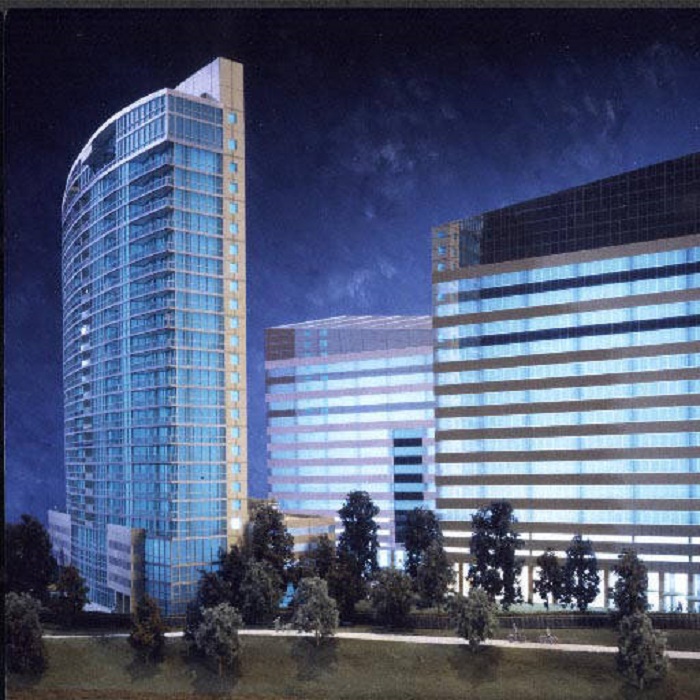
Rendering of Miranova in 1998.

On November 16, 1995, Developer Ron Pizzuti announced plans for a residential and office complex on the Scioto River shore on the southwestern edge of Downtown, a project that would eventually become Miranova Tower. In 1995, this area was a large vacant lot and a handful of small buildings. Originally, the $150 million plan called for replacing this whole area with two 25-story condominium towers, 14 luxury townhomes on the river, a 5-story office building and a pair of restaurants, all with construction to begin in 1996. 200 residential units were planned for the towers. This was all supposed to be part of a new series of Downtown developments including a new COSI, a new soccer stadium across the river on the Scioto Peninsula and a residential development on the Whittier Peninsula west of the Brewery District.

On May 12th, 1996, it was reported that the project would not actually break ground until sometime in 1997, already another year later than originally planned. The two towers remained on the agenda, as did the townhomes and restaurants, but the office building had gained a floor and would now be 6 stories.

By July 8th, 1996, the project had gotten larger still. The # of townhomes had more than doubled to 30 and the office building had risen to 7 stories.

On December 16, 1996, the office building once again grew, this time to 8 stories.

By February 4, 1997, the number of towers had fallen to just one, and mention of townhomes had disappeared, yet the price tag remained $150 million.

Further changes came on December 12, 1997. The single tower would be 28 stories and the office tower had grown to 16 stories. Groundbreaking was pushed back to sometime in 1998.

February 11, 1998, still a single 28 story condo tower, but now two 16-story office towers.

May 8, 1998, and back to just one office tower. Still no groundbreaking.

September 19, 1998, more changes. Condo tower down to 26 stories and the office building down to 15. But work has begun on pouring foundations

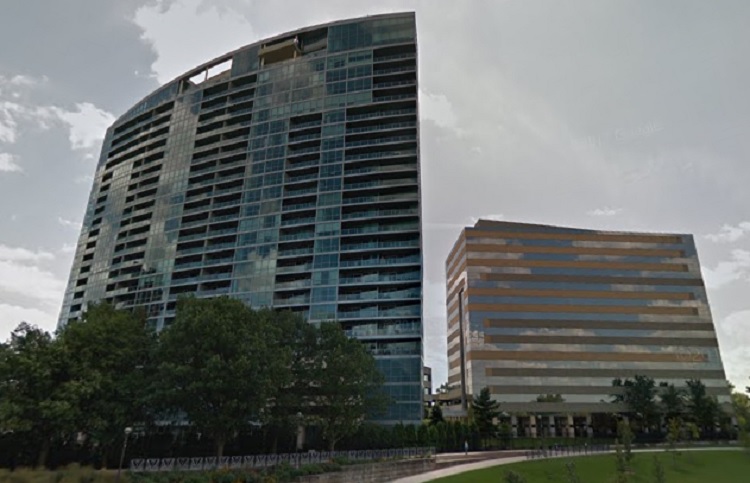
Miranova condo tower was completed in the early spring of 2000. By July, 79 of the 112 condos had sold. The office building, down to a final height of 12 stories, would not be finished until 2001. The last condo sale would not happen for several years, as the 2000s saw the market crash for these residences.

Miranova Project Stats
Began Construction in 1999
Completed in 2001
Cost: $150 Million
Height: 26 Stories
# of Residential Units: 112

Completed projects going back to the 19th Century, as well as new proposals, can be found at the Columbus Development links page. New proposals happen all the time, and you can follow the process for many of them on the Columbus Area Commissions website.

Is Columbus Getting Younger?

Is Columbus getting younger? This article America’s Baby Boom and Bust Cities
from New Geography suggests… maybe. It was one of only two Midwestern cities (the other being Indianapolis) that saw its population of people aged 15 and younger grow from 2000-2010, and actually scored at #18 for the best growth in this catergory in the 51 largest metros. The 15 and younger population grew by almost 32,000, or 9.2%. Columbus has long been a young city, especially within Ohio, where the median age is almost 37, higher than the national average. In 2010, Columbus’ median age was just 31.4. Should its young population continue to rise, that median age may actually drop over time. It’s long been established that younger cities tend to do better economically and with growth, while aging cities tend to see sustained decline, so this is good news for Columbus’ future.

Age Demographics for the City of Columbus 2000-2010
Under 5
2000: 52,638 7.4%
2010: 61,122 7.7%
5 to 14
2000: 95,251 13.4%
2010: 99,143 12.6%
15 to 24
2000: 122,768 17.3%
2010: 133,796 16.9%
25 to 34
2000: 139,327 19.6%
2010: 147,584 18.7%
35 to 44
2000: 112,361 15.8%
2010: 110,342 14.0%
45 to 54
2000: 80,668 11.3%
2010: 97,782 12.4%
55 to 64
2000: 45,949 6.5%
2010: 74,265 9.4%
65 to 74
2000: 33,718 4.7%
2010: 35,816 4.5%
75 and Over
2000: 28,964 4.1%
2010: 30,089 3.8%

Age Demographics for the Metropolitan Area 2000-2010
Under 5
2000: 115,002 7.1%
2010: 127,350 6.9%
5 to 14
2000: 233,018 14.4%
2010: 253,211 13.8%
15 to 24
2000: 233,784 14.5%
2010: 264,784 14.4%
25 to 34
2000: 256,992 15.9%
2010: 270,931 14.7%
35 to 44
2000: 270,406 16.8%
2010: 260,069 14.1%
45 to 54
2000: 213,906 13.3%
2010: 265,770 14.4%
55 to 64
2000: 127,707 7.9%
2010: 202,911 11.0%
65 to 74
2000: 89,876 5.6%
2010: 109,390 5.9%
75 and Over
2000: 72,003 4.5%
2010: 86,215 4.7%

The Scioto Peninsula Project


The Scioto Peninsula Project Columbus, Ohio

The Scioto Peninsula project is an in-planning-stage development that promised to be hugely transformational for both Downtown and all of Franklinton.

The history of the Scioto Peninsula in not really all that positive. Bounded by 315 to the west and on all other sides by the Scioto River directly across from Downtown, this area currently contains Veteran’s Memorial, COSI and not much else. Even as far back as the 1950s, a large chunk of the peninsula, especially around Central High School (which still exists as COSI), was just vacant land. Otherwise, what existed were warehouse buildings and other commercial buildings. What people lived there were mostly confined to a few public housing projects. Being so close to the Scioto River, the area repeatedly flooded over its history, especially in the Great Flood of 1913 and to a lesser extent in 1959. This prevented much development here and in Franklinton in general. Federal standards were actually in place that banned most new construction or even renovations to most types of buildings. This allowed all of Franklinton, including the Peninsula, to stagnate and go through steady decline.

Help was coming, however, in the form of a giant floodwall. Conceived as far back as the 1980s, the Franklinton Floodwall would not be completed until 2004. It took another 4-5 years before people began to seriously look at the area for redevelopment and then for that development to actually start taking place. Eastern Franklinton, so far, has been the focal point of that redevelopment, and a big project to help tie in Downtown with the neighborhood is the planned redevelopment of the Peninsula.

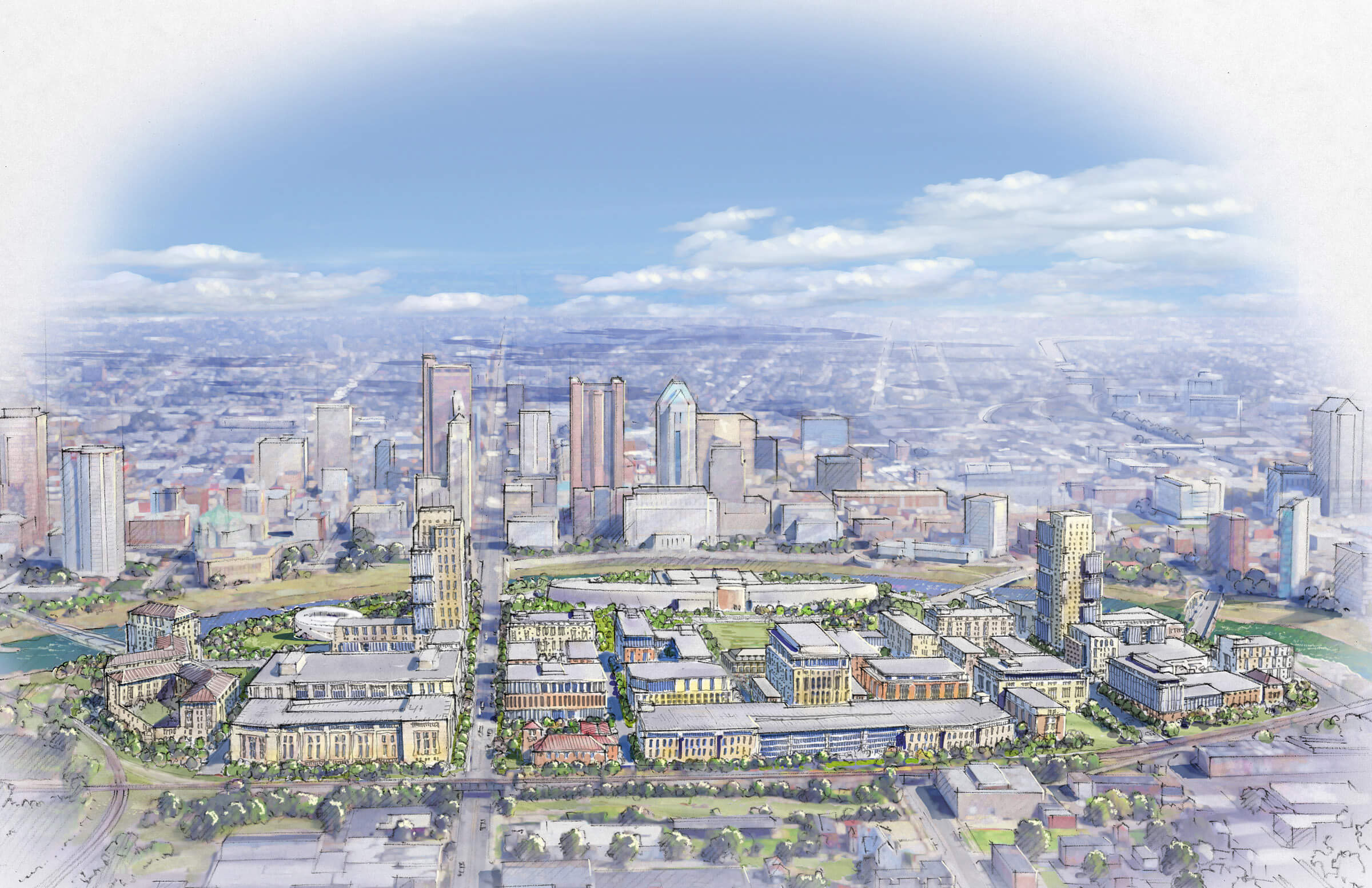
Almost all the buildings that existed in the ’50s are now gone, even the housing projects. COSI uses much of the land for parking, as does Veteran’s Memorial. The rest is grassy lots primed for redevelopment. Some projects have already taken place. The two new Downtown bridges at Main and Rich Streets provide a nice access onto the Peninsula, along with the Broad Street bridge. A 4th, a planned pedestrian bridge, will be located on the north end crossing from Vet’s Memorial to North Bank Park in the Arena District. This bridge is probably still a few years off, as there is another, large project planned. The low-head dams along the Scioto River in the Downtown area are going to be removed, starting sometime next year. This will lower the river level and create a more natural flowing waterway. It will also create acres of new riverfront parkland that new paths and landscaping will be added to. This will create an inviting, park setting to both sides of the river.

The Peninsula has been planned for redevelopment several times in the last 30 years, but there was a lack of momentum for urban projects for decades and no serious plans ever seemed to emerge. That was until the last 10 years, starting in 2002 with the first Downtown development plan by Mayor Coleman and the city. A new version was released in 2010 and contained a dozen projects planned to help Downtown become a destination again. While the Scioto Peninsula was not specifically mentioned, fixing the riverfront was. That’s where Scioto Mile park came from and is now a very popular spot for residents. With all this momentum, the Peninsula needed a serious plan. Right now, meetings are taking place and a development plan is now in the early stages. Some early ideas include a lot of residential, retail and entertainment space, along with a more interactive riverfront and even a transit station for light rail. The first draft of the plan is likely to be released in 2013 and construction could begin as early as 2014.

This project can be found in the Columbus Development links page, which provides a large and regularly-updated list of ongoing and proposed development across the area.