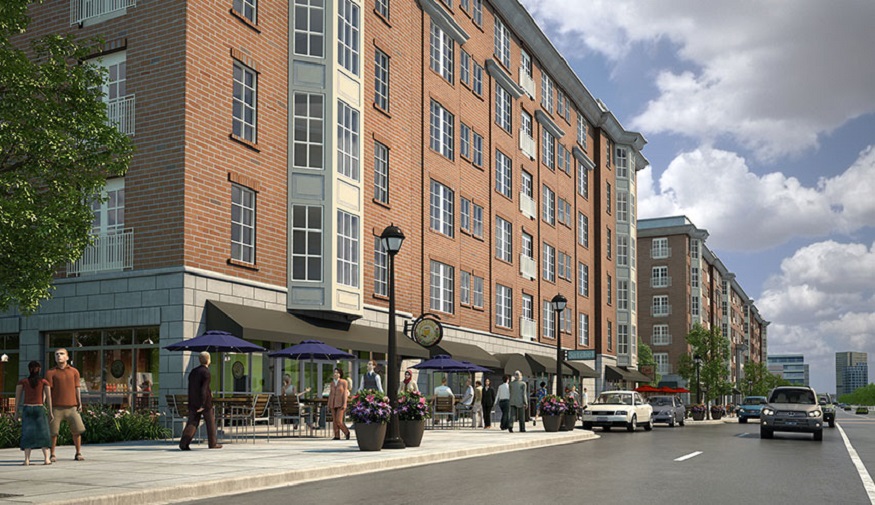
Random Columbus Photos 1

On the hot, summer day of August 21, 1947, a thunderstorm hit the Columbus area that would produce a memorable and tragic event. A bolt of lightning struck the southwestern corner of the Broad Street Bridge in Downtown. Perhaps because of the extreme heat or structural deficiencies, the lightning caused part of the bridge to seemingly explode, and large chunks of the bridge collapsed into the Scioto River. While no cars fell off the bridge as a result, 4 pedestrians did. One of those pedestrians died the following day from sustained injuries. The bridge itself had been built as the replacement for the one destroyed during the great flood of 1913. After the incident in 1947, the bridge was repaired and continued to serve as the main Scioto River crossing at Downtown for another 43 years. In 1990, it was demolished and replaced by the current (and very similar looking) Discovery Bridge, completed in 1992 in time for the celebration of the 500th anniversary of the “discovery” of America by the city’s namesake, Christopher Columbus.

Random Columbus photos 1

The damaged bridge.


Midwest GDP and Income Comparison


Midwest GDP and income comparison

The Bureau of Economic Analysis recently issued GDP numbers for 2012, along with revised data for previous years, so I thought it would be interesting to make a Midwest GDP and income comparison.

First, let’s look at how Ohio is doing in relation to the other Midwest states.

2012 Gross Domestic Product By State in Millions, Highest to Lowest
1. Illinois: $695,238
2. Ohio: $509,393
3. Michigan: $400,504
4. Indiana: $298,625
5. Minnesota: $294,729
6. Wisconsin: $261,548
7. Missouri: $258,832
8. Iowa: $152,436
9. Kansas: $138,953
10. Nebraska: $99,557
11. North Dakota: $46,016
12. South Dakota: $42,464

Total Midwest GDP in 2012 in Millions: $3,198,295

So Ohio has the 2nd largest economy in the Midwest, only behind Illinois and its Chicago powerhouse. Ohio has also reclaimed its spot as the 7th largest state economy after catching up to and surpassing New Jersey, which passed Ohio in 2006.

Ohio’s more than half-trillion economy is also growing faster than almost every state in the Midwest, as shown below.

Total GDP Change 2000-2012 in Millions, Highest to Lowest
1. Illinois: +$220,718
2. Ohio: +$128,498
3. Minnesota: +$105,911
4. Indiana: +$100,387
5. Wisconsin: +$84,193
6. Missouri: +$77,865
7. Michigan: +$63,045
8. Iowa: +$59,124
9. Kansas: +$53,231
10. Nebraska: +$42,224
11. North Dakota: +$27,750
12. South Dakota: +$18,426

Difference in Millions Between Ohio’s GDP and that of Other States 2000 and 2012
Ohio vs. Illinois
2000: -$93,865
2010: -$185,845
Ohio vs. Indiana
2000: $182,657
2010: $210,768
Ohio vs. Iowa
2000: $287,583
2010: $356,957
Ohio vs. Kansas
2000: $295,173
2010: $370,440
Ohio vs. Michigan
2000: $43,436
2010: $108,889
Ohio vs. Minnesota
2000: $192,077
2010: $214,664
Ohio vs. Missouri
2000: $199,928
2010: $250,561
Ohio vs. Nebraska
2000: $323,562
2010: $409,836
Ohio vs. North Dakota
2000: $362,629
2010: $463,377
Ohio vs. South Dakota
2000: $356,857
2010: $466,929
Ohio vs. Wisconsin
2000: $203,540
2010: $247,845

So Ohio has increased its GDP lead over every Midwest state except for Illinois.

Per-Capita GDP, however, is not Ohio’s strong point.

2012 Per-Capita GDP in Dollars, Highest to Lowest
1. North Dakota: $55,250
2. Minnesota: $47,028
3. Illinois: $46,161
4. Nebraska: $44,943
5. South Dakota: $43,181
6. Iowa: $42,222
7. Kansas: $41,070
8. Wisconsin: $39,308
9. Indiana: $39,065
10. Ohio: $37,690
11. Missouri: $36,815
12. Michigan: $35,298

Per-Capita GDP, does not tell us income, however.

2012 Per-Capita Income By State, Highest to Lowest
1. North Dakota: $51,893
2. Minnesota: $46,227
3. Illinois: $44,815
4. South Dakota: $43,659
5. Nebraska: $43,143
6. Iowa: $42,126
7. Kansas: $41,835
8. Wisconsin: $40,537
9. Ohio: $39,289
10. Missouri: $39,049
11. Michigan: $37,497
12. Indiana: $36,902

Ohio does slightly better here. The question would be, why is Ohio’s so low in comparison? It may have a bit to do with the overall cost of living, at least according to this cost of living index.m

Cost of Living Rank by State (out of 50), 2nd Quarter 2013
Nebraska: 2
Indiana: 5
Iowa: 9
Kansas: 11
Ohio: 13
Missouri: 16
Michigan: 19
Illinois: 20
Wisconsin: 23
North Dakota: 30
South Dakota: 31
Minnesota: 34

Ohio is less expensive to live in than 7 of the other Midwest states and is cheaper than 37 states in total. This almost certainly plays a role in wages. All in all, perhaps the state is far better off economically than the perception may indicate, at least by these metrics.


Historic Midwest Population and Density Ranking


Historic Midwest population and density ranking

I’ve compared Columbus to peer cities nationally in terms of density and population, but I’ve never compared Columbus to the Midwest as a whole historically for those categories. For the following historic Midwest population and density ranking, I used the top 15 largest Midwest cities as of 2012 as determined by the US Census.

Red indicates a fallen ranking while blue indicates a rise. Black is no change.

Historic Population Rankings
1840

1. Cincinnati: 46,338
2. St. Louis: 16,469
3. Detroit: 9,102
4. Cleveland: 6,071
5. Columbus: 6,048
6. Chicago: 4,470
7. Indianapolis: 2,695
8. Milwaukee: 1,700
9. Toledo: 1,222
10. Kansas City: Not incorporated.
11. Lincoln: Not incorporated.
12. Minneapolis: Not incorporated.
13. Omaha: Not incorporated.
14. St. Paul: Not incorporated.
15. Wichita: Not incorporated.

1850
1. Cincinnati: 115,435
2. St. Louis: 77,860
3. Chicago: 29,963
4. Detroit: 21,019
5. Milwaukee: 20,061
6. Columbus: 17,882
7. Cleveland: 17,034
8. Indianapolis: 8,091
9. Toledo: 3,829
10. St. Paul: 1,112
11. Kansas City: Not incorporated.
12. Lincoln: Not incorporated.
13. Minneapolis: Not incorporated.
14. Omaha: Not incorporated.
15. Wichita: Not incorporated.

1860
1. Cincinnati: 161,044
2. St. Louis: 160,773
3. Chicago: 112,172
4. Detroit: 45,619
5. Milwaukee: 45,246
6. Cleveland: 43,417
7. Indianapolis: 18,611
8. Columbus: 18,554
9. Toledo: 13,768
10. St. Paul: 10,401
11. Minneapolis: 5,809
12. Kansas City: 4,418
13. Omaha: 1,883
14. Lincoln: Not incorporated.
15. Wichita: Not incorporated.

1870
1. St. Louis: 310,864
2. Chicago: 298,977
3. Cincinnati: 216,239
4. Cleveland: 92,829
5. Detroit: 79,577
6. Milwaukee: 71,440
7. Indianapolis: 48,244
8. Kansas City: 32,260
9. Toledo: 31,584
10. Columbus: 31,274
11. St. Paul: 20,030
12. Omaha: 16,083
13. Minneapolis: 13,066
14. Lincoln: 2,441
15. Wichita: 689

1880
1. Chicago: 503,185
2. St. Louis: 350,518
3. Cincinnati: 255,139
4. Cleveland: 160,146
5. Detroit: 116,340
6. Milwaukee: 115,587
7. Indianapolis: 75,056
8. Kansas City: 55,785
9. Columbus: 51,647
10. Toledo: 50,137
11. Minneapolis: 46,887
12. St. Paul: 41,473
13. Omaha: 30,518
14. Lincoln: 13,003
15. Wichita: 4,911

1890
1. Chicago: 1,099,850
2. St. Louis: 451,770
3. Cincinnati: 296,908
4. Cleveland: 261,353
5. Detroit: 205,877
6. Milwaukee: 204,468
7. Minneapolis: 164,738
8. Omaha: 140,452
9. St. Paul: 133,156
10. Kansas City: 132,716
11. Indianapolis: 105,436
12. Columbus: 88,150
13. Toledo: 81,434
14. Lincoln: 55,164
15. Wichita: 23,853

1900
1. Chicago: 1,698,575
2. St. Louis: 575,238
3. Cleveland: 381,768
4. Cincinnati: 325,902
5. Detroit: 285,704
6. Milwaukee: 285,315
7. Minneapolis: 202,718
8. Indianapolis: 169,164
9. Kansas City: 163,752
10. St. Paul: 163,065
11. Toledo: 131,822
12. Columbus: 125,560
13. Omaha: 102,555
14. Lincoln: 40,169
15. Wichita: 24,671

1910
1. Chicago: 2,185,283
2. St. Louis: 687,029
3. Cleveland: 560,663
4. Detroit: 465,766
5. Milwaukee: 373,857
6. Cincinnati: 363,591
7. Minneapolis: 301,408
8. Kansas City: 248,381
9. Indianapolis: 233,650
10. St. Paul: 214,744
11. Columbus: 181,511
12. Toledo: 168,497
13. Omaha: 124,096
14. Wichita: 52,450
15. Lincoln: 43,973

1920
1. Chicago: 2,701,705
2. Detroit: 993,678
3. Cleveland: 796,841
4. St. Louis: 772,897
5. Milwaukee: 457,147
6. Cincinnati: 401,247
7. Minneapolis: 380,582
8. Kansas City: 324,410
9. Indianapolis: 314,194
10. Toledo: 243,164
11. Columbus: 237,031
12. St. Paul: 234,698
13. Omaha: 191,061
14. Wichita: 72,217
15. Lincoln: 54,948

1930
1. Chicago: 3,376,438
2. Detroit: 1,568,662
3. Cleveland: 900,429
4. St. Louis: 821,960
5. Milwaukee: 578,249
6. Minneapolis: 464,356
7. Cincinnati: 451,160
8. Kansas City: 399,746
9. Indianapolis: 364,161
10. Toledo: 290,718
11. Columbus: 290,564
12. St. Paul: 271,606
13. Omaha: 214,006
14. Wichita: 111,110
15. Lincoln: 75,933

1940
1. Chicago: 3,396,808
2. Detroit: 1,623,452
3. Cleveland: 878,336
4. St. Louis: 816,048
5. Milwaukee: 587,472
6. Minneapolis: 492,370
7. Cincinnati: 455,610
8. Kansas City: 400,178
9. Indianapolis: 386,972
10. Columbus: 306,087
11. St. Paul: 287,736
12. Toledo: 282,349
13. Omaha: 223,844
14. Wichita: 114,966
15. Lincoln: 81,984

1950
1. Chicago: 3,620,962
2. Detroit: 1,849,568
3. Cleveland: 914,808
4. St. Louis: 856,796
5. Milwaukee: 637,392
6. Minneapolis: 521,718
7. Cincinnati: 503,998
8. Kansas City: 456,622
9. Indianapolis: 427,173
10. Columbus: 375,901
11. St. Paul: 311,349
12. Toledo: 303,616
13. Omaha: 251,117
14. Wichita: 168,279
15. Lincoln: 98,884

1960
1. Chicago: 3,550,404
2. Detroit: 1,670,144
3. Cleveland: 876,050
4. St. Louis: 750,026
5. Milwaukee: 741,324
6. Cincinnati: 502,550
7. Minneapolis: 482,872
8. Indianapolis: 476,258
9. Kansas City: 475,539
10. Columbus: 471,316
11. Toledo: 318,003
12. St. Paul: 313,411
13. Omaha: 301,598
14. Wichita: 254,698
15. Lincoln: 128,521

1970
1. Chicago: 3,366,957
2. Detroit: 1,514,063
3. Cleveland: 750,903
4. Indianapolis: 744,624
5. Milwaukee: 717,099
6. St. Louis: 622,236
7. Columbus: 539,677
8. Kansas City: 507,087
9. Cincinnati: 452,525
10. Minneapolis: 434,400
11. Toledo: 383,818
12. Omaha: 346,929
13. St. Paul: 309,980
14. Wichita: 276,554
15. Lincoln: 149,518

1980
1. Chicago: 3,005,072
2. Detroit: 1,203,368
3. Indianapolis: 700,807
4. Milwaukee: 636,212
5. Cleveland: 573,822
6. Columbus: 564,871
7. St. Louis: 452,801
8. Kansas City: 448,159
9. Cincinnati: 385,460
10. Minneapolis: 370,951
11. Toledo: 354,635
12. Omaha: 313,939
13. Wichita: 279,272
14. St. Paul: 270,230
15. Lincoln: 171,932

1990
1. Chicago: 2,783,726
2. Detroit: 1,027,974
3. Indianapolis: 731,327
4. Columbus: 632,910
5. Milwaukee: 628,088
6. Cleveland: 505,616
7. Kansas City: 435,146
8. St. Louis: 396,685
9. Minneapolis: 368,383
10. Cincinnati: 364,040
11. Omaha: 335,795
12. Toledo: 332,943
13. Wichita: 304,011
14. St. Paul: 272,235
15. Lincoln: 191,972

2000
1. Chicago: 2,896,016
2. Detroit: 951,270
3. Indianapolis: 781,926
4. Columbus: 711,470
5. Milwaukee: 596,974
6. Cleveland: 478,403
7. Kansas City: 441,545
8. Omaha: 390,007
9. Minneapolis: 382,618
10. St. Louis: 348,189
11. Wichita: 344,284
12. Cincinnati: 331,285
13. Toledo: 313,619
14. St. Paul: 287,151
15. Lincoln: 225,581

2010
1. Chicago: 2,695,598
2. Indianapolis: 829,445
3. Columbus: 787,033
4. Detroit: 713,777
5. Milwaukee: 594,833
6. Kansas City: 459,787
7. Omaha: 408,958
8. Cleveland: 396,815
9. Minneapolis: 382,578
10. Wichita: 382,368
11. St. Louis: 319,294
12. Cincinnati: 296,945
13. Toledo: 287,208
14. St. Paul: 285,068
15. Lincoln: 258,379

2012
1. Chicago: 2,714,856
2. Indianapolis: 834,852
3. Columbus: 809,798
4. Detroit: 701,475
5. Milwaukee: 598,916
6. Kansas City: 464,310
7. Omaha: 421,570
8. Minneapolis: 392,880
9. Cleveland: 390,928
10. Wichita: 385,577
11. St. Louis: 318,172
12. Cincinnati: 296,727
13. St. Paul: 290,770
14. Toledo: 284,012
15. Lincoln: 265,404

2020 Projection based on 2012 growth rates.
1. Chicago: 2,789,944
2. Indianapolis: 893,465
3. Columbus: 892,495
4. Detroit: 665,954
5. Milwaukee: 607,919
6. Kansas City: 482,776
7. Omaha: 460,487
8. Minneapolis: 428,487
9. Wichita: 401,104
10. Cleveland: 373,336
11. St. Louis: 315,462
12. St. Paul: 305,878
13. Cincinnati: 302,288
14. Lincoln: 289,901
15. Toledo: 271,124

Columbus seems poised to take the #2 spot from Indianapolis around or just after 2020. Also, 11 of 15 would’ve seen growth 2010-2020. Cleveland, Toledo, St. Louis and Detroit would be the only cities that still lost.

2012 Density
1. Chicago: 11,949.2
2. Minneapolis: 7,156.3
3. Milwaukee: 6,230.9
4. St. Paul: 5,593.9
5. St. Louis: 5,140.1
6. Detroit: 5,055.7
7. Cleveland: 5,031.2
8. Cincinnati: 3,807.1
9. Columbus: 3,728.4
10. Toledo: 3,519.8
11. Omaha: 3,317.1
12. Lincoln: 2,978.4
13. Wichita: 2,420.6
14. Indianapolis: 2,286.6
15. Kansas City: 1,474.2

2020 Projected density using 2012 growth rates
1. Chicago: 12,279.7
2. Minneapolis: 7,804.9
3. Milwaukee: 6,324.6
4. St. Paul: 5,884.5
5. St. Louis: 5,096.3
6. Cleveland: 4,804.8
7. Detroit: 4,799.7
8. Columbus: 4,109.7
9. Cincinnati: 3,878.5
10. Omaha: 3,623.3
11. Toledo: 3,360.1
12. Lincoln: 3,253.3
13. Wichita: 2,518.1
14. Indianapolis: 2,447.2
15. Kansas City: 1,532.9


Rise of RiverSouth


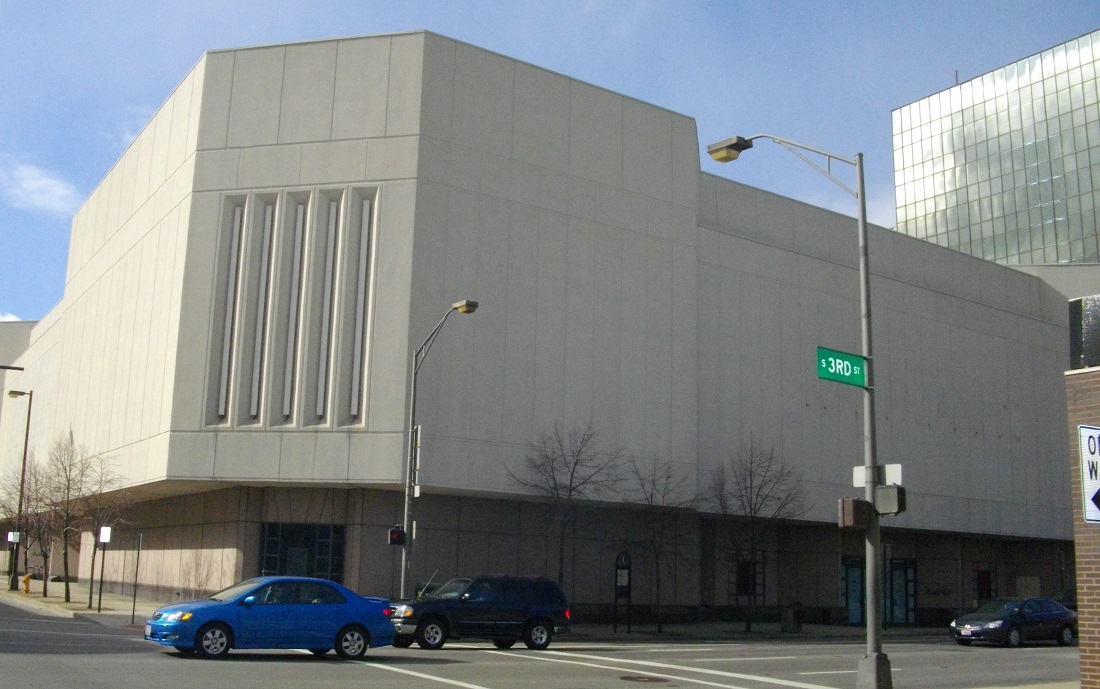
The RiverSouth area of Downtown was, not that long ago, the epitome of the disastrous Urban Renewal policy so popular during much of the mid-latter part of the 20th century. Bounded to the east by High Street, north by State Street, west by the Scioto River and south by I-70, this area, by the mid-1990s, had become a sea of surface parking lots, old storage warehouses, underutilized or empty storefronts and ugly infrastructure. The construction of City Center Mall in 1989, with its location directly across High Street, was supposed to help bring this neighborhood back with new development. Instead, as the mall did with the rest of Downtown, it helped suck the life out what retail and business existed there. Worse, the concrete, prison-like exterior of the mall lacked any type of street-level connection, so it functioned to keep people off the sidewalks and the streets were as abandoned as ever even as thousands of shoppers flooded the new mall every weekend.

Rise of RiverSouth Columbus, Ohio

The imposing structure of City Center.


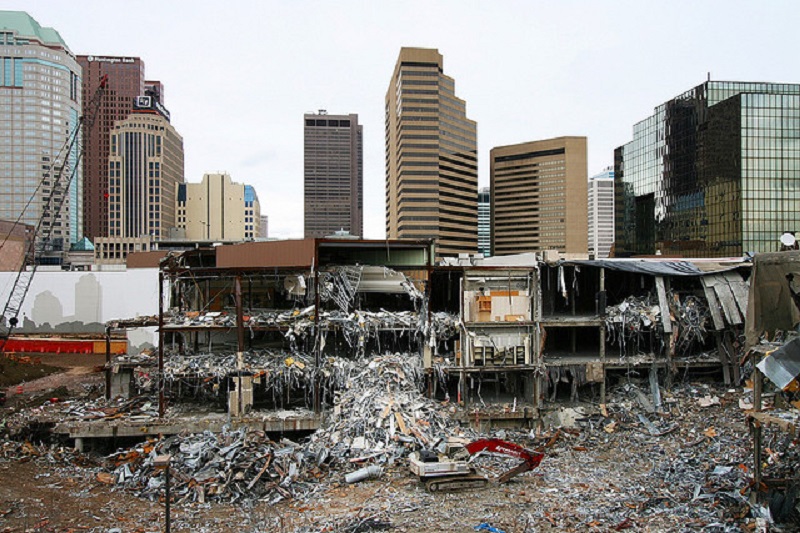
As newer suburban competition gradually killed City Center itself, the city was left with the task of figuring out what to do with its hulking core. Proposals were put for from everything to government buildings to redesigning the building itself into an Easton-like outdoor shopping town center. However, the money and interest for such proposals just weren’t there, and so the city came up with another, much different plan. The 10-15 year development plan called for the complete demolition of the mall complex, replacing it with a new city park complete with an entertainment stage, carousel and eateries.

City Center being demolished in 2010.


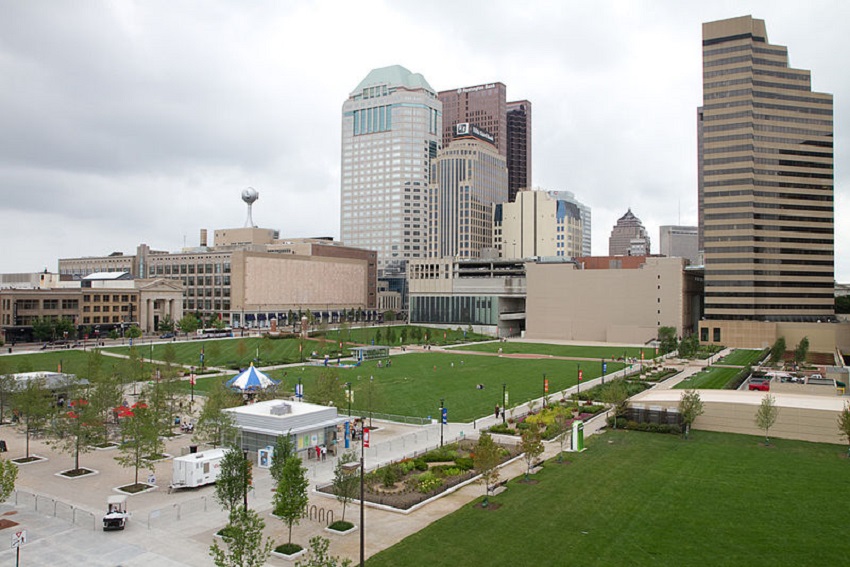
The mall was closed in 2009 and demolished the following year. This event seems to have marked the true beginning of the rise of RiverSouth. Columbus Commons and its 9 acres opened to the public in 2011. Despite a hugely negative expectation by some that the park would see little use and become a new place for vagrants and criminals, CC was an almost instant success. Hundreds of events were held there during its first year, and those numbers have grown every year since. Picnic with the Pops moved to the new park during the 2012 season, and the Columbus Food Truck Festival has attracted tens of thousands each of the last 2 years. The carousel, outdoor library and other events have been popular with kids and families. The park, with all its success, helped to bring about another important change to the area. It attracted development.

Columbus Commons before any development.


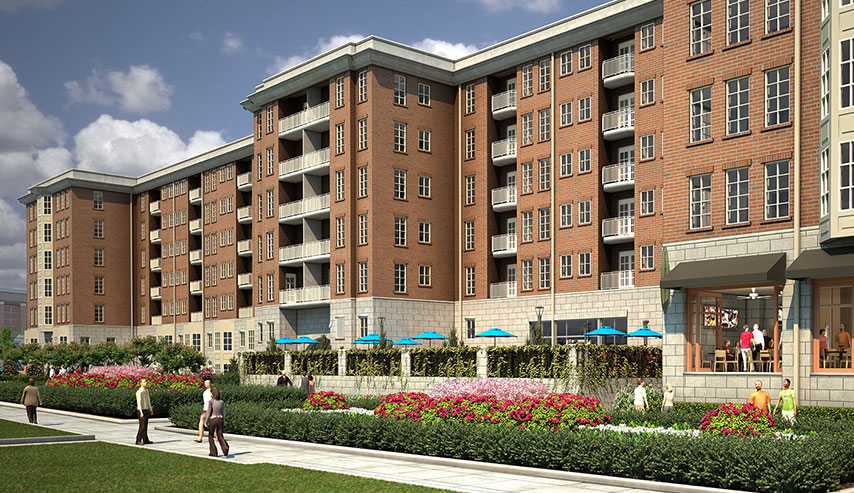
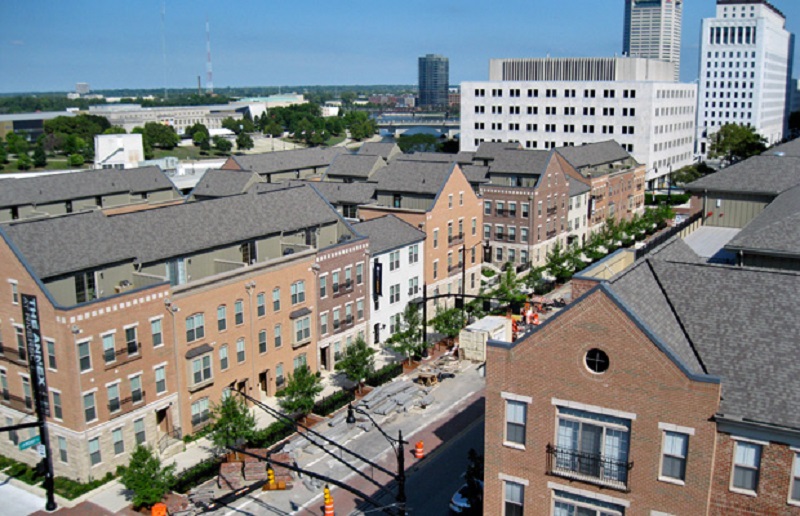
Originally, the park’s long-term plan was to have the grassy areas along High Street developed, but no one expected that to happen within a decade. Instead, a developer came forward less than a year after the park opened. High Point was that project, a pair of 6-story mixed-used buildings that would line the entire west side of the park from the corner of Rich and High. 302 new apartments, a handful of restaurants and ground floor retail lining High were all part of the project. Still under construction, this project should be complete in early 2014. Unfortunately, as the below pictures show (and the most flattering ones I could find at that) that the architecture is pretty horrendous. Despite that, the buildings will help fill in the gaps on High Street and bring hundreds of new residents, so the positives outweigh the negatives here.

Since the announcement of City Center’s demise, other projects have come about over the last few years that have helped raise the profile of RiverSouth.
-The Annex at RiverSouth replaced several surface parking lots along S. Front Street. This 214-unit, 4-story residential complex was originally planned to be a mix of condos and apartments, but became mostly apartments when the condo market died off. The complex was completed in 2010.

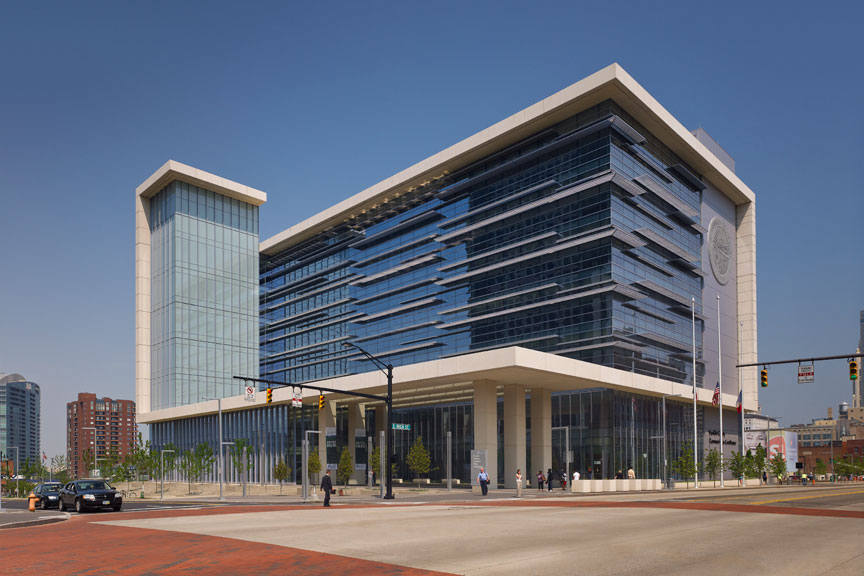
-The new Franklin County Courthouse, a $106 million, 7-story complex was completed in 2011 at the southwest corner of W. Main and S. High Streets.

-The Scioto Mile, the $44 million riverfront park, was completed in 2011 complete with fountains, a restaurant, paths and an entertainment stage.

Scioto Mile

-Main Street Bridge was replaced with a signature, $60 million arched span in 2011.

-The Rich Street Bridge was also replaced in 2012 with a new $26 million open span.

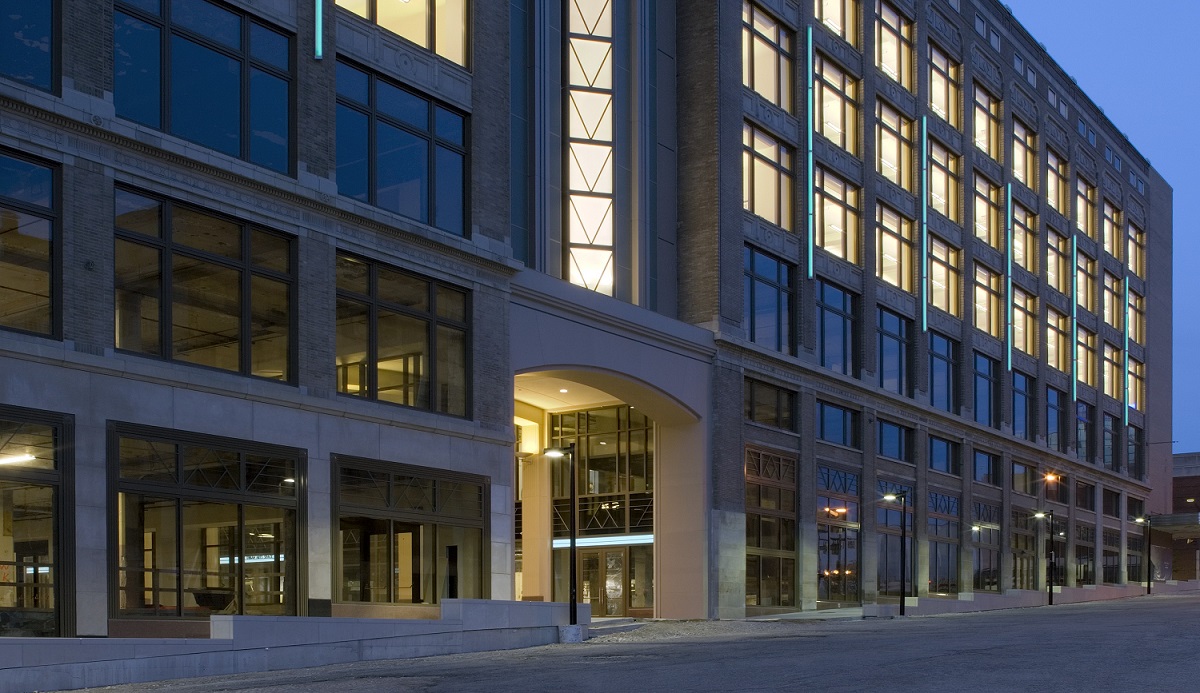
-The old Lazarus building, once connected to City Center by a massive skywalk, received a $60 million renovation in 2010 that converted the former retail building into an LEED green office building for the Ohio EPA and other organizations.

-Many of the streets in the area have been rebuilt with brick crossing and new landscaping.

So a lot has been done over the past few years, but what’s coming next? Beyond the High Point project, 3 more projects have recently been announced.

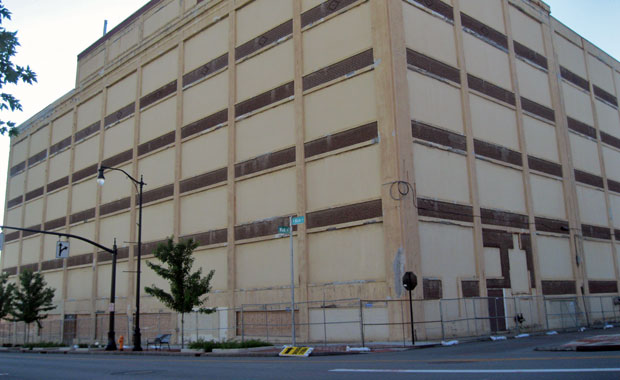
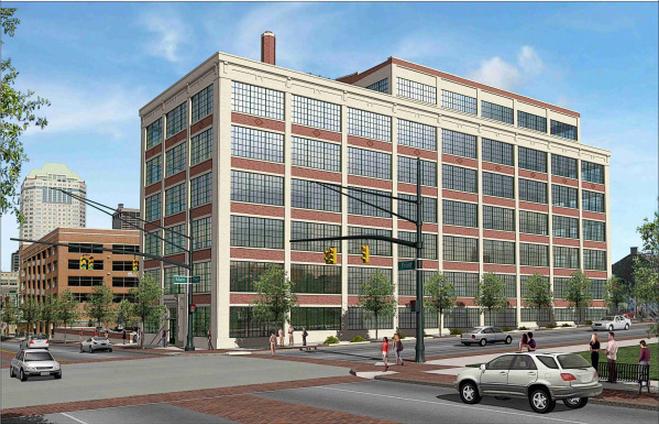
-The first is the conversion of the Secur-It warehouse building at the northeast corner of S. Front and W. Main Street. The century-old building was once used as a shoe factory, but was bricked over and used as a storage facility for many years. The current plan by Casto is to turn the building into about 90 residential units. The old warehouse windows will be restored, as well as the façade and interiors. The project should get started in the spring of 2014.

The current Secure-It building.


Proposed rendering for the Secure-It building.

-Second, we have Lifestyle Communities LC at RiverSouth project. This 8-story, 102-unit residential building will occupy the northwest corner of S. High and W. Rich Streets, directly across from Columbus Commons. Construction should begin this fall and complete in early 2015.

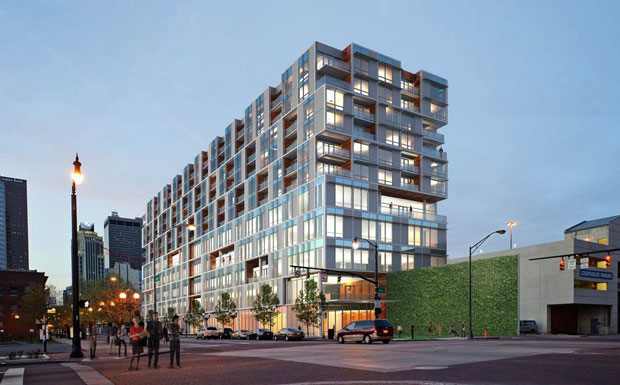
-And finally, we have the recently announced 250 High project. This $50 million, 12-story mixed-use tower would have ground floor retail, 4 floors of offices and 7 floors of residential totaling 156 units. This project will be built on the surface lot adjacent to the old City Center parking garage at 250 S. High Street. Construction on this project should also begin in the fall and complete sometime in early 2015.

These projects will no doubt spur others in the near future. Several surface lots still exist in RiverSouth, and a few of them are still along S. High Street just north of the new courthouse. Given the momentum of the neighborhood, expect to see development announcements on at least a few of these lots sooner than you think.


Downtown Columbus Parking


Downtown Columbus parking Columbus, Ohio

Downtown Columbus parking is a problem… in that there is far too much of it. It’s long been common knowledge that Downtown had an abundance of parking lots and garages, but I’ve never seen it actually mapped or counted before. The following Google map shows what’s long been known in a bit more graphic detail.

http://goo.gl/maps/hWkCf”>Downtown Parking

Red pins are surface parking lots and blue pins are parking garages. I only tried to count surface lots with 10 spaces or more, and they could be city, business or other types of lots. Lots currently being developed were not counted, nor were underground garages.

The final tally? 310 surface lots and 27 garages! Remember that the next time someone says they can’t find somewhere to park Downtown.