Columbus Commute Comparison to Other Cities


Columbus commute comparison

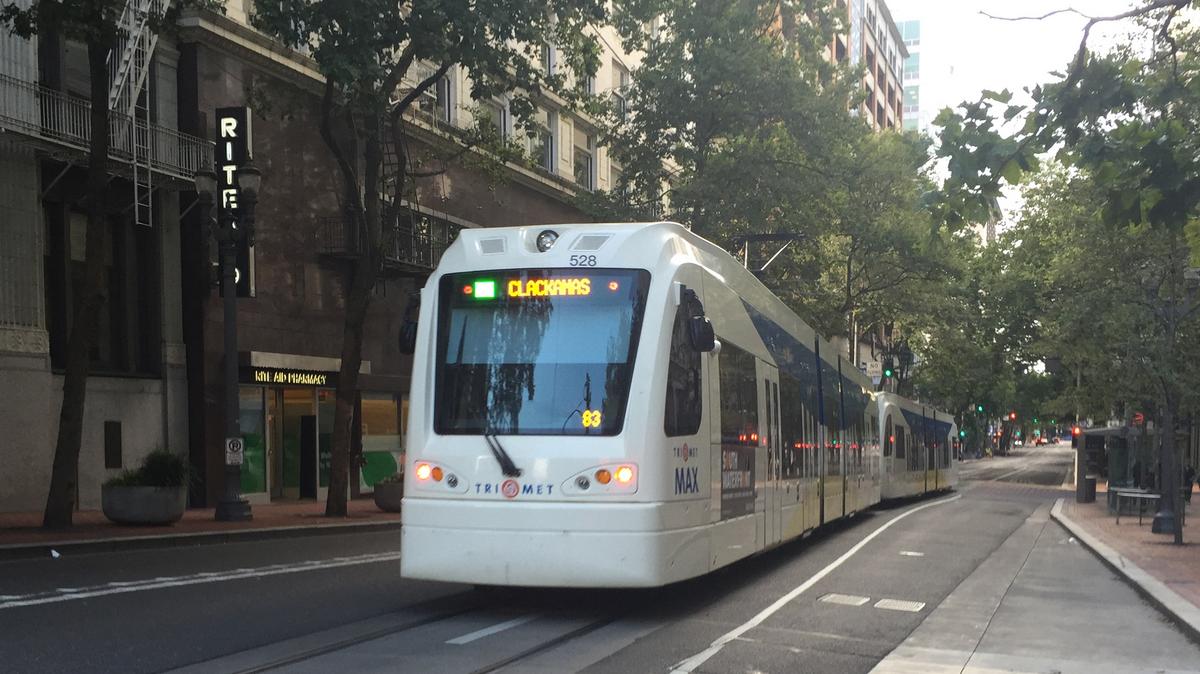
Light Rail in Portland, Oregon

For a long time, Columbus has had a reputation for having a relatively easy commute, at least in terms of driving. Its abundant highway and road system allowed commuters to travel to work quickly, with most commutes 20 minutes or less. However, as the city has grown and traffic has increased, the local commute may not be as quick as it once was. Story after story has shown that Columbus’ commute is steadily getting worse.

This post seeks to answer both how people are getting to work, how fast they get to work, and how commuters in Columbus differ from those in other cities. For this comparison, I used cities from metro areas most similar to Columbus’ size- 1.5-2.5 million- as well as major Midwest and Ohio cities.

First, let’s look at just how people get to work by the % of workers in 2019, the latest year available.
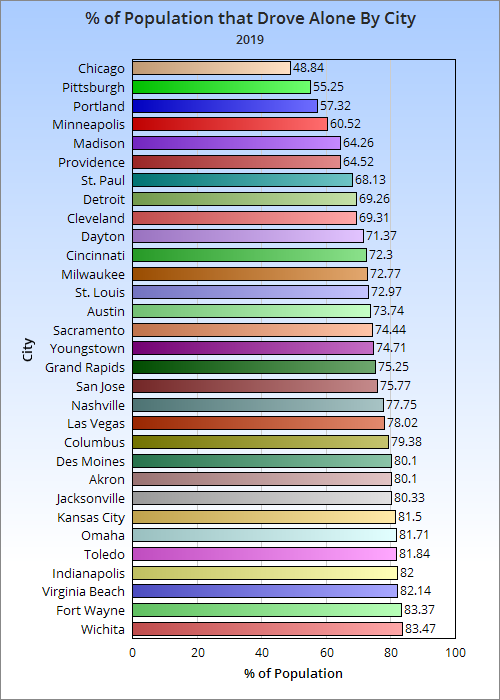
Out of the 31 cities looked out, Columbus is the 10th most car-dependent city. It is also the 3rd most car-dependent in Ohio after Akron and Toledo.
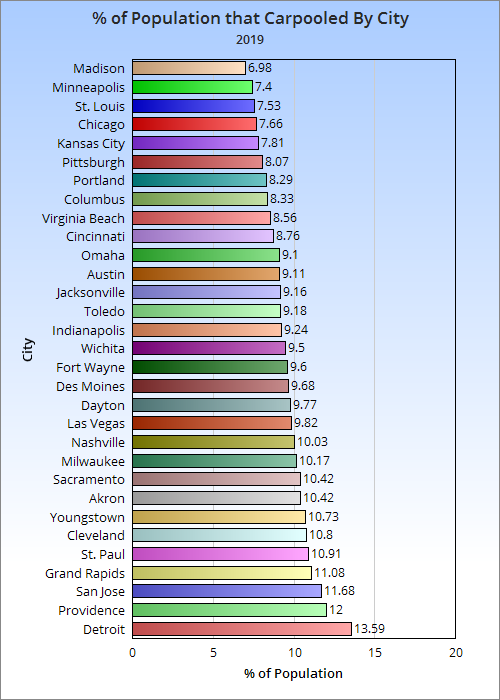
The heavy use of cars in Columbus did not translate to more people carpooling.
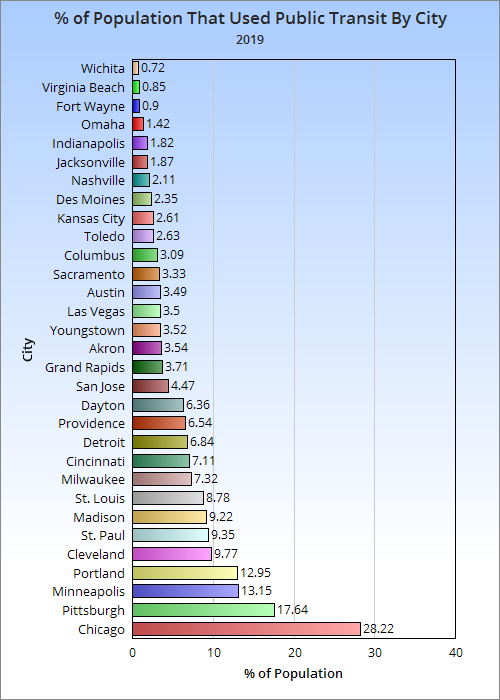
With only the COTA bus system available, the portion of the population that uses public transit is also in the bottom half. This despite the city seeing strong bus ridership growth over the last several years.
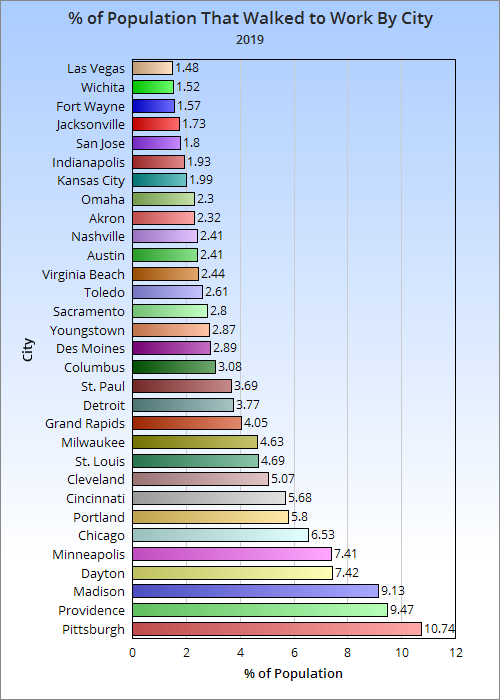
Columbus sat right in the middle of cities with the number of walking commuters. Several parts of the city lack sufficient walking infrastructure. For example, large parts of Linden and the South Side were built without sidewalks of any kind. Crosswalks and other safety features are also lacking in many areas.
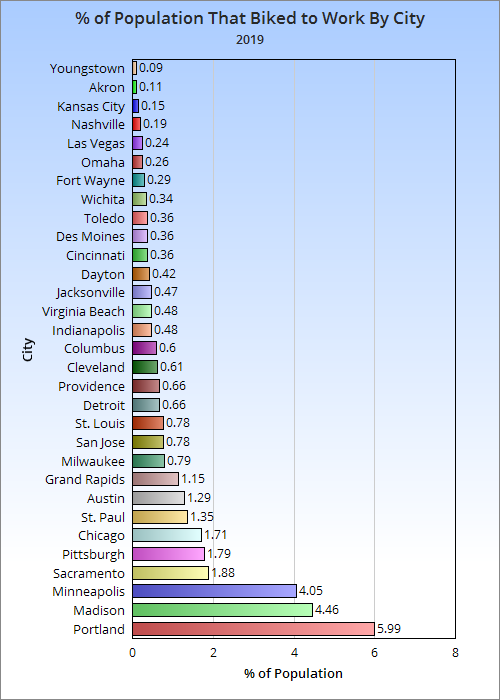


Columbus is again in the middle of the pack on biking commutes, and again infrastructure is the likely reason. There is only a single section of one bike lane that is protected anywhere in the city. Creating more bike lanes, let alone protected ones, remains a low priority for the city. Instead, they have relied on “Shared Use” type signage, along with painting sharrows.
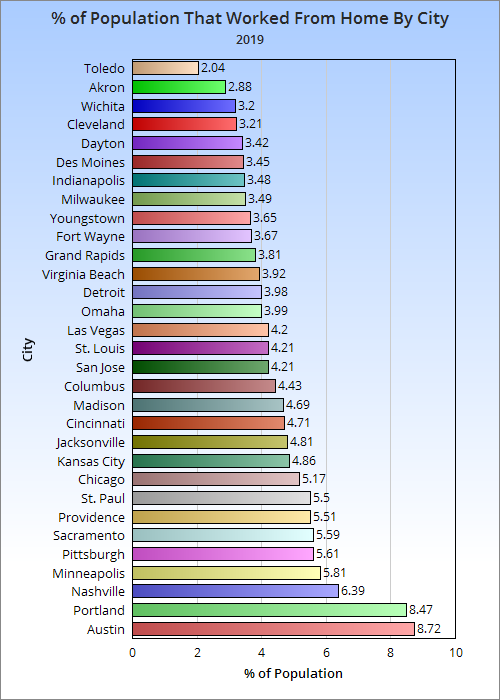
Columbus was in the top half of at-home workers. These numbers were all prior to the pandemic, so it’s likely that there will be significant increases in long-term or permanent home workers in post-2019 numbers.
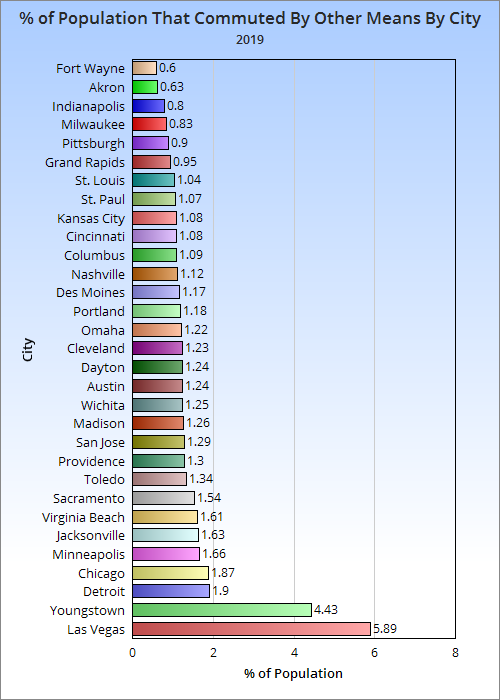
Other types of commuting include everything from taxis to commercial airline flights.
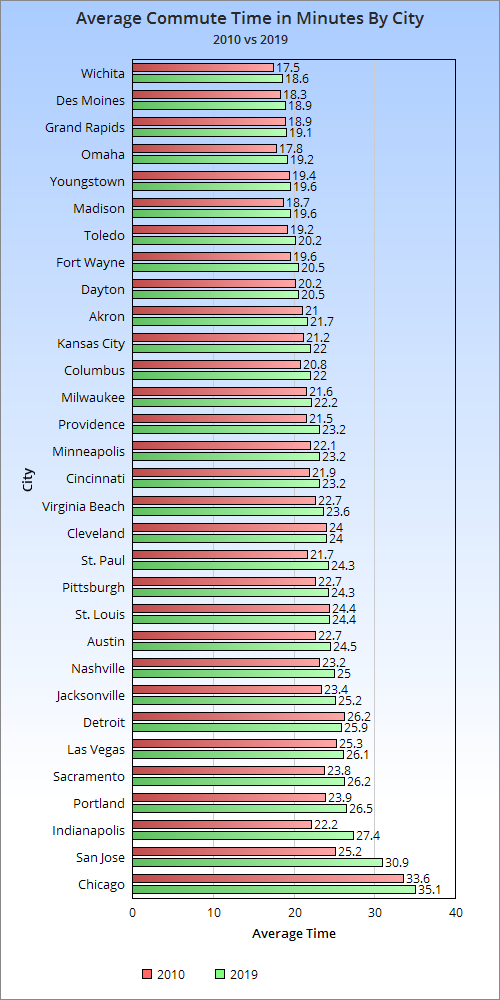
Columbus was in the bottom half of cities for the average commute time. Like almost everywhere else, that time has been increasing, however. Columbus saw the 11th biggest commute time increase and had the 2nd largest in Ohio. With its far larger population growth recently and predicted, that commute time is only going to get worse.

It’s pretty clear that Columbus has significant car dependency. With increasing commute times, it is crucial to plan for how people will get to work in the future. That is why it’s so important that new development is built to be walkable and dense while the average commute is still relatively short. This will promote walking, biking and new transit forms, all of which is better for a more vibrant, healthier city. It will also perhaps keep the number of cars on the road from growing as much. To assist in this process, the city must invest in more pedestrian and bike-friendly infrastructure, while also writing building codes that promote better planning in development.

To be fair, Columbus has made some progress. In 2010, the % of the population that drove alone was 80.76%, 1.38 points above where it was in 2019. Furthermore, the city has promoted more bus usage with its CPASS program. That said, the culture changes could’ve been much better had more policy and infrastructure been in place years ago like many other cities have had. Columbus has a lot of work to do.

To see about Columbus transit history, visit the following links.
Roads and Highways
Rail Transportation
Planes and Buses

Housing Market Update March 2021


housing market update March 2021 Columbus, Ohio

The popular monthly series continues with the local housing market update March 2021 report. Let’s drill down into the results.

Note: LSD= Local School District, CSD= City School District. In both cases, school district boundaries differ from city boundaries.

Top 15 Most Expensive Locations By Median Sales Price in March 2021
1. New Albany: $652,000
2. New Albany Plain LSD: $523,500
3. Powell: $519,000
4. Upper Arlington CSD: $476,600
5. German Village: $475,550
6. Grandview Heights: $474,000
7. Dublin: $462,000
8. Olentangy LSD: $443,685
9. Buckeye Valley LSD: $420,000
10. Dublin CSD: $419,000
11. Bexley: $413,000
12. Short North: $399,900
13. Granville LSD: $388,500
14. Big Walnut LSD: $384,900
15. Worthington: $358,000

New Albany continued to dominate the top of the market in terms of median sales price, and it wasn’t even close.

Top 15 Least Expensive Locations by Median Sales Price in March 2021
1. Whitehall: $140,100
2. Newark CSD: $146,000
3. Lancaster CSD: $160,500
4. Hamilton LSD: $166,000
5. Groveport Madison LSD: $185,000
6. Jefferson LSD: $185,000
7. Reynoldsburg CSD: $205,250
8. Columbus CSD: $209,718
9. Circleville CSD: $210,000
10. Columbus: $217,000
11. Obetz: $227,420
12. South-Western CSD: $230,000
13. Johnstown-Monroe LSD: $230,000
14. London CSD: $251,000
15. Teays Valley LSD: $253,092

Whitehall remains the area’s biggest bargain. This inner suburb hasn’t always had the best reputation, but the city has been making efforts to improve both its commercial corridors and residential options. Columbus is relatively cheap compared to most of the metro, yet has by far the largest variety of options and neighborhood types to choose from.

Overall Market Median Sales Price in March 2021: $242,550
The overall market is defined by Columbus Metro Area counties.

Top 15 Locations with the Highest Median Sales Price % Growth Between March 2020 and March 2021
1. London CSD: +52.2%
2. Circleville CSD: +44.3%
3. New Albany Plain LSD: +32.5%
4. German Village: +29.4%
5. Obetz: +26.4%
6. Gahanna Jefferson CSD: +26.0%
7. Grandview Heights: +25.4%
8. Powell: +23.9%
9. Upper Arlington CSD: +23.8%
10. Lancaster CSD: +23.7%
11. Jonathan Alder LSD: +23.6%
12. Grove City: +22.0%
13. Gahanna: +21.9%
14. Teays Valley: +21.5%
15. Pickerington LSD: +20.8%
16. Pickerington: +20.8%

Top 15 Locations with the Lowest Median Sales Price % Growth Between March 2020 and March 2021
1. Johnstown Monroe LSD: -25.0%
2. Downtown Columbus: -14.5%
3. Granville LSD: -13.2%
4. Big Walnut LSD: -10.5%
5. Short North: -10.0%
6. Bexley: -6.1%
7. Minerva Park: -5.4%
8. Worthington: -5.0%
9. Hamilton LSD: -3.8%
10. Hilliard: +0.8%
11. New Albany: +1.7%
12. Newark CSD: +4.3%
13. Dublin CSD: +4.6%
14. Hilliard CSD: +5.5%
15. Dublin: +7.5%

Urban areas and some inner suburbs had either the biggest price declines or smallest increases in March vs. March 2020 as the fallout continued from Covid and protest-related activities. These declines may be seen by potential buyers as a positive from the high prices that otherwise continue, however.

Overall Market Median Sales Price % Change March 2021 vs. March 2020: +16.3%

Top 10 Locations with the Most New Listings in March 2021
1. Columbus: 1,156
2. Columbus CSD: 811
3. South-Western CSD: 187
4. Olentangy LSD: 161
5. Hilliard CSD: 138
6. Westerville CSD: 125
7. Dublin CSD: 125
8. Gahanna Jefferson CSD: 78
9. Dublin: 77
10. Upper Arlington CSD: 76

To no surprise, Columbus remains strongly at the top. There were about 300 more new listings in Columbus in March than in February as warmer weather prompted more sellers to put their homes on the market.

Top 10 Locations with the Fewest New Listings in March 2021
1. Valleyview: 0
2. Lithopolis: 2
3. Minerva Park: 2
4. Jefferson LSD: 8
5. Jonathan Alder: LSD: 11
6. Sunbury: 12
7. Grandview Heights: 12
8. Obetz: 12
9. Whitehall: 12
10. German Village: 13

Total New Listings in the Columbus Metro in March 2021: 2,797
Overall Metro New Listings % Change March 2021 vs March 2020: +3.3%
The small increase overall was pushed by big increases smaller counties like Perry, Pickaway and Union.


Top 10 Fastest-Selling Locations by # of Days Homes Remain on the Market Before Sale in March 2021
1. Canal Winchester CSD: 3
2. Johnstown-Monroe LSD: 4
3. Minerva Park: 6
4. Hilliard: 7
5. Jefferson LSD: 7
6. Gahanna: 8
7. Groveport Madison LSD: 8
8. Whitehall: 9
9. London CSD: 10
10. Jonathan Alder LSD: 11
11. Marysville CSD: 11
12. South-Western CSD: 11

Top 10 Slowest-Selling Locations by # of Days Homes Remain on the Market Before Sale in March 2021
1. Lithopolis: 59
2. Powell: 55
3. Downtown Columbus: 54
4. Short North: 52
5. Big Walnut LSD: 49
6. Lancaster CSD: 39
7. Olentangy LSD: 38
8. Dublin: 37
9. Grandview Heights: 36
10. Buckeye Valley LSD: 34

Top 10 Locations with the Greatest % Decline of # of Days on the Market Before Sale March 2021 vs March 2020
1. Johnstown-Monroe LSD: -92.7%
2. Canal Winchester CSD: -92.5%
3. Minerva Park: -90.2%
4. Jefferson LSD: -89.9%
5. Sunbury: -85.0%
6. Jonathan Alder LSD: -83.8%
7. New Albany: -81.9%
8. New Albany Plain LSD: -75.5%
9. Marysville CSD: -71.8%
10. Whitehall: -71.0%

Top 10 Locations with the Lowest % Decline of # of Days on the Market Before Sale March 2021 vs March 2020
1. Worthington CSD: +50.0%
2. Worthington: +38.5%
3. Powell: +12.2%
4. Lancaster CSD: +2.6%
5. Hilliard CSD: -4.3%
6. Obetz: -5.3%
7. Short North: -10.3%
8. Newark CSD: -14.3%
9. Downtown Columbus: -23.9%
10. Pataskala: -26.1%

% Change for the # of Days Homes Remain on the Market Before Sale Across the Metro Overall:
-24.5%

The market remained hot in March, with faster sales and higher prices than in the previous. Inventory did inch up some as spring arrived, but not nearly enough to counter overall demand. Urban areas are still a bit off their peaks from pre-Covid and protests, but seem to have recovered slightly from some previous months.

The previous housing market report and the Columbus Realtors site offers additional information on the Columbus market.


Cool Link Ohio Black-Owned Businesses


With the economic collapse, pandemic and racial strife, Columbus’ minority-owned businesses need and deserve your support more than ever! Today’s link gives a list of Ohio Black-owned businesses.

Blackout

40 businesses are listed here, but there are far more within the city, and even more in the suburbs and other Ohio cities. Follow the links within the site to check out businesses throughout the region.

Stay safe out there!

Housing Market Update January 2017


housing market update January 2017 Columbus, Ohio

The recent housing market update January 2017 edition information comes from Columbus Realtors.

Note: LSD= Local School District, CSD= City School District. In both cases, school district boundaries differ from city boundaries.

Top 15 Most Expensive Locations By Median Sales Price in January 2017
1. New Albany: $535,000
2. New Albany Plain LSD: $397,450
3. German Village: $376,000
4. Powell: $354,950
5. Dublin: $343,600
6. Granville CSD: $330,000
7. Bexley: $325,000
8. Upper Arlington CSD: $319,500
9. Olentangy LSD: $315,000
10. Big Walnut LSD: $306,250
11. Dublin CSD: $271,500
12. Worthington: $270,000
13. Buckeye Valley LSD: $259,000
14. Sunbury: $253,000
15. Downtown: $243,750

Top 15 Least Expensive Locations by Median Sales Price in January 2017
1. Obetz: $80,100
2. Hamilton LSD: $80,100
3. Whitehall: $85,950
4. Newark CSD: $86,900
5. Lancaster CSD: $103,000
6. Jefferson LSD: $123,000
7. London CSD: $124,000
8. Groveport Madison LSD: $125,900
9. Reynoldsburg CSD: $125,950
10. Columbus CSD: $129,900
11. South-Western CSD: $131,000
12. Columbus: $140,026
13. Jonathan Alder LSD: $150,000
14. Minerva Park: $159,500
15. Grove City: $160,950

Overall Market Median Sales Price in January 2017: $160,368
Median Sales Price Change January 2016-January 2016: +$3,172

Top 15 Locations with the Highest Median Sales Price % Growth Between January 2016 and January 2017
1. Whitehall: +69.5%
2. Circleville CSD: +64.9%
3. Sunbury: +63.0%
4. Jefferson LSD: +53.5%
5. Big Walnut LSD: +44.1%
6. Canal Winchester CSD: +40.9%
7. Westerville: +29.8%
8. Westerville CSD: +27.3%
9. Powell: +25.4%
10. Pataskala: +24.0%
11. Olentangy LSD: +23.5%
12. Gahanna Jefferson CSD: +21.8%
13. Grandview Heights: +21.2%
14. Granville CSD: +20.0%
15. Pickerington: +17.7%

Top 15 Locations with the Lowest Median Sales Price % Growth Between January 2016 and January 2017
1. London CSD: -53.5%
2. Obetz: -38.3%
3. Hamilton LSD: -27.1%
4. Jonathan Alder LSD: -25.2%
5. Buckeye Valley LSD: -23.0%
6. Reynoldsburg CSD: -18.7%
7. Hilliard: -17.7%
8. Lancaster CSD: -17.6%
9. Grove City: -15.3%
10. Dublin CSD: -12.8%
11. Johnstown-Monroe LSD: -10.8%
12. Upper Arlington CSD: -8.5%
13. Newark CSD: -8.1%
14. Dublin: -7.1%
15. South-Western CSD: -6.4%

Overall Market Median Sales Price % Change January 2016-January 2017: +2.0%

Top 10 Locations with the Most New Listings in January 2017
1. Columbus: 829
2. Columbus CSD: 544
3. South-Western CSD: 136
4. Olentangy LSD: 122
5. Westerville CSD: 100
6. Hilliard CSD: 94
7. Dublin CSD: 89
8. Worthington CSD: 66
9. Dublin: 64
10. Pickerington LSD: 60

Top 10 Locations with the Fewest New Listings in January 2017
1. Valleyview: 0
2. Lithopolis: 1
3. Minerva Park: 2
4. Sunbury: 2
5. Obetz: 3
6. Johnstown Monroe LSD: 5
7. Jefferson LSD: 8
8. Jonathan Alder LSD: 8
9. German Village: 8
10. Hamilton LSD: 8
11. Northridge LSD: 9

Total New Listings in the Columbus Metro in January 2017: 2,002
Overall Metro New Listings % Change January 2016-January 2017: -1.9%

Top 10 Fastest-Selling Locations by # of Days Homes Remain on the Market Before Sale in January 2017
1. Obetz: 18
2. Sunbury: 21
3. Pataskala: 22
4. Jefferson LSD: 26
5. Gahanna: 28
6. Minerva Park: 28
7. Delaware CSD: 29
8. Bexley: 31
9. Hilliard CSD: 31
10. Pickerington: 31
11. Worthington CSD: 31

Top 10 Slowest-Selling Locations by # of Days Homes Remain on the Market Before Sale in January 2017
1. Dublin: 96
2. New Albany: 93
3. Dublin CSD: 82
4. Powell: 80
5. Granville CSD: 79
6. Olentangy LSD: 78
7. Downtown: 77
8. Grandview Heights: 76
9. New Albany Plain LSD: 68
10. Canal Winchester CSD: 67
11. New Albany CSD: 65
12. Upper Arlington CSD: 62
13. Circleville CSD: 61
14. Johnstown Monroe LSD: 61
15. Hamilton LSD: 60

# of Days For-Sale Homes Remain on the Market Before Sale Across the Metro Overall: 51.6
Change in # of Days Before Sale January 2016-January 2017: -22.0


Top 10 Locations with the Greatest % Decline of # of Days on the Market Before Sale January 2016-January2017
1. Obetz: -89.2%
2. Pataskala: -64.5%
3. Whitehall: -64.3%
4. Circleville CSD: -56.1%
5. Gahanna: -53.3%
6. Grove City: -49.2%
7. Delaware CSD: -44.2%
8. Bexley: -40.4%
9. Pickerington LSD: -39.7%
10. Worthington CSD: -38.0%

Top 10 Locations with the Lowest % Decline of # of Days on the Market Before Sale January 2016-January 2017
1. German Village: +161.1%
2. Worthington: +123.8%
3. Powell: +77.8%
4. Grandview Heights: +46.2%
5. Big Walnut LSD: +41.5%
6. Minerva Park: +40.0%
7. Jonathan Alder LSD: +37.8%
8. Canal Winchester CSD: +31.4%
9. Marysville CSD: +28.3%
10. Johnstown Monroe LSD: +27.1%

% Change for the # of Days Homes Remain on the Market Before Sale Across the Metro Overall: -29.9%


Peer and Columbus Metro GDP Comparison


Metro GDP comparison

This metro GDP comparison is based on information from the Bureau of Economic Analysis.

Rank of Major Midwest Metros and Columbus National Peers by GDP, 2001, 2010 and 2015
In Millions
2001——————————————–2010————————————-2015

1. Chicago, IL: $416,444————-1. Chicago: $533,825————–1. Chicago: $640,656
2. Detroit, MI: $190,921———–2. Minneapolis: $199,606——-2. Minneapolis: $248,779
3. Minneapolis, MN: $148,192—–3. Detroit: $197,973—————–3. Detroit: $245,607
4. San Jose, CA: $125,037———4. San Jose: $163,836———–4. San Jose: $235,222
5. St. Louis, MO: $102,385———5. Portland: $141,233————5. Portland: $158,770
6. Pittsburgh, PA: $88,769———-6. St. Louis: $133,888———6. St. Louis: $155,077
7. Cleveland: $87,796————-7. Pittsburgh: $117,895———-7. Charlotte: $152,447
8. Portland, OR: $80,753———8. Charlotte: $114,500————8. Pittsburgh: $138,873
9. Cincinnati: $79,638————-9. Indianapolis: $111,084——-9. Indianapolis: $134,081
10. Kansas City, MO: $79,544—-10. Cleveland: $109,365—–10. Cleveland: $128,448
11. Charlotte, NC $78,675———11. Kansas City: $107,265—11. Cincinnati: $127,057
12. Indianapolis, IN: $78,009——-12. Cincinnati: $104,314—-12. Kansas City: $125,618
13. Columbus: $74,172————-13. Orlando: $101,307——–13. Columbus: $124,381
14. Sacramento, CA: $66,696—–14. Columbus: $96,475——14. Orlando: $121,329
15. Orlando, FL: $66,644———–15. Sacramento: $96,015—-15. Austin: $119,949
16. Milwaukee, WI: $65,033——–16. Austin: $87,473———-16. Sacramento: $118,822
17. Nashville, TN: $58,245———17. Milwaukee: $86,569—–17. Nashville: $113,680
18. Las Vegas, NV: $57,035——-18. Las Vegas: $85,020—–18. San Antonio: $108,879
19. Virginia Beach, VA: $54,040—-19. Nashville: $84,804—19. Las Vegas: $103,343
20. Austin, TX: $53,915——20. Virginia Beach: $82,685—–20. Milwaukee: $102,209
21. San Antonio, TX: $53,248—21. San Antonio: $81,722—21. Virginia Beach: $95,680
22. Providence, RI: $49,997——-22. Providence: $67,754—-22. Providence: $78,694
23. Grand Rapids, MI: $35,248—-23. Omaha: $47,711——-23. Omaha: $59,090
24. Omaha, NE: $32,044——–24. Grand Rapids: $41,221–24. Grand Rapids: $53,949
25. Dayton: $29,658————–25. Dayton: $34,226————25. Dayton: $39,206
26. Toledo: $22,216————–26. Akron: $28,628————–26. Akron: $34,419
27. Akron: $21,684—————27. Toledo: $27,158————-27. Toledo: $34,019
28. Youngstown: $15,314——28. Youngstown: $17,293——28. Youngstown: $21,417

Rank by Total Change in Millions 2001-2015
1. Chicago: +$224,212
2. San Jose: +$110,185
3. Minneapolis: +$100,587
4. Portland: +$78,017
5. Charlotte: +$73,772
6. Austin: +$66,034
7. Indianapolis: +$56,072
8. San Antonio: +$55,631
9. Nashville: +$55,435
10. Detroit: +$54,686
11. Orlando: +$54,685
12. St. Louis: +$52,692
13. Sacramento: +$52,126
14. Columbus: +$50,209
15. Pittsburgh: +$50,104
16. Cincinnati: +$47,419
17. Las Vegas: +$46,308
18. Kansas City: +$46,074
19. Virginia Beach: +$41,640
20. Cleveland: +$40,652
21. Milwaukee: +$37,176
22. Providence: +$28,697
23. Omaha: +$27,046
24. Grand Rapids: +$18,701
25. Akron: +$12,735
26. Toledo: +$11,803
27. Dayton: +$9,548
28. Youngstown: +$6,103

Rank by Total Change in Millions 2010-2015
1. Chicago: +$106,831
2. San Jose: +$71,386
3. Minneapolis: +$49,173
4. Detroit: +$47,634
5. Charlotte: +$37,947
6. Austin: +$32,476
7. Nashville: $28,876
8. Columbus: +$27,906
9. San Antonio: +$27,157
10. Indianapolis +$22,997
11. Sacramento: +$22,807
12. Cincinnati: +$22,743
13. St. Louis: +$21,189
14. Pittsburgh: +$20,978
15. Orlando: +$20,022
16. Cleveland: +$19,083
17. Kansas City: +$18,353
18. Las Vegas: +$18,323
19. Portland: +$17,537
20. Milwaukee: +$15,640
21. Virginia Beach: +$12,995
22. Grand Rapids: +$12,728
23. Omaha: +$11,379
24. Providence: +$10,940
25. Toledo: +$6,861
26. Akron: +$5,791
27. Dayton: +$4,980
28. Youngstown: +$4,124

Total Rank by % Change 2001-2015
1. Austin: +122.48%
2. San Antonio: +104.48%
3. Portland: +96.61%
4. Nashville: +95.18%
5. Charlotte: +93.77%
6. San Jose: +88.12%
7. Omaha: +84.40%
8. Orlando: +82.06%
9. Las Vegas: +81.19%
10. Sacramento: +78.15%
11. Virginia Beach: +77.05%
12. Indianapolis: +71.88%
13. Minneapolis: +67.88%
14. Columbus: +67.69%
15. Cincinnati: +59.54%
16. Akron: +58.73%
17. Kansas City: +57.92%
18. Providence: +57.40%
19. Milwaukee: +57.16%
20. Pittsburgh: +56.44%
21. Chicago: +53.84%
22. Toledo: +53.13%
23. Grand Rapids: +53.06%
24. St. Louis: +51.46%
25. Cleveland: +46.30%
26. Youngstown: +39.85%
27. Dayton: +32.19%
28. Detroit: +28.64%

Total Rank by % Change 2010-2015
1. San Jose: +43.57%
2. Austin: +37.13%
3. Nashville: +34.05%
4. San Antonio: +33.23%
5. Charlotte: +33.14%
6. Grand Rapids: +30.88%
7. Columbus: +28.93%
8. Toledo: +25.26%
9. Minneapolis: +24.64%
10. Detroit: +24.06%
11. Omaha: +23.85%
12. Youngstown: +23.85%
13. Sacramento: +23.75%
14. Cincinnati: +21.80%
15. Las Vegas: +21.55%
16. Indianapolis: +20.70%
17. Akron: +20.23%
18. Chicago: +20.01%
19. Orlando: +19.76%
20. Milwaukee: +18.07%
21. Pittsburgh: +17.79%
22. Cleveland: +17.45%
23. Kansas City: +17.11%
24. Providence: +16.15%
25. St. Louis: +15.83%
26. Virginia Beach: +15.72%
27. Dayton: +14.55%
28. Portland: +12.42%

Finally, let’s take a look at per-capita GDP and income.

Rank of Metros by Per-Capita GDP in Dollars, 2015
1. San Jose: $112,851
2. Minneapolis: $63,474
3. Portland: $62,229
4. Chicago: $59,688
5. Indianapolis: $59,479
6. Milwaukee: $58,219
7. Omaha: $57,334
8. Cleveland: $56,013
9. Nashville: $55,841
10. Charlotte: $55,610
11. Pittsburgh: $55,335
12. Austin: $55,323
13. Columbus: $55,005
14. Kansas City: $54,097
15. Cincinnati: $52,649
16. Detroit: $51,428
17. Virginia Beach: $49,606
18. Toledo: $49,428
19. St. Louis: $49,258
20. Sacramento: $46,697
21. Grand Rapids: $46,677
22. Orlando: $45,756
23. Akron: $44,246
24. Dayton: $43,748
25. Providence: $43,744
26. Las Vegas: $43,476
27. San Antonio: $42,169
28. Youngstown: $34,960

Total Growth 2001-2015 by Rank, in Dollars
1. San Jose: +$40,677
2. Portland: +$18,225
3. Pittsburgh: +$10,064
4. Austin: +$9,925
5. Toledo: +$7,414
6. Virginia Beach: +$7,256
7. Nashville: +$7,071
8. Cleveland: +$6,767
9. Milwaukee: +$6,744
10. Omaha: +$6,581
11. Akron: +$6,167
12. Minneapolis: +$5,900
13. Providence: +$5,560
14. Chicago: +4,663
15. San Antonio: +$4,652
16. Cincinnati: +$4,426
17. Youngstown: +$4,391
18. Sacramento: +$3,210
19. Columbus: +$3,182
20. Indianapolis: +$2,984
21. Grand Rapids: +$2,971
22. Charlotte: +$2,880
23. Kansas City: +$2,770
24. St. Louis: +$2,699
25. Detroit: +$2,011
26. Dayton: +$162
27. Orlando: -$1,630
28. Las Vegas: -$5,041

Total Per-Capita GDP Growth 2010-2015, in Dollars
1. San Jose: +$23,814
2. Toledo: +$6,242
3. Pittsburgh: +$6,172
4. Nashville: +$5,643
5. Detroit: +$5,459
6. Austin: +$5,307
7. Grand Rapids: +$5,158
8. Youngstown: +$4,987
9. San Antonio: +$4,878
10. Columbus: +$4,864
11. Minneapolis: +$4,644
12. Charlotte: +$4,578
13. Chicago: +$4,004
14. Cleveland: +$3,992
15. Cincinnati: +$3,986
16. Akron: +$3,774
17. Milwaukee: +$2,913
18. Omaha: +$2,863
19. Sacramento: +$2,680
20. Providence: +$1,902
21. St. Louis: +$1,884
22. Dayton: +$1,439
23. Kansas City: +$1,270
24. Indianapolis: +$1,186
25. Virginia Beach: +$998
26. Las Vegas: +$206
27. Portland: -$992
28. Orlando: -$1,345

What the numbers suggest is that Columbus was performing at a middle-mediocre level in the first half of the 2001-2015 period, and has generally been performing significantly better in the latter half. In Ohio, Columbus is poised to become Ohio’s largest metro economy over the next few years.