2015 City Population Estimates


2015 city population estimates

The latest 2015 city population estimates came out today from the US Census, so let’s take a look at them.

First of all, let’s look at the top 25 cities in Ohio on July 1, 2015, and the population change from July 1, 2014.
1. Columbus: 850,106 +12,175
2. Cleveland: 388,072 -1,788
3. Cincinnati: 298,550 +509
4. Toledo: 279,789 -803
5. Akron: 197,542 -557
6. Dayton: 140,599 -235
7. Parma: 79,937 -119
8. Canton: 71,885 -395
9. Youngstown: 64,628 -438
10. Lorain: 63,647 -104
11. Hamilton: 62,407 -44
12. Springfield: 59,680 -246
13. Kettering: 55,525 -117
14. Elyria: 53,775 -179
15. Lakewood: 50,656 -297
16. Cuyahoga Falls: 49,146 -123
17. Middletown: 48,760 -6
18. Newark: 47,986 +140
19. Euclid: 47,676 -242
20. Mentor: 46,901 +35
21. Mansfield: 46,830 -5
22. Beavercreek: 46,227 +217
23. Dublin: 45,098 +794
24. Cleveland Heights: 44,962 -243
25. Strongsville: 44,668 -9

Only a handful of the top 25 saw growth.

Now let’s look at the Columbus metro overall, and the change since July 1, 2014.
1. Columbus: 850,106
2. Newark (Licking): 47,986
3. Dublin: 45,098
4. Lancaster (Fairfield): 39,766
5. Grove City: 39,388
6. Westerville: 38,384
7. Delaware (Delaware): 37,995
8. Reynoldsburg: 37,158
9. Upper Arlington: 34,907
10. Gahanna: 34,590
11. Hilliard: 33,649
12. Marysville (Union): 22,817
13. Pickerington (Fairfield): 19,745
14. Whitehall: 18,694
15. Pataskala (Licking): 15,245
16. Worthington: 14,498
17. Bexley: 13,654
18. Circleville (Pickaway): 13,857
19. Powell (Delaware): 12,927
20. Heath (Licking): 10,489
21. London (Madison): 10,060
22. New Albany: 9,879
23. Canal Winchester: 7,818
24. Grandview Heights: 7,328
25. Logan (Hocking): 7,117
26. Granville (Licking): 5,747
27. Groveport: 5,737
28. Sunbury (Delaware): 5,097
29. Johnstown (Licking): 4,918
30. Obetz: 4,761
31. New Lexington (Perry): 4,727
32. Plain City (Madison): 4,302
33. West Jefferson (Madison): 4,279
34. Ashville (Pickaway): 4,190
35. Mount Gilead (Morrow): 3,653
36. Baltimore (Fairfield): 2,970
37. Buckeye Lake (Licking): 2,760
38. Crooksville (Perry): 2,498
39. Hebron (Licking): 2,409
40. Richwood (Union): 2,281
41. Utica (Licking): 2,196
42. Cardington (Morrow): 2,047
43. South Bloomfield (Pickaway): 1,851
44. Mount Sterling (Madison): 1,745
45. Commercial Point (Pickaway): 1,611
46. Somerset (Perry): 1,464
47. Bremen (Fairfield): 1,437
48. Ashley (Delaware): 1,361
49. Lithopolis (Fairfield) 1,351
50. Minerva Park: 1,318
51. Hanover (Licking): 1,131
52. Williamsport (Pickaway): 1,051
53. Millersport (Fairfield): 1,049
54. Urbancrest: 1,033
55. Thornville (Perry): 997
56. Pleasantville (Fairfield): 958
57. New Holland (Pickaway): 836
58. Milford Center (Union): 823
59. Junction City (Perry): 810
60. Amanda (Fairfield): 747
61. Shawnee Hills (Delaware): 735
62. New Straitsville (Perry): 715
63. Ostrander (Delaware): 688
64. Galena (Delaware): 684
65. Shawnee (Perry): 646
66. Valleyview: 636
67. Thurston (Fairfield): 610
68. Marble Cliff: 584
69. Corning (Perry): 573
70. Riverlea: 569
71. Stoutsville (Fairfield): 566
72. Kirkersville (Licking): 541
73. Carroll (Fairfield): 520
74. Laurelville (Hocking): 517
75. Alexandria (Licking): 523
76. Murray City (Hocking): 435
77. Edison (Morrow): 435
78. Sugar Grove (Fairfield): 431
79. Hartford (Licking): 402
80. St. Louisville (Licking): 376
81. South Solon (Madison): 361
82. Marengo (Morrow): 346
83. Harrisburg: 334
84. Midway (Madison): 327
85. Rushville (Fairfield): 305
86. Tarlton (Pickaway): 290
87. Orient (Pickaway): 275
88. Magnetic Springs (Union): 276
89. Fulton (Morrow): 261
90. Lockbourne: 247
91. Unionville Center (Union): 239
92. Chesterville (Morrow): 230
93. Darbyville (Pickaway): 229
94. Gratiot (Licking): 224
95. Glenford (Perry): 177
96. Sparta (Morrow): 163
97. Hemlock (Perry): 156
98. West Rushville (Fairfield): 135
99. Brice: 120
100. Rendville (Perry): 36

Finally, let’s take a look at population growth ranking between Census 2010 and July 1, 2015.
1. Columbus: +63,073
2. Hilliard: +5,214
3. Grove City: +3,813
4. Dublin: +3,347
5. Delaware: +3,242
6. Westeville: +2,264
7. New Albany: +2,155
8. Powell: +1,472
9. Pickerington: +1,454
10. Gahanna: +1,342
11. Reynoldsburg: +1,265
12. Upper Arlington: +1,136
13. Lancaster: +986
14. Worthington: +923
15 Grandview Heights: +792
16. Marysville: +723
17. Canal Winchester: +717
18. Sunbury: +708
19. Whitehall: +632
20. Bexley: +597
21. Circleville: +543
22. Newark: +413
23. Groveport: +374
24. Johnstown: +286
25. Pataskala: +283
26. Lithopolis: +245
27. Obetz: +229
28. Hanover: +210
29. Heath: +179
30. London: +156
31. South Bloomfield: +107
32. Granville: +101
33. Ashville: +93
34. Plain City: +77
35. Urbancrest: +73
36. Hebron: +73
37. Utica: +64
38. West Jefferson: +57
39. Shawnee Hills: +54
40. Richwood: +52
41. Minverva Park: +46
42. Galena: +45
43. Ostrander: +45
44. New Holland: +35
45. Milford Center: +31
46. Ashley: +31
47. Commercial Point: +29
48. Williamsport: +28
49. Riverlea: +24
50. Kirkersville: +16
51. Valleyview: +16
52. Buckeye Lake: +14
53. Harrisburg: +14
54. Bremen: +12
55. Marble Cliff: +11
56. Amanda: +10
57. Lockbourne: +10
58. Tarlton: +8
59. Magnetic Springs: +8
60. Darbyville: +7
61. Brice: +7
62. Thurston: +6
63. Alexandria: +6
64. Stoutsville: +6
65. Unionville Center: +6
66. Thornville: +6
67. Millersport: +5
68. Orient: +5
69. Sugar Grove: +5
70. Hartford: +5
71. South Solon: +5
72. Somerset: +5
73. Midway: +5
74. Marengo: +4
75. Baltimore: +4
76. Glenford: +4
77. Fulton: +3
78. Gratiot: +3
79. St. Louisville: +3
80. Rushville: +3
81. Chesterville: +2
82. Sparta: +2
83. West Rushville: +1
84. Hemlock: +1
85. Cardington: 0
86. Rendville: 0
87. Pleasantville: -2
88. Edison: -2
89. Carroll: -4
90. New Lexington: -4
91. Mount Gilead: -7
92. New Straitsville: -7
93. Junction City: -9
94. Shawnee: -9
95. Corning: -10
96. Laurelville: -10
97. Murray City: -14
98. Logan: -35
99. Mount Sterling: -37
100. Crooksville: -37

So 86 of the metro’s 100 places have either grown or held steady in population since 2010. That is an increase from 70 places during the 2000s.

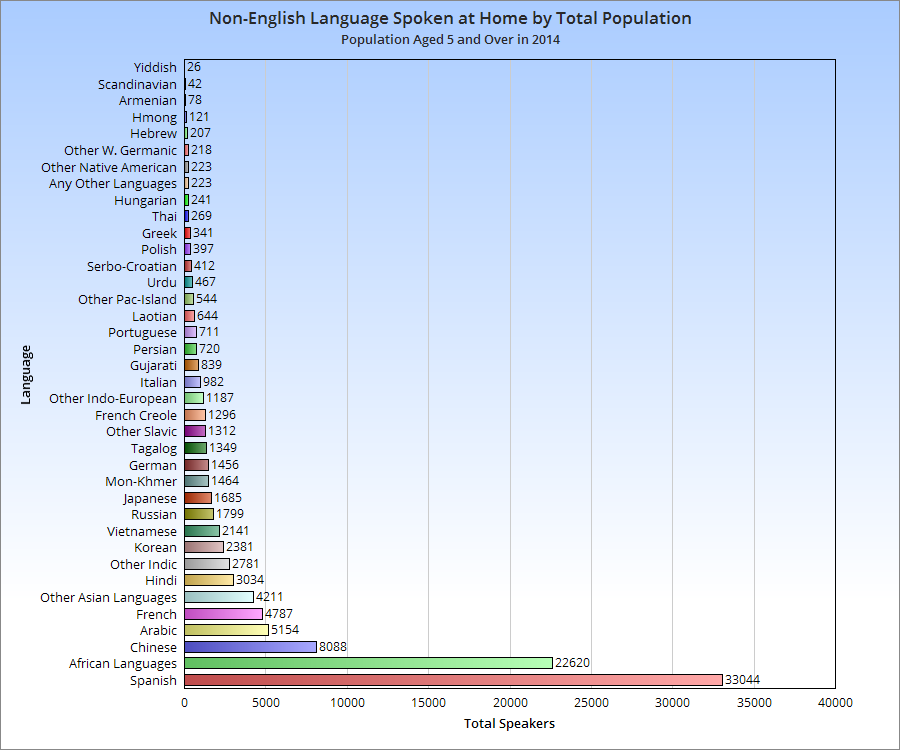
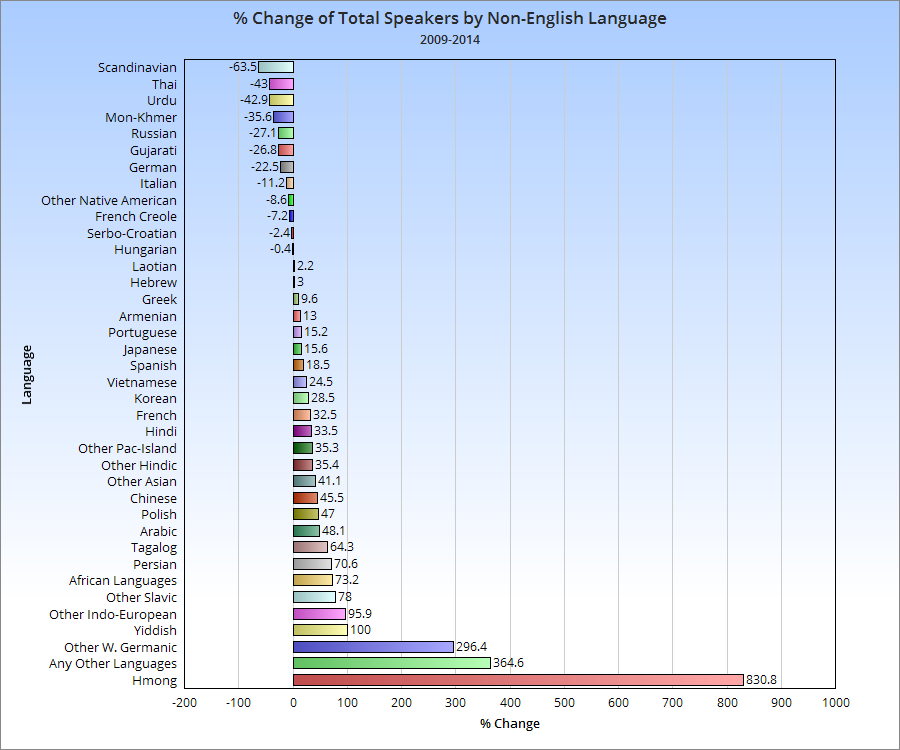

Non-English Languages Spoken in Columbus


Just a quick little post about the non-English languages spoken in the city of Columbus and how they have changed between 2009 and 2014, by total number of speakers.
languages spoken in Columbus

For the record, in 2014, 14.3% of the Columbus population spoke a language other than English at home, up from about 12% in 2009.

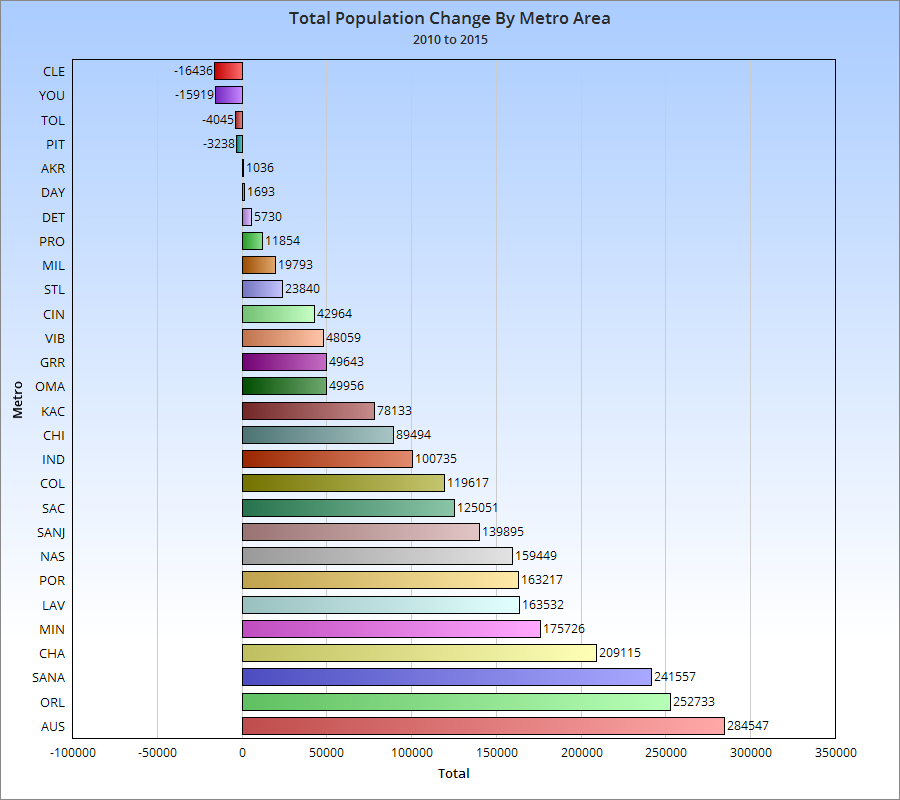
2015 Metro Area Population Estimates and Peer Comparison


As promised, here are the 2015 metro area population estimates for Columbus and its regional and national peers.

2015 Metro Population Estimates
Chicago, IL: 9,551,031
Detroit, MI: 4,302,043
Minneapolis, MN: 3,524,583
St. Louis, MO: 2,811,588
Charlotte, NC: 2,426,363
Portland, OR: 2,389,228
Orlando, FL: 2,387,138
San Antonio, TX: 2,384,075
Pittsburgh, PA: 2,353,045
Sacramento, CA: 2,274,194
Cincinnati: 2,157,719
Las Vegas, NV: 2,114,801
Kansas City, MO: 2,087,471
Cleveland: 2,060,810
Columbus: 2,021,632
Austin, TX: 2,000,860
Indianapolis: 1,988,817
San Jose, CA: 1,976,836
Nashville, TN: 1,830,345
Virginia Beach, VA: 1,724,876
Providence, RI: 1,613,070
Milwaukee, WI: 1,575,747
Grand Rapids, MI: 1,038,583
Omaha, NE: 915,312
Dayton: 800,909
Akron: 704,243
Toledo: 605,956
Youngstown: 549,885
2015 metro area population estimates

Components of Metro Area Population Change


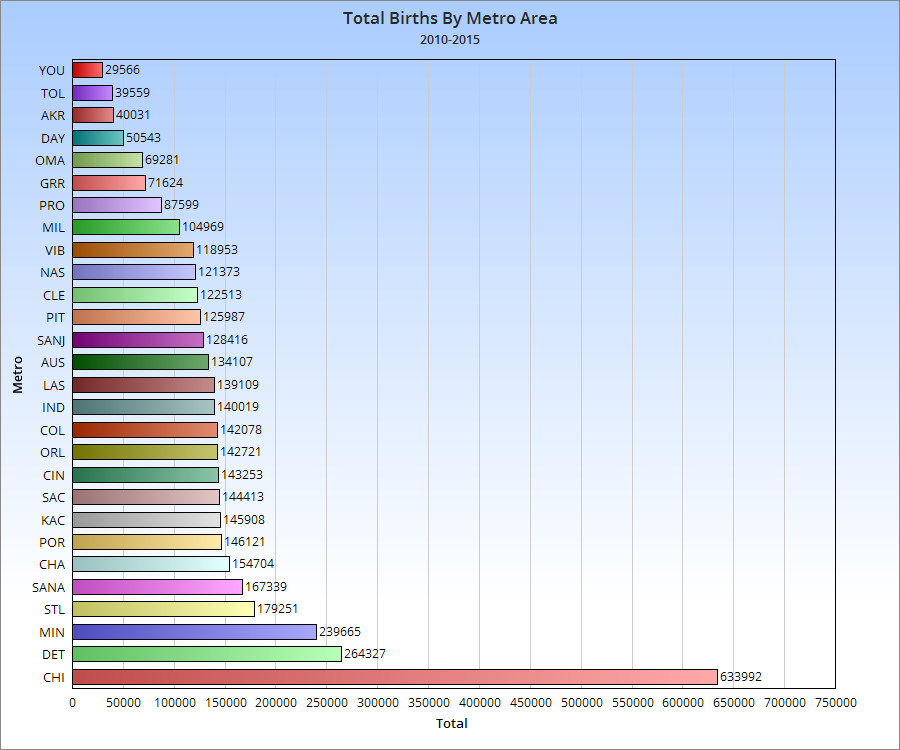
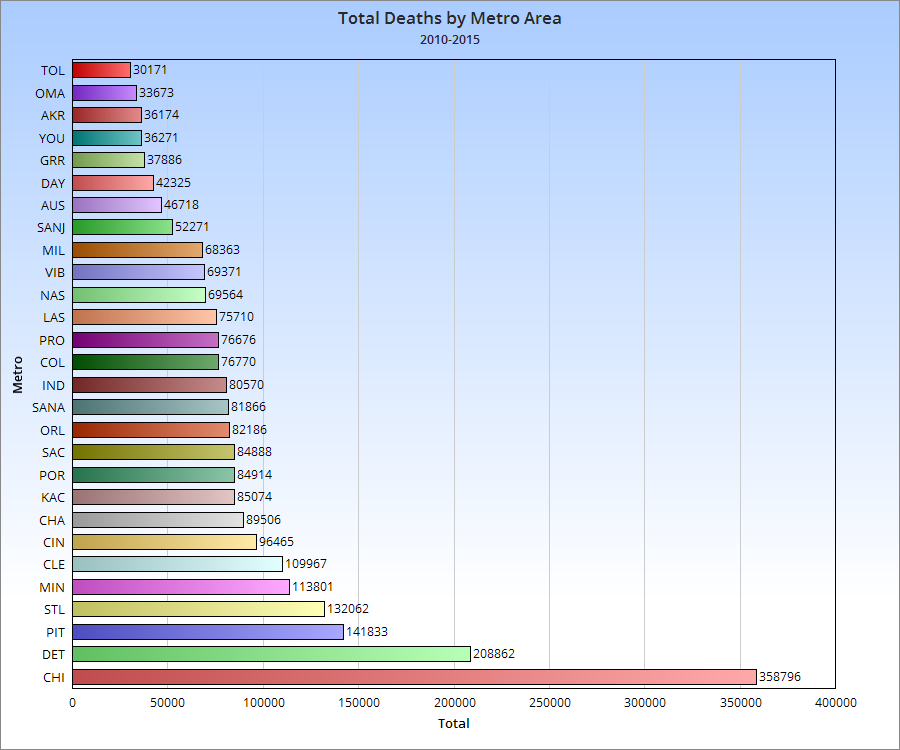
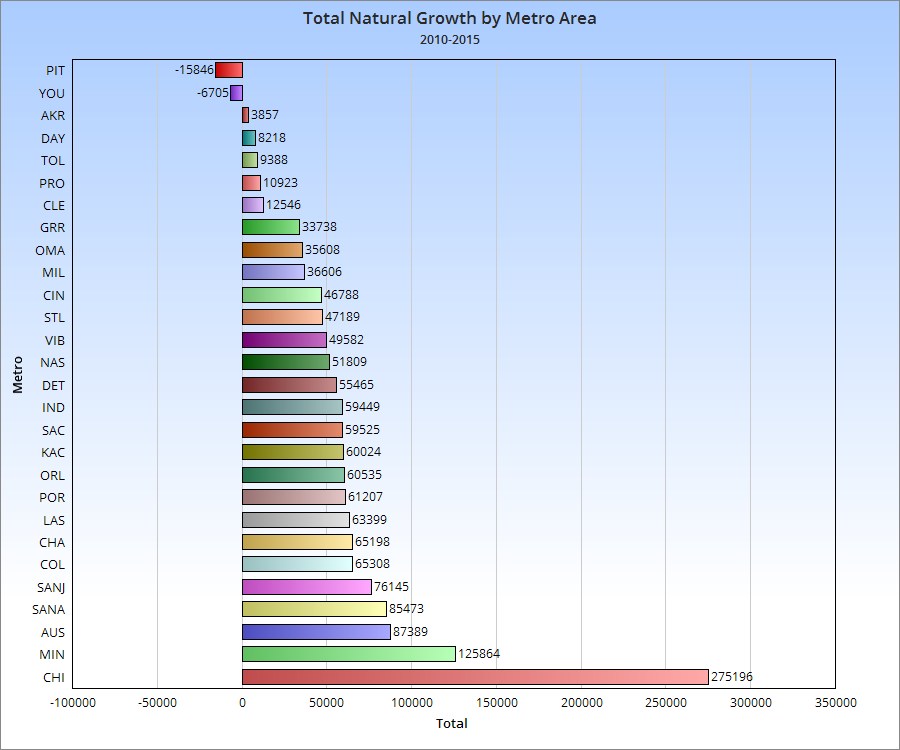
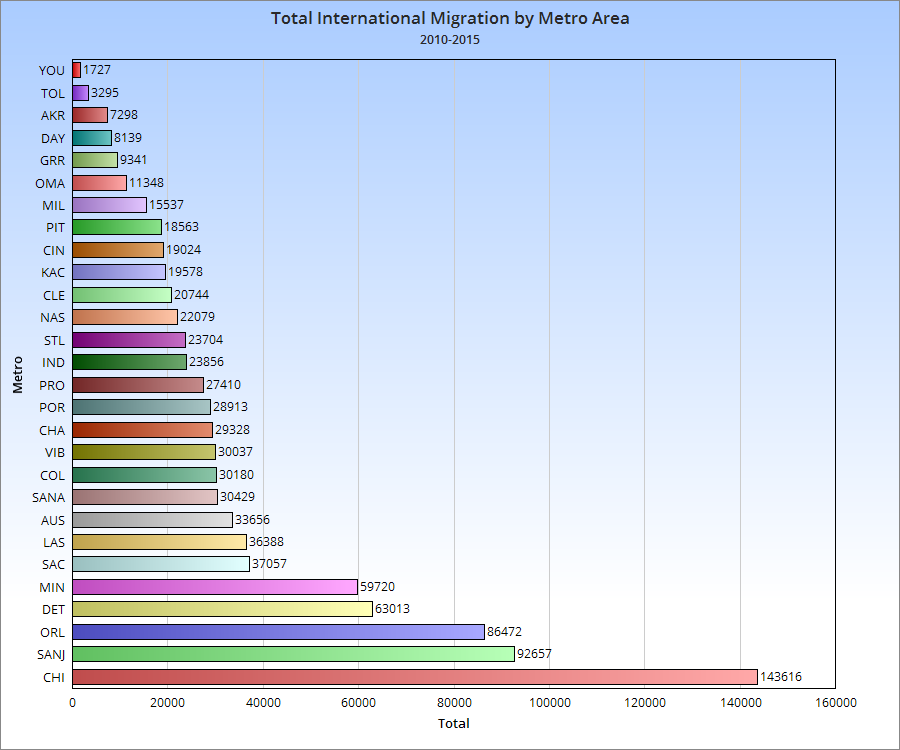
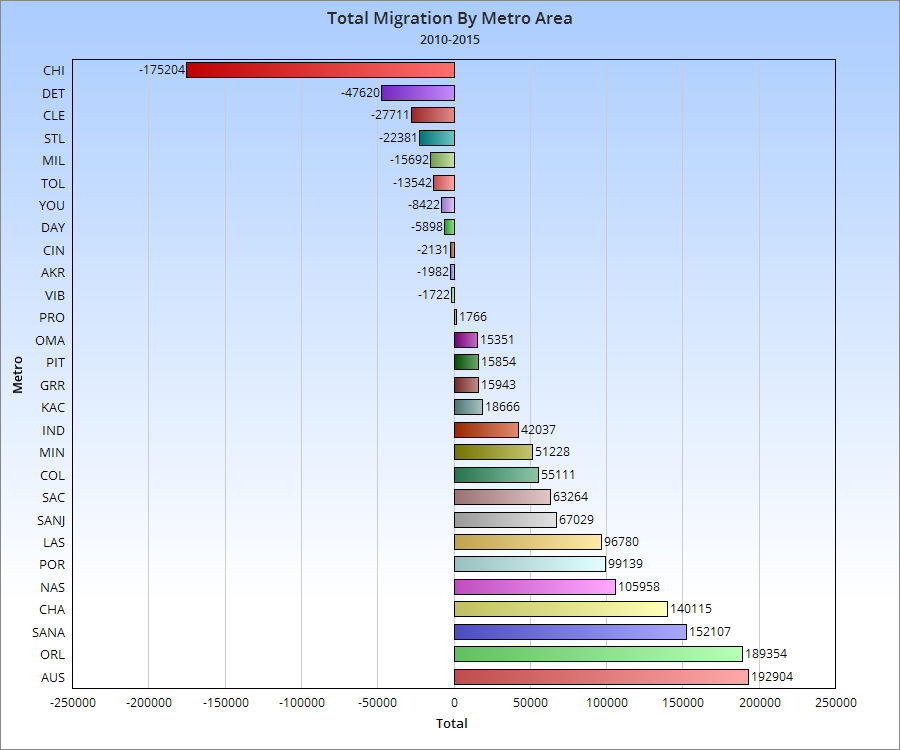
As you can see, while Columbus has a middle of the road birth rate for its peers, its relatively low death rate means that it manages to be near the top of the its peer group in natural growth.


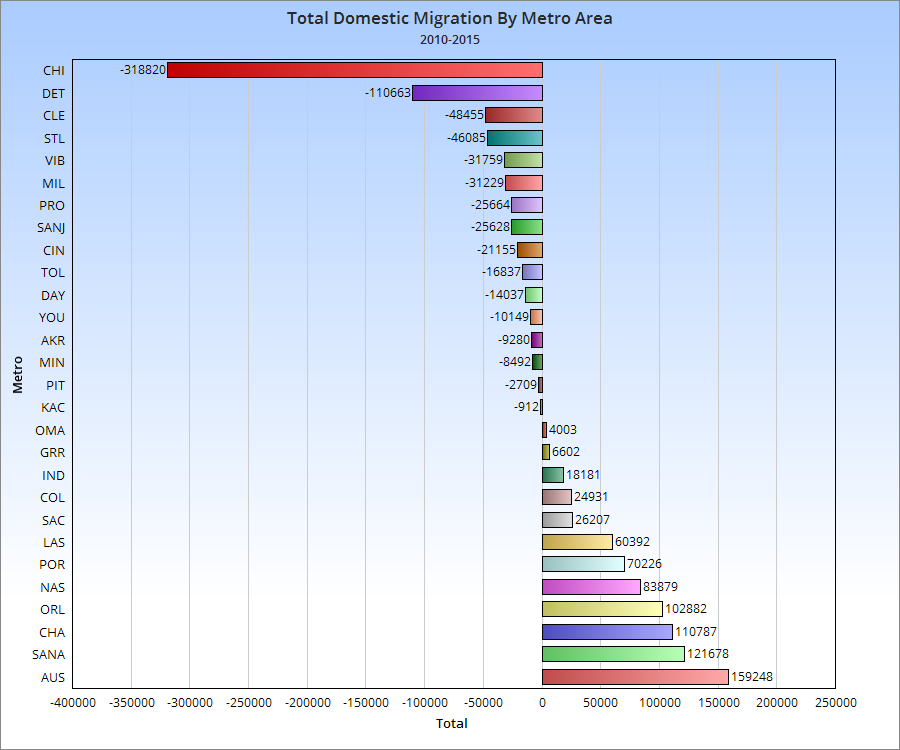
It seems that while international migration is competitive with peers in the Columbus metro, domestic migration would need to improve to truly be at the upper peer level. At the very least, it is positive.

For more local and national population and demographic data, visit:
Demographics and Population
US Census


2015 County Population Estimates Report


The US Census has released its population estimates for both counties and metros for the year ending July 1, 2015. Here is a detailed look at Ohio’s counties in this 2015 county population estimates report.

Ohio’s Top 25 Largest Counties
2010……………………………….2014………………………………..2015

1. Cuyahoga: 1,280,109….1. Cuyahoga: 1,263,796……1. Cuyahoga: 1,255,921
2. Franklin: 1,163,545……..2. Franklin: 1,234,126………2. Franklin: 1,251,722
3. Hamilton: 802,270……….3. Hamilton: 806,332……….3. Hamilton: 807,598
4. Summit: 541,671………..4. Summit: 542,600………….4. Summit: 541,968
5. Montgomery: 536,216….5. Montgomery: 532,515…..5. Montgomery: 532,258
6. Lucas: 441,575…………..6. Lucas: 434,615…………….6. Lucas: 433,689
7. Stark: 375,461…………….7. Stark: 375,638…………….7. Butler: 376,353
8. Butler: 369,064…………..8. Butler: 373,948…………….8. Stark: 375,165
9. Lorain: 301,471…………..9. Lorain: 304,187……………9. Lorain:305,147
10. Mahoning: 238,398……10. Mahoning: 233,398…….10. Mahoning: 231,900
11. Lake: 230,004…………..11. Lake: 229,220……………11. Lake: 229,245
12. Warren: 213,524………..12. Warren: 221,816………..12. Warren: 224,469
13. Trumbull: 209,854………13. Trumbull: 205,255……..13. Trumbull: 203,751
14. Clermont: 197,795……..14. Clermont: 201,375……..14. Clermont: 201,973
15. Delaware: 175,146……..15. Delaware: 189,237…….15. Delaware: 193,0134
16. Medina: 172,542………..16. Medina: 175,963………..16. Medina: 176,395
17. Licking: 166,480…………17. Licking: 169,407………..17. Licking: 170,570
18. Greene: 161,608………..18. Greene: 164,660………..18. Greene: 164,427
19. Portage: 161,448……….19. Portage: 162,235………..19. Porage: 162,275
20. Fairfield: 146,385……….20. Fairfield: 150,432………..20. Fairfield: 151,408
21. Clark: 148,246…………..21. Clark: 136,482……………21. Clark: 135,959
22. Wood: 125,940………….22. Wood: 129,575…………..22. Wood: 129,730
23. Richland: 124,173……..23. Richland: 121,914……….23. Richland: 121,707
24. Wayne: 114,439………..24. Wayne: 115,572………….24. Wayne: 116,063
25. Columbiana: 107,863…25. Columbiana: 105,597…..25. Columbiana: 104,806

From the numbers above, Columbus’ Franklin County was just below Cuyahoga last year. It is likely that, given each county’s growth rates, Franklin has now passed up Cuyahoga to become Ohio’s most populated county.

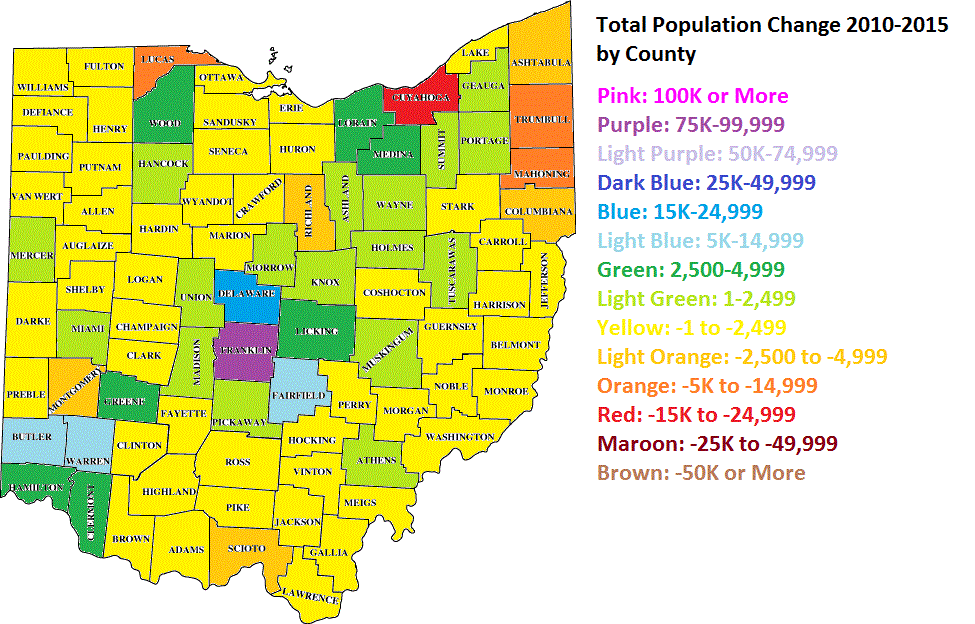
Top 25 Total Growth Counties 2010-2015
1. Franklin: +88,177
2. Delaware: +18,824
3. Warren: +11,601
4. Butler: +8,223
5. Fairfield: +5,256
6. Hamilton: +5,224
7. Clermont: +4,610
8. Wood: +4,242
9. Licking: +4,090
10. Medina: +4,062
11. Lorain: +3,791
12. Greene: +2,858
13. Union: +2,010
14. Miami: +1,718
15. Wayne: +1,549
16. Holmes: +1,543
17. Pickaway: +1,300
18. Athens: +1,113
19. Portage: +854
20. Hancock: +791
21. Geauga: +692
22. Madison: +664
23. Tuscarawas: +334
24. Morrow: +247
25. Muskingum: +216
2015 county population estimates report

Components of County Population Change

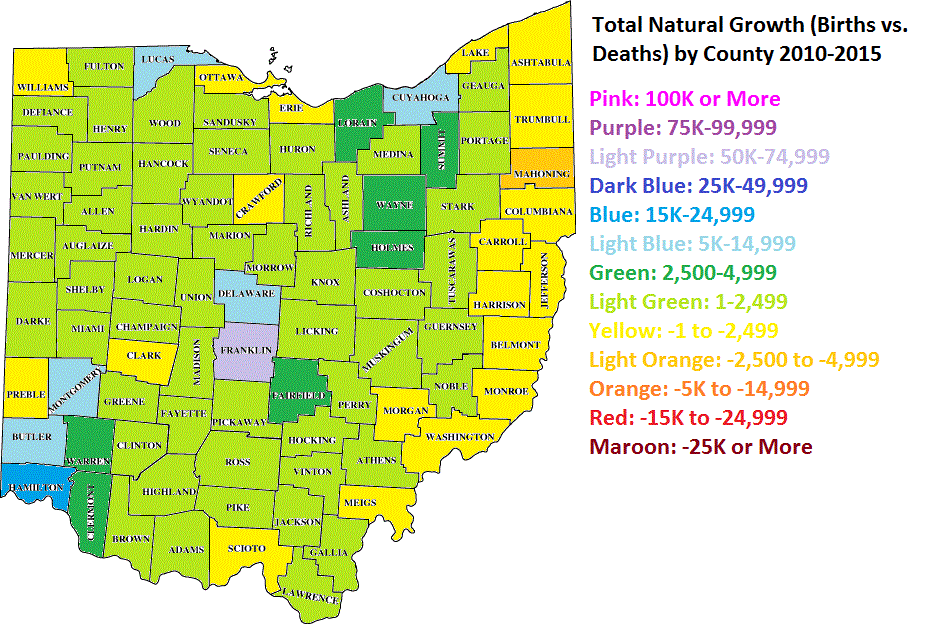
Top 25 Counties for Natural Growth (Births vs. Deaths) 2010-2015
1. Franklin: +50,736
2. Hamilton: +17,256
3. Butler: +7,785
4. Cuyahoga: +7,409
5. Lucas: +7,053
6. Delaware: +6,260
7. Montgomery: +5,007
8. Warren: +4,688
9. Clermont: +3,987
10. Summit: +3,194
11. Fairfield: +2,676
12. Lorain: +2,630
13. Holmes: +2,613
14. Wayne: +2,554
15. Licking: +2,482
16. Greene: +2,309
17. Medina: +2,040
18. Wood: +1,824
19. Union: +1,475
20. Hancock: +1,196
21. Allen: +1,115
22. Shelby: +1,038
23. Miami: +902
24. Putnam: +849
25. Huron: +815

Franklin County’s natural growth rate destroys every other county in the state. It gains almost 7x that of Cuyahoga County, despite Cuyahoga having a larger population during this period, and nearly 3x that of Hamilton County.

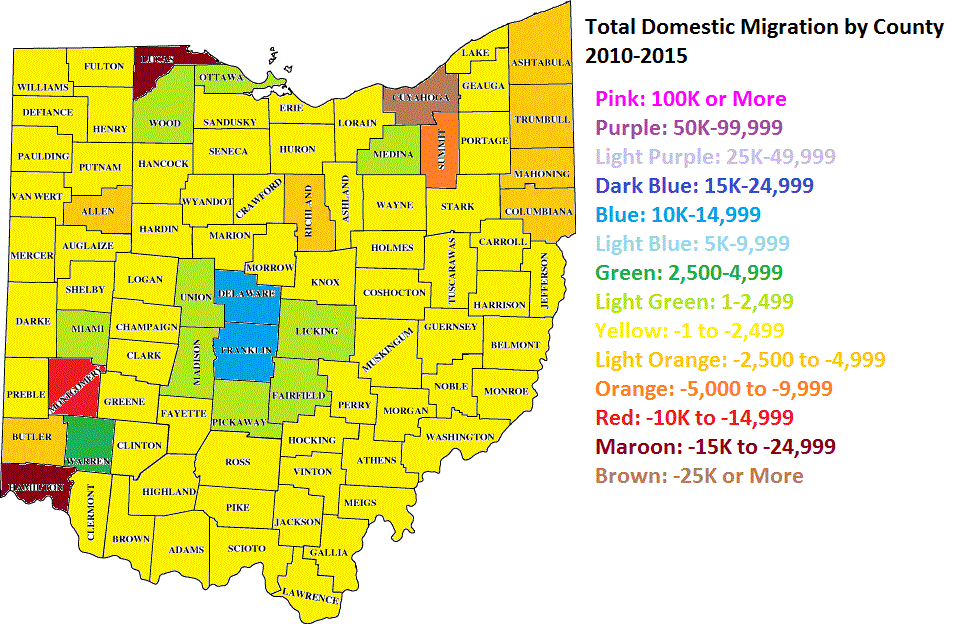
Top 25 Counties for Domestic Migration 2010-2015
1. Franklin: +11,715
2. Delaware: +10,532
3. Warren: +4,496
4. Fairfield: +1,691
5. Licking: +1,249
6. Medina: +1,234
7. Wood: +1,120
8. Pickaway: +711
9. Miami: +475
10. Union: +249
11. Madison: +246
12. Ottawa: +5
13. Clermont: -39
14. Morrow: -159
15. Morgan: -162
16. Monroe: -167
17. Washington: -177
18. Harrison: -198
19. Belmont: -221
20. Geauga: -320
21. Vinton: -361
22. Meigs: -401
23. Noble: -421
24. Van Wert: -431
25. Perry: -464

Again, Franklin County leads the pack, with Columbus metro counties performing the best statewide, as shown in the map below.

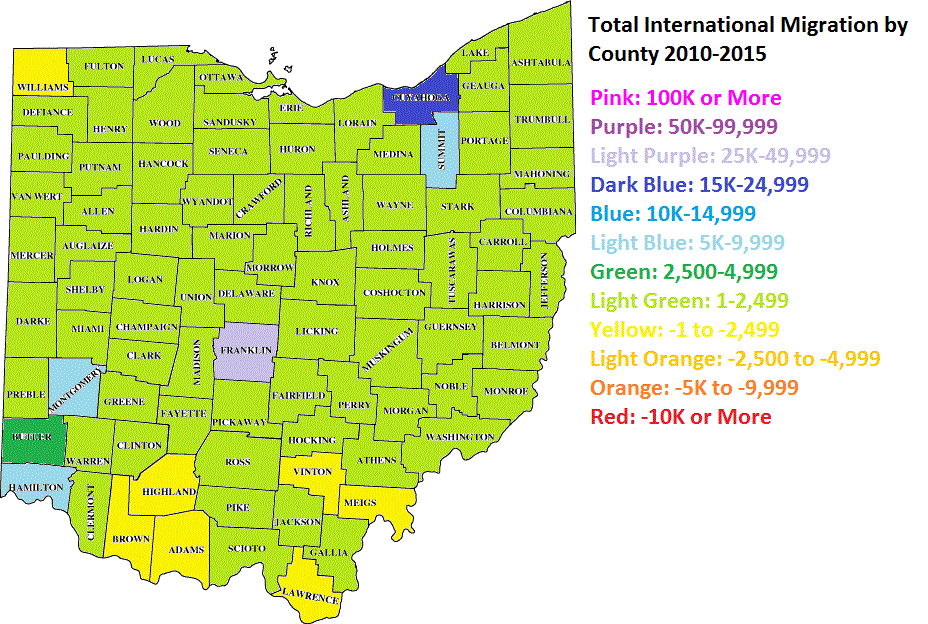
Top 25 Counties for International Migration 2010-2015
1. Franklin: +26,977
2. Cuyahoga: +16,926
3. Hamilton: +9,016
4. Montgomery: +5,380
5. Summit: +5,307
6. Butler: +4,066
7. Greene: +2,400
8. Lorain: +2,303
9. Warren: +2,198
10. Lucas: +2,194
11. Portage: +1,991
12. Delaware: +1,610
13. Athens: +1,586
14. Mahoning: +1,383
15. Wood: +1,026
16. Stark: +881
17. Lake: +729
18. Fairfield: +658
19. Clermont: +612
20. Medina: +578
21. Tuscarawas: +468
22. Wayne: +408
23. Licking: +404
24. Allen: +375
25. Miami: +359

Most Ohio counties saw increases in international migration, but once again, none came close to Franklin County’s total.

So there you have it, the updated numbers for Ohio’s counties.


Columbus’ Shrinking Annexation Rate

Ever wonder how Columbus got so big in area? Its city limits stretch into parts of other counties and include about a third of Franklin County. Today, it has a reputation for annexing its way to growth, but how true is this?

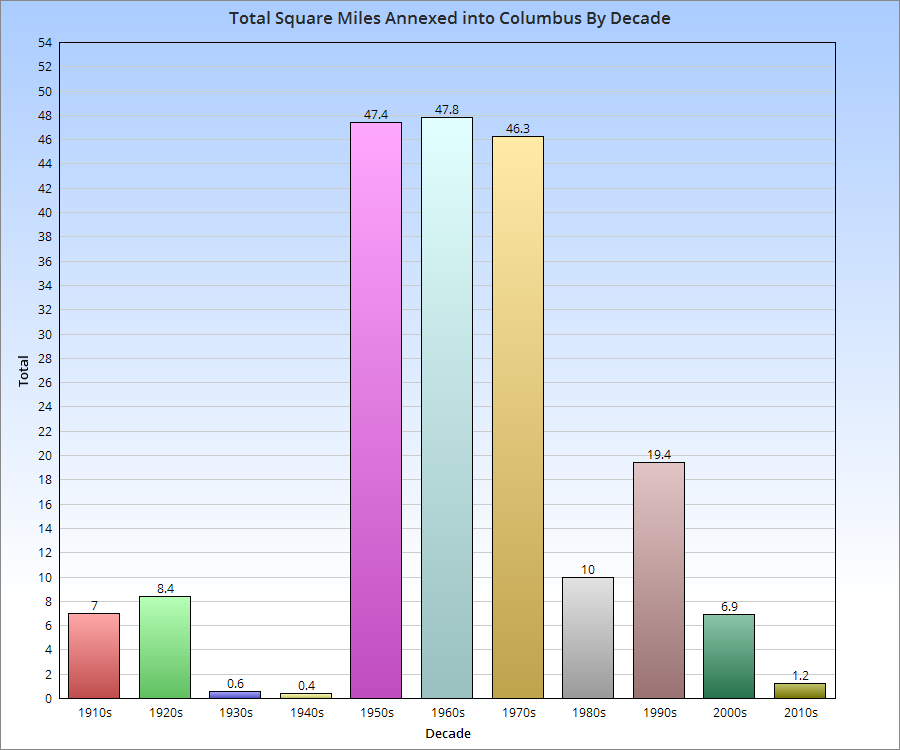
Well, 50 years ago, it was more or less true. Today, not so much. Aggressive annexation began in Columbus in 1953, when Mayor Maynard “Jack” Sensenbrenner began his policy of requiring annexation into the city if communities wanted city water service. Between 1953 and 1960, the area size of the city more than doubled, and that rate continued through the 1960s and 1970s, even after Sensenbrenner was no longer mayor. After 1980, annexation rates gradually began to decline.

As the chart above shows, you can see the rapid rate of growth during the 1950s-1970s and the decline in more recent decades. Through the first 5 years of the 2010s, Columbus is on pace to add fewer than 3 square miles by 2020. Despite that fact, the city’s annual population growth since 2010 is exceeding the average annual growth of any decade during the mass annexation years. This strongly supports that the dynamic, and indeed, the story of Columbus’ growth is no longer about “fake” growth through the addition of existing land and population, but rather though the influx of new residents from outside of the city limits altogether. This is helping to gradually raise the city’s population density, which exceeded Cincinnati’s last year, as the chart below shows, along with a few other Columbus peers.