For the Random Columbus Photos 9 edition, we take a not-so-distant look back for a change.
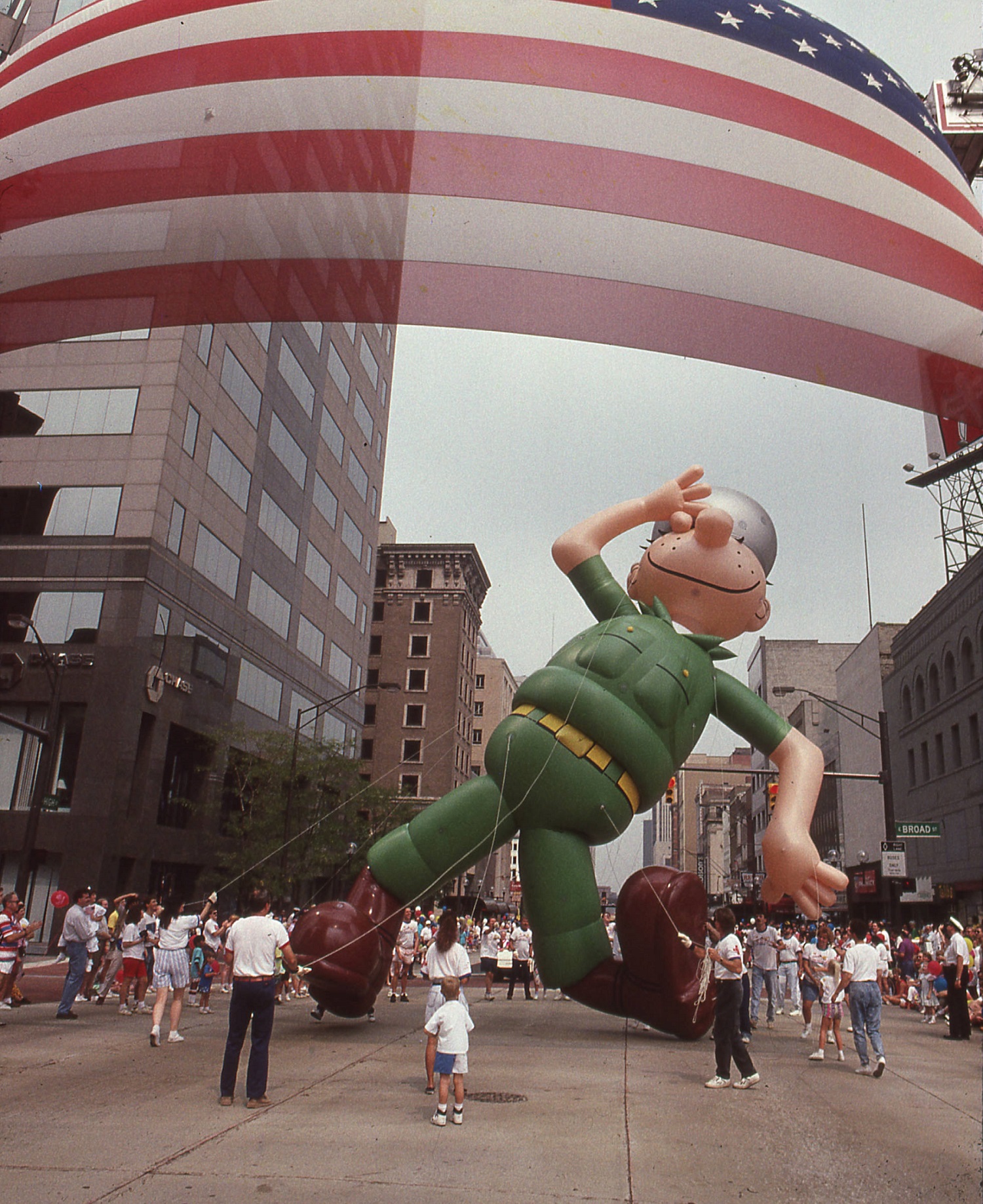
Photo Location: High and Broad intersection, looking north. Photo Date: August 31, 1991 Photo History: The Celebrate Them Home Columbus parade occurred as an event to honor returning Gulf War and Operation Desert Storm veterans, as well as veterans of previous wars. The event was held only one time. National patriotism was unusually high during this short war, and helped to revive Lee Greenwood’s 1984 song “God Bless the USA”, which often played on the radio during the conflict. Contrary to what may be popular belief, the Beetle Bailey character represented in the balloon does not date back to WWII. Instead, he first appeared in comic strips in 1950 and continues to run today.
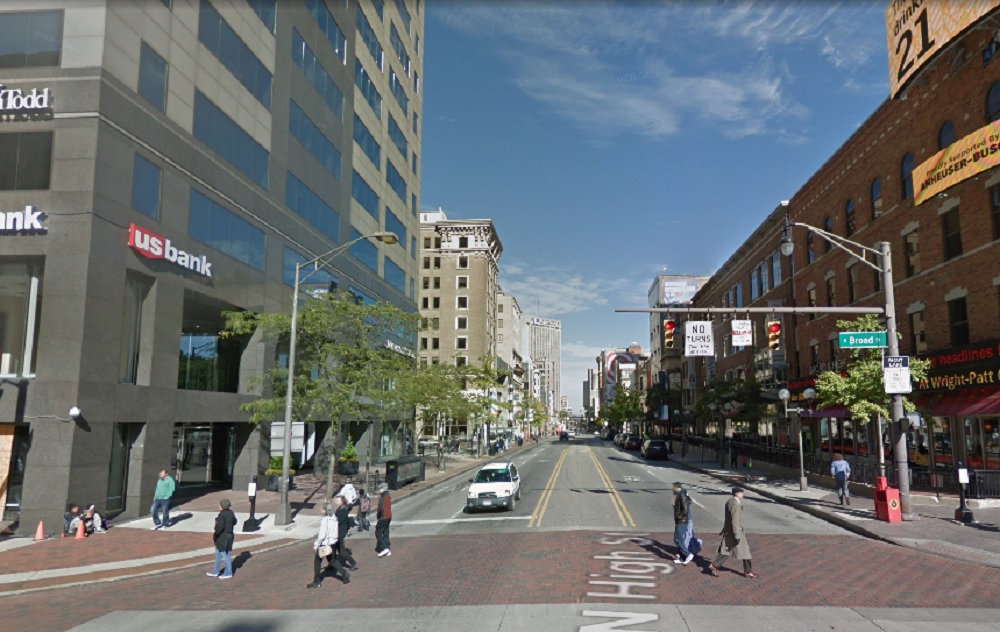
The same view today. Not much has changed since the 1991 photo. A few buildings have been renovated and the streetscape has seen improvements, but otherwise, the view is largely the same.
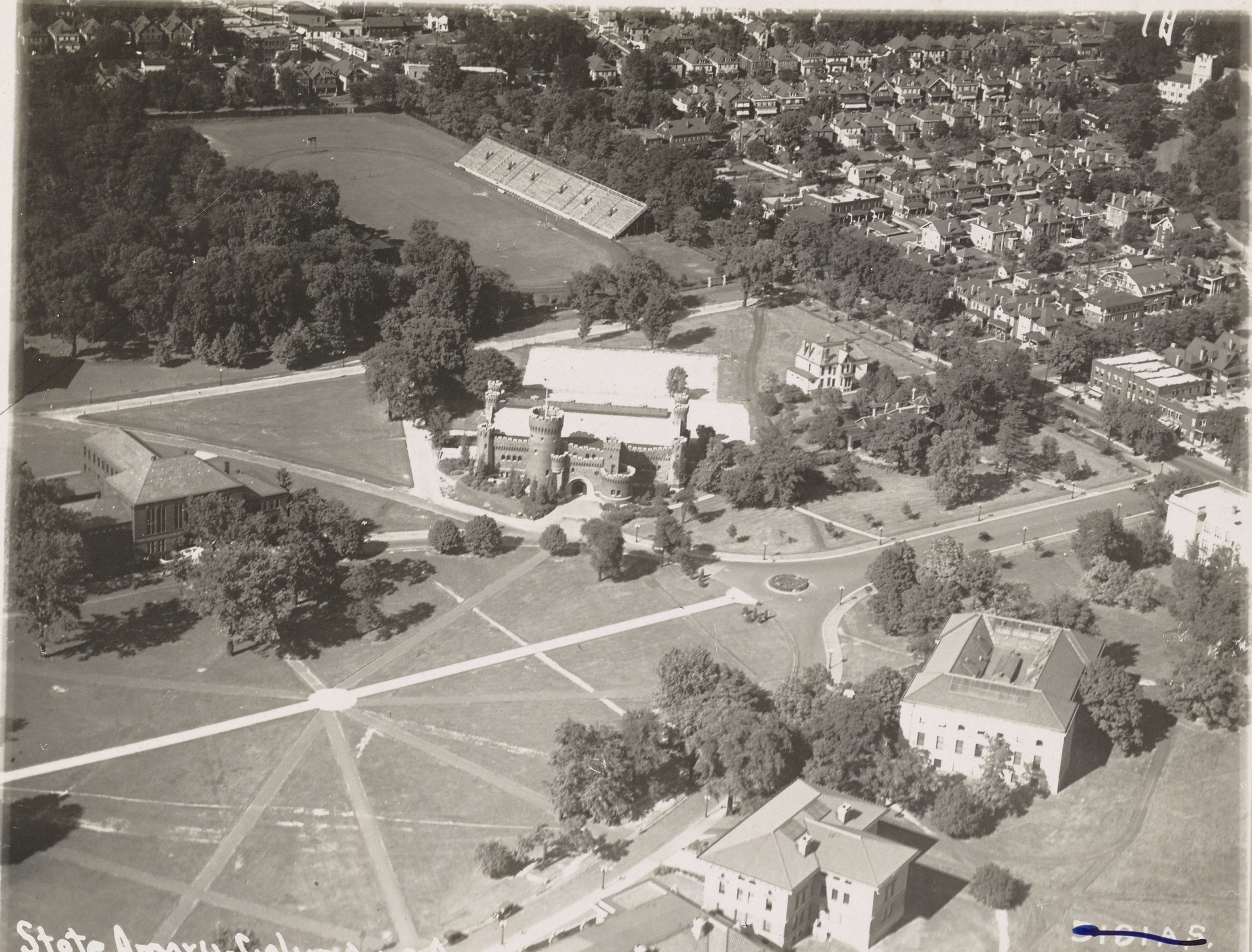
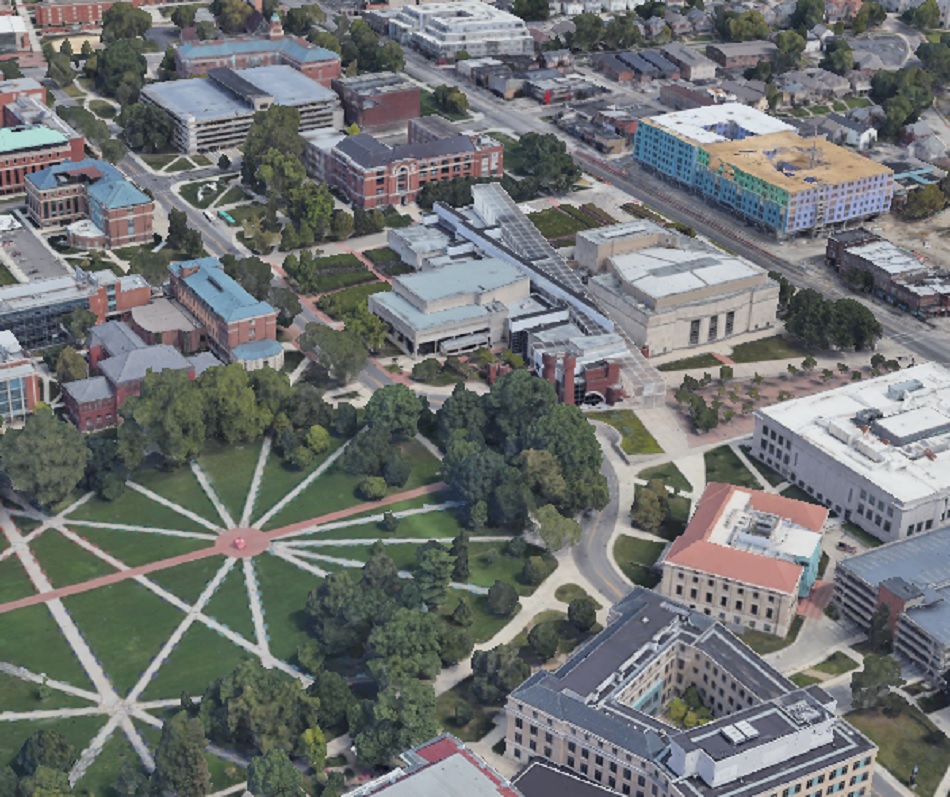
It’s hard to imagine Columbus without its flagship university. While today Ohio State is one of the nation’s largest universities and a powerful influence in and out of Columbus in many ways, it got its start as just a humble agricultural college in 1870. Let’s go back to a time and look at these Ohio State campus aerials from 1919, and compare them to the same views today.
Before
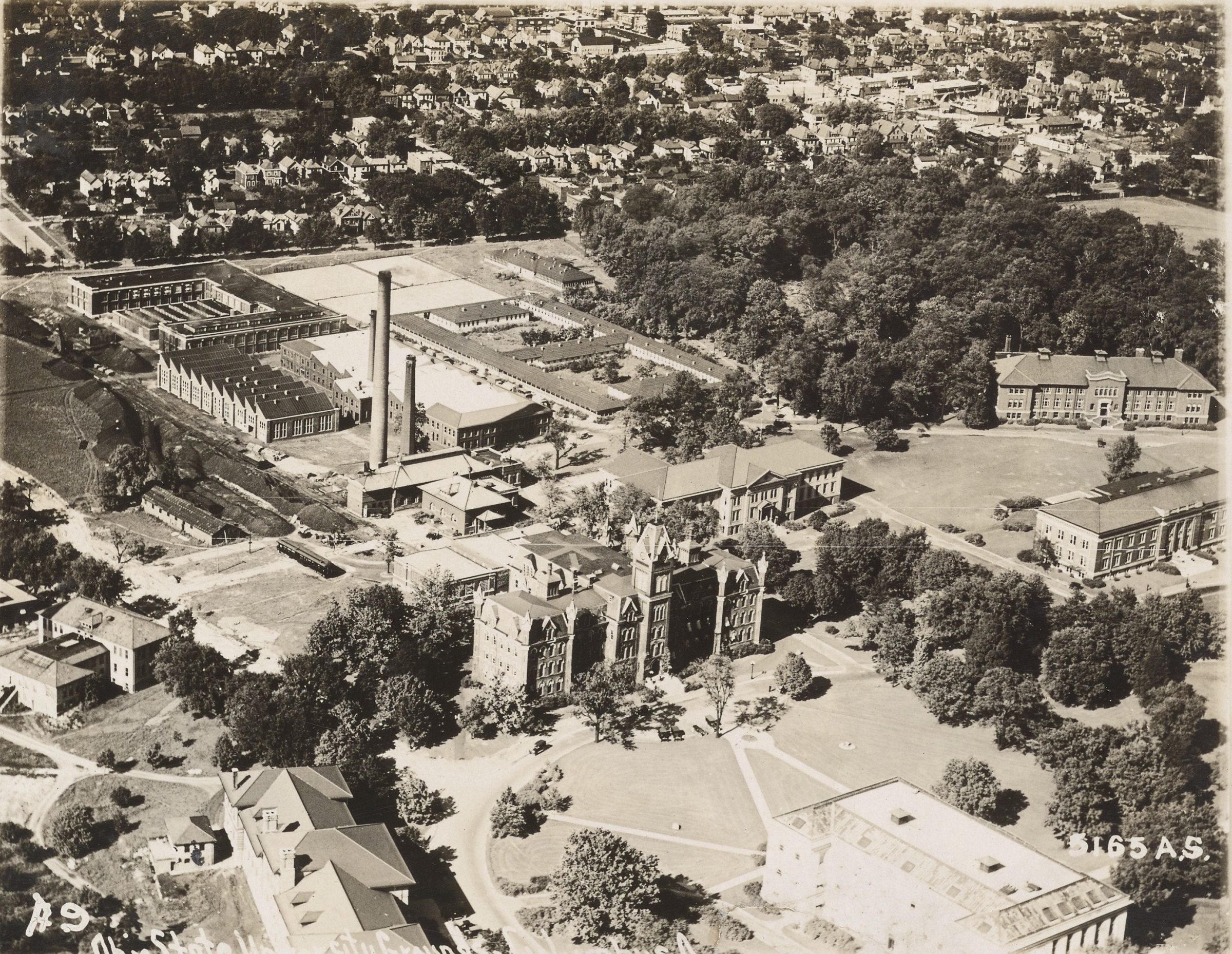
Photo taken in 1919.
This 1919 photo of the Oval and the surrounding neighborhood shows just how small the campus was back then. Residential areas began just to the north of of the Oval. Over the years, almost every single building in this photo would be demolished in OSU’s never-ending quest to expand and modernize. After
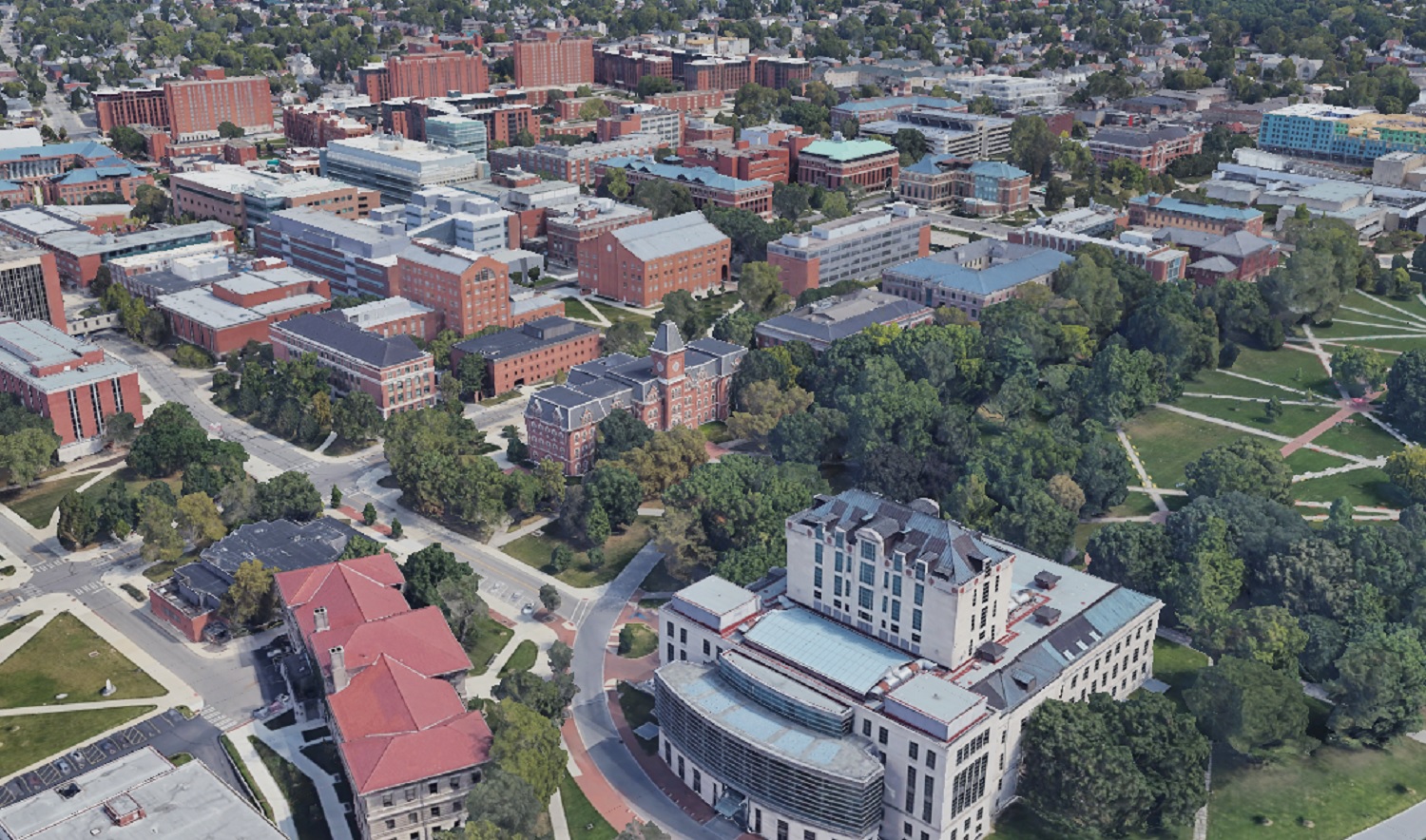
Photo taken in 2019.
The residential neighborhood is long gone, replaced with new student residences, offices and educational buildings. Almost nothing remains the same- even the street grid itself has been dramatically altered. Before
Photo taken in 1919.
This photo of Campus further east show the famous castle-looking Armory, along with an athletic field and part of High Street. After Some buildings remain recognizable, but not many. The athletic field disappeared by the 1930s, and the Armory burned down in disastrous fire in the early 1950s. It iconic castle towers were recreated somewhat in the Wexner Center for the Arts, which occupies the former Armory location.
Clearly, Ohio State’s campus has changed drastically over the last century. No doubt a century from now, it will be equally as unrecognizable to us as the current iteration would be to students from long ago.
The Random Columbus Photos 2 edition looks at one of the most infamous building complexes that had ever existed in the city.
Photo Date: Unknown, Pre-1910 Location: The southeastern corner watchtower of the Ohio Penitentiary site. The old Ohio Penitentiary first opened up in 1834. The Civil-War-era building that fronted Spring Street was easily the most iconic. It can be seen in the background of the photo as the lighter building. The Ohio Pen had an interesting, and occasionally disastrous, life. On April 21, 1930, a massive fire broke out that would kill 322 inmates and become the worst prison fire in United State history. Despite the fire, the prison’s population would continue to grow. At its peak in 1955, the prison held over 5,200 inmates- and singlehandedly provided a large population boost to Downtown. The following year, Ohio began transferring inmates to more modern facilities. The move took nearly 30 years. Ohio moved the last inmates in 1984 and then permanently closed the prison. After the closure, the abandoned prison deteriorated quickly. Due to a lack of state maintenance, a portion of the outer wall collapsed onto some cars in 1996, and the city began to aggressively plan a new life for the site. In 1998, despite some protests to save some of the historic buildings, the city demolished the entire complex to make way for the planned Arena District. Today, the only reminder of the prison site is that the eastern edge of McPherson Commons park runs along the same line as the original outer wall.
Downtown, more than any other neighborhood, has seen major changes over the years. This edition of Before and After Downtown looks at just a few locations around the neighborhood that have seen massive transformation over the years. Some of these photos come from the Historic Building Database.
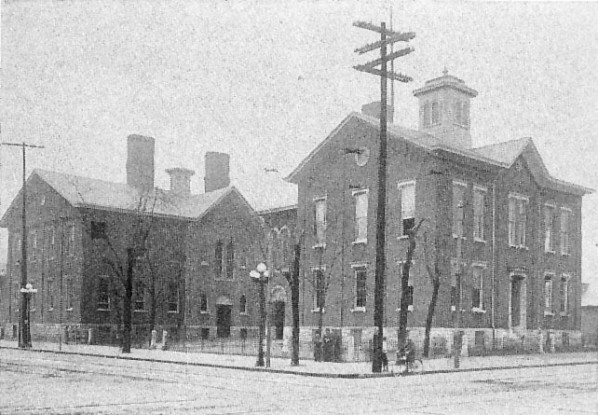
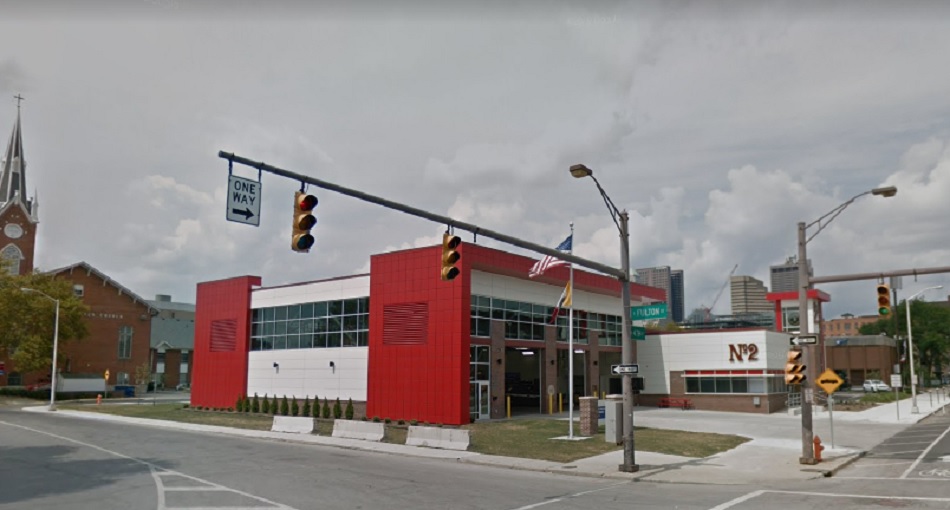
Before: The Central German School at 400 S. 4th Street in 1916 After: 2017 The school was originally opened in December, 1863. In 1920, the school began an expansion and opened as an institution for physically challenged children in March, 1922. The building met its demise in December, 1967 to clear the right of way for I-70/I-71. The highway split the northern sections of German Village off from the rest of the neighborhood. Eventually, almost every historic building left to the north of the highway was demolished. One of the few still remaining is the nearby Trinity Lutheran Church at the corner of S. 3rd and E. Fulton Street, which was dedicated on December 20, 1857.
Before: Southern Theater in 1905 After: 2018 The Southern Theater came about out of the ashes of it’s predecessors. Fires had destroyed 5 separate Columbus theaters between 1889 and 1893, and with the sudden absence of major city theaters, the concept of the Southern Theater was born. The theater opened on September 21, 1896 and has changed very little over the years. Today, it is one of the oldest surviving theaters in Ohio. Very few other buildings can be seen in the old photo, but the 1895 building next door on High and Noble also survives.
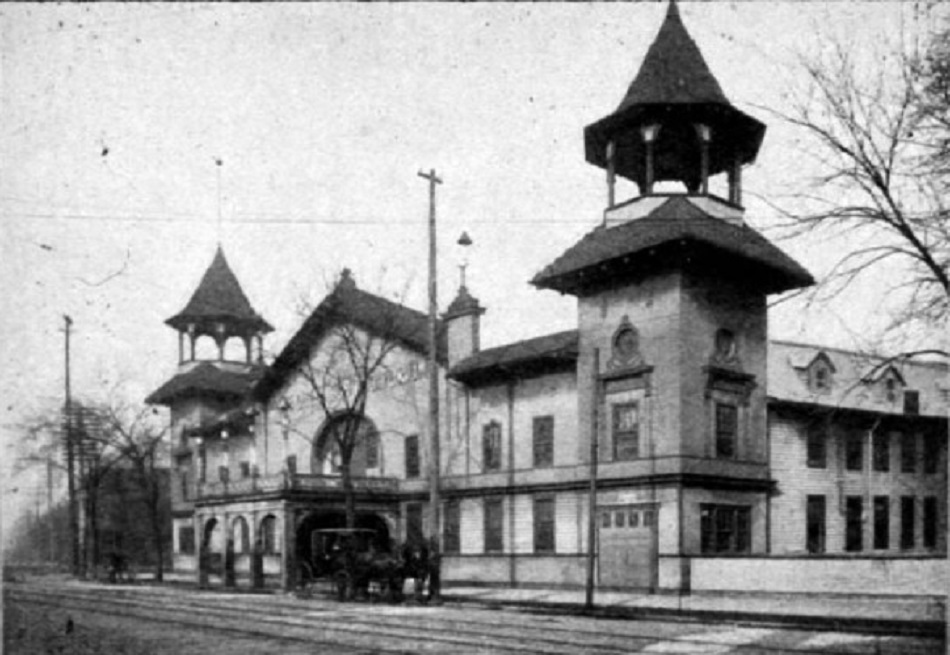
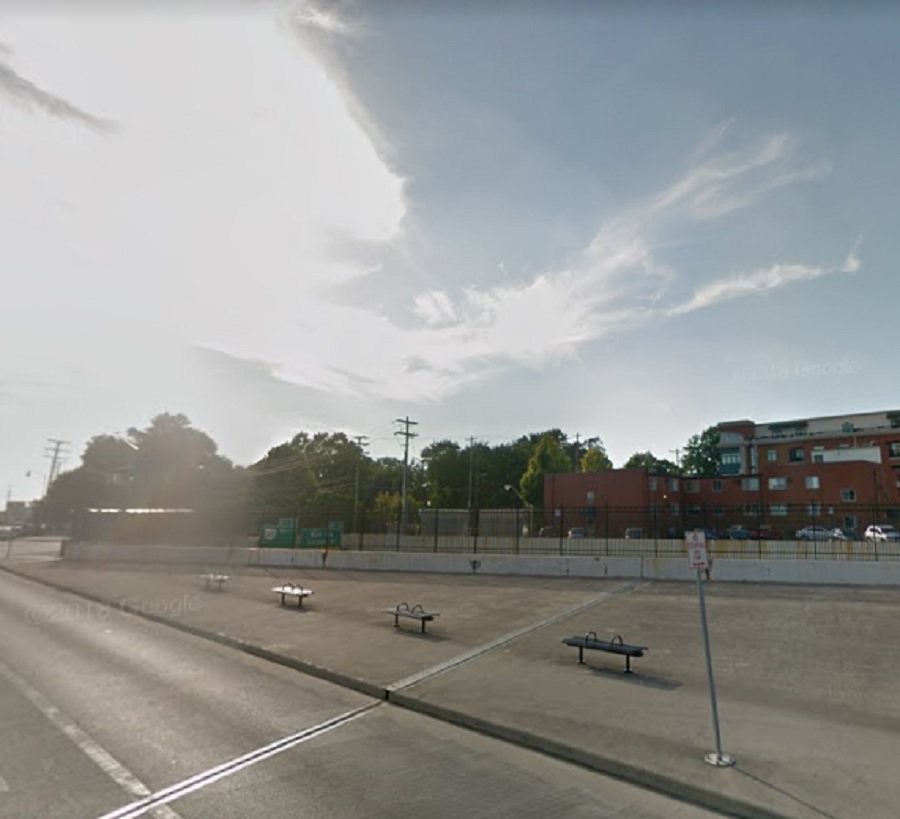
Before: The Columbus Auditorium at 570 N. Front Street in 1901 After: 2018 Opened on March 17, 1885, the Park Roller Skating Rink was a large, beautiful building across from where Nationwide Arena sits today. Originally for amusement, the rink only lasted a bit over a decade before being bought and remodeled to become the Columbus Auditorium in 1897. It’s large expanse of flat roof doomed the building however. After more than 15″ of snow fell on the city from February 16-18, 1910, the roof simply could not handle the load, and collapsed on the 18th. The building was deemed a total loss and was torn down not long after.
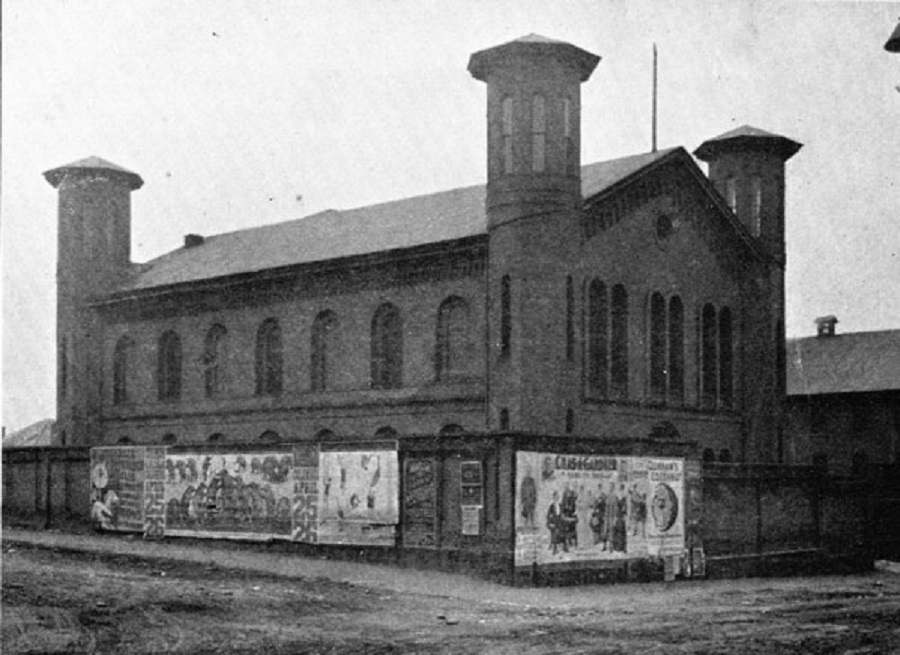
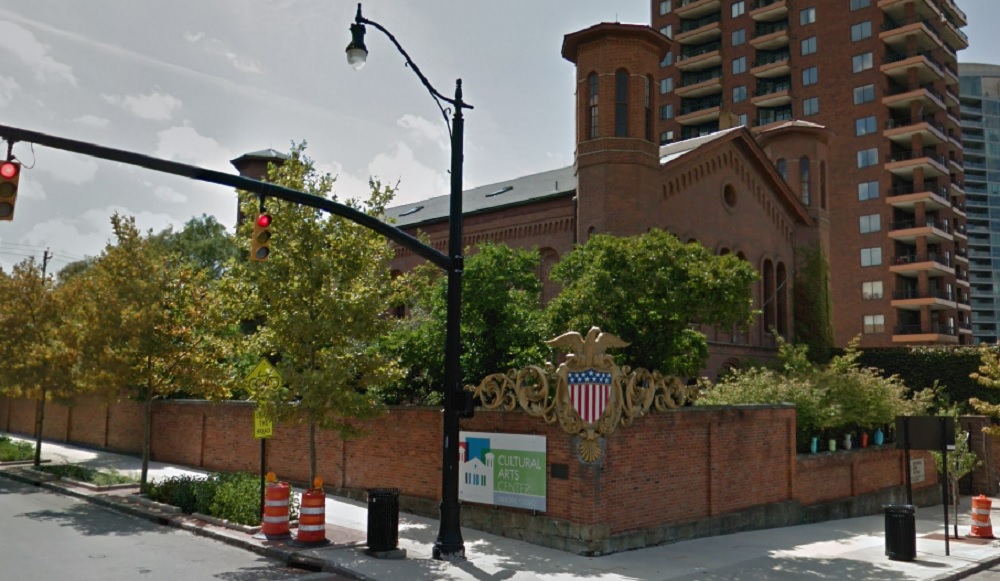
Before: The Ohio State Arsenal building at 139 W. Main Street in 1898 After: 2017 The Ohio State Arsenal building at 139 W. Main Street, seems to have a bit of disagreement as to when it was actually built (1861 vs. 1863), but regardless, it was a Civil War era arsenal that was used for this purpose for well over 100 years. It was put on the National Register of Historic Places in 1974, and became a cultural arts center in 1978, which it remains so to this day.
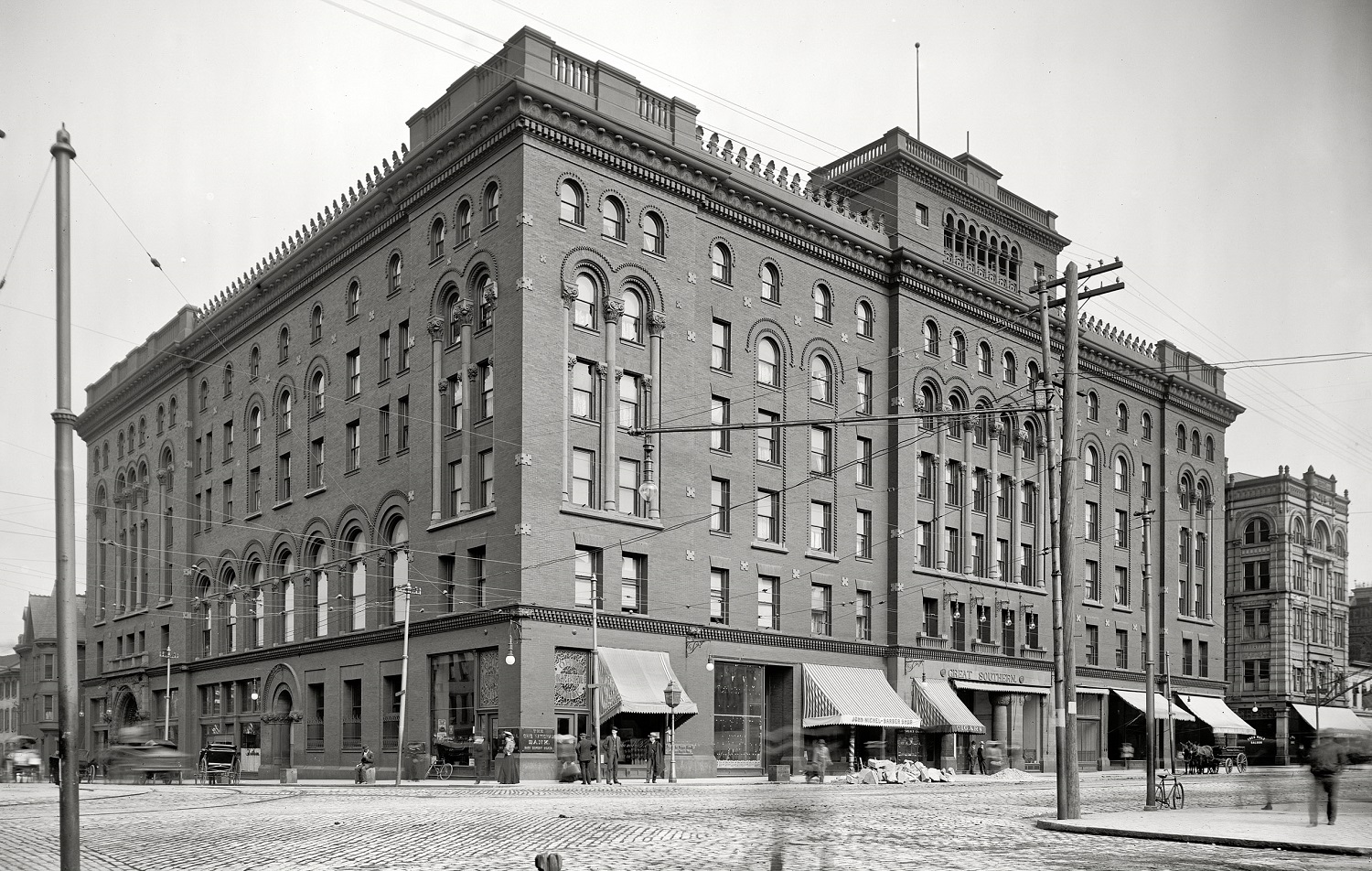
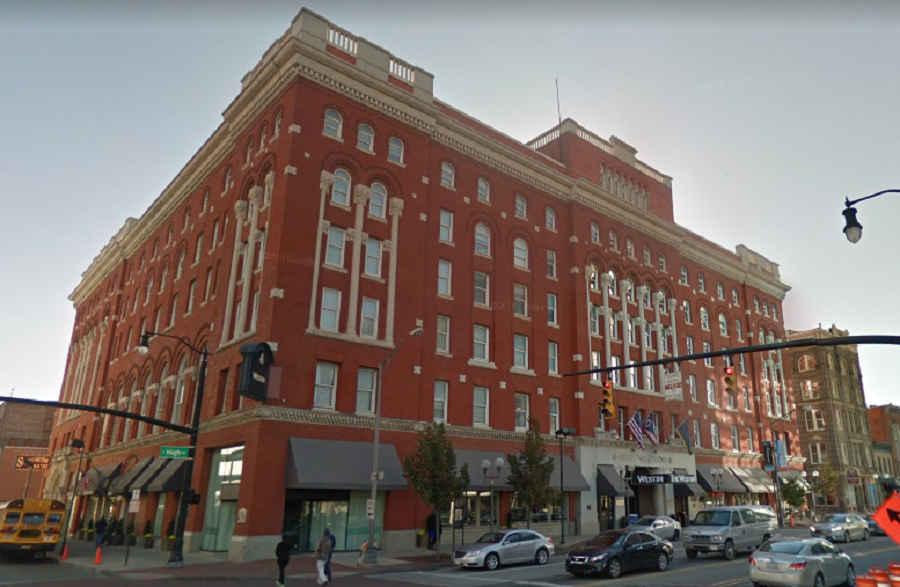
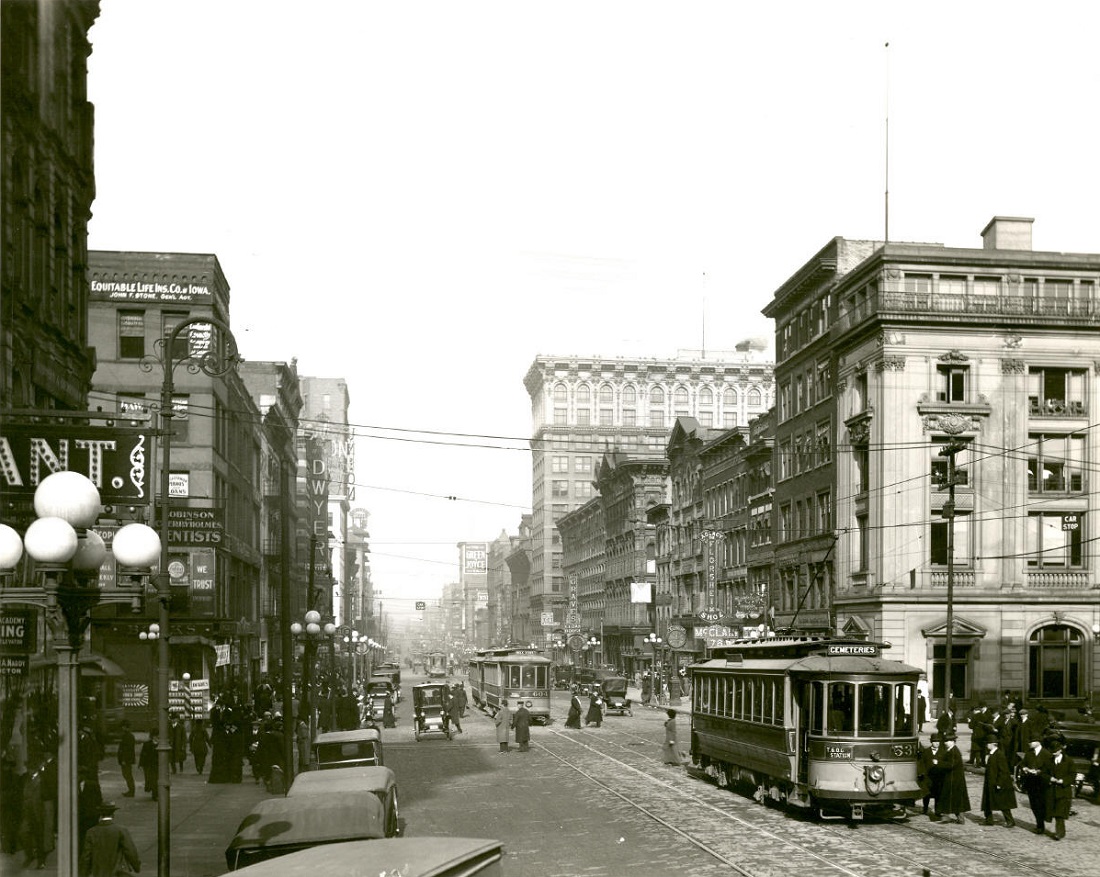
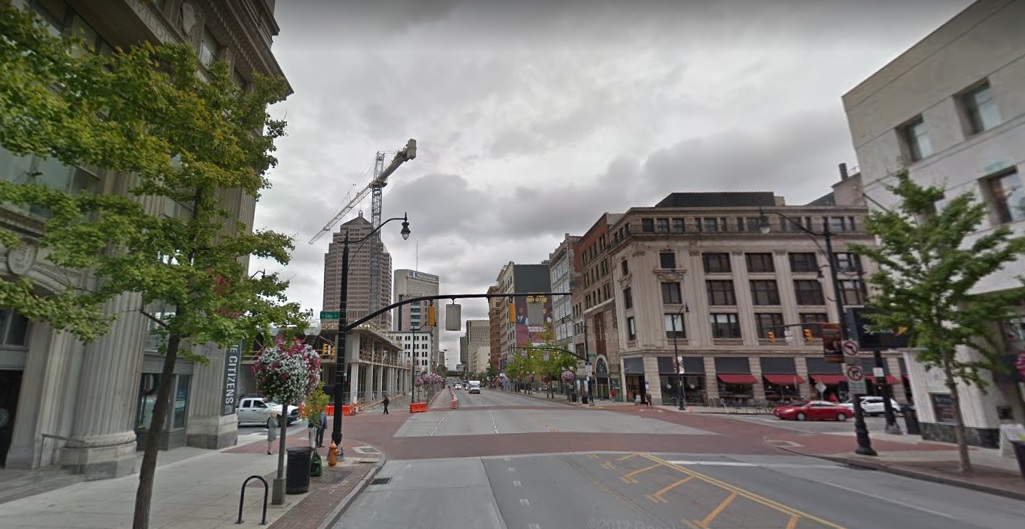
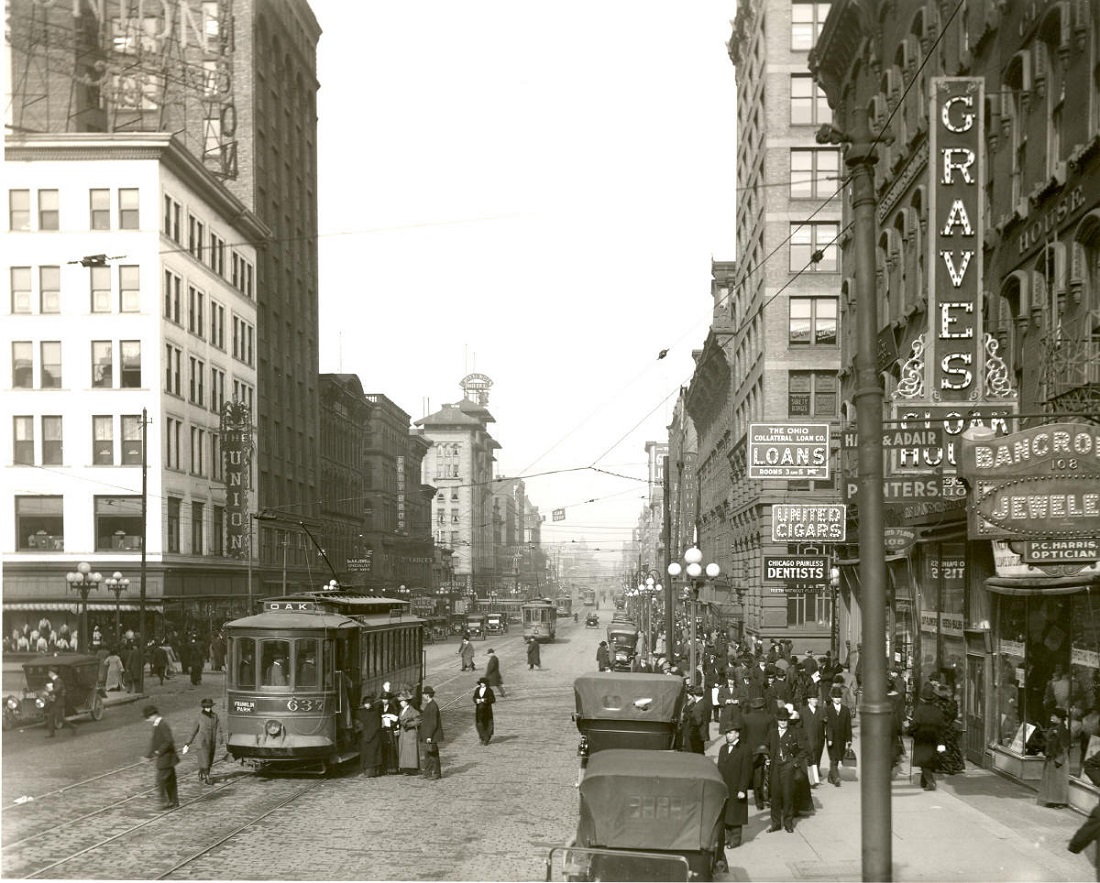
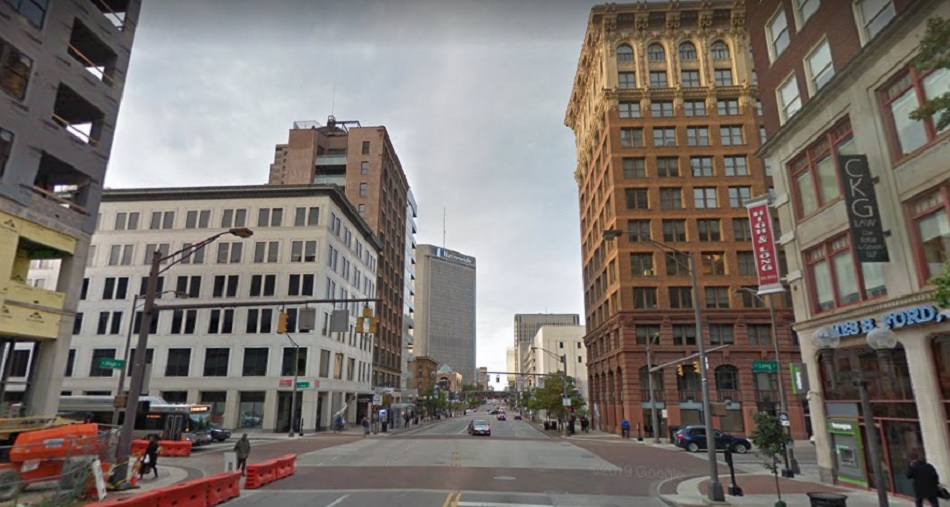
To an urbanist, the following sets of photos are truly disturbing. I’ve heard it said many times over that Columbus is a new city filled with suburban design, and that it never really had a true urban, historic core. The sad thing is that that is dead wrong, and I say it’s sad because so much of it was lost in the name of progress. 99 years ago, Downtown was truly a beautiful, vibrant place, and the present-day shots only serve to make the transformation all that much more awful. You have to wonder what people were thinking in terms of design and the way that they systematically destroyed the environment that made the city what it was.
In any case, the photo set from 1914 was apparently taken by a photographer that walked the length of High Street starting from the intersection of Town Street all the way up to Goodale Avenue at the beginning of the Short North. They are some of the best historic photographs I’ve ever seen of Downtown Columbus. Let’s begin the tour.
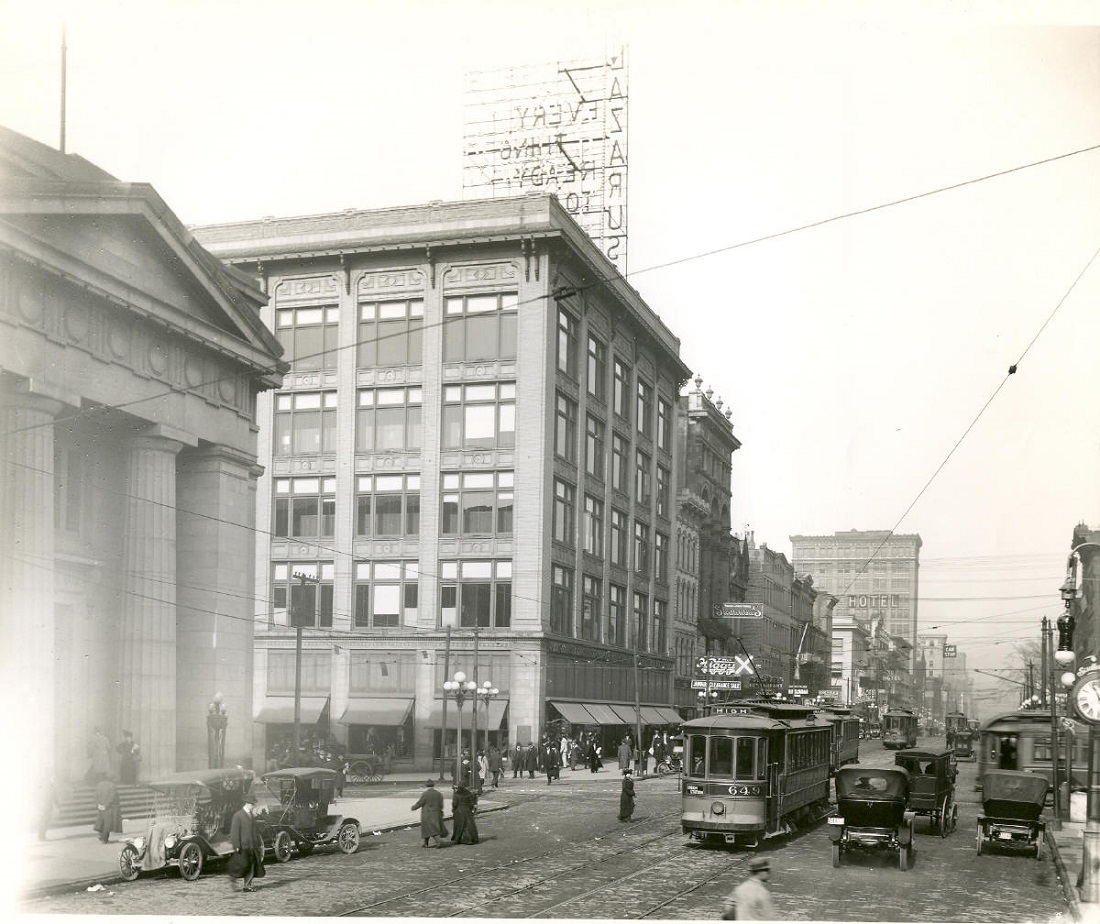
Photo taken at High and Town looking north.
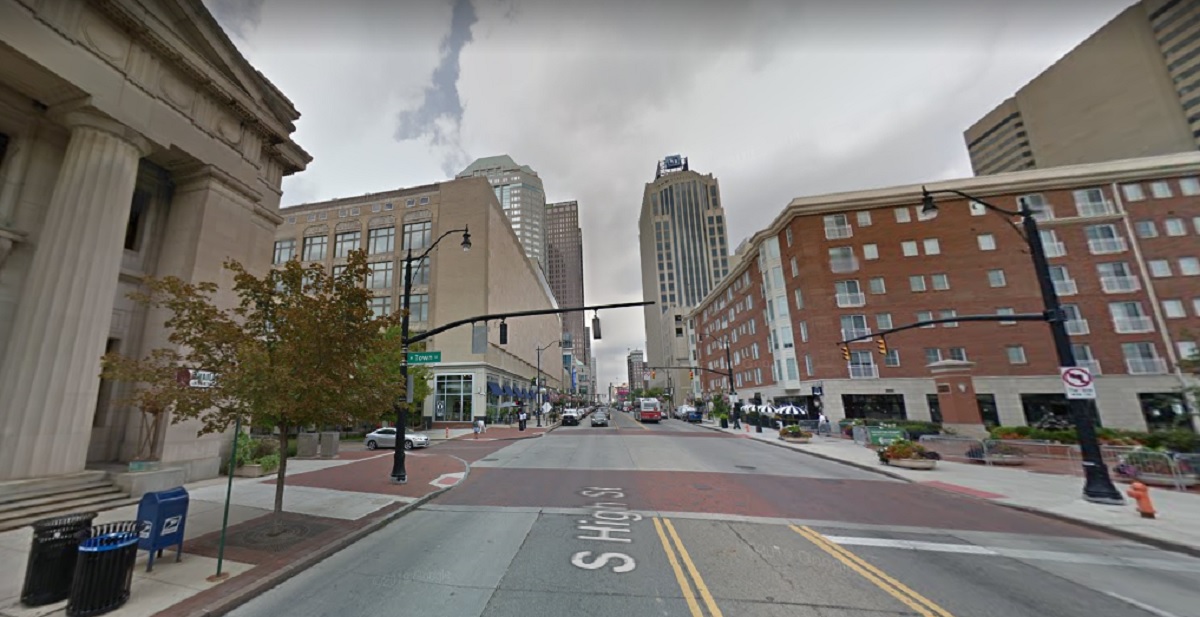
The photo above at Town and High shows Lazarus Department Store on the left. It is one of the few buildings that remains today, as shown below.
Town and High in 2016.
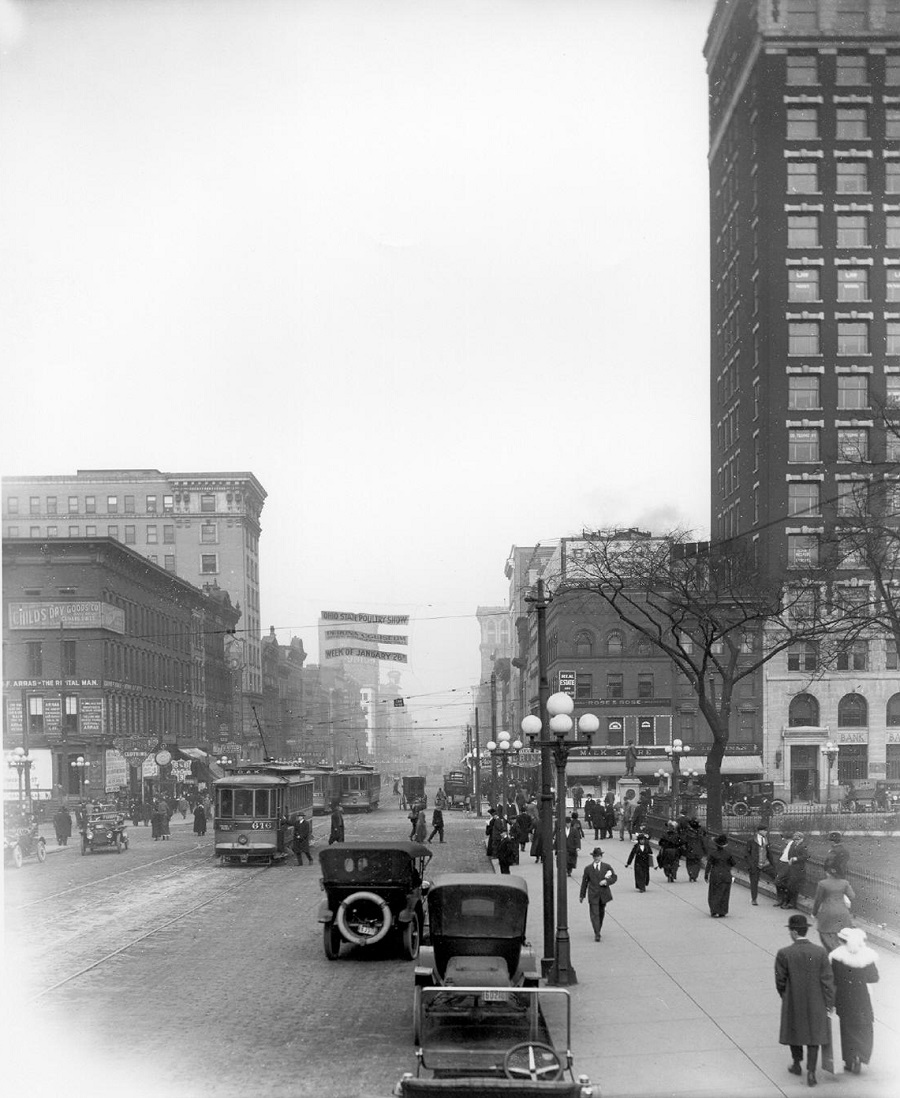
The next set is the before and after from Capital Square, just south of the Broad and High intersection. The tall building in the center of the photo is 8 E. Broad and one of the few still standing today.
Capital Square looking north.
Capital Square in 2016.
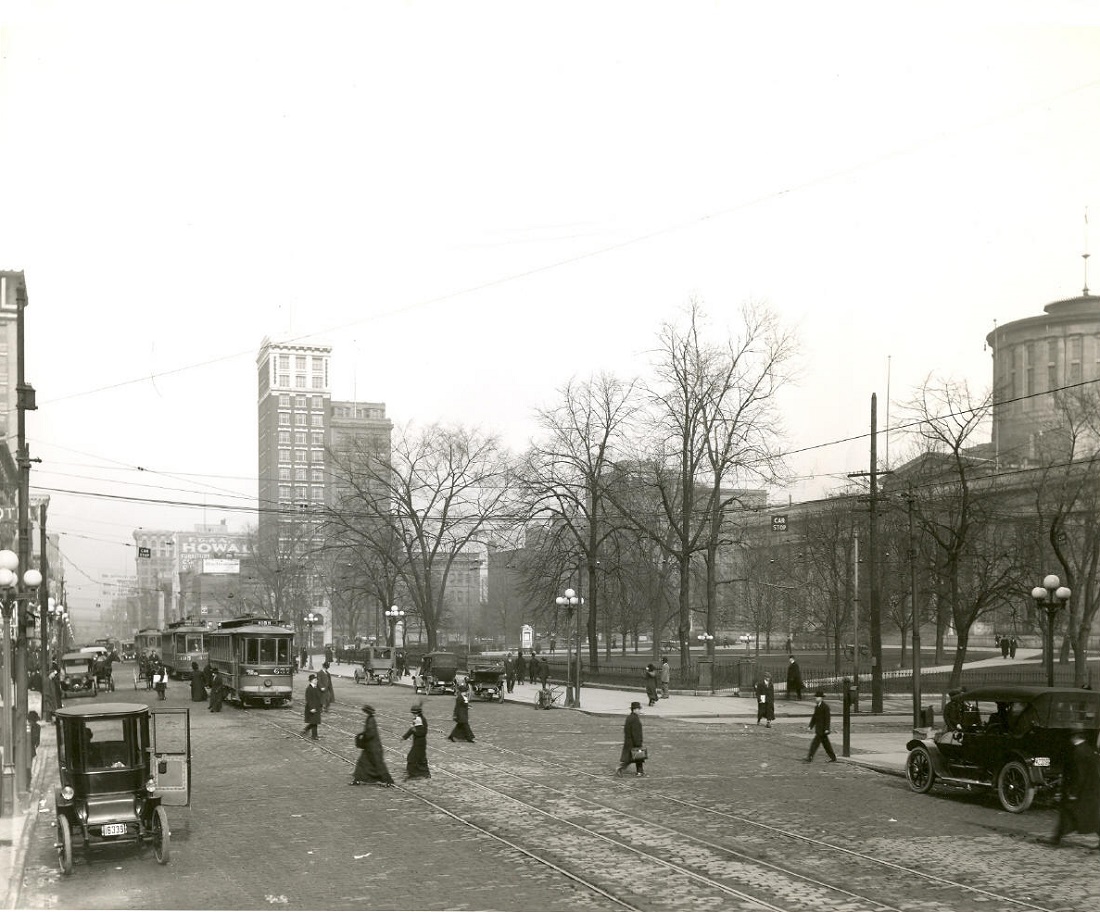
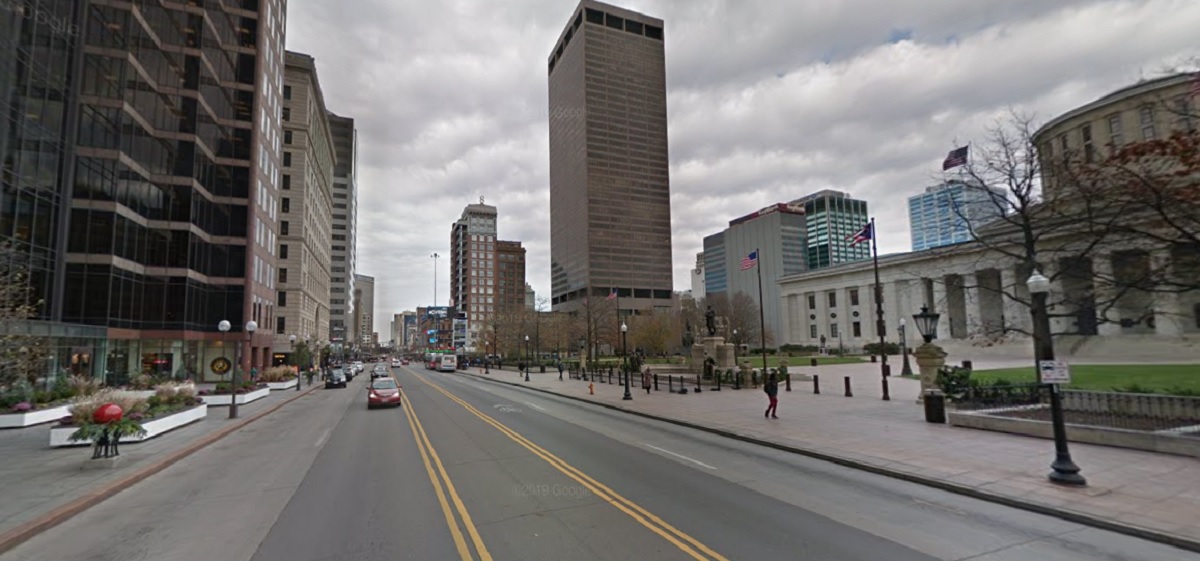
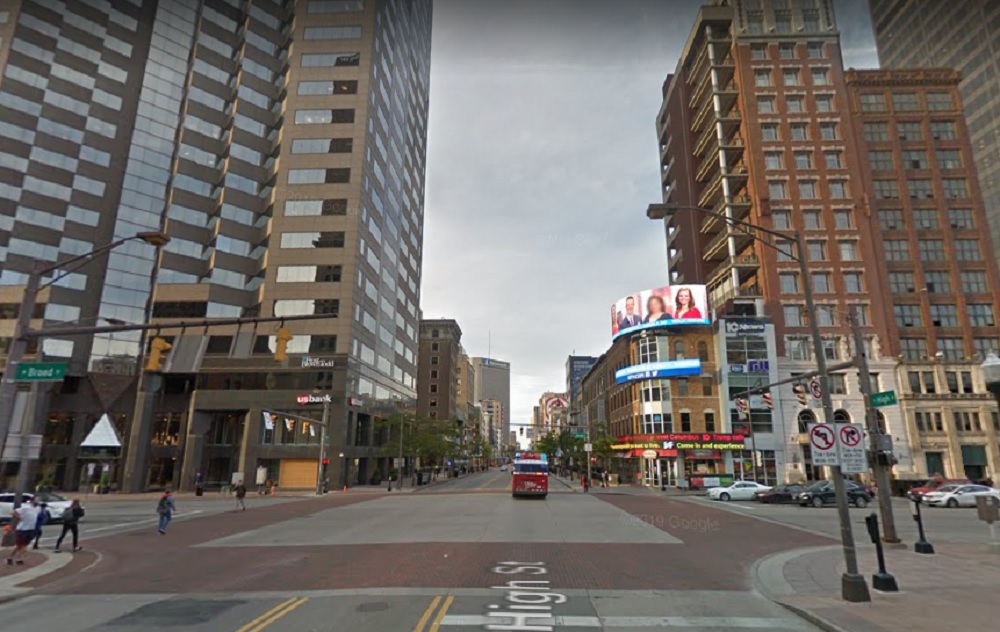
The next few photographs show the very heart of Downtown, the intersection of Broad and High. A few buildings remain, but most is gone.
Broad and High looking north.
Broad and High in 2018.
Next is High Street just north of Broad and looking north. Notice just how many buildings are gone.
High and Gay Street, looking north.
High and Gay in 2017.
Up next is the intersection of Long and High, just south of the Atlas building (on the right). The Atlas Building still exists and is in the process of renovation. There are also a few buildings across the street that survived. Few others did.
Long and High in 1914.
Long and High in 2018.
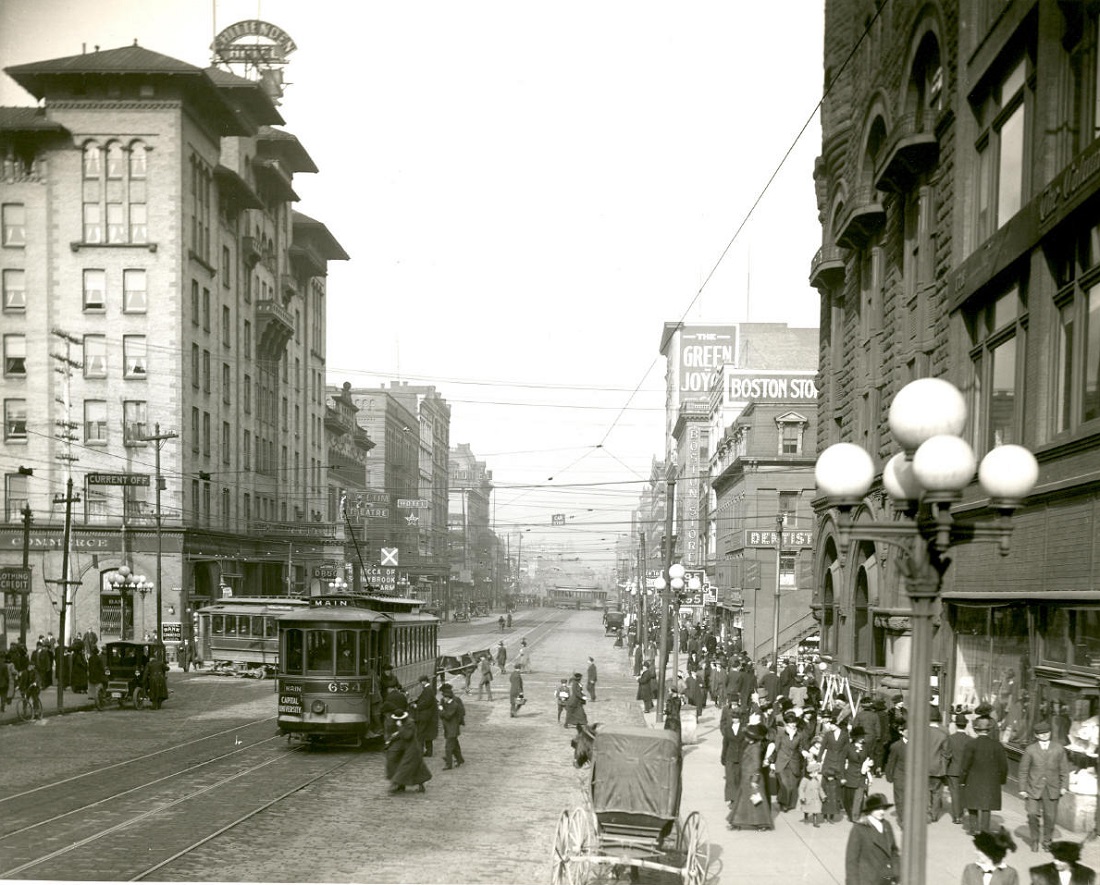
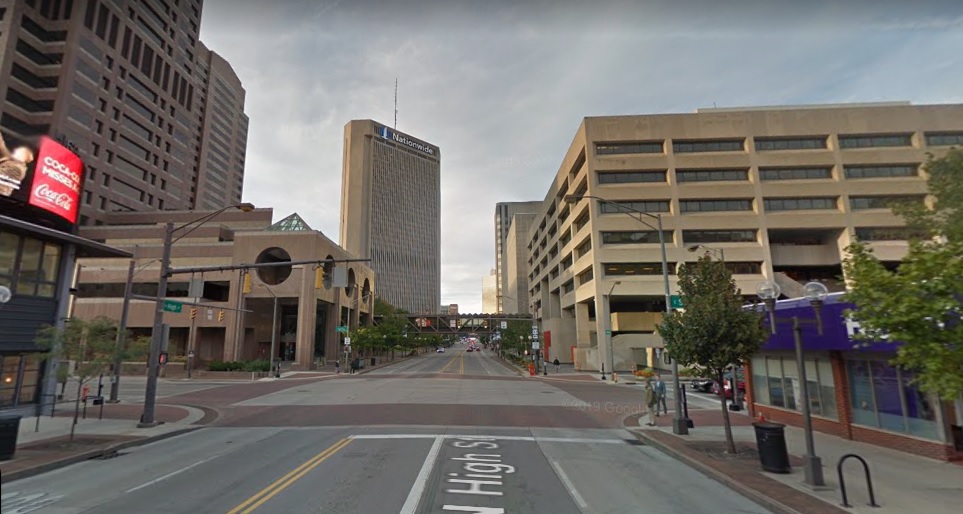
For the 2nd to last set, we have the intersection of Spring and High. The old Chittenden Hotel is the large building on the left with the Lyceum Theater behind it. Most of these buildings were torn down to make room for the Nationwide complex in the 1980s. There is literally not a single building from 1914 still standing in this area.
Spring Street and High in 1914.
Spring and High in 2018.
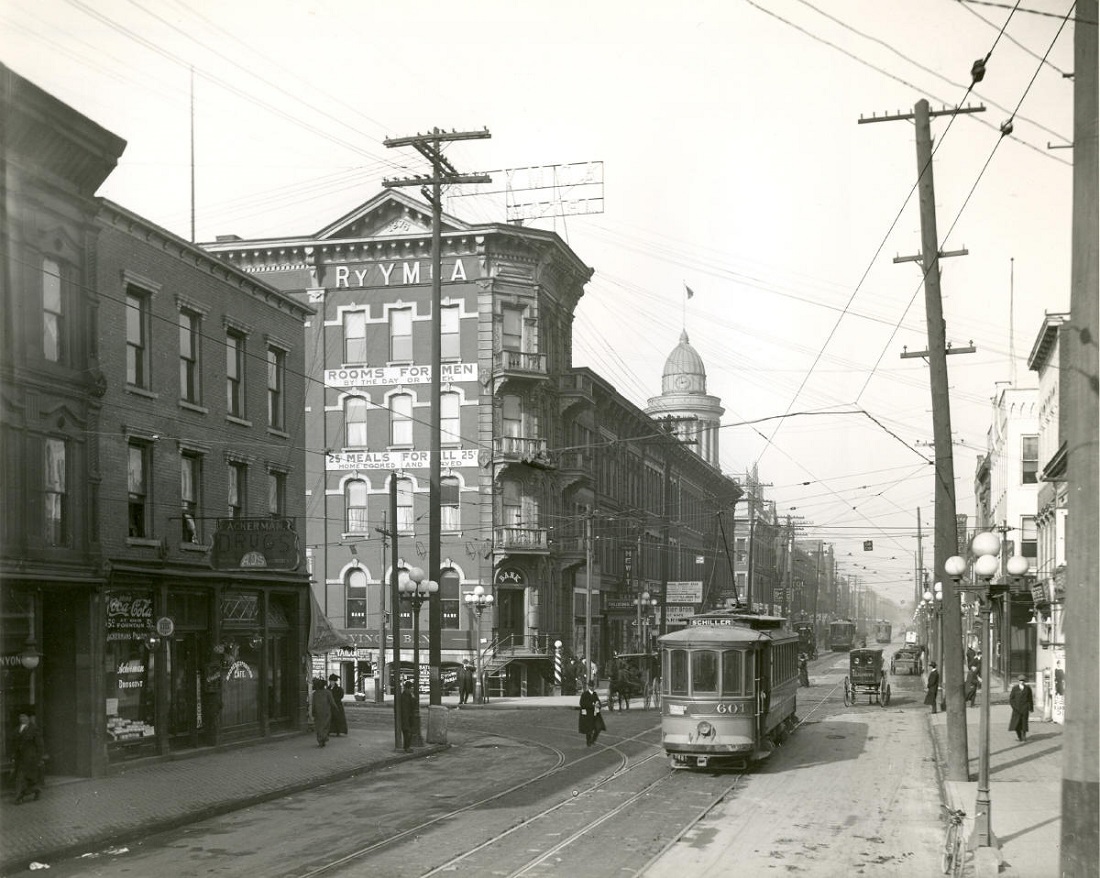
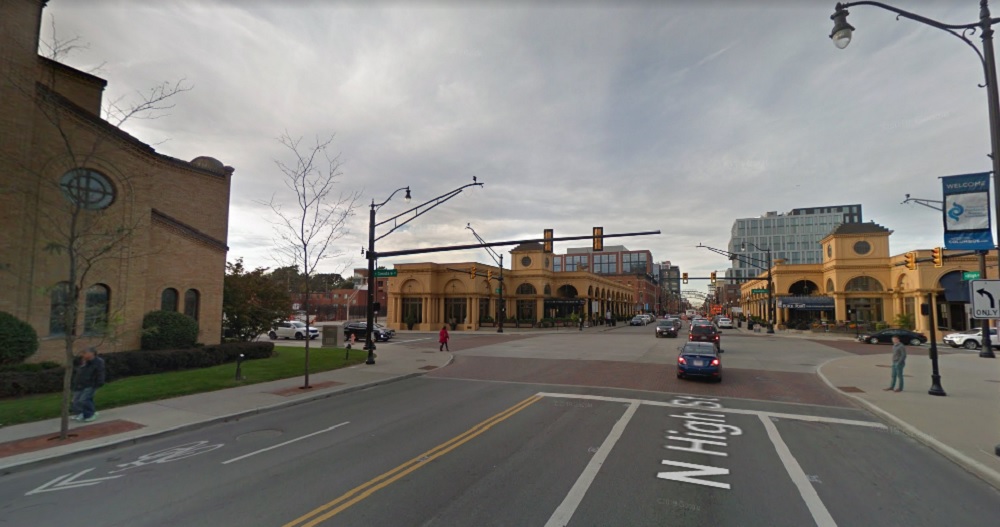
And finally, we have the intersection of Goodale Avenue and High Street. This before and after shows a drastic transformation. Many of the buildings in the photo, including the building with the beautiful domed rotunda, were demolished to clear the right of way for the construction of I-670. Others succumbed due to the Convention Center’s construction or the Greek Orthodox Church’s expansion in the 1980s. There is only one point of reference to know this is the same place. To me, this is the most tragic photo of all. Like so many cities, Columbus had incredible architecture in abundance, and the leaders in the middle part of the 20th century squandered it all away, leaving the current generation trying to rebuild a divided, empty shell of what once was. Much of it, however, can never be restored. Let it be a visible reminder that development has real consequences if not followed through wisely.