For the Columbus economy July 2022 report, we find several local industries in record high territory, but with a metro labor force that is barely growing. The data comes from the Bureau of Labor Statistics.
Overall Metro Area July 2022 and Change from July 2021 Labor Force: 1,136,345 +1,050 Employed: 1,093,966 +13,074 Unemployed: 42,379 -12,024 Unemployment Rate: 3.7% -1.1 Total Non-Farm Jobs: 1,126,200 +16,400 Numbers continued the trend of improvement year-over-year, but labor force growth remained relatively slow.
Overall Metro Area July 2022 and Change from February 2020 (Pre-Pandemic) Labor Force: 1,136,345 +15,541 Employed: 1,093,966 +17,126 Unemployed: 42,379 -1,585 Unemployment Rate: 3.7% -0.2 Total Non-Farm Jobs: 1,126,200 +14,800 The overall metro area remained better in July than the last month prior to the pandemic.
Now let’s view the results by industry.
Mining/Logging/Construction 7/2020———–7/2021———-7/2022 45,200————46,800———48,200 These industries remain near their all-time highs for total metro jobs. Mining/Logging/Construction Jobs as a % of Total Metro Jobs 7/2020————7/2021———7/2022 4.3——————4.2————–4.3
Manufacturing 7/2020———–7/2021———-7/2022 70,100———–72,700———-72,900 Manufacturing has largely recovered from pandemic losses, but remains well below historic highs achieved decades ago. Manufacturing Jobs as a % of Total Metro Jobs 7/2020————7/2021———-7/2022 6.7——————6.6—————6.5
Trade/Transportation/Utilities 7/2020———–7/2021———-7/2022 215,000———-225,400———240,200 These industries are at historic highs. Trade/Transportation/Utilities Jobs as a % of Total Metro Jobs 7/2020————7/2021———7/2022 20.4—————–20.3———–21.3
Information 7/2020———–7/2021———-7/2022 15,300———–16,000———-17,000 While nowhere near previous highs of the late 1990s-early 2000s “Dot.com” boom, this industry has been steadily growing since it hit a pandemic bottom in late 2020, and has returned to levels last seen in 2019. Information Jobs as a % of Total Metro Jobs 7/2020————7/2021———-7/2022 1.5——————1.4—————1.5
Financial Activities 7/2020———–7/2021———-7/2022 85,200———–85,900———-85,600 Financial jobs initially recovered from the pandemic recession, but then in late 2021 through part of 2022 plummeted to their lowest levels in 6 years. However, since May, they have been shooting back up and are once again close to historic highs. Financial Activities Jobs as a % of Total Metro Jobs 7/2020————7/2021———-7/2022 8.1——————7.7—————7.6
Professional and Business Services 7/2020———–7/2021———-7/2022 172,800———-183,800———181,200 These industries have been hovering around their highs since about 2015, so it seems like these jobs have not been changing much in recent years. Professional and Business Services Jobs as a % of Total Metro Jobs 7/2020———–7/2021———-7/2022 16.4—————-16.6————–16.1
Education and Health Services 7/2020———–7/2021———-7/2022 152,100———-159,800———161,800 While these industries have not fully recovered to pre-pandemic levels, they are relatively close to doing so. Education and Health Services Jobs as a % of Total Metro Jobs 7/2020———–7/2021———-7/2022 14.4—————-14.4————-14.4
Leisure and Hospitality 7/2020———–7/2021———-7/2022 90,600———–105,600————108,000 This industry should be near historic highs by the holiday season, despite being hit the hardest during the recent recession. Leisure and Hospitality Jobs as a % of Total Metro Jobs 7/2020————7/2021————7/2022 8.6——————9.5——————9.6
Other Services 7/2020———–7/2021———-7/2022 37,400———–41,100———-41,900 This industry is near historic highs. Other Services Jobs as a % of Total Metro Jobs 7/2020———–7/2021———-7/2022 3.5—————–3.7—————-3.7
Government 7/2020———–7/2021———-7/2022 170,100———-172,700———169,400 Government jobs have been in a slow decline since the pandemic recession. Government Jobs as a % of Total Metro Jobs 7/2020———–7/2021———-7/2022 16.1—————15.6————–15.0
For the Columbus economy May 2022 report, we will look for any signs that the local economy is being negatively affected by ongoing inflation and higher energy prices.
Overall Metro Area May 2022 and Change from May 2021 Labor Force: 1,132,871 +24,699 Employed: 1,100,438 +43,723 Unemployed: 32,433 -19,024 Unemployment Rate: 2.9% -1.7 Total Non-Farm Jobs: 1,123,200 +28,300
The 2.9% May unemployment rate for the Columbus metro remains one of the lowest in more than 30 years, and all metrics were better than they were a year ago.
Overall Metro Area May 2022 and Change from February 2020 (Pre-Pandemic) Labor Force: 1,132,871 +12,067 Employed: 1,100,438 +23,598 Unemployed: 32,433 -11,531 Unemployment Rate: 2.9% -1.0 Total Non-Farm Jobs: 1,123,200 +11,800 The metro area has surpassed pre-pandemic data across the board.
Now let’s view the results by industry.
Mining/Logging/Construction 5/2020———–5/2021———-5/2022 43,200————45,700———47,500 This industry has fully recovered from the pandemic and continues to set new highs.
Manufacturing 5/2020———–5/2021———-5/2022 66,700———–71,900———-72,300 Although manufacturing has largely recovered from pandemic lows, it remains *well* below anytime before 2000.
Trade/Transportation/Utilities 5/2020———–5/2021———-5/2022 205,400———-221,000———238,000 This industry is at 30 year highs.
Information 5/2020———–5/2021———-5/2022 15,500———–15,600———-16,600 The industry has been in somewhat of a decline overall since the Dot.com boom of the late 1990s. It recovered most pandemic losses, but seems unlikely to do much better in the long run.
Financial Activities 5/2020———–5/2021———-5/2022 83,900———–84,500———-83,700 Financial activities jobs have declined slightly since recovering its pandemic losses.
Professional and Business Services 5/2020———–5/2021———-5/2022 166,500———-179,600———178,200 As with the financial activities industry, this industry initially recovered from the pandemic, but has stagnated a bit since then.
Education and Health Services 5/2020———–5/2021———-5/2022 145,600———-159,700———158,800 These industries have been somewhat stagnant as well since around October, 2020.
Leisure and Hospitality 5/2020———–5/2021———-5/2022 69,000———-97,200———-107,600 This industry was arguably hit the hardest of any during the pandemic crash, but have recovered fairly strongly since then. However, because the fall was so great, it has not completely come back to date.
Other Services 5/2020———–5/2021———-5/2022 32,800———–39,800———-41,500 This industry is on track for full recovery by late summer.
Government 5/2020———–5/2021———-5/2022 177,500———-179,900———179,000 Government jobs remain below where they were pre-pandemic, and have shown little movement either way.
Overall, the metro has recovered from the pandemic and most metrics are generally positive, but not all industries are doing equally well. There remains no sign of any impending downturn.
The Bureau of Labor Statistics, the source of this data, is useful for local employment data for any metro area in the United States.
For the Columbus economy April 2022 report, we look at how the situation has continued to improve from the pandemic-related crash of 2020. High inflation rates had yet to affect things like hiring, which remained strong. Let’s break it down.
Overall Metro Area April 2022 and Change from April 2021 Labor Force: 1,120,035 +13,475 Employed: 1,087,123 +37,439 Unemployed: 32,912 -23,964 Unemployment Rate: 2.9% -2.2 Total Non-Farm Jobs: 1,111,100 +25,100
The 2.9% April unemployment rate for the Columbus metro was the lowest rate since May 2001, and only a few tenths of a percent off the lowest since at least 1990.
Overall Metro Area April 2022 and Change from February 2020 (Pre-Pandemic) Labor Force: 1,120,035 -769 Employed: 1,087,123 +10,283 Unemployed: 32,912 -11,052 Unemployment Rate: 2.9% -1.0 Total Non-Farm Jobs: 1,111,100 -300 The metro area overall is just about where it was pre-pandemic, though more people are employed now than at that time.
Now let’s view the results by industry.
Mining/Logging/Construction 4/2020———–4/2021———-4/2022 40,300————44,800———45,900 This industry has been recovering nicely from pandemic lows, and should hit all-time highs over the summer.
Manufacturing 4/2020———–4/2021———-4/2022 63,400———–71,800———-72,800 Manufacturing has nearly fully recovered to pre-pandemic levels.
Trade/Transportation/Utilities 4/2020———–4/2021———-4/2022 190,200———-220,200———235,800 This industry completely recovered and consistently hitting record highs.
Information 4/2020———–4/2021———-4/2022 15,400———–15,400———-16,600 Information has fully recovered to pre-pandemic levels, but only just. This industry has been fairly stagnant, if not in decline, since 2001.
Financial Activities 4/2020———–4/2021———-4/2022 83,700———–85,200———-82,900 Unlike other industries, financial activities did not drop significantly during the crash. It did fully recover all lost jobs, but is now sliding down further than during the pandemic. It’s unclear why.
Professional and Business Services 4/2020———–4/2021———-4/2022 162,900———-177,800———178,600 This industry did recover most pandemic losses, but plateaued in 2016 and has been unable to do much since then.
Education and Health Services 4/2020———–4/2021———-4/2022 142,100———-159,600———157,900 Hit extremely hard during the pandemic, the industries of health and education have not yet been able to fully recover. Healthcare in particular is having an extremely difficult time finding workers, and is losing people to burnout.
Leisure and Hospitality 4/2020———–4/2021———-4/2022 56,100———-93,100———-101,500 This industry was arguably hit the hardest of any during the pandemic crash. These jobs fell by nearly 50%. They’ve made a strong comeback, but not quite yet to pre-pandemic levels.
Other Services 4/2020———–4/2021———-4/2022 29,600———–39,400———-41,500 This industry is on track for full recovery by late summer.
Government 4/2020———–4/2021———-4/2022 178,400———-178,700———177,600 While the fall during the pandemic was not as dramatic as other types of jobs, government jobs have largely stagnated since the crash well below their pre-pandemic levels. It’s unclear if its local level or state and federal level jobs that have not returned.
All said, the metro area has just about fully recovered from pandemic effects- and is doing better now than before in some respects- but some industries continue to lag behind. Inflation and energy prices are hitting people hard, and that is not just true in the United States. Nearly all nations are seeing similar effects, and the longer these global conditions last, the more likely it is that it harms the upward movement of the economy.
The Bureau of Labor Statistics, the source of this data, is useful for local employment data for any metro area in the United States.
The Columbus economy in February 2022 continued its slow recovery from the Covid pandemic crash of 2020. Let’s break it down.
Overall Metro Area February 2022 and Change from February 2021 Labor Force: 1,126,967 +9,435 Employed: 1,085,393 +27,948 Unemployed: 41,574 -18,513 Unemployment Rate: 3.7% -1.7 Total Non-Farm Jobs: 1,102,000 +25,400
Overall Metro Area February 2022 and Change from February 2020 (Pre-Pandemic) Labor Force: 1,126,967 +10,719 Employed: 1,085,393 +13,820 Unemployed: 41,574 -3,101 Unemployment Rate: 3.7% -0.3 Total Non-Farm Jobs: 1,102,000 -9,400 In most categories, the metro area overall has fully recovered to levels just before the pandemic crash- and has improved upon most metrics. Non-farm jobs is the only area that has not yet fully recovered.
Now let’s view the results by industry.
Mining/Logging/Construction 2/2020———–2/2021———-2/2022 42,500————41,000———44,400 The construction industry (Columbus doesn’t have a significant mining or logging industry) has surpassed pre-Covid levels.
Manufacturing 2/2020———–2/2021———-2/2022 73,000———–71,700———-72,600 Manufacturing hasn’t fully recovered, but appears likely to within the next few months.
Trade/Transportation/Utilities 2/2020———–2/2021———-2/2022 215,600———-222,800———234,900 This industry has gone well past pre-pandemic levels is one of the strongest performing in the metro area.
Information 2/2020———–2/2021———-2/2022 16,500———–15,200———-16,500 Information has fully recovered to pre-pandemic levels, but only just. It remains to be seen how much further it will improve as the industry had been losing jobs steadily since the end of 2018.
Financial Activities 2/2020———–2/2021———-2/2022 85,900———–85,000———-84,600 Unlike other industries, financial activities did not drop significantly during the crash. It did fully recover all lost jobs by November of 2021, but has slid some since.
Professional and Business Services 2/2020———–2/2021———-2/2022 178,800———-176,500———175,400 As with the Financial Activities sector, this industry did fully recover by the fall of 2021, but is now lagging a bit.
Education and Health Services 2/2020———–2/2021———-2/2022 165,100———-158,500———159,700 Although recovering slowly and ahead of last year, this industry has yet to return to pre-pandemic levels. Part of the reason for this may have been the mass resignations within the health industry due to burnout from stress.
Leisure and Hospitality 2/2020———–2/2021———-2/2022 106,800———-87,200———-96,500 This industry was arguably hit the hardest of any during the pandemic crash (jobs fell by nearly 50%), and in many cases has struggled to fill existing jobs as the economy has improved. Still, trends suggest that the industry will be fully recovered by this summer.
Other Services 2/2020———–2/2021———-2/2022 41,900———–38,800———-40,400 Another industry that will likely be fully recovered by summer or early fall.
Government 2/2020———–2/2021———-2/2022 185,300———-179,900———177,000 As the state capital, Columbus has always been heavy in this industry. However, for whatever reason, government jobs just haven’t been coming back as much and may not recover fully until sometime next year.
While the overall metro has largely recovered, several industries have not. However, most are trending towards passing pre-pandemic levels by this summer- barring any other economic problems from Covid or global events.
The Bureau of Labor Statistics, the source of this data, is useful for local employment data for any metro area in the United States.
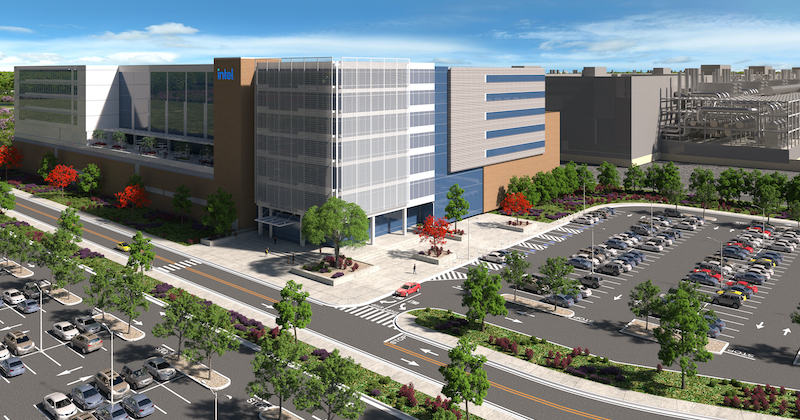
The Columbus area will soon be home to Ohio’s largest private investment in history with the Intel semiconductor fab planned for the Franklin County/Licking County line in New Albany. While this is not within Columbus itself, this project has massive implications for the city, region and possibly even Ohio overall. Let’s examine exactly what the Intel semiconductor fabs mean for Columbus, and some of the potential impacts the project may have for years to come.
What is it? Semiconductors -at their most basic- conduct electricity, and are essentially what are used to make microchips. As such, they are crucially important for virtually all types of electronics, from cars to computers to ATMS to household appliances. Because they are so important, everyone needs them. Unfortunately, however, their production is more complex than many other types of manufacturing. Their production plants require large amounts of power and water, and manufacturing areas have to be free of things like static electricity and humidity, which can damage semiconductors. Furthermore, the jobs typically require specialized training and degrees. What all this means is that building a semiconductor factory- or fab- is enormously expensive. A single fab can easily cost $10-$20 billion, so there aren’t that many companies in the world that can actually build them- in fact, there are currently just 38 companies in the entire world capable of manufacturing them.
The proposed fab in New Albany is significant in several ways. First of all, as mentioned above, it will be Ohio’s largest single private investment in history, significantly more than any auto manufacturer or other industry. The first phase of the project has been announced, and will include two fabs at a cost of $20 billion, and will provide 3,000 direct jobs, 10,000 ancillary jobs and 7,000 construction jobs. The fab jobs will have an average salary of $135,000, about 2.5x the Ohio average. While this first phase is huge on its own, it seems that it will just be the beginning.
For some time, Intel has been talking about building a “mini-city” type development somewhere in the US. This mini tech city would include up to 8 or more fabs, and along with supporting development would be an investment greater than $100 billion. When news first broke about the New Albany project, there was some speculation that this site would be where this gigantic development would go, especially given that it included more than 3,000 acres of available land. Now, it seems that we have confirmation that Central Ohio is indeed the location of this mini city. In a recent Time article, this section stood out:
“Our expectation is that this becomes the largest silicon manufacturing location on the planet,” Intel CEO Pat Gelsinger told TIME; the company has the option to eventually expand to 2,000 acres and up to eight fabs. “We helped to establish the Silicon Valley,” he said. “Now we’re going to do the Silicon Heartland.”
So now that Central Ohio is about to rocket to the potential forefront of microchip manufacturing on a global scale, what might be the consequences long term?
Impacts
It’s hard to overstate how significant this development will be for the Columbus area. Here are just a few.
Housing Market While the effects of this project won’t be felt by most right away, the areas and communities nearest to it will likely see home prices escalate fairly quickly. Places like Johnstown, New Albany, Alexandria and Granville, among others, will likely see the fastest- and most significant- realization of this increase, but virtually every community within 50 miles will likely see upward pressure- certainly including Columbus, which will probably end up with a healthy majority of any new workers into the region. What that means long term is that housing construction will also explode. The region, if anything, has been underbuilding for years despite high demand. Even before this news, it was estimated that Central Ohio needed roughly 2x-4x the residential units constructed each year just to meet existing demand. Because of that existing issue, the area has faced a deep housing shortage and a near monthly new median housing price record. So housing construction will almost inevitably increase, but the makeup of that housing and where it will be built remains to be seen. No doubt suburban sprawl around the construction area will accelerate, but what happens in Columbus itself is likely to be somewhat different. The city could see a massive upward movement in urban infill projects that make the past decade look paltry in comparison. You might be wondering why all this development would even occur just because of this one project, no matter how large it is, and that brings us to the next impact.
Population A project as large as the Intel mini-city doesn’t happen everyday, and arguably nowhere else in the country is going to have something like it in the industry. Because of the scale and notoriety alone, it is inevitable that other companies- and not just tech- take notice and give the Columbus are a new look for investment or relocation. Columbus, and indeed Ohio, doesn’t have the high costs associated with the West Coast or even parts of the Sun Belt. Ohio doesn’t struggle with water supplies like the Southwest, has stable power, does not suffer from significant natural disaster threats, is positioned well for climate change and is arguably the best-located state for access to a majority of the US population. Seeing Intel make such a large investment in the state will attract other investments as well, and these new companies investing will need supporting infrastructure and companies of their own, as well. In fact, this process has already begun. Intel itself has said that multiple other companies, such as Air Products, Applied Materials, LAM Research and Ultra Clean Technology, among others, are already moving to invest in the area. Many more will follow. Over time, this will lead to a greater influx of people, spurring more and more development. Obviously, this is not going to happen overnight. Intel’s first fab isn’t even due to be completed for potentially another 3-4 years, but the stars are aligning for the Columbus population to really begin taking off and enter a true golden age.
Infrastructure Up to now, the Columbus region’s infrastructure has been more or less sufficient in handling the needs of the population, with some exceptions. The highway system has been more than adequate to ensure that most trips around the area are relatively quick and easy, but should a rapidly-rising population manifest, that highway and road system may quickly fall behind. Even with current growth levels, traffic is becoming more of an issue. It’s been rumored that the State is going to invest up to a billion dollars improving infrastructure in the area surrounding the site, but this most likely is limited to roadway expansion, if anything. One big negative for the region has always been mass transit. Columbus remains one of the few large US cities without rail service of any kind. It’s certainly possible, if not likely, that MORPC and other local planning groups are going to be faced with increasing pressure to invest in driving alternatives. COTA can only go so far. The plan to build BRT routes in some areas of the city is a start, but rail needs to be part of the longer-term picture. At the very least, a few lines between Downtown and the airport, and perhaps the airport and New Albany is something that needs to seriously be considered. The Columbus region can no longer afford to keep putting these investments off. Planning needs to start now, not later.
John Glenn International Airport is another potential weakness. While it is fine as a regional airport, all this news should put greater emphasis on the plan to replace the current terminal with a new one. Originally, city planners were talking about 2030 or later for this to happen. Due to the pandemic and a drop in overall air traffic, those plans were likely moved back even later, but if anything, the plans should go forward even sooner. This will allow the city to gain more flights- perhaps even some truly international ones- that are going to be increasingly in-demand.
The reality is that these are just a handful of the potential long-term impacts for the city and region, but they are the ones most obviously likely to be impacted the greatest. In effect, Intel’s mini-city is not just a single economic boost for Central Ohio, but it could also be the first wave in a tsunami of transformation that will change Columbus- good or bad- forever.