
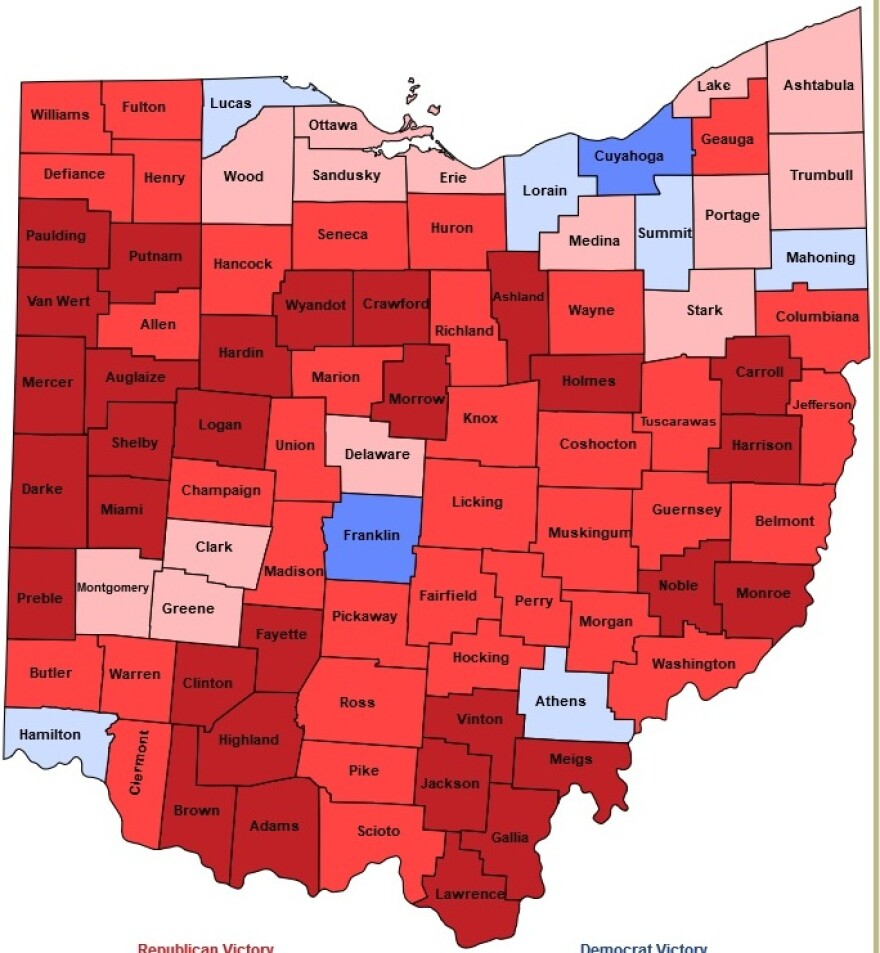
For this post, I want to focus on politics and Ohio’s economic performance in relation to the party in power. There’s been much said over whether the economy does better under Republicans or Democrats at the national level, and I wanted to see if national politics played any role in the economic performance of Columbus and Ohio overall. Now, to put it simply, I really just looked at Bureau of Labor Statistics to see how the economy performed under different administrations. It’s not necessarily going to be a very deep analysis beyond that. In recent surveys, many user responses chose political content as something I should contribute to the site more often. While I do not want to make the site overtly political, I think there can be a balance by using a data-driven approach. This is what I used in past posts relating to politics, from Covid numbers to voting totals.
In any case, we have to determine what administrations we’re going to look at. First, the criteria is that they have to be completed adminisrations, as we will look at entire 4-year periods. The data for the BLS for Ohio goes back to 1976, but only to 1990 for Columbus itself. Therefore, for the state we will use Carter, Reagan, Bush, Clinton, Bush II, Obama and Trump for the state numbers, and Clinton, Bush II, Obama and Trump for city numbers. Will the state numbers follow the same patterns as the city, or not?
For this post, it’s all about Ohio.
Let’s look at the overall stats of each president. These will be Labor Force (people within the job market), Employment (people in the labor force with jobs), Unemployment (people in the labor force without jobs), and Unemployment Rate (percent of the labor force without jobs).
State of Ohio | Labor Force Data | |||
President | Figure at Term Beginning | Figure at Term End | Net Change | % Change |
Jimmy Carter (D) 1/1977-1/1981 | 4,781,086 | 5,085,673 | +304,587 | +6.37 |
Ronald Reagan (R) 1st Term 1/1981-1/1985 | 5,085,673 | 5,088,875 | +3,202 | +0.06 |
Ronald Reagan (R) 2nd Term 1/1985-1/1989 | 5,088,875 | 5,316,349 | +227,474 | +4.47 |
George H.W. Bush (R) 1/1989-1/1993 | 5,316,349 | 5,478,918 | +162,569 | +3.06 |
Bill Clinton (D) 1st Term 1/1993-1/1997 | 5,478,918 | 5,684,684 | +205,766 | +3.76 |
Bill Clinton (D) 2nd Term 1/1997-1/2001 | 5,684,684 | 5,802,000 | +117,316 | +2.06 |
George W. Bush (R) 1st Term 1/2001-1/2005 | 5,802,000 | 5,851,991 | +49,991 | +0.86 |
George W. Bush (R) 2nd Term 1/2005-1/2009 | 5,851,991 | 5,960,636 | +108,645 | +1.86 |
Barack Obama (D) 1st Term 1/2009-1/2013 | 5,960,636 | 5,705,642 | -254,994 | -4.28 |
Barack Obama (D) 2nd Term 1/2013-1/2017 | 5,705,642 | 5,791,153 | +85,511 | +1.50 |
Donald Trump (R) 1st Term 1/2017-1/2021 | 5,791,153 | 5,720,805 | -70,348 | -1.21 |
Joe Biden (D) 1/2021-1/2025 | 5,720,805 | 5,922,243 | +201,438 | +3.52 |
Total Labor Force Change by Entire Presidency
1. Bill Clinton: +323,082
2. Jimmy Carter: +304,587
3. Ronald Reagan: +232,676
4. Joe Biden: +201,438
5. George H.W. Bush: +162,569
6. George W. Bush: +158,636
7. Donald Trump: -70,348
8. Barack Obama: -169,483
Total by Party
Democratic: +659,624
Republican: +483,533
Next up, Employment.
State of Ohio | Employment Data | |||
President | Figure at Term Beginning | Figure at Term End | Net Change | % Change |
Jimmy Carter (D) 1/1977-1/1981 | 4,423,538 | 4,629,708 | +206,170 | +4.66 |
Ronald Reagan (R) 1st Term 1/1981-1/1985 | 4,629,708 | 4,633,809 | 4,101 | +0.09 |
Ronald Reagan (R) 2nd Term 1/1985-1/1989 | 4,633,809 | 5,032,921 | +399,112 | +8.61 |
George H.W. Bush (R) 1/1989-1/1993 | 5,032,921 | 5,092,311 | +59,390 | +1.18 |
Bill Clinton (D) 1st Term 1/1993-1/1997 | 5,092,311 | 5,396,922 | +304,611 | +5.98 |
Bill Clinton (D) 2nd Term 1/1997-1/2001 | 5,396,922 | 5,577,863 | +180,941 | +3.35 |
George W. Bush (R) 1st Term 1/2001-1/2005 | 5,577,863 | 5,484,332 | -93,531 | -1.68 |
George W. Bush (R) 2nd Term 1/2005-1/2009 | 5,484,332 | 5,437,168 | -47,164 | -0.86 |
Barack Obama (D) 1st Term 1/2009-1/2013 | 5,437,168 | 5,279,345 | -157,823 | -2.90 |
Barack Obama (D) 2nd Term 1/2013-1/2017 | 5,279,345 | 5,489,730 | +210,385 | +3.99 |
Donald Trump (R) 1st Term 1/2017-1/2021 | 5,489,730 | 5,370,247 | -119,483 | -2.18 |
Joe Biden (D) 1/2021-1/2025 | 5,370,247 | 5,651,168 | +280,921 | +5.23 |
Total Employment Change by Entire Presidency
1. Bill Clinton: +485,552
2. Ronald Reagan: +403,213
3. Joe Biden: +280,921
4. Jimmy Carter: +206,170
5. George H.W. Bush: +59,390
6. Barack Obama: +52,562
7. Donald Trump: -119,483
8. George W. Bush: -140,695
Total by Party
Democratic: +1,025,205
Republican: +202,425
Now Unemployment.
State of Ohio | Unemployment Data | |||
President | Figure at Term Beginning | Figure at Term End | Net Change | % Change |
Jimmy Carter (D) 1/1977-1/1981 | 357,548 | 455,965 | +98,417 | +27.53 |
Ronald Reagan (R) 1st Term 1/1981-1/1985 | 455,965 | 455,066 | -899 | -0.2 |
Ronald Reagan (R) 2nd Term 1/1985-1/1989 | 455,066 | 283,428 | -171,638 | -37.72 |
George H.W. Bush (R) 1/1989-1/1993 | 283,428 | 386,607 | +103,179 | +36.40 |
Bill Clinton (D) 1st Term 1/1993-1/1997 | 386,607 | 287,762 | -98,845 | -25.57 |
Bill Clinton (D) 2nd Term 1/1997-1/2001 | 287,762 | 224,137 | -63,625 | -22.11 |
George W. Bush (R) 1st Term 1/2001-1/2005 | 224,137 | 367,659 | +143,522 | +64.03 |
George W. Bush (R) 2nd Term 1/2005-1/2009 | 367,659 | 523,468 | +155,809 | +42.38 |
Barack Obama (D) 1st Term 1/2009-1/2013 | 523,468 | 426,297 | -97,171 | -18.56 |
Barack Obama (D) 2nd Term 1/2013-1/2017 | 426,297 | 301,423 | -124,874 | -29.29 |
Donald Trump (R) 1st Term 1/2017-1/2021 | 301,423 | 350,558 | +49,135 | +16.30 |
Joe Biden (D) 1/2021-1/2025 | 350,558 | 271,075 | -79,483 | -22.67 |
Total Unemployment Change by Entire Presidency
1. Barack Obama: -222,045
2. Ronald Reagan: -172,537
3. Bill Clinton: -162,470
4. Joe Biden: -79,483
5. Donald Trump: +49,135
6. Jimmy Carter: +98,417
7. George H.W. Bush: +103,179
8. George W. Bush: +299,331
Total by Party
Democratic: -365,581
Republican: +279,108
And finally, the Unemployment Rate
State of Ohio | Unemployment Rate Data | ||
President | Figure at Term Beginning | Figure at Term End | Net Change |
Jimmy Carter (D) 1/1977-1/1981 | 7.5 | 9.0 | +1.5 |
Ronald Reagan (R) 1st Term 1/1981-1/1985 | 9.0 | 8.9 | -0.1 |
Ronald Reagan (R) 2nd Term 1/1985-1/1989 | 8.9 | 5.3 | -3.6 |
George H.W. Bush (R) 1/1989-1/1993 | 5.3 | 7.1 | +1.8 |
Bill Clinton (D) 1st Term 1/1993-1/1997 | 7.1 | 5.1 | -2.0 |
Bill Clinton (D) 2nd Term 1/1997-1/2001 | 5.1 | 3.9 | -1.2 |
George W. Bush (R) 1st Term 1/2001-1/2005 | 3.9 | 6.3 | +2.4 |
George W. Bush (R) 2nd Term 1/2005-1/2009 | 6.3 | 8.8 | +2.5 |
Barack Obama (D) 1st Term 1/2009-1/2013 | 8.8 | 7.5 | -1.3 |
Barack Obama (D) 2nd Term 1/2013-1/2017 | 7.5 | 5.2 | -2.3 |
Donald Trump (R) 1st Term 1/2017-1/2021 | 5.2 | 6.1 | +0.9 |
Joe Biden (D) 1/2021-1/2025 | 6.1 | 4.6 | -1.5 |
Total Unemployment Rate Change by Entire Presidency
1. Ronald Reagan: -3.7
2. Barack Obama: -3.6
3. Bill Clinton: -3.2
4. Joe Biden: -1.5
5. Donald Trump: +0.9
6. Jimmy Carter: +1.5
7. George H.W. Bush: +1.8
8. George W. Bush: +4.9
Total by Party
Democratic: -6.8
Republican: +3.9
Presidents Ranked by Ohio Performance Overall Per Average Rank Position
1. Bill Clinton/Ronald Reagan: 2.0
2. Joe Biden: 3.75
3. Barack Obama: 4.25
4. Jimmy Carter: 4.5
5. Donald Trump: 6.0
6. George H.W. Bush: 7.0
7. George W. Bush: 7.5
It seems pretty clear based on this that Ohio does significantly better when Democrats are in the Oval Office. They produced 5x the number of jobs and moved the unemployment rate down by an average of -1.7 points, while Republicans moved it up by an average of almost 1 point. Every single metric measured by the BLS did better under Democrats. Only Reagan really stood out for Republicans while even Carter- regularly derided as a terrible president- did better than all 3 other Republicans on the list. In regards to the two most recent presidents from both parties, Biden clearly had much more favorable numbers than Trump did in his first term.
Now, does this trend translate to the more local level? In an upcoming post, I will examine how the Columbus Metro performed
