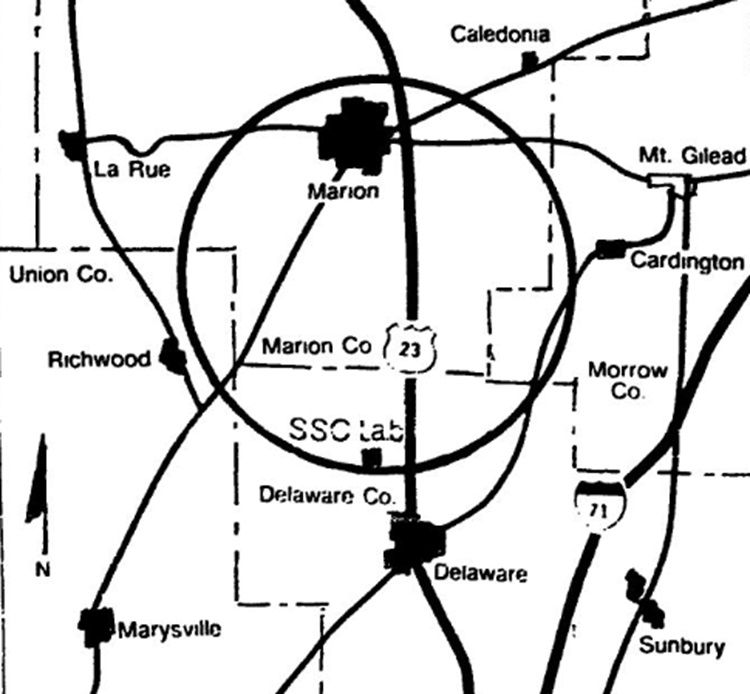
The approximate location of the proposed atom collider tunnel.
Today’s failed project is a short, but interesting one- Ohio’s atom collider.
On August 9, 1985, the Columbus Dispatch ran an article about an “atom tunnel” to be located underneath parts of Delaware, Marion, Morrow and Union counties. This 60-100 mile long tunnel was to be one of the first of its kind, an early version of the Hadron Collider in Europe. The $3 billion dollar tunnel was to be buried 200 feet down and be about 10 feet in diameter. Ohio was not the only state vying for the project, but Ohio was considered to be near the top of the list. Ohio would’ve had to spend $66 million to get the site ready, anchored by a 5,000 acre project laboratory in Delaware County. The project, expected to bring 3,000 construction jobs and 6,000 permanent jobs, was expected to put the state at the forefront of scientific research.
This project largely failed for one reason: The Reagan Administration. Though the Department of Energy and the science community wanted this and other science advancements funded, it never went through, so the funding never became available. Instead, the European Organization for Nuclear Research (CERN) took the lead and built the now famous Large Hadron Collider, between 1998 and 2008. While Ohio’s “atom tunnel” would by now be far outdated, who knows what kind of research and technological advancement, even to this day, would’ve taken place under the Columbus metro’s northern counties.
In recent years, Columbus has lost multiple historic buildings, but not all of them were for new development. Instead, they were largely the victims of neglect and indifference, with both owners and the City itself acting as their executioners. The most recent building collapse is a City failure, but it is just one more in a long, depressing list. Let’s take a look at just some of these cases, and how bias against poorer or less-White neighborhoods may be part of the problem.
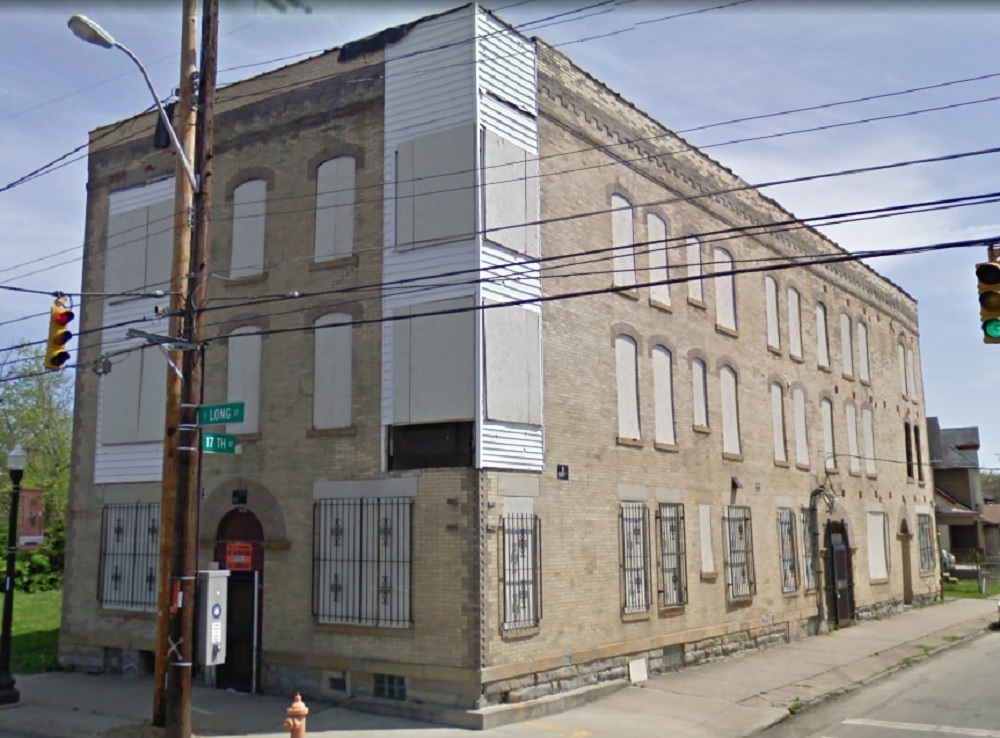
Charles Building
The Charles Building in 2009.
905 E. Long Street Built: 1910s Demolished: 2010 The apartment building was first owned by Dr. William Method, a prominent figure who was often called the “dean of Negro physicians” at the time. Method was responsible for helping to build the hospital across the street, known as Alpha Hospital, which primarily served Black residents who struggled to get adequate medical care otherwise. The apartment building was named after Method’s only son, Charles. Method didn’t own the building for very long and was in the hands of another owner by 1920. The building belonged to one owner from 1938-1966, and was largely maintained during this period. In 1970, it passed to yet new owners, and that seems to have been when the problems started. At the time, disinvestment in the Near East Side had become a powerful force in and of itself. After 70-71 had split the neighborhood off from Downtown in 1962, the population collapsed and most of the people who remained were lower-income minorities, a demographic that wasn’t exactly being prioritized in the mid-20th Century. Coinciding with the Urban Renewal period, these neighborhoods were devastated both by the lack of investment, but also by the City demolishing large swaths of what they had determined to be undesirable areas. Part of that lack of investment was allowing many of the older buildings that didn’t immediately meet the wrecking ball to decline in condition through lax, and sometimes virtually nonexistent inspections and maintenance. The building was old by the 1970s, but continued to be a solidly-built structure. Over the following decades, however, neglect eventually caused the building to become abandoned, and the City took over ownership of it in 2004. The City did not maintain it after that, though, and it remained abandoned and in increasingly poor shape as the years went on. In the late 2000s, a plan was finally formed to renovate it and turn it into affordable housing by the Affordable Housing Trust for Columbus & Franklin County. However, city architects argued that it would cost more to renovate the building than to tear it down and build new ($2.1 Million vs. $1.5 Million), and city leaders were concerned the federal government wouldn’t provide the funds to make up the difference, leaving Columbus on the hook for the remaining $600,000. So, the renovation plans were given up and the decision was made to demolish it. A part of the story familiar to most of the demolitions listed here, neighborhood residents were less than happy about another part of their history being lost due to outright neglect and the hand-wringing of officials using cost as an excuse. Regardless, the building was torn down by the end of 2010. An affordable housing project was built on the site in 2012, and given the name “The Charles” as a somewhat pandering move to the site’s history. Ironically, the new Charles building cost $2.2 million to construct, which meant that the demolition and new building ended up costing more than just renovating the old one in the first place. Curious. Worse, the new building provided only 10 units, fewer than the original building could have.
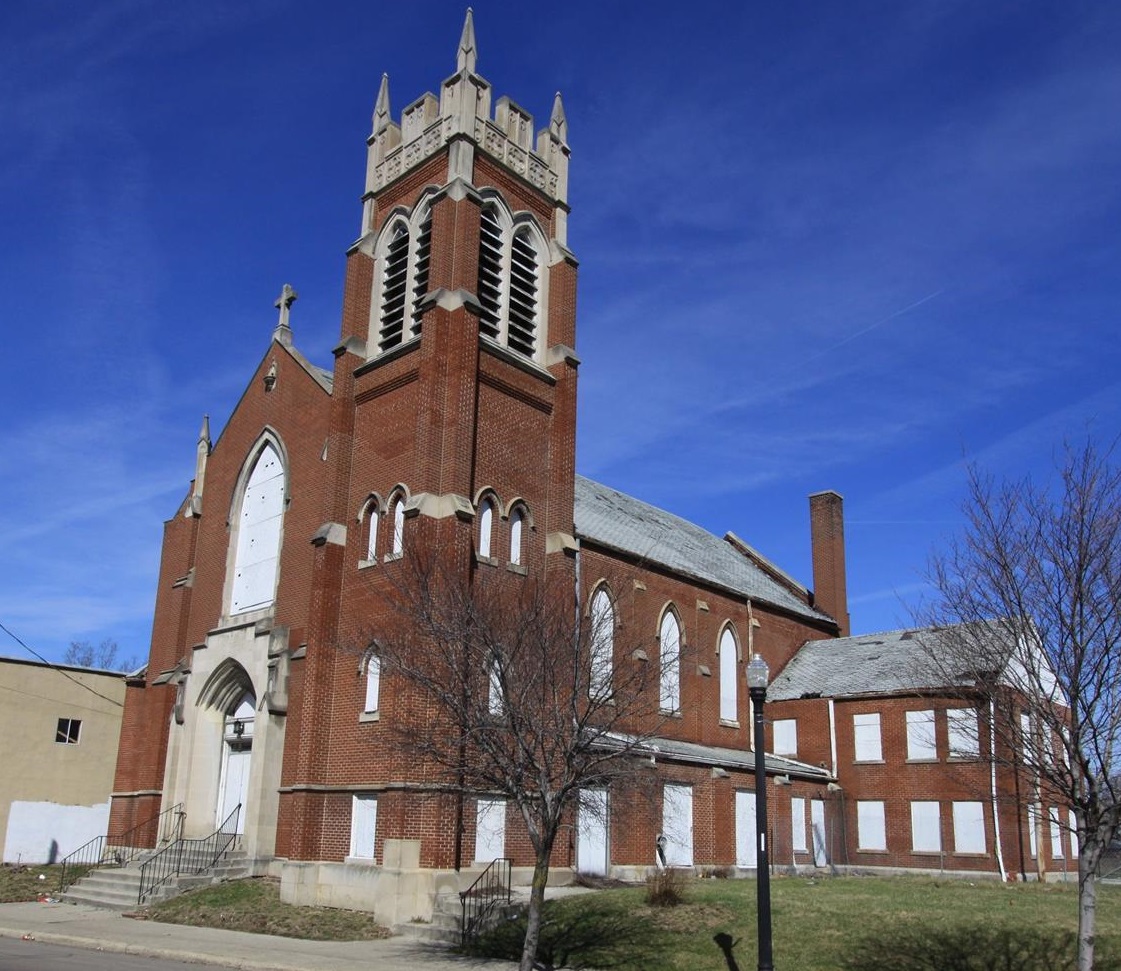
Centenary United Methodist Church
The church in March, 2010.
928 E. Long Street Built: 1928 Demolished: May, 2010 In 2002, then Columbus Mayor Michael Coleman was pushing hard for revitalizing the King-Lincoln neighborhood, with 25 buildings throughout the neighborhood being designated as “major community assets”. The old Centenary United Methodist Church, the home of a long-time predominantly Black congregation, was one of those buildings. The following year, that existing congregation vacated the building and it was sold to Second Baptist Church of Columbus. Second Baptist didn’t seem to have any real plans for the building, as in 2009, it prepared to sell it to another church called Yeshua is Lord Ministries, which wanted to renovate the structure for a community center. By 2003, the building was already 75 years old and had started to show its age. Deferred maintenance by the long-time owner had left parts of the structure, particularly the brick facade, vulnerable. Second Baptist had spent no money maintaining the structure, either, between 2003 and 2009. The sale to Yeshua got as far as Second Baptist signing a sale contract, but for reasons that aren’t clear, the deal fell through. It’s also unclear whether Second Baptist sought other buyers after that or just decided to tear it down. In April, 2010, a city engineer’s report called the building “unsafe” due to loose brick, a few of which had fallen off the building. The City ordered the church stabilized or torn down, and Second Baptist chose the latter, with a vague plan to redevelop the site after. Columbus Landmarks Foundation briefly got involved to either raise money to save it or find a new buyer, but they just didn’t have any time to do so. Only a month after the report, the church was demolished. To date, Second Baptist still owns the site, but it continues to be vacant more than a decade later. In some ways, this story is more complicated than with the Charles Building, but there are familiar themes here too. The building lacked the necessary maintenance by its owners, and the City lacked the oversight necessary to make sure it was maintained before it became a public safety issue. By the time any of it was addressed, the timeline pushed to do so did not give interested parties the time necessary to save it. Furthermore, we have a common case of historic buildings being demolished with no real plans in place to replace them with anything. Churches have been a surprising force in this type of historic destruction, not just with church buildings themselves, but with surrounding blocks, often either for newer buildings or parking lots.
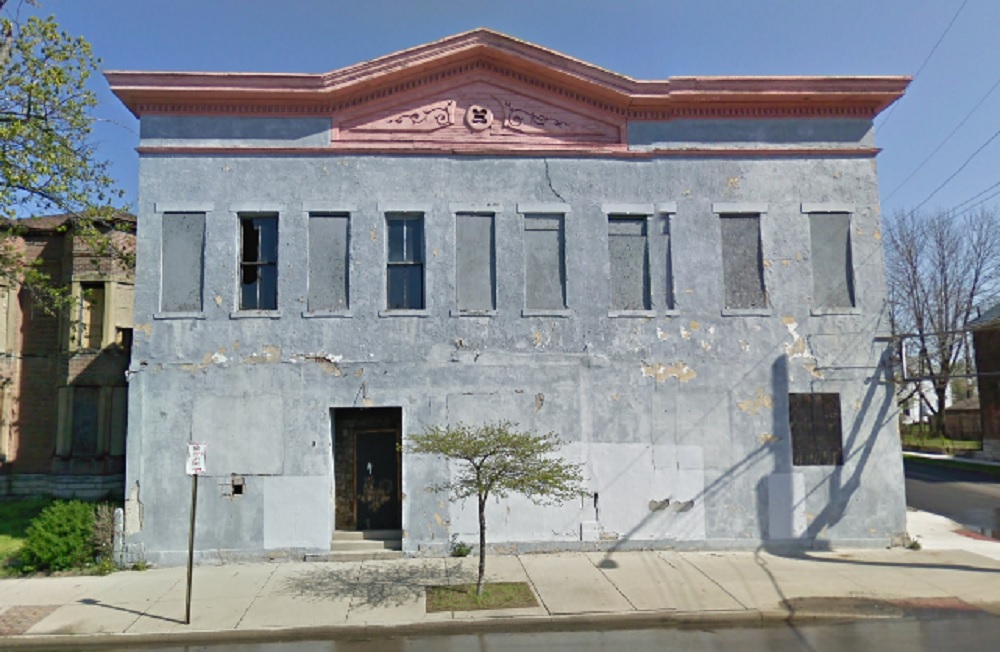
Commercial Building
The building in 2009.
1072 E. Long Street Built: Unknown, prior to 1891 Demolished: 2010 While it never seems to have had an official name, this commercial building was long an important fixture on Long Street. While articles say it was built around 1910, historic maps clearly show it being at the site as early as 1891, so it was far older than suggested. In the 1940s and 1950s, for example, it functioned as the Burns Memorial Funeral Home, a family-owned business that served the local Black community. It also served as apartments, retail space, the Crosby Funeral Home and in the early 1970s, as a Franklin County registrar to buy plates and licenses. Records after the 1970s are few, and it seems the building may have been fallen into disuse by the 1980s, coinciding with the general decline of the Near East Side. Its path to demolition is an interesting one, as it seems the City was determined to tear it down. In November, 2009, the building went to a Sheriff’s auction, where Columbus bought it with plans to turn over the site to the Columbus Housing Partnership. At the time, though, CHP had no actual plans for it. A few weeks later and after an inspection, the City inspectors issued an emergency order that claimed the building was in such a state of decay that it could “collapse at any time”. The order gave Columbus 30 days to either fix the building or tear it down. After the emergency order was issued, the Bronzeville Neighborhood Association, among other neighborhood groups, requested the chance to get a second opinion on the building’s condition and if there was a possibility of saving it. The Columbus Department of Development, which took ownership of the building after the auction, claimed that there was simply no time to wait for that as the building was a significant risk. It is very strange, then, that the City did not act within the ordered 30-day timeframe. Indeed, 4 months would go by and nothing would be done with the structure, far longer than would’ve been required to honor the request of neighborhood groups for a second opinion on condition. On March 1, 2010, The Bronzeville Neighborhood Association offered Columbus $500 for the building, an amount more than the Director of the Columbus Department of Development thought the building was worth. The same day, the BNA was given until March 5th to come up with a “viable” plan to buy and renovate the building. So to recap, city inspectors had claimed the building was in imminent danger of collapse and gave the Department of Development 30 days to either renovate or demolish. The DOD then told neighborhood groups that 30 days was just not enough time for them to get a second opinion and put together a proposal. 4 months pass with no action from Columbus, neighborhood groups put an offer for more than the building is considered to be worth, but the DOD gives them just 5 days to come up with a new proposal, something they could’ve been working on the previous 4 months as the City did nothing. It sure seems like the City wasn’t acting in good faith. On the March 5th deadline, the City rejected the $500 offer by saying that it didn’t come with any assurances that the neighborhood groups would raise the necessary funds to renovate the structure. Just a week later, the building came down. At the time, it was one of the oldest buildings remaining on Long Street.
Charles Seefried Building
Seefried building in 2021.
555 W. Town Street Built: 1884 Demolished: Soon While this mixed-use building has yet to meet the wrecking ball, it seems to be only a matter of time. Charles Seefried’s life seems to not show up much in the historical record. In an 1889 directory, he is listed as a “blacksmith helper” and living at 179 1/2 N. High Street, but it’s unclear if this is the same Seefried whose name adorns the building. Either way, Seefried seems to have passed away on October 29, 1888 at age 43. The building housed apartments on upper floors with commercial space on the ground for for just about all of its existence. A general store called Couts & Downing is listed in the building as early as 1907 and were still there when WWII broke out. A bar called the Red Star Grill was there for at least a decade in the 1960s and 1970s. The exact year when the building was abandoned is unclear, but it seems the most likely period was the 1980s. Between 1979 and 2012, the building was sold at least 6 times to different owners, most of whom did almost nothing in terms of maintenance. There were minor repairs done in the mid-1990s and in 2002, but they were not the kind of repairs that would halt the deterioration. In 2016, it seems the most recent owner at least applied for a permit to replace the roof, but it’s unclear if that was done. A few years later, in March, 2019, the building was declared unsafe, with similar declarations coming into 2020, with repeated 90-day orders to stabilize or tear the building down. Finally, in March of this year, it was reported the the owner had decided to tear it down, citing structural issues that rendered the building “too far gone”. No permits for the demolition have yet been issued, so there is a very tiny chance that the building will somehow make it, but that seems very unlikely.
And now we finally come to the latest loss.
Mixed-Use Building
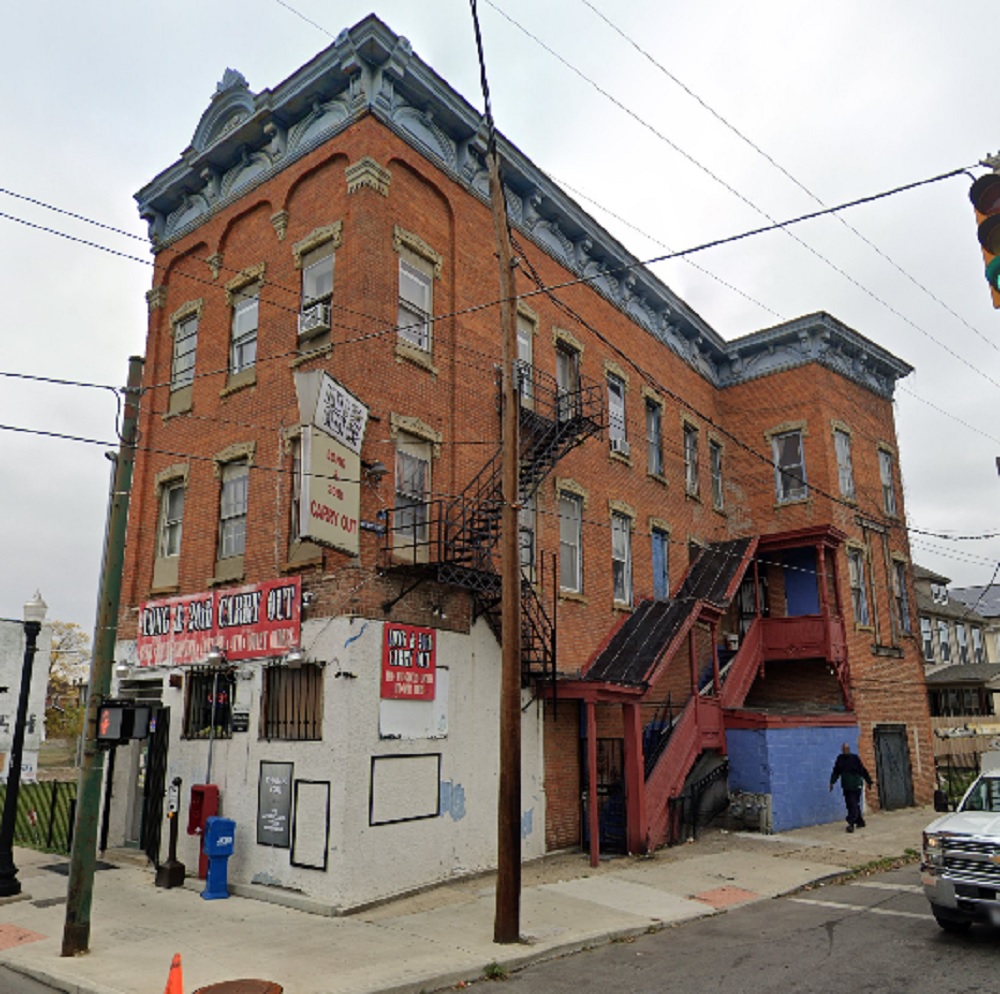
1032 E. Long in 2021.
1032 E. Long Street Built: 1880s Demolished: July, 2022 This was likely one of the oldest remaining commercial buildings on East Long Street, a very rare survivor after 70 years of demolitions in the neighborhood. How it survived so long when so many others did not is probably more luck than anything, but it still managed to meet the same fate of neglect that all these others- and so many more- did. On July 18, 2022, part of the back half of the building completely collapsed.
In public records, there are no listed permits for any improvements or renovations, so this likely occurred simply due to neglect. After 140 years, all that deferred maintenance left the building vulnerable until it literally couldn’t stand anymore. Going back more than a decade, the only code violations I could find had to do with trash, weeds, graffiti and signage. Had there been any inspections of the building at all over the past 5 owners in the last 20 years? Why is Columbus allowing so much of its history to rot away to the point of collapse? These buildings had history and each one arguably added more to their neighborhoods architecturally than anything being built today. Each loss is a tragedy and should serve as reason enough for change.
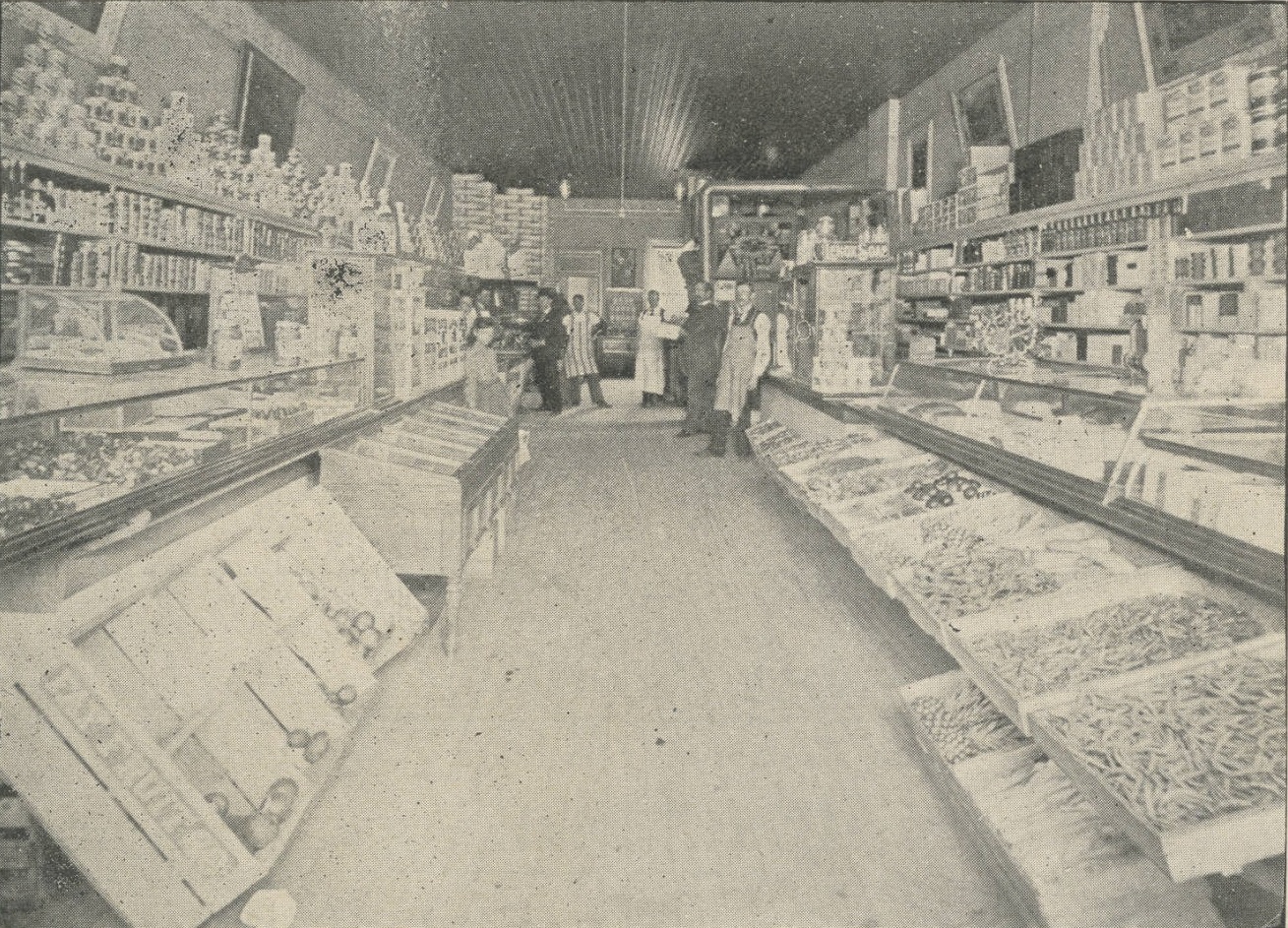
The interior of L. Hicken Staple and Fancy Groceries inside 1032 E. Long Street in 1898.
Columbus saw a ton of new development proposals the past year, but not all of them have a future. Here are 3 major Columbus proposals that died in 2021.
Harmony Tower Originally announced in the summer of 2020, this proposal called for a 30-story, mixed-use tower to replace a parking lot at 158 N. High Street Downtown. The $100+ million project would’ve included a hotel, 15 floors of condos, office and retail space. After announcing the project, Schiff Capital went silent and the project basically disappeared. There were no updates, no news. In some ways, it was a reminder of the way Arshot had gone silent on the SPARC project years earlier. Sometime over the summer of 2021, plans for the tower were quietly abandoned, though no reason was given as to why. Speculation for its cancellation mostly revolved around Covid and its consequences related to supply chains and rapidly rising costs of construction materials. Sadly, this was not the only skyline-altering proposal that went belly-up this year.
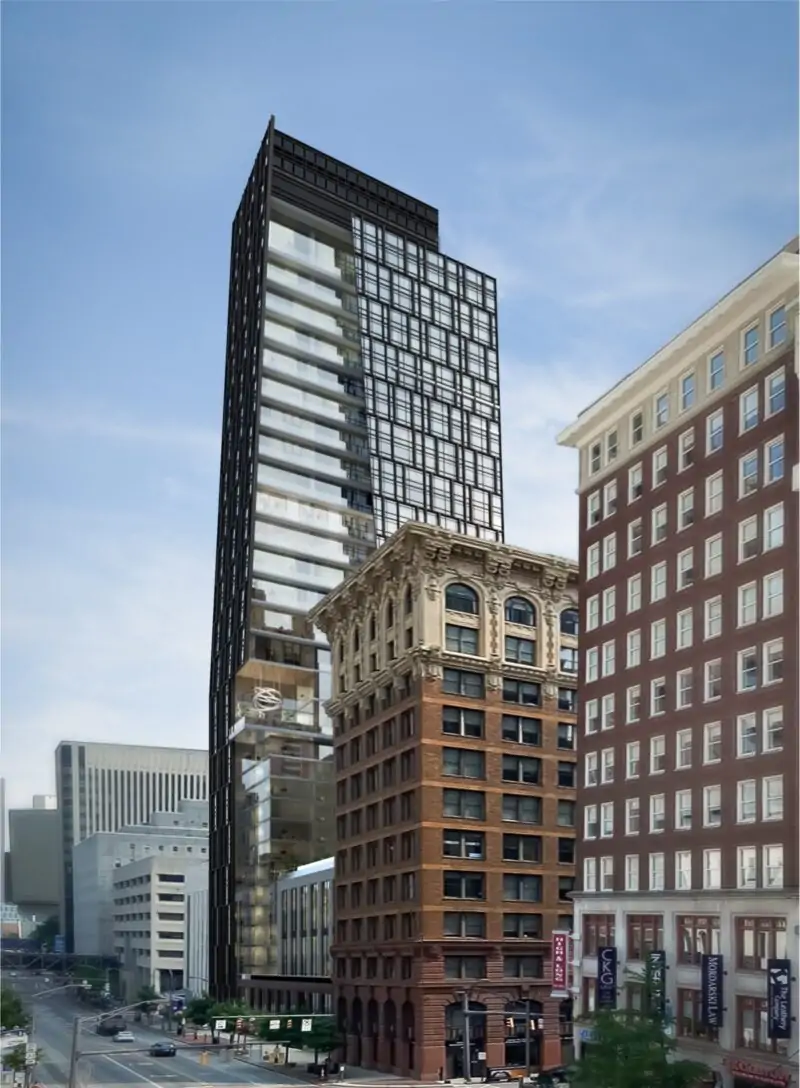
Whittier Peninsula Tower At the end of 2019, a North Carolina company announced a proposal for a significant new development along the railroad tracks just to the east of Scioto-Audubon Metro Park in the Brewery District. The plan called for for the multi-phase development of 10 buildings, including a mixed-use tower that would reach up to 30-stories, with a 7-story and 12-story containing another 400 residential units and retail and office space making up the first phase. The use makeup of the 30-story tower and other buildings had not been determined fully at the time.
Rendering of the original 30-story tower.
As with Harmony tower, after the initial announcement there was radio silence for months. 18 months later, in June of this year, new renderings for the proposal all but confirmed that the project had gone through a serious downsizing. Instead of 10 buildings with heights between 7-30 stories, the update consisted of just 5 6-story apartment and retail buildings. Unfortunately, the scaling down wasn’t finished. In early October of this year, yet another update was released. In it, the 5 6-story buildings had been reduced to to just 3. So the number of buildings had been reduced by 70%, and the top height was now 5x shorter than the original proposal. To me, it seems like a pretty blatant case of the developer never having the necessary resources- or ability to access the necessary resources- required for the original proposal, and by the end of it, the neighborhood development commission was just happy to approve whatever leftovers the developer had really intended to build all along.
The Mondrian The Mondrian was originally a 13-story tower for 567 W. Broad in Franklinton. It was by far the largest proposal for Franklinton to date in its new revival. The Mondrian would’ve had 80 residential units and ground-floor retail space along Broad Street.
The 15-story Mondrian proposal rendering from Spring 2021.
In April we found out that the proposal had actually increased in height to 15 stories, likely to try to take advantage of new, large-project state tax credits, but otherwise, there was no known movement on this project. We know by now that no news on a big project tends to be bad news, and while there has been no official word that this project has been canceled, the evidence points that it has met an end. It was reported earlier this month that the listed site for the project is now up for sale, indicating that the proposal is likely dead. That said, this project could still have some legs to it and the situation will be monitored until a more definitive answer is known.
Proposals come and go, and in a city growing as fast as Columbus, the more proposals the city gets, the more likely it is that some of them never come to fruition.
These monthly updates do not include all ongoing projects, but just updates on the most significant or those that have recently made news. To see the full list, check out the Columbus Development page.
Downtown 1. The ongoing Neighborhood Launch expansion continues The current expansion includes a pair of 5-story buildings along E. Long Street at N. 5th. The two buildings will contain about 260 new apartments. The foundations are mostly complete and the buildings are now going vertical. The former Faith Mission at 315 E. Long will be renovated and converted into an event and meeting space for new residents of the project. 2. Construction continues on the High Point residential project at Columbus Commons. Just over 300 apartments as well as ground floor retail and a handful of park-side restaurants will be included once complete. Work is well underway on the 2nd story of these twin 6-story buildings. 3. An application for architectural review has been submitted to the downtown commission for Discovery Commons, a 5-story residential project at E. Spring and Neilston that will include 102 apartments and 70 underground parking spaces. This project has been floating around for over a year, so the recent submission suggests this may finally start to move forward. 4. The historic corner building at 101 S. High Street was recently announced to be renovated into mixed-use. The 4-story building will have Heartland Bank take over the bottom floor with the top 3 floors being residential. No word on how many units it would be, but the renovation is expected to start later this year. 5. The Hills Market at 96 Grant Avenue finally opened a few weeks ago after long construction delays put off the original opening date by almost 4 months. 6. The Atlas building will finally begin its renovation and conversion to 186 apartments and ground-floor retail later this spring. Historic preservation credits were issued for the building at 8 E. Long Street earlier this year. 7. Renovation and expansion of the old Police HQ building at N. Ludlow and W. Gay is nearing completion. The building will allow consolidation of local offices from other buildings. The fate of the vacated buildings nearby remains unannounced. 8. The LeVeque Tower’s renovation and conversion to mixed-use continues. A hotel, offices and several dozen residential units are in the works once complete later in the year. 9. The Columbus Metropolitan Library Main Branch at S. Grant and E. Town Streets recently announced purchase and expansion plans for the adjacent old Deaf School. Construction should begin sometime this year.
Detailed lists of present, past and future Columbus development are included on the Development page.
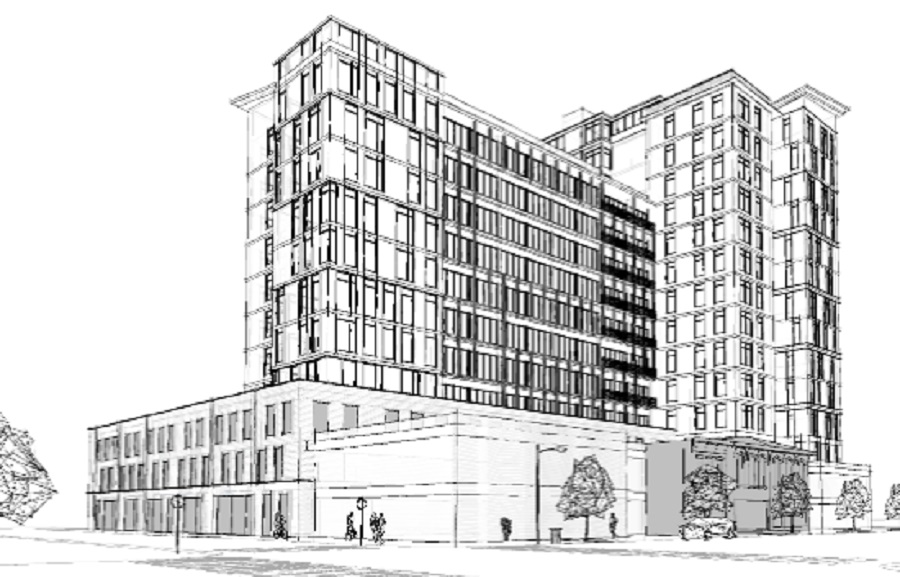
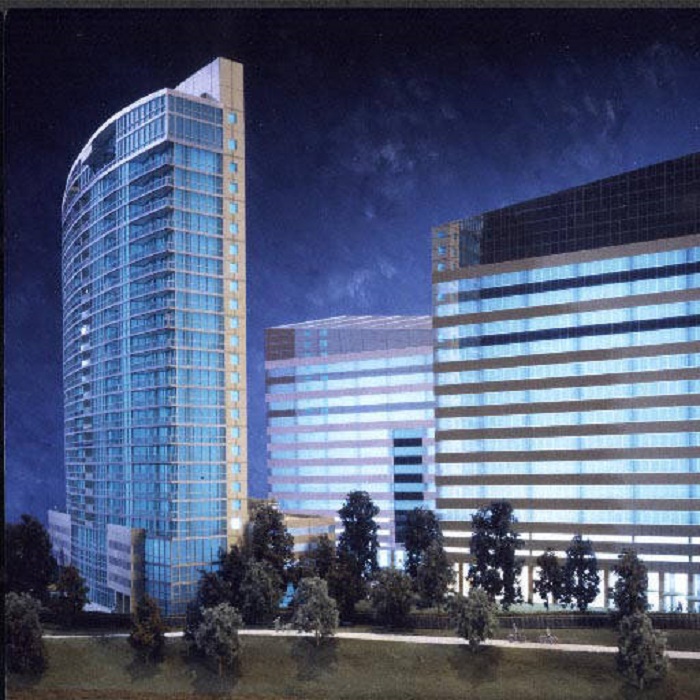
On November 16, 1995, Developer Ron Pizzuti announced plans for a residential and office complex on the Scioto River shore on the southwestern edge of Downtown, a project that would eventually become Miranova Tower. In 1995, this area was a large vacant lot and a handful of small buildings. Originally, the $150 million plan called for replacing this whole area with two 25-story condominium towers, 14 luxury townhomes on the river, a 5-story office building and a pair of restaurants, all with construction to begin in 1996. 200 residential units were planned for the towers. This was all supposed to be part of a new series of Downtown developments including a new COSI, a new soccer stadium across the river on the Scioto Peninsula and a residential development on the Whittier Peninsula west of the Brewery District.
On May 12th, 1996, it was reported that the project would not actually break ground until sometime in 1997, already another year later than originally planned. The two towers remained on the agenda, as did the townhomes and restaurants, but the office building had gained a floor and would now be 6 stories.
By July 8th, 1996, the project had gotten larger still. The # of townhomes had more than doubled to 30 and the office building had risen to 7 stories.
On December 16, 1996, the office building once again grew, this time to 8 stories.
By February 4, 1997, the number of towers had fallen to just one, and mention of townhomes had disappeared, yet the price tag remained $150 million.
Further changes came on December 12, 1997. The single tower would be 28 stories and the office tower had grown to 16 stories. Groundbreaking was pushed back to sometime in 1998.
February 11, 1998, still a single 28 story condo tower, but now two 16-story office towers.
May 8, 1998, and back to just one office tower. Still no groundbreaking.
September 19, 1998, more changes. Condo tower down to 26 stories and the office building down to 15. But work has begun on pouring foundations
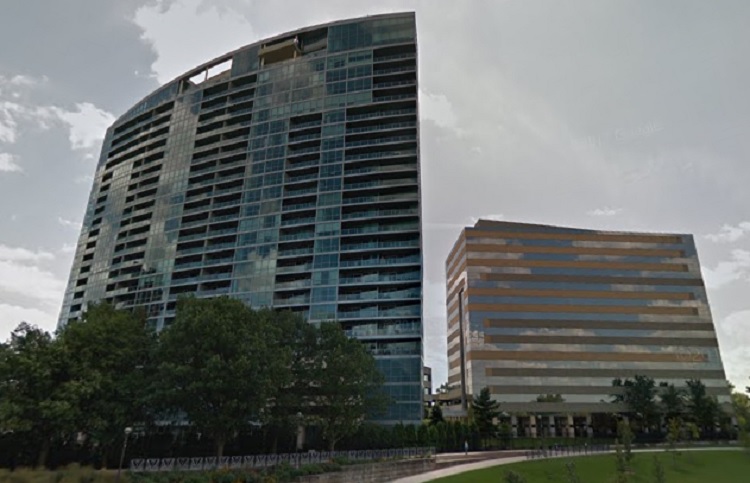
Miranova condo tower was completed in the early spring of 2000. By July, 79 of the 112 condos had sold. The office building, down to a final height of 12 stories, would not be finished until 2001. The last condo sale would not happen for several years, as the 2000s saw the market crash for these residences.
Miranova Project Stats Began Construction in 1999 Completed in 2001 Cost: $150 Million Height: 26 Stories # of Residential Units: 112
Completed projects going back to the 19th Century, as well as new proposals, can be found at the Columbus Development links page. New proposals happen all the time, and you can follow the process for many of them on the Columbus Area Commissions website.