Here is a map for all the listed 1950s Ohio severe weather reports during that era. Click on the pins for more information.
The map incudes information for tornadoes, high wind and hail reports.
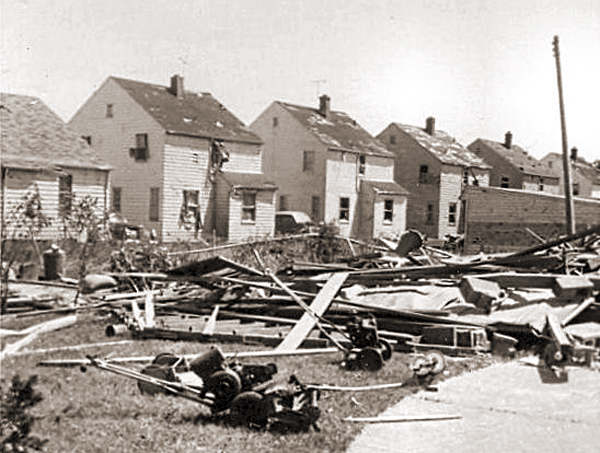
June 8, 1953 Northeast Ohio tornado damage.

Here is a map for all the listed 1950s Ohio severe weather reports during that era. Click on the pins for more information.
The map incudes information for tornadoes, high wind and hail reports.
June 8, 1953 Northeast Ohio tornado damage.

With temperatures predicted to fall to near freezing for the first time this week for the fall season, I thought it might be interesting to take a look at the incidence of early season cold, and the average on when it tends to arrive.
Here are the earliest dates on record for the following:
Temperatures Below 40 and Temperature Range of Observed Dates
1. 8/29/1965: 39
2. 9/8/1951: 39
3. 9/9/1883: 39
4. 9/13/1964: 38
5. 9/14/1902, 9/14/1923, 9/14/1953, 19/14/1975: 38-39
6. 9/17/1959: 37
7. 9/20/1896, 9/20/1956, 9/20/1962: 37-39
8. 9/21/1889, 9/21/1897, 9/21/1991: 37-38
9. 9/22/1918, 9/22/1974, 9/22/1976, 9/22/1995: 37-38
10. 9/23/1885, 9/23/1913, 9/23/1963, 9/23/1967, 9/23/1981, 9/23/1989: 35-39
Average Date of First Under-40 Temp By Decade (1878-2014)
2010s: October 11th
2000s: October 8th
1990s: October 2nd
1980s: September 30th
1970s: October 1st
1960s: September 25th
1950s: September 25th
1940s: September 30th
1930s: October 11th
1920s: October 2nd
1910s: October 9th
1900s: October 5th
1890s: October 1st
1880s: October 2nd
1870s: October 1st
Highs Below 32
1. 10/30/1917: 32
2. 11/3/1951, 11/3/1966: 28-29
3. 11/4/1991: 27
4. 11/6/1967: 31
5. 11/7/1971: 31
6. 11/8/1976: 32
7. 11/10/1913: 27
8. 11/12/1920, 11/12/1921, 11/12/1932: 30-32
9. 11/13/1911, 11/13/1919, 11/13/1986, 11/13/1996: 25-32
10. 11/15/1880, 11/15/1893, 11/15/1916, 11/15/1933, 11/15/1940, 11/15/1969: 24-32
Average Date of First 32 or Below High By Decade
2010s: December 4th
2000s: December 2nd
1990s: December 7th
1980s: November 28th
1970s: November 29th
1960s: November 23rd
1950s: November 26th
1940s: December 2nd
1930s: November 27th
1920s: November 28th
1910s: November 22nd
1900s: November 30th
1890s: November 25th
1880s: November 30th
1870s: December 4th
Lows Below 32
1. 9/21/1962: 31
2. 9/29/1961: 32
3. 9/30/1888, 9/30/163: 31-32
4. 10/1/1899: 30
5. 10/2/1886, 10/2/1908, 10/2/1974: 31-32
6. 10/3/1975, 10/3/1981, 10/3/2003: 32
7. 10/4/1952, 10/4/1987: 29-32
8. 10/5/1965, 10/5/1968: 31-32
9. 10/6/1892, 10/6/1964, 10/6/1980, 10/6/1988: 30-31
10. 10/7/1889, 10/7/1935: 30-31
Average Date of First 32 or Below Low By Decade
2010s: October 24th
2000s: October 26th
1990s: October 22nd
1980s: October 17th
1970s: October 17th
1960s: October 8th
1950s: October 22nd
1940s: November 3rd
1930s: October 24th
1920s: October 28th
1910s: October 31st
1900s: October 24th
1890s: October 20th
1880s: October 20th
1870s: October 26th
As summer slowly approaches its inevitable end, thoughts of winter have started to creep into our minds. The last two winters seemed particularly harsh, and questions were often asked as to their historic status as well as whether another bad winter was on the way. Ask any older person in Ohio, and the winters between 1976 and 1979 will often come up. But do they really deserve their reputations? To find out, I came up with a ranking system for meteorological winter only- December through February0- to rank the worst winters of all time. Here was the criteria:
Temperature: # of 32 or Below Highs, # of 32 or Below Lows, # of 0 or Below Highs, # of 0 or Below Lows: Each earned the winter a point for each day that featured these conditions.
# of 60 or Above Highs and # of 50 or Above Lows meant a point was removed for each occurrence.
Precipitation: # of Days with Measurable Snowfall, # of 1″+ Snow Days, # of 2.5″+ Snow Days, # of 5″+ Snow Days, # of 10″+ Snow Days as well as # of Measurable Precipitation Days all counted as 1 point for each occurrence.
I then added the temperature and precipitation points together to come up with a ranking for how miserable each winter really was.
Here are the 30 worst winters of all time and their total points.
1. 1976-1977: 240
2. 1977-1978: 238
3. 1969-1970: 230
4. 2002-2003: 228
5. 1978-1979: 226
6. 1880-1881: 225
7. 1917-1918: 223
8. 1935-1936: 220
9. 2013-2014: 219
10. 1892-1893, 1962-1963: 218
11. 1909-1910: 217
12. 1995-1996, 2009-2010: 208
13. 2010-2011: 207
14. 1903-1904: 204
15. 1981-1982: 202
16. 1911-1912, 1963-1964: 197
17. 1886-1887, 1919-1920: 196
18. 1904-1905: 195
19. 1984-1985: 194
20. 1916-1917: 193
21. 1894-1895: 191
22. 1883-1884: 189
23. 2000-2001: 188
24. 1947-1948, 1961-1962: 187
25. 1993-1994: 186
26. 1884-1885, 1939-1940: 185
27. 1983-1984, 1987-1988: 183
28. 1902-1903, 2014-2015: 182
29. 1954-1955: 180
30. 1878-1879, 1882-1883, 1960-1961, 1985-1986, 2003-2004, 2008-2009: 179
Do any of these surprise you? Both 2013-2014 and 2014-2015 are in the top 30 worst, but only 2013-2014 is in the top 10. In fact, other recent winters like 2000-2001, 2002-2003, 2009-2010 and 2010-2011 are all ranked worse than last winter. There have been a surprising number of recent winters in the top 30, however. There have been 8 total since 2000. No other similar time frame has produced as many.
And here are the 30 best winters (if you like warm, snowless, dry winters, that is).
1. 1931-1932: 74
2. 1889-1890: 75
3. 1879-1880: 86
4. 1997-1998: 102
5. 1881-1882, 1943-1944: 111
6. 2001-2002: 112
7. 1996-1997: 115
8. 1948-1949, 1953-1954: 118
9. 1941-1942, 1982-1983: 120
10. 1918-1919: 122
11. 1936-1937: 123
12. 1932-1933, 1991-1992: 124
13. 1930-1931: 125
14. 1905-1906, 1972-1973: 126
15. 1949-1950: 128
16. 1897-1898, 1986-1987: 129
17. 2011-2012: 130
18. 1938-1939: 131
19. 1937-1938: 134
20. 1908-1909, 1920-1921, 2005-2006: 135
21. 1924-1925: 137
22. 1896-1897: 138
23. 1927-1928, 1929-1930, 1940-1941, 1990-1991: 139
24. 1952-1953: 140
25. 1921-1922, 1945-1946, 1998-1999: 141
26. 1988-1989: 143
27. 1891-1892: 144
28. 1946-1947, 1971-1972: 145
29. 1912-1913, 1934-1935: 147
30. 1923-1924, 1992-1993: 148
Look how many of the warmest/least snowy occur between 1920 and 1945. Historically, this period had the fewest number of cold and/or snowy winters on record of any such 25-year period.
And what about winter 2015-2016? Well, that remains to be seen. However, the developing strong El Nino suggests a warmer than average winter. However, factors such as its position (west or east-based) as well as the PDO could throw some wrenches into that standard El Nino forecast. Either way, it will likely not be a top 30 worst.

This summer has been wet… very wet. Rain has fallen on far more days than not, and cloud cover has hung thick and heavy in what are historically much sunnier months. To top it all off, temperatures have been somewhat below normal.
How wet has the Summer of Rain 2015 been up through today? Meteorological summer runs June 1st-August 31st, and today makes the midpoint of that period, so I thought it would be a good time to check in and answer that question.
Here are the top 10 wettest summers through yesterday.
1. 1958: 12.54″
2. 2008: 11.68″
3. 1990: 10.93″
4. 2015: 10.66″
5. 1949: 10.40″
6. 1973: 10.23″
7. 1917: 10.06″
8. 1928: 10.02″
9. 1937: 9.75″
10. 1969: 9.38″
So 2015 is running the 4th wettest. It looks to be dry the next few days before more thunderstorms and rain return, so 2015′s position may end up rising.
What are the wettest full summers of all time? A few of the above years went on to be in the top 10, but not all.
1. 1958: 22.02″
2. 1979: 20.92″
3. 1995: 19.85″
4. 2003: 19.39″
5. 1969: 19.09″
6. 1915: 18.92″
7. 1992: 18.44″
8. 1973: 17.81″
9. 1989: 17.45″
10. 1949: 16.54″
Summer 2015 needs about 6″ more to reach into the top 10 wettest summers, which at the current pace is more than possible.

After a generally cold December, the January 1879 arctic outbreak would begin the new year, leading to Columbus’ 2nd coldest temperature ever officially recorded. The outbreak began on January 2nd, when a strong cold front moved in from the northwest in the early afternoon hours. The temperature fell rapidly during the evening, reaching a low of -13 on the 2nd for a total drop that day of 42 degrees. The core of the cold air moved across Ohio during the day of the 3rd, so temperatures warmed very little. Highs across the state were in the single digits south to below zero across the norther 2/3rds. Columbus had a rare below zero high of -4, which is the 2nd coldest January high on record and the 3rd coldest high of any month. The low on the 3rd was a frigid -20. This low stood as the coldest temperature in Columbus for 115 years, only being surpassed during the great arctic outbreak of January 1994, during which the temperature fell to -22.
The strong front was very moisture starved, and only a few tenths to an inch to an inch of snow fell with its passage.
Temperatures remained in the single digits for two more days before a gradual warming commenced. By the 8th temperatures went above freezing. The rest of January 1879 was fairly tame. 16 days after the 8th had highs of 35 or greater.
Of note is that the temperature of -20 occurred two more times before the end of the 19th century, in January 1884 and February 1899.