Just a few May project updates. These represent only a small fraction of what’s going on in terms of local development.
Downtown 1. Neighborhood Launch’s expansion with a pair of new 5-story buildings containing 260 apartments continues. Located on E. Long Street, the buildings’ foundation work has been mostly completed and elevator shafts and the first steel frames are now going up, which means construction should really get going now. The timetable for these to be complete is late fall or winter. 2. Over at Columbus Commons, the Highpoint 300-unit residential project continues and at least one of the buildings is now reaching towards its 6th and final floor. 3. The Liberty Place 200+ unit residential expansion in the Brewery District is getting closer to being done with the external work, as brick and finishes are going on. 4. The mess that is the reconstruction of 670/71 also continues, but we’re still a year or so away from that being done… before the next phase begins closer to the 70/71 section. 5. Work continues on the restoration of the LeVeque Tower, but more details have emerged. Up to 70 residential units will be created in the tower section, along with lower floors having a new boutique hotel and office space. The lobby will be restored to its original 2-story look, and the entrance outside will get new marble, planters and lighting. The terra cotta exterior of the building will take up to 5 more years to complete, as 80 years of grime and damage have to be fixed. The other improvements should be done late this year or early next year. 6. Columbia Gas’ new HQ building in the Arena District has reached it’s maximum 6-story height with steel, but no exterior work is done yet. 7. The Flats II 120-unit residential building next door to that project is seeing exterior work being done and should be done later this summer or early fall. Reports have been coming out showing this and other residential projects nearby have extremely high rental interest already. 8. 600 Goodale, the 5-story 174-unit residential building is seeing exterior work now and should be done by the end of summer or fall.
Short North 1. Aston Place, a new residential project on Hubbard Avenue, is moving along and the elevator shaft is just about done, so steel should be going up soon. 2. The Hubbard project continues to the east. The 5-story, 68-unit residential building is all framed out and exterior work is beginning. The adjoining parking garage is complete and the 4 concealing townhomes should begin construction soon. 3. The Out of the Closet development at 5th and High is well underway, now completely framed out.
In this Columbus Retail History Shopping Centers edition, we look back at how the city and retail innovation have been together for a long time, and there is a strong argument that the city has had such innovation before anywhere else in America. Even today, retail is a powerful player in the city’s economic and social picture. How did it all get started? Columbus Retail History: Shopping Centers, the second in the series, seeks to answer that.
As the automobile began to grow in use and importance, the concept of shopping changed. Previously, stores had been set up right against the sidewalk or street and customers would walk or find some other way to reach it. When the automobile came about, on-street parking was added. This was soon deemed insufficient for the steadily growing number of drivers, and developers and engineers began to think of new shopping experiences to adapt to this changing environment.
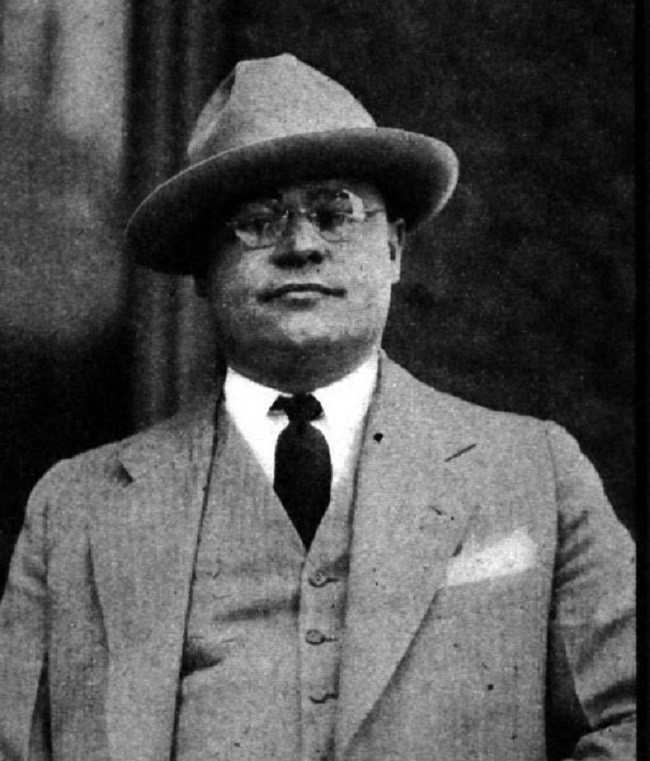
Don Casto Sr. in 1928.
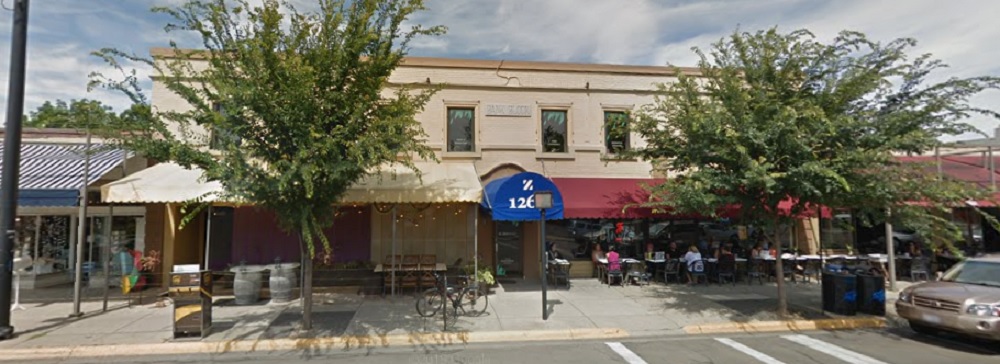
One of the first major changes to come about was the strip center. Prolific in every suburb in America today, the strip center got its start in Columbus. The first one was developed in Grandview Heights and named the Grandview Avenue Shopping Center (also known as the Grandview Avenue Bank Block). Opening in 1928, the center included 30 shops and incorporated parking spaces for up to 400 cars, one of the first major retail developments to design for cars. It was also the first regional shopping center and the first to have more than one national grocer (it had 4). The opening was a big deal at the time. There was a parade that featured child actors from the “Our Gang” films (Alfalfa, Spanky, etc), a street fair and musical acts. It was, of course, an instant success, and copies began to sprout around the city, and eventually, the nation. The center was built by Don Casto Sr., and Casto Construction still is a Columbus entity, recently announcing a local HQ move to the Bicentennial Plaza building Downtown. The Bank Block also still exists, and although not functioning today exclusively as it was designed (it is now mixed-use), it is on the National Historic Register and continues to be a part of the Grandview Heights landscape.
The 1929 Bank Block at 1269 Grandview Avenue.
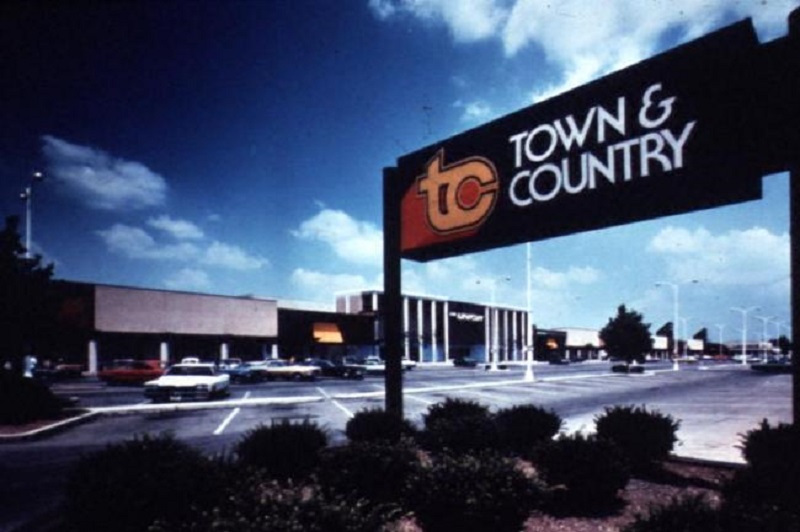
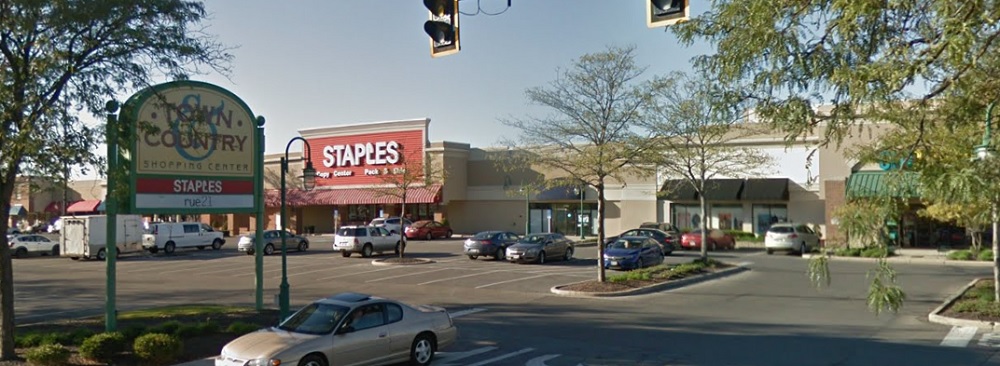
During the 1930s and 1940s, as suburban strip centers expanded and prospered, another idea began to emerge: The suburban shopping center. They were to be larger in scale than any strip center so far, with many stores, abundant parking and perhaps entertainment venues. Don Casto Sr., once again, took the lead. He proposed a new center at 3772 E. Broad Street, ironically, in order to relieve traffic congestion of shoppers in the Downtown area. Town & Country Shopping Center in Whitehall, was the result, opening in 1949. It was still strip-style, but much larger and with the parking lot set in front of the buildings. This became the dominant layout of all strip centers (and all retail development of any kind) for much of the next 60 years. Today, Town & Country has been renovated and reworked several times over, and shows little sign of its age.
Photo taken in 1976.
Town & Country in 2018.
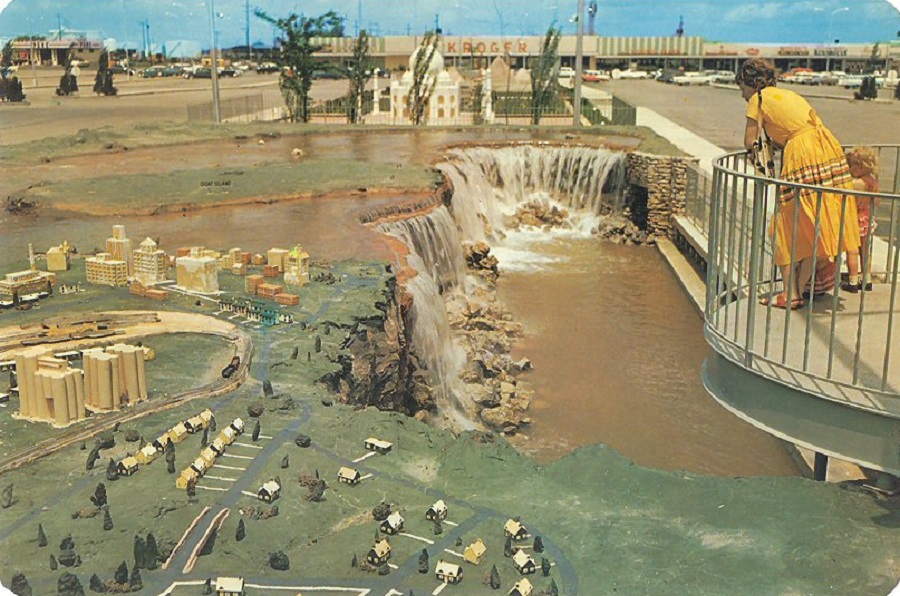
Casto followed up Town & Country with a string of new strip shopping centers that included Northern Lights Shopping Center on the North Side (1954), Great Western in Hilltop (1955), Graceland Shopping Center at 5155 N. High Street (1955) and Great Southern Shopper’s City on S. High Street (1957). Most of these new centers also featured some type of local attraction. At Great Southern, there was a Pan American flag display, while at Great Western, there was the famous Walk O’ Wonders, where a large section of the parking lot featured scale models of the world’s major architectural and natural wonders, such as the Great Pyramids of Giza and Niagara Falls. Today, all of these centers still exist, though none of them are particularly popular. Most of them now have low-end retail or non-retail establishments, victims of the shopping mall.
Niagara Falls at the Walk O’ Wonders at Great Western C. 1960. The attraction lasted about a decade.
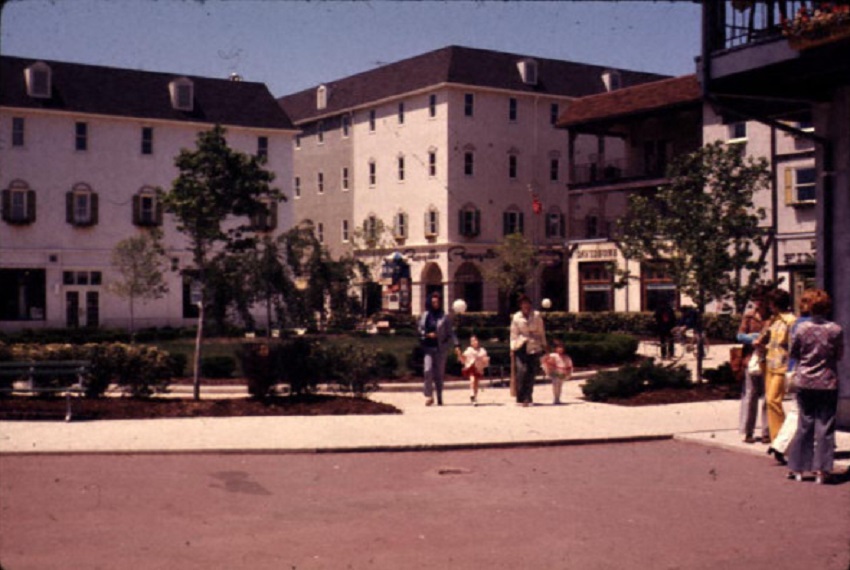
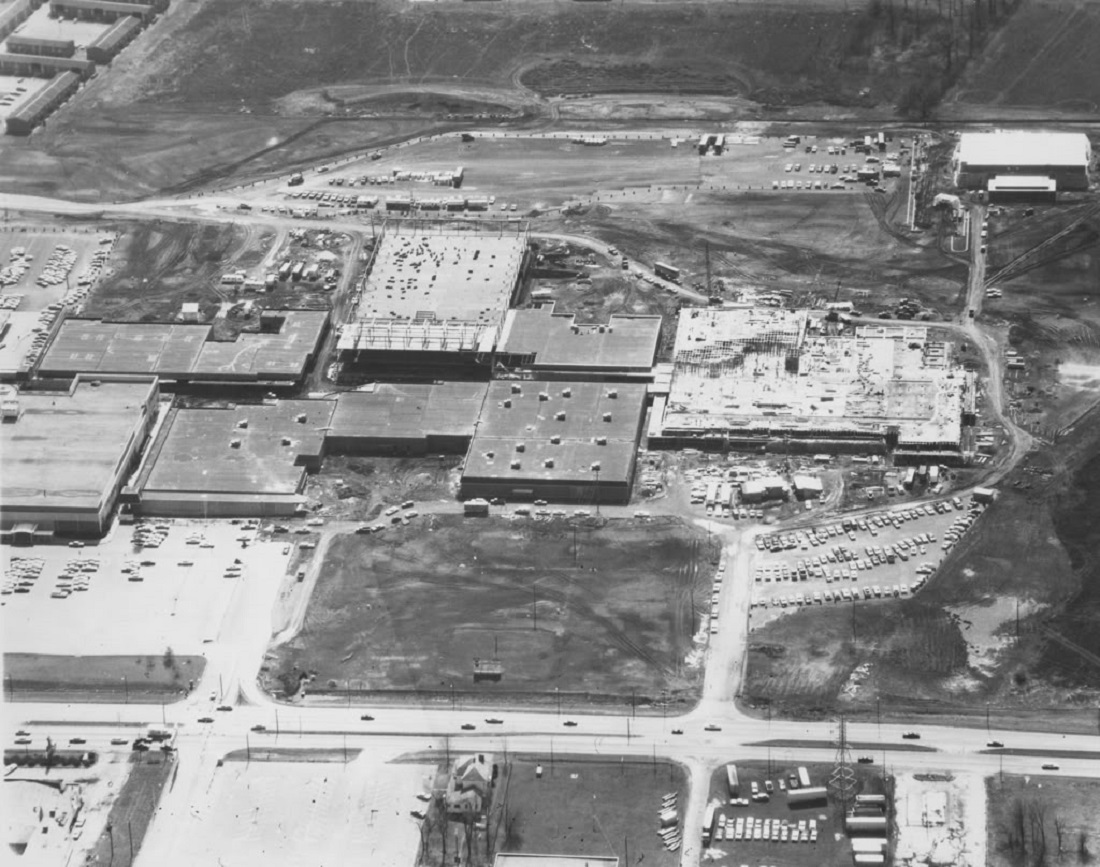
By the 1960s, the regional shopping mall was the next big idea in retail, and malls were sprouting up all over the country. Columbus was no exception to this trend. Columbus’ first major mall was Northland, which opened on August 13, 1964. Built for a modest $11 million, the enclosed mall featured 43 stores and 4,500 parking spaces. It was soon to be followed by Eastland Mall in February 1968 and Westland Mall in February 1969. The Westland Mall site was already a retail destination, having the first Lazarus branch store in the nation, opening in 1962. The mall was also built as an open-air shopping plaza, a very early version of the Easton Town Center concept, but the design proved unpopular, especially in bad weather months, and the mall was enclosed in 1982. The last retail destination was The Continent. Opening in 1973, The Continent was an open-air shopping center that featured European-style architecture and walkways that resembled the cobblestone alleys of Europe. As of today, only Eastland still functions as a full mall. Northland closed in 2002 and was demolished in 2004. The site is being redeveloped into a mixed-use site with offices, restaurants and small-scale retail. Westland still has a few stores, but the main mall section is now closed. The new Hollywood Casino opened in October 2012 across the street, and plans for the mall’s redevelopment are in the works. These plans are expected to be announced sometime this year, perhaps in the spring, although the owners have said it will likely not be a mall any longer and that the building itself may not remain. As far as The Continent goes, many of the stores began to move out in the 1980s and today the area is a collection of motels, low-end retail and not much else.
The Continent in 1976.
Westland Mall under construction in 1968 as an open-air concept.
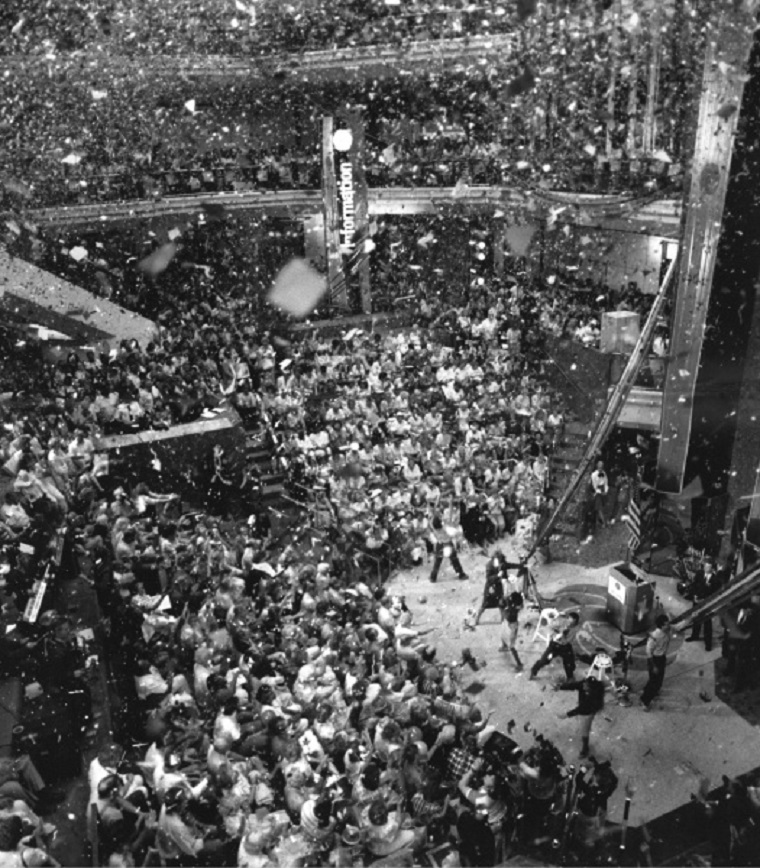
Why did these malls fail? Pretty simple really… too much competition. This brings us to the the later arrivals on the retail scene. First up, was City Center. This mall was conceived as the savior of Downtown, to pull in shoppers from the suburbs and bring back traffic to the area. This $100 million, 100+ store enclosed mall was completed in 1989. For awhile, it did function as a destination mall, but also pulled business from Northland, Westland and Eastland malls, though it did not kill them.
August 18, 1989 — BLACK & WHITE — File photo of Columbus City Center grand opening celebration. City Center is the three-level shopping mall in downtown Columbus. (Ran in the paper on August 19, 1989.) The mall marked a turning point in Downtown redevelopment.
Three new suburban shopping malls opened between 1997 and 2001: Tuttle Crossing, Easton Town Center and Polaris Fashion Place. Each was a bigger blow to the traffic at the older malls, and one by one most of them perished. Eastland was the only survivor, and only because it was the furthest away from the new destinations.
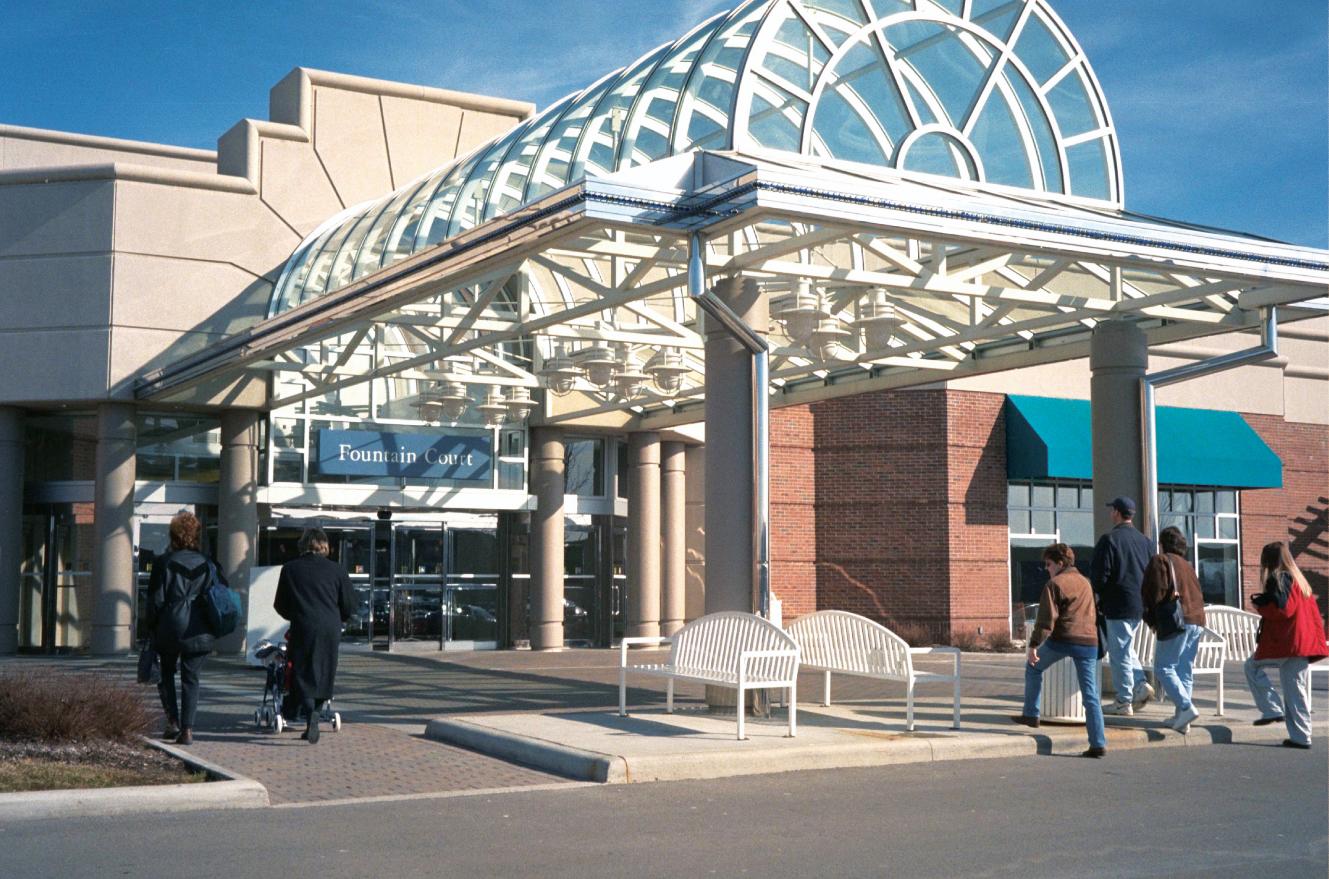
Tuttle Crossing was completed in 1997 with 150 stores. A traditional enclosed mall, this 2-floor building has been largely successful and has remained busy through its lifespan so far. The future of the enclosed mall, however, is not as bright.
Tuttle Crossing’s main entrance.
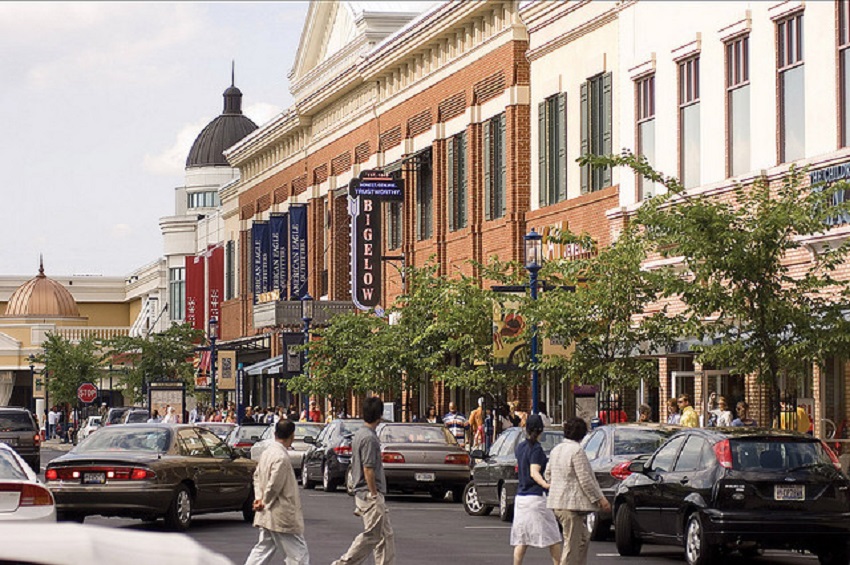
Easton Town Center opened in 1999. The nearly $1 billion retail center brought back the open-air concept that had been absent in Columbus since the 1980s. However, instead of just lines of stores, the center was built as a small town, complete with streets, public plazas, landscaping and other amenities. Easton proved to be extremely popular, adding a second phase in 2001 and is currently planning a 3rd phase, perhaps for completion by 2014. As it stands now, there are already over 200 stores, a 30-screen movie theater and dozens of restaurants. Easton’s design was hailed as innovative and revolutionary to the mall concept, and has since been copied around the nation, much like Don Casto’s early strip centers.
Easton Town Center’s street scenes.
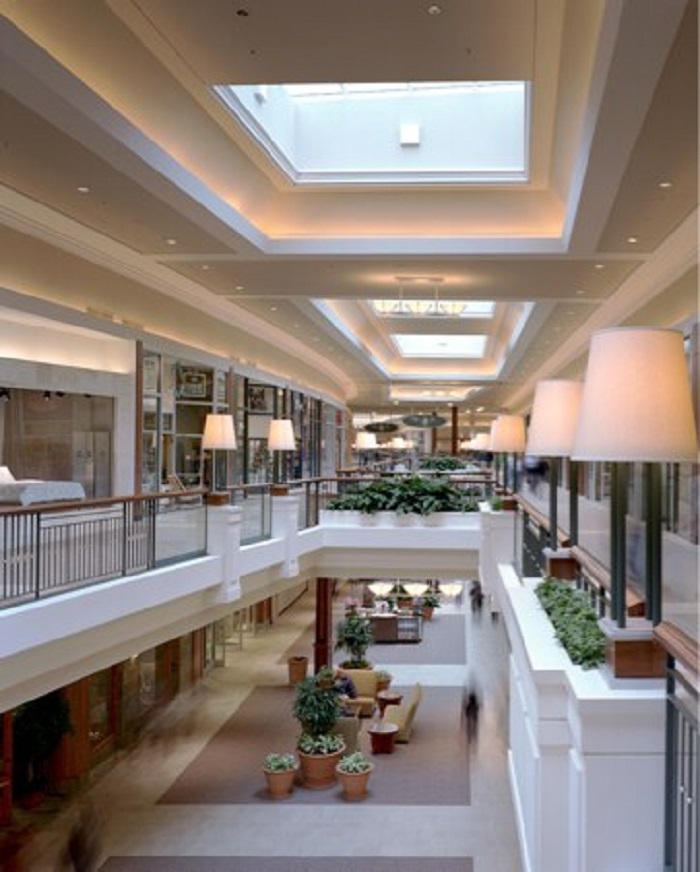
Polaris Fashion Place was the last major retail center to be built in Columbus, a $200 million 200-store enclosed mall in the southern part of Delaware County just west of I-71. It was the largest mall in Central Ohio and one of the largest in the state. It introduced the Columbus market to new stores like Lord & Taylor and Sak’s Fifth Avenue, and Polaris was considered to be the high end fashion destination for the area at the time. Development around the mall has since exploded, requiring the construction of two exits to be built off of 71 to handle the traffic levels.
Polaris Fashion Place interior.
So what is the future of these most recent places? City Center is, of course, gone. The mall was demolished in 2010 and the site converted to Columbus Commons Park. Tuttle Crossing and Polaris are still popular, but enclosed malls are increasingly falling out of favor and both are showing signs of this. No new ones have been built in the US since 2006, and there may not be another built anywhere for a long time to come. Retail has evolved from just mere shopping to an overall experience. In that sense, Easton looks to have the brightest future of the bunch, so long as it can keep updating itself in the way it has for the past 14 years. Polaris may be the most in trouble of the bunch. A recent proposal by the Ohio Department of Transportation is to rebuild the 36/37 interchange in Delaware County. Along with this rebuild, retail is being proposed for the site. This retail may include one, or perhaps two, outlet malls similar to the one in Jeffersonville, about an hour southwest of Columbus. If these get built, the cycle that killed off Westland, Northland and City Center may be repeated. Customers are likely to get pulled from Polaris to this new development unless Polaris can update itself in the way Easton has. It remains to be seen. Studies have suggested that Columbus cannot absorb much more retail, even as a growing city, so the construction of more large-scale retail is bound to have ripple effects across the metro area. In future posts, I want to highlight some of these retail places a bit more, especially City Center and its ultimate demise. Until then, happy shopping!
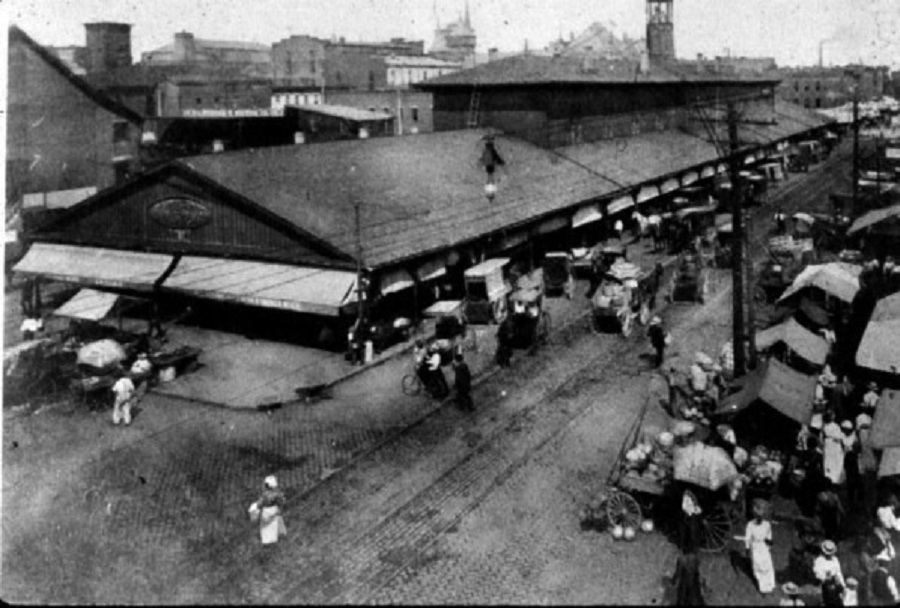
In this edition of Columbus retail history, we will talk about how the markets of the city were once a vibrant and important part of daily life. As in most cities, shopping in Columbus prior to 1950 was almost exclusively a function of Downtown. This was for the simple reason that widespread suburbs did not exist yet and Downtown was the heart of the city, where almost everyone lived and worked, and therefore did all of their shopping there as well. Most of this shopping occurred in family owned shops and small marketplaces, but as the city grew, the need for larger centers of commerce began to rise. Beginning in 1849 and continuing through early 1850, Central Market was built at S. 4th and E. Town Streets. Opening on June 1, 1850, Central Market was designed to be an economic center for the city, but also served as City Hall from May 1851 until 3/28/1872 when the new City Hall opened.
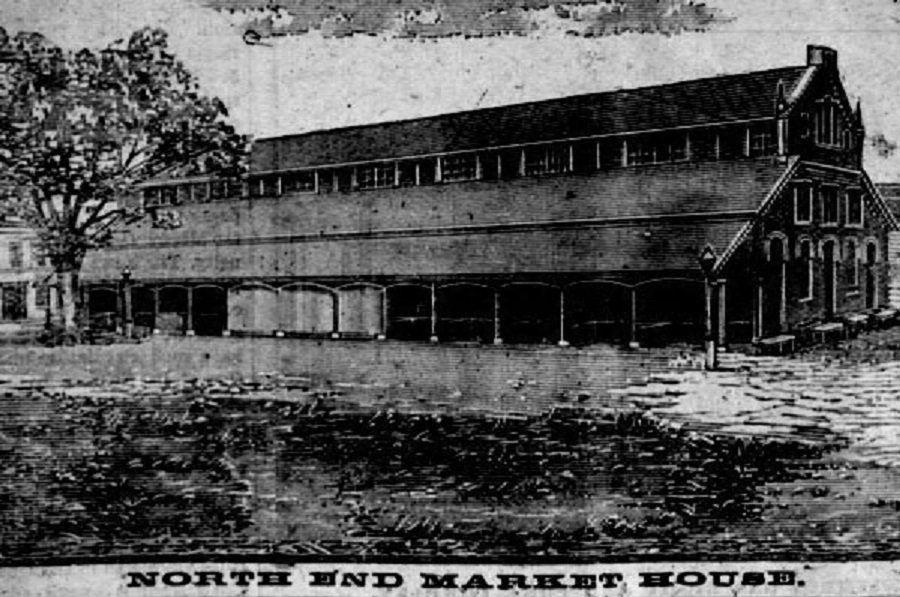
Central Market C. 1860-1880 Central Market was a very popular market for decades, and at its height, attracted some 20,000 shoppers during weekend days. Its success allowed for the creation of other, smaller markets nearby. East Market was located at the intersection of Mt Vernon and Miami Avenues in the King-Lincoln neighborhood. West Market was located on S. Gift Street in Franklinton. North Market, the last to be built, was finished in 1876 and located at the intersection of Spruce and N. Hight Streets.
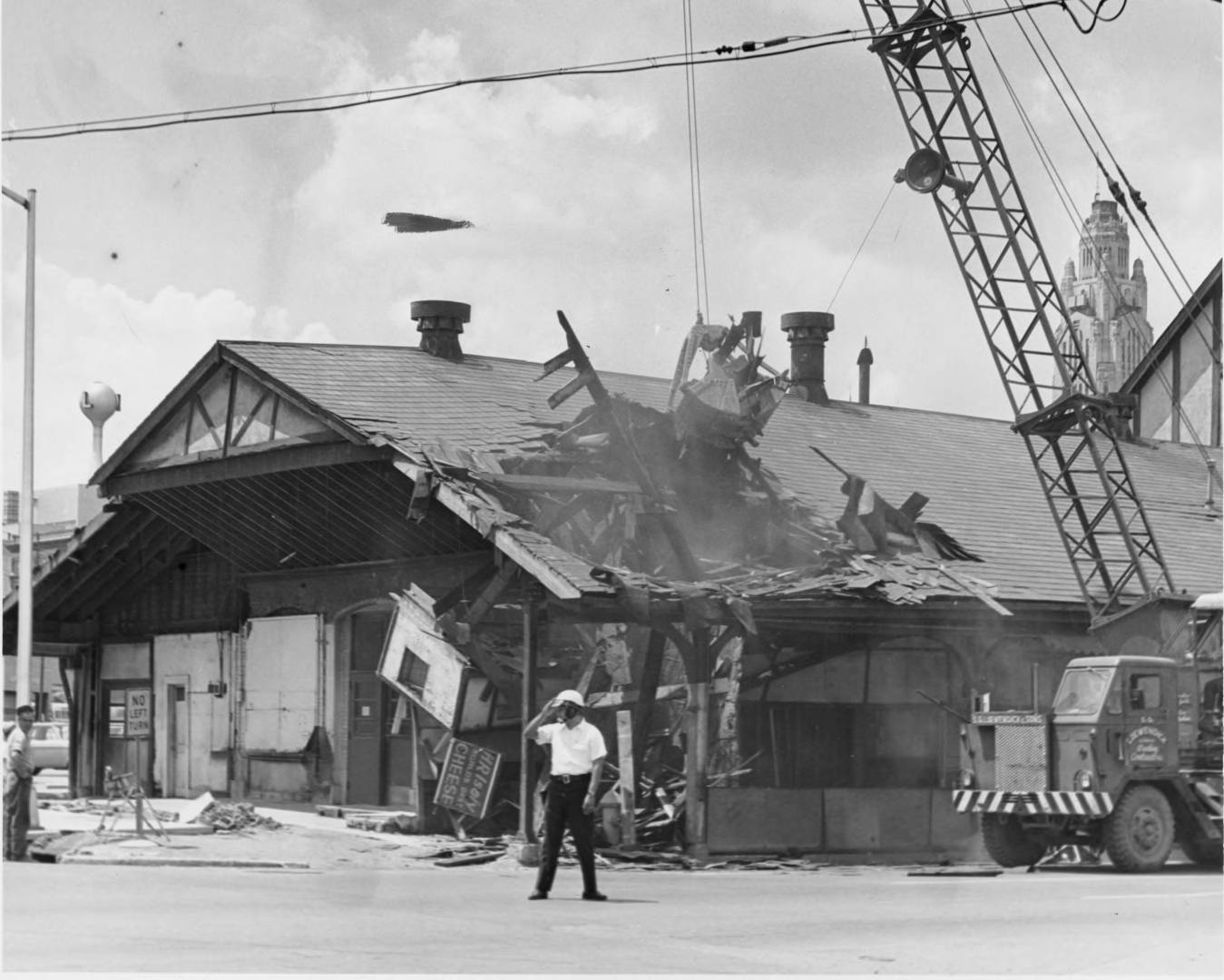
Original North Market: 1876-1948 As time passed, each of these markets succumbed, most notably through fire. East and West Markets were gone by the 1940s, and North Market, too, burned to the ground in February 1948. Central Market was spared fire and significant alteration, existing almost exactly as it was built through the entirety of its lifetime. It also continued to serve as a marketplace, albeit with steadily declining traffic, through the 1950s. Its future, however, was doomed. With no widespread preservation groups at the time and with the push for Urban Renewal, a historic relic like Central Market had no chance. So, in June 1966, Central Market was demolished to make way for a new Greyhound Bus terminal, an exceedingly ugly building built in the brutalist style that was popular during the time. Central Market’s Demolition: 1966
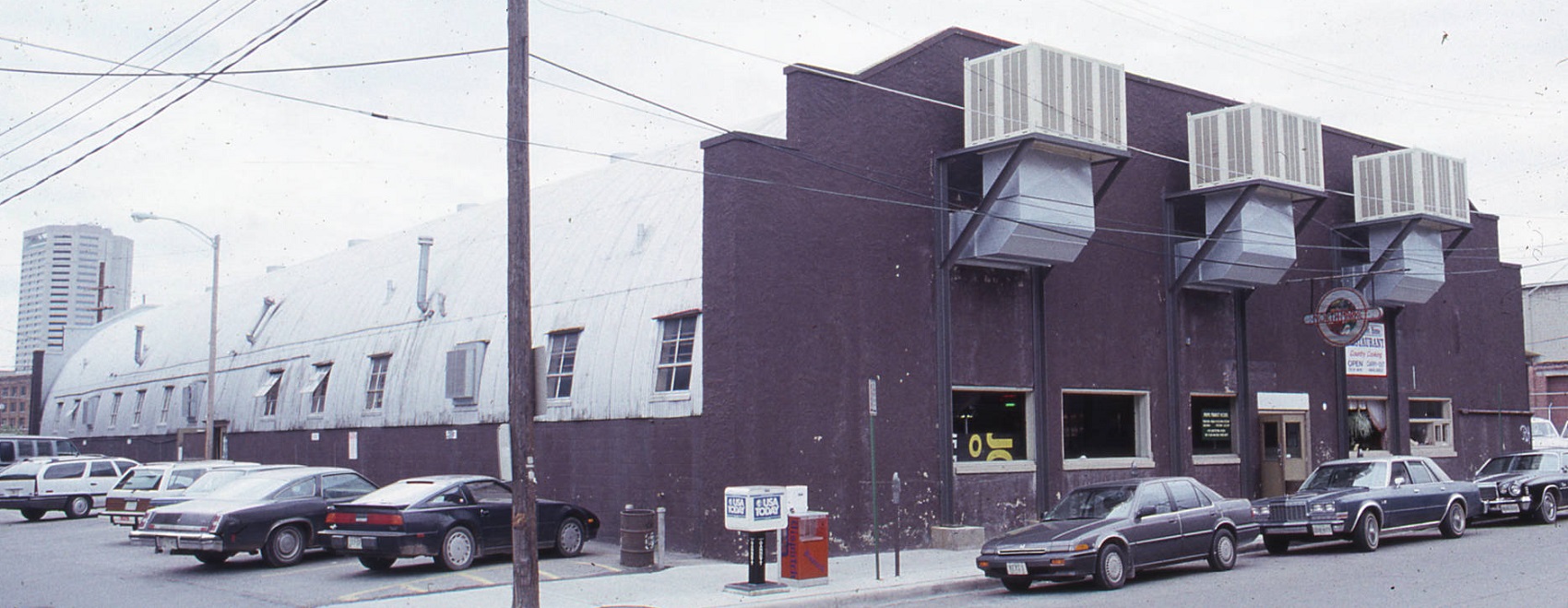
North Market’s replacement did survive somewhat, but was in pretty bad shape by the 1980s. In 1988, the North Market Development Authority was formed to bring the old market back to life. Unfortunately, the old building was not feasible to reuse as the market. The 1948 North Market building from Spruce Street: 1990
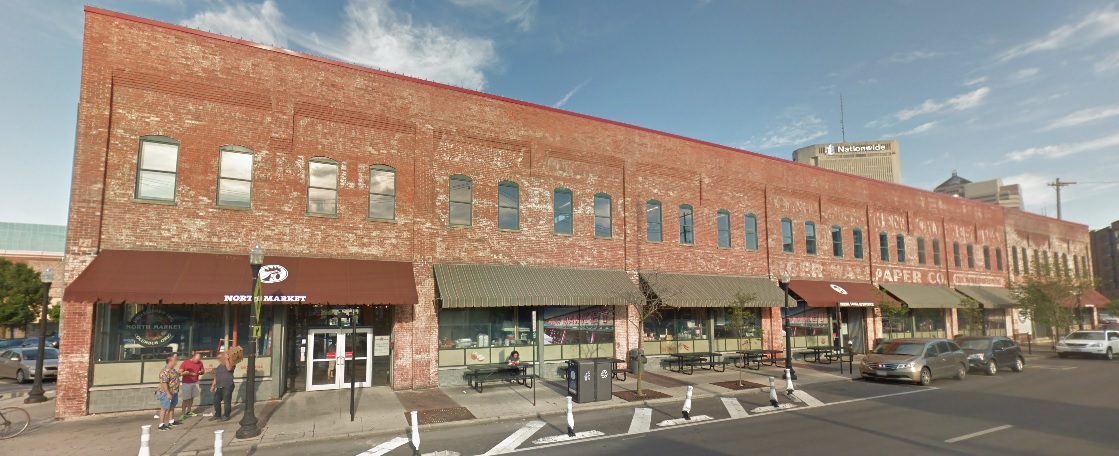
In 1992, Nationwide Insurance sold the NMDA a former warehouse just to the west of the original location. A $5 million renovation of the warehouse was completed and the new North Market opened in November 1995. Today, North Market remains a very popular destination and has played a role in the area’s revitalization, especially along Park Street, which has become a popular spot for new bars and restaurants. It has become a strong incubator for area small businesses and helped launch concepts such as Jeni’s Ice Creams. North Market: 2018
Although much has been lost to time, markets are now returning as an important part of urban life. With North Market’s success and a now increasing population in the Downtown area, a need for the market has returned. A Hills Market grocery store is now in the works at Grant Avenue and should be opening within the next month or two. While lacking the scale and nature of 19th century marketplaces, it will serve new generations of Downtown residents who are helping to bring back this urban neighborhood.
See Shopping Centers for the continuation of the local retail story.
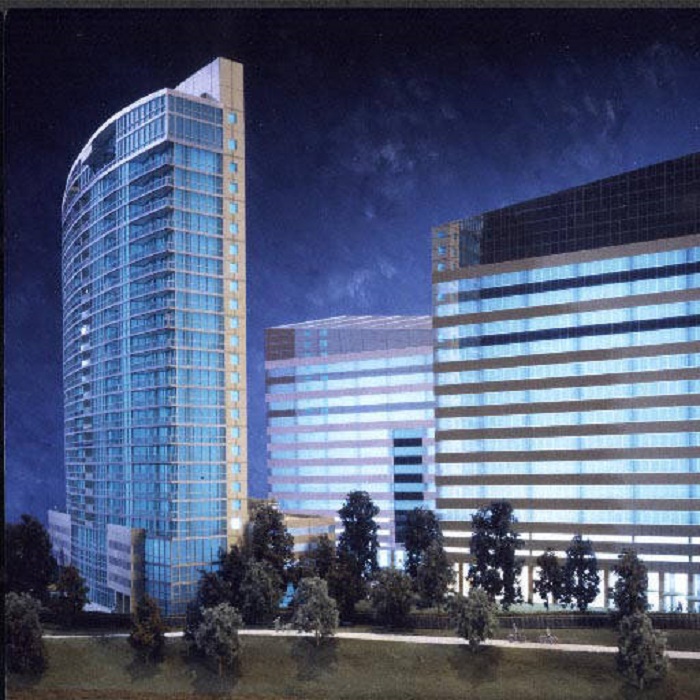
On November 16, 1995, Developer Ron Pizzuti announced plans for a residential and office complex on the Scioto River shore on the southwestern edge of Downtown, a project that would eventually become Miranova Tower. In 1995, this area was a large vacant lot and a handful of small buildings. Originally, the $150 million plan called for replacing this whole area with two 25-story condominium towers, 14 luxury townhomes on the river, a 5-story office building and a pair of restaurants, all with construction to begin in 1996. 200 residential units were planned for the towers. This was all supposed to be part of a new series of Downtown developments including a new COSI, a new soccer stadium across the river on the Scioto Peninsula and a residential development on the Whittier Peninsula west of the Brewery District.
On May 12th, 1996, it was reported that the project would not actually break ground until sometime in 1997, already another year later than originally planned. The two towers remained on the agenda, as did the townhomes and restaurants, but the office building had gained a floor and would now be 6 stories.
By July 8th, 1996, the project had gotten larger still. The # of townhomes had more than doubled to 30 and the office building had risen to 7 stories.
On December 16, 1996, the office building once again grew, this time to 8 stories.
By February 4, 1997, the number of towers had fallen to just one, and mention of townhomes had disappeared, yet the price tag remained $150 million.
Further changes came on December 12, 1997. The single tower would be 28 stories and the office tower had grown to 16 stories. Groundbreaking was pushed back to sometime in 1998.
February 11, 1998, still a single 28 story condo tower, but now two 16-story office towers.
May 8, 1998, and back to just one office tower. Still no groundbreaking.
September 19, 1998, more changes. Condo tower down to 26 stories and the office building down to 15. But work has begun on pouring foundations
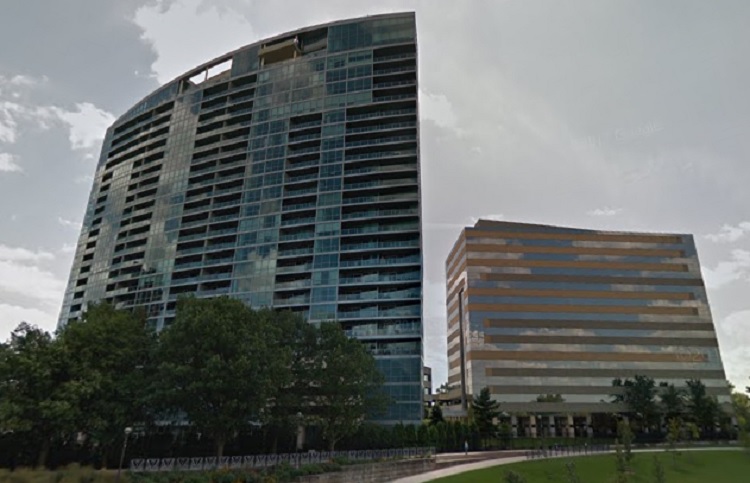
Miranova condo tower was completed in the early spring of 2000. By July, 79 of the 112 condos had sold. The office building, down to a final height of 12 stories, would not be finished until 2001. The last condo sale would not happen for several years, as the 2000s saw the market crash for these residences.
Miranova Project Stats Began Construction in 1999 Completed in 2001 Cost: $150 Million Height: 26 Stories # of Residential Units: 112
Completed projects going back to the 19th Century, as well as new proposals, can be found at the Columbus Development links page. New proposals happen all the time, and you can follow the process for many of them on the Columbus Area Commissions website.
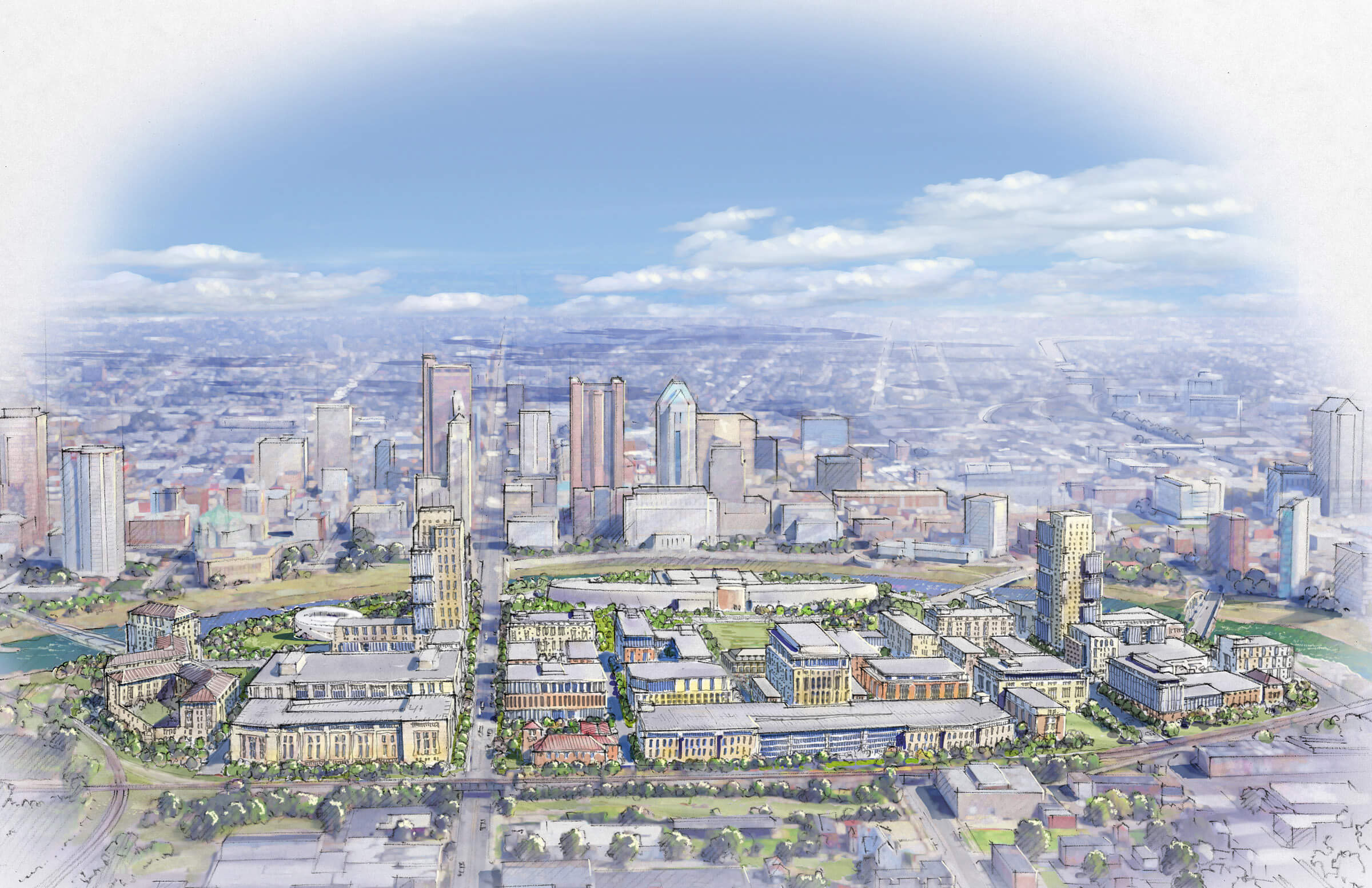
The Scioto Peninsula project is an in-planning-stage development that promised to be hugely transformational for both Downtown and all of Franklinton.
The history of the Scioto Peninsula in not really all that positive. Bounded by 315 to the west and on all other sides by the Scioto River directly across from Downtown, this area currently contains Veteran’s Memorial, COSI and not much else. Even as far back as the 1950s, a large chunk of the peninsula, especially around Central High School (which still exists as COSI), was just vacant land. Otherwise, what existed were warehouse buildings and other commercial buildings. What people lived there were mostly confined to a few public housing projects. Being so close to the Scioto River, the area repeatedly flooded over its history, especially in the Great Flood of 1913 and to a lesser extent in 1959. This prevented much development here and in Franklinton in general. Federal standards were actually in place that banned most new construction or even renovations to most types of buildings. This allowed all of Franklinton, including the Peninsula, to stagnate and go through steady decline.
Help was coming, however, in the form of a giant floodwall. Conceived as far back as the 1980s, the Franklinton Floodwall would not be completed until 2004. It took another 4-5 years before people began to seriously look at the area for redevelopment and then for that development to actually start taking place. Eastern Franklinton, so far, has been the focal point of that redevelopment, and a big project to help tie in Downtown with the neighborhood is the planned redevelopment of the Peninsula.
Almost all the buildings that existed in the ’50s are now gone, even the housing projects. COSI uses much of the land for parking, as does Veteran’s Memorial. The rest is grassy lots primed for redevelopment. Some projects have already taken place. The two new Downtown bridges at Main and Rich Streets provide a nice access onto the Peninsula, along with the Broad Street bridge. A 4th, a planned pedestrian bridge, will be located on the north end crossing from Vet’s Memorial to North Bank Park in the Arena District. This bridge is probably still a few years off, as there is another, large project planned. The low-head dams along the Scioto River in the Downtown area are going to be removed, starting sometime next year. This will lower the river level and create a more natural flowing waterway. It will also create acres of new riverfront parkland that new paths and landscaping will be added to. This will create an inviting, park setting to both sides of the river.
The Peninsula has been planned for redevelopment several times in the last 30 years, but there was a lack of momentum for urban projects for decades and no serious plans ever seemed to emerge. That was until the last 10 years, starting in 2002 with the first Downtown development plan by Mayor Coleman and the city. A new version was released in 2010 and contained a dozen projects planned to help Downtown become a destination again. While the Scioto Peninsula was not specifically mentioned, fixing the riverfront was. That’s where Scioto Mile park came from and is now a very popular spot for residents. With all this momentum, the Peninsula needed a serious plan. Right now, meetings are taking place and a development plan is now in the early stages. Some early ideas include a lot of residential, retail and entertainment space, along with a more interactive riverfront and even a transit station for light rail. The first draft of the plan is likely to be released in 2013 and construction could begin as early as 2014.
This project can be found in the Columbus Development links page, which provides a large and regularly-updated list of ongoing and proposed development across the area.