This occasional series will focus on interesting or important dates in Columbus history, with today’s being the 1919 Prohibition Party Convention.
February 22, 1872 A convention of the Prohibition Party was convened at the Opera House to discuss ways in which to enact legislation banning the manufacturing and sale of alcohol. Such conventions had taken place at least 8 times in the previous 40 years, but was the first such event since 1869. The 1869 event in Chicago formed the Prohibition Party itself, so the Columbus event could be described as the first convention of the new political party.
The event was attended by about 25 delegates from 12 states. Those in attendance included Gideon T. Stewart, then a prohibition candidate for Ohio governor. Stewart gave the welcoming speech. In it, he described the prohibition movement as an attempt to “protect the interests of humanity” and that due to the government’s involvement in the sale of liquor, was “fast verging towards the precipice over which other governments have swept to destruction”.
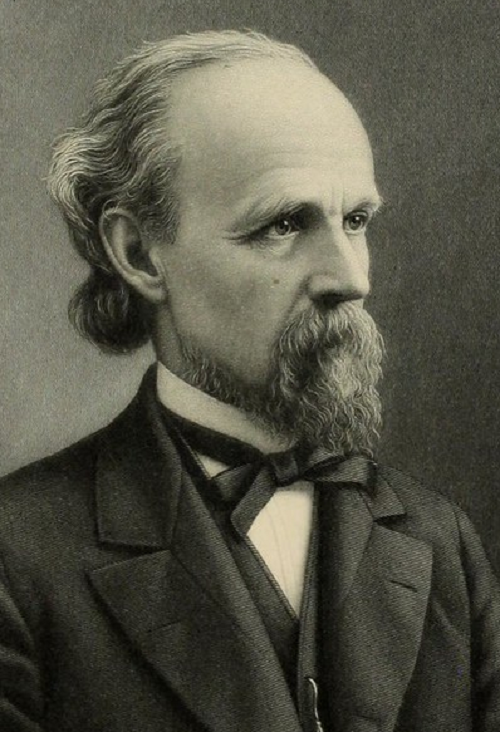
Gideon Steward around 1900.
Stewart was elected as the party secretary during the convention. The 1872 convention was also the first the party nominated candidates for US president.
During the event, it was ironically noted that Columbus itself benefitted greatly from alcohol sales, and functioned as “one of the foremost benefactors of the world” in that regard. Columbus did have multiple breweries at the time- most in the Brewery District, of course- but it cannot be verified if Columbus was indeed special in either its alcohol consumption or sales compared to other cities. In 1919, the Prohibition Party was ultimately successful in establishing nationwide prohibition by assisting in the passage of the 18th Amendment to the Constitution. This victory, however, proved somewhat pyrrhic in nature as the 18th was repealed by 1933 and the Party suffered a long-lasting blow to its reputation. It was never again quite able to gain such a prominent role in leading national public policy. For a political movement driven by such a singular issue, it is perhaps surprising that the Prohibition Party is still in existence today, though its influence even as a 3rd party is now virtually non-existent.
On occasion, city leaders and developers say some absurd, ridiculous and hilariously tone-deaf comments regarding development and other urban issues in and around Columbus. And sometimes, as is the case with this example, those comments will highlight the often underwhelming results compared to the rhetoric.
15 years ago, the southeast corner of West Henderson and Reed Road was filled with a family-owned Italian restaurant called Da Vinci’s Ristorante. The restaurant had sat at the location since the mid-1970s and had become something of a local institution for the area.
For reasons that have been lost if ever reported, Da Vinci’s was closed and torn down in the spring of 2006. The family, it seems were either tired of the restaurant business, or had decided that a prominent location such as theirs could be a better money-making operation if it was redeveloped. Hence, Arlington Pointe, the current development on the site, came into being.
In a Dispatch article from that time, the developer- Ruscilli Real Estate Services- talked about the development in somewhat glowing terms. “We wanted something that had more of a streetscape appeal,” said Ruscilli Real Estate President Tim Kelton. “There’s a lot of parking in the back and a hallway in the center. We wanted the shops and restaurants and everything very close to Henderson Road to fit into the neighborhood better.”
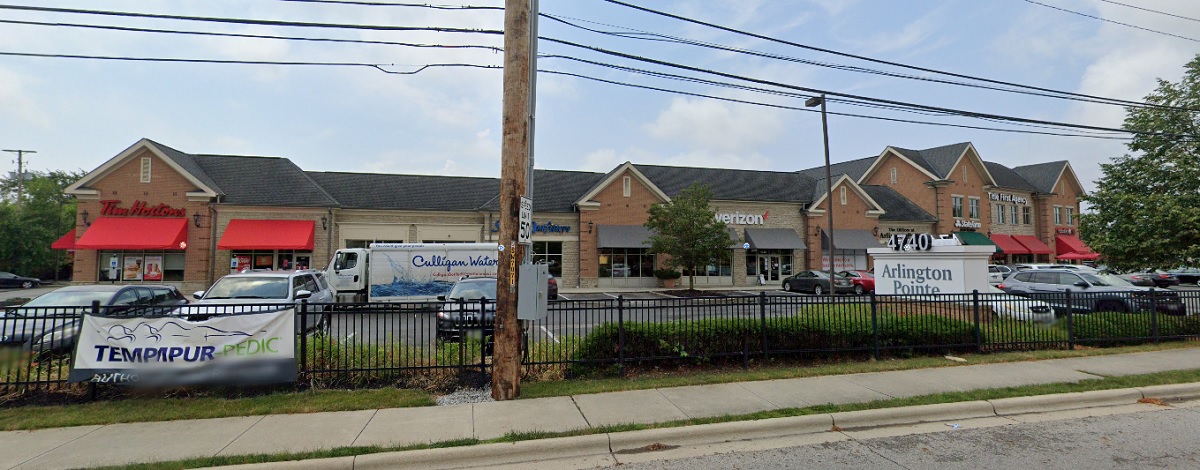
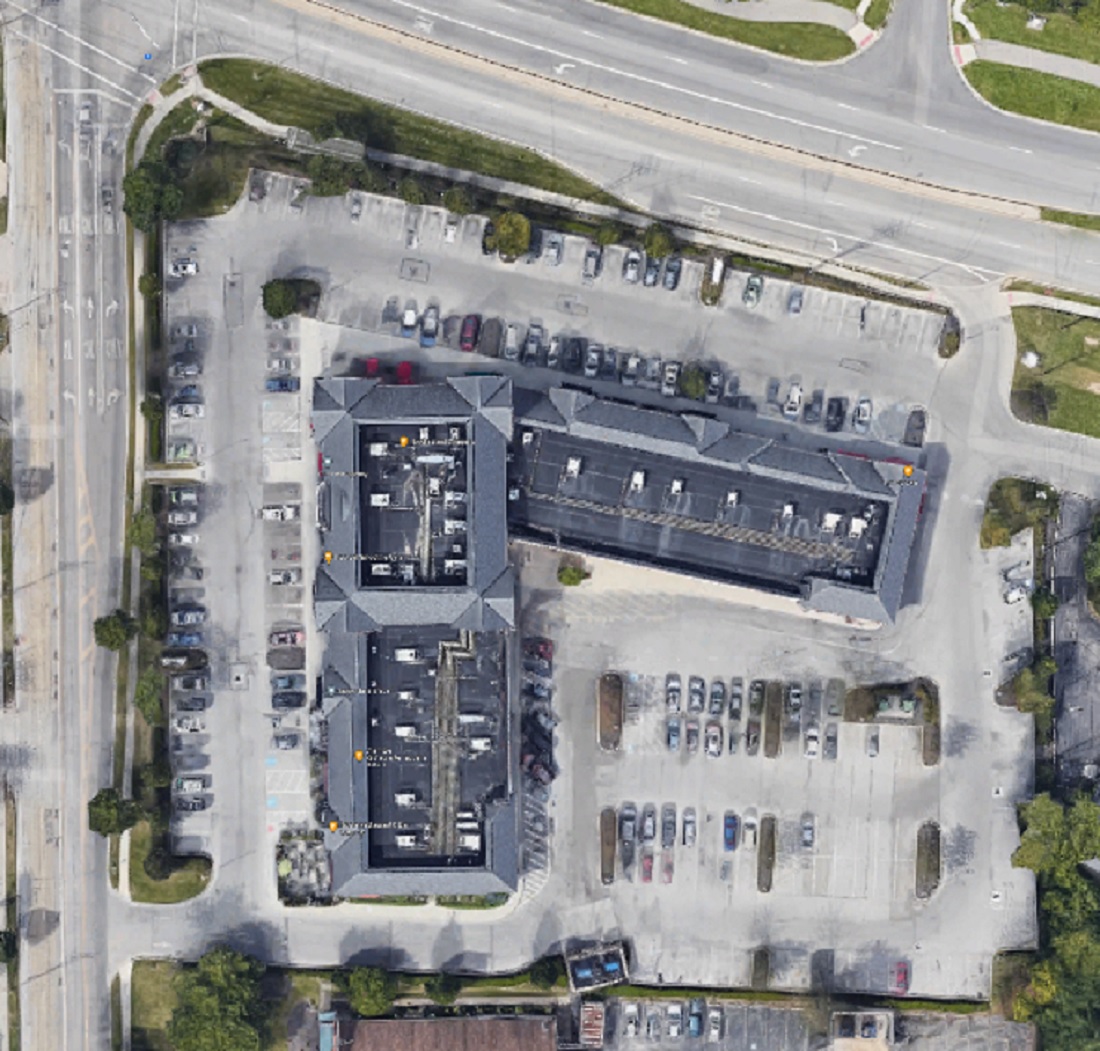
And what exactly did this development with lots of “streetscape appeal” look like? Yeah, it was just a standard strip center, the same kind that has been built 100,000x over across Ohio and the country, and now dominate the suburbs. Do the shops look close to Henderson? They are set well back from Henderson, actually, and a large parking lot wraps the entire way around the building. In fact, there is more parking fronting Reed and Henderson than there is in the lot behind the building, as can be seen from the aerial.
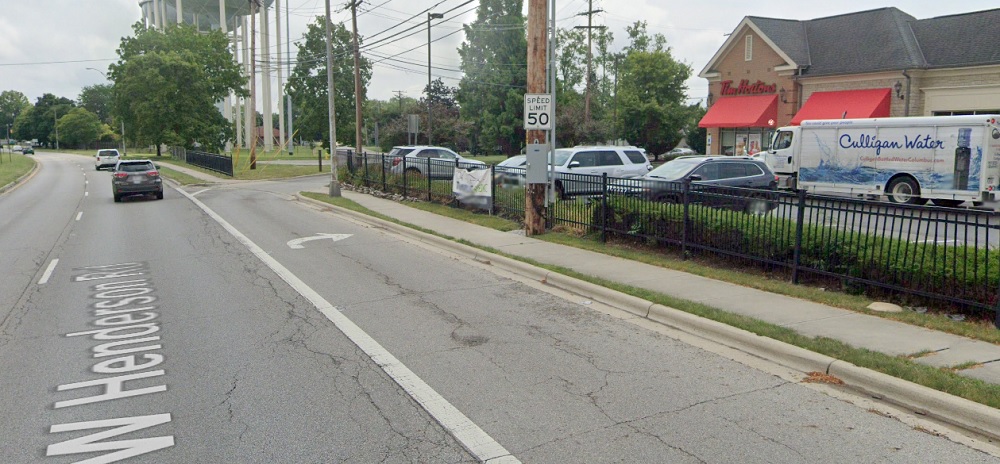
Like so many of these suburban strip centers, getting to the shops and office space by any means other than a car was completely ignored. In fact, the development caters to cars so thoroughly that it actually has its own mini-off ramp from Henderson.
Now, there are sidewalks around, but the chances that anyone actually uses them in what must be an unpleasant, loud and dangerous walk seem slim.
Ruscilli did get one thing correct, though- the project did fit in with the area given that the vast majority of neighboring development is much the same.
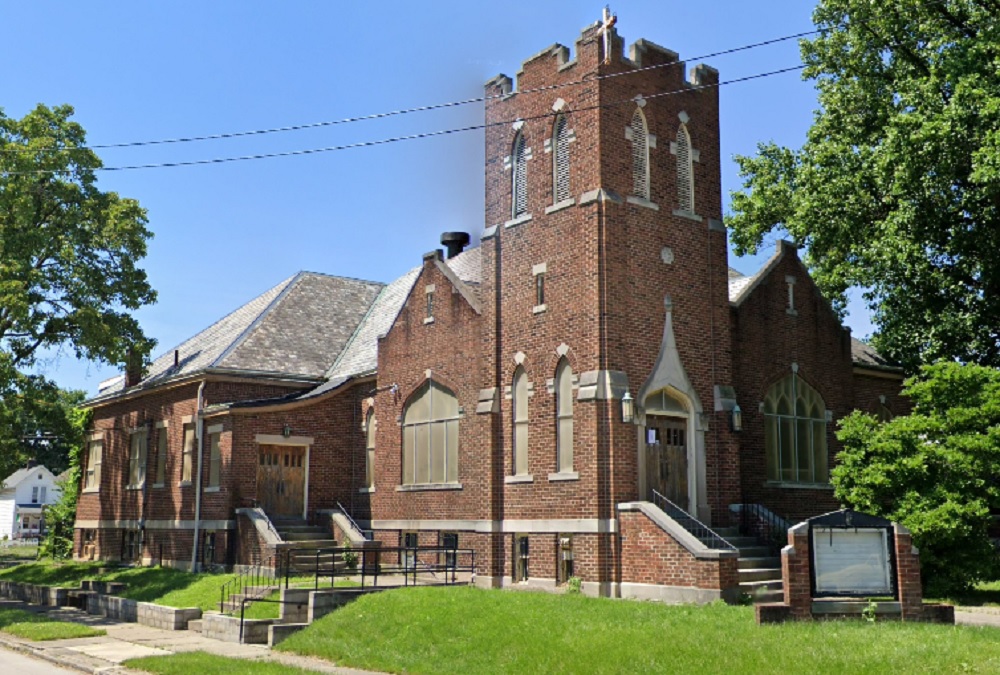
The former Washington Avenue United Methodist Church in 2019.
Columbus historic church demolition is a tricky subject, but has happened far more times over the years than people might believe. The Washington Avenue United Methodist Church at 359 East Markison Avenue has been part of the community since its dedication in 1923. While neither the oldest church in the city, nor the most elaborate, it has its own charms that would be lost to history should it fall to the wrecking ball.
It stopped functioning as a church at the beginning of 2015, perhaps part of the national decline in church attendance. Because of that relatively recent closure, the building remains in relatively good condition.
Churches used to just be torn down after their congregation abandoned them, but in recent years, they have found new life. They have become unique restaurants or retail shops, but the most popular conversion has been residential. Whether one of faith or not, churches offer a kind of architecture not found in any other building type.
Beyond adaptive reuse, however, is the issue of historic preservation. As mentioned, many such buildings have ended up rotting away before they are eventually demolished, and that scenario has played out many times in Columbus. This phenomenon is unfortunately not just part of our past. It continues to happen even now. Recently, a Franklinton church’s demolition was approved for new housing. Unlike the Washington Avenue building, this church had seen long-term abandonment and neglect by its owners. It’s poor overall condition from that neglect was then used to justify its demolition. It survived the 1913 flood when many surrounding buildings didn’t, but it won’t survive the Columbus building boom or intentional neglect.
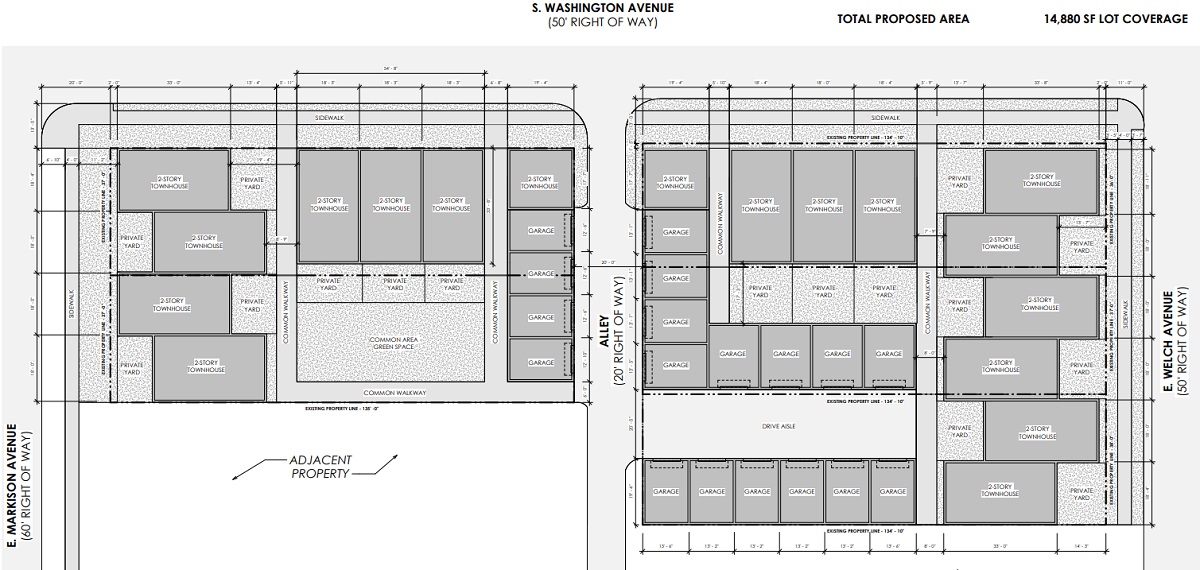
Sadly, it looks like the same fate is in store for the Washington Avenue United Methodist Church. A company called Bexley Manning 569 Holdings has proposed demolishing all but the church’s steeple tower in order to construct 17 townhomes. Columbus is in the midst of one of the largest housing crunches in its history, so the city desperately needs more homes. Sacrificing yet another beautiful old building still seems wrong, though. Columbus has already lost so much of its architectural history to the wrecking ball.
The original site plan for the Markison project.
The project is still in initial approval phases, so it’s possible the demolition will receive some pushback. The fact that the steeple tower is being preserved is actually a change from the original design. Perhaps more of the church may be saved in subsequent project updates. That said, the location is outside of established historic zones and lacks formal protection. Therefore, it seems likely that the WAUMC is facing its last days.
The history of the Scioto Peninsula is much the same as the Franklinton neighborhood it resides in. Since Franklinton’s founding in 1797 (Columbus’ oldest neighborhood and predates Columbus itself by 15 years), it did not take long to figure out the area’s one major flaw: Floods. Essentially built upon a river flood plain, Franklinton flooded several times during the 19th century, but the most devastating came in 1913 and 1959. The 1913 flood, Ohio’s deadliest and most widespread natural disaster, inundated Franklinton with up to 20 feet of water in places, and the neighborhood flooded all the way back to where present-day I-70 cuts through the far western border. Franklinton suffered massive damage, and over 100 people died along the Scioto in Columbus. The flood in 1959 was less severe, thanks to flood protections put into place after 1913, but one consequence of this flood was that new construction and most renovation was all but prohibited due to the flood risk. This helped to stagnate the entire neighborhood, and combined with the urban decline for the next several decades, Franklinton gradually fell into disrepair. The Scioto Peninsula, the far eastern section of the neighborhood just across from Downtown, was always the hardest hit by flooding. As such, the 56-acre peninsula gradually became a manufacturing and warehouse site, although a few thousand people did live there in low-income housing projects. Central High School also helped to maintain a residential presence.
As manufacturing declined and more people left the urban core, the warehouses and businesses closed shop. Many were bulldozed into vacant lots. Central High was closed as a school in the early 1980s. By the mid-1990s, the area was largely empty except for Veteran’s Memorial and a handful of housing developments and businesses. Plans were in the works to help bring Franklinton back, however, and construction of the Franklinton Floodwall began at this time. This construction helped encourage COSI to move into Central High, renovating and expanding the old building in exhibit and museum space. Most of the rest of the peninsula became surface parking. In 2004, with the completion of the floodwall, building restrictions were finally lifted, but for several years, little happened. The stigma of a neighborhood in decline kept development interests away.
In 2010, Columbus came out with a list of 12 projects it wanted to accomplish in the downtown area. Some of them have come to pass, such as the renovation of the riverfront with Scioto Mile and the redevelopment of City Center into Columbus Commons. Another one of these projects was the redevelopment of the Scioto Peninsula. The city saw an opportunity in so much empty land so close to Downtown, especially coinciding with the emerging back-to-the-city movement. This prime real estate was ripe. The city began planning of this project early in 2012, as East Franklinton itself began to emerge as an artist destination. The Short North has, more or less, reached the final stage of gentrification. It’s become upscale, attracting high end retail and residential, as the number of art galleries has gradually declined due to rising rents. Franklinton has proven to be an attractive alternative, with such live-work projects as 400 Rich, which grew rapidly in its first year. Residential projects are now in the works, as well as more artist space, warehouse conversions and new bars and restaurants.
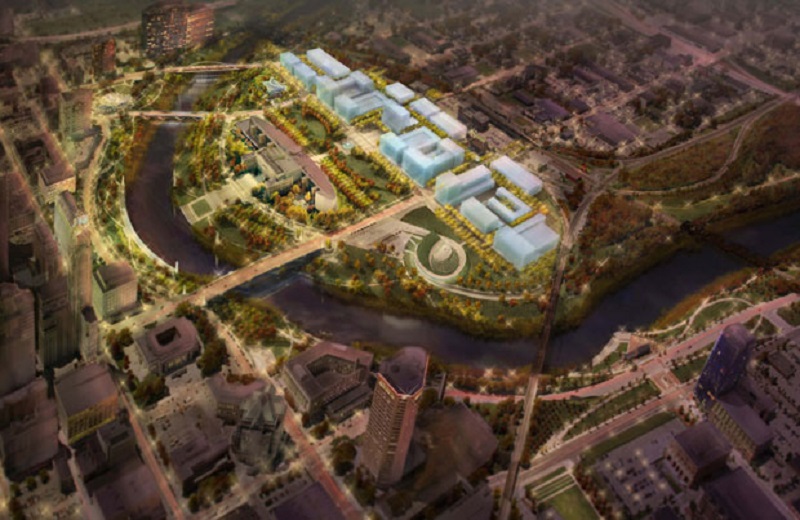
General plan for the Peninsula.
A few months back, details of the Peninsula’s redevelopment plan began to trickle out, but the official announcement finally came yesterday. Here is what we now know of the plan:
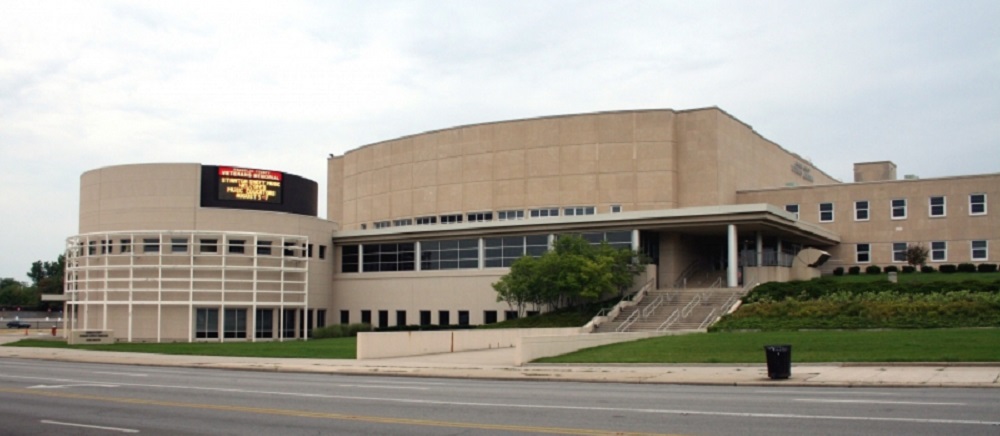
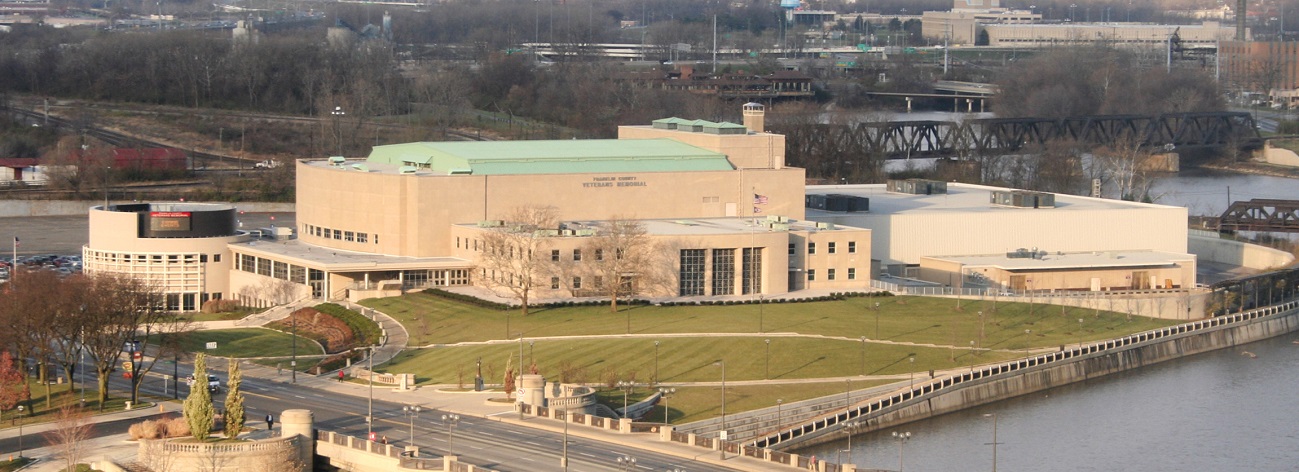
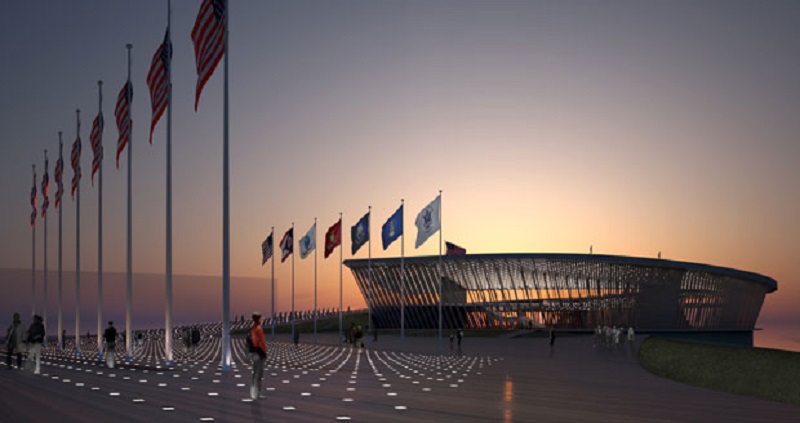
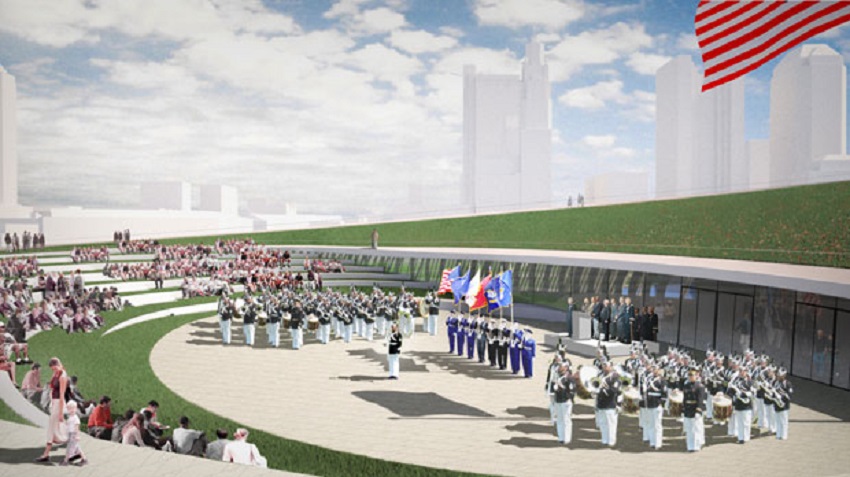
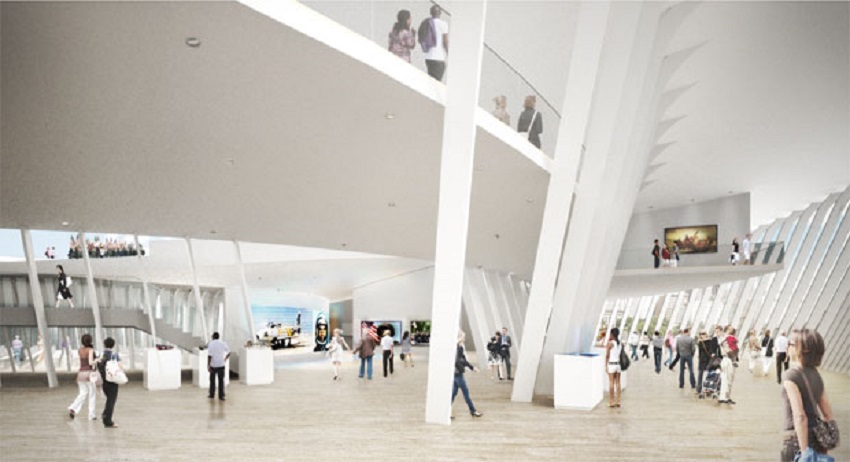
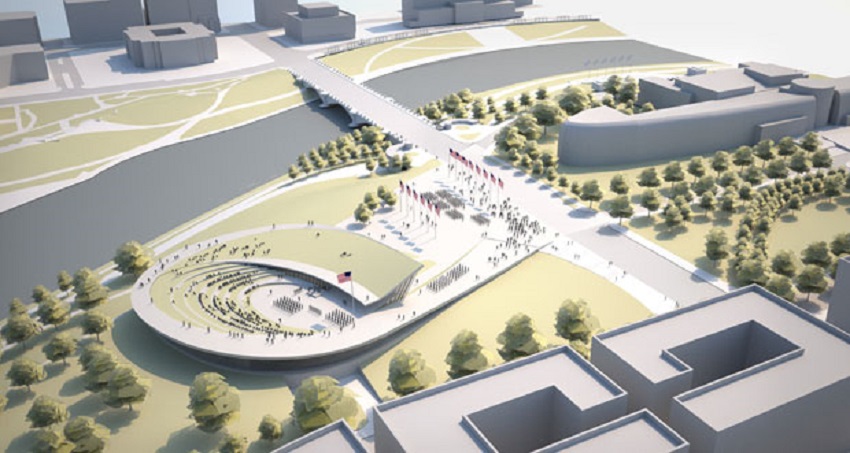
1. Veterans Memorial, built in 1955 and expanded/renovated a few times over the years, will be torn down and replaced with a new Vets. This new Vets will be of modern design, spiral in shape with glass walls and a rooftop, outdoor amphitheater. Inside will be an Ohio military museum, along with meeting and event space. Estimated costs run around $50 million. Old Vets Memorial New Veterans Memorial
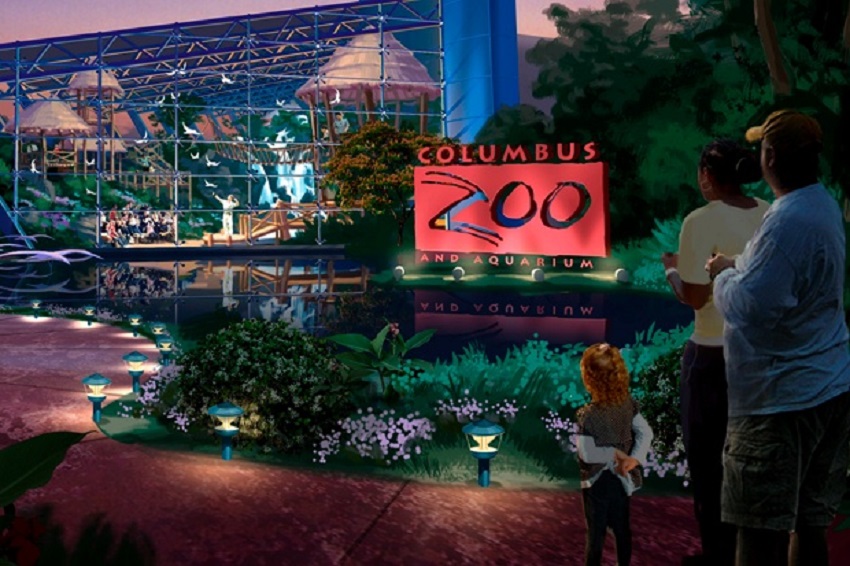
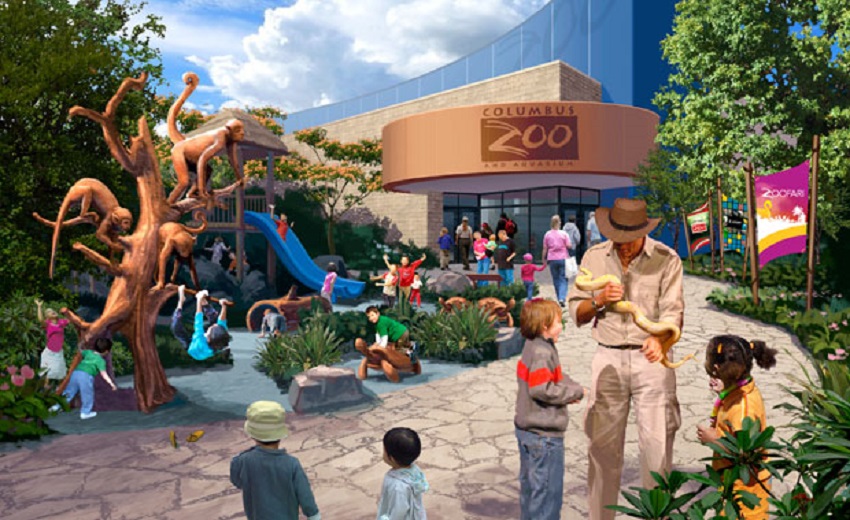
2. Southwest of COSI, the Columbus Zoo will build a $50+ million, 50,000 square foot zoo extension. The building will include an aquarium, rainforest, outdoor zoo-themed playground and other exhibits.
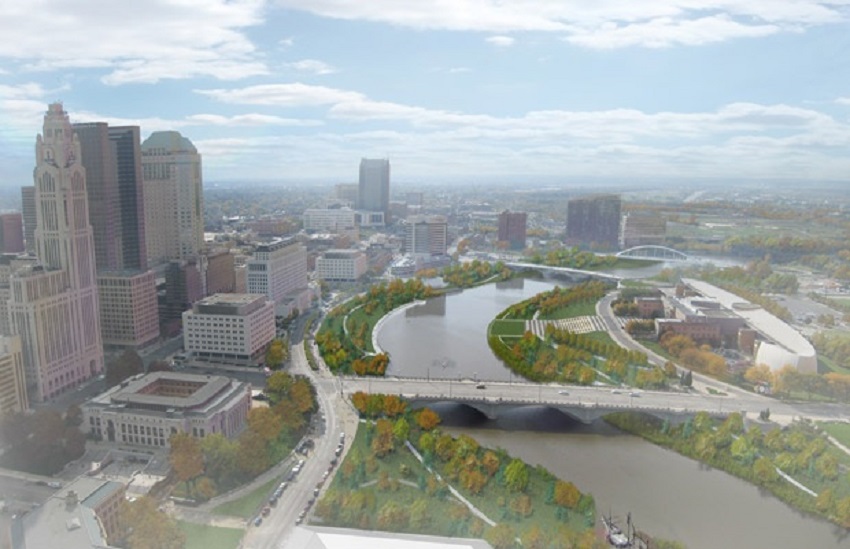
3. Where the current COSI parking lots are, a large underground parking garage will be constructed to serve the 3 attractions. Once complete, the garage will be covered by a large central park. 4. While not yet designed and weren’t talked about yesterday, previous details have included elevated walkways connecting all 3 buildings across the peninsula. 5. Between Bell Street and the railroad tracts that run along the western border of the peninsula, a mix of low, mid and high-rise mixed-use buildings will go in. Ground floor retail will line streets while upper floors will be mostly residential. Between 1,000 and 1,200 residential units are planned, but private interests could easily include more given the very high demand for urban residential and the fantastic location with views of Downtown and the river. Estimated costs exceed $100 million. 6. Not included specifically in the peninsula plan, but surely also impacting it, will be the Scioto River itself. Another one of the 12 projects is the removal of low-head dams through Downtown. This will lower the river level through Downtown, creating 33 acres of new land that will be landscaped into park space. Bike paths and walkways will also be constructed on this new land. The river itself will run faster, cleaner and open up more potential recreational uses. This project is set to begin this fall and complete in 2015. Estimated costs for the project are around $25 million.
The Riverfront after reconstruction.
The Riverfront now.
7. After the completion of the river restoration project, another one of the 12 ideas should begin. That will be the construction of a signature pedestrian bridge connecting North Bank Park in the Arena District with the Scioto Peninsula near the new Vets. There are no cost estimates at this time.
So given all this, the Scioto River and the Scioto Peninsula are looking at several hundred million in investment and development over the next several years. This will radically change the riverfront, and has the potential to jumpstart Franklinton, especially eastern parts, in ways not seen in many decades.
Just a few May project updates. These represent only a small fraction of what’s going on in terms of local development.
Downtown 1. Neighborhood Launch’s expansion with a pair of new 5-story buildings containing 260 apartments continues. Located on E. Long Street, the buildings’ foundation work has been mostly completed and elevator shafts and the first steel frames are now going up, which means construction should really get going now. The timetable for these to be complete is late fall or winter. 2. Over at Columbus Commons, the Highpoint 300-unit residential project continues and at least one of the buildings is now reaching towards its 6th and final floor. 3. The Liberty Place 200+ unit residential expansion in the Brewery District is getting closer to being done with the external work, as brick and finishes are going on. 4. The mess that is the reconstruction of 670/71 also continues, but we’re still a year or so away from that being done… before the next phase begins closer to the 70/71 section. 5. Work continues on the restoration of the LeVeque Tower, but more details have emerged. Up to 70 residential units will be created in the tower section, along with lower floors having a new boutique hotel and office space. The lobby will be restored to its original 2-story look, and the entrance outside will get new marble, planters and lighting. The terra cotta exterior of the building will take up to 5 more years to complete, as 80 years of grime and damage have to be fixed. The other improvements should be done late this year or early next year. 6. Columbia Gas’ new HQ building in the Arena District has reached it’s maximum 6-story height with steel, but no exterior work is done yet. 7. The Flats II 120-unit residential building next door to that project is seeing exterior work being done and should be done later this summer or early fall. Reports have been coming out showing this and other residential projects nearby have extremely high rental interest already. 8. 600 Goodale, the 5-story 174-unit residential building is seeing exterior work now and should be done by the end of summer or fall.
Short North 1. Aston Place, a new residential project on Hubbard Avenue, is moving along and the elevator shaft is just about done, so steel should be going up soon. 2. The Hubbard project continues to the east. The 5-story, 68-unit residential building is all framed out and exterior work is beginning. The adjoining parking garage is complete and the 4 concealing townhomes should begin construction soon. 3. The Out of the Closet development at 5th and High is well underway, now completely framed out.