A lot has happened in the past week, so Week in Review 4 is jammed full with site updates.
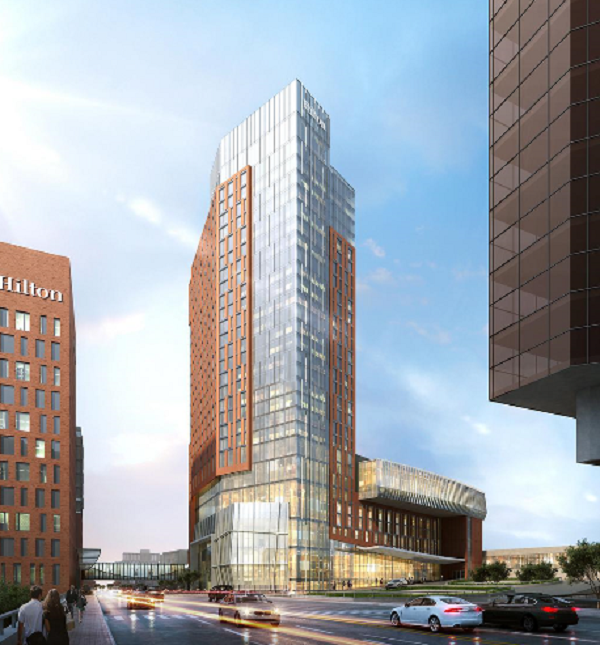
First up, the proposed new Hilton Hotel at the Convention Center continues to get taller, and now stands currently proposed for 28 stories. Construction is not set to begin until possibly next fall, so we have a while to see if any further changes occur.
The latest rendering.
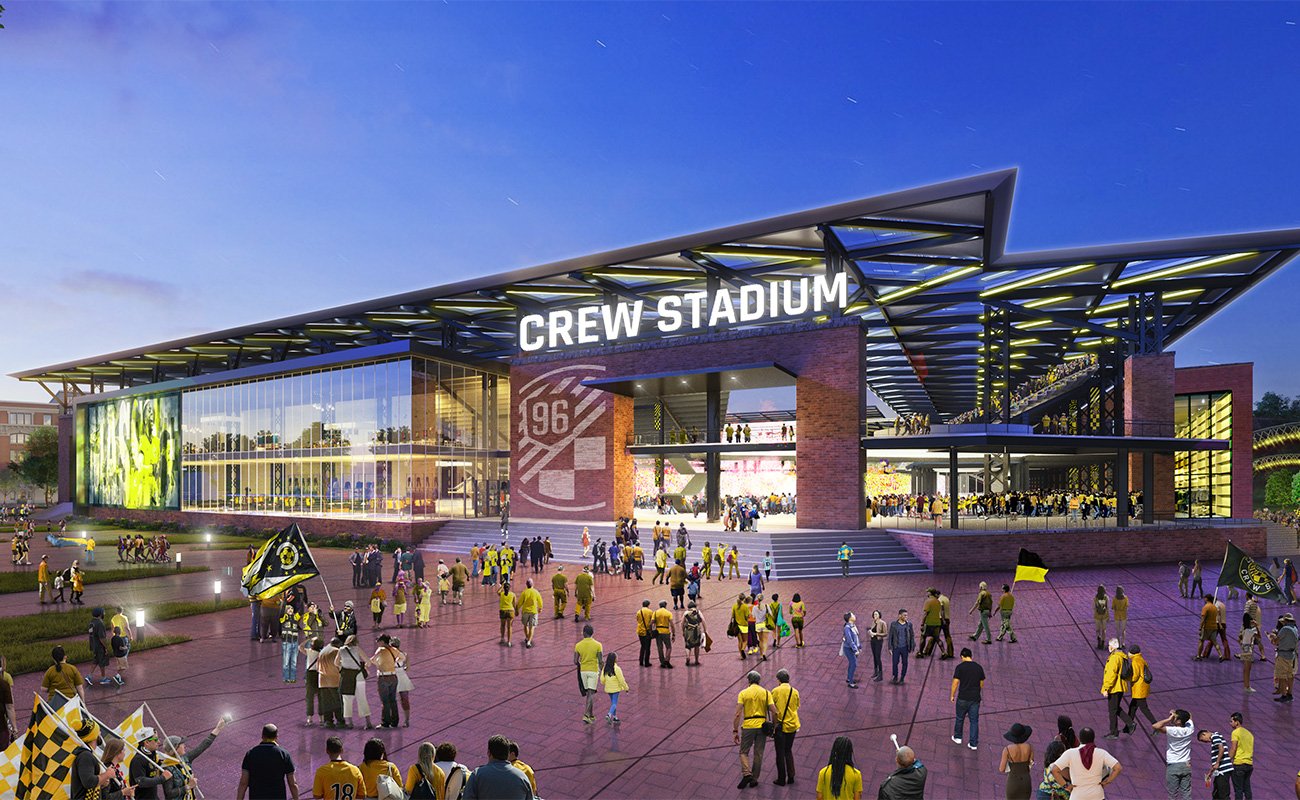
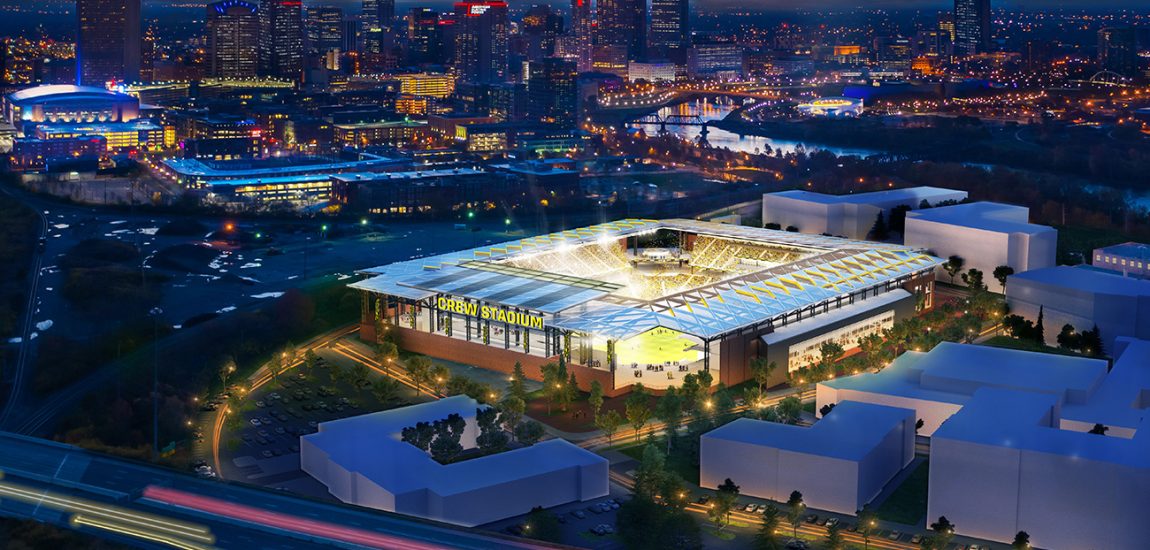
Crew fans got huge news a few months back that a new ownership group was looking to buy the team and keep them in Columbus. This week, it was announced as to what would happen to both Mapfre Stadium, as well as the first renderings and location of a brand new Arena District stadium. The new stadium would be built along with a new mixed-use neighborhood called Confluence Village. It would include offices, restaurant/retail space, 885 apartments and a riverfront park.
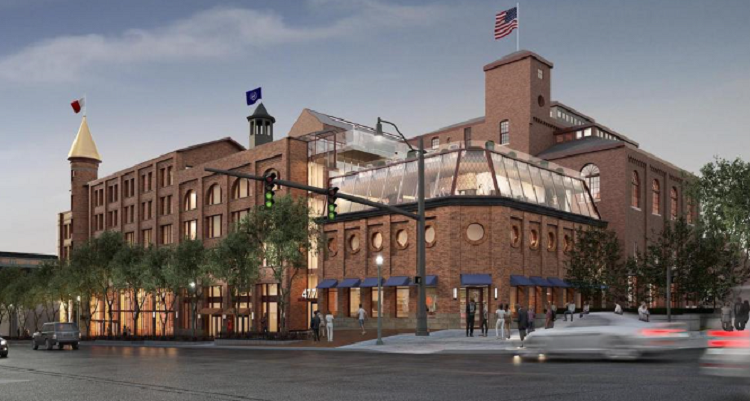
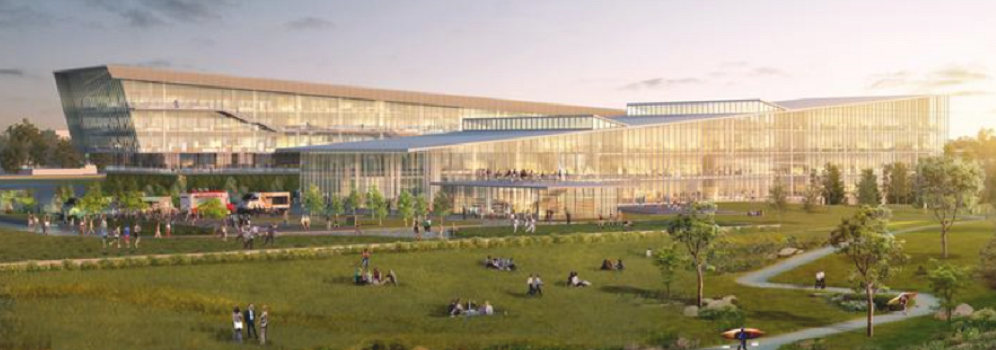
Franklinton continues to move up in the world with the new renderingsof the CoverMyMeds campus. The $240 million project would be one of the largest investment in the neighborhood in perhaps… ever.
Other news… Google may build a $600 million data center in New Albany.
And “Planet Oasis”, the proposed $2 billion entertainment complex in Delaware county, still looks unlikely to happen as the feud between its former development partners continues.
The oldest buildings on Capital Square finally received some funding for the proposal to renovate them into office space. The buildings date to 1869 and 1901.
The former Graham Ford dealership in Franklinton was purchased by Pizzuti Companies. The 7-acre site is to the west of 315, away from where recent development has been concentrated, so the site may remain undeveloped for a while yet. But it indicates where the future of Franklinton overall is headed.
The Week in Review 3 includes some big news that has me very excited. The Columbus Metropolitan Library announced that it had reached an agreement with The Columbus Dispatch and its parent company to purchase the rights to its entire newspaper collection, which it will make available in digital form on its website as early as November. The Columbus Dispatch has been publishing since 1871, but the library has had Dispatch content from 1985-present only, and only in text format for a limited number of articles. The agreement will allow the library to offer every issue of the paper online since 1871 in its entirety, including its enormous photograph collection. This is an massive win and game-changer for researchers and history buffs alike. This information has largely been difficult to access. Microfilm at the library was impossible to search through unless you knew the exact date of an article. The digital collection will allow for easy searching for any content with just a simple search box, as it has with its other digital collections.
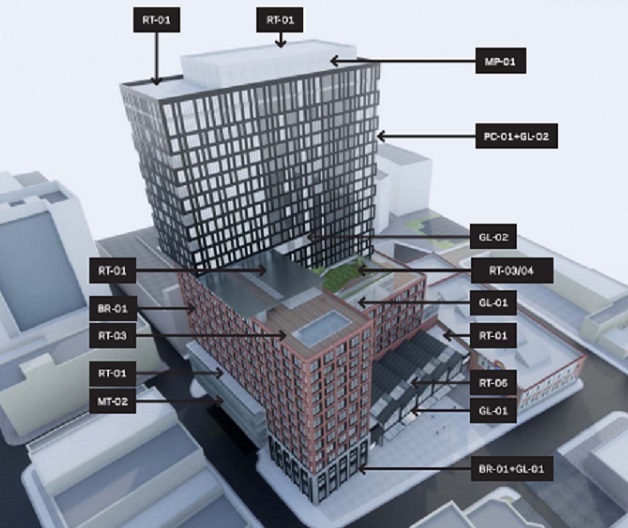
The other news this week was the ongoing saga with the North Market Tower project. A few weeks back, I posted renderings that were released, perhaps be accident, on an architect’s website. Well, this week we saw yet another rendering, seen below:
All I can say is… I hope to god this isn’t the final design. Not only is it shorter (and the planners promised that the project would absolutely NOT be reduced in height regardless of the final design), but it has none of the interesting architecture of any previous renderings. It’s just another box on top of another box. I call this style Modern Vanilla. It’s so painfully boring and architecturally sterile that to see this being built would remove all the excitement from this project. The height reduction would be pure Columbus.
**2018 Update: The Crew was saved and Confluence Village, a new development with a new Crew Stadium, will be built at the Arena District site.
Last week, it was announced that the owner of the Columbus Crew MLS team- Anthony Precourt- was considering moving the team. His reasons, whether one believes them to be true, include the idea that the current home stadium- Mapre- is outdated and in a bad location to attract the needed attendance to make the team financially viable. The stadium, which was the first soccer-specific stadium of its kind in the United States, is just 18 years old. However, being still relatively young, it is currently one of the most bare-bones professional soccer stadiums in the country, and it’s location at the Ohio State Fairgrounds is not particularly good. The stadium itself is surrounded by vacant and parking lots as well as a mish-mash of development that leaves the area feeling rather desolate. For years, there has been talk about building a new stadium closer to or in Downtown itself. The city, according to officials, have tried to talk with Precourt about either buying the team or trying to come up with a stadium plan, but were apparently rebuffed. This may be because Precourt had long-established plans to move the team to Austin, Texas, an out clause that he intentionally added to the contract when he purchased the team. So while the Mayor and others discuss the future of the team, there’s a practical matter to solve.
I don’t want to go too much more into the debate about Precourt, his motives or how likely it is that the Crew will stay in Columbus even with the promise of a new arena. Those subjects are already being debated on other sites, including the Dispatch and Reddit and other forums. So, what I want to do is to look at where a potential new stadium could even go. Let’s look at the potential options.
Scioto Peninsula The Scioto Peninsula has long been underutilized and empty since its old manufacturing buildings were torn down between the 1970s and the early 2000s. Pros: More than enough room for a new stadium as well as surrounding mixed-use development. Great location Downtown on the Riverfront. Cons: This site has an existing mixed-use development plan already in place, and an Indianapolis company has recently been chosen to develop the Peninsula, with a potential construction start in Spring 2018. It would seem unlikely that those plans would be scrapped at the last minute.
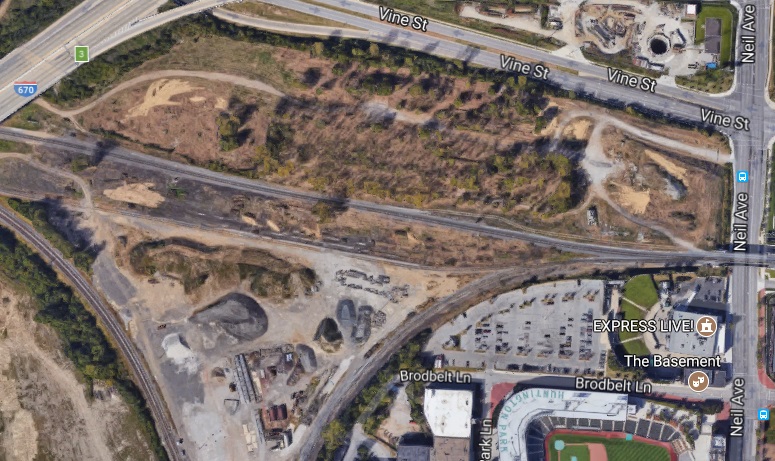
Arena District Site #1 The Arena District is a thriving neighborhood that would be a perfect fit for a new stadium. Pros: Already an established entertainment and sports neighborhood with stadiums for the Clippers and Blue Jackets, lots of local bars and restaurants, great location, enough space for a new stadium development. Cons: As with the Scioto Peninsula, this site already has plans. Perhaps a new stadium could be incorporated, especially when the plan left a lot of open space with parking lots and retention ponds. The site is also split in half by railroad tracks that are still active. This would take some creative development to accommodate a stadium and any required infrastructure.
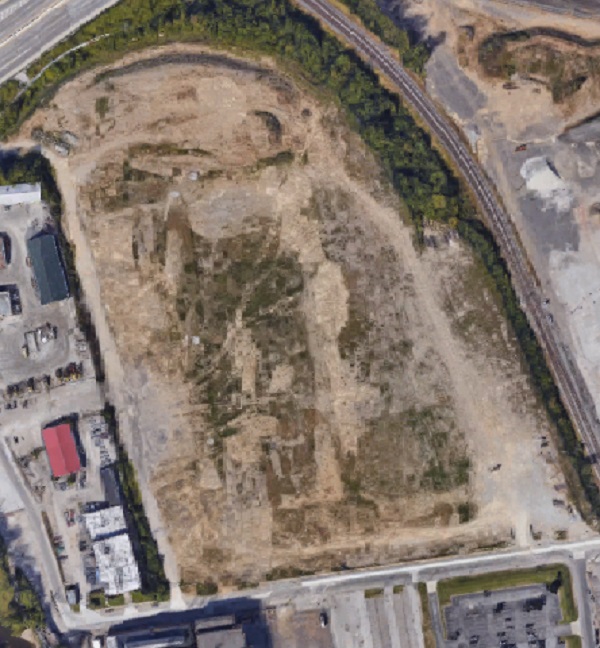
Arena District Site #2 Pros: Good location, enough space for a stadium, near bars, restaurants and other entertainment venues. Cons: This site is owned by Nationwide. While no specific plans have been announced as of yet, they have stated for a few years now that they want to eventually do some kind of mixed-use development. Whether they would be willing to incorporate a stadium into those plans is unknown. The site is also somewhat separated from the rest of the AD by the railroad tracks on the east side. Another problem may be infrastructure. There is really only a single road- Nationwide Boulevard- in and out of this site. During games, this could be an issue unless it’s resolved or some kind of shuttle system is provided.
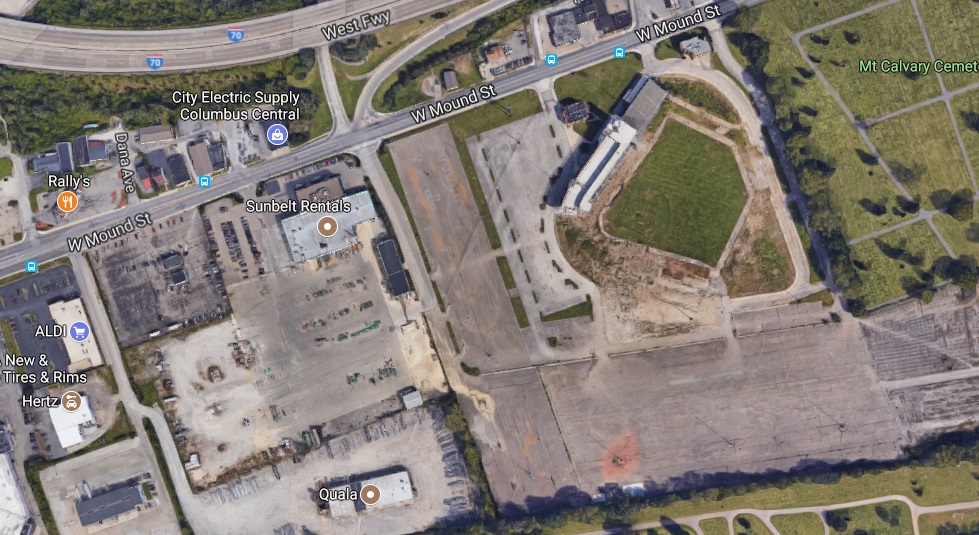
Cooper Stadium Cooper Stadium, the original home of the Columbus Clippers before they moved to the Arena District, has sat empty and rotting since 2010. The surrounding area, while not exactly great, is a perfect candidate for revitalization. Pros: Enough room for a stadium, and with the potential purchase of nearby properties, enough to create a mixed-use development around it. Still close to Downtown. Cons: This site is owned by Arshot, a development company that has long planned a race track development here called SPARC. However, there has been no movement on this development whatsoever, and most now believe that the project is dead. Would Arshot be willing to develop a soccer stadium there instead? Also, given that the site is surrounded by a cemetery on 2 sides affect the possible development?
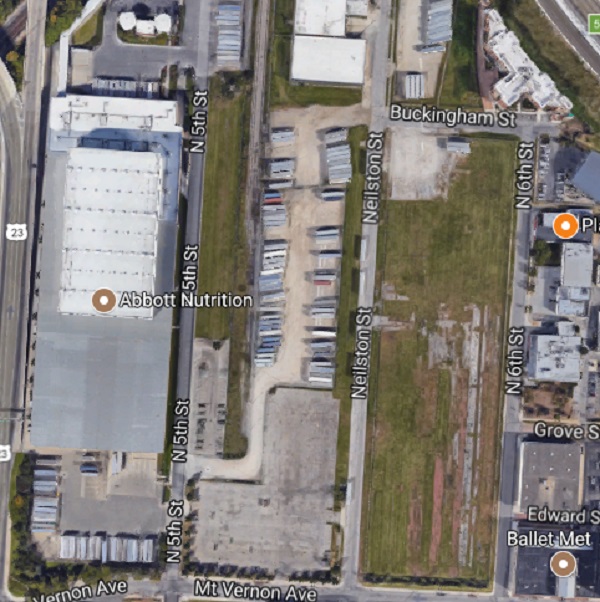
Abbott Labs On the north end of the Central Business District, this site has very large empty lots that are mostly used to store semi trailers, when they’re used at all. Pros: Plenty of space, as Downtown as Downtown gets, plenty of nearby restaurant and bar options to create a neighborhood experience. Cons: Abbott Labs owns the land. While much of it is only lightly used at best, they may not be willing to sell it.
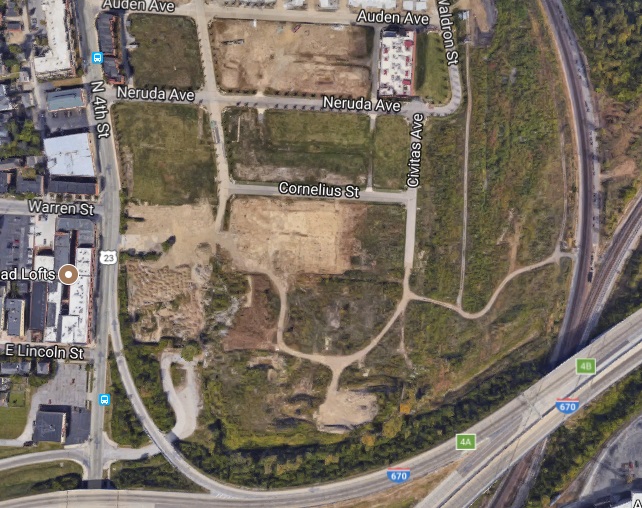
Jeffrey Manufacturing The old site of the Jeffrey Manufacturing Plant, these vacant lots are in one of the most prime locations in the entire city. Pros: Great location in the Short North/Italian Village, high levels of bars and restaurants nearby. Cons: Most of the site north of Neruda Avenue has already been developed with housing. I’m not sure if there is enough space to the south for a new stadium and some kind of parking garage (parking is already very tight in the area). Again, this could be potentially solved with a shuttle or transit system from existing lots/garages Downtown, though. I’m also not sure if the current developers would be willing to sell it, and NIMBYism would likely be fierce from local residents.
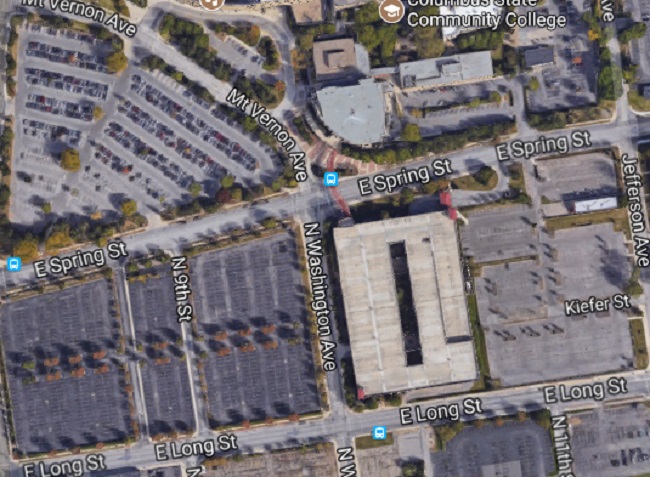
Columbus State Parking Lots On the northeast side of the Central Business District, Columbus State Community College’s land includes one of the largest areas of surface parking lots anywhere in the city. Pros: Great location, plenty of space to develop. Cons: Columbus State owns the land and has long-term plans to develop these. It’s doubtful that they’d be willing to incorporate a stadium here and lose valuable expansion space.
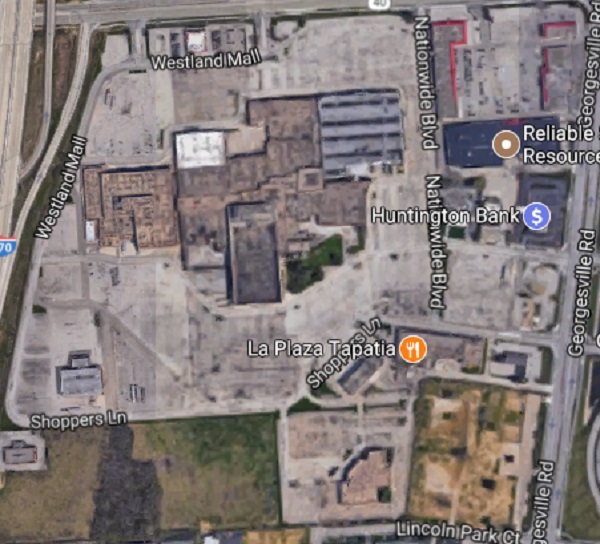
Unconventional Possibilities Westland Mall Westland Mall hasn’t been functional for many years, and its last and original tenant- Sears- recently abandoned the site as well. There have been no plans announced for the mall and it otherwise rots and prevents the improvement of the Far West Side. Pros: The defunct mall site is enormous. A new stadium and new mixed-use neighborhood could basically be built from scratch. It also has excellent access to the Outerbelt. Cons: Not Downtown or even close to it, so it wouldn’t solve the complaint about being too far from the core of the city. This area is also not particularly nice, and may suffer the same perception problems that the current stadium site has.
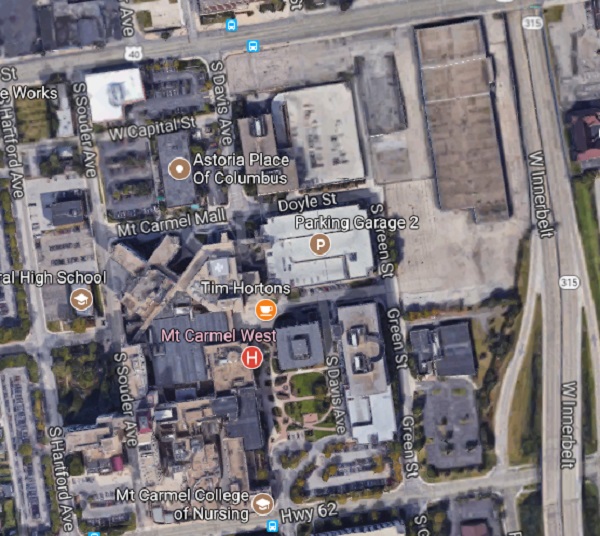
Mt. Carmel West Mt. Carmel West, a long-time hospital in Franklinton, will be moving most of its operations to Grove City. Pros: Close to Downtown, potential to create new entertainment district. Cons: The site has many existing buildings that would have to be torn down or repurposed to fit a stadium and mixed-use development. Mt. Carmel has plans to create a mixed-use development eventually, anyway, but this would be one of the most difficult to remake.
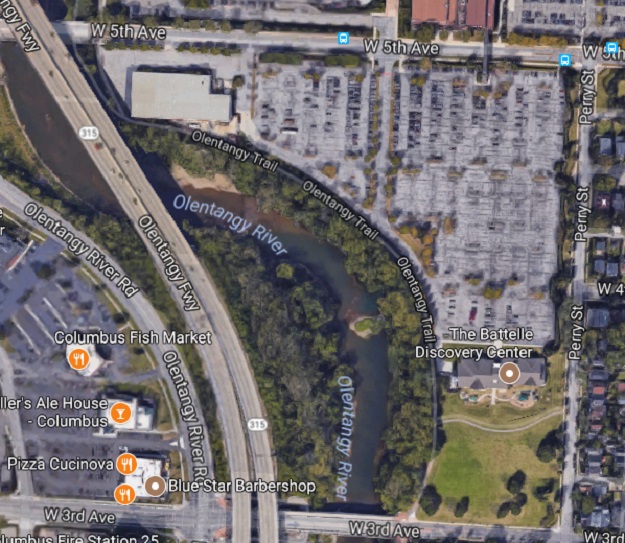
Harrison West Part of the Short North, Harrison West is a largely residential neighborhood. Off of 5th Avenue is a large parking lot and empty land that Battelle is selling off for redevelopment. Pros: Great location, should be enough space. Cons: There is little extra room for mixed-use development, and neighbors would pull the same kind of strong NIMBYism that the Jeffrey Manufacturing site would face. There are also already tentative development plans, and it’s unknown if a stadium would work.
Ohio State Campus Pros: While not exactly Downtown, Ohio State is already a destination in many ways- certainly for sports. There is land available, and the surrounding neighborhoods are much nicer than the current stadium location. Cons: Ohio State has long-term plans for practically every square inch of land it owns. Would they be willing to part with enough for a stadium? And could an attached mixed-use development come into play?
So there you have it, my list of potential Crew Stadium locations. What do you think? Am I missing any good ones?
The Random Columbus Photos 2 edition looks at one of the most infamous building complexes that had ever existed in the city.
Photo Date: Unknown, Pre-1910 Location: The southeastern corner watchtower of the Ohio Penitentiary site. The old Ohio Penitentiary first opened up in 1834. The Civil-War-era building that fronted Spring Street was easily the most iconic. It can be seen in the background of the photo as the lighter building. The Ohio Pen had an interesting, and occasionally disastrous, life. On April 21, 1930, a massive fire broke out that would kill 322 inmates and become the worst prison fire in United State history. Despite the fire, the prison’s population would continue to grow. At its peak in 1955, the prison held over 5,200 inmates- and singlehandedly provided a large population boost to Downtown. The following year, Ohio began transferring inmates to more modern facilities. The move took nearly 30 years. Ohio moved the last inmates in 1984 and then permanently closed the prison. After the closure, the abandoned prison deteriorated quickly. Due to a lack of state maintenance, a portion of the outer wall collapsed onto some cars in 1996, and the city began to aggressively plan a new life for the site. In 1998, despite some protests to save some of the historic buildings, the city demolished the entire complex to make way for the planned Arena District. Today, the only reminder of the prison site is that the eastern edge of McPherson Commons park runs along the same line as the original outer wall.
I’m not a complainer… or at the very least, I don’t prefer to be. That said, there are simply times where negativity makes perfectly logical sense, and where it can serve a real purpose for true positive change. That is arguably the case now, with the a very poor decision about the Columbus Convention Center. I’ve not posted too much on my personal views regarding development, but recent events have prompted me to give some of them on this particular project.
Back in March, it was revealed that the Greater Columbus Convention Center leadership had asked the local development community to come up with ideas for a potential expansion project for the convention center itself. The building was designed by famed 1980s and early 1990s architect Peter Eisenman (who also did the Wexner Center for the Arts), and began construction in 1989 and completed in 1990. Originally, the building included 1.4 million square feet of space, with a large parking lot occupying the southeast corner of the Goodale/N. High Street intersection.
In 1999, an expansion pushed the structure north nearly to Goodale, but left enough space for a small plaza there.
So even after the initial construction of the original building, there were obvious problems with the design, not least of which was the pastel color scheme better suited for Miami Beach. The building simply didn’t have any street-level presence. Beyond a few entrances, the convention center’s design essentially created a block-long wall along High Street. There was no ground floor retail, no restaurants and no pedestrian interaction whatsoever. Back in 1989, this was just fine and dandy, because no one really cared about that and hadn’t since the days before WWII. Cities had become showplaces and for big buildings and massive surface parking lots that didn’t actually bring anyone to live there. There was no reason to walk on the streets of the city, and architects certainly didn’t think it was necessary to build for that purpose. The suburbs were the real future, blah blah blah. Everyone knows that story.
Since 1999, the neighborhood around the convention center has been rocketing upward in popularity. The nearby Arena District continued to grow and add development, and the Short North continued to rapidly revitalize and is now the city’s hottest neighborhood. For the past few years, there has been a push to attract more business to Columbus via the center and to highlight all the nearby amenities. To that end, the 12-story, 500+ room Hilton was completed across the street in 2012. The $140 million structure was built with public dollars, as a private developer did not step forward when the idea was put forth. The project was somewhat speculative, as the demand for hotel space in the city was not particularly high enough to warrant the construction (a good reason why private development hadn’t shown up), but because the city understood that hotel space was part of the key to attract bigger and better convention events, the hotel went up and Hilton came in to run the space.
The gamble seemed to be paying off, and in January, the Columbus Dispatch came out with an article about the hotel’s success. In the article, there was even the mention of adding even more hotel space, possibly up to 1,000 additional rooms, at some point in the near future.
So when the convention center authority announced it was searching for ideas for a new expansion project, that reality seemed to be taking place. In late March, there was this bit of news. Four separate proposals had been submitted by private developers on ideas to develop the north end of the convention center, along with the surface parking lot north of Goodale behind the 670 retail cap. The most prominent idea came from Wagenbrenner, with a pair of 15-story, mixed-use towers that would’ve included more than 100 residential units, hotel and event space, and ground-floor retail along High Street, an element the original building severely lacked.
Wagenbrenner Development’s proposal.
Wagenbrenner Development’s proposal, looking southeast from High and Goodale.
Another proposal from Kaufman was far more modern, but still retained mixed-use elements.
The Kaufman proposal, looking east on Goodale.
In Wagenbrenner’s case, a hotel chain had already stepped forward interested in running the hotel aspect of the project, and there seemed little doubt that one of the proposals would move forward, based on quotes from the convention center authority and their stated goal for a “big idea” sort of project moving forward. The selection of the design would be announced in a few month’s time.
So what was the result of all that? On June 12th, 2014, an article in the Dispatch came out detailing a renovation and expansion project for the convention center. The problem was that the article did not mention any mixed-use project whatsoever. Instead, it called for a general total-building renovation and a small 30,000 sf expansion and entranceway into the plaza space at the southeast corner of High and Goodale. Additionally, an 800-space parking garage would be built in the surface lot behind the 670 cap.
Wait, what?? When the article initially came out, there was confusion by many in the development-following community on just what was going on. Part of the confusion stemmed from the fact that the convention center authority had already announced a renovation project just 2 weeks prior to the release of the information on the mixed-use expansion project. That announcement had mentioned only a $30 million renovation, not the much larger one announced on June 12th. There had also been mention previously of the garage project, back in late 2013. In that discussion, the garage was being looked at to get ground-floor retail, especially closer to High, to take advantage of the neighborhood’s high walkability and retail success.
So at first, it was assumed that the garage and renovation project was a separate issue from the larger proposed expansion, but the article on June 12th specifically mentioned the very same land that the proposed mixed-use towers would’ve used. The following day, on June 13th, the Dispatch came out with a second article about the $125 million renovation/expansion project, and in it near the bottom, was this damning paragraph:
Jennison said the expansion of the convention center rules out earlier ideas of adding shops and residences to the north end of the facility, including the possibility of more hotel space. The authority’s board sought proposals for such a project earlier this year before ultimately ruling them out.
Suddenly, the 2-tower project had been swept under the rug and abandoned. Worse, it had been abandoned in favor of new carpets/fresh paint, a glorified 2-story entrance on Goodale, and a 1970s parking garage with no retail at all.
The parking garage proposal on Goodale behind the 670 retail cap, part of the convention authority’s new plan.
To say that there was some disbelief that such a decision had been made is putting it mildly. Across development forums, and even on the Dispatch articles themselves, the negative reaction was swift and universal. How and why had such a promising proposal for the convention center turned into the height of mediocrity? And why had potential fully private or a private/public funded project turned into a 100% publicly funded fiasco? The answer, it seems, is likely staring us in the face: The Hilton Hotel. Though it hasn’t been confirmed either way, there is an element of suspicion against the Hilton for obvious reasons. The Hilton is publicly financed and was publicly built. To have a private company build a competing hotel may have taken away business, and the convention authority was not interested in allowing competition for a public enterprise. There are precious few other logical reasons why the convention authority would actively seek private investment only to toss those proposals out a few months later in favor of a project that had no competing elements to it.
Worse still, the convention authority knows it’s a terrible plan in comparison. On June 15th, yet another article on the project appeared in the Columbus Dispatch.
In it, the idea is pushed forth that the renovation plan will be transformative, and will keep Columbus competitive for convention business. The problem is that it’s neither transformative nor competitive. Granted, the convention center is in need of renovations, as much of the interior is dated. But to spend $125 million on that renovation, combined with a laughably bad expansion/garage rather than actually going with, at the very least, a partially privately-funded project that would’ve actually improved Columbus’ competitiveness along with adding much needed pedestrian access and excitement to the intersection in question… well, it’s insanity. And the 3rd article only suggests that the convention authority is well aware of the overwhelmingly negative reaction to their plan and are attempting to justify it as much as possible. Only there can be no real justification. Bad decisions remain bad decisions. Whether this one was made to prevent competition or is simply an example of being out of touch with a stated goal, the convention center authority has made one of the worst decisions in Columbus development history… and that was after the city allowed Union Station to be demolished. Shame on them.