Independence Day Climatology


Independence Day climatology Columbus, Ohio

In honor of the 4th, here is the history of Independence Day climatology and extreme weather events.

Normals
High: 85
Low: 65
Mean: 75
Precipitation: 0.15″

# of July 4ths Where the Maximum was…
100 or Above: 3
90 or Above: 34
80 and Above: 104
79 and Below: 31
69 and Below: 2

# of July 4ths Where the Minimum was…
70 or Above: 26
60 or Above: 95
59 or Below: 40
49 or Below: 2

Top 5 Warmest Highs
1. 1911: 104
2. 1897: 102
3. 2012: 100
4. 1919: 97
5. 1900, 1921, 1949, 2002: 96

Top 5 Coldest Highs
1. 1882, 1922: 69
2. 1924, 1967, 1978, 2008: 71
3. 1909, 1927, 1972, 1979: 72
4. 1920: 73
5. 1937, 1989: 74

Top 5 Warmest Lows
1. 1911: 79
2. 1897, 1900, 1999: 75
3. 1879, 1921: 74
4. 1883, 1902, 2012: 73
5. 1899, 1919, 1991, 2004: 72

Top 5 Coldest Lows
1. 1968: 47
2. 1963: 49
3. 1996: 50
4. 1986: 51
5. 1927, 1940: 52

# of July 4ths where Precipitation was…
0: 65
Trace: 18
0.01-0.24: 32
0.25-0.49: 8
0.50-0.74: 8
0.75-0.99: 2
1.00 and Above: 2

Top 10 Wettest
1. 1984: 1.38″
2. 1935: 1.04″
3. 1915: 0.86″
4. 1932: 0.84″
5. 1957: 0.66″
6. 2008: 0.61″
7. 1939: 0.60″
8. 2003: 0.59″
9. 1926: 0.58″
10. 2006: 0.56″

Ohio’s most infamous July 4th weather event, occurred in 1969. Severe thunderstorms developed over southeastern Michigan and moved southeastward into the Ohio lakeshore communities around 7:30PM on July 4th. Every lakeshore community from Toledo to Cleveland was affected, as well as areas further inland. The storms continuously trained over the same areas from Lucas to Wayne counties for several hours, dropping torrential rains, tornadoes, high winds, hail and lightning. Rainfall in a 100-mile stretch from just southeast of Toledo into Wayne County totaled 6″-14″. These rains caused record local flooding. All told, the storms of July 4th-5th, 1969 caused $65 million in damage, damaged or destroyed 10,000 homes, 7,000 cars, 104 businesses, 300 mobile homes and more than 700 boats. 41 people were killed and 559 were injured, mostly from flooding. This was the 3rd most damaging flood in Ohio history, behind January 1959 and March 1913. Columbus was too far south to see any of the storms and received just 0.03″ of rain for the period.


1810 US Census


The 1810 US Census doesn’t exactly have a lot of information available. The earliest censuses seem to focus more on economic information rather than population and demographics.

In 1810, Ohio had just 36 counties and Columbus had not been founded yet. Franklin County, however, did exist at the time, as well as Franklinton and a few other towns.

Franklin County
Cotton Goods Value in Dollars: $6,043
Rank of Ohio’s Counties: 3rd
Flaxen Goods Value in Dollars: $13,935
Rank of Ohio’s Counties: 13th
Blended and Unnamed Cloths and Stuffs Value in Dollars: $9,927
Rank of Ohio’s Counties: 15th
Woolen Goods Value in Dollars: $2,496
Rank of Ohio’s Counties: 13th
# of Looms: 150
# of Naileries: 1
# of Tanneries: 5

That’s all I have for now, but if I find more information about the area in 1810, I will add it here.

King-Lincoln Neighborhood Profile


King-Lincoln neighborhood profile Columbus, Ohio

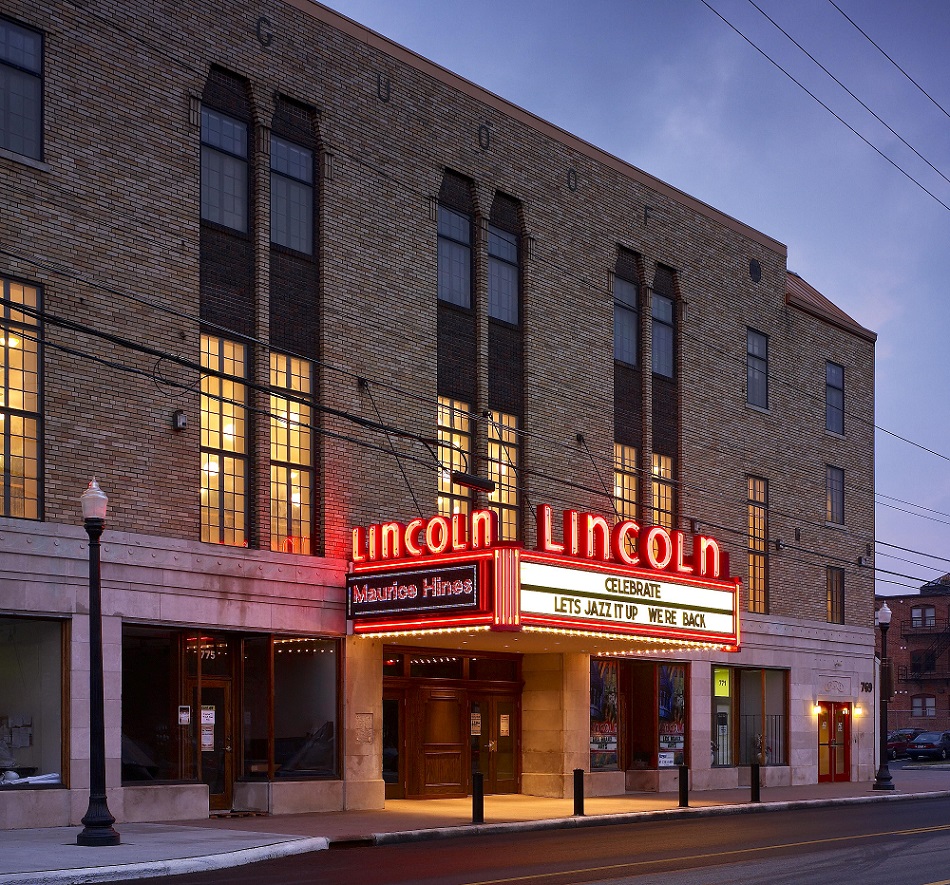
The Lincoln Theater.

This week is Demographics week. First up, ACD’s second neighborhood profile, featuring the King-Lincoln District, Columbus’ historically African American cultural heart.

I was going to write a history for the area, but this video tells it better than I ever could.

History aside, what I can do is provide a more detailed demographic picture from the past, present and possible future of the neighborhood.

Population
1930: 17,970
1940: 18,282
1950: 20,527
1960: 17,746
1970: 11,627
1980: 9,291
1990: 8,456
2000: 8,025
2010: 6,439

Population peaked around 1950, but during the 1950s began its long-term decline. Some might say this was a product of White Flight, but in this case, the neighborhood was already almost entirely non-White. The White Flight movement was more than just about racial demographic changes in neighborhoods, it was a factor of urban neglect. Just like in the rest of urban Columbus, King-Lincoln lost its urban appeal due to infrastructure deterioration, lack of city-focused leadership, decline of schools and increasing crime rates (among other things). One of the biggest blows to the area, just like what occurred with Olde Towne East to its south, was the construction of I-71 in the early 1960s. The highway cut the neighborhood off from Downtown, demolished hundreds of historic buildings, and allowed more people to effectively leave the neighborhood altogether. This is a good reason why the population dropped by almost 35% between 1960 and 1970.

The population loss rate had been slowing down each decade through 2000. During the 2000s, the city cleared out Poindexter Village, one of Columbus’ first public-housing projects and home to several hundred residents. This accounted for a very large chunk of the loss that occurred from 2000-2010 and why the loss increased during that time. The city is now tearing the complex down with plans for mixed-use development on the site. If not for this action by the city, it’s very likely that King-Lincoln would’ve had it’s lowest total population loss since the decline began in the 1950s.

Demographics
White
1990: 6.1%
2000: 6.2%
2010: 9.6%
Black
1990: 90.7%
2000: 87.7%
2010: 84.0%
Asian
1990: 2.4%
2000: 0.7%
2010: 0.5%
Hispanic
1990: 0.6%
2000: 1.1%
2010: 2.2%
Other
1990: 0.9%
2000: 5.4%
2010: 5.9%

% Change By Demographic for Each Decade
1990-2000

White: -3.7%
Black: -8.2%
Asian: -71.6%
Hispanic: +63.0%
Other: +501.4%
2000-2010
White: +24.5%
Black: -23.1%
Asian: -42.1%
Hispanic: +60.2%
Other: -11.8%
The demographics for the last 30 years show Hispanic and White populations are becoming an ever larger chunk of the neighborhood, while Asians have declined significantly. The African American population is still, by far, the largest demographic, but it too is on a long-term decline. This suggests a gradual gentrification of the neighborhood.

And what of the future of the area? Significant revitalization news has been coming out in recent months. As mentioned above, the 36-building Poindexter Village, long a hot spot for crime and concentrated poverty, is currently in the process of being torn down. The site will be replaced with residential, retail, office and arts space over time. A larger area plan was recently announced here: http://www.columbusunderground.com/pact-plans-165-million-strategic-redevelopment-for-near-east-side. The $165 million plan will focus on King-Lincoln’s main thoroughfares: East Long Street, Mount Vernon Avenue and Taylor Avenue. Increasing density with mixed-use development and revitalizing the commercial corridors is a big part of the plan, as well as infrastructure and green space improvement. Smaller developments include Homeport’s housing renovations, which have been very successful so far.

So while King-Lincoln has seen better days, the neighborhood is currently in transition. 5-10 years from now, the neighborhood should be radically changed, hopefully for the better. Its proximity to Downtown and other central neighborhoods give it a great advantage as the city has become fairly popular again.


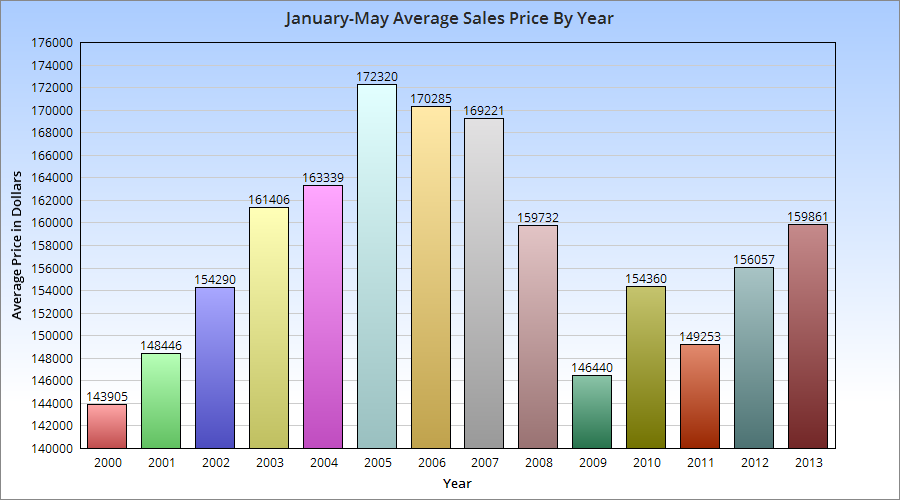
Columbus Housing Market May 2013


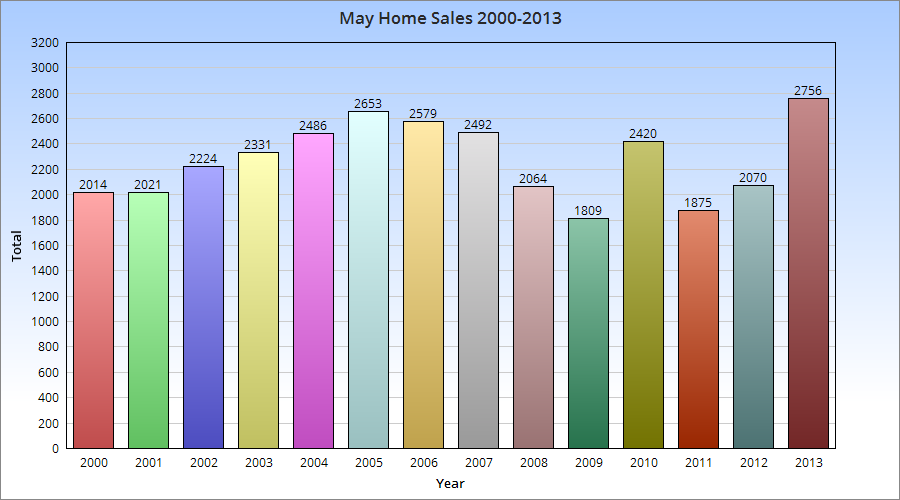
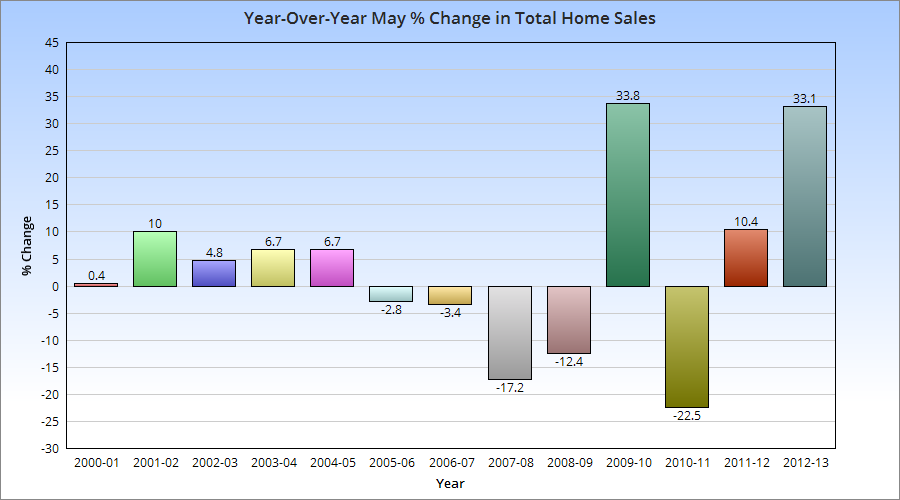
May home sales set a record for the month.
Columbus housing market May 2013

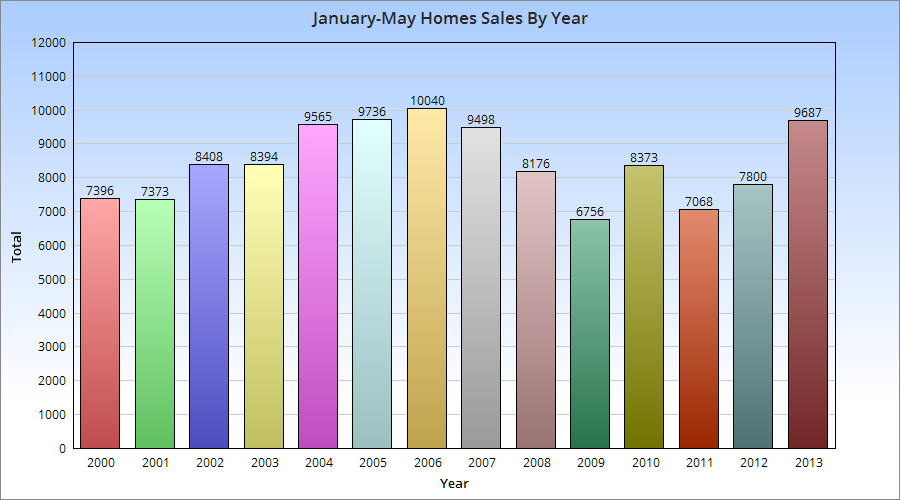
Through May, total sales are also way up, and were the 2nd highest for the 2000-2013 period.

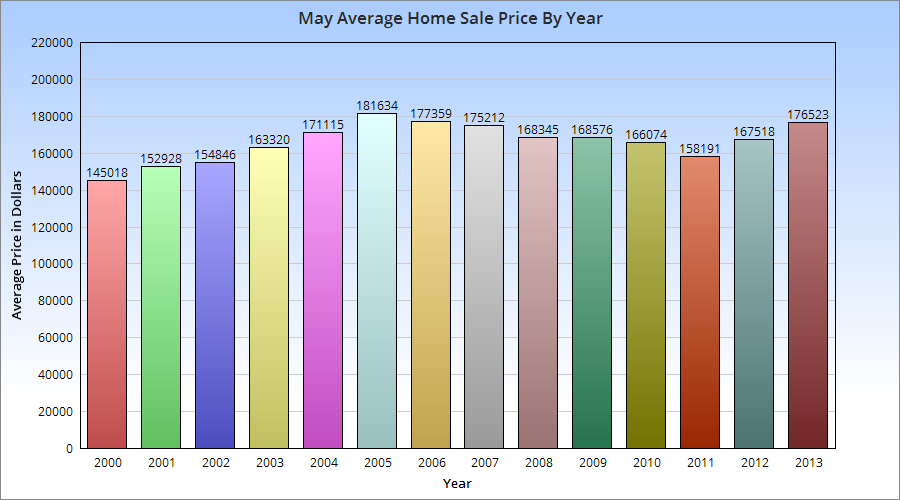
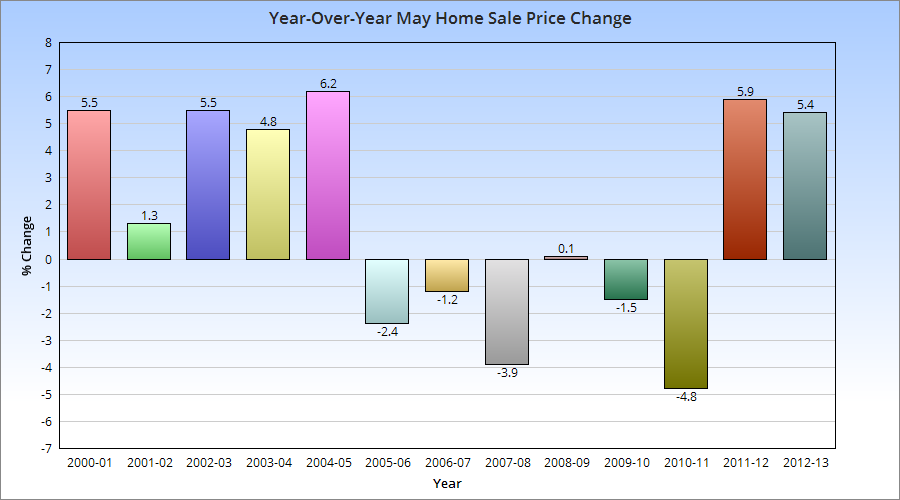
The average May home sales price was the highest since 2006.

The average January-May sales price was also up.

To me, all this shows is that after the Recession’s downturn, housing in the Columbus area is seeing a strong recovery. In some cases, the recovery is already surpassing the market that existed pre-Recession.


May Project Updates


May project updates Neighborhood Launch

Just a few May project updates. These represent only a small fraction of what’s going on in terms of local development.

Downtown
1. Neighborhood Launch’s expansion with a pair of new 5-story buildings containing 260 apartments continues. Located on E. Long Street, the buildings’ foundation work has been mostly completed and elevator shafts and the first steel frames are now going up, which means construction should really get going now. The timetable for these to be complete is late fall or winter.
2. Over at Columbus Commons, the Highpoint 300-unit residential project continues and at least one of the buildings is now reaching towards its 6th and final floor.
3. The Liberty Place 200+ unit residential expansion in the Brewery District is getting closer to being done with the external work, as brick and finishes are going on.
4. The mess that is the reconstruction of 670/71 also continues, but we’re still a year or so away from that being done… before the next phase begins closer to the 70/71 section.
5. Work continues on the restoration of the LeVeque Tower, but more details have emerged. Up to 70 residential units will be created in the tower section, along with lower floors having a new boutique hotel and office space. The lobby will be restored to its original 2-story look, and the entrance outside will get new marble, planters and lighting. The terra cotta exterior of the building will take up to 5 more years to complete, as 80 years of grime and damage have to be fixed. The other improvements should be done late this year or early next year.
6. Columbia Gas’ new HQ building in the Arena District has reached it’s maximum 6-story height with steel, but no exterior work is done yet.
7. The Flats II 120-unit residential building next door to that project is seeing exterior work being done and should be done later this summer or early fall. Reports have been coming out showing this and other residential projects nearby have extremely high rental interest already.
8. 600 Goodale, the 5-story 174-unit residential building is seeing exterior work now and should be done by the end of summer or fall.

Short North
1. Aston Place, a new residential project on Hubbard Avenue, is moving along and the elevator shaft is just about done, so steel should be going up soon.
2. The Hubbard project continues to the east. The 5-story, 68-unit residential building is all framed out and exterior work is beginning. The adjoining parking garage is complete and the 4 concealing townhomes should begin construction soon.
3. The Out of the Closet development at 5th and High is well underway, now completely framed out.