Why Columbus Doesn’t Have Rail Part 2


Why doesn't why Columbus doesn't have rail part 2

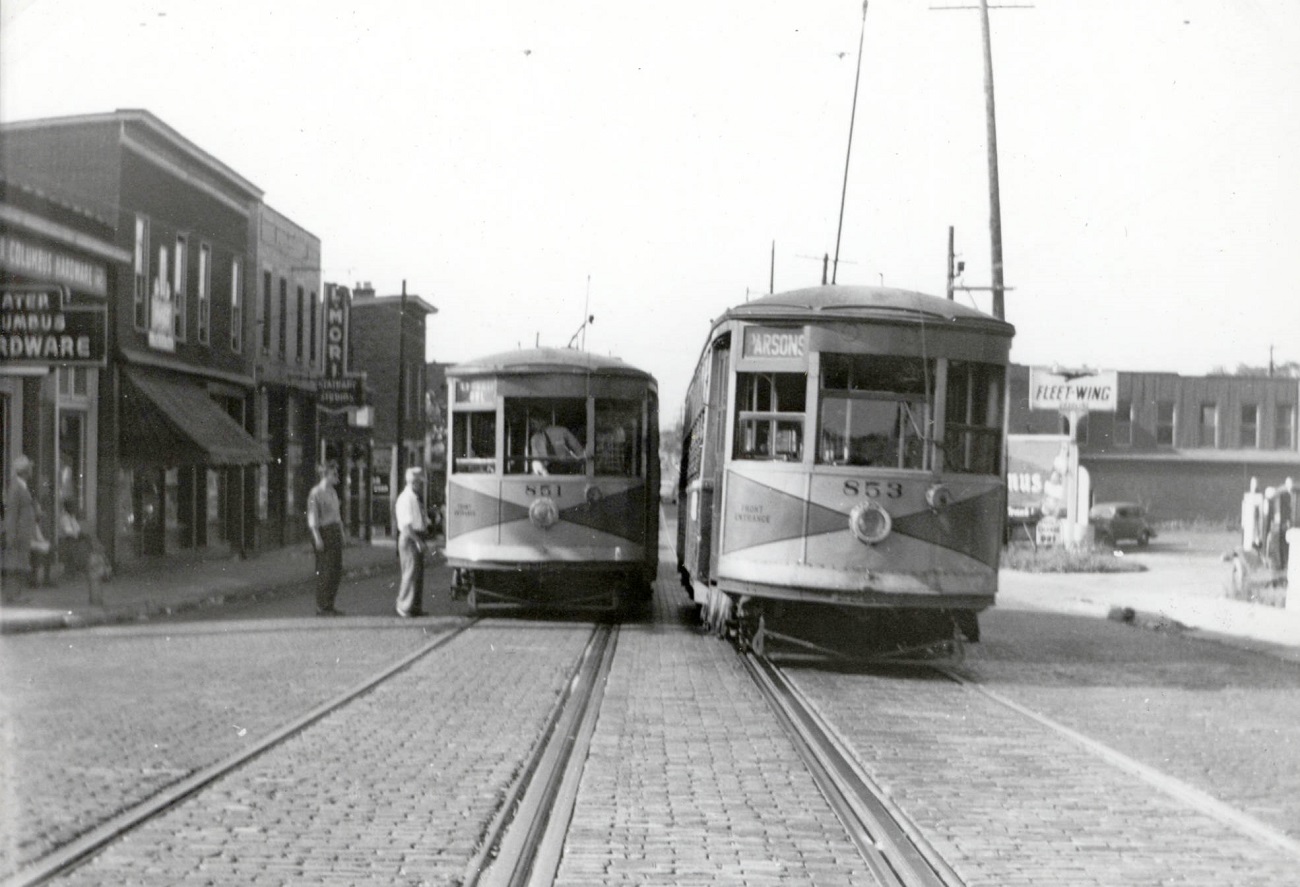
Parsons Avenue streetcars ending service in 1948.

In Part 1 I talked a little about the history of passenger rail in Columbus and how no such service has existed within the city since 1977. In Why Columbus doesn’t have rail Part 2, we review the bad luck, bad decisions and just plain confusion that has prevented the otherwise very successful city from going beyond the bus.

Rail was being mentioned to make a comeback as early as the dawn of the 1980s. In 1980, COTA (Central Ohio Transit Authority) was able to convince area residents to pass a 0.5% sales tax to fund a list of ambitious projects, as well as promising free Downtown service. When the money from the sales tax came in, COTA decided to overreach and proposed a controversial plan to use the extra money. Called Transit80+, the plan had transit goals of articulated buses and a Downtown transit mall, as well as a proposal for a North Side light rail system (Why there, I don’t know). The development would be paid for with the $76 million surplus that COTA was running. Ironically, these projects largely died because of funding and support issues. Within a few years, COTA’s financial situation was changing. Federal budget cuts and the expiration of the sales tax in 1984 began to shrink the overall transit budget. Beyond the money, however, the public had reacted overwhelmingly negatively to the 1980 plan. Many felt that COTA needed to improve its already-existing bus service before spending money by jumping into other forms of transit. Consider this was only about 5 years after passenger rail left the city, and many people did not feel like it needed to be brought back.
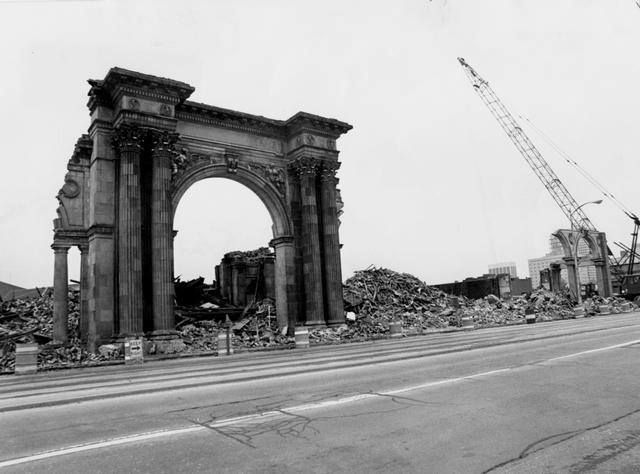
Union Station demolition in 1977.

In 1987, talk mounted for a monorail system in the Downtown area. The $40 million proposal included a large loop that wound through the Ohio Pen site (Arena District), the Scioto Peninsula, the county office complex on South High and then up to the City Center site (Columbus Commons). A feasibility study was never completed (there was no money for it), and COTA had steadily shrinking money on hand when levies failed in 1986 and 1988. A 0.25% sales tax did pass in 1989, but most of that money was used to rebuild the budget and maintain existing services.

For a few years after that, there was scant mention of rail beyond COTA’s continued long-term goal planning. A 1991 study by COTA only mentioned a light rail system to be put into place by 2020, and it seemed like the city would not see it for decades. However, only a year later, in 1992, rail came up again when the city hosted the international floral show, AmeriFlora ’92 at Franklin and Wolf parks. The show sparked much conversation about Columbus’ future as a city and what was needed to revitalize the urban core, something that City Center and other developments had, up to then, failed to really do. A light rail system was part of that discussion, and by 1993, there was a flurry of news related to this development.

A Columbus version of Grand Central Station was being proposed for Downtown that would connect taxis, cars, buses, light rail and high-speed heavy rail that would link Ohio’s large cities. MORPC (the Mid-Ohio Regional Planning Commission) was deep into looking at potential locations, most of which were near the Ohio Pen site and the new convention center. Future mayor Michael Coleman was quoted in early 1993 saying, “We’re moving into the 21st century, and we need to prepare for that challenge.”

Beyond a city light rail system, suburbs and exurbs were also talking about a train. A proposal for a Columbus to Lancaster train was put forth. This was a proposal in addition to the Rt 33 bypass around Lancaster (which was eventually built) that would relieve growing congestion on the freeway. Also, a 3-C high speed train was being proposed and the idea was to have this system in place by 1995 with a connection at the proposed transit terminal near the convention center. The $3.2 billion high-speed 3-C train would’ve had an average speed of about 110mph with a max speed of 186mph, making the trip between Cincinnati and Cleveland in about 2 1/2 hours, even with stops.

Another proposal brought back the idea of a monorail system, though instead of a Downtown loop, the overhead system would run from just north of 270/Rt 23 to Downtown. The $110 million, 11-mile proposal would’ve been built in a corridor between Olentangy River Road and Cleveland Avenue and be capable of speeds of up to 75mph. The trains would’ve had 30 cars each and carry up to 5,000 people per hour.

Much of these developments (and others) were proposed to be completed by 2001.

The first snag came near the end of December 1993, when Nationwide refused to consider selling 5.3 acres it owned near the convention center that MORPC and COTA were interested in buying for the transit terminal. Nationwide insisted it hadn’t been consulted on the site bordered by High, Front, Nationwide and Spruce and had no interest in selling the property. The following month, the managing director of COTA and one of the biggest proponents of the hub and rail projects, announced he was leaving for Atlanta. The double-blow was bad, but not the end, yet. COTA and MORPC regrouped but still wanted the Nationwide site, which Nationwide still didn’t want to sell. The entire light-rail system’s proposed cost had risen to $522 million. In July 1994, COTA’s 13-member board approved the project moving forward… it only needed a 0.25% sales tax increase, with a vote scheduled for November 1995.
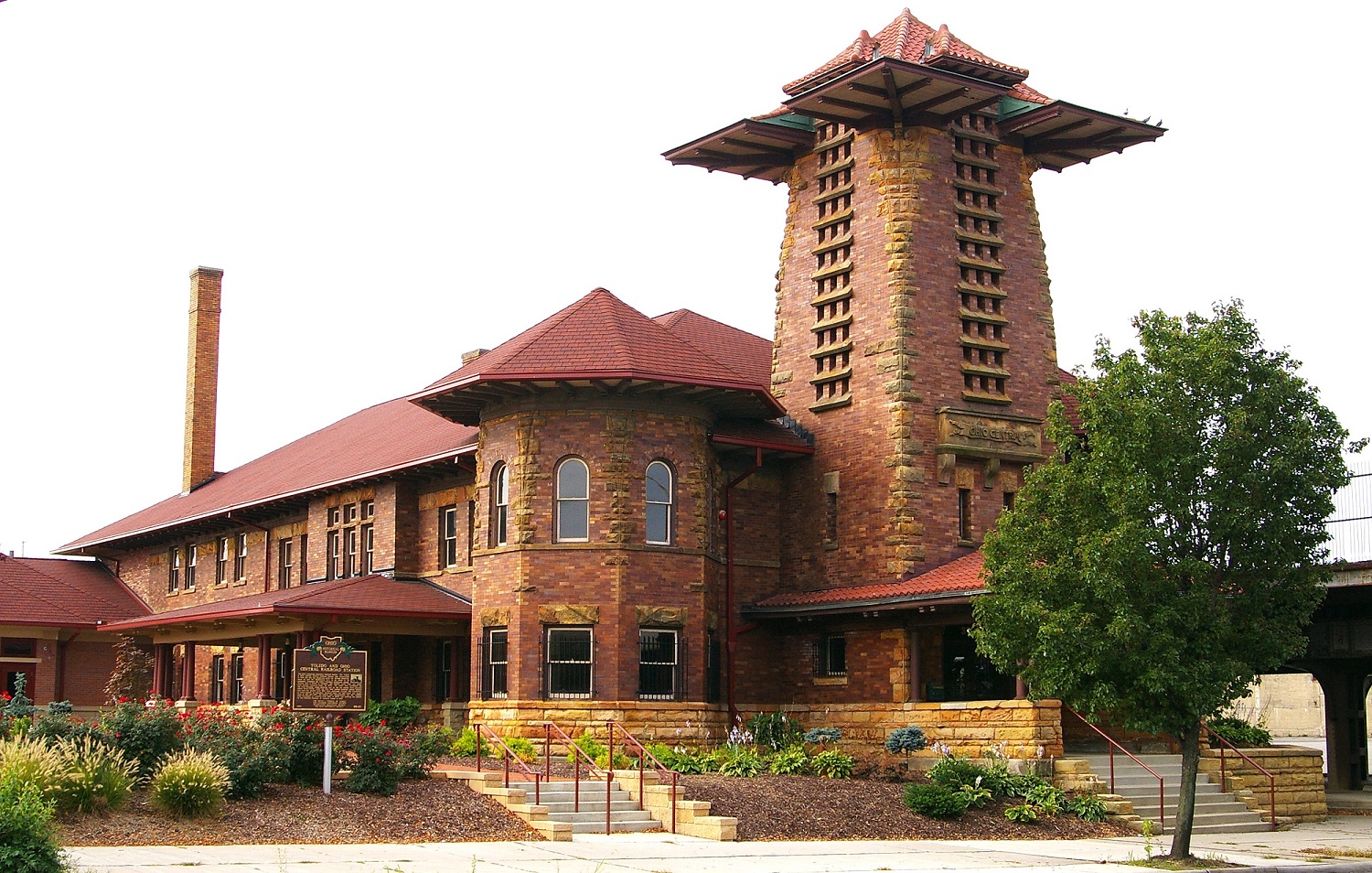
The old Toledo and Ohio Central Railroad Depot in Franklinton.

And then it all fell apart. Federal mass transit subsidies were cut by 12%, capital funding for bus replacement by 60% and state operating assistance by 4% Not only that, but future Ohio governor John Kasich, a Westerville US House representative, put forth a bill with massive mass transit cuts, especially to fixed systems like light rail. Without this money, the system would’ve had to have been entirely locally supported with another $65 million borrowed. The ambitious system suddenly proved too costly and COTA voted to pull the plan from its agenda. Columbus was not alone, as 25 other cities had to kill future or expansion rail plans. One has to wonder if Kasich had seen the momentum for rail in central Ohio and targeted these projects specifically with his national bill. This would not be the final time he would stand in the way of mass transit in Ohio. Ironically, in a poll taken the same week that COTA killed light rail plans, nearly 60% of the public surveyed in Columbus said they would’ve voted to support the November levy that would’ve built it. Instead, without the plans, the November 1995 levy failed. The location of the hub no longer mattered.

Three years later, in 1998, President Clinton signed a $217 billion package that would help fund 191 light rail projects nationally. COTA had no current rail plan and failed to submit any, so therefore was passed up on the funding. Despite this, COTA and MORPC once again prepared to sell the city on light rail, this time in order to pass a levy at the end of 1999. The hub idea was also revived, and the new location was directly across High Street from the convention center, in parking lots along N. Wall Street between Front and High.

Along with the hub, 8 commuter lines and a Downtown loop were proposed. The 8 lines were:
-A northbound from Downtown to the Crosswoods area
-A northwest line to Dublin along Rt 315
-A northeast line to Easton/Westerville parallel to Cleveland Avenue
-An eastbound line to Gahanna and Reynoldsburg
-A track along 33 northwest to southeast
-A west track along Broad Street
-A south track along Rt 3
The plan was once again ambitious, but COTA no longer had a good sales team. A public meeting for the plan in November 1998 only attracted 4 people. The word simply wasn’t getting out.

Leading up to the 1999 sales tax vote to pay for the new system, public reaction was generally positive, but there was still a lack of information available and the public seemed confused as to what would and wouldn’t happen and how it would be paid for. On voting day, the ballot seemed to lack any mention of rail whatsoever, as COTA had been barred from stating the purpose of the tax increase on the ballot. Not only that, but the ballot initiative was split into two parts. Issue 20 was a permanent 0.25% increase on sales tax while Issue 21 was for 10 years at the same rate. While the public was generally supportive of the rail plan, the split and the lack of wording on what the taxes were actually for confused many and they ended up going down to defeat. Columbus’ first (and last) vote on rail had gone down due to confusion and poor management by COTA.

Almost a decade later, Mayor Coleman once again revived the prospect of a rail system in 2007, though this time for streetcars Downtown and perhaps north and south along High Street. The idea was supported by COTA and MORPC, as well as through public polling, but many felt like streetcars really didn’t go far enough with the light rail concept, so many urban and light rail enthusiasts seemed to be underwhelmed by it all. Regardless of the lukewarm response, the proposal seemed to be moving forward. The following year, however, the economy began to crash into the Great Recession, and by 2010, with the election of John Kasich as governor, all mass transit projects at the time pretty much died. The revived 3-C high-speed train was single-handedly killed off by Kasich and it became very clear he would do everything he could to prevent mass transit projects from getting state funding. Cincinnati was able to get a streetcar passed, but almost exclusively from local support. The double whammy of the worst economic times since the Great Depression combined with state leadership that was wholly unfriendly to mass transit effectively shelved the streetcar proposal before it ever went very far.

Today, in early 2013, conditions have changed somewhat. The economy is gradually improving and COTA is running in the black, having the fastest growing ridership in the nation. More importantly, people seem to want to live in the city again, a development that no project like City Center could ever accomplish. Thousands of residential units are under construction or planned for the urban core of Columbus, Downtown is seeing dozens of new restaurants open, along with a new park, concert stage and the Scioto Mile. After 60 years of suburban-driven population growth, the city is making a dramatic and welcome return. But more than that, Columbus continues to grow, with the metro adding over 40,000 people in the past few years alone, and the city adding about half that. A recent article came out suggesting that Columbus now has the worst congestion of Ohio’s cities, and it is steadily getting worse.

These trends bode well for light rail and other forms of mass transit. The next time rail is brought up, it should (finally) move forward barring some major economic meltdown. Of course, given Columbus’ history of following Murphy’s Law when it comes to this subject, an alien invasion seems entirely possible.

And for more information on the history of other Columbus transportation forms, visit the following links.
Road and Highway History
Air and Bus Transportation History
Canal and Other Transportation History
Why Columbus Doesn’t Have Rail Part 1


Why Columbus doesn't have rail part 1

Rail in some form existed in Columbus from the 1850s through the mid-1970s. For generations, rail travel was the way to go. It was the connector of distances, the driver of local and state economies. On the local scale, it brought folks to and from their city’s downtown areas for shopping and employment, and the trolley, interurban and other rail systems were as prolific as the horse and buggy before them. So what happened? In this Why Columbus Doesn’t Have Rail Part 1, we will review all of the history of rail travel within the city.

Most people today are aware of the Union Station that existed on High Street where the Convention Center is now, but there were actually 2 more depots that proceeded it.
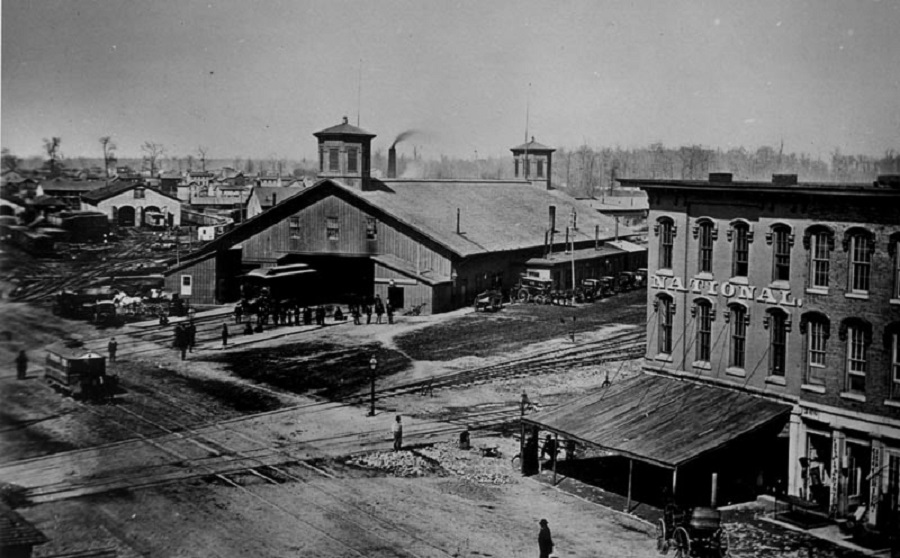
Columbus got it’s first real taste of rail travel in 1851, when the Columbus Union Depot opened, a year after the city’s first railroad, the Columbus & Xenia, entered the city. It was followed by the Cleveland, Columbus & Cincinnati Railroad in 1851. Both railroads wanted their depots to be as close to the downtown area as possible, as this was the center of the city’s population and commercial activity. At the time, the city was significantly smaller than it is now. Today, Chestnut and Naughten Streets are within the heart of Downtown, but in the early 1850s, there was almost no development north of these streets, so the two railroads collaborated and purchased a plot of land at the northeastern corner of the North High Street and Naughten intersection, about where the Hyatt Regency is today. This would be the location of their new terminal, the Columbus Union Depot.

The first Union Station that operated between 1851-1875.

This was the first depot in the city and resembled a barn, in some ways similar to the first North Market building that would go up nearby. It was built to handle 3 railroads but by the early 1870s was handling the traffic of 5, well exceeding capacity. Beyond the inadequate size, the depot’s trains dangerously and regularly blocked traffic on High Street, much to the anger of many residents. The push for a new depot began.

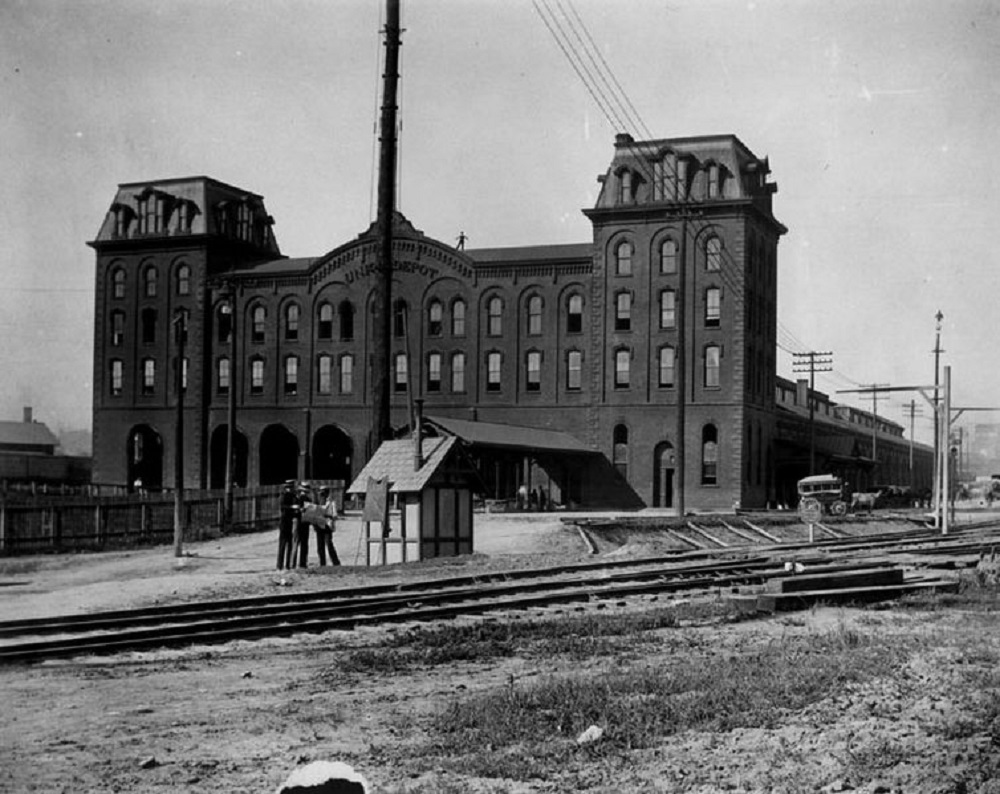
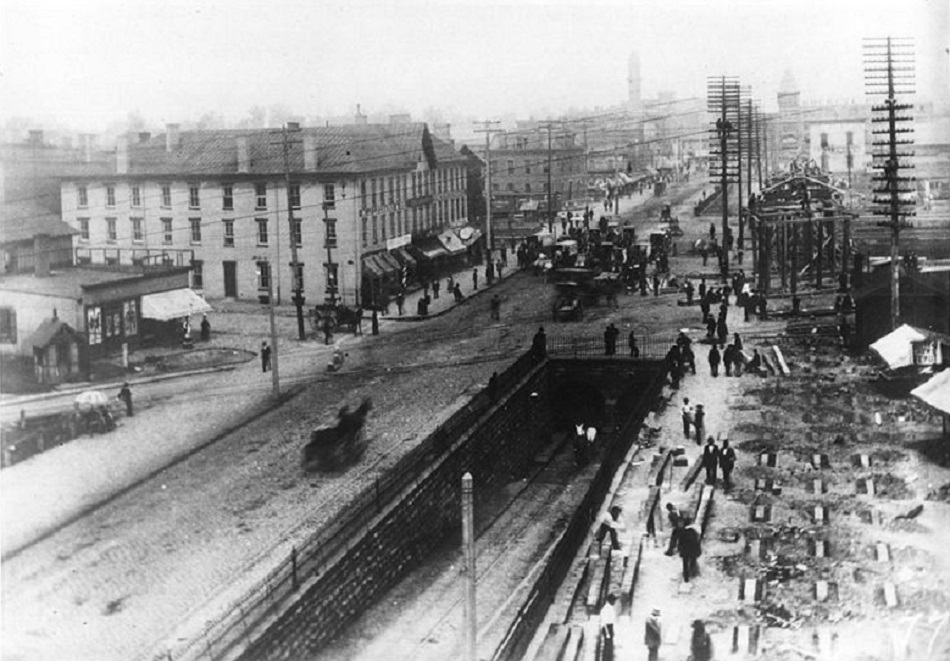
Plans were approved in 1871 for the new depot and it was completed and opened in February 1875, with the old depot torn down and many of the old tracks relocated/rerouted to the much larger depot, now located further east of the old depot location, just north of Naughten. Not only was it much larger, but much grander in design. No longer a giant, single story barn, it was instead a 3-story red brick structure and had many architectural features that the previous depot lacked. Tracks still crossed High, but a 160-ft tunnel underneath helped to relieve congestion. For years, this new setup solved many of the previous problems, but a steady increase in train traffic (there were over 120 daily trains by the early 1890s), as well as pedestrian and horse and buggy traffic getting too and from the depot began to cause major problems in the area once more. A new depot was once again needed.

Union Station 1875-1897.


The High Street tunnel that connected the 2nd depot, around 1888.


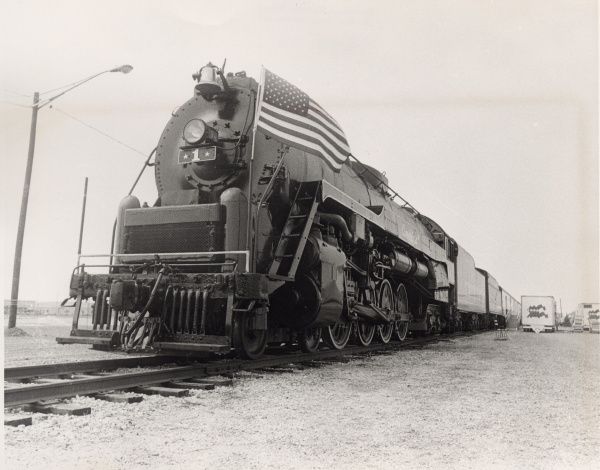
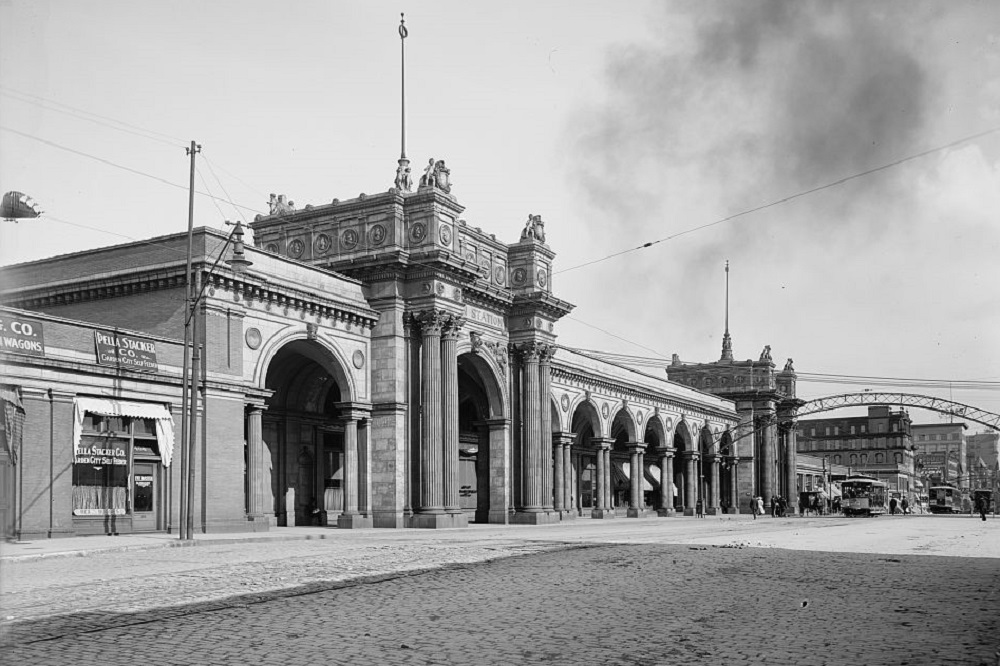
The third and most recognizable depot was completed in 1897: Union Station. It was, by far, the largest and most elaborately designed depot of the three, with 45-ft ceilings, a grand concourse and ornate plaster details. Much of the glamour was lost in a 1920′s remodeling, however, and falling numbers of daily trains gradually eroded maintenance levels. Union Station continued to serve passengers for nearly 50 more years, until the last passenger train passed through Union Station on April 28, 1977, ending over 125 years of passenger rail in the city. Demolition of Union Station had begun almost 7 months earlier, in an underhanded tactic to make way for a proposed convention center. The depot, particularly the arcade section along High Street, had been put on the National Register of Historic Places in 1974, and preservationists had won an injunction to stop demolition. However, a coalition led by Battelle rushed to demolish the building anyway, and by the time preservationists could act, most of it had already been lost. A single archway was all that remained, and today it sits on the northern corner of McPherson Commons park in the Arena District, a lonely testament to what was lost. The rest of the station was demolished by the fall of 1979. Ironically, the best evidence of how preservation attitudes have changed is just a bit further north with the I-670 retail cap. It is designed to resemble the Union Station arcade.

Union Station in 1910. It existed from 1897-1977.

Beyond heavy passenger rail, Columbus also had a streetcar system. The Columbus Street Railroad Company was formed in 1854, but the first streetcar did not come about until June 1863, when a horse-powered car arrived on High Street. By the 1890s, more than a dozen street rail companies were in the city and had almost 35 miles of tracks. Most of these were also horse-drawn until the early 1890s, when electrified lines proved far more efficient, making horse-drawn lines obsolete.

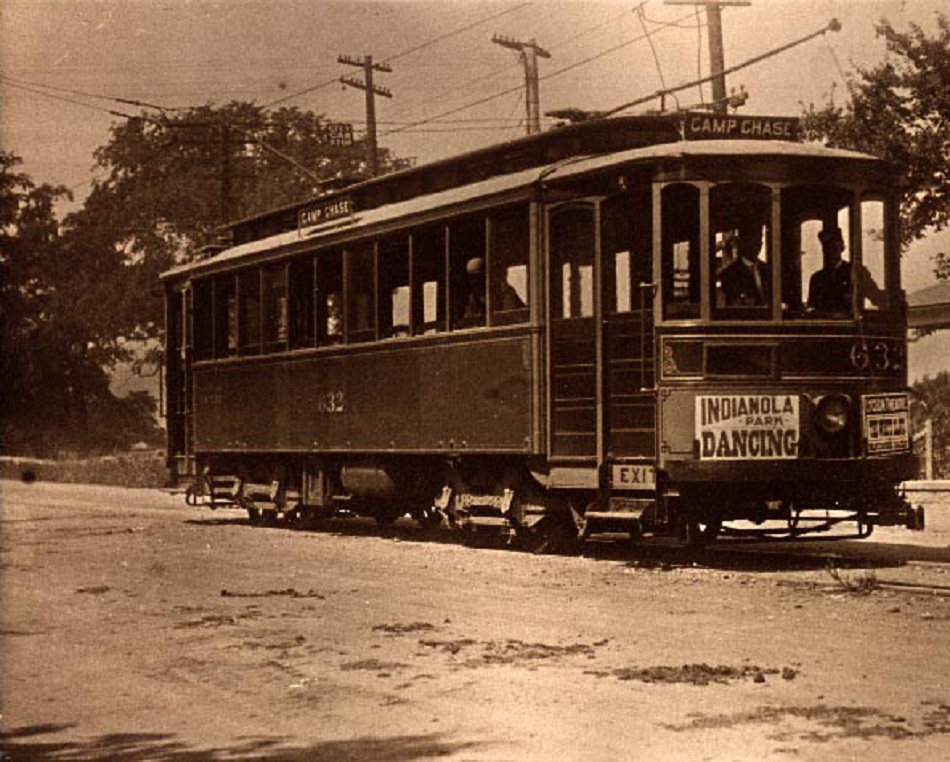
The Camp Chase streetcar.

Electric lines and passenger totals continued to grow over the next few decades and, by the mid 1910s, annual passenger tickets exceeded 65 million, equating to almost one trip per day for every man, woman and child living in Columbus at the time. By the 1920s, streetcar lines had spread to almost all of the urban core neighborhoods and inner ring suburbs, but passenger totals were already falling as the automobile increased in popularity. In the 1930s, an attempt was made to adapt to this changing transit environment and the fixed-track streetcars began to be replaced with trolley buses, with the last streetcar decommissioned in 1948. They too, however, only lasted until 1965, when they were replaced with the standard diesel bus.

In Part 2, I’ll examine what happened and why rail has, to this date, not returned to the city.

And for more information on the history of other Columbus transportation forms, visit the following links.
Road and Highway History
Air and Bus Transportation History
Canal and Other Transportation History


Housing Market Update January 2013


housing market update January 2013

Columbus housing market update January 2013

We’re starting a new year in this edition of the Columbus Housing Market Update, with new January 2013 data now available!

Note: LSD= Local School District, CSD= City School District. In both cases, school district boundaries differ from city boundaries.

Top 15 Most Expensive Locations By Median Sales Price in January 2013
1. New Albany: $447,500
2. Powell: $342,500
3. Upper Arlington CSD: $320,000
4. New Albany Plain LSD: $314,400
5. Dublin: $284,00
6. Bexley: $269,950
7. Olentangy LSD: $250,101
8. German Village: $241,618
9. Worthington: $228,938
10. Grandview Heights: $223,000
11. Downtown: $210,000
12. Granville CSD: $207,000
13. Dublin CSD: $190,450
14. Big Walnut LSD: $187,000
15. Marysville CSD: $182,000

New Albany continued to be the most expensive market.

Top 15 Least Expensive Locations by Median Sales Price in January 2013
1. Whitehall: $29,750
2. Hamilton LSD: $54,500
3. Columbus CSD: $68,500
4. Groveport Madison LSD: $70,000
5. Lancaster CSD: $71,250
6. Valleyview: $79,850
7. Newark CSD: $84,500
8. Reynoldsburg CSD: $94,500
9. Columbus: $95,000
10. Jefferson LSD: $95,000
11. South-Western CSD: $103,000
12. Circleville CSD: $109,000
13. Canal Winchester CSD: $112,000
14. Pataskala: $120,000
15. London CSD: 122,000

Whitehall was by far the cheapest market to buy into this month.

Overall Market Median Sales Price in January 2013: $120,885

Top 15 Locations with the Highest Median Sales Price % Growth Between January 2012 and January 2013
1. Newark CSD: +83.3%
2. Valleyview: +76.5%
3. Lithopolis: +71.1%
4. Circleville CSD: +61.4%
5. Groveport Madison LSD: +60.9%
6. Marysville CSD: +38.8%
7. London CSD: +34.8%
8. New Albany: +29.7%
9. Columbus CSD: +28.0%
10. Grandview Heights: +27.4%
11. Columbus: +26.7%
12. Upper Arlington CSD: +24.3%
13. Downtown: +19.3%
14. Sunbury: +18.4%
15. South-Western CSD: +16.1%

Downtown and Columbus overall made the top markets for appreciation in the past year.

Top 15 Locations with the Lowest Median Sales Price % Growth Between January 2012 and January 2013
1. Granville CSD: -50.7%
2. Jonathan Alder LSD: -33.0%
3. Westerville: -29.2%
4. Dublin CSD: -23.3%
5. Hamilton LSD: -21.6%
6. Jefferson LSD: -20.8%
7. Big Walnut LSD: -19.7%
8. Bexley: -17.6%
9. Gahanna: -17.0%
10. Johnstown Monroe LSD: -16.2%
11. Westerville CSD: -14.8%
12. Worthington CSD: -12.5%
13. German Village: -10.5%
14. Grove City: -6.4%
15. Whitehall: -4.9%

Overall Market Median Sales Price % Change January 2012 vs. January 2013: +8.6%

Top 10 Locations with the Most New Listings in January 2013
1. Columbus: 957
2. Columbus CSD: 605
3. South-Western CSD: 210
4. Olentangy LSD: 146
5. Hilliard CSD: 126
6. Westerville CSD: 109
7. Dublin CSD: 94
8. Pickerington LSD: 81
9. Grove City: 66
10. Groveport Madison LSD: 65

Top 10 Locations with the Fewest New Listings in January 2013
1. Valleyview: 1
2. Minerva Park: 1
3. Lithopolis: 2
4. Jefferson LSD: 3
5. Obetz: 6
6. Jonathan Alder LSD: 8
7. Grandview Heights: 9
8. Sunbury: 10
9. Johnstown Monroe LSD: 10
10. Hamilton LSD: 12
11. Whitehall: 15

Total New Listings in the Columbus Metro in January 2013: 2,388
Overall Metro New Listings % Change January 2012-January 2013: -3.7%

This month, prices increased as overall supply slipped.

For more information on the local market, go here: Columbus Realtors


Columbus Retail History Shopping Centers


In this Columbus Retail History Shopping Centers edition, we look back at how the city and retail innovation have been together for a long time, and there is a strong argument that the city has had such innovation before anywhere else in America. Even today, retail is a powerful player in the city’s economic and social picture. How did it all get started? Columbus Retail History: Shopping Centers, the second in the series, seeks to answer that.

As the automobile began to grow in use and importance, the concept of shopping changed. Previously, stores had been set up right against the sidewalk or street and customers would walk or find some other way to reach it. When the automobile came about, on-street parking was added. This was soon deemed insufficient for the steadily growing number of drivers, and developers and engineers began to think of new shopping experiences to adapt to this changing environment.

Columbus retail history shopping centers

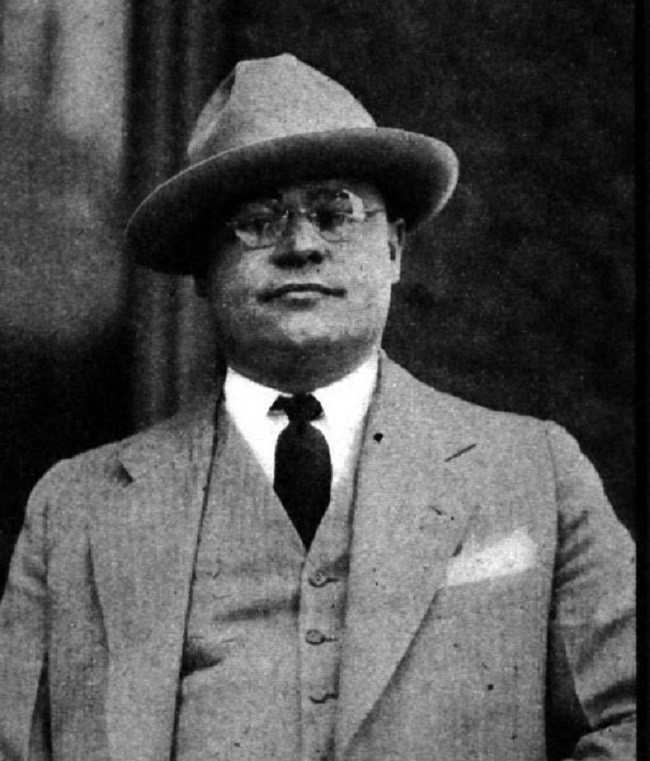
Don Casto Sr. in 1928.

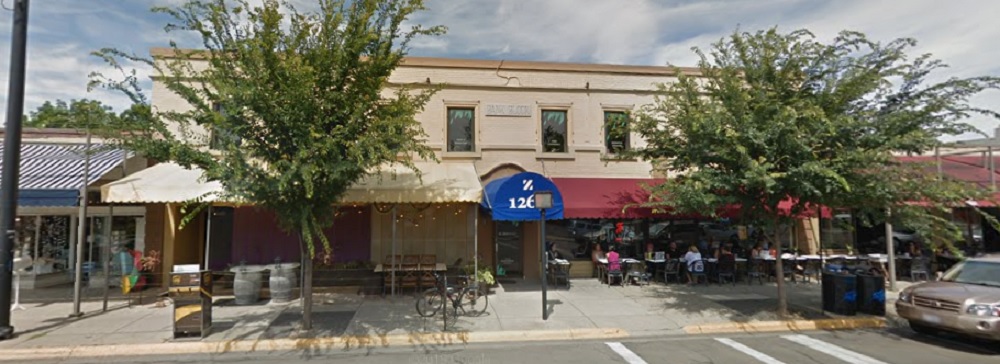
One of the first major changes to come about was the strip center. Prolific in every suburb in America today, the strip center got its start in Columbus. The first one was developed in Grandview Heights and named the Grandview Avenue Shopping Center (also known as the Grandview Avenue Bank Block). Opening in 1928, the center included 30 shops and incorporated parking spaces for up to 400 cars, one of the first major retail developments to design for cars. It was also the first regional shopping center and the first to have more than one national grocer (it had 4). The opening was a big deal at the time. There was a parade that featured child actors from the “Our Gang” films (Alfalfa, Spanky, etc), a street fair and musical acts. It was, of course, an instant success, and copies began to sprout around the city, and eventually, the nation. The center was built by Don Casto Sr., and Casto Construction still is a Columbus entity, recently announcing a local HQ move to the Bicentennial Plaza building Downtown. The Bank Block also still exists, and although not functioning today exclusively as it was designed (it is now mixed-use), it is on the National Historic Register and continues to be a part of the Grandview Heights landscape.

The 1929 Bank Block at 1269 Grandview Avenue.


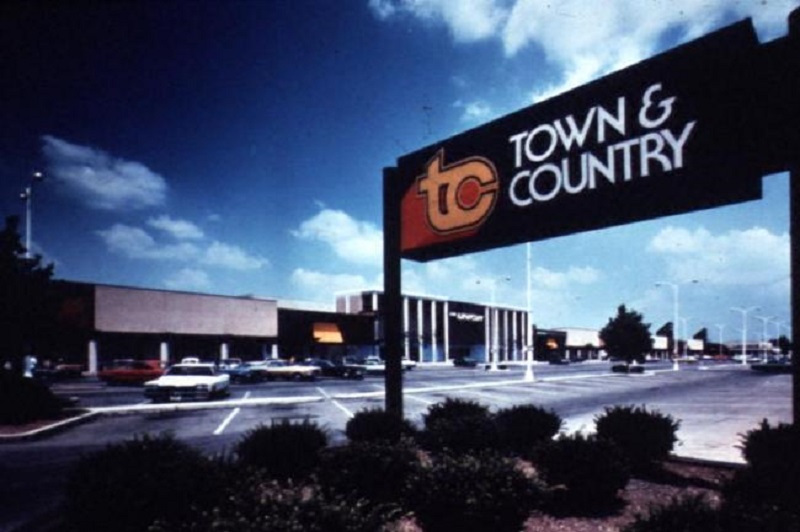
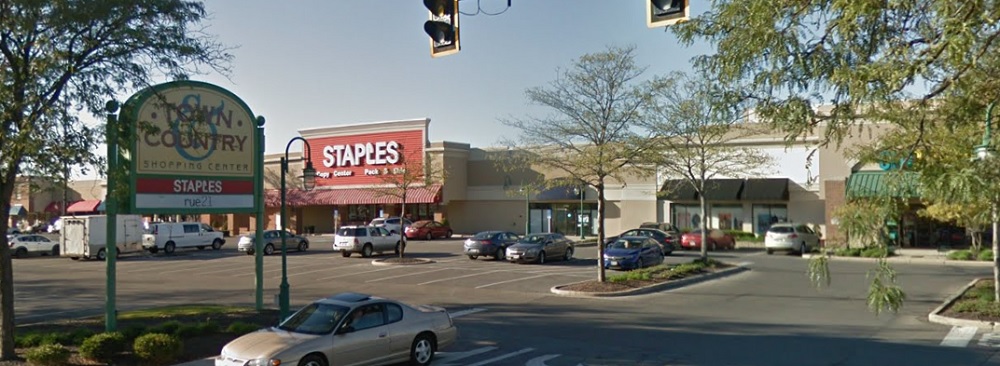
During the 1930s and 1940s, as suburban strip centers expanded and prospered, another idea began to emerge: The suburban shopping center. They were to be larger in scale than any strip center so far, with many stores, abundant parking and perhaps entertainment venues. Don Casto Sr., once again, took the lead. He proposed a new center at 3772 E. Broad Street, ironically, in order to relieve traffic congestion of shoppers in the Downtown area. Town & Country Shopping Center in Whitehall, was the result, opening in 1949. It was still strip-style, but much larger and with the parking lot set in front of the buildings. This became the dominant layout of all strip centers (and all retail development of any kind) for much of the next 60 years. Today, Town & Country has been renovated and reworked several times over, and shows little sign of its age.

Photo taken in 1976.


Town & Country in 2018.


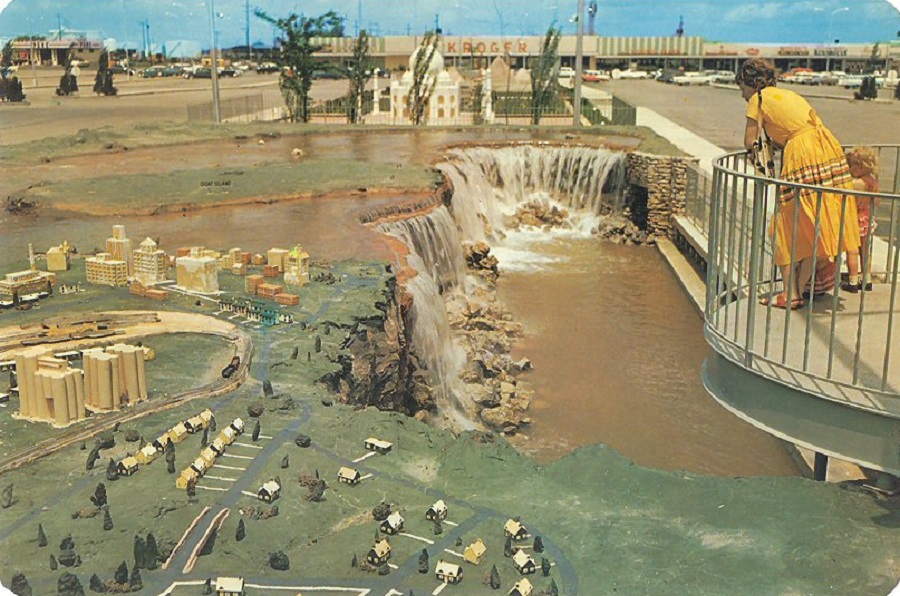
Casto followed up Town & Country with a string of new strip shopping centers that included Northern Lights Shopping Center on the North Side (1954), Great Western in Hilltop (1955), Graceland Shopping Center at 5155 N. High Street (1955) and Great Southern Shopper’s City on S. High Street (1957). Most of these new centers also featured some type of local attraction. At Great Southern, there was a Pan American flag display, while at Great Western, there was the famous Walk O’ Wonders, where a large section of the parking lot featured scale models of the world’s major architectural and natural wonders, such as the Great Pyramids of Giza and Niagara Falls. Today, all of these centers still exist, though none of them are particularly popular. Most of them now have low-end retail or non-retail establishments, victims of the shopping mall.

Niagara Falls at the Walk O’ Wonders at Great Western C. 1960. The attraction lasted about a decade.

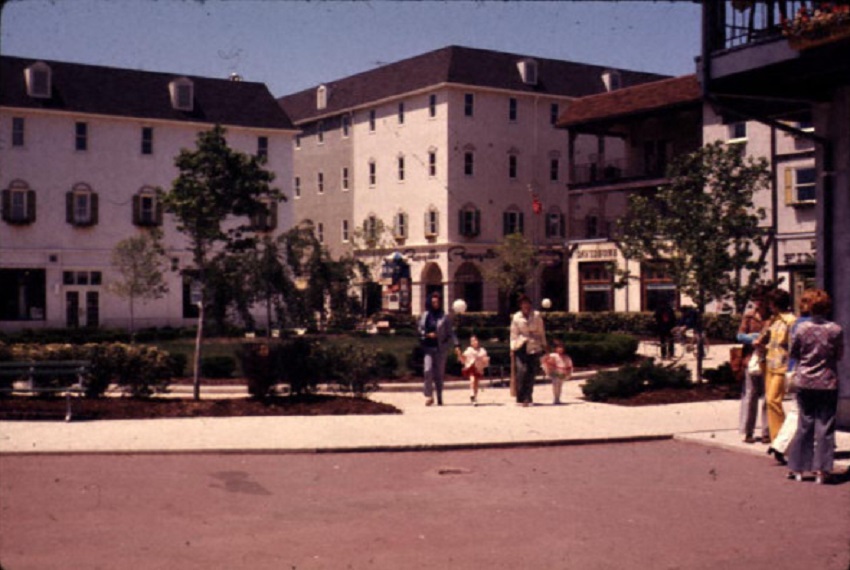
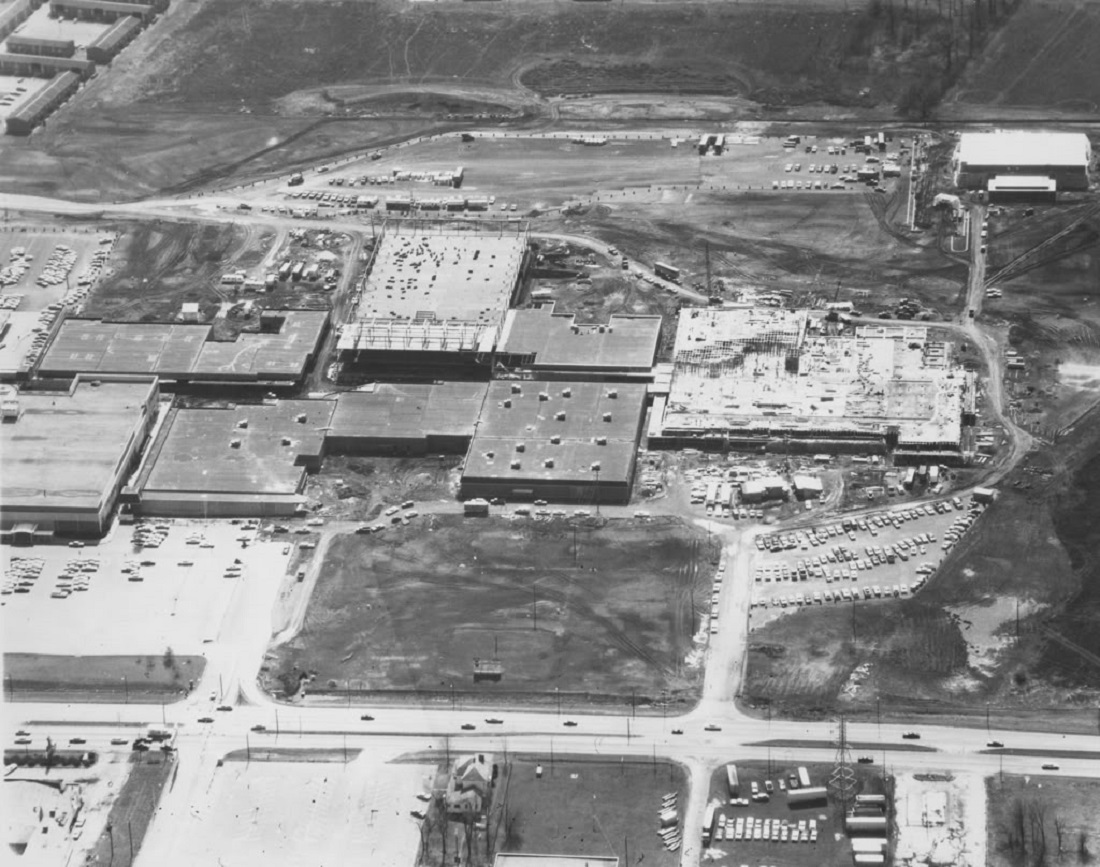
By the 1960s, the regional shopping mall was the next big idea in retail, and malls were sprouting up all over the country. Columbus was no exception to this trend. Columbus’ first major mall was Northland, which opened on August 13, 1964. Built for a modest $11 million, the enclosed mall featured 43 stores and 4,500 parking spaces. It was soon to be followed by Eastland Mall in February 1968 and Westland Mall in February 1969. The Westland Mall site was already a retail destination, having the first Lazarus branch store in the nation, opening in 1962. The mall was also built as an open-air shopping plaza, a very early version of the Easton Town Center concept, but the design proved unpopular, especially in bad weather months, and the mall was enclosed in 1982. The last retail destination was The Continent. Opening in 1973, The Continent was an open-air shopping center that featured European-style architecture and walkways that resembled the cobblestone alleys of Europe. As of today, only Eastland still functions as a full mall. Northland closed in 2002 and was demolished in 2004. The site is being redeveloped into a mixed-use site with offices, restaurants and small-scale retail. Westland still has a few stores, but the main mall section is now closed. The new Hollywood Casino opened in October 2012 across the street, and plans for the mall’s redevelopment are in the works. These plans are expected to be announced sometime this year, perhaps in the spring, although the owners have said it will likely not be a mall any longer and that the building itself may not remain. As far as The Continent goes, many of the stores began to move out in the 1980s and today the area is a collection of motels, low-end retail and not much else.

The Continent in 1976.


Westland Mall under construction in 1968 as an open-air concept.

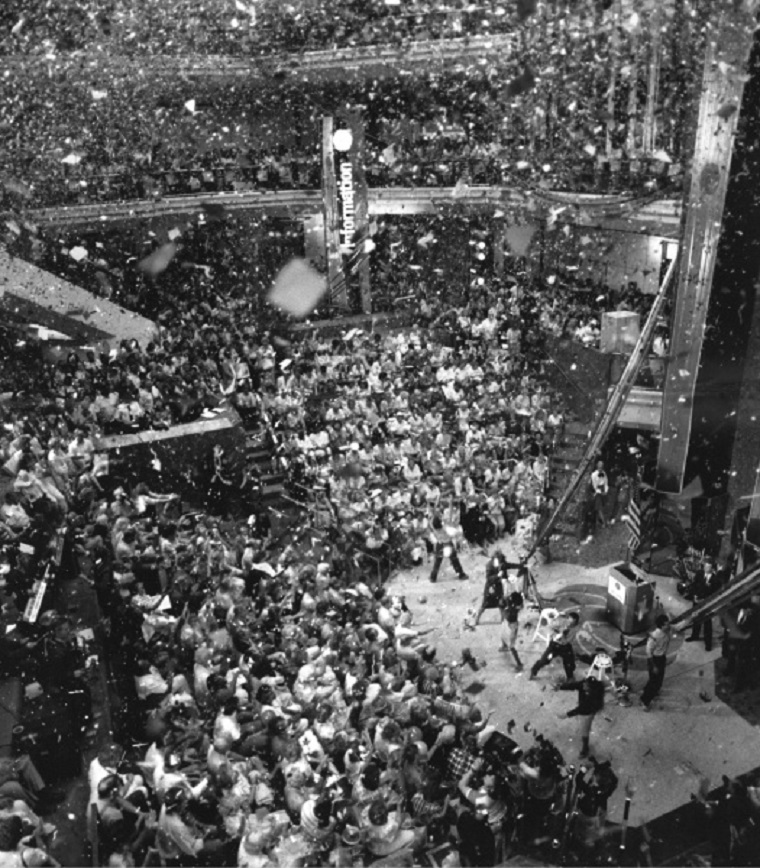
Why did these malls fail? Pretty simple really… too much competition. This brings us to the the later arrivals on the retail scene. First up, was City Center. This mall was conceived as the savior of Downtown, to pull in shoppers from the suburbs and bring back traffic to the area. This $100 million, 100+ store enclosed mall was completed in 1989. For awhile, it did function as a destination mall, but also pulled business from Northland, Westland and Eastland malls, though it did not kill them.

August 18, 1989 — BLACK & WHITE — File photo of Columbus City Center grand opening celebration. City Center is the three-level shopping mall in downtown Columbus. (Ran in the paper on August 19, 1989.) The mall marked a turning point in Downtown redevelopment.

Three new suburban shopping malls opened between 1997 and 2001: Tuttle Crossing, Easton Town Center and Polaris Fashion Place. Each was a bigger blow to the traffic at the older malls, and one by one most of them perished. Eastland was the only survivor, and only because it was the furthest away from the new destinations.

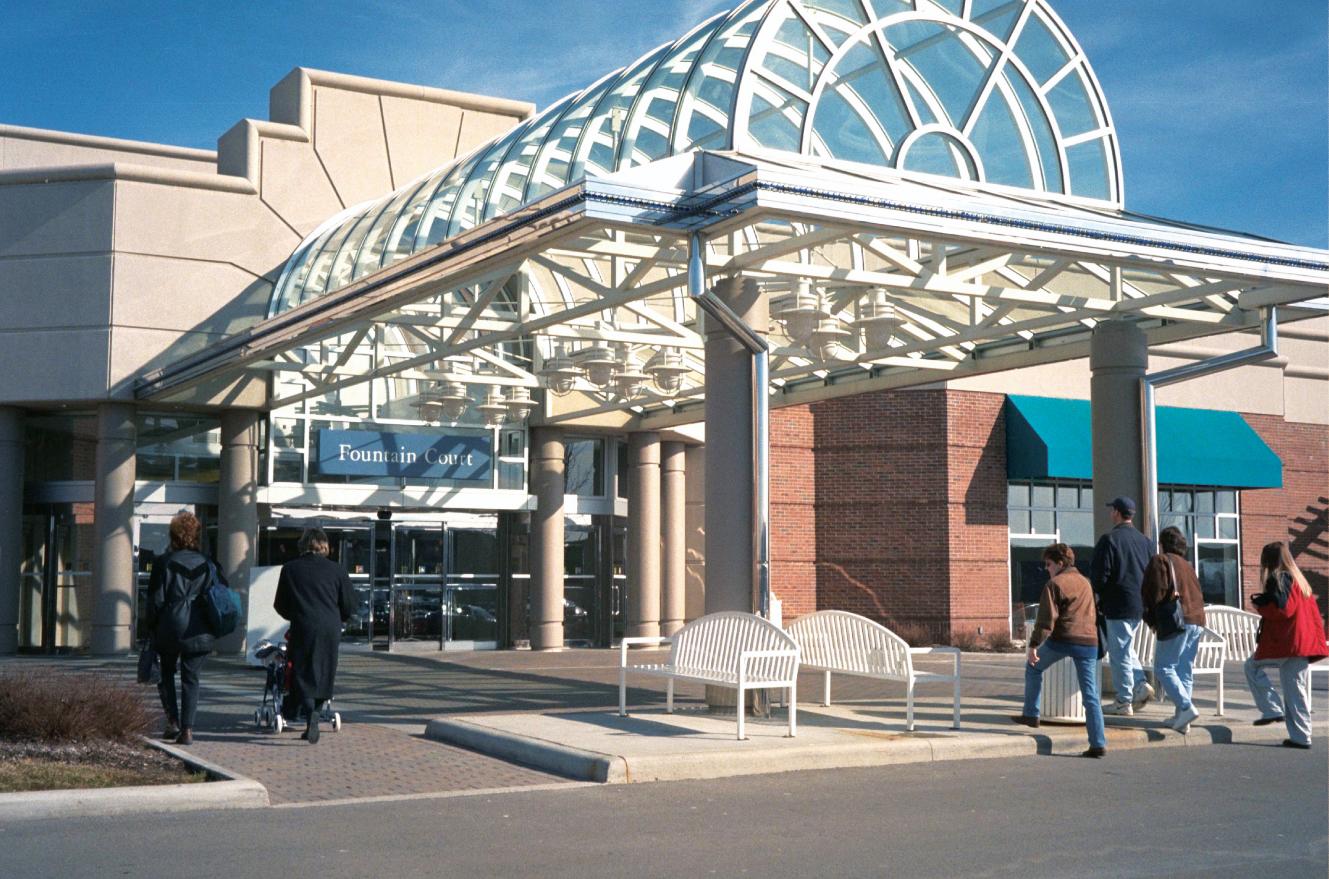
Tuttle Crossing was completed in 1997 with 150 stores. A traditional enclosed mall, this 2-floor building has been largely successful and has remained busy through its lifespan so far. The future of the enclosed mall, however, is not as bright.

Tuttle Crossing’s main entrance.

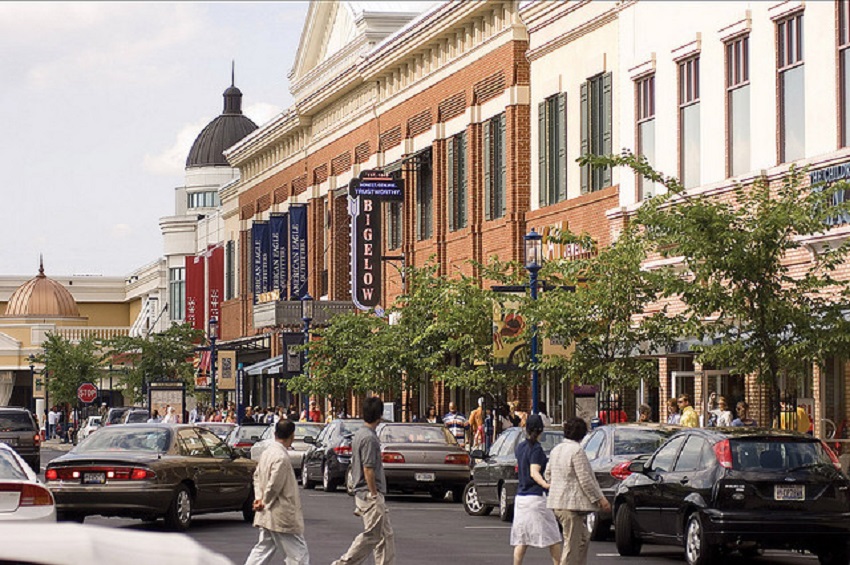
Easton Town Center opened in 1999. The nearly $1 billion retail center brought back the open-air concept that had been absent in Columbus since the 1980s. However, instead of just lines of stores, the center was built as a small town, complete with streets, public plazas, landscaping and other amenities. Easton proved to be extremely popular, adding a second phase in 2001 and is currently planning a 3rd phase, perhaps for completion by 2014. As it stands now, there are already over 200 stores, a 30-screen movie theater and dozens of restaurants. Easton’s design was hailed as innovative and revolutionary to the mall concept, and has since been copied around the nation, much like Don Casto’s early strip centers.

Easton Town Center’s street scenes.

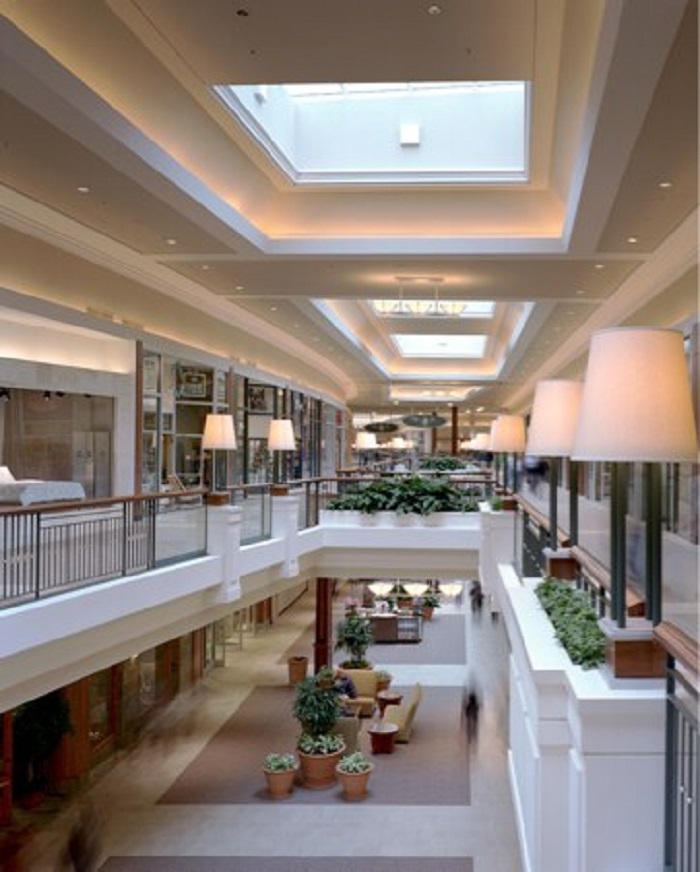
Polaris Fashion Place was the last major retail center to be built in Columbus, a $200 million 200-store enclosed mall in the southern part of Delaware County just west of I-71. It was the largest mall in Central Ohio and one of the largest in the state. It introduced the Columbus market to new stores like Lord & Taylor and Sak’s Fifth Avenue, and Polaris was considered to be the high end fashion destination for the area at the time. Development around the mall has since exploded, requiring the construction of two exits to be built off of 71 to handle the traffic levels.

Polaris Fashion Place interior.

So what is the future of these most recent places? City Center is, of course, gone. The mall was demolished in 2010 and the site converted to Columbus Commons Park. Tuttle Crossing and Polaris are still popular, but enclosed malls are increasingly falling out of favor and both are showing signs of this. No new ones have been built in the US since 2006, and there may not be another built anywhere for a long time to come. Retail has evolved from just mere shopping to an overall experience. In that sense, Easton looks to have the brightest future of the bunch, so long as it can keep updating itself in the way it has for the past 14 years. Polaris may be the most in trouble of the bunch. A recent proposal by the Ohio Department of Transportation is to rebuild the 36/37 interchange in Delaware County. Along with this rebuild, retail is being proposed for the site. This retail may include one, or perhaps two, outlet malls similar to the one in Jeffersonville, about an hour southwest of Columbus. If these get built, the cycle that killed off Westland, Northland and City Center may be repeated. Customers are likely to get pulled from Polaris to this new development unless Polaris can update itself in the way Easton has. It remains to be seen. Studies have suggested that Columbus cannot absorb much more retail, even as a growing city, so the construction of more large-scale retail is bound to have ripple effects across the metro area. In future posts, I want to highlight some of these retail places a bit more, especially City Center and its ultimate demise. Until then, happy shopping!


Columbus Retail History The Markets


In this edition of Columbus retail history, we will talk about how the markets of the city were once a vibrant and important part of daily life.
As in most cities, shopping in Columbus prior to 1950 was almost exclusively a function of Downtown. This was for the simple reason that widespread suburbs did not exist yet and Downtown was the heart of the city, where almost everyone lived and worked, and therefore did all of their shopping there as well. Most of this shopping occurred in family owned shops and small marketplaces, but as the city grew, the need for larger centers of commerce began to rise. Beginning in 1849 and continuing through early 1850, Central Market was built at S. 4th and E. Town Streets. Opening on June 1, 1850, Central Market was designed to be an economic center for the city, but also served as City Hall from May 1851 until 3/28/1872 when the new City Hall opened.

Central Market C. 1860-1880
Columbus retail history the markets
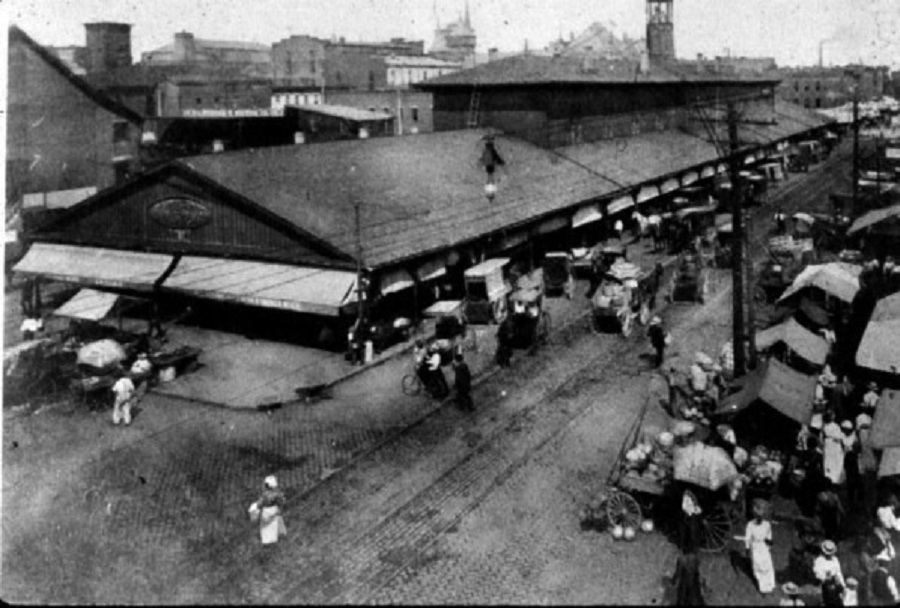
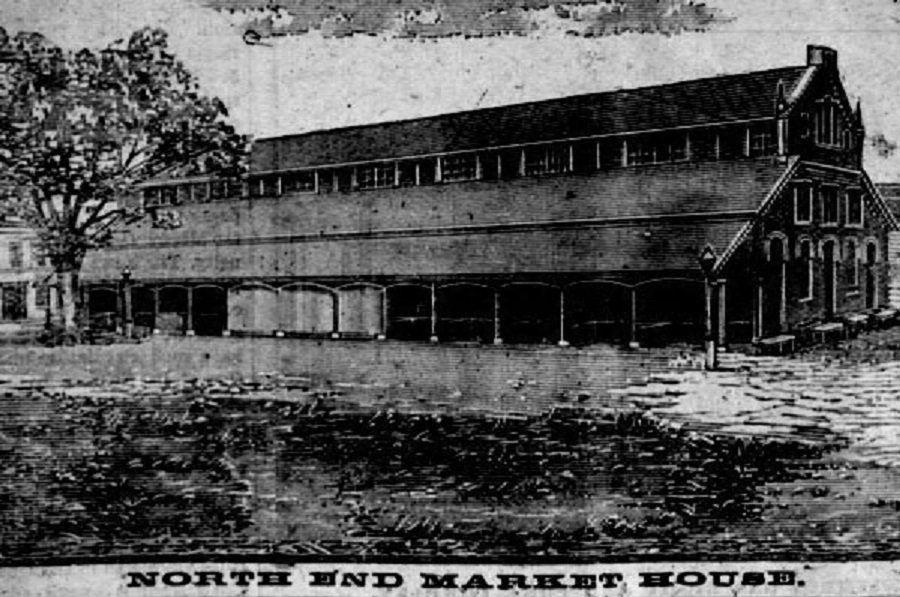
Central Market was a very popular market for decades, and at its height, attracted some 20,000 shoppers during weekend days. Its success allowed for the creation of other, smaller markets nearby. East Market was located at the intersection of Mt Vernon and Miami Avenues in the King-Lincoln neighborhood. West Market was located on S. Gift Street in Franklinton. North Market, the last to be built, was finished in 1876 and located at the intersection of Spruce and N. Hight Streets.

Original North Market: 1876-1948

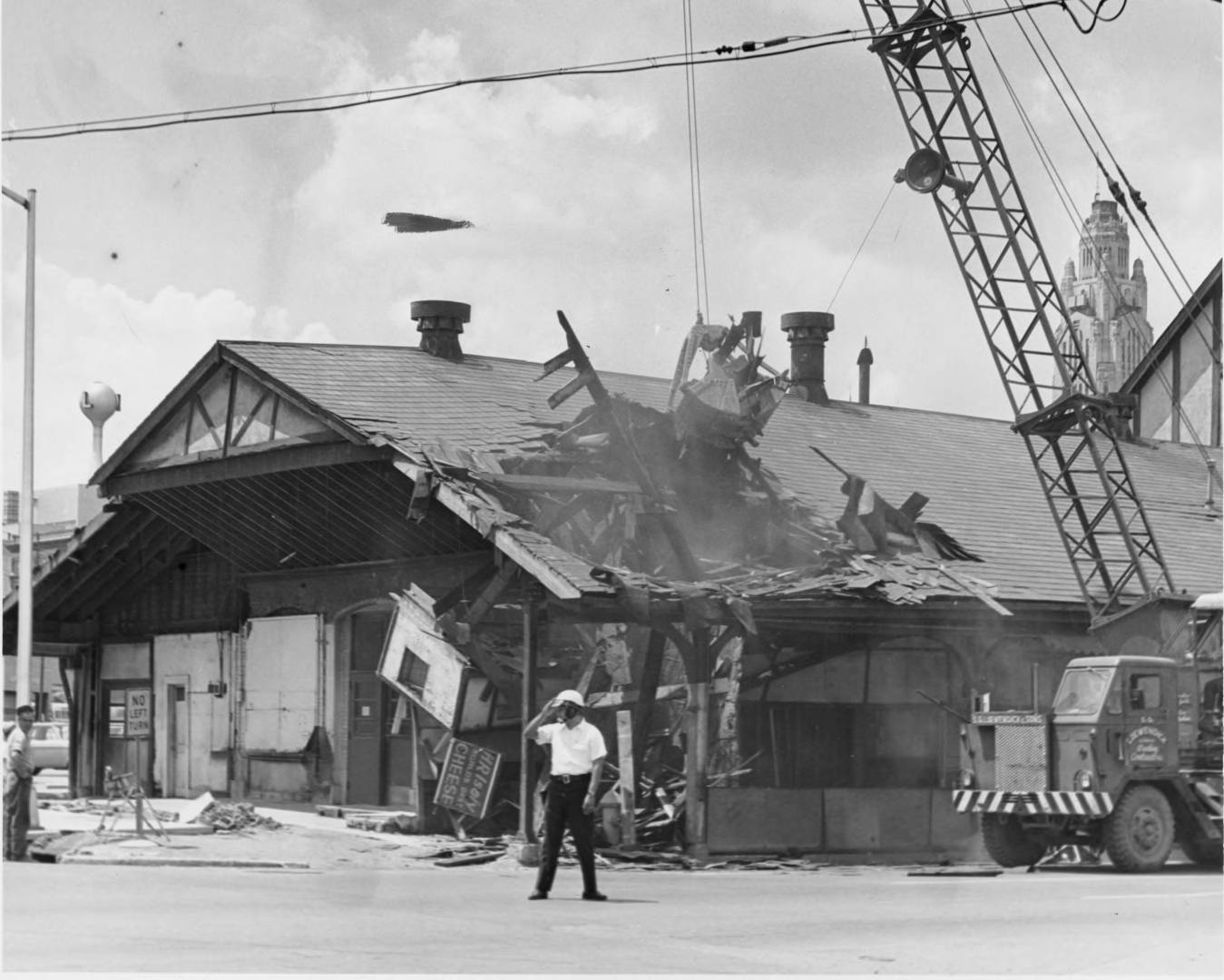
As time passed, each of these markets succumbed, most notably through fire. East and West Markets were gone by the 1940s, and North Market, too, burned to the ground in February 1948. Central Market was spared fire and significant alteration, existing almost exactly as it was built through the entirety of its lifetime. It also continued to serve as a marketplace, albeit with steadily declining traffic, through the 1950s. Its future, however, was doomed. With no widespread preservation groups at the time and with the push for Urban Renewal, a historic relic like Central Market had no chance. So, in June 1966, Central Market was demolished to make way for a new Greyhound Bus terminal, an exceedingly ugly building built in the brutalist style that was popular during the time.
Central Market’s Demolition: 1966

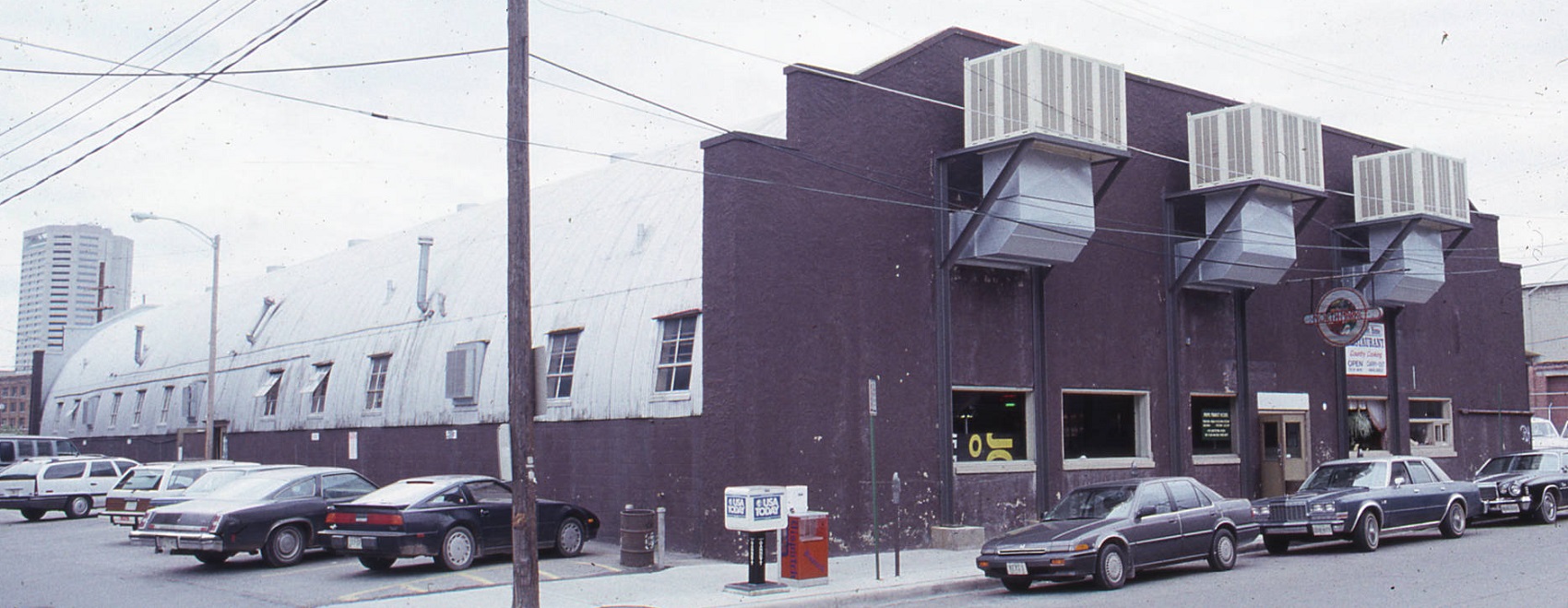
North Market’s replacement did survive somewhat, but was in pretty bad shape by the 1980s. In 1988, the North Market Development Authority was formed to bring the old market back to life. Unfortunately, the old building was not feasible to reuse as the market.
The 1948 North Market building from Spruce Street: 1990

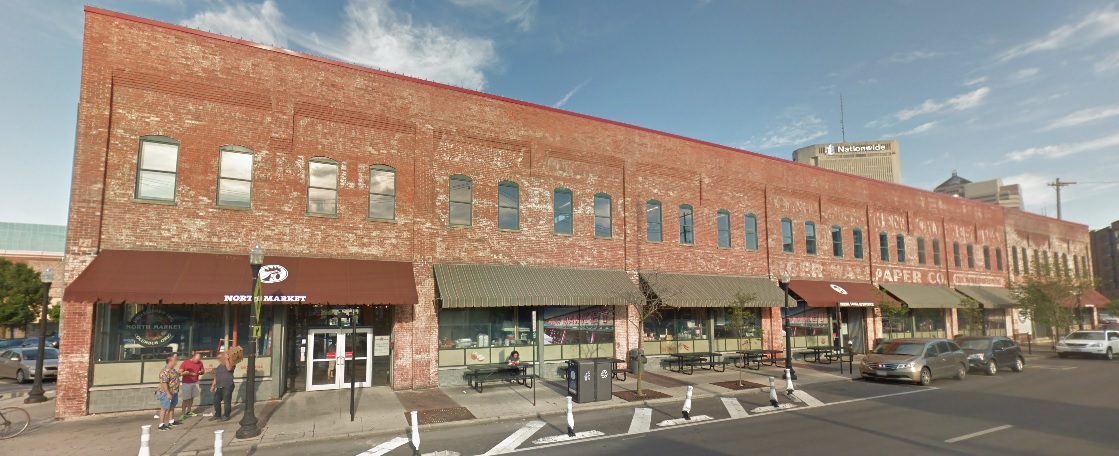
In 1992, Nationwide Insurance sold the NMDA a former warehouse just to the west of the original location. A $5 million renovation of the warehouse was completed and the new North Market opened in November 1995. Today, North Market remains a very popular destination and has played a role in the area’s revitalization, especially along Park Street, which has become a popular spot for new bars and restaurants. It has become a strong incubator for area small businesses and helped launch concepts such as Jeni’s Ice Creams.
North Market: 2018

Although much has been lost to time, markets are now returning as an important part of urban life. With North Market’s success and a now increasing population in the Downtown area, a need for the market has returned. A Hills Market grocery store is now in the works at Grant Avenue and should be opening within the next month or two. While lacking the scale and nature of 19th century marketplaces, it will serve new generations of Downtown residents who are helping to bring back this urban neighborhood.

See Shopping Centers for the continuation of the local retail story.