Peer and Columbus Metro GDP Comparison


Metro GDP comparison

This metro GDP comparison is based on information from the Bureau of Economic Analysis.

Rank of Major Midwest Metros and Columbus National Peers by GDP, 2001, 2010 and 2015
In Millions
2001——————————————–2010————————————-2015

1. Chicago, IL: $416,444————-1. Chicago: $533,825————–1. Chicago: $640,656
2. Detroit, MI: $190,921———–2. Minneapolis: $199,606——-2. Minneapolis: $248,779
3. Minneapolis, MN: $148,192—–3. Detroit: $197,973—————–3. Detroit: $245,607
4. San Jose, CA: $125,037———4. San Jose: $163,836———–4. San Jose: $235,222
5. St. Louis, MO: $102,385———5. Portland: $141,233————5. Portland: $158,770
6. Pittsburgh, PA: $88,769———-6. St. Louis: $133,888———6. St. Louis: $155,077
7. Cleveland: $87,796————-7. Pittsburgh: $117,895———-7. Charlotte: $152,447
8. Portland, OR: $80,753———8. Charlotte: $114,500————8. Pittsburgh: $138,873
9. Cincinnati: $79,638————-9. Indianapolis: $111,084——-9. Indianapolis: $134,081
10. Kansas City, MO: $79,544—-10. Cleveland: $109,365—–10. Cleveland: $128,448
11. Charlotte, NC $78,675———11. Kansas City: $107,265—11. Cincinnati: $127,057
12. Indianapolis, IN: $78,009——-12. Cincinnati: $104,314—-12. Kansas City: $125,618
13. Columbus: $74,172————-13. Orlando: $101,307——–13. Columbus: $124,381
14. Sacramento, CA: $66,696—–14. Columbus: $96,475——14. Orlando: $121,329
15. Orlando, FL: $66,644———–15. Sacramento: $96,015—-15. Austin: $119,949
16. Milwaukee, WI: $65,033——–16. Austin: $87,473———-16. Sacramento: $118,822
17. Nashville, TN: $58,245———17. Milwaukee: $86,569—–17. Nashville: $113,680
18. Las Vegas, NV: $57,035——-18. Las Vegas: $85,020—–18. San Antonio: $108,879
19. Virginia Beach, VA: $54,040—-19. Nashville: $84,804—19. Las Vegas: $103,343
20. Austin, TX: $53,915——20. Virginia Beach: $82,685—–20. Milwaukee: $102,209
21. San Antonio, TX: $53,248—21. San Antonio: $81,722—21. Virginia Beach: $95,680
22. Providence, RI: $49,997——-22. Providence: $67,754—-22. Providence: $78,694
23. Grand Rapids, MI: $35,248—-23. Omaha: $47,711——-23. Omaha: $59,090
24. Omaha, NE: $32,044——–24. Grand Rapids: $41,221–24. Grand Rapids: $53,949
25. Dayton: $29,658————–25. Dayton: $34,226————25. Dayton: $39,206
26. Toledo: $22,216————–26. Akron: $28,628————–26. Akron: $34,419
27. Akron: $21,684—————27. Toledo: $27,158————-27. Toledo: $34,019
28. Youngstown: $15,314——28. Youngstown: $17,293——28. Youngstown: $21,417

Rank by Total Change in Millions 2001-2015
1. Chicago: +$224,212
2. San Jose: +$110,185
3. Minneapolis: +$100,587
4. Portland: +$78,017
5. Charlotte: +$73,772
6. Austin: +$66,034
7. Indianapolis: +$56,072
8. San Antonio: +$55,631
9. Nashville: +$55,435
10. Detroit: +$54,686
11. Orlando: +$54,685
12. St. Louis: +$52,692
13. Sacramento: +$52,126
14. Columbus: +$50,209
15. Pittsburgh: +$50,104
16. Cincinnati: +$47,419
17. Las Vegas: +$46,308
18. Kansas City: +$46,074
19. Virginia Beach: +$41,640
20. Cleveland: +$40,652
21. Milwaukee: +$37,176
22. Providence: +$28,697
23. Omaha: +$27,046
24. Grand Rapids: +$18,701
25. Akron: +$12,735
26. Toledo: +$11,803
27. Dayton: +$9,548
28. Youngstown: +$6,103

Rank by Total Change in Millions 2010-2015
1. Chicago: +$106,831
2. San Jose: +$71,386
3. Minneapolis: +$49,173
4. Detroit: +$47,634
5. Charlotte: +$37,947
6. Austin: +$32,476
7. Nashville: $28,876
8. Columbus: +$27,906
9. San Antonio: +$27,157
10. Indianapolis +$22,997
11. Sacramento: +$22,807
12. Cincinnati: +$22,743
13. St. Louis: +$21,189
14. Pittsburgh: +$20,978
15. Orlando: +$20,022
16. Cleveland: +$19,083
17. Kansas City: +$18,353
18. Las Vegas: +$18,323
19. Portland: +$17,537
20. Milwaukee: +$15,640
21. Virginia Beach: +$12,995
22. Grand Rapids: +$12,728
23. Omaha: +$11,379
24. Providence: +$10,940
25. Toledo: +$6,861
26. Akron: +$5,791
27. Dayton: +$4,980
28. Youngstown: +$4,124

Total Rank by % Change 2001-2015
1. Austin: +122.48%
2. San Antonio: +104.48%
3. Portland: +96.61%
4. Nashville: +95.18%
5. Charlotte: +93.77%
6. San Jose: +88.12%
7. Omaha: +84.40%
8. Orlando: +82.06%
9. Las Vegas: +81.19%
10. Sacramento: +78.15%
11. Virginia Beach: +77.05%
12. Indianapolis: +71.88%
13. Minneapolis: +67.88%
14. Columbus: +67.69%
15. Cincinnati: +59.54%
16. Akron: +58.73%
17. Kansas City: +57.92%
18. Providence: +57.40%
19. Milwaukee: +57.16%
20. Pittsburgh: +56.44%
21. Chicago: +53.84%
22. Toledo: +53.13%
23. Grand Rapids: +53.06%
24. St. Louis: +51.46%
25. Cleveland: +46.30%
26. Youngstown: +39.85%
27. Dayton: +32.19%
28. Detroit: +28.64%

Total Rank by % Change 2010-2015
1. San Jose: +43.57%
2. Austin: +37.13%
3. Nashville: +34.05%
4. San Antonio: +33.23%
5. Charlotte: +33.14%
6. Grand Rapids: +30.88%
7. Columbus: +28.93%
8. Toledo: +25.26%
9. Minneapolis: +24.64%
10. Detroit: +24.06%
11. Omaha: +23.85%
12. Youngstown: +23.85%
13. Sacramento: +23.75%
14. Cincinnati: +21.80%
15. Las Vegas: +21.55%
16. Indianapolis: +20.70%
17. Akron: +20.23%
18. Chicago: +20.01%
19. Orlando: +19.76%
20. Milwaukee: +18.07%
21. Pittsburgh: +17.79%
22. Cleveland: +17.45%
23. Kansas City: +17.11%
24. Providence: +16.15%
25. St. Louis: +15.83%
26. Virginia Beach: +15.72%
27. Dayton: +14.55%
28. Portland: +12.42%

Finally, let’s take a look at per-capita GDP and income.

Rank of Metros by Per-Capita GDP in Dollars, 2015
1. San Jose: $112,851
2. Minneapolis: $63,474
3. Portland: $62,229
4. Chicago: $59,688
5. Indianapolis: $59,479
6. Milwaukee: $58,219
7. Omaha: $57,334
8. Cleveland: $56,013
9. Nashville: $55,841
10. Charlotte: $55,610
11. Pittsburgh: $55,335
12. Austin: $55,323
13. Columbus: $55,005
14. Kansas City: $54,097
15. Cincinnati: $52,649
16. Detroit: $51,428
17. Virginia Beach: $49,606
18. Toledo: $49,428
19. St. Louis: $49,258
20. Sacramento: $46,697
21. Grand Rapids: $46,677
22. Orlando: $45,756
23. Akron: $44,246
24. Dayton: $43,748
25. Providence: $43,744
26. Las Vegas: $43,476
27. San Antonio: $42,169
28. Youngstown: $34,960

Total Growth 2001-2015 by Rank, in Dollars
1. San Jose: +$40,677
2. Portland: +$18,225
3. Pittsburgh: +$10,064
4. Austin: +$9,925
5. Toledo: +$7,414
6. Virginia Beach: +$7,256
7. Nashville: +$7,071
8. Cleveland: +$6,767
9. Milwaukee: +$6,744
10. Omaha: +$6,581
11. Akron: +$6,167
12. Minneapolis: +$5,900
13. Providence: +$5,560
14. Chicago: +4,663
15. San Antonio: +$4,652
16. Cincinnati: +$4,426
17. Youngstown: +$4,391
18. Sacramento: +$3,210
19. Columbus: +$3,182
20. Indianapolis: +$2,984
21. Grand Rapids: +$2,971
22. Charlotte: +$2,880
23. Kansas City: +$2,770
24. St. Louis: +$2,699
25. Detroit: +$2,011
26. Dayton: +$162
27. Orlando: -$1,630
28. Las Vegas: -$5,041

Total Per-Capita GDP Growth 2010-2015, in Dollars
1. San Jose: +$23,814
2. Toledo: +$6,242
3. Pittsburgh: +$6,172
4. Nashville: +$5,643
5. Detroit: +$5,459
6. Austin: +$5,307
7. Grand Rapids: +$5,158
8. Youngstown: +$4,987
9. San Antonio: +$4,878
10. Columbus: +$4,864
11. Minneapolis: +$4,644
12. Charlotte: +$4,578
13. Chicago: +$4,004
14. Cleveland: +$3,992
15. Cincinnati: +$3,986
16. Akron: +$3,774
17. Milwaukee: +$2,913
18. Omaha: +$2,863
19. Sacramento: +$2,680
20. Providence: +$1,902
21. St. Louis: +$1,884
22. Dayton: +$1,439
23. Kansas City: +$1,270
24. Indianapolis: +$1,186
25. Virginia Beach: +$998
26. Las Vegas: +$206
27. Portland: -$992
28. Orlando: -$1,345

What the numbers suggest is that Columbus was performing at a middle-mediocre level in the first half of the 2001-2015 period, and has generally been performing significantly better in the latter half. In Ohio, Columbus is poised to become Ohio’s largest metro economy over the next few years.
2015 County Population Estimates Report


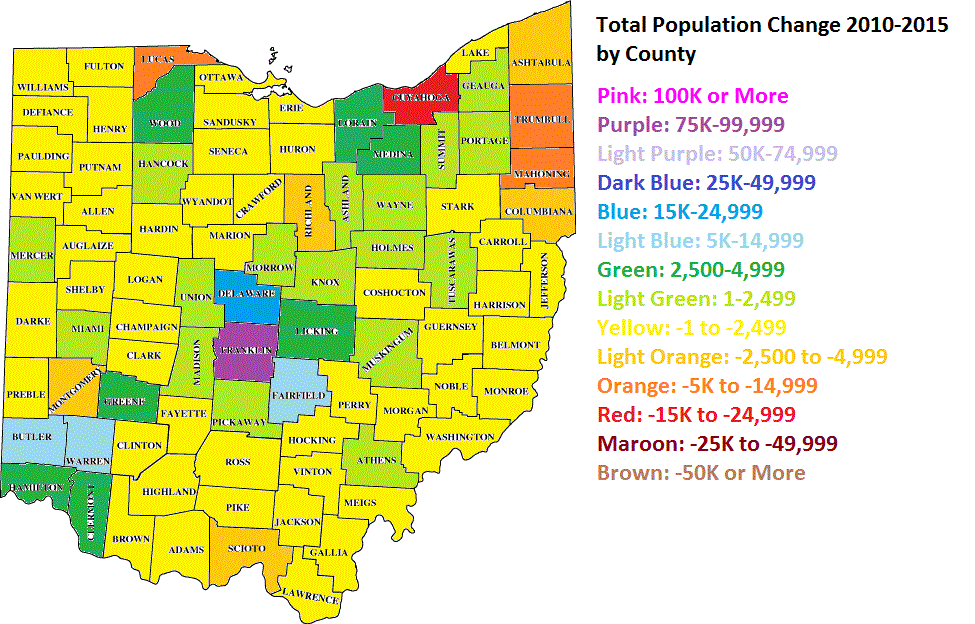
The US Census has released its population estimates for both counties and metros for the year ending July 1, 2015. Here is a detailed look at Ohio’s counties in this 2015 county population estimates report.

Ohio’s Top 25 Largest Counties
2010……………………………….2014………………………………..2015

1. Cuyahoga: 1,280,109….1. Cuyahoga: 1,263,796……1. Cuyahoga: 1,255,921
2. Franklin: 1,163,545……..2. Franklin: 1,234,126………2. Franklin: 1,251,722
3. Hamilton: 802,270……….3. Hamilton: 806,332……….3. Hamilton: 807,598
4. Summit: 541,671………..4. Summit: 542,600………….4. Summit: 541,968
5. Montgomery: 536,216….5. Montgomery: 532,515…..5. Montgomery: 532,258
6. Lucas: 441,575…………..6. Lucas: 434,615…………….6. Lucas: 433,689
7. Stark: 375,461…………….7. Stark: 375,638…………….7. Butler: 376,353
8. Butler: 369,064…………..8. Butler: 373,948…………….8. Stark: 375,165
9. Lorain: 301,471…………..9. Lorain: 304,187……………9. Lorain:305,147
10. Mahoning: 238,398……10. Mahoning: 233,398…….10. Mahoning: 231,900
11. Lake: 230,004…………..11. Lake: 229,220……………11. Lake: 229,245
12. Warren: 213,524………..12. Warren: 221,816………..12. Warren: 224,469
13. Trumbull: 209,854………13. Trumbull: 205,255……..13. Trumbull: 203,751
14. Clermont: 197,795……..14. Clermont: 201,375……..14. Clermont: 201,973
15. Delaware: 175,146……..15. Delaware: 189,237…….15. Delaware: 193,0134
16. Medina: 172,542………..16. Medina: 175,963………..16. Medina: 176,395
17. Licking: 166,480…………17. Licking: 169,407………..17. Licking: 170,570
18. Greene: 161,608………..18. Greene: 164,660………..18. Greene: 164,427
19. Portage: 161,448……….19. Portage: 162,235………..19. Porage: 162,275
20. Fairfield: 146,385……….20. Fairfield: 150,432………..20. Fairfield: 151,408
21. Clark: 148,246…………..21. Clark: 136,482……………21. Clark: 135,959
22. Wood: 125,940………….22. Wood: 129,575…………..22. Wood: 129,730
23. Richland: 124,173……..23. Richland: 121,914……….23. Richland: 121,707
24. Wayne: 114,439………..24. Wayne: 115,572………….24. Wayne: 116,063
25. Columbiana: 107,863…25. Columbiana: 105,597…..25. Columbiana: 104,806

From the numbers above, Columbus’ Franklin County was just below Cuyahoga last year. It is likely that, given each county’s growth rates, Franklin has now passed up Cuyahoga to become Ohio’s most populated county.

Top 25 Total Growth Counties 2010-2015
1. Franklin: +88,177
2. Delaware: +18,824
3. Warren: +11,601
4. Butler: +8,223
5. Fairfield: +5,256
6. Hamilton: +5,224
7. Clermont: +4,610
8. Wood: +4,242
9. Licking: +4,090
10. Medina: +4,062
11. Lorain: +3,791
12. Greene: +2,858
13. Union: +2,010
14. Miami: +1,718
15. Wayne: +1,549
16. Holmes: +1,543
17. Pickaway: +1,300
18. Athens: +1,113
19. Portage: +854
20. Hancock: +791
21. Geauga: +692
22. Madison: +664
23. Tuscarawas: +334
24. Morrow: +247
25. Muskingum: +216
2015 county population estimates report

Components of County Population Change

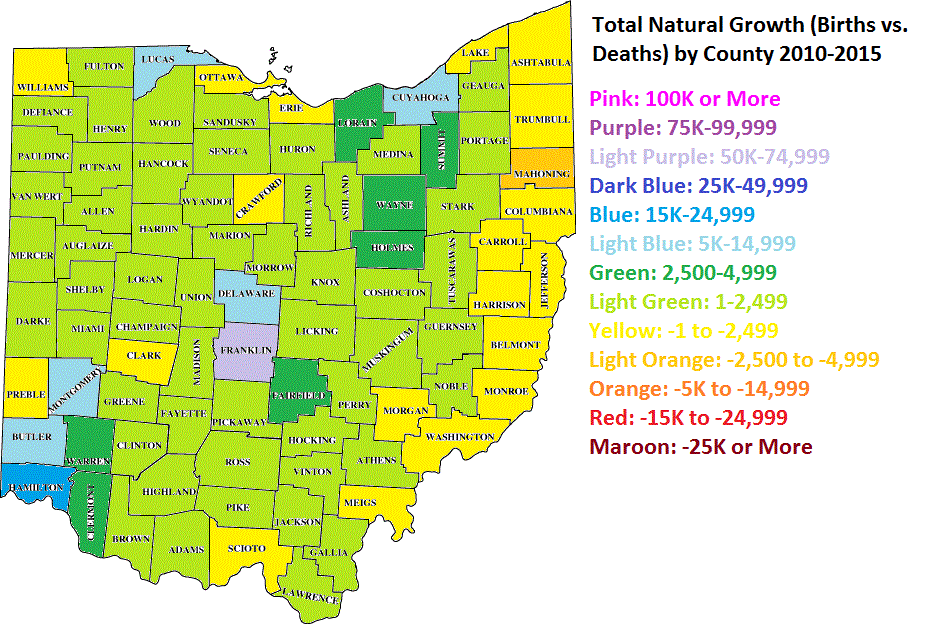
Top 25 Counties for Natural Growth (Births vs. Deaths) 2010-2015
1. Franklin: +50,736
2. Hamilton: +17,256
3. Butler: +7,785
4. Cuyahoga: +7,409
5. Lucas: +7,053
6. Delaware: +6,260
7. Montgomery: +5,007
8. Warren: +4,688
9. Clermont: +3,987
10. Summit: +3,194
11. Fairfield: +2,676
12. Lorain: +2,630
13. Holmes: +2,613
14. Wayne: +2,554
15. Licking: +2,482
16. Greene: +2,309
17. Medina: +2,040
18. Wood: +1,824
19. Union: +1,475
20. Hancock: +1,196
21. Allen: +1,115
22. Shelby: +1,038
23. Miami: +902
24. Putnam: +849
25. Huron: +815

Franklin County’s natural growth rate destroys every other county in the state. It gains almost 7x that of Cuyahoga County, despite Cuyahoga having a larger population during this period, and nearly 3x that of Hamilton County.

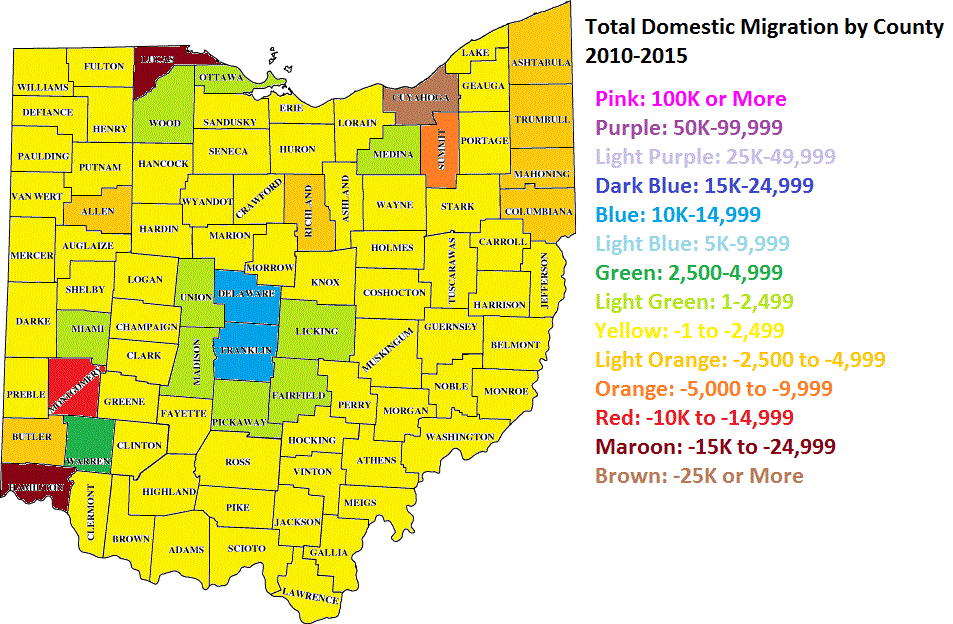
Top 25 Counties for Domestic Migration 2010-2015
1. Franklin: +11,715
2. Delaware: +10,532
3. Warren: +4,496
4. Fairfield: +1,691
5. Licking: +1,249
6. Medina: +1,234
7. Wood: +1,120
8. Pickaway: +711
9. Miami: +475
10. Union: +249
11. Madison: +246
12. Ottawa: +5
13. Clermont: -39
14. Morrow: -159
15. Morgan: -162
16. Monroe: -167
17. Washington: -177
18. Harrison: -198
19. Belmont: -221
20. Geauga: -320
21. Vinton: -361
22. Meigs: -401
23. Noble: -421
24. Van Wert: -431
25. Perry: -464

Again, Franklin County leads the pack, with Columbus metro counties performing the best statewide, as shown in the map below.

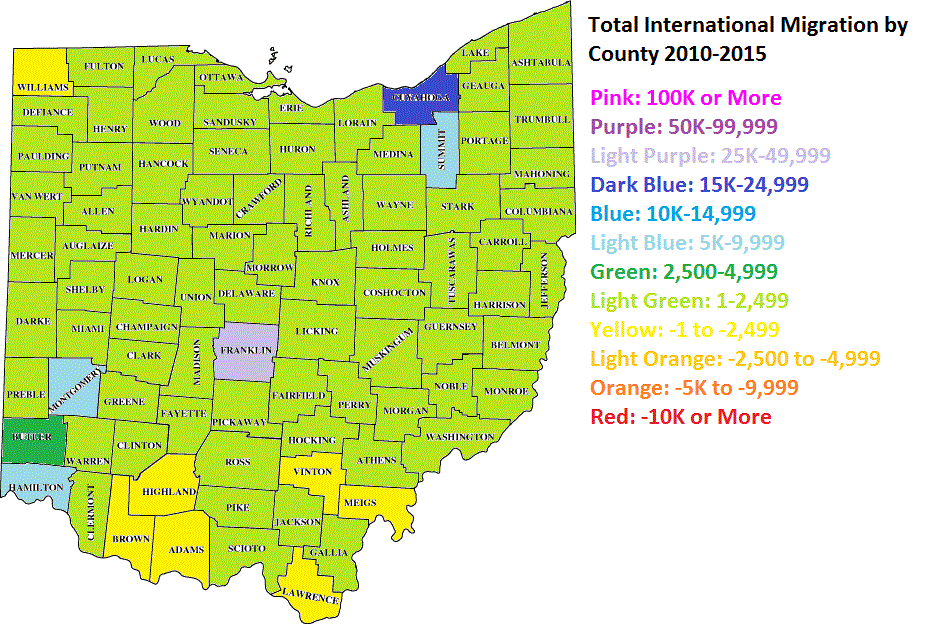
Top 25 Counties for International Migration 2010-2015
1. Franklin: +26,977
2. Cuyahoga: +16,926
3. Hamilton: +9,016
4. Montgomery: +5,380
5. Summit: +5,307
6. Butler: +4,066
7. Greene: +2,400
8. Lorain: +2,303
9. Warren: +2,198
10. Lucas: +2,194
11. Portage: +1,991
12. Delaware: +1,610
13. Athens: +1,586
14. Mahoning: +1,383
15. Wood: +1,026
16. Stark: +881
17. Lake: +729
18. Fairfield: +658
19. Clermont: +612
20. Medina: +578
21. Tuscarawas: +468
22. Wayne: +408
23. Licking: +404
24. Allen: +375
25. Miami: +359

Most Ohio counties saw increases in international migration, but once again, none came close to Franklin County’s total.

So there you have it, the updated numbers for Ohio’s counties.


Young Professionals and the City: A Comparison Part 2


young professionals and the city

The first part of this comparison of young professionals and the city, seen here, seemed to be well-received, so I wanted to expand the examination of the 25-34 age group. In the first post, I just compared growth of this population by Columbus’ peers, but let’s take a closer look at this group through educational attainment. I will use the same 33 cities I used in the first post.

Educational Attainment 2014 Rank by City of Bachelors Degree or Higher within 25-34 Population
1. Chicago: 268,470
2. Austin: 97,721
3. Columbus: 75,305
4. San Jose: 68,392
5. Charlotte: 63,132
6. San Antonio: 62,572
7. Portland: 60,259
8. Minneapolis: 51,043
9. Indianapolis: 48,188
10. Pittsburgh: 35,860
11. Kansas City: 32,101
12. Madison: 30,039
13. Milwaukee: 29,661
14. Omaha: 28,984
15. St. Louis: 28,946
16. Sacramento: 27,304
17. Cincinnati: 25,496
18. St. Paul: 22,929
19. Virginia Beach: 22,134
20. Orlando: 20,181
21. Wichita: 19,659
22. Las Vegas: 17,817
23. Lincoln: 16,429
24. Grand Rapids: 15,724
25. Detroit: 14,285
26. Fort Wayne: 12,228
27. Cleveland: 12,013
28. Des Moines: 10,089
29. Providence: 10,432
30. Toledo: 8,514
31. Akron: 6,600
32. Dayton: 4,029
33. Youngstown: 1,084

Columbus has the 3rd highest total of 25-34-year-olds with at least a bachelor’s degree, even compared to some cities with larger populations in the city or metro area. This is likely due to the high number of colleges and universities in the area, not least of which includes Ohio State.

2014 % of Total 25-34 Age Group with Bachelors or Higher
1. Madison: 67.0%
2. Pittsburgh: 57.4%
3. Minneapolis: 56.3%
4. Portland: 51.5%
5. Chicago: 51.1%
6. Austin: 48.9%
7. Cincinnati: 47.0%
8. St. Louis: 46.9%
9. Charlotte: 44.5%
10. San Jose: 44.5%
11. Columbus: 44.1%
12. St. Paul: 42.1%
13. Lincoln: 41.0%
14. Omaha: 40.8%
15. Grand Rapids: 40.5%
16. Kansas City: 40.5%
17. Orlando: 37.1%
18. Indianapolis: 34.3%
19. Wichita: 33.7%
20. Providence: 32.7%
21. Sacramento: 32.5%
22. Fort Wayne: 32.4%
23. Des Moines: 29.8%
24. Milwaukee: 29.6%
25. Virginia Beach: 29.3%
26. San Antonio: 27.6%
27. Akron: 23.4%
28. Cleveland: 21.4%
29. Las Vegas: 19.7%
30. Toledo: 19.5%
31. Dayton: 19.1%
32. Detroit: 15.9%
33. Youngstown: 12.8%

While just outside of the top 10 in the peer group, Columbus still performs in the top 1/3rd when it comes to the % of 25-34-year-olds that have at least a bachelor’s degree.

2000-2014 Total Change in Age 25-34 with a Bachelor’s Degree or Higher
1. Chicago: +78,514
2. Austin: +38,348
3. Portland: +26,042
4. San Antonio: +23,504
5. Columbus: +21,601
6. Charlotte: +19,149
7. Pittsburgh: +19,060
8. Minneapolis: +15,629
9. St. Louis: +14,538
10. San Jose: +13,372
11. Sacramento: +11,530
12. Kansas City: +10,499
13. Madison: +8,774
14. Orlando: +8,600
15. Omaha: +8,521
16. Indianapolis: +8,369
17. Milwaukee: +7,031
18. Grand Rapids: +6,275
19. Wichita: +6,049
20. Fort Wayne: +5,350
21. Cincinnati: +5,083
22. Las Vegas: +4,433
23. St. Paul: +4,316
24. Virginia Beach: +4,167
25. Lincoln: +3,450
26. Providence: +2,488
27. Des Moines: +806
28. Dayton: +59
29. Youngstown: -108
30. Cleveland: -522
31. Akron: -628
32. Detroit: -1,471
33. Toledo: -1,639

Another great showing is in the total growth of 25-34-year-olds with at least a bachelor’s degree. Again, Columbus is outperforming several larger cities/metros on the list.

2000-2014 Total % Change in Age 25-34 with a Bachelor’s Degree or Higher
1. Pittsburgh: +113.45%
2. St. Louis: +100.90%
3. Fort Wayne: +77.78%
4. Portland: +76.11%
5. Orlando: +74.26%
6. Sacramento: +73.09%
7. Grand Rapids: +66.41%
8. Austin: +64.59%
9. San Antonio: +60.16%
10. Kansas City: +48.60%
11. Wichita: +44.45%
12. Minneapolis: +44.13%
13. Charlotte: +43.54%
14. Omaha: +41.64%
15. Chicago: +41.33%
16. Madison: +41.26%
17. Columbus: +40.22%
18. Las Vegas: +33.12%
19. Providence: +31.32%
20. Milwaukee: +31.07%
21. Lincoln: +26.58%
22. Cincinnati: +24.90%
23. San Jose: +24.30%
24. St. Paul: +23.19%
25. Virginia Beach: +23.19%
26. Indianapolis: +21.02%
27. Des Moines: +8.68%
28. Dayton: +1.49%
29. Cleveland: -4.16%
30. Akron: -8.69%
31. Youngstown: -9.06%
32. Detroit: -9.34%
33. Toledo: -16.14%

So in Part 1, it was shown that Columbus had one of the fastest growing 25-34 populations. These numbers show that it also has one of the largest age 25-34 populations with a Bachelor’s degree or higher in terms of totals, and one of the fastest growing in terms of totals. By %, however, it performs a bit worse, but part of the reason for that is because so many of these cities started with relatively low educated populations to begin with. Overall, Columbus seems to be very attractive, not only to this age group, but also for those within the group that are highly educated.


Young Professionals and the City: A Comparison


young professionals

Millennials- those born roughly between 1981 and 2001- are big news these days. They are the largest generation ever in terms of total numbers (exceeding 76 million), and their choices are already having big impacts on everything from housing to the economy. I wanted to look at Columbus and its peers to see where it ranks in terms of attracting these young professionals.

For the comparison, I looked at metro areas of 1.5-2.5 million as well as major Midwest metros and then used their core cities to get the numbers. I used the age group of 25-34 specifically, as that is usually the number most often cited in the news.

Rank of Total Population Aged 25-34
2005_______________________2010___________________2014

1. Chicago: 463,236_______1. Chicago: 510,042_______1. Chicago: 525,381
2. San Antonio: 180,981_____2. San Antonio: 200,645____2. San Antonio: 226,711
3. Austin: 137,523_________3. Austin: 162,247_________3. Austin: 199,838
4. San Jose, CA: 133,144___4. Columbus: 147,584______4. Columbus: 170,759
5. Columbus: 131,641______5. San Jose, CA: 142,551___5. San Jose, CA: 153,690
6. Indianapolis: 114,532_____6. Indianapolis: 133,088____6. Charlotte, NC: 141,869
7. Detroit: 110,759_________7. Charlotte, NC: 127,539___7. Indianapolis: 140,491
8. Charlotte, NC: 100,025____8. Portland, OR: 113,210___8. Portland, OR: 116,109
9. Portland, OR: 90,023_____9. Milwaukee: 97,359______9. Milwaukee: 100,205
10. Las Vegas: 84,418______10. Detroit: 85,023________10. Minneapolis: 90,662
11. Milwaukee: 82,060______11. Minneapolis: 81,532____11. Las Vegas: 90,441
12. Sacramento, CA: 75,497___12. Las Vegas: 81,212____12. Detroit: 89,843
13. Minneapolis: 74,208___13. Sacramento, CA: 78,527__13. Sacramento, CA: 84,013
14. Kansas City, MO: 68,060__14. Kansas City: 73,872__14. Kansas City, MO: 79,262
15. Virginia Beach: 60,749__15. Virginia Beach: 67,614__15. Virginia Beach: 75,543
16. Omaha, NE: 56,248____16. Omaha, NE: 62,396_____16. Omaha, NE: 71,040
17. Wichita, KS: 52,426____17. St. Louis: 57,627_______17. Pittsburgh: 62,473
18. Cleveland: 50,558_____18. Wichita, KS: 56,737_____18. St. Louis: 61,718
19. St. Louis: 48,137______19. Cleveland: 54,428______19. Wichita, KS: 58,334
20. Cincinnati: 44,945_____20. Pittsburgh: 51,109______20. Cleveland: 56,134
21. Toledo: 43,134_______21. St. Paul, MN: 50,107_____21. St. Paul, MN: 54,464
22. Orlando: 40,846______22. Cincinnati: 49,067_______22. Orlando: 54,395
23. St. Paul, MN: 39,676__23. Orlando: 48,102________23. Cincinnati: 54,247
24. Lincoln, NE: 38,893___24. Madison, WI: 44,662_____24. Madison, WI: 44,835
25. Madison, WI: 38,826___25. Lincoln, NE: 42,034_____25. Toledo: 43,661
26. Pittsburgh: 38,744____26. Toledo: 41,580_________26. Lincoln, NE: 40,071
27. Grand Rapids: 35,287__27. Fort Wayne, IN: 35,193__27: Grand Rapids: 38,922
28. Des Moines: 32,640__28. Providence, RI: 31,044__28. Fort Wayne, IN: 37,741
29. Fort Wayne, IN: 31,738__29. Grand Rapids: 30,963__29. Des Moines: 33,857
30. Akron: 30,436_______30. Des Moines: 30,376_____30. Providence, RI: 31,902
31. Providence, RI: 29,307__31. Akron: 27,446________31. Akron: 28,207
32. Dayton: 18,591_______32. Dayton: 20,278________32. Dayton: 21,096
33. Youngstown: 8,505____33. Youngstown: 8,484_____33. Youngstown: 8,468

So Columbus ranks highly among total population in the 25-34 age group. But what about growth?

Total Growth Rank in 25-34 Population 2005-2014
1. Austin, TX: 62,315
2. Chicago: 62,145
3. San Antonio, TX: 45,730
4. Charlotte, NC: 41,844
5. Columbus: 39,118
6. Portland, OR: 26,086
7. Indianapolis: 25,959
8. Pittsburgh: 23,729
9. San Jose, CA: 20,546
10. Milwaukee, WI: 18,145
11. Minneapolis, MN: 16,454
12. Virginia Beach, VA: 14,794
13. St. Paul, MN: 14,788
14. Omaha, NE: 14,612
15. St. Louis, MO: 13,581
16. Orlando, FL: 13,549
17. Kansas City, MO: 11,202
18. Cincinnati: 9,302
19. Sacramento, CA: 8,516
20. Las Vegas, NV: 6,023
21. Madison, WI: 6,009
22. Fort Wayne, IN: 6,003
23. Wichita, KS: 5,908
24. Cleveland: 5,576
25. Grand Rapids, MI: 3,635
26. Providence, RI: 2,595
27. Dayton: 2,505
28. Des Moines, IA: 1,217
29. Lincoln, NE: 1,178
30. Toledo: 527
31. Youngstown: -37
32. Akron: -2,229
33. Detroit: -20,736

Again, Columbus ranks near the top during this period. What about more recently, since 2010?

Total Growth Rank of 25-34 Population 2010-2014
1. Austin: 37,591
2. San Antonio: 26,066
3. Columbus: 23,175
4. Chicago: 15,339
5. Charlotte: 14,330
6. Pittsburgh: 11,364
7. San Jose: 11,139
8. Las Vegas: 9,229
9. Minneapolis: 9,130
10. Omaha: 8,644
11. Grand Rapids: 7,959
12. Virginia Beach: 7,929
13. Indianapolis: 7,403
14. Orlando: 6,293
15. Sacramento: 5,486
16. Kansas City: 5,390
17. Cincinnati: 5,180
18. Detroit: 4,820
19. St. Paul: 4,357
20. St. Louis: 4,091
21. Des Moines: 3,481
22. Portland: 2,899
23. Milwaukee: 2,846
24. Fort Wayne: 2,548
25. Toledo: 2,081
26. Cleveland: 1,706
27. Wichita: 1,597
28. Providence: 858
29. Dayton: 818
30. Akron: 761
31. Madison: 173
32. Youngstown: -16
33. Lincoln: -1,963

So Columbus is doing even better since 2010 than it did in the earlier period and attracts significantly more Millennials in the 25-34 age group than cities often cited for this very metric.

Next, let’s look at percentage growth, as city size can affect this.

Total Percent Growth 2005-2014 in 25-34 Population
1. Pittsburgh: +61.25%
2. Austin: +45.31%
3. Charlotte: +41.83%
4. St. Paul: +37.27%
5. Orlando: +33.17%
6. Columbus: +29.72%
7. Portland: +28.98%
8. St. Louis: +28.21%
9. Omaha: +25.89%
10. San Antonio: +25.27%
11. Virginia Beach: +24.35%
12. Indianapolis: +22.67%
13. Minneapolis: +22.17%
14. Milwaukee: +22.11%
15. Cincinnati: +20.70%
16. Fort Wayne: +18.91%
17. Kansas City: +16.46%
18. Madison: +15.48%
19. San Jose: +15.43%
20. Dayton: +13.47%
21. Chicago: +13.42%
22. Sacramento: +11.28%
23. Wichita: +11.27%
24. Cleveland: +11.03%
25. Grand Rapids: +10.30%
26. Providence: +8.85%
27. Las Vegas: +7.13%
28. Des Moines: +3.73%
29. Lincoln: +3.03%
30. Toledo: +1.22%
31. Youngstown: -0.44%
32. Akron: -7.32%
33. Detroit: -18.75%

So Columbus again performs well in percentage growth, despite having one of the largest populations in the age group. It performs even better in the period since 2010, coming in at 3rd place.

Finally, now that we know the totals and the growth, what is the % of total city population that the 25-34 age group makes up?

25-34 % of Total City Population 2014
1. Minneapolis: 22.27%
2. Austin: 21.89%
3. Orlando: 20.73%
4. Pittsburgh: 20.45%
5. Columbus: 20.42%
6. Grand Rapids: 20.08%
7. St. Louis: 19.44%
8. Chicago: 19.30%
9. Portland: 18.74%
10. St. Paul: 18.30%
11. Madison: 18.25%
12. Cincinnati: 18.19%
13. Providence: 17.81%
14. Charlotte: 17.52%
15. Sacramento: 17.32%
16. Kansas City: 16.84%
17. Virginia Beach: 16.75%
18. Milwaukee: 16.71%
19. Indianapolis: 16.50%
20. Des Moines: 16.19%
21. Omaha: 15.91%
22. San Antonio: 15.78%
23. Toledo: 15.54%
24. San Jose: 15.13%
25. Wichita: 15.02%
26. Dayton: 14.96%
27. Fort Wayne: 14.74%
28. Las Vegas: 14.74%
29. Lincoln: 14.68%
30. Cleveland: 14.41%
31. Akron: 14.26%
32. Detroit: 13.21%
33. Youngstown: 13.02%

And here’s a simple % of population projection for just 4 years from now, 2018, provided the 25-34 population grows the same between 2014-2018 as it did 2010-2014.
1. Pittsburgh: 24.18%
2. Grand Rapids: 23.71%
3. Austin: 23.38%
4. Minneapolis: 23.27%
5. Columbus: 22.16%
6. Orlando: 21.34%
7. St. Louis: 20.82%
8. Cincinnati: 19.85%
9. Chicago: 19.70%
10. St. Paul: 19.05%
11. Providence: 18.20%
12. Portland: 18.14%
13. Virginia Beach: 18.1%
14. Sacramento: 17.84%
15. Charlotte: 17.67%
16. Kansas City: 17.64%
17. Des Moines: 17.50%
18. Madison: 17.40%
19. Milwaukee: 17.07%
20. Indianapolis: 16.85%
21. Omaha: 16.61%
22. Toledo: 16.59%
23. San Antonio: 16.52%
24. Fort Wayne: 15.61%
25. Las Vegas: 15.59%
26. Dayton: 15.27%
27. San Jose: 15.24%
28. Wichita: 15.23%
29. Cleveland: 15.08%
30. Akron: 14.73%
31. Detroit: 14.48%
32. Youngstown: 13.35%
33. Lincoln: 13.13%

Columbus has an existing large population of the 25-34 age demographic, and looks to be one of the strongest performers into the near future.
Some would ask why that would be considering that Columbus transit is woefully lacking and has a reputation (very undeservedly, in my opinion) of being suburban- characteristics that Millennials supposedly almost universally reject. Perhaps the bottom line is that economics trump all other desires. Cost of living and employment tend to be higher up the list than rail lines, and Columbus has both a strong economy and relatively low COL. Whatever the case may be, Columbus seems to be doing something right. Continue this look at this population in Part 2.


Midwest Cities Historic Population and Density


Midwest cities historic population and density

I’ve compared Columbus to peer cities nationally in terms of density and population, but I’ve never made a Midwest cities historic population and density comparison overall. For the following, I used the top 15 largest Midwest cities as of 2014.

Red indicates a fallen ranking while blue indicates a rise. Black is no change.

Historic Population Rankings
1840

1. Cincinnati: 46,338
2. St. Louis: 16,469
3. Detroit: 9,102
4. Cleveland: 6,071
5. Columbus: 6,048
6. Chicago: 4,470
7. Indianapolis: 2,695
8. Milwaukee: 1,700
9. Toledo: 1,222
10. Kansas City: Not incorporated.
11. Lincoln: Not incorporated.
12. Minneapolis: Not incorporated.
13. Omaha: Not incorporated.
14. St. Paul: Not incorporated.
15. Wichita: Not incorporated.

1850
1. Cincinnati: 115,435
2. St. Louis: 77,860
3. Chicago: 29,963
4. Detroit: 21,019
5. Milwaukee: 20,061
6. Columbus: 17,882
7. Cleveland: 17,034
8. Indianapolis: 8,091
9. Toledo: 3,829
10. St. Paul: 1,112
11. Kansas City: Not incorporated.
12. Lincoln: Not incorporated.
13. Minneapolis: Not incorporated.
14. Omaha: Not incorporated.
15. Wichita: Not incorporated.

1860
1. Cincinnati: 161,044
2. St. Louis: 160,773
3. Chicago: 112,172
4. Detroit: 45,619
5. Milwaukee: 45,246
6. Cleveland: 43,417
7. Indianapolis: 18,611
8. Columbus: 18,554
9. Toledo: 13,768
10. St. Paul: 10,401
11. Minneapolis: 5,809
12. Kansas City: 4,418
13. Omaha: 1,883
14. Lincoln: Not incorporated.
15. Wichita: Not incorporated.

1870
1. St. Louis: 310,864
2. Chicago: 298,977
3. Cincinnati: 216,239
4. Cleveland: 92,829
5. Detroit: 79,577
6. Milwaukee: 71,440
7. Indianapolis: 48,244
8. Kansas City: 32,260
9. Toledo: 31,584
10. Columbus: 31,274
11. St. Paul: 20,030
12. Omaha: 16,083
13. Minneapolis: 13,066
14. Lincoln: 2,441
15. Wichita: 689

1880
1. Chicago: 503,185
2. St. Louis: 350,518
3. Cincinnati: 255,139
4. Cleveland: 160,146
5. Detroit: 116,340
6. Milwaukee: 115,587
7. Indianapolis: 75,056
8. Kansas City: 55,785
9. Columbus: 51,647
10. Toledo: 50,137
11. Minneapolis: 46,887
12. St. Paul: 41,473
13. Omaha: 30,518
14. Lincoln: 13,003
15. Wichita: 4,911

1890
1. Chicago: 1,099,850
2. St. Louis: 451,770
3. Cincinnati: 296,908
4. Cleveland: 261,353
5. Detroit: 205,877
6. Milwaukee: 204,468
7. Minneapolis: 164,738
8. Omaha: 140,452
9. St. Paul: 133,156
10. Kansas City: 132,716
11. Indianapolis: 105,436
12. Columbus: 88,150
13. Toledo: 81,434
14. Lincoln: 55,164
15. Wichita: 23,853

1900
1. Chicago: 1,698,575
2. St. Louis: 575,238
3. Cleveland: 381,768
4. Cincinnati: 325,902
5. Detroit: 285,704
6. Milwaukee: 285,315
7. Minneapolis: 202,718
8. Indianapolis: 169,164
9. Kansas City: 163,752
10. St. Paul: 163,065
11. Toledo: 131,822
12. Columbus: 125,560
13. Omaha: 102,555
14. Lincoln: 40,169
15. Wichita: 24,671

1910
1. Chicago: 2,185,283
2. St. Louis: 687,029
3. Cleveland: 560,663
4. Detroit: 465,766
5. Milwaukee: 373,857
6. Cincinnati: 363,591
7. Minneapolis: 301,408
8. Kansas City: 248,381
9. Indianapolis: 233,650
10. St. Paul: 214,744
11. Columbus: 181,511
12. Toledo: 168,497
13. Omaha: 124,096
14. Wichita: 52,450
15. Lincoln: 43,973

1920
1. Chicago: 2,701,705
2. Detroit: 993,678
3. Cleveland: 796,841
4. St. Louis: 772,897
5. Milwaukee: 457,147
6. Cincinnati: 401,247
7. Minneapolis: 380,582
8. Kansas City: 324,410
9. Indianapolis: 314,194
10. Toledo: 243,164
11. Columbus: 237,031
12. St. Paul: 234,698
13. Omaha: 191,061
14. Wichita: 72,217
15. Lincoln: 54,948

1930
1. Chicago: 3,376,438
2. Detroit: 1,568,662
3. Cleveland: 900,429
4. St. Louis: 821,960
5. Milwaukee: 578,249
6. Minneapolis: 464,356
7. Cincinnati: 451,160
8. Kansas City: 399,746
9. Indianapolis: 364,161
10. Toledo: 290,718
11. Columbus: 290,564
12. St. Paul: 271,606
13. Omaha: 214,006
14. Wichita: 111,110
15. Lincoln: 75,933

1940
1. Chicago: 3,396,808
2. Detroit: 1,623,452
3. Cleveland: 878,336
4. St. Louis: 816,048
5. Milwaukee: 587,472
6. Minneapolis: 492,370
7. Cincinnati: 455,610
8. Kansas City: 400,178
9. Indianapolis: 386,972
10. Columbus: 306,087
11. St. Paul: 287,736
12. Toledo: 282,349
13. Omaha: 223,844
14. Wichita: 114,966
15. Lincoln: 81,984

1950
1. Chicago: 3,620,962
2. Detroit: 1,849,568
3. Cleveland: 914,808
4. St. Louis: 856,796
5. Milwaukee: 637,392
6. Minneapolis: 521,718
7. Cincinnati: 503,998
8. Kansas City: 456,622
9. Indianapolis: 427,173
10. Columbus: 375,901
11. St. Paul: 311,349
12. Toledo: 303,616
13. Omaha: 251,117
14. Wichita: 168,279
15. Lincoln: 98,884

1960
1. Chicago: 3,550,404
2. Detroit: 1,670,144
3. Cleveland: 876,050
4. St. Louis: 750,026
5. Milwaukee: 741,324
6. Cincinnati: 502,550
7. Minneapolis: 482,872
8. Indianapolis: 476,258
9. Kansas City: 475,539
10. Columbus: 471,316
11. Toledo: 318,003
12. St. Paul: 313,411
13. Omaha: 301,598
14. Wichita: 254,698
15. Lincoln: 128,521

1970
1. Chicago: 3,366,957
2. Detroit: 1,514,063
3. Cleveland: 750,903
4. Indianapolis: 744,624
5. Milwaukee: 717,099
6. St. Louis: 622,236
7. Columbus: 539,677
8. Kansas City: 507,087
9. Cincinnati: 452,525
10. Minneapolis: 434,400
11. Toledo: 383,818
12. Omaha: 346,929
13. St. Paul: 309,980
14. Wichita: 276,554
15. Lincoln: 149,518

1980
1. Chicago: 3,005,072
2. Detroit: 1,203,368
3. Indianapolis: 700,807
4. Milwaukee: 636,212
5. Cleveland: 573,822
6. Columbus: 564,871
7. St. Louis: 452,801
8. Kansas City: 448,159
9. Cincinnati: 385,460
10. Minneapolis: 370,951
11. Toledo: 354,635
12. Omaha: 313,939
13. Wichita: 279,272
14. St. Paul: 270,230
15. Lincoln: 171,932

1990
1. Chicago: 2,783,726
2. Detroit: 1,027,974
3. Indianapolis: 731,327
4. Columbus: 632,910
5. Milwaukee: 628,088
6. Cleveland: 505,616
7. Kansas City: 435,146
8. St. Louis: 396,685
9. Minneapolis: 368,383
10. Cincinnati: 364,040
11. Omaha: 335,795
12. Toledo: 332,943
13. Wichita: 304,011
14. St. Paul: 272,235
15. Lincoln: 191,972

2000
1. Chicago: 2,896,016
2. Detroit: 951,270
3. Indianapolis: 781,926
4. Columbus: 711,470
5. Milwaukee: 596,974
6. Cleveland: 478,403
7. Kansas City: 441,545
8. Omaha: 390,007
9. Minneapolis: 382,618
10. St. Louis: 348,189
11. Wichita: 344,284
12. Cincinnati: 331,285
13. Toledo: 313,619
14. St. Paul: 287,151
15. Lincoln: 225,581

2010
1. Chicago: 2,695,598
2. Indianapolis: 829,445
3. Columbus: 787,033
4. Detroit: 713,777
5. Milwaukee: 594,833
6. Kansas City: 459,787
7. Omaha: 408,958
8. Cleveland: 396,815
9. Minneapolis: 382,578
10. Wichita: 382,368
11. St. Louis: 319,294
12. Cincinnati: 296,945
13. Toledo: 287,208
14. St. Paul: 285,068
15. Lincoln: 258,379

2014
1. Chicago: 2,722,389
2. Indianapolis: 848,788
3. Columbus: 835,957
4. Detroit: 680,250
5. Milwaukee: 599,642
6. Kansas City: 470,800
7. Omaha: 446,559
8. Minneapolis: 407,207
9. Cleveland: 389,521
10. Wichita: 388,413
11. St. Louis: 317,419
12. Cincinnati: 298,165
13. St. Paul: 297,640
14. Toledo: 281,031
15. Lincoln: 272,996

2020 Projection based on recent estimates.
1. Chicago: 2,736,032
2. Columbus: 905,875
3. Indianapolis: 873,774
4. Detroit: 646,682
5. Milwaukee: 606,730
6. Kansas City: 494,731
7. Omaha: 460,487
8. Minneapolis: 445,321
9. Wichita: 395,751
10. Cleveland: 380,149
11. St. Louis: 308,348
12. St. Paul: 306,448
13. Cincinnati: 302,288
14. Lincoln: 297,136
15. Toledo: 270,837

Columbus seems poised to take the #2 spot from Indianapolis around or just after 2020. Also, 11 of 15 would’ve seen growth 2010-2020. Cleveland, Toledo, St. Louis and Detroit would be the only cities that still lost.

2014 Density
1. Chicago: 11,634.1
2. Minneapolis: 6,972.7
3. Milwaukee: 6,188.3
4. St. Paul: 5,296.1
5. St. Louis: 4,809.4
6. Detroit: 4,760.3
7. Cleveland: 4,721.5
8. Omaha: 3,755.8
9. Columbus: 3,747.0
10. Cincinnati: 3,745.8
11. Lincoln: 3,620.6
12. Toledo: 3,246.1
13. Wichita: 2,374.2
14. Indianapolis: 2,306.5
15. Kansas City: 1,475.9

2020 Projected density using recent estimates.
1. Chicago: 11,692.4
2. Minneapolis: 7,625.4
3. Milwaukee: 6,261.4
4. St. Paul: 5,452.8
5. St. Louis: 4,671.9
6. Cleveland: 4,607.9
7. Detroit: 4,525.4
8. Columbus: 4,060.4
9. Lincoln: 3,940.8
10. Omaha: 3,872.9
11. Cincinnati: 3,797.6
12. Toledo: 3,220.4
13. Wichita: 2,419.0
14. Indianapolis: 2,374.4
15. Kansas City: 1,550.9

The Census is a great source if you are interested in seeing other cities that are not listed above.