Okay, so a link on Census record transcribing may not be the coolest I’ve put on this site, but it may be one of the most important. The US Census records go back all the way to the 1700s, and a lot of these records have either not been digitized at all, or only rough copies exist in many different formats. Due to age, use, insect and water damage, etc., some of these records are in danger of disappearing forever. Many others are difficult to use because of the varying formats. Because of this, transcribing them into a standardized digital form is critical. This site allows anyone from the general public to choose individual records and volunteer to transcribe them digitally. No experience necessary! The site gives basic walkthroughs and other how-to information, so anyone can do it, and at their own speed in their free time. Just click on the state and area of your choice and go from there.
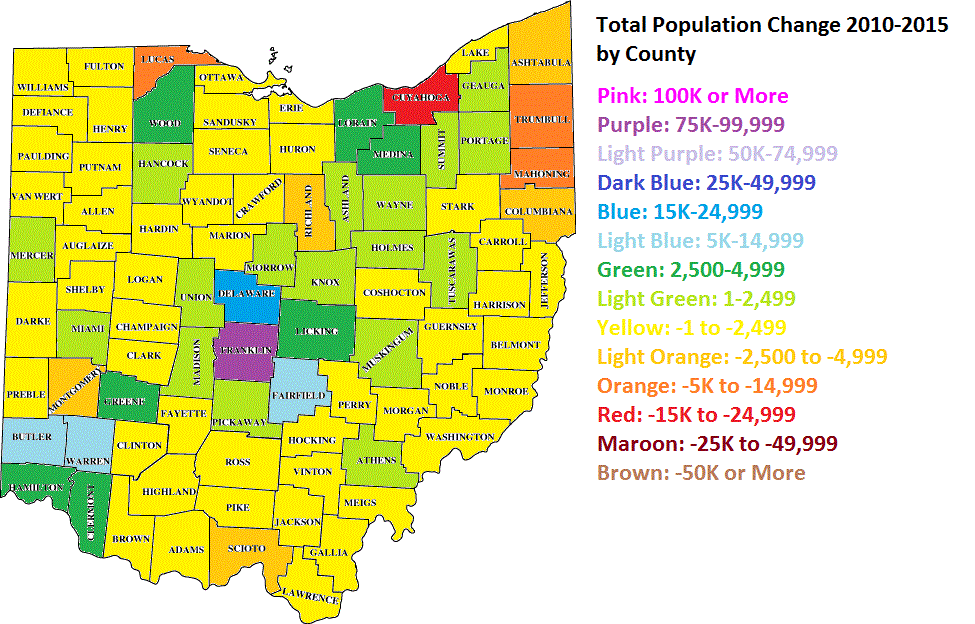
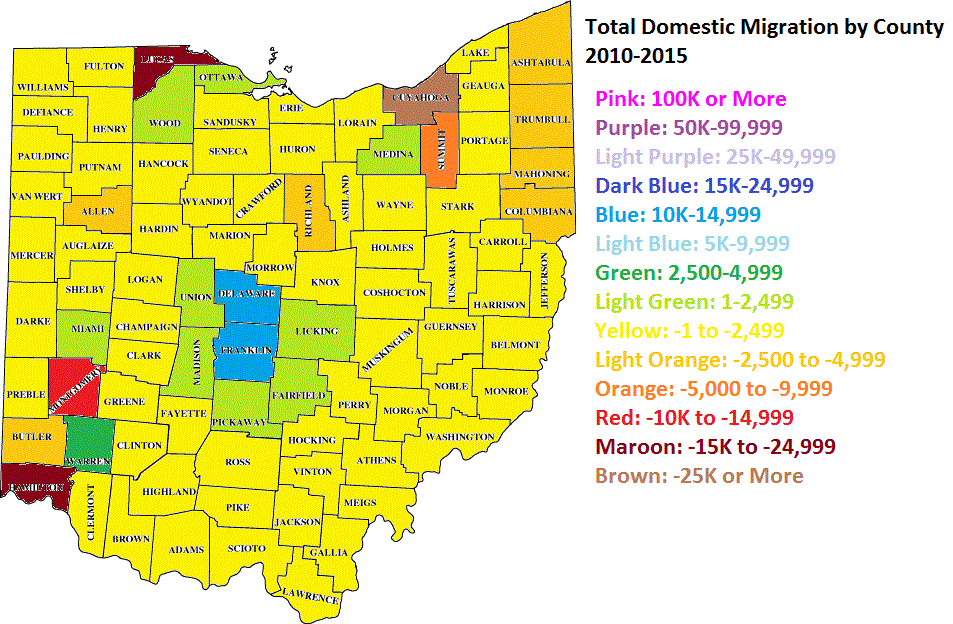
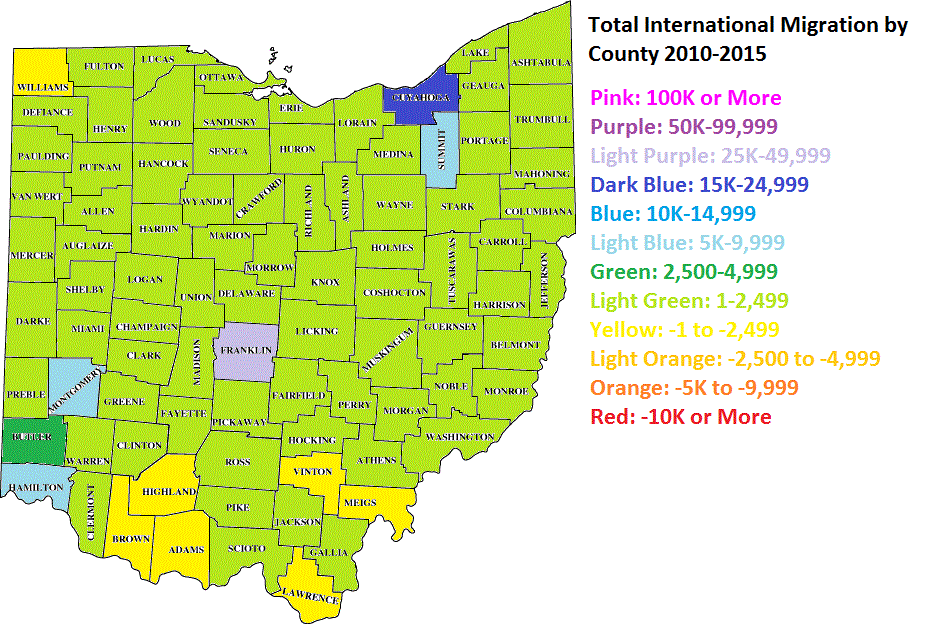
The US Census has released its population estimates for both counties and metros for the year ending July 1, 2015. Here is a detailed look at Ohio’s counties in this 2015 county population estimates report.
From the numbers above, Columbus’ Franklin County was just below Cuyahoga last year. It is likely that, given each county’s growth rates, Franklin has now passed up Cuyahoga to become Ohio’s most populated county.
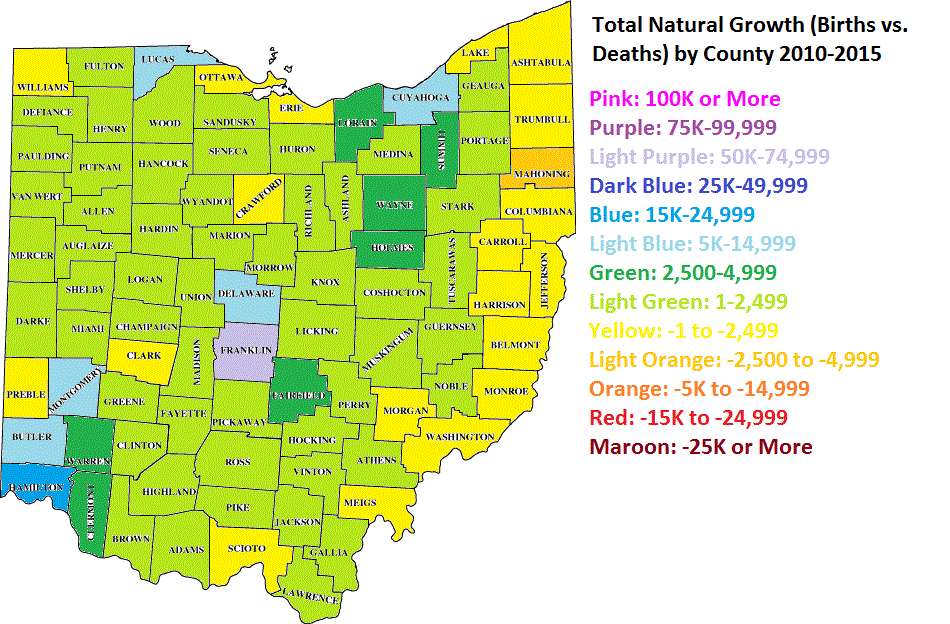
Franklin County’s natural growth rate destroys every other county in the state. It gains almost 7x that of Cuyahoga County, despite Cuyahoga having a larger population during this period, and nearly 3x that of Hamilton County.
The recent Census release of updated population numbers gives new figures on metro populations. In previous articles, I talked mostly about density, so this time, the data is being expanded a bit for a full 2013 metro area comparison.
Metro Area Population on July 1, 2012 and July 1, 2013 By Rank 2012————————————–—-2013 1. Pittsburgh: 2,360,989— 1. Pittsburgh: 2,360,867 2. Charlotte: 2,294,990—2. Charlotte: 2,335,358 3. Portland, OR: 2,289,038—3. Portland, OR: 2,314,554 4. San Antonio, TX: 2,234,494—4. San Antonio, TX: 2,277,550 5. Orlando: 2,223,456—5. Orlando: 2,267,846 6. Sacramento, CA: 2,193,927—6. Sacramento, CA: 2,215,770 7. Cincinnati: 2,129,309—7. Cincinnati: 2,137,406 8. Cleveland: 2,064,739—8. Cleveland: 2,064,725 9. Kansas City: 2,038,690—9. Kansas City: 2,054,473 10. Las Vegas: 1,997,659—10. Las Vegas: 2,027,868 11. Columbus: 1,944,937—11. Columbus: 1,967,066 12. Indianapolis: 1,929,207—12. Indianapolis: 1,953,961 13. San Jose, CA: 1,892,894—13. San Jose, CA: 1,919,641 14. Austin, TX: 1,835,110— 14. Austin, TX: 1,883,051 15. Nashville: 1,726,759—15. Nashville: 1,757,912 16. Virginia Beach, VA: 1,698,410—16. Virginia Beach, VA: 1,707,369 17. Providence, RI: 1,601,160—17. Providence, RI: 1,604,291 18. Milwaukee: 1,566,182—18. Milwaukee: 1,569,659
Total Metro Population Change, 2012-2013, By Rank 1. Austin: +47,941 2. Orlando: +44,390 3. San Antonio: +43,056 4. Charlotte: +40,368 5. Nashville: +31,153 6. Las Vegas: +30,209 7. San Jose: +26,747 8. Portland: +25,516 9. Indianapolis: +24,754 10. Columbus: +22,129 11. Sacramento: +21,843 12. Kansas City: +15,783 13. Virginia Beach: +8,959 14. Cincinnati: +8,097 15. Milwaukee: +3,477 16. Providence: +3,131 17. Cleveland: -14 18. Pittsburgh: -122
**Some of the changes in rates are due to boundary changes. For example, part of the growth rate for Columbus 2000-2010 was a retroactive population addition when boundaries were changed in 2013. The actual growth rate changed very little.