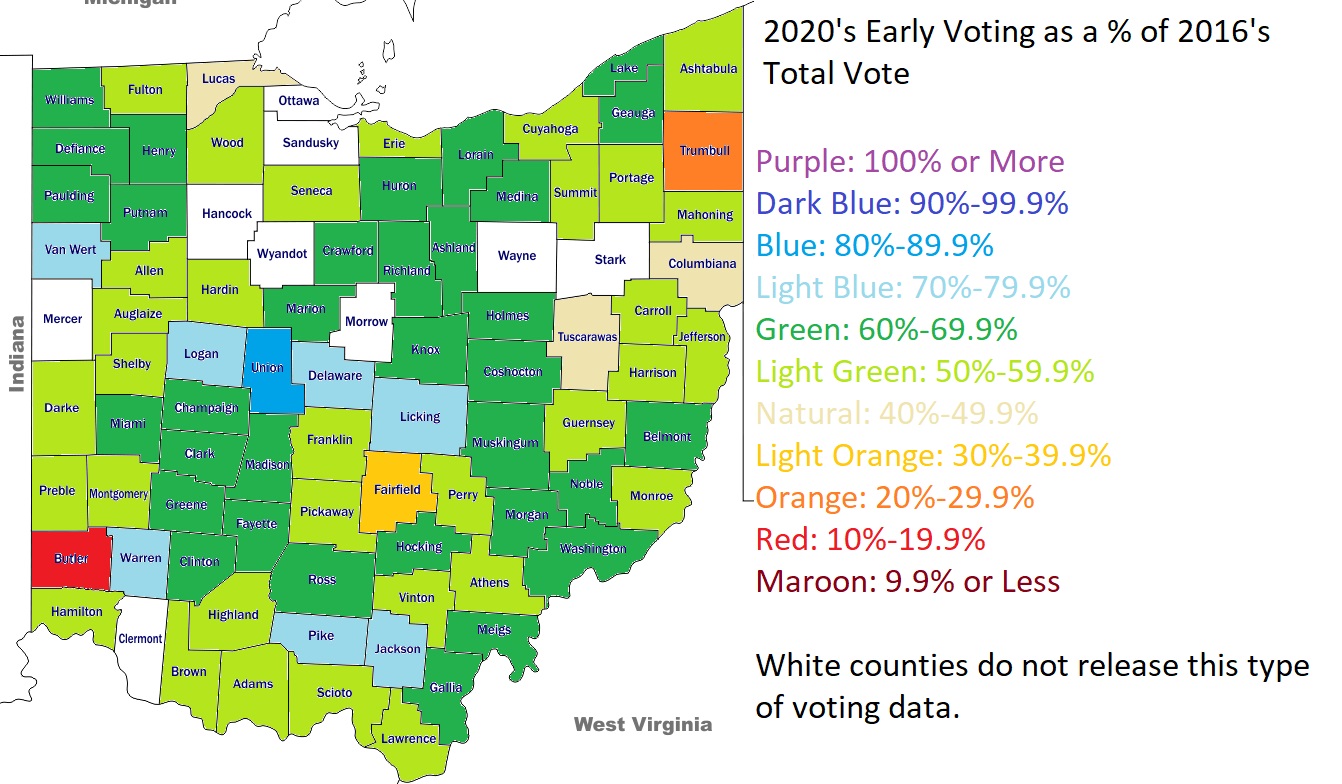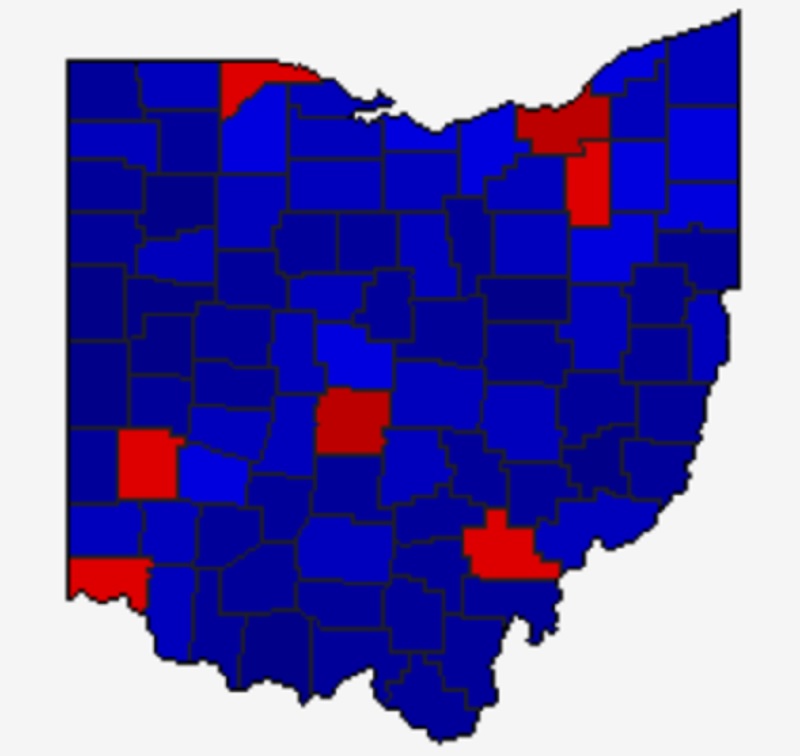
Although Ohio is technically still counting some votes, there shouldn’t be any significant movement in the overall numbers, so we can now take a look at how the local area voted down to the precinct level. In this post, though, the focus is on 2020 election results for Columbus metro counties, as well as past elections going back to 2000.
First, here are the voting total breakdowns by every metro county since 2000.
Delaware County Total Votes By Election 2020: 126,374 2016: 105,639 2012: 98,899 2008: 92,581 2004: 80,456 2000: 55,403 Fairfield County 2020: 81,598 2016: 73,554 2012: 72,220 2008: 72,147 2004: 67,882 2000: 54,094 Franklin County 2020: 632,532 2016: 587,524 2012: 572,188 2008: 561,763 2004: 525,827 2000: 414,074 Hocking County 2020: 13,860 2016: 12,929 2012: 12,768 2008: 13,016 2004: 13,199 2000: 10,756 Licking County 2020: 94,396 2016: 83,624 2012: 81,550 2008: 82,570 2004: 79,420 2000: 62,466 Madison County 2020: 19,887 2016: 17,421 2012: 17,557 2008: 17,510 2004: 17,398 2000: 14,667 Morrow County 2020: 18,468 2016: 16,688 2012: 16,217 2008: 16,679 2004: 16,328 2000: 12,839 Perry County 2020: 16,676 2016: 15,101 2012: 15,020 2008: 15,437 2004: 15,189 2000: 12,828 Pickaway County 2020: 28,326 2016: 24,912 2012: 24,154 2008: 23,787 2004: 22,852 2000: 17,740 Union County 2020: 33,535 2016: 27,695 2012: 25,623 2008: 24,984 2004: 22,631 2000: 17,024
Total Metro Area 2020: 1,065,652 2016: 965,087 2012: 936,196 2008: 920,474 2004: 861,182 2000: 671,891
All of Columbus’ metro counties saw at or near record turnout levels, but also just high general vote totals. The metro added almost 400,000 total voters since 2000, partly explained by the area’s population growth.
Now let’s look at a breakdown of partisanship by total votes. With the margins, positive numbers are Republican, negative numbers are Democratic, again since 2000.
Only 3 metro counties- Delaware, Fairfield and Franklin- moved further blue since 2016. Franklin and Delaware moved strongly left, Fairfield only slightly. Delaware and Franklin also moved more blue from 2012 to 2016. Union stayed very similar to 2016. Delaware and Franklin are the 2 most urbanized counties in the metro, so it makes sense they moved bluer. The most rural counties tended to have the strongest movement to the right.
2020 was the first election in which either party surpassed half a million votes.
Metro Area Margin Between Democratic and Republican Votes (Negative is Democrat, Positive is Republican) 2020: -87,648 2016: -45,097 2012: -65,040 2008: -52,119 2004: +40,202 2000: +63,063
2020 provided the largest margin for either party since 2000, and the metro has generally become more blue over time.
This post will update daily county voting data, where available, through the election. Numbers in parenthesis are from the previous day, for comparison. There are 8 counties without data, as those county board of elections do not post their statistics online.
**Last Updated: 11/2/2020- 10AM
Total Votes in Ohio Through 11/1: 2,909,171 (2,854,258)
County Average of the Return Rate for 2020 Absentee Ballots: 92.02% (91.09%)
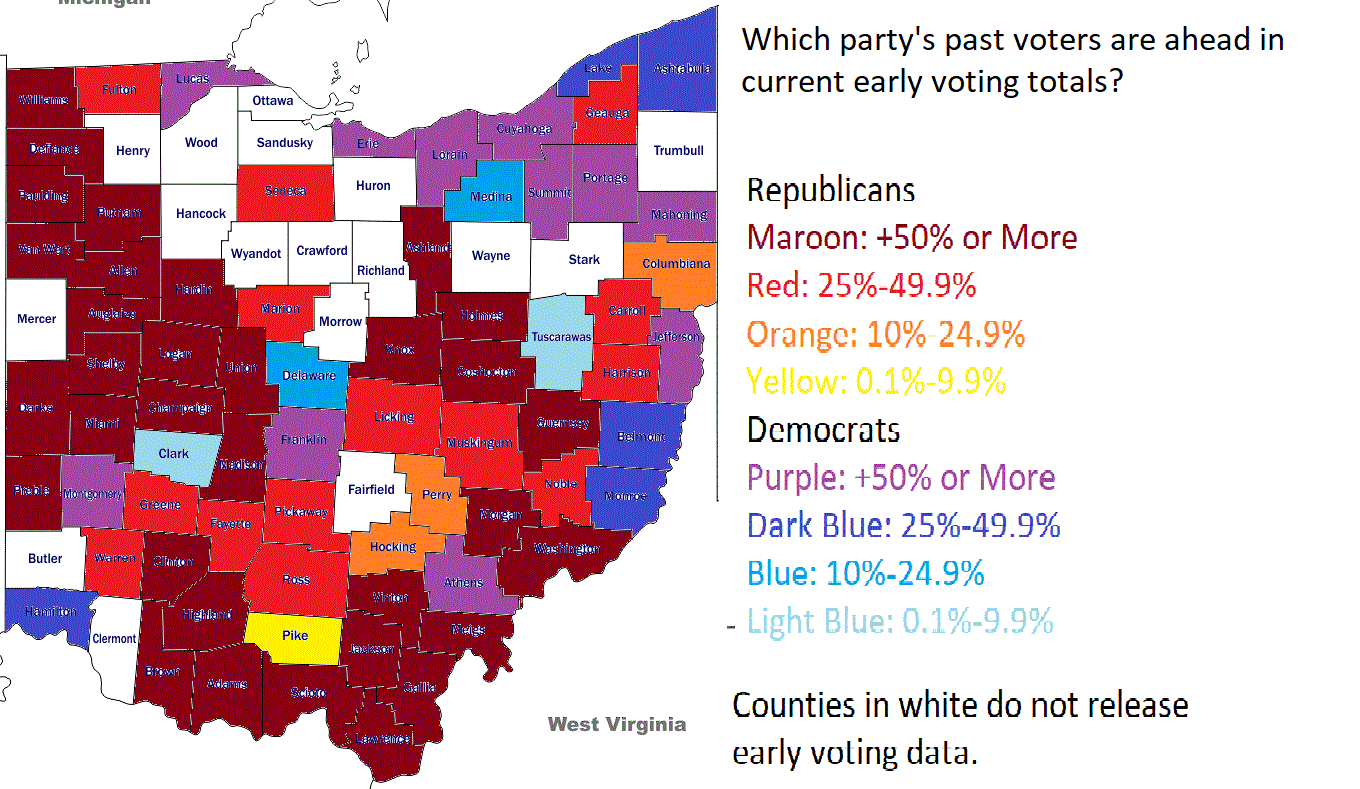
Ohio does not register voters by party, but most counties do release the breakdown of how registered voters voted in previous elections and apply that breakdown to current early voting totals. These numbers are in no way any guarantee of how voters will actually vote in 2020, but they do provide at least some context as to *who* is voting so far. So which party’s past voters are ahead in the counties?
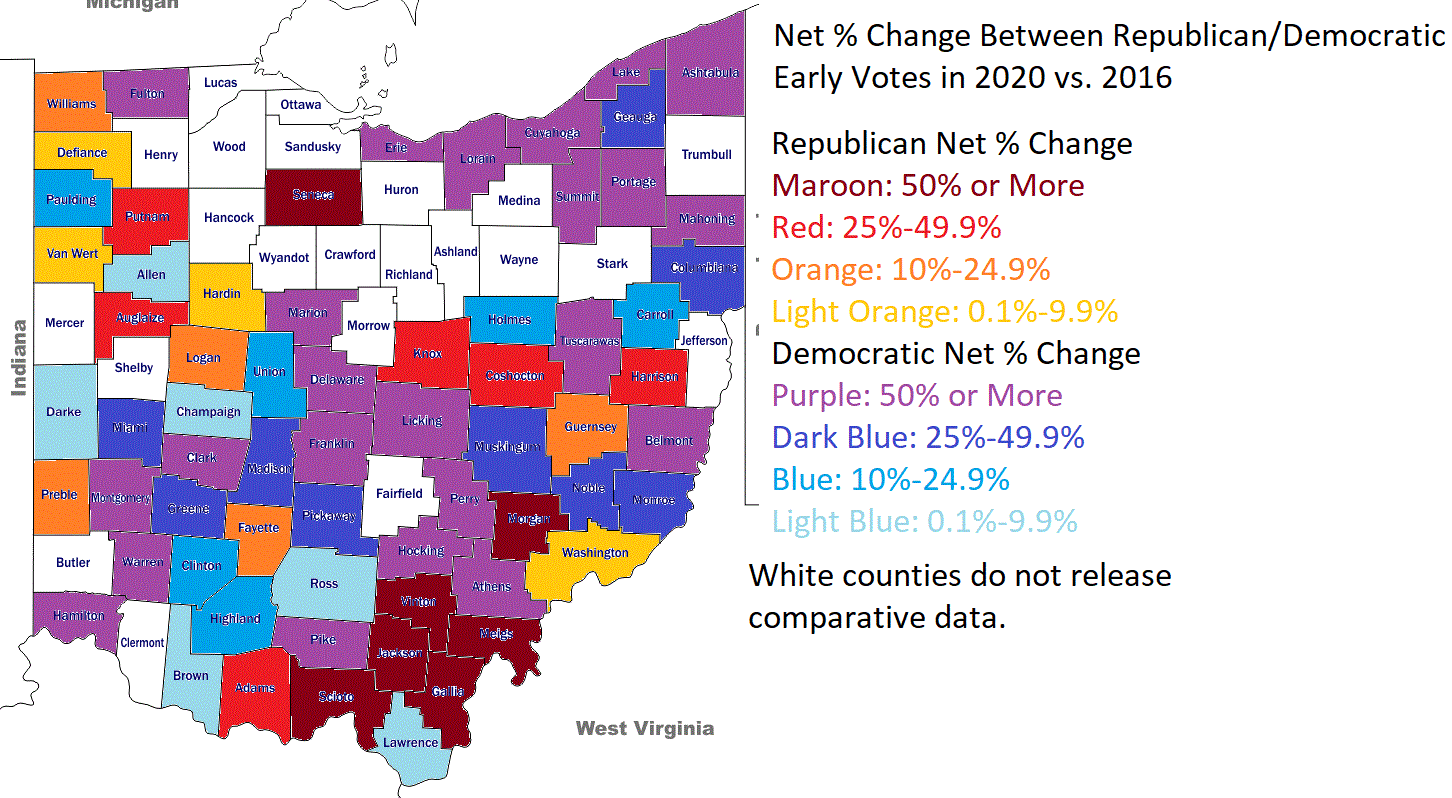
And here is a map of the net change of Democratic and Republican early votes between 2016 and 2020. Again, although we can’t be sure who these people voted for, it does appear that Democrats have made broad gains across most of the state.
Today, I am going to examine 2017 metro population estimates from the US Census, not only for Ohio, but also Columbus’ peer group that includes Midwest and national metro areas. Midwest peers (outside Ohio) used would be any metro with a population greater than 500,000. National peers would be metros that either started or ended the period 2010-2017 with a population between 1.5-2.5 Million.
As with counties, I am going to start this look with a comparison of overall population.
Total Metro Area Population Census 2010, July 1, 2016 and July 1, 2017 Census 2010——————————-July 1, 2016————————July 1, 2017 1. Chicago, IL: 9,461,104————-1. Chicago: 9,546,326———–1. Chicago: 9,533,040 2. Detroit, MI: 4,296,250—————2. Detroit: 4,305,869————-2. Detroit: 9,313,002 3. Minneapolis, MN: 3,348,8459—3. Minneapolis: 3,557,276–3. Minneapolis: 3,600,618 4. St. Louis, MO: 2,787,701———4. St. Louis: 2,806,782———4. St. Louis: 2,807,338 5. Pittsburgh, PA: 2,356,285——–5. Charlotte: 2,475,519———5. Charlotte: 2,525,305 6. Portland, OR: 2,226,009———-6. Orlando: 2,453,333———-6. Orlando: 2,509,831 7. Charlotte: 2,217,012———–7. San Antonio: 2,426,211—–7. San Antonio: 2,473,974 8. Sacramento, CA: 2,149,127—–8. Portland: 2,423,102——–8. Portland: 2,453,168 9. San Antonio, TX: 2,142,516—–9. Pittsburgh: 2,341,536——9. Pittsburgh: 2,333,367 10. Orlando, FL: 2,134,411—–10. Sacramento: 2,295,233—10. Sacramento: 2,324,884 11. Cincinnati: 2,114,580———-11. Cincinnati: 2,166,029—–11. Las Vegas: 2,204,079 12. Cleveland: 2,077,240————12. Las Vegas: 2,156,724—-12. Cincinnati: 2,179,082 13. Kansas City, MO: 2,009,342-13. Kansas City: 2,106,382-13. Kansas City: 2,128,912 14. Las Vegas, NV: 1,951,269——–14. Austin: 2,060,558——–14. Austin: 2,115,827 15. Columbus: 1,901,974———-15. Cleveland: 2,060,065——15. Columbus: 2,078,725 16. Indianapolis, IN: 1,887,877——16. Columbus: 2,046,977—16. Cleveland: 2,058,844 17. San Jose, CA: 1,836,911—17. Indianapolis: 2,005,612—17. Indianapolis: 2,028,614 18. Austin, TX: 1,716,289————18. San Jose: 1,990,910—-18. San Jose: 1,998,463 19. Virginia Beach, VA: 1,676,822—19. Nashville: 1,868,855—-19. Nashville: 1,903,045 20. Nashville: 1,670,890—20. Virginia Beach: 1,722,766–20. Virginia Beach: 1,725,246 21. Providence, RI: 1,600,852—-21. Providence: 1,615,878—21. Providence: 1,621,122 22. Milwaukee, WI: 1,555,908—–22. Milwaukee: 1,576,143—22. Milwaukee: 1,576,236 23. Jacksonville, FL: 1,345,596-23. Jacksonville: 1,476,503–23. Jacksonville: 1,504,980 24. Grand Rapids: 988,938–24. Grand Rapids: 1,048,826-24. Grand Rapids: 1,059,113 25. Omaha, NE: 865,350————–25. Omaha: 924,003—-25. Omaha: 933,316 26. Dayton: 799,232——————–26. Dayton: 800,886—–26. Dayton: 803,416 27. Akron: 703,200———————27. Akron: 702,556——–27. Akron: 703,505 28. Wichita, KS: 630,919————-28. Madison: 647,432—28. Madison: 654,230 29. Toledo: 610,001——————29. Wichita: 644,680——29. Des Moines: 645,911 30. Madison, WI: 605,435———–30. Des Moines: 634,740—-30. Wichita: 645,628 31. Des Moines, IA: 569,633——-31. Toledo: 604,591——31. Toledo: 603,668 32. Youngstown: 565,773——32. Youngstown: 544,543—32. Youngstown: 541,926 33. Canton: 404,422——————33. Canton: 401,165—-33. Canton: 399,927
Columbus passed up Cleveland to become Ohio’s 2nd largest metro.
Metro Area Total Growth Census 2010-July 1, 2017 and July 1, 2016-July 1, 2017 Census 2010-July 1, 2017—————————–July 1, 2016-July 1, 2017 1. Austin, TX: +399,507———————————–1. Orlando: +56,498 2. Orlando, FL: +375,432———————————2. Austin: +55,269 3. San Antonio, TX: +331,458—————————3. Charlotte: +49,786 4. Charlotte, NC: +308,313——————————-4. San Antonio: +47,763 5. Las Vegas, NV: +252,810—————————–5. Las Vegas: +47,355 6. Minneapolis, MN: +251,760————————–6. Minneapolis: +43,342 7. Nashville, TN: +232,162——————————-7. Nashville: +34,190 8. Portland, OR: +227,167——————————-8. Columbus: +31,748 9. Columbus: +176,724———————————–9. Portland: +30,066 10. Sacramento, CA: +175,740————————10. Sacramento: +29,651 11. San Jose, CA: +161,523—————————-11. Jacksonville: +28,477 12. Jacksonville, FL: +159,382————————-12. Indianapolis: +23,002 13. Indianapolis, IN: +140,524————————-13. Kansas City: +22,530 14. Kansas City, MO: +119,574————————14. Cincinnati: +13,053 15. Des Moines, IA: +76,278—————————15. Des Moines: +11,171 16. Chicago, IL: +71,499——————————–16. Grand Rapids: +10,287 17. Grand Rapids, MI: +70,173————————17. Omaha: +9,313 18. Omaha, NE: +67,960——————————–18. San Jose: +7,533 19. Cincinnati: +64,396———————————–19. Detroit: +7,133 20. Madison, WI: +48,802——————————-20. Madison: +6,798 21. Virginia Beach, VA: +48,429———————-21. Providence: +5,244 22. Milwaukee, WI: +20,282—————————22. Dayton: +2,530 23. Providence, RI: +19,912————————–23. Virginia Beach: +2,480 24. St. Louis, MO: +19,575—————————24. Akron: +949 25. Detroit, MI: +16,685——————————-25. Wichita: +948 26. Wichita, KS: +14,704——————————26. St. Louis: +556 27. Dayton: +4,165————————————-27. Milwaukee: +93 28. Akron: +302—————————————–28. Toledo: -923 29. Canton: -4,501————————————-29. Cleveland: -1,221 30. Toledo: -6,334————————————-30. Canton: -1,238 31. Cleveland: -18,427——————————-31. Youngstown: -2,617 32. Pittsburgh, PA: -22,924————————-32. Pittsburgh: -8,169 33. Youngstown: -23,873—————————-33. Chicago: -13,286
Now, as done with counties, let’s look at the components of population change for metro areas.
Total Births By Metro Census 2010-July 1, 2017 and July 1, 2016-July 1, 2017 Census 2010-July 1, 2017———————————July 1, 2016-July 1, 2017 1. Chicago: +869,178—————————————-1. Chicago: +115,915 2. Detroit: +364,121———————————————-2. Detroit: +49,940 3. Minneapolis: +331,430————————————–3. Minneapolis: +45,810 4. St. Louis: +246,280——————————————4. San Antonio: +34,318 5. San Antonio: +236,348————————————–5. St. Louis: +33,143 6. Charlotte: +217,525——————————————6. Charlotte: +31,315 7. Portland: +201,872——————————————-7. Orlando: +29,173 8. Orlando: +200,843——————————————-8. Portland: +28,220 9. Kansas City: +200,535————————————–9. Columbus: +27,663 10. Sacramento: +198,466————————————10. Kansas City: +27,565 11. Columbus: +197,185—————————————11. Las Vegas: +27,449 12. Cincinnati: +196,146—————————————12. Austin: +27,400 13. Las Vegas: +194,083————————————–13. Sacramento: +27,148 14. Indianapolis: +193,599————————————14. Cincinnati: +26,855 15. Austin: +188,961——————————————–15. Indianapolis: +26,769 16. San Jose: +176,224—————————————-16. Nashville: +24,690 17. Pittsburgh: +173,472—————————————17. San Jose: +23,826 18. Nashville: +170,824—————————————–18. Pittsburgh: +23,614 19. Cleveland: +168,361—————————————19. Cleveland: +22,873 20. Virginia Beach: +163,787———————————20. Milwaukee: +19,474 21. Milwaukee: +144,429————————————–21. Jacksonville: +18,748 22. Jacksonville: +130,339————————————22. Providence: +16,542 23. Providence: +120,526————————————-23. Grand Rapids: +13,548 24. Grand Rapids: +98,214———————————–24. Omaha: +13,421 25. Omaha: +96,558——————————————-25. Dayton: +9,615 26. Dayton: +69,855——————————————-26. Des Moines: +9,172 27. Wichita: +65,873——————————————27. Wichita: +8,694 28. Des Moines: +63,958————————————28. Madison: +7,400 29. Akron: +54,644——————————————–29. Toledo: +7,345 30. Toledo: +54,309——————————————-30. Akron: +7,342 31. Madison: +53,718—————————————-31. Virginia Beach: +5,935 32. Youngstown: +40,696———————————–32. Youngstown: +5,551 33. Canton: +32,199——————————————33. Canton: +4,434
Total Deaths By Metro Census 2010-July 1, 2017 and July 1, 2016-July 1, 2017 Census 2010-July 1, 2017———————————July 1, 2016-July 1, 2017 1. Chicago: -501,469—————————————1. Chicago: -72,491 2. Detroit: -293,091—————————————–2. Detroit: -41,075 3. Pittsburgh: -197,572————————————3. Pittsburgh: -27,439 4. St. Louis: -186,111————————————–4. St. Louis: -26,755 5. Minneapolis: -161,913———————————5. Minneapolis: -23,527 6. Cleveland: -153,138———————————–6. Cleveland: -21,068 7. Cincinnati: -135,975———————————–7. Cincinnati: -19,515 8. Charlotte: -127,523————————————-8. Charlotte: -19,009 9. Portland: -120,590————————————–9. Orlando: -18,268 10. Sacramento: -120,429——————————10. Sacramento: -18,081 11. Kansas City: -119,748——————————11. Portland: -17,875 12. Orlando: -117,771———————————–12. San Antonio: -17,679 13. San Antonio: -117,289——————————13. Kansas City: -17,106 14. Indianapolis: -113,742——————————14. Las Vegas: -16,867 15. Columbus: -108,704——————————–15. Indianapolis: -16,081 16. Las Vegas: -108,003——————————–16. Columbus: -15,833 17. Providence: -107,920——————————-17. Providence: -15,031 18. Nashville: -99,415———————————–18. Nashville: -14,723 19. Virginia Beach: -97,935—————————-19. Milwaukee: -13,399 20. Milwaukee: -95,601———————————20. Jacksonville: -13,288 21. Jacksonville: -86,920——————————-21. San Jose: -11,360 22. San Jose: -73,507———————————–22. Austin: -10,609 23. Austin: -67,704—————————————23. Dayton: -8,359 24. Dayton: -59,736————————————-24. Grand Rapids: -7,674 25. Grand Rapids: -53,725—————————-25. Akron: -7,138 26. Akron: -50,948—————————————26. Youngstown: -6,821 27. Youngstown: -50,302——————————27. Omaha: -6,667 28. Omaha: -47,763————————————-28. Toledo: -5,968 29. Toledo: -42,313————————————-29. Wichita: -5,686 30. Wichita: -40,647————————————30. Des Moines: -4,631 31. Canton: -31,722————————————31. Canton: -4,366 32. Des Moines: -31,563——————————32. Madison: -4,252 33. Madison: -30,385———————————-33. Virginia Beach: -3,280
Total Net Natural Change (Births vs. Deaths) By Metro Census 2010-July 1, 2017 and July 1, 2016-July 1, 2017 Census 2010-July 1, 2017———————————July 1, 2016-July 1, 2017 1. Chicago: +367,709—————————————1. Chicago: +43,424 2. Minneapolis: +169,517———————————–2. Minneapolis: +22,283 3. Austin: +121,257——————————————3. Austin: +16,791 4. San Antonio: +119,059———————————-4. San Antonio: +16,639 5. San Jose: +102,717————————————–5. San Jose: +12,466 6. Charlotte: +90,002—————————————-6. Charlotte: +12,306 7. Columbus: +88,481————————————–7. Columbus: +11,830 8. Las Vegas: +86,080————————————-8. Orlando: +10,905 9. Orlando: +83,072—————————————-9. Indianapolis: +10,688 10. Portland: +81,282————————————-10. Las Vegas: +10,582 11. Kansas City: +80,787———————————11. Kansas City: +10,459 12. Indianapolis: +79,857——————————–12. Portland: +10,345 13. Sacramento: +78,037——————————–13. Nashville: +9,967 14. Nashville: +71,409————————————14. Sacramento: +9,067 15. Detroit: +71,030—————————————15. Detroit: +8,865 16. Virginia Beach: +65,852—————————–16. Virginia Beach: +7,762 17. Cincinnati: +60,171———————————–17. Cincinnati: +7,340 18. St. Louis: +60,169————————————-18. Omaha: +6,754 19. Milwaukee: +48,828———————————-19. St. Louis: +6,388 20. Omaha: +48,795————————————–20. Grand Rapids: +5,874 21. Grand Rapids: +44,489—————————–21. Jacksonville: +5,460 22. Jacksonville: +43,419——————————-22. Des Moines: +4,541 23. Des Moines: +32,395——————————-23. Madison: +3,148 24. Wichita: +25,226————————————-24. Milwaukee: +6,075 25. Madison: +23,333———————————–25. Wichita: +3,008 26. Cleveland: +15,223——————————–26. Cleveland: +1,805 27. Providence: +12,606——————————27. Providence: +1,511 28. Toledo: +11,996———————————–28. Toledo: +1,377 29. Dayton: +10,119———————————-29. Dayton: +1,256 30. Akron: +3,696————————————–30. Akron: +204 31. Canton: +477—————————————31. Canton: +68 32. Youngstown: -9,606——————————-32. Youngstown: -1,270 33. Pittsburgh: -24,100——————————–33. Pittsburgh: -3,825
Total Domestic Migration By Metro Census 2010-July 1, 2017 and July 1, 2016-July 1, 2017 Census 2010-July 1, 2017———————————July 1, 2016-July 1, 2017 1. Austin: +224,351—————————————–1. Charlotte: +31,102 2. Charlotte: +177,484————————————-2. Austin: +30,120 3. San Antonio: +169,684——————————–3. Las Vegas: +29,414 4. Orlando: +155,498————————————–4. San Antonio: +24,891 5. Nashville: +126,142————————————-5. Orlando: +23,321 6. Las Vegas: +119,742———————————-6. Jacksonville: +18,921 7. Portland: +106,839————————————-7. Nashville: +18,708 8. Jacksonville: +87,040———————————8. Portland: +13,384 9. Sacramento: +49,262———————————9. Sacramento: +12,888 10. Columbus: +42,932———————————10. Columbus: +12,562 11. Des Moines: +32,042——————————-11. Kansas City: +8,531 12. Indianapolis: +30,772——————————-12. Minneapolis: +8,095 13. Kansas City: +16,802——————————-13. Indianapolis: +7,763 14. Madison: +13,224————————————14. Des Moines: +4,812 15. Grand Rapids: +12,355—————————-15. Grand Rapids: +2,217 16. Omaha: +5,265—————————————16. Madison: +1,706 17. Minneapolis: +432———————————–17. Cincinnati: +1,541 18. Canton: -5,797—————————————-18. Omaha: +383 19. Akron: -13,427—————————————-19. Dayton: -346 20. Youngstown: -16,228——————————-20. Akron: -877 21. Dayton: -16,864————————————–21. Canton: -1,469 22. Wichita: -18,452————————————–22. Youngstown: -1,711 23. Cincinnati: -21,259———————————-23. Providence: -2,588 24. Toledo: -23,102————————————–24. Toledo: -3,070 25. Pittsburgh: -24,397———————————25. Wichita: -3,235 26. Providence: -33,335——————————-26. Virginia Beach: -4,706 27. Milwaukee: -50,575——————————–27. Cleveland: -8,008 28. Virginia Beach: -51,916—————————28. Pittsburgh: -8,633 29. Cleveland: -64,353——————————–29. Milwaukee: -9,635 30. St. Louis: -67,560———————————30. St. Louis: -8,828 31. San Jose: -73,026——————————–31. Detroit: -14,863 32. Detroit: -141,006———————————-32. San Jose: -25,729 33. Chicago: -479,482——————————–33. Chicago: -85,177
Total International Migration By Metro Census 2010-July 1, 2017 and July 1, 2016-July 1, 2017 Census 2010-July 1, 2017———————————July 1, 2016-July 1, 2017 1. Chicago: +183,162—————————————1. Chicago: +28,302 2. Orlando: +135,860—————————————2. Orlando: +22,207 3. San Jose: +132,938————————————-3. San Jose: +20,747 4. Detroit: +86,366——————————————4. Detroit: +13,214 5. Minneapolis: +83,552———————————-5. Minneapolis: +13,107 6. Sacramento: +49,560———————————-6. Austin: +8,185 7. Austin: +49,311——————————————7. Sacramento: +7,722 8. Las Vegas: +46,411————————————8. Columbus: +7,350 9. Columbus: +45,744————————————9. Las Vegas: +7,221 10. Providence: +41,325——————————–10. Providence: +6,381 11. San Antonio: +40,953——————————-11. Portland: +6,335 12. Charlotte: +39,380———————————–12. Charlotte: +6,279 13. Portland: +38,542————————————13. San Antonio: +6,173 14. Virginia Beach: +34,619—————————-14. Nashville: +5,510 15. Nashville: +33,169———————————–15. Cleveland: +5,045 16. Cleveland: +31,236———————————-16. Indianapolis: +4,603 17. Indianapolis: +30,329——————————-17. Pittsburgh: +4,359 18. Jacksonville: +28,593——————————-18. Cincinnati: +4,285 19. St. Louis: +27,666————————————19. Jacksonville: +4,043 20. Pittsburgh: +27,300———————————20. St. Louis: +4,032 21. Cincinnati: +26,502———————————21. Milwaukee: +3,689 22. Kansas City: +23,098——————————22. Kansas City: +3,572 23. Milwaukee: +22,616——————————–23. Grand Rapids: +2,233 24. Omaha: +14,383————————————24. Omaha: +2,213 25. Grand Rapids: +13,800—————————25. Madison: +1,949 26. Madison: +12,367———————————-26. Des Moines: +1,807 27. Des Moines: +11,592—————————–27. Dayton: +1,654 28. Dayton: +11,230———————————–28. Akron: +1,647 29. Akron: +10,413————————————-29. Wichita: +1,187 30. Wichita: +8,117————————————-30. Virginia Beach: +1,077 31. Toledo: +4,627————————————-31. Toledo: +769 32. Youngstown: +2,171——————————32. Youngstown: +381 33. Canton: +1,118————————————33. Canton: +174
Total Net Migration By Metro Census 2010-July 1, 2017 and July 1, 2016-July 1, 2017 Census 2010-July 1, 2017———————————July 1, 2016-July 1, 2017 1. Orlando: +291,358————————————–1. Orlando: +45,528 2. Austin: +273,662—————————————-2. Austin: +38,305 3. Charlotte: +216,864————————————3. Charlotte: +37,381 4. San Antonio: +210,637——————————–4. Las Vegas: +36,635 5. Las Vegas: +166,153———————————-5. San Antonio: +31,064 6. Nashville: +159,311————————————6. Nashville: +24,218 7. Portland: +145,381————————————7. Jacksonville: +22,964 8. Jacksonville: +115,633——————————-8. Minneapolis: +21,202 9. Sacramento: +98,822——————————–9. Sacramento: +20,610 10. Columbus: +88,676——————————–10. Columbus: +19,912 11. Minneapolis: +83,984——————————11. Portland: +19,719 12. Indianapolis: +61,101——————————12. Indianapolis: +12,366 13. San Jose: +59,912———————————-13. Kansas City: +12,103 14. Des Moines: +43,634——————————14. Des Moines: +6,619 15. Kansas City: +39,900——————————15. Cincinnati: +5,826 16. Grand Rapids: +26,155—————————16. Grand Rapids: +4,450 17. Madison: +25,591———————————-17. Providence: +3,793 18. Omaha: +19,648————————————18. Madison: +3,655 19. Providence: +7,990———————————19. Omaha: +2,596 20. Cincinnati: +5,243———————————-20. Dayton: +1,308 21. Pittsburgh: +2,903———————————-21. Akron: +770 22. Akron: -3,014—————————————-22. Canton: -1,295 23. Canton: -4,679————————————–23. Youngstown: -1,330 24. Dayton: -5,634————————————–24. Detroit: -1,649 25. Wichita: -10,335————————————25. Wichita: -2,048 26. Youngstown: -14,057—————————–26. Toledo: -2,301 27. Virginia Beach: -17,297————————–27. Cleveland: -2,963 28. Toledo: -18,475————————————28. Virginia Beach: -3,629 29. Milwaukee: -27,959——————————29. Pittsburgh: -4,274 30. Cleveland: -33,117——————————-30. San Jose: -4,982 31. St. Louis: -39,894———————————31. St. Louis: -5,796 32. Detroit: -54,640————————————32. Milwaukee: -5,946 33. Chicago: -296,320——————————-33. Chicago: -56,875
Early this morning, the Census released the most recent population figures for counties, Metropolitan Statistical Areas and Consolidated Statistical Areas. The 2017 county population estimates, among others, cover the year from July 1, 2016 to July 1, 2017.
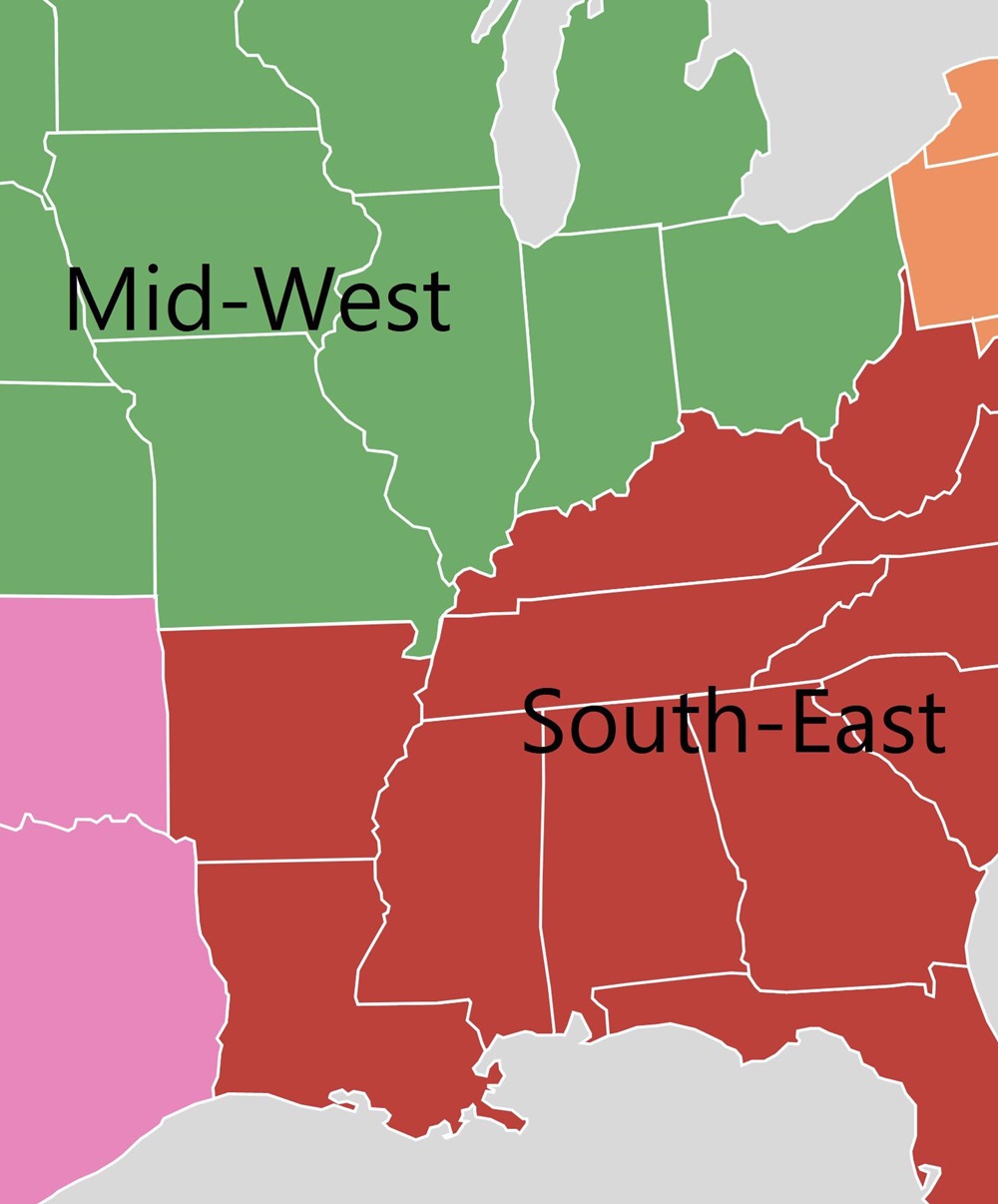
For years, if not decades, we’ve been hearing a familiar tale- that anyone and everyone is moving from the Midwest and Northeast to the South and West. This trend began during and after the collapse of Northern manufacturing, and as higher cost of living began to make the lower-cost South more attractive in particular. However, a lot of the South’s growth over the years- indeed a majority- never had anything to do with region-to-region migration. Instead, it was due largely to natural growth (births vs. deaths) and international migration, particularly from Central America. What received all the attention, though, was the belief that people were packing up and moving to the South from places like Ohio and other struggling Northern states. While that may have been true for a while, that is increasingly looking like it is no longer the case.
The Midwest, especially, has been derided as the region no one wants to live in. Despite its growing population approaching 66 million people, the common refrain was that its colder winters, flailing economies and questionable demographic future meant that it was simply a region being left behind by the booming Southern states.
Recently, the US Census released estimates for 2015-2016 geographic mobility, and they tell a very different story altogether. Regional domestic migration in 2016 may have actually bucked the trends.
First, let’s look at the total domestic migration moving to the Midwest from other regions. South to Midwest: +309,000 West to Midwest: +72,000 Northeast to Midwest: +61,000 Total to Midwest: +442,000
And then compare that to the total that the Midwest sends to other regions. Midwest to South: -254,000 Midwest to West: -224,000 Midwest to Northeast: -34,000 Total from Midwest: -512,000
Net difference by region. Midwest vs. South: +55,000 Midwest vs. West: -152,000 Midwest vs. Northeast: +27,000 Total Net: -70,000
So while the Midwest is seeing an overall net domestic migration loss, it is entirely to the Western states.
This could just be an off year, as almost all recent years showed losses to the South, but then again, maybe not. The South has been in a boom for several decades now, and in that time, the region still lags the other 3 in almost every quality of life metric used. All booms end eventually, and the South’s 2 biggest perceived advantages, low cost of living and business-friendly climate, have been gradually eroding over time. As Census surveys show, people don’t actually move for a change in weather, so it’s the economic factors that are going to make the biggest impacts long-term. The Midwest now has many cities and several states that are doing well economically, including Columbus, and perhaps they are becoming more attractive than they have in many years. Time will tell, but last year, the narrative of an unattractive Midwest vs. South was at least temporarily shelved.